
REVIEW · JAPANESE CRAFT AND CALLIGRAPHY WORKSHOPS
Kintsugi Experience: Art of Golden Joinery in Tokyo
Gold seams make broken dishes feel sacred. This Tokyo workshop teaches Kintsugi philosophy and the hands-on method, so you understand why repair matters as much as the finished look, and you can even meet Master Taku in the 11:00am class.
I like that the lesson is practical and friendly, not art-school intimidating. You’ll work in a small group (no more than 10), wear a samue, learn with provided tools and a studio plate, and finish with a take-home souvenir. One consideration: you cannot bring your own pottery to repair, you’ll use plates provided by the studio.
In This Review
- Key things that make this class worth your time
- Why Kintsugi is more than a craft project
- Finding TNCA Minami-Aoyama Studio near Omotesando
- The one-hour flow: samue, group size, and master-level attention
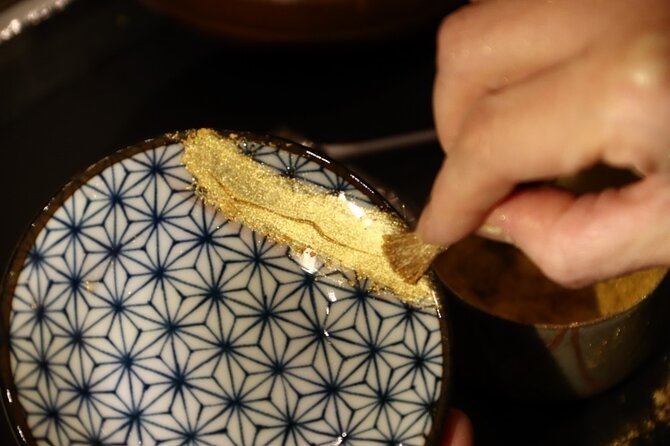
- What you actually do with the gold lacquer
- Your Kintsugi souvenir: what to expect when it’s done
- Why this feels meditative (and not stressful)
- Who should book this Kintsugi experience
- Price and value for $59.69 in Tokyo
- The one drawback to weigh before you go
- Should you book this Kintsugi lesson in Tokyo?
- FAQ
- How long is the Kintsugi lesson?
- Where does the workshop start and end?
- Is hotel pickup included?
- What is included in the lesson price?
- Do I need to bring my own broken pottery?
- What will I wear during the workshop?
- How large is the group?
- Is the class suitable for children?
- Do I have to speak Japanese?
- Can I change the date or get a refund if my plans change?
Key things that make this class worth your time
- A repair lesson with meaning, not just a craft demo, built around the idea that breakage becomes part of the object’s history
- Gold-lacquer lines you actually apply, learning the technique step by step during the session
- Small, capped groups, so you get real attention instead of feeling lost
- A samue outfit, which makes the whole thing feel like a traditional craft moment
- Take-home value baked in, since the repaired plate is yours to bring home
- English-friendly instruction, with clear directions that work for non-Japanese speakers
Make something to take home. Other workshops
- Tokyo Shinjuku Chopsticks Making Class
★ 5.0 · 1,763 reviews - Chopstick Making Workshop in Ginza
★ 4.8 · 1,366 reviews - Tokyo Sumo Experience: Chanko & Mochi with a Former Pro
★ 4.8 · 567 reviews - Kintsugi Experience: Art of Golden Joinery in Tokyo
★ 5.0 · 467 reviews
Why Kintsugi is more than a craft project
Kintsugi has a simple, powerful message: broken things are not automatically finished. The Japanese belief behind it treats damage and repair as part of an object’s story, not a reason to hide it or toss it.
That mindset changes how you look at the final result. Instead of trying to make the crack disappear, you highlight it with a deliberate gold line. You end up with an object that looks like it has lived a little, even if it started as a plain plate from the studio.
And this class does a good job linking the why to the how. You don’t just get a recipe. You get the purpose. That makes the workshop feel more personal, and it is also why the souvenir feels more meaningful than a typical take-home item.
Finding TNCA Minami-Aoyama Studio near Omotesando

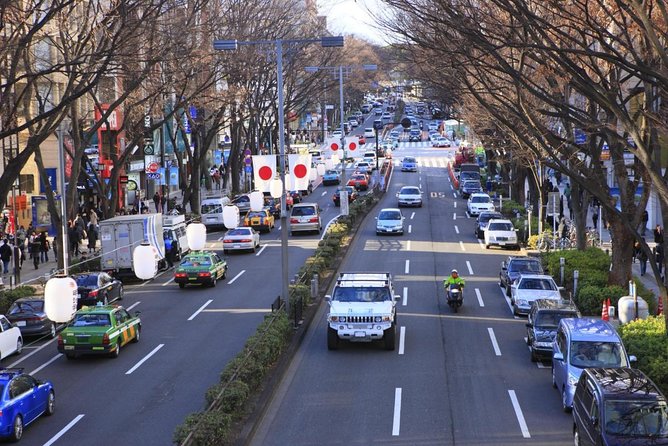
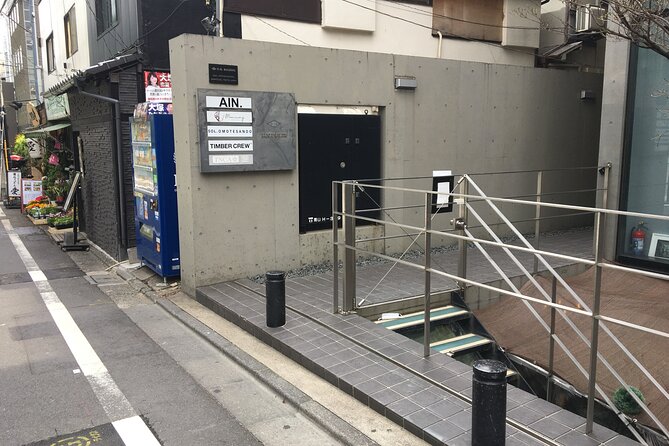
This workshop starts at the TNCA Minami-Aoyama Studio in Minato City, in the Minami-Aoyama neighborhood (close to the Omotesando area). You make your own way there. There is no hotel pickup, so plan to arrive a few minutes early with time to find the exact entrance.
The good news is that the studio is described as near public transportation. If you plan your day around train or metro access, this is the kind of short class that fits well between other Tokyo stops.
Practical tip: wear shoes you can walk in. The studio is small and you’ll be moving through steps, getting hands on with the materials, and generally staying focused for about an hour.
The one-hour flow: samue, group size, and master-level attention
The workshop runs about 1 hour. The pacing matters. You are not sitting through a long talk, and you are not rushing through a complex multi-day process either. It is designed to be doable in a single session.
Here is how the time typically feels:
1) You meet your teacher and your small group.
2) You change into a samue, a traditional craftsperson garment.
3) You get guided instruction on the Kintsugi technique using a provided ceramic plate.
4) You learn the cultural philosophy behind the craft while you work.
5) You finish with a repaired plate to take home.
Two things make this flow work for beginners. First, the group is capped at a small number, with no more than 10 guests mentioned for the hands-on experience. That means you are more likely to get help when you need it. Second, the instruction style is built for non-specialists, with clear steps and supportive staff.
Also, some classes include the chance to meet Master Taku, specifically noted for the 11:00am session. Even if you do not catch the master in person, the workshop is still presented as a real craft setting, not a staged performance for tourists.
- Mt Fuji and Hakone 1-Day Bus Tour Return by Bullet Train★ 5.0 · 26,383 reviews
- 1-Day Tokyo Bus Tour★ 5.0 · 14,250 reviews
- Tokyo: teamLab Planets TOKYO Digital Art Museum Entry Ticket★ 4.6 · 9,779 reviews
- Mt Fuji & Hakone Cruise, Drum Show Bullet Train 1 Day from Tokyo★ 4.0 · 7,413 reviews
- Tokyo: Shinjuku Food Tour (13 Dishes at 4 Local Eateries)★ 5.0 · 6,603 reviews
What you actually do with the gold lacquer
Kintsugi can sound mysterious, like some mystical Japanese secret. In practice, this workshop makes it clear that it is a technique.
You use a ceramic plate supplied by the studio. Studio materials include all necessary equipment, and the process involves repairing damaged areas with lacquer mixed with gold. The gold is not just a decoration. It is a key part of the aesthetic idea: repair should be visible, intentional, and beautiful.
You are also taught the basic technique of what to do and when to do it, so you can complete your piece within the time you have. The approach is beginner-friendly, with instructions that are easy to copy and repeat.
One more detail that matters for your experience: the workshop is set up for you to repair the provided plate, not to experiment on your own items. Personal items are not allowed. That protects both you and the studio’s workflow, and it keeps the lesson results predictable.
Your Kintsugi souvenir: what to expect when it’s done
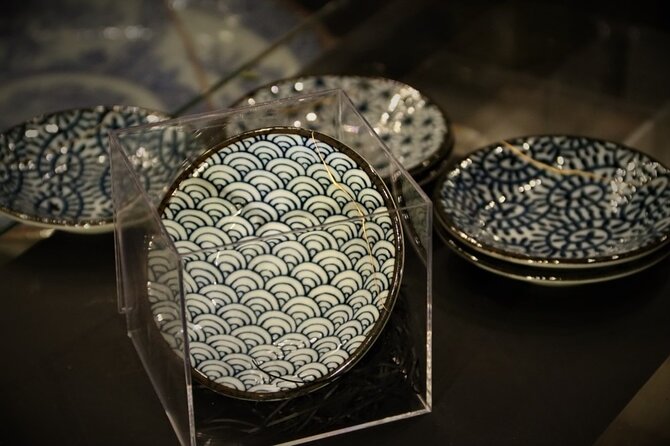
By the end of the lesson, you take home a repaired item as your souvenir. That is a big value point for a Tokyo workshop. Many craft classes give you a photo. This one gives you an object you can keep, use, or display, with the gold repair lines showing your work.
Expect the final plate to look intentionally different from a fully restored, invisible repair. The beauty is in the contrast between the healed area and the visible gold seams. It is the “new life” effect, where the object looks better because it tells a story.
Also, because it is a studio-provided plate and all the materials are included, you are not left to figure out how to pack fragile ceramics for a long day in the city. The class also includes help so your work is handled in a way that supports travel back with your souvenir.
Practical note: plan where this will live in your luggage. Ceramic can take up space, and you will want to protect it from bumps on trains and in taxis.
Why this feels meditative (and not stressful)
One of the most praised aspects is how the workshop feels during the work itself. The best comments point to a calm, focused rhythm. You are concentrating on small steps, and the process has a satisfying sense of progress as your repair line comes together.
There is also a social element that does not feel forced. Because the studio group is small, you can ask questions, and the staff can help each person finish their piece successfully. Even non-artists are specifically mentioned as able to do it, and the lesson is described as very accessible.
A little humor and light conversation also show up in the experience, which helps if you worry that a traditional craft class might be stiff. This is a craft you do with your hands, and the staff makes it easier to learn without feeling pressured.
Who should book this Kintsugi experience
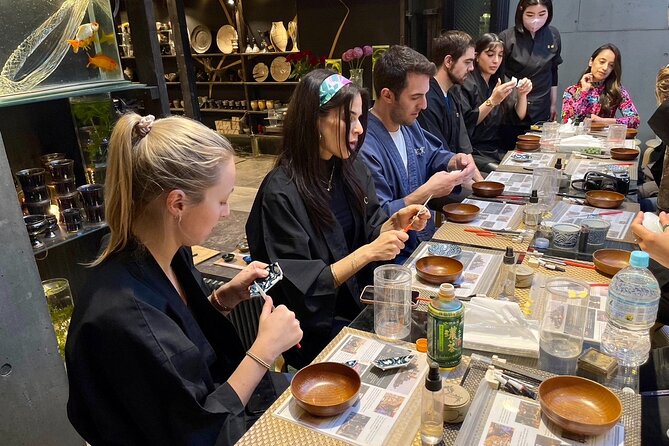
This workshop is a strong fit if you want a Tokyo activity that is:
- Hands-on, with a real skill at the end
- Short enough to do on a busy day
- Cultural, with the philosophy explained while you work
- Worth the money because you leave with an item you repaired yourself
It is also a good option for couples or friends. The class setup is small and the experience is structured, so it works even if only one person in the pair is especially interested in crafts.
It is less suitable if you are under 6 years old. For safety reasons, children under 6 cannot enter the atelier.
And if your dream is to repair your own favorite broken mug or heirloom, you should know that personal items are not allowed. This is a studio-plate experience.
Price and value for $59.69 in Tokyo
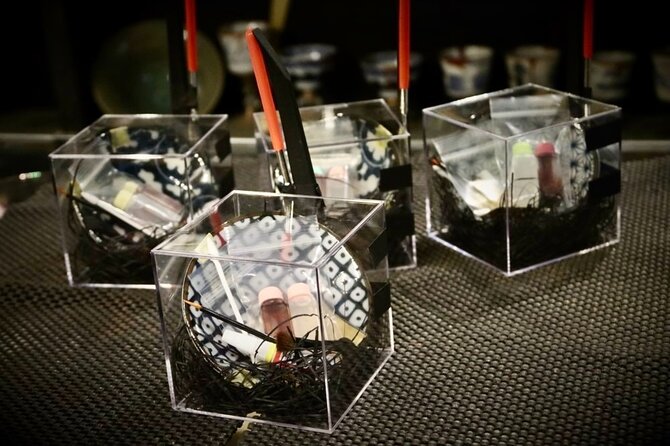
At $59.69 per person, you are paying for more than “someone shows you how.” The lesson fee includes:
- The plate you use during the class and take home after
- All necessary equipment
- All taxes, fees, and handling charges
That matters for value because the big cost of a craft workshop is usually the materials plus instruction time. Here, your souvenir is part of the price. You are not spending extra later on a separate piece to buy or on supplies you do not need.
The session is also short, about 1 hour. In Tokyo, time is expensive. A compact workshop like this can be slotted into a day without turning into a half-day commitment.
Add in the small-group approach, and the price starts to feel reasonable for a beginner-focused, guided craft lesson that ends with something you truly own.
The one drawback to weigh before you go
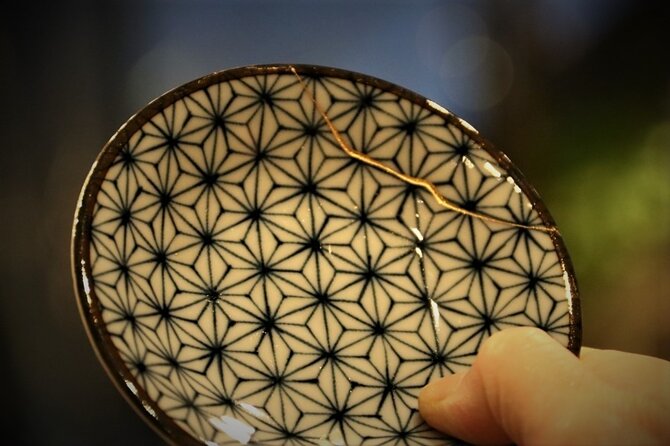
The main consideration is simple: you cannot repair your own pottery. You will work on a plate provided by the studio. If you are hoping to bring your own object for a personal repair and sentimental transformation, this workshop is not set up for that.
A second practical consideration is location. The studio is centrally located, but reviews note that finding the studio can be difficult. That is not a reason to skip. It is just a reason to give yourself a little buffer time and double-check your route.
Should you book this Kintsugi lesson in Tokyo?
If you want a meaningful souvenir and a short, hands-on craft experience, this class is an easy yes. The balance of philosophy plus technique is what makes it click. You learn why repair matters in Japanese culture, then you do the gold-lacquer work yourself with clear guidance.
Book it if:
- You like making things with your hands
- You want a unique Tokyo activity that does not require artistic talent
- You want to take home an actual repaired object, not just a memory
Skip it if:
- You want to repair your own pottery (studio plates only)
- You need a flexible schedule with no consequences for changes (the experience is non-refundable and cannot be changed)
FAQ
How long is the Kintsugi lesson?
The lesson is approximately 1 hour.
Where does the workshop start and end?
It starts at TNCA Minami-Aoyama Studio, 3-chōme-8-2 Minamiaoyama, Minato City, Tokyo 107-0062, Japan. It ends back at the same meeting point.
Is hotel pickup included?
No. Hotel pickup and drop-off are not included.
What is included in the lesson price?
The price includes the lesson fee, the plate you will use and take home, all necessary equipment, and all taxes, fees, and handling charges.
Do I need to bring my own broken pottery?
No. Personal items are not allowed. The studio provides a ceramic plate for the lesson.
What will I wear during the workshop?
You will put on a samue (a traditional Japanese craftsperson’s garment).
How large is the group?
The class uses a small capped group of no more than 10 guests, and the activity has a maximum of 20 travelers.
Is the class suitable for children?
Under 6 years old cannot enter the atelier for safety reasons.
Do I have to speak Japanese?
Most travelers can participate, and the experience is set up to be accessible for non-Japanese speakers.
Can I change the date or get a refund if my plans change?
No. The experience is non-refundable and cannot be changed for any reason.
Made by Hand, and Yours to Keep

Newest Tokyo write-ups from the Loving Japan desk


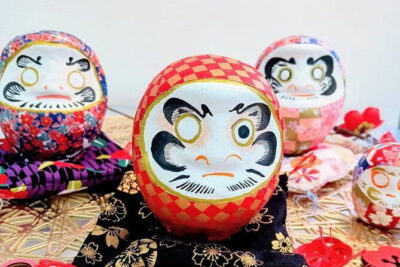

Japanese Craft and Calligraphy Workshops, side by side.
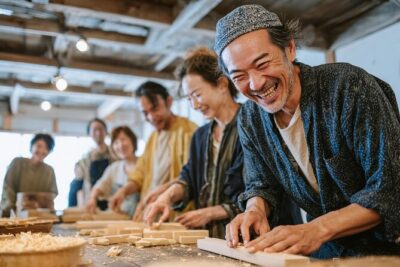 ★ 5.0Tokyo Shinjuku Chopsticks Making ClassFrom $201,763 reviews
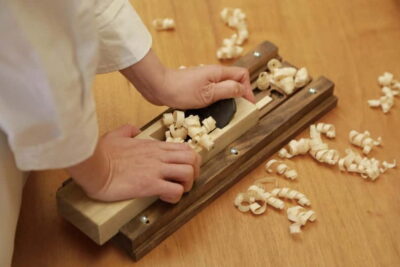 ★ 4.8Chopstick Making Workshop in GinzaFrom $251,366 reviews
 ★ 5.0Chopsticks Making Workshop in Gion with Engraving OptionFrom $15958 reviews
 ★ 4.8Tokyo Sumo Experience: Chanko & Mochi with a Former ProFrom $103567 reviews
 ★ 5.0Tokyo Chopstick Making Workshop with ArtisanFrom $26466 reviews
 ★ 4.9Matcha Making Experience with Mochi Sweets in AsakusaFrom $22388 reviews
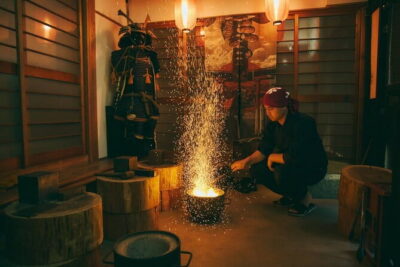 ★ 4.8Authentic knife making experience at a blacksmith in KyotoFrom $154350 reviews
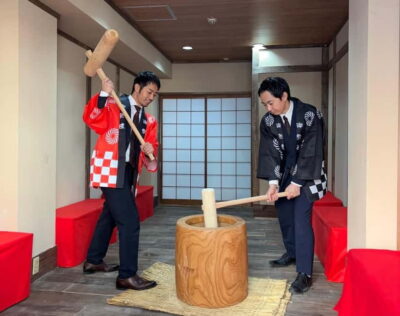 ★ 4.9Traditional Mochi Pounding Experience with TastingFrom $31306 reviews
Filed on these lists too