
REVIEW · KYOTO TEA CEREMONIES AND MATCHA
Tokyo: Matcha Making Experience with Mochi Sweets in Asakusa
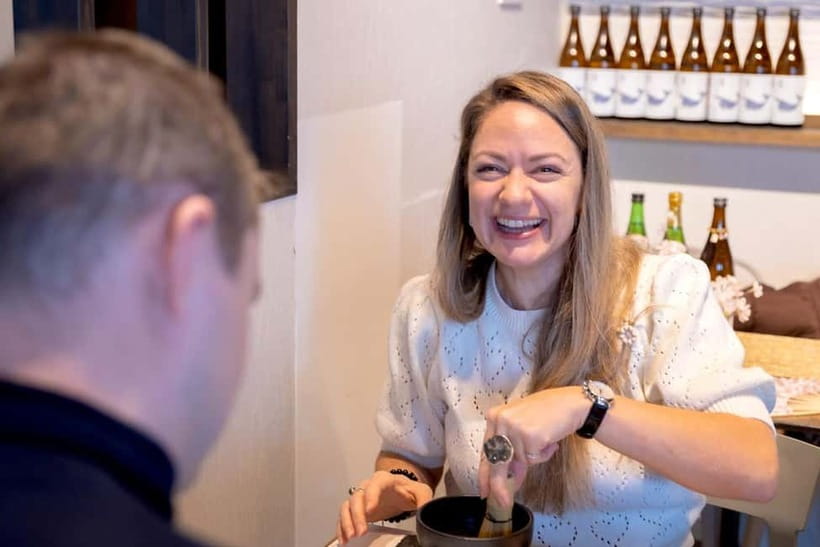
Tokyo’s matcha class feels more like a friendly mini show. I love the interactive matcha history quiz and the hands-on whisking with traditional tools. The one thing to consider is that this is a short 1-hour format, so you will leave with a great intro, not a full tea-ceremony deep training.
In Asakusa, you learn in a way that actually sticks. Instructors like Ken, Mana, Hayato, and Hiho are described as funny, engaging, and clear in English, and the tasting part comes right after the technique. I also like that you sit for the session, which helps if kneeling is not your thing.
In This Review
- Key highlights that make this class worth your time
- Why this Asakusa matcha class feels different from a typical food stop
- Meeting in Asakusa is easy, even if you get a little lost
- The 1-hour game plan: quiz, whisking, tasting, and sweets
- Step 1: Warm welcome and matcha history through a quiz
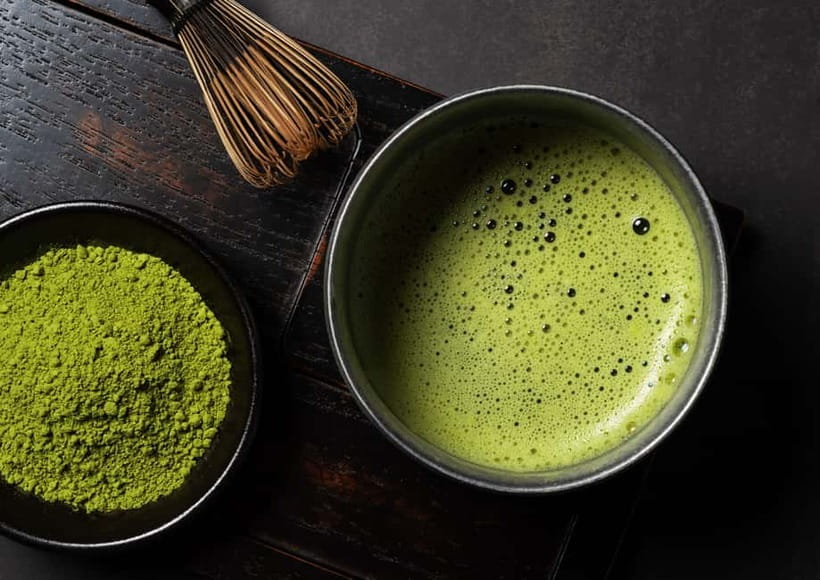
- Step 2: Whisk your own matcha with traditional tools
- Step 3: Drink what you made, then eat Japanese sweets
- Step 4: English Q&A and finishing tips
- What you actually learn about matcha technique
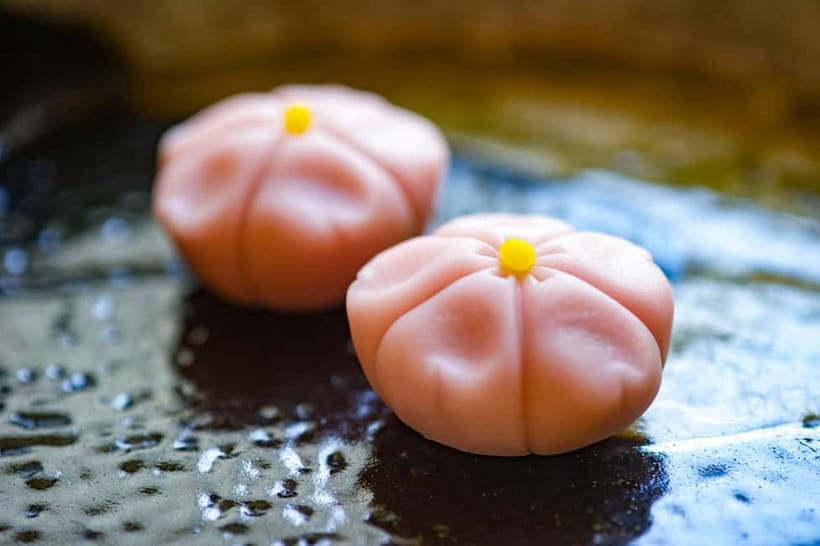
- The sweets pairing and why it makes the lesson better
- Instructors set the tone: Ken, Mana, Hayato, Hiho, and more
- Price and value: what $22 buys you in Tokyo
- Who this matcha making class is best for
- Practical tips so your hour goes smoothly
- Should you book Matcha Making Tokyo in Asakusa?
- FAQ
- How long is the matcha making experience?
- How much does it cost?
- Where is the meeting point in Asakusa?
- Is the class taught in English?
- What is included in the price?
- What is not included?
- Can I get a refund if my plans change?
- Do I have to pay right away to reserve?
Key highlights that make this class worth your time
- 1-minute location advantage: meet near Asakusa Station at Relink KAMINARIMON building 6F
- English guidance throughout: you get help as you whisk and taste
- Hands-on matcha technique: you make the drink yourself with traditional tools
- History via a quiz: matcha background is taught in a light, interactive way
- Sweet pairing with the matcha: Japanese sweets are served alongside your drink
- Family-friendly energy: kids and adults both seem to enjoy the pace and format
Still on the Sumida side? A few more Asakusa options
- Tokyo: Japanese Dance Cabaret Theater Asakusa-Kaguwa Ticket
★ 4.8 · 2,270 reviews - Tokyo: Meiji Shrine, Asakusa, Skytree Bus Tour and Cruise
★ 4.7 · 1,986 reviews - Tokyo: Roll and Authentic Sushi Making Class in Asakusa
★ 4.9 · 1,957 reviews - Tokyo: Asakusa Walking Tour with Sensoji Temple Visit
★ 4.8 · 1,583 reviews
Why this Asakusa matcha class feels different from a typical food stop
Asakusa is the kind of neighborhood where food traditions feel like part of daily life. You are close to Tokyo Skytree, and the whole setting makes the experience feel grounded, not staged. This class leans into matcha as a craft, not a souvenir. You learn how it is prepared, then you taste what you made right away.
What I really like is the combination of three parts that work together. First comes a matcha history lesson, taught through a quiz that keeps your brain awake without turning serious. Then you practice whisking, which is where most people finally understand why matcha foam matters. Finally you sip your drink and eat Japanese sweets, so the lesson lands on your tongue, not just in your head.
One practical consideration: because it is only one hour, you should go in expecting a confident start. You will learn the basics well, but you will not leave with every advanced tea-ceremony detail. If you want an all-day ritual, you might look elsewhere. For a first-time matcha experience in Tokyo, this one is built for momentum.
Meeting in Asakusa is easy, even if you get a little lost
The meeting point is close to public transit, which matters in Tokyo. You meet 1 minute from Asakusa Station at Relink KAMINARIMON building 6F. The coordinates are 35.710774, 139.7956532.
That location detail is more useful than it sounds. If you are bouncing between sights in Asakusa, you do not want a long walk with train-fatigue. Plan to arrive a few minutes early, especially if you are lining up with a specific entry time for the class.
Also note what is not included: hotel pickup and drop-off are not part of the price. So you will want to reach Asakusa Station on your own and treat this as a quick, focused block of time.
The 1-hour game plan: quiz, whisking, tasting, and sweets
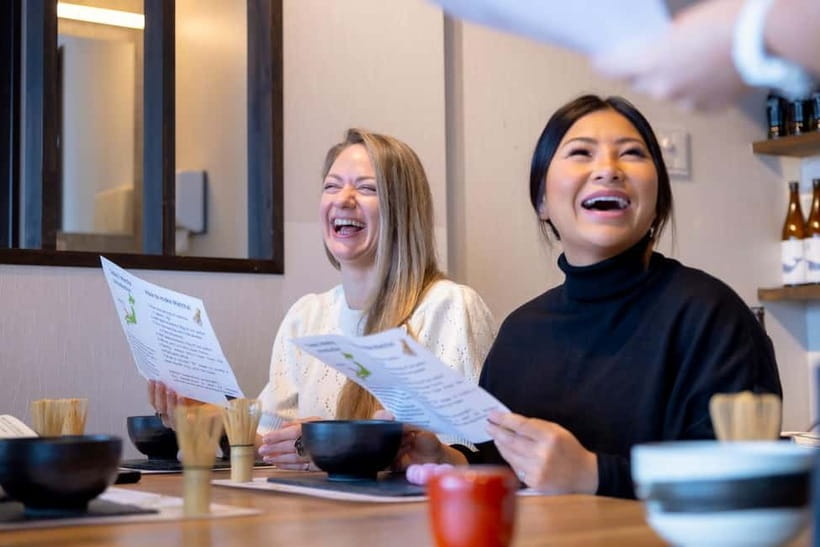
This class is designed to move. In one hour, you cover the story of matcha, the method of making it, and the fun of tasting it with sweets.
Sit down somewhere quieter. Other tea rooms we booked
- Matcha Making Class in Tokyo with Authentic Japanese Sweets Set★ 5.0 · 744 reviews
- Tokyo: Traditional Tea Ceremony with a Tea Master★ 5.0 · 528 reviews
- Tokyo: Matcha Making Experience with Mochi Sweets in Asakusa★ 4.9 · 388 reviews
- Tokyo: Matcha and Kimono Experience★ 4.7 · 219 reviews
- Tea Ceremony Workshop in Tokyo by the Experienced Instrucor★ 5.0 · 189 reviews
Step 1: Warm welcome and matcha history through a quiz
You start with an interactive intro that frames matcha in a way that feels approachable. The history portion is described as lighthearted and quiz-based, which helps if you normally tune out long explanations. It is a smart way to learn, because you remember answers you had to think for.
Step 2: Whisk your own matcha with traditional tools
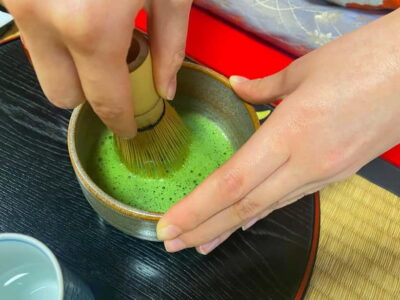
Next, you get hands-on. You whisk your own matcha using traditional tools, guided by the instructor like you are shadowing a tea craftsperson. Several instructors are specifically praised for clarity and patience while people practice the technique.
You are not just watching. You are doing the motions, learning how to mix smoothly so you get the right texture. If you are the kind of person who learns best by trying, this part is the heart of the experience.
Step 3: Drink what you made, then eat Japanese sweets
After whisking, you drink your matcha. Then Japanese sweets come out with your tasting. Many people say the pairing works well, and one key detail you might care about is that the matcha is served without sugar in the class format described.
That means you taste matcha more directly. If you are used to sweetened drinks, you may notice the natural flavor profile more strongly here. That is part of the point. It teaches you how matcha tastes at baseline.
Step 4: English Q&A and finishing tips
Throughout, the class stays in English. The vibe from multiple instructors is upbeat and supportive, and the session includes guidance on technique and etiquette. You also have chances to ask questions while you are making and tasting.
What you actually learn about matcha technique
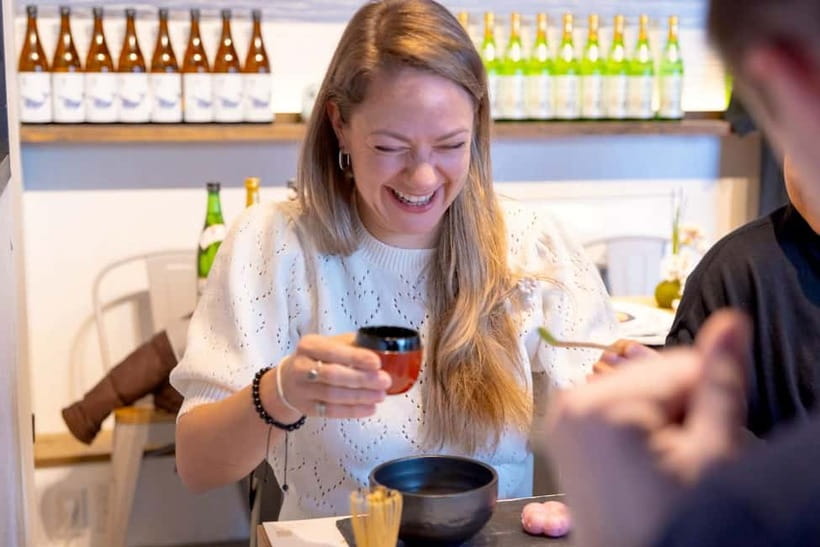
People often think matcha is just powdered green tea. In practice, the drink quality depends on how you mix it. This class focuses on the method you can repeat.
Here is what you can take home as practical understanding, even if you never join a tea ceremony again:
- Texture is the goal: your whisking affects the smoothness and foam.
- Timing and control matter: you learn the rhythm of whisking, not just the tool.
- Serving style changes the experience: sipping right away matters because matcha is meant to be enjoyed fresh.
Because the class is short, the technique you learn is intentionally beginner-friendly. You get enough guidance to feel like you can make a solid cup later at home. In fact, multiple people mention leaving feeling ready to make matcha on their own.
The sweets pairing and why it makes the lesson better
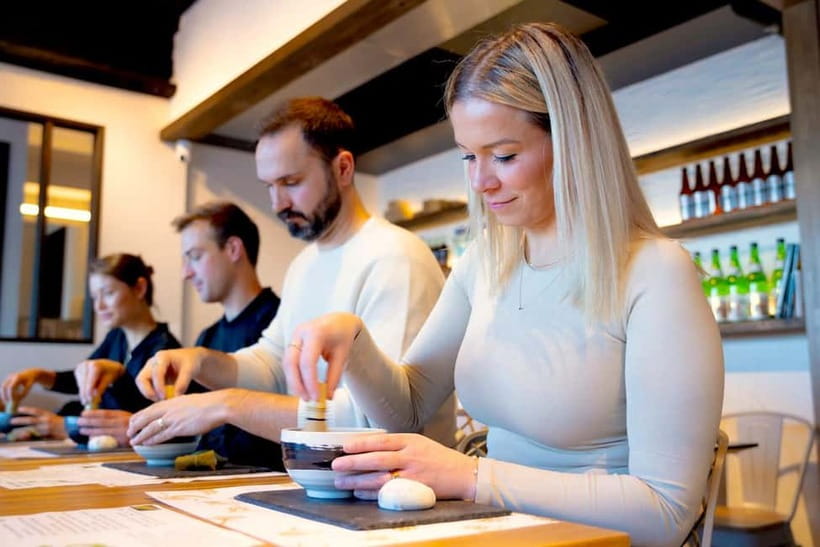
The sweets are not an afterthought. They are part of how Japanese tea culture is often experienced: a balance of flavors, not just one taste.
You are served Japanese sweets alongside your matcha. People describe the pairing as delicious, and the combination helps you understand matcha beyond bitterness and color. With sweets, you get a more complete flavor picture.
One additional detail that stands out: one person specifically notes the matcha is served without sugar. That changes the role of the sweets. Instead of masking flavor, the sweets complement what matcha tastes like naturally. If you enjoy exploring food pairings, you will probably appreciate this structure.
Instructors set the tone: Ken, Mana, Hayato, Hiho, and more
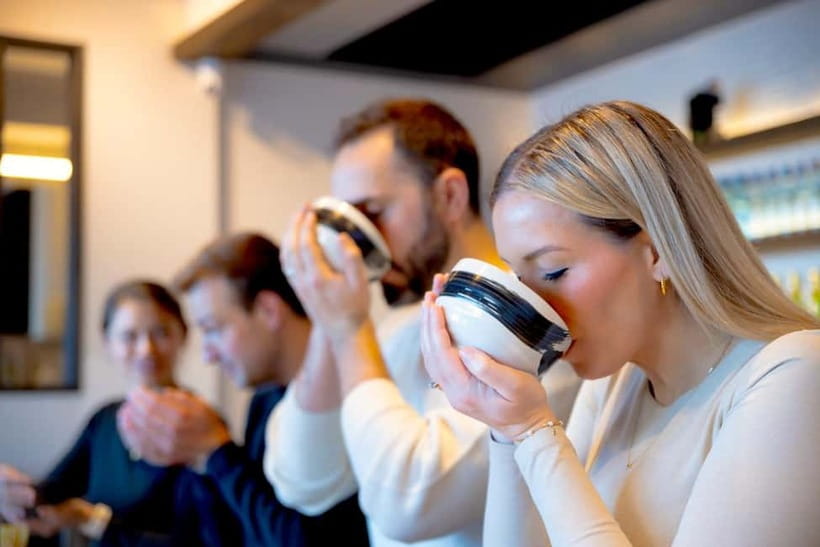
A class like this lives or dies on the guide. Here, the consistency is striking. Many sessions name the instructors and praise their energy, humor, and patient teaching.
Common themes from the class style:
- Interactive teaching so you are not stuck listening the whole time
- Clear English explanations during both technique and tasting
- Humor and personality that makes practice less intimidating
- Comfortable pace for mixed groups, including families
People mention instructors by name, including Ken, Mana, Hayato, Hiho, Honoka, Midori, Moe, and Yui. Even if you do not know who you will get, the important part for you is this: the class is organized so you can participate, ask questions, and still feel relaxed.
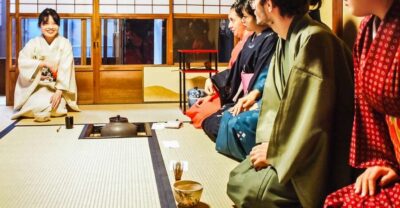
There is also an extra comfort detail that matters for many visitors. One description highlights that the session happens seated, with video support, which can be a big plus if kneeling is uncomfortable for you. So if you want Japanese tea culture without a physical test, this setup may feel much more welcoming.
Price and value: what $22 buys you in Tokyo
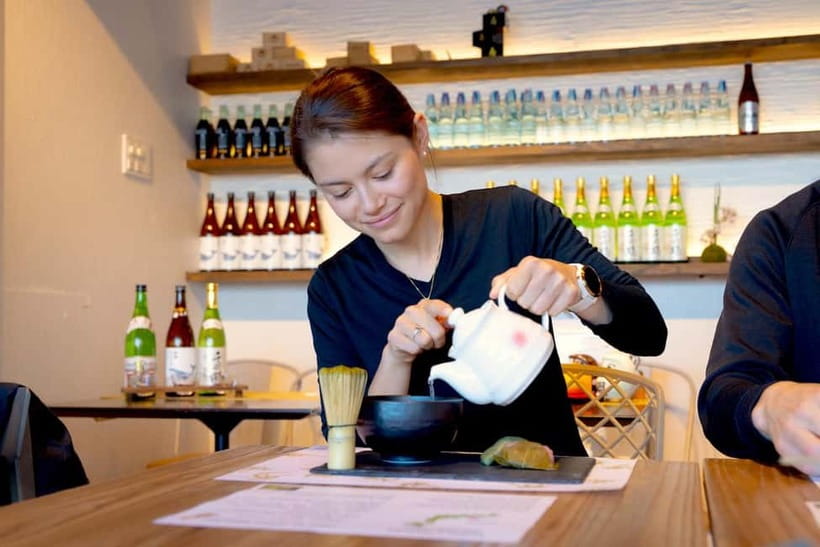
At $22 per person for a 1-hour class, the value comes from three things.
First, you are not paying just for tea. You pay for ingredients, a guided instructor, and the fact that you make and taste your own matcha with sweets. That turns the experience into something you can talk about, not just something you walk by.
Second, you are buying convenience. The meeting point is close to Asakusa Station, which means less time lost on transit. In Tokyo, time is money, and short, well-located activities are often the difference between a good day and a frantic one.
Third, you are buying English support. Language support matters when you are practicing food technique. Multiple people specifically mention the English flow as a reason the class felt easy and educational.
The class also has flexibility built in. You can cancel up to 24 hours in advance for a full refund, and you can reserve now and pay later, meaning you can book without paying today.
With an average rating of 4.9 out of 5 from 388 reviews, this is one of those experiences that consistently delivers for first-timers, not just matcha fans.
Who this matcha making class is best for
This is the type of activity that works across ages and travel styles.
- Families: kids reportedly enjoy the quiz-style history and hands-on whisking.
- Solo travelers: it is described as a social setting where you meet other people, not a private script.
- Food and tea beginners: you get a smooth start with basics you can repeat later.
- Tea ceremony curious visitors: you learn etiquette elements without needing to sign up for a longer, more formal ceremony.
If you are traveling with multiple generations, the structure can help. One account mentions a 74-year-old mom and a 23-year-old son both enjoying the same session. That suggests the pace and teaching style can work well when people have different comfort levels.
If your goal is purely to check a box, you might feel it is too interactive. But if you want something you can do with your hands and taste immediately after, this class fits.
Practical tips so your hour goes smoothly
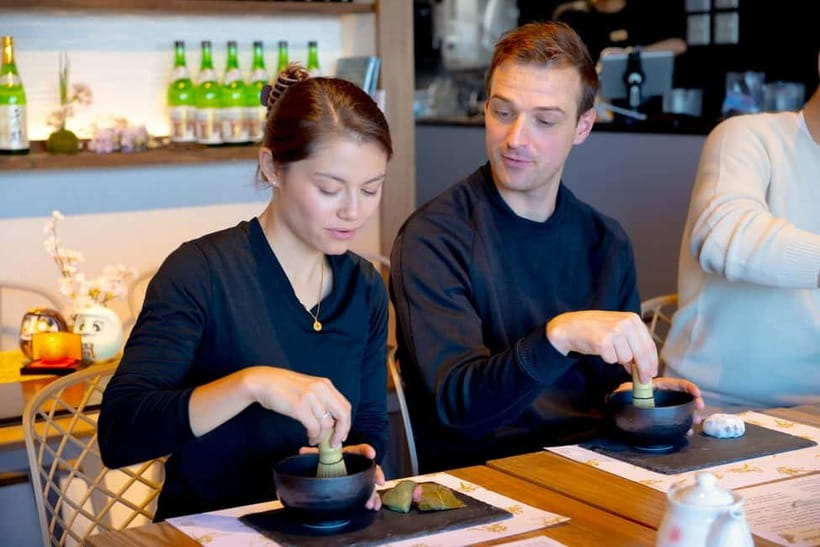
You only have one hour, so prep lightly.
- Arrive a few minutes early so you can find the 6F meeting room without stress.
- Come ready to taste: matcha without sugar means you should expect a more direct tea flavor.
- Be willing to practice: whisking is partly muscle memory. Your first attempt may feel awkward, then it clicks.
- Ask questions while you are making: instructors are praised for English clarity, so use it.
Also, if you are pairing this with a day in Asakusa, put it where it makes sense. A matcha class works well as a mid-morning or early afternoon reset because it gives you energy and a calm, seated break.
Should you book Matcha Making Tokyo in Asakusa?
Book it if you want a genuine first taste of Japanese tea culture, with your hands involved and your drink served right after. This is a smart choice for anyone who wants matcha technique basics, English guidance, and a sweet pairing in a tight one-hour format.
Skip it if you already know the full basics of matcha whisking and want a long, formal ceremony experience. Also, if you dislike interactive activities like quizzes, you may find that part less enjoyable.
For most visitors, though, this class is a great value play: $22 for ingredients, instruction, and an experience you can repeat at home. In Asakusa near Tokyo Skytree, it is also a convenient way to connect with the neighborhood while learning something you can actually do.
FAQ
How long is the matcha making experience?
The class lasts 1 hour.
How much does it cost?
The price is $22 per person.
Where is the meeting point in Asakusa?
You meet 1 minute from Asakusa Station at Relink KAMINARIMON building 6F.
Is the class taught in English?
Yes, the instructor provides English guidance.
What is included in the price?
The cooking class includes ingredients and instruction.
What is not included?
Hotel pickup and drop-off are not included.
Can I get a refund if my plans change?
Yes. You can cancel up to 24 hours in advance for a full refund.
Do I have to pay right away to reserve?
No. You can reserve now and pay later, keeping your travel plans flexible.
Kyoto by the Bowl

Asakusa and the Skytree, Keep Going

Newest Tokyo write-ups from the Loving Japan desk


Kyoto Tea Ceremonies and Matcha, side by side.
 ★ 4.9Tea Ceremony in a Traditional Tea House in KiyomizuFrom $493,519 reviews
 ★ 4.9Tea Ceremony Ju-An at Jotokuji TempleFrom $293,207 reviews
 ★ 4.345-Minute Tea Ceremony Lesson ExperienceFrom $222,378 reviews
 ★ 5.0World Heritage Kyoto & Nara Uji Authentic Matcha ExperienceFrom $1291,573 reviews
 ★ 4.9Tea Ceremony ExperienceFrom $251,426 reviews
 ★ 4.9Table-Style Tea Ceremony at a Kyo-MachiyaFrom $451,211 reviews
 ★ 4.8Kenrokuen Tea Ceremony ExperienceFrom $351,139 reviews
 ★ 5.0Kimono Tea Ceremony at Kyoto Maikoya, NISHIKIFrom $65911 reviews