
REVIEW · NAGOYA AND CENTRAL JAPAN
Gifu Samurai Sword Town;Japanese Damascus Knife Making Experience
Damascus knives start as sparks. In Seki, you get hands-on knife-making guidance from Hiro, Sumi, and Yoshi, then test the edge yourself by cutting fresh vegetables.
You also leave with real sharpening know-how, not just a souvenir.
One drawback to plan for is the location, since the meeting point is a bit away from the busiest tourist grid. Still, the payoff is worth it if you arrive on time and give yourself a little buffer.
In This Review
- Key highlights to know before you go
- Seki’s cutlery roots, and what makes Damascus knife-making special
- Getting there smoothly from Sekitomioka Station (and why timing matters)
- Knife Museum in a Canadian-style log house beside the factory
- Inside the G.SAKAI factory: where “quality” stops being a buzzword
- Your Damascus knife in the atelier: assemble, polish, sharpen, sign
- Testing your edge on fresh vegetables, then learning sharpening for real life
- Picking the right knife: kitchen daily use, hunting portability, or Chinese-style prep
- Price of $250.38, and whether it feels like value or just fun
- Who should book this, and who might want to rethink
- Should you book this Damascus knife workshop in Gifu?
- FAQ
- How long is the Damascus knife making experience?
- What time does the workshop start, and where do I meet?
- Is pickup available?
- How many people are in the group?
- What types of knives can I choose to make?
- What do I do after making the knife?
- Is free cancellation available?
Key highlights to know before you go
- Small group size with a maximum of 5 people for more hands-on attention
- Knife Museum stop in a Canadian-style log house right next to the G.SAKAI factory
- Factory viewing to see how quality Japanese knives are made today
- Atelier crafting time where you assemble, polish, sharpen, and write your name on the blade
- Sharpness test cutting fresh vegetables immediately after finishing
- Sharpening skills you can maintain so the edge stays in good shape for years
Still weighing up options in Gifu Prefecture? These are the ones our reviewers rated highest.
- Private-group Morning Cycling Tour in Hida-Furukawa
★ 5.0 · 105 reviews - Magome & Tsumago Nakasendo Trail Day Hike with Government-Licensed Guide
★ 5.0 · 38 reviews - Explore Kiso Valley : Magome – Tsumago Mountain Trail Walk
★ 5.0 · 33 reviews - Knife Making Experience in Samurai Sword Town
★ 5.0 · 29 reviews
Seki’s cutlery roots, and what makes Damascus knife-making special
If you like the idea of turning craft into something you can actually use every day, this workshop hits the sweet spot. Seki in Gifu Prefecture has been associated with sword and knife making since the 13th century, helped along by iron sand from the Nagaragawa River. By the Edo period, there were hundreds of blacksmiths producing large numbers of Samurai swords and knives.
Today, Seki is often grouped with Sheffield and Solingen as one of the world’s top cutlery-making regions. In this experience, you’re not just watching the process. You’re building a Damascus-style blade and learning what to do after you take it home.
Damascus-style knives are popular because the layered construction creates a striking visual pattern, but the practical point matters more for you. You’ll be taught sharpening basics during the build, so the knife stays sharp beyond the moment you first cut vegetables. That’s the part that makes this feel like education, not just a “make a thing and leave” class.
Getting there smoothly from Sekitomioka Station (and why timing matters)
The workshop starts at 10:30 am at Sekitomioka Station in Hidase, Seki, Gifu. The area is described as near public transportation, so you should be able to connect without a car, but you still need to arrive ready to meet up.
Pickup is offered, which is a big help if you’re staying somewhere awkward for trains or you just don’t want to stress the route. In practice, many people find pickup especially valuable here because the location feels off the beaten track compared with central sightseeing hubs.
Plan around the start time. This is a 2 hours 30 minutes experience, so there’s not much slack built in. If you’re coming from Kyoto for a day trip, the trip time is about 1.5 to 2 hours by train, so you’ll want an early start and an easy return plan. With a workshop like this, you want to arrive fresh, not rushed, so you can focus on the craft.
Knife Museum in a Canadian-style log house beside the factory
Before you touch a knife yourself, you’ll visit the Knife Museum located in a Canadian-style log house next to the G.SAKAI factory. This is one of those stops that quietly sets the mood. The exhibits give you context for how cutlery culture sits inside everyday life in this region.
You’ll see rare items and cutlery displays from around the world. Even if you’re not a hardcore collector, it helps you connect the dots between “this looks cool” and “this is made with serious intent.” It also gives you something to do while your brain shifts into maker mode, rather than jumping straight into tools.
The museum is also a nice pacing reset. After you look around, you head into the factory, where the process becomes more real and less display-focused. That flow matters, because by the time you reach the atelier, you understand what you’re trying to produce and why.
A small practical note: since it’s next to a working factory area, you’ll likely feel like you’re in a working neighborhood more than a traditional temple-and-gate sightseeing zone. If you enjoy industry sites, you’ll probably love this. If you prefer only scenic landmarks, you’ll still get something worthwhile here, but your expectations should be craft-first.
Inside the G.SAKAI factory: where “quality” stops being a buzzword
Next comes the factory visit. You’ll see how quality Japanese knives are made nowadays, which is the part that makes the entire experience feel grounded. You’re not just learning a technique, you’re learning the production mindset behind the technique.
G.SAKAI is presented as a leading Japanese knife producer with trade partners around the world. The knives are used across practical fields like cookery, hunting, and outdoor sports. That matters for your expectations because it signals you’re dealing with tools designed for real use, not just decorative objects.
As you watch the process, pay attention to how the workshop frames the idea of quality. You’ll hear, directly, the kind of standards makers aim for, especially around the cutting edge and how it performs. That connection becomes important later when you do the sharpening lesson and the fresh-vegetable test.
One thing I liked about this part of the day is that it helps you understand what you’re about to do with your own knife. The atelier portion can feel like “a lot of steps,” but once you’ve seen manufacturing principles in motion, the process becomes less mysterious and more logical.
Your Damascus knife in the atelier: assemble, polish, sharpen, sign
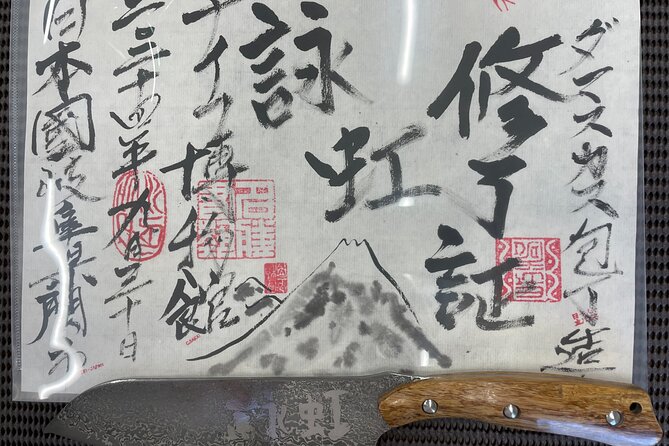
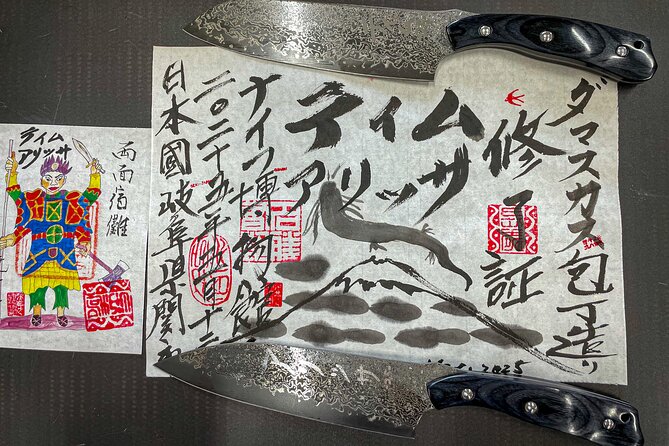
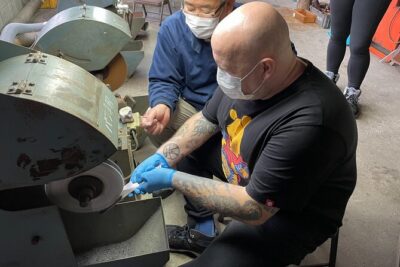
This is the heart of the experience. In the atelier, you construct your own knife in a guided process that includes assembling, polishing, sharpening, and writing your name on it with the knife craftsman.
For you, the big value isn’t only that you leave with a blade. It’s that you learn what each step is trying to achieve. Polishing isn’t just cosmetic. It’s tied to how the surface and edge behave. Sharpening isn’t just “get it sharp.” You’re learning how to keep that sharpness from fading quickly after a few uses.
Because the group is capped at 5 travelers, you’re not stuck in a crowd where you watch while other people work. The vibe is more like a small workshop table, with your attention pulled toward the task. That also makes it easier to ask questions about sharpening and care in plain terms.
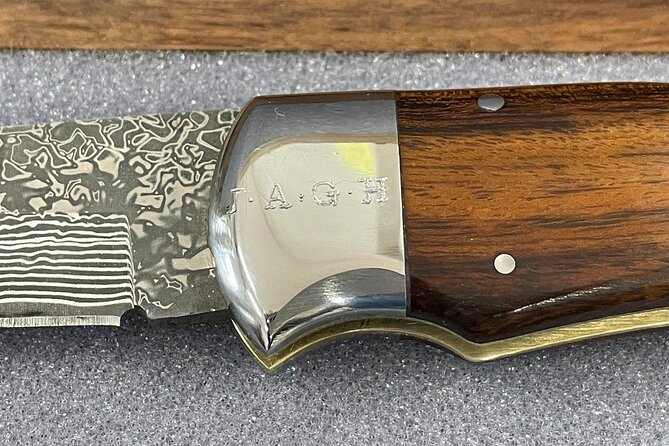
Writing your name on the knife is a small detail, but it turns the finished blade into something personal. You’re not just paying for a pattern and a handle. You’re taking ownership of the craft, which is the kind of souvenir that actually has meaning later when you’re cooking, prepping, or heading outdoors.
Also, you get to choose what you’re making. That choice shapes the whole experience, because the right knife for your habits is the one you’ll enjoy using long after the class.
Testing your edge on fresh vegetables, then learning sharpening for real life
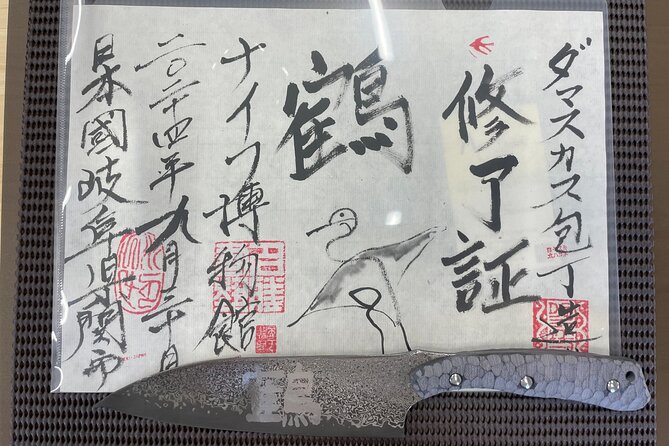
Once the knife is completed, you’ll test its sharpness by cutting fresh vegetables. This is one of the best moments in the day because you get immediate feedback. You can see how the blade performs, right away, in a way that feels more honest than theoretical explanations.
That sharpness test does two useful things. First, it confirms the work you just did. Second, it connects the workshop to your kitchen or your prep routine at home. Cutting vegetables is basic, but it’s exactly the kind of test that reveals edge quality fast.
After that, you learn the art of sharpening throughout the knife-making process. The goal is simple: you’ll understand how to maintain a razor-sharp edge so your knife stays in prime condition for years. You’re not being asked to memorize a ritual. You’re learning the skill so you can make sense of sharpening when you’re not in the workshop.
Here’s how to think about this as a buyer. If you already know you’ll eventually sharpen your own knives, the sharpening instruction makes the price feel more fair because you’re getting long-term value. If you’ve never sharpened before, this lesson reduces the fear factor. It turns “I should take care of this knife” into “I know what to do, and I know why.”
And yes, it’s normal if you’re surprised by how sharp the knife is at the test stage. That moment is a big part of why people call it a highlight.
Picking the right knife: kitchen daily use, hunting portability, or Chinese-style prep
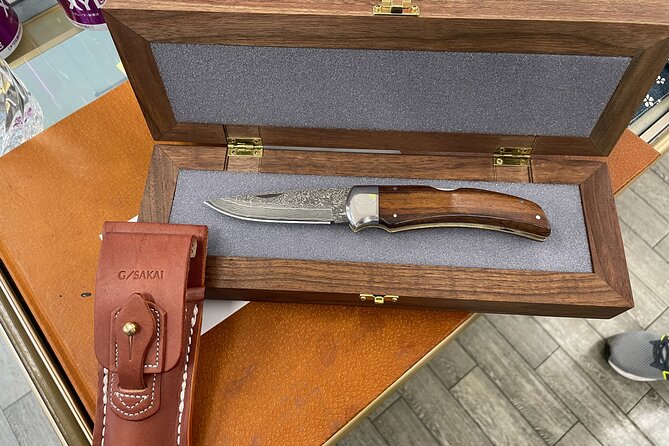
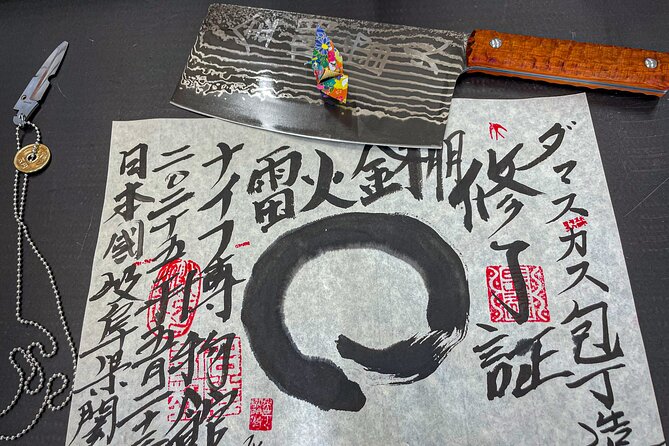
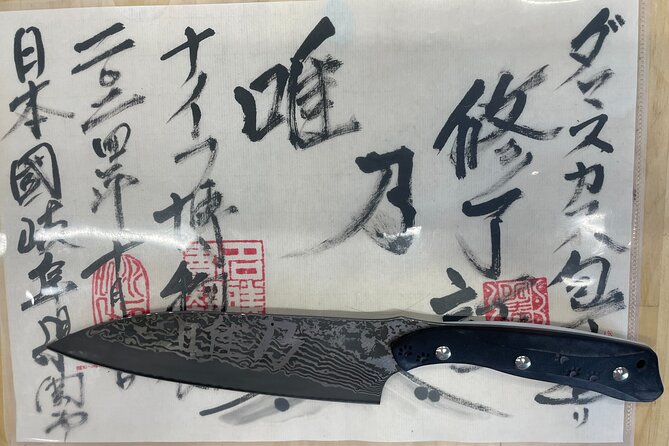
You’ll choose from three distinct types of knives, each aimed at a different use case. This is where you should match the choice to your habits, not just what looks coolest in the workshop photos.
Japanese Damascus Kitchen Knife
This is for everyday culinary use. If you mostly cook at home and want one knife that covers a lot of routine tasks, this is the safest, most practical choice.
Folding Damascus Hunting Knife
This is the portable option for outdoor enthusiasts. If you like the idea of a compact tool you can bring along, folding design plus Damascus style is a combination that feels made for the outdoors.
Chinese Damascus Kitchen Knife
This one is described as ideal for traditional Chinese cooking techniques. If you cook in that style and your knife setup matters for technique, this option lines up with what you’re trying to do.
Prices vary based on the type of knife you choose. That means your total cost is really tied to how specialized you want your end product to be. If you choose the knife type that fits how you’ll actually use it, you’ll feel the value more strongly later.
My practical advice: don’t decide based on pattern alone. Decide based on your routine. A knife you love using is worth more than a knife you keep in a drawer because it doesn’t match your cooking style.
Price of $250.38, and whether it feels like value or just fun
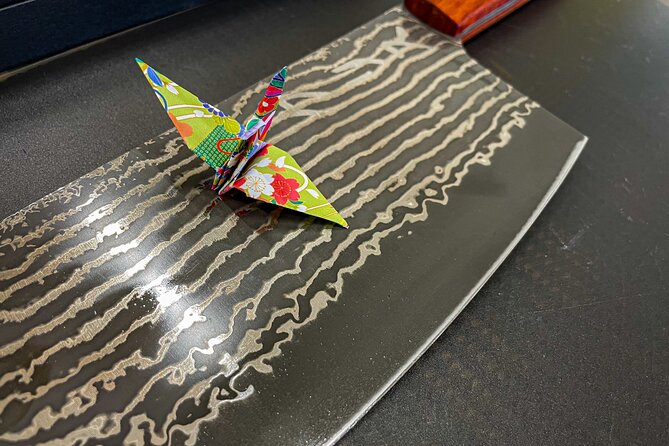
At $250.38 per person for about 2 hours 30 minutes, this sits in the “serious workshop” category. The key question is what you get beyond the final blade.
You get a guided build in the atelier, plus access to the Knife Museum in a Canadian-style log house, plus a factory visit to see how knives are made today. Then you get a sharpness test on fresh vegetables. Finally, you get sharpening instruction designed to help you maintain the edge for years.
So the price is paying for several types of value at once:
- Material and craftsmanship that ends with a usable knife
- Time with craftsmen instead of a fast demonstration
- Skill transfer through sharpening learning
- Context and access through museum and factory stops
If you only wanted a Damascus-pattern knife as a souvenir, you might compare prices elsewhere and feel the workshop is expensive. If you want a functional knife plus the skills to keep it working, this feels much more like a fair deal.
Also, the group size matters. A maximum of 5 travelers usually means more direct attention. When the class includes both making and instruction, that smaller group is part of the value.
Who should book this, and who might want to rethink
This is a great fit if you like hands-on crafting, want a high-use object at the end, and actually care about learning a skill you can keep using. It also works well for people who enjoy seeing how products are made, not only admiring the final item.
It’s especially good for:
- Home cooks who want a Damascus kitchen knife with sharpening basics
- Outdoor-minded folks who prefer a folding style for portability
- Anyone who wants a meaningful workshop experience, guided by people like Hiro, Sumi, and Yoshi who keep the day friendly and clear
You might rethink it if you’re mainly looking for classic tourist sightseeing or only want big scenic photo moments. This is a craft day. It’s still fascinating, but the focus is on making and testing blades, not on temples and street views.
Should you book this Damascus knife workshop in Gifu?
If you want a souvenir you’ll use, plus a real skill you can take home, I think this is a strong yes. The combo of museum context, factory viewing, and atelier crafting makes the experience feel complete. Then the sharpness test on fresh vegetables seals it.
Book it if you:
- Plan a day around the 10:30 am start
- Can get to Sekitomioka Station on time, or use the pickup option
- Choose the knife type that matches how you’ll actually cook or go outdoors
Skip it if you:
- Only want passive sightseeing
- Are short on time and can’t comfortably fit a 2.5-hour workshop day trip from Kyoto area timing
For most people who like craft, tools, and learning, this workshop delivers the kind of “I can’t believe I made this” memory that stays useful long after you leave Seki.
FAQ
How long is the Damascus knife making experience?
It runs for about 2 hours 30 minutes.
What time does the workshop start, and where do I meet?
It starts at 10:30 am at Sekitomioka Station in Hidase, Seki, Gifu 501-3911, Japan.
Is pickup available?
Yes, pickup is offered.
How many people are in the group?
The group size is limited to a maximum of 5 travelers.
What types of knives can I choose to make?
You can choose from three options: a Japanese Damascus kitchen knife, a folding Damascus hunting knife, or a Chinese Damascus kitchen knife. The price varies based on the type you select.
What do I do after making the knife?
After completing your knife, you test its sharpness by cutting fresh vegetables. You also learn sharpening skills during the process so you can maintain the edge later.
Is free cancellation available?
Yes. You can cancel up to 24 hours in advance for a full refund. If you cancel less than 24 hours before the start time, the amount paid is not refunded.
Blade Work and Stagecraft
Newest Gifu Prefecture write-ups from the Loving Japan desk

Nagoya and Central Japan, side by side.
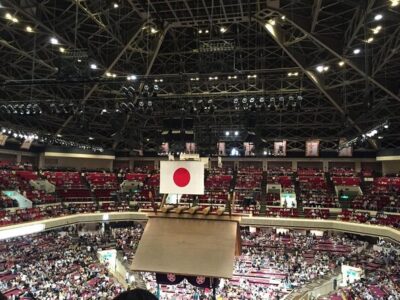 ★ 5.0Ultimate Sumo Tournament: Tokyo, Osaka, Nagoya, FukuokaFrom $184468 reviews
 ★ 4.4From Nagoya: Gujo, Hida Takayama, and Shirakawa-go Day TourFrom $61398 reviews
 ★ 4.5Ghibli Park 1-Day Bus Tour from NagoyaFrom $179277 reviews
 ★ 4.5From Nagoya: Hida Takayama & Shirakawa-go Tour w/Opt. LunchFrom $61256 reviews
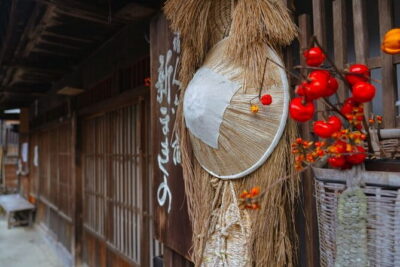 ★ 5.0Hiking the Historic Nakasendo Trail [1 Day Tour from Nagoya]From $210104 reviews
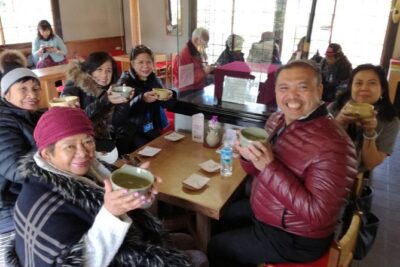 ★ 5.0Nagoya Highlight Tour guided by a friendly localFrom $11286 reviews
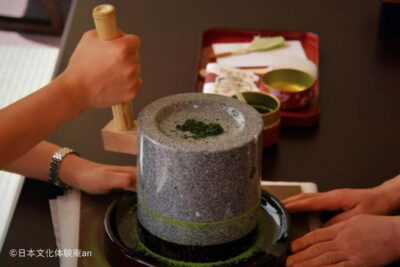 ★ 4.9Japanese Traditional Sweets making and Tea CeremonyFrom $1876 reviews
 ★ 4.6Magome-juku, Tsumago-juku & Ena-kyo 1d Bus Tour from NagoyaFrom $6175 reviews