
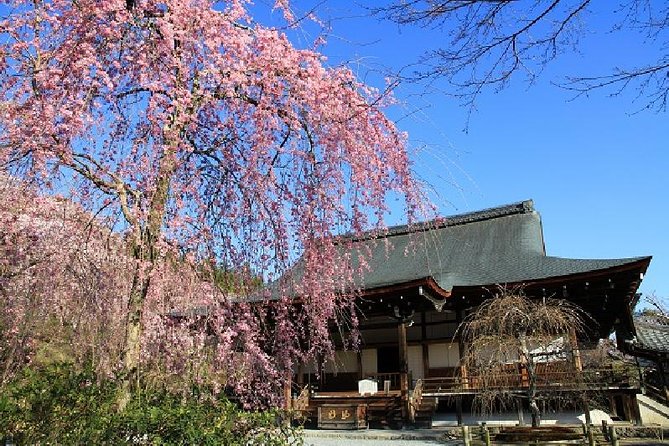
REVIEW · ARASHIYAMA AND THE BAMBOO GROVE
Half Day Kyoto Sagano Bamboo Grove & Arashiyama Walking Tour
Bamboo sounds like a spa day in Kyoto. This half-day walking tour strings together Sagano’s bamboo grove, Kyoto’s top Zen temple stop, and river-and-bridge scenery so your time feels full without being exhausting. It is built for a calm morning outside the city core, with a clear route and entrance fees handled for you.
Two things I really like: first, you do not just walk through bamboo, you also get the temple context at Tenryu-ji, plus the quieter hillside stop at Jojakko-ji. Second, the best guides on this format, including people named Sachiko and Donna in past departures, tend to explain what you are seeing in plain English, not just recite dates.
One possible drawback to plan around: this is public-transport based and group sizes can feel crowded at peak times. You are also doing a mix of walking and stairs, so it is not the best match for anyone who hates hills or knee-jarring steps.
In This Review
- Key highlights that make this tour worth your time
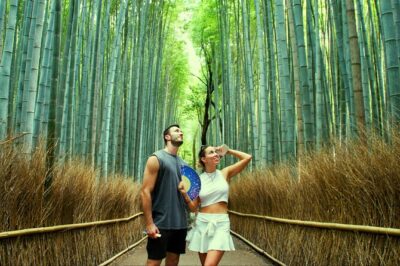
- Sagano bamboo grove, the 3-km goal that feels longer
- Tenryu-ji Temple and its garden design you should not rush
- Jojakko-ji on the hillside: small, quiet, and cinematic
- Togetsukyo Bridge, then a yakatabune breather over the Hozu River
- Getting there and back without losing half your day
- Price and value: what $79.26 buys you in real life
- What the group pacing means for your comfort
- Who should book this Sagano and Arashiyama half-day
- Should you book it?
- FAQ
- How long is the Half Day Kyoto Sagano Bamboo Grove & Arashiyama Walking Tour?
- What walking distance should I expect?
- What is included in the price?
- Is Jojakko-ji Temple always part of the itinerary?
- Do we ride a yakatabune boat?
- Where does the tour start and end?
- Can I get a refund if I cancel?
Key highlights that make this tour worth your time
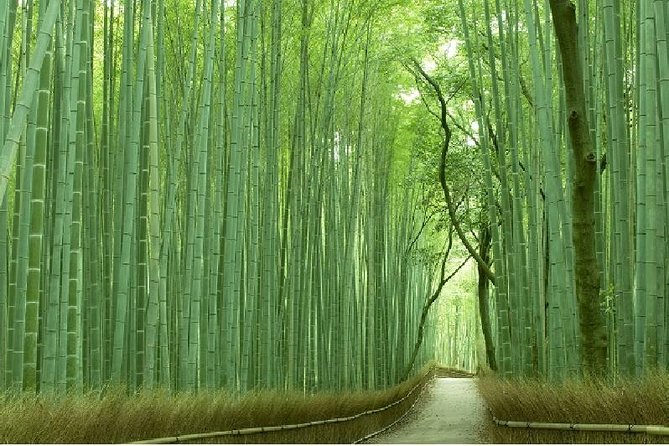
- Sagano bamboo grove walk with a guided pace, so you see more than just the postcard strip
- Tenryu-ji Temple plus its garden design, tied to the Rinzai Zen tradition and the Arashiyama scenery
- Jojakko-ji on a hillside with Heike-era connections, and chances to spot the Jizo statue and a hidden pagoda
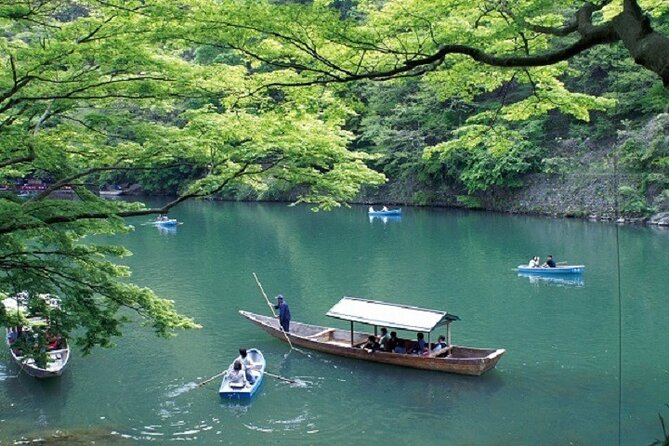
- Togetsukyo Bridge views over the Hozu River, plus time for scenery from a yakatabune boat
- Up to 25 people, with past departures ranging from small-feeling to busy, so timing and your expectations matter
Still in Arashiyama? Keep going west
- Kyoto: Fushimi Inari, Kinkakuji, Bamboo Grove 1 Day Bus Tour
★ 4.8 · 4,316 reviews - Osaka/Kyoto:Kinkakuji,Arashiyama,FushimiInariShrine,NaraPark
★ 4.1 · 1,596 reviews - Kyoto/Osaka: Nara, Fushimi Inari Taisha, Arashiyama Bus Tour
★ 4.7 · 1,275 reviews - Kyoto Arashiyama Walking Tour: Bamboo, Monkeys, Gardens & Secrets
★ 5.0 · 1,216 reviews
Sagano bamboo grove, the 3-km goal that feels longer
This tour starts by getting you from Kyoto Station to the Sagano-Arashiyama area using public transport. Seats on the train are non-reserved, so when it is busy you might stand. It is normal. Just pack for it: comfy shoes, water, and a quick way to keep your phone charged.
Once you reach Sagano, the main show begins with a bamboo grove stroll of about 2 miles (3 km is the full walking total for the tour). The route is short on paper, but bamboo + crowds + uneven footpaths can slow you down. I like this format because it is long enough to get your bearings and soak up the atmosphere, but short enough that you still arrive at the temples feeling human.
Here is the trick: bamboo looks best when you pause. Do not treat it like a sprint for photos. Let the grove’s calm reset your pace before you move into the temple stops, because temples in Japan reward a slower rhythm.
Tenryu-ji Temple and its garden design you should not rush
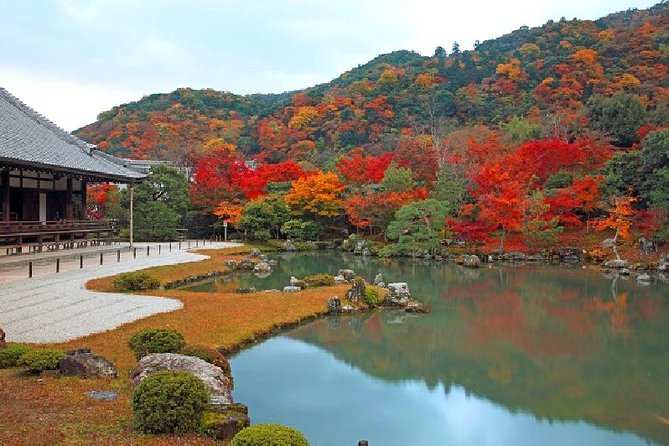
Tenryu-ji is one of the anchors of Arashiyama. The tour spends about 30 minutes here, and that is enough time if you focus on the garden layout rather than trying to see every corner.
Tenryu-ji dates to 1339, linked to the Ashikaga Shogunate and the Rinzai Zen school. You will likely hear how the garden design has a surviving structure close to its original intent. That matters because it is not just pretty greenery, it is a composed viewing experience. When you understand the logic of the garden paths and sightlines, the place stops feeling like a park and starts feeling like a spiritual tool for attention.
What to do in your 30 minutes:
- Walk to a viewpoint where you can take in the garden composition, then let your eyes rest.
- Look for how the garden connects visually to Arashiyama scenery, since the setting is part of the design.
- If your guide is talkative, ask one follow-up question. This stop benefits from a little human context.
A plus here, based on guide performance: the strongest departures tend to turn temple visits into stories you can remember, with clear English and practical pointers for what to look for next.
Jojakko-ji on the hillside: small, quiet, and cinematic
Jojakko-ji is the kind of stop you expect in a movie, not a schedule. It sits in wooded hills on a mountainside, and it is known for panoramic views over Sagano and toward Kyoto.
You will spend around 30 minutes here. That is not a lot, but the place is not designed for marathon touring. It is built for stillness. The tour focuses your attention on the most important visual cues: a statue linked to Jojakko-ji and a pagoda tucked away among the trees. You may also hear about its connection to the Tale of the Heike, a classic Japanese work that tells a story involving Empress Dowager Kenrei-mon-in, who is said to have lived at the site.
Season matters for this stop. In autumn, Jojakko-ji is known for a dramatic color display, with hillside maple scenes that can feel almost 360-degree. Even if you are not visiting in peak leaf season, the “forest temple” feel comes through year-round.
Important seasonal note: during July and September, the Jojakko-ji visit is not part of the itinerary. The tour changes to an Okochi Sanso Villa Garden stop instead. If you are traveling in summer and you specifically want Jojakko-ji, double-check dates when you book.
- PERFECT KYOTO 1-Day Bus Tour★ 5.0 · 13,518 reviews
- Kyoto: Fushimi Inari, Kinkakuji, Bamboo Grove 1 Day Bus Tour★ 4.8 · 4,316 reviews
- Kyoto: Tea Ceremony in a Traditional Tea House in Kiyomizu★ 4.9 · 3,519 reviews
- Kyoto Geisha Walking Tour: Gion District & Hidden Gems★ 4.7 · 3,273 reviews
- Kyoto: Tea Ceremony Ju-An at Jotokuji Temple★ 4.9 · 3,207 reviews
Togetsukyo Bridge, then a yakatabune breather over the Hozu River
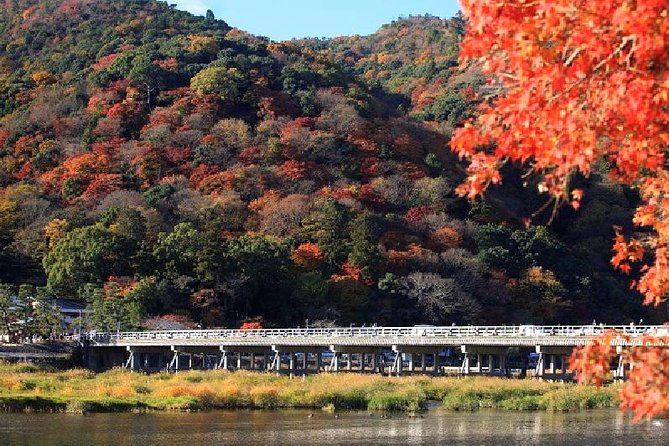
After the hillside temple, you end with Togetsukyo Bridge, also known as the Crossing Moon Bridge. The bridge is about 250 meters long, and it is one of those Kyoto scenes that photographers swarm for good reason.
The tour pairs the bridge views with a yakatabune boat ride. This is a big deal for your comfort. Walking tours can wear you down, and the boat gives you a break while still keeping the scenery moving. You will be looking at the Hozu River below and forest-covered hills beyond. That combination is why this area feels special compared to other temple districts.
One thing I value about this structure is the pacing: you finish with something scenic instead of finishing with another intense climb. By the time you reach the bridge, your brain is warmed up by bamboo and temples, so the river-and-hills views land as a payoff rather than a repeat of earlier walking effort.
Also, the bridge area is a prime time for seasonal photos. Togetsukyo is associated with cherry blossoms in spring and autumn leaves later on. Even if you cannot plan your exact day for peak bloom, you will get the classic framing: stone bridge, moving river, layered hills.
Getting there and back without losing half your day
This is a half-day tour, but it is still rooted in real Kyoto logistics. You start at a JTB Sunrise Tours desk in Kyoto and you head to the Arashiyama-Sagano side by public transport with non-reserved seats. That means:
- You might need to stand during busy commuting hours.
- The order of stops can shift based on road conditions and congestion.
On the way back, the tour ends at Kyoto Station. From a practical standpoint, that is great. It keeps you from doing extra transportation juggling mid-day. If you plan your afternoon well, you can either rest or add another nearby activity without rethinking the whole route.
The max group size is 25. Past departures have felt smaller on some dates, and more crowded on others. Your best move is to treat the experience as a balance: accept that you may be walking with a group, but do not assume it will always be quiet.
Price and value: what $79.26 buys you in real life
The price is $79.26 per person for about 4 hours. That sounds like a lot until you look at what you are actually getting.
You are paying for:
- A national government licensed English guide interpreter fee
- Entrance fees for the included sights
- Transportation costs within the tour plan
So you are not just buying a route map. You are buying reduced friction. Kyoto’s big sightseeing zones are spread out, ticket lines and entrance fees add up, and language barriers can cost time. Here, those costs are mostly bundled.
Where you might spend extra is simple: anything not listed as included, plus snacks and any personal add-ons you choose after the tour. If you are using a rail pass, one important heads-up from past experiences: the tour may ask you to use your JR pass for the Kyoto to Arashiyama leg, and some people reported they did not receive a rebate. If this matters for your budget, ask before you go so you are not surprised.
What the group pacing means for your comfort
Because this is a walking tour with short stops, pacing is everything.
The tour is designed for moderate physical fitness and includes stairs. Even though the total walking distance is about 3 km, the temple-and-hillside setting can make that feel longer. If you have limited mobility or you struggle with stairs, this is the part you should worry about.
On the other hand, the schedule is efficient. You do not waste hours between major sights. You also get a guide flow that reduces decision fatigue. That is a real value in Kyoto, where it is easy to wander into the wrong side street and lose time.
Guide quality can vary by date. Some departures are reported as very smooth, with strong explanations and good encouragement to explore. Other departures have been described as less commentary-heavy or slightly chaotic when people went off-route. Your best safeguard is to stay close during the regroup points and keep an eye on where your guide wants everyone to meet.
If you like to move at your own speed, ask your guide near the end if there is a good nearby spot to add on after the tour. People have used this time to chase extra sights on their own, such as viewpoints and local treats.
Who should book this Sagano and Arashiyama half-day
Book it if you want:
- A first-timer friendly Arashiyama sampler that still includes real temple garden time
- A short bamboo-and-temple morning with a scenic finish on Togetsukyo Bridge
- Entrance fees handled and an English guide to translate meaning, not just directions
You might skip it if:
- You hate crowds and you want solitude. Even with a smaller group, this area gets busy fast.
- You cannot handle stairs and uneven walking surfaces.
- You expect a fully flexible, wander-at-will style with no regrouping.
This tour is also great for travelers who want an efficient plan that still leaves room after the tour. It ends at Kyoto Station, so you can pivot quickly based on weather and energy.
Should you book it?
I would book this tour if your goal is a balanced morning: bamboo grove atmosphere, Tenryu-ji garden focus, a hillside temple pause, and then river views plus a yakatabune break. The value is strongest when you want the route and entrance fees bundled and when you appreciate guided context for temples.
If your priority is maximum quiet, go early in the day if you can, and accept that even peaceful places can feel crowded in peak seasons. And if you are traveling with tight mobility needs, plan for stairs and choose comfortable footwear without hesitation.
FAQ
How long is the Half Day Kyoto Sagano Bamboo Grove & Arashiyama Walking Tour?
It runs for about 4 hours.
What walking distance should I expect?
The tour involves walking with a total distance of approximately 3 km and includes stairs. It is described as moderate physical fitness.
What is included in the price?
The price includes a national government licensed English guide interpreter fee, other admission fees, and transportation costs connected to the tour.
Is Jojakko-ji Temple always part of the itinerary?
No. During July and September, the itinerary does not include Jojakko-ji Temple, and part of the route changes to an Okochi Sanso Villa Garden visit instead.
Do we ride a yakatabune boat?
Yes. You enjoy the scenery of Togetsukyo Bridge and Arashiyama from aboard the yakatabune.
Where does the tour start and end?
The tour starts at the JTB Sunrise Tours desk Kyoto and ends upon arrival at Kyoto Station. You proceed to your next destination independently after the tour ends.
Can I get a refund if I cancel?
Yes, free cancellation is available. You can cancel up to 24 hours in advance of the experience start time for a full refund.
Further Into Arashiyama

Newest Kyoto write-ups from the Loving Japan desk
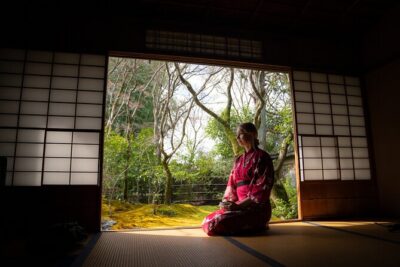
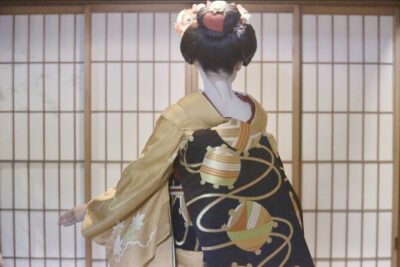
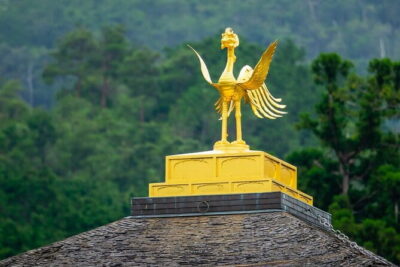

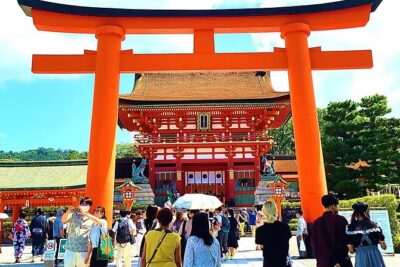
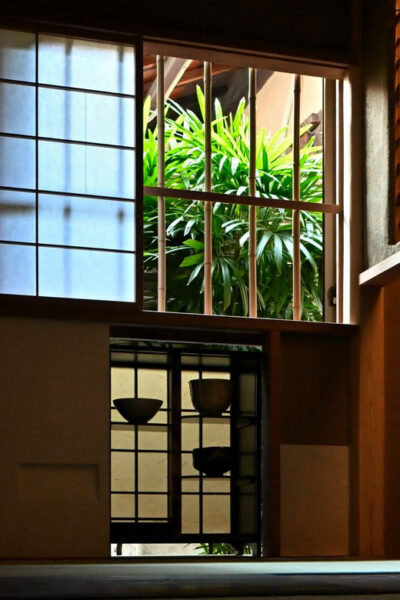
Arashiyama and the Bamboo Grove, side by side.
 ★ 4.8Fushimi Inari, Kinkakuji, Bamboo Grove 1 Day Bus TourFrom $1224,316 reviews
 ★ 4.1Osaka/Kyoto:Kinkakuji,Arashiyama,FushimiInariShrine,NaraParkFrom $661,596 reviews
 ★ 4.7Kyoto/Osaka: Nara, Fushimi Inari Taisha, Arashiyama Bus TourFrom $521,275 reviews
 ★ 5.0Kyoto Arashiyama Walking Tour: Bamboo, Monkeys, Gardens & SecretsFrom $651,216 reviews
 ★ 4.8Arashiyama Bamboo, Temple, Monkeys, or Secret Sake BreweryFrom $87886 reviews
 ★ 5.0Arashiyama Bamboo Forest, Monkeys, Matcha & Temple TourFrom $53759 reviews
 ★ 4.4Osaka/Kyoto: Arashiyama, Nara & Fushimi Inari Shrine w/LunchFrom $61754 reviews
 ★ 5.0Nijo, Kinkaku-ji, Arashiyama, Kiyomizu & Fushimi InariFrom $51699 reviews
Filed on these lists too