
REVIEW · ARASHIYAMA AND THE BAMBOO GROVE
Kyoto: Arashiyama Bamboo Forest, Monkeys, Matcha & Temple Tour
Quiet Arashiyama has a way of resetting your day. This half-day walk strings together Zen calm, Kyoto nature, and a real wild-animal finale in Monkey Park Iwatayama. You’ll hit Tenryu-ji first, then slip into the bamboo grove, cross Togetsu-kyo Bridge, stop at Nonomiya Shrine, and finish with macaques plus panoramic city views.
I love how this tour stacks major Arashiyama sights without feeling like you’re rushing from one box to the next. The included Tenryu-ji entry and Uji matcha drink add real value, and the guides are repeatedly praised for keeping the day moving with good timing and breaks.
One heads-up: the Monkey Park segment includes an uphill climb, and it can be a lot if your mobility is limited or if weather is slippery. If you’re worried, plan to take it slow and wear proper shoes.
In This Review
- Key things that make this tour special
- Why Arashiyama feels different on foot
- The meeting point, timing, and pacing you can plan around
- Tenryu-ji Temple: UNESCO calm and garden photography
- Arashiyama Bamboo Forest walk: the quiet between the crowds
- Nonomiya Shrine: mossy woods and older rituals
- Togetsu-kyo Bridge: the iconic photo stop done right
- Monkey Park Iwatayama: wild macaques and Kyoto city views
- Matcha break with Uji tea: a practical reset
- Guides, group size, and why explanations change everything
- Price and value: why $53.06 can be a bargain in Kyoto
- What to wear and how to prepare (so the day feels easy)
- Who should book this tour, and who might skip it
- Should you book Kyoto: Arashiyama Bamboo Forest, Monkeys, Matcha and Temple Tour?
- FAQ
- How long is the Arashiyama tour?
- Is the Tenryu-ji Temple ticket included?
- What is included besides the temple and park entrances?
- Where does the tour start and end?
- Do I need a ticket for the bamboo forest or Togetsukyo Bridge?
- Is this tour good for first-time visitors to Kyoto?
- What group size should I expect?
- What is the cancellation policy?
Key things that make this tour special
- Tenryu-ji Temple, UNESCO Zen gardens with time set aside for reflections and seasonal views
- Arashiyama Bamboo Forest as a quick, atmospheric reset from temple quiet
- Monkey Park Iwatayama climb for wild Japanese macaques and wide Kyoto panoramas
- Togetsu-kyo Bridge for iconic river-and-mountain photos without needing extra tickets
- Uji matcha drink included, a practical cultural break that keeps energy steady
- Small group size (max 15) helps you stay together on a walking day
Still in Arashiyama? Keep going west
- Kyoto: Fushimi Inari, Kinkakuji, Bamboo Grove 1 Day Bus Tour
★ 4.8 · 4,316 reviews - Osaka/Kyoto:Kinkakuji,Arashiyama,FushimiInariShrine,NaraPark
★ 4.1 · 1,596 reviews - Kyoto/Osaka: Nara, Fushimi Inari Taisha, Arashiyama Bus Tour
★ 4.7 · 1,275 reviews - Kyoto Arashiyama Walking Tour: Bamboo, Monkeys, Gardens & Secrets
★ 5.0 · 1,216 reviews
Why Arashiyama feels different on foot
Arashiyama is famous, but it’s also easy to experience it the wrong way, by treating it like a checklist and spending most of your time in crowd flow. This tour is designed as a walking loop through the district’s most recognizable layers: temple stillness, bamboo atmosphere, shrine history, bridge views, and then the hill climb to Monkey Park.
That structure matters because each stop shifts your pace and your senses. Tenryu-ji slows you down. The bamboo grove changes the soundscape, with wind moving through tall stalks. The river gives you breathing room, then the climb adds payoff in the form of Kyoto spreads out below you.
The meeting point, timing, and pacing you can plan around
You start and end at TULLY’S COFFEE at Randen Arashiyama Station (Shop 20-2, Sagatenryūji Tsukurimichichō, Ukyo Ward). It’s a handy anchor point because it’s near public transportation, so you’re not locked into complicated local transfers.
Expect about 4 to 4.5 hours total. The stop lengths are short enough to keep things lively, but long enough that you’re not just standing and taking one photo. In reviews, people often call out that the guide broke up the walking time, including breaks and bathroom stops. That’s not a small detail in Kyoto, where heat, crowds, and long lines can quietly drain your day.
One practical consideration: there’s a comment about a late start when someone arrived after the scheduled time. That’s not guaranteed, but if you have a tight next plan later that day, give yourself a buffer.
Tenryu-ji Temple: UNESCO calm and garden photography
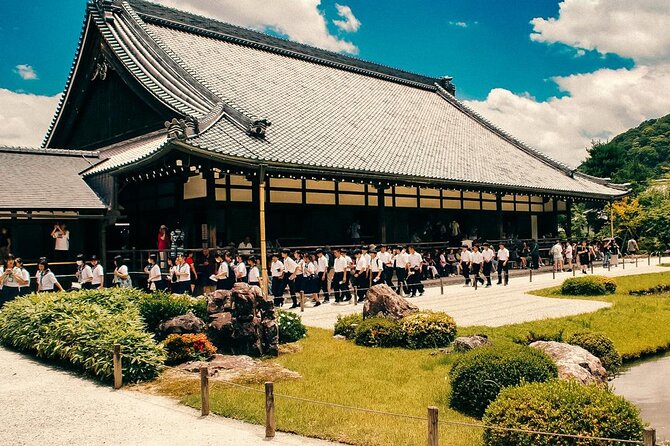
Tenryu-ji is the kind of place where you feel the layout before you even read a sign. This tour gives you about 30 minutes, with entry included, so you’re not paying extra at the gate and you’re not stuck making last-minute decisions.
What you’re looking for here is the Zen garden experience. People mention the meditation vibe, plus pond reflections and seasonal colors. If you like gardens that change your angle of view, this stop is a great start because it sets a visual baseline for the day. After Tenryu-ji, everything else in Arashiyama feels like a natural extension, not a random assortment of sights.
How to get more out of your short time:
- Pause at the garden focal points rather than moving every 30 seconds.
- Take a couple of photos, then look again without the camera. You’ll notice reflections and composition more on the second pass.
- Keep an eye on your timing so you don’t lose momentum before the bamboo forest.
Sit down somewhere quieter. Other tea rooms we booked
- Kyoto: Tea Ceremony Ju-An at Jotokuji Temple★ 4.9 · 3,207 reviews
- Kyoto: 45-Minute Tea Ceremony Lesson Experience★ 4.3 · 2,378 reviews
- Kyoto: Table-Style Tea Ceremony at a Kyo-Machiya★ 4.9 · 1,211 reviews
- Kimono Tea Ceremony at Kyoto Maikoya, NISHIKI★ 5.0 · 911 reviews
- Kyoto: Arashiyama Bamboo Forest, Monkeys, Matcha & Temple Tour★ 5.0 · 759 reviews
Arashiyama Bamboo Forest walk: the quiet between the crowds
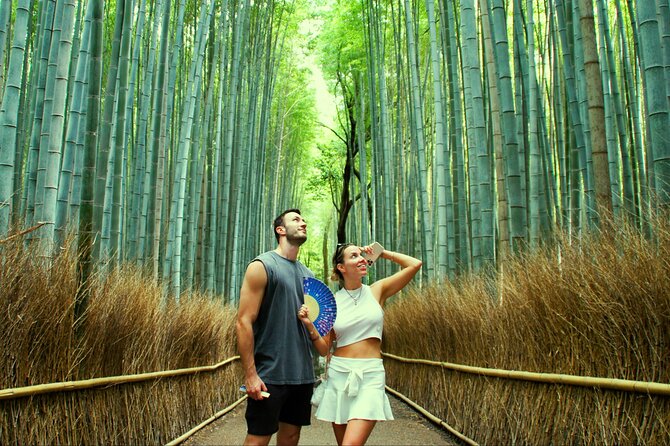
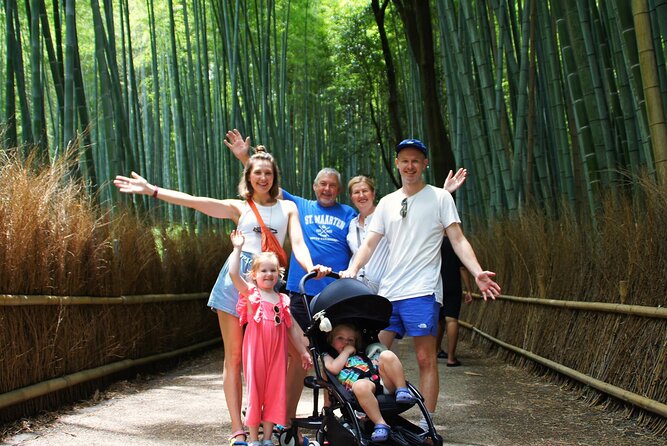
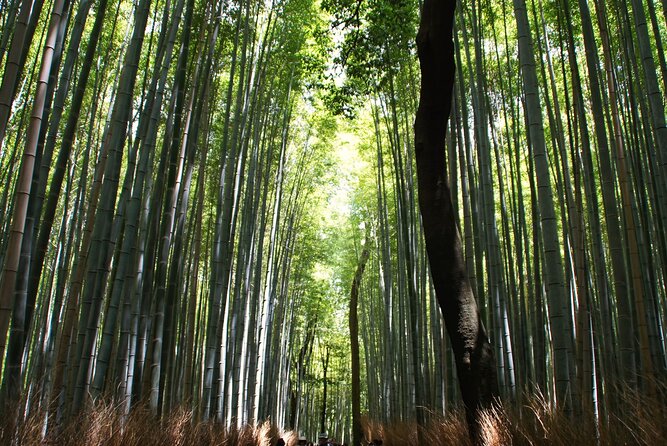
Next comes the Arashiyama Bamboo Forest segment, about 30 minutes, and admission is ticket-free. This is the ethereal, sway-in-the-wind part of the day. The stalks are tall enough to make the world feel narrower, and the light shifts as you walk.
Even if you’ve seen bamboo photos before, the live version tends to surprise people. It’s not just pretty. It’s a pause. The walk naturally slows your pace, which makes the later uphill part to Monkey Park feel more manageable.
If you’re sensitive to crowds, this part still gets busy, but the structure of the tour keeps you moving as a group, rather than wandering alone and getting stuck in bottlenecks. Wear good shoes because you’re walking on paths that can be slick when damp.
Nonomiya Shrine: mossy woods and older rituals
Then you shift from bamboo energy to Nonomiya Shrine, roughly 15 minutes and no admission ticket required. This is a smaller stop, but it’s a satisfying change of texture. Reviews connect it to a peaceful, mossy setting and to older purification-related traditions.
Why it’s worth your time even when it feels short:
- It gives your day a Shinto layer, not just temples and scenery.
- It’s a calmer moment after photo-heavy spots.
- A shrine stop helps you understand Arashiyama as lived cultural space, not only a scenic district.
Go in expecting quiet. You don’t need to rush this one, and you’ll enjoy it more if you let your eyes adjust to the greenery and shadows.
Togetsu-kyo Bridge: the iconic photo stop done right
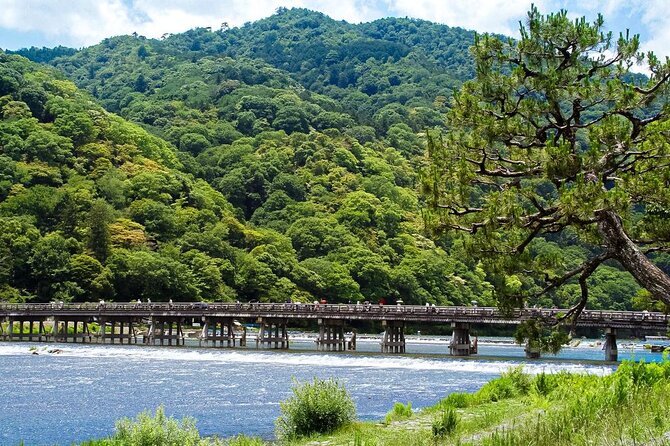
After the shrine, you cross Togetsukyo Bridge for about 10 minutes. There’s no ticket here, so you’re free to focus on the view and the walk across.
This bridge is widely known as a symbol of Arashiyama, often associated with river scenes and mountain backdrops. The smart move is to treat this as a reset before the climb. Take photos, but also take a breath. If you do the monkey hike right after, you’ll be glad you used the bridge moment to rehydrate and steady your pace.
If you’re prone to stopping often for pictures, keep it tight here so you don’t arrive at the monkey park entry point already tired.
Monkey Park Iwatayama: wild macaques and Kyoto city views
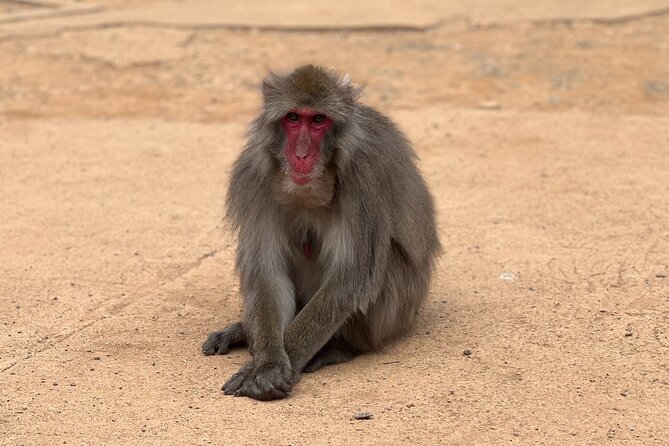
This is the “payoff” stop, and it comes with the main tradeoff of the tour. You get about 1 hour at Monkey Park Iwatayama, and the entrance fee is included.
You’ll deal with an uphill hike. Reviews repeatedly point this out, and it’s the part most likely to challenge your comfort if you have mobility issues or limited endurance. One review notes that people who avoided the climb still had access to photos, which tells you that there are ways to manage the situation with a group. Still, the core experience is the hike plus viewpoint.
What you’re actually going for:
- Wild Japanese macaques in their natural setting
- A chance to watch social behavior, playfulness, and how the group moves
- Panoramic views of Kyoto from the mountaintop
A helpful note from reviews: macaques tend to stay at distance unless you’re in a specific feeding area. So if you’re cautious, you don’t need to treat this as a hands-on encounter. Stay with your guide’s instructions, keep your footing, and don’t try to outsmart wild animals.
Weather matters here. If it’s damp, paths can get slippery. Your best defense is footwear with grip and taking the climb slow.
Matcha break with Uji tea: a practical reset
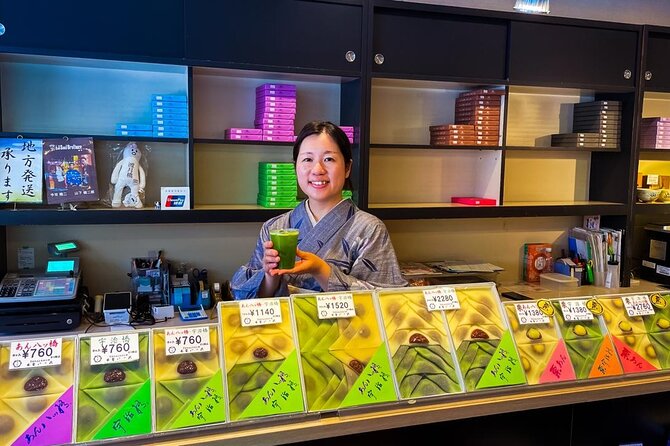
You also get one Uji matcha drink included. This isn’t just a cultural checkbox. It’s timing. Matcha gives you a pause in the middle of a walking itinerary, and it helps you reset before the later sections.
People highlight the matcha stop as a meaningful cultural touch, especially when they’re explaining how the tea is prepared. Even if you don’t consider yourself a tea person, this break makes the tour feel more intentional and less like a sprint through landmarks.
One extra detail from reviews: some people mention matcha ice cream as an added bonus. That isn’t listed as a guaranteed inclusion, but it does suggest you may find a treat opportunity depending on the guide and day.
Guides, group size, and why explanations change everything
This is a professional English-speaking guide tour for up to 15 travelers. That limit matters in Arashiyama because sight lines, path width, and timing are all tighter than people expect.
Reviews repeatedly mention guides by name, including Nay, Tim, Sofia, Pedro, and Gabriele, plus others like Amy and Daniel. Common praise across these names: clear, history-rich explanations, friendly energy, and pacing that prevents you from feeling steamrolled by the route.
What you should watch for, even in a great guide-led experience: if your group gets split by lost members or delays, the guide might need to flex. One comment says the guide handled lost guests well, which is reassuring.
Price and value: why $53.06 can be a bargain in Kyoto
At $53.06 per person for a roughly 4 to 4.5 hour tour, the value is strongest when you look at what’s included.
You’re not just paying for “someone to walk with you.” Your ticket cost covers:
- Tenryu-ji admission
- Monkey Park Iwatayama entrance
- 1 Uji matcha drink
- A professional English-speaking guide
When you price those items individually while traveling in Japan, the math usually starts making sense fast. Add in the fact that this tour also includes a sensible sequence of iconic Arashiyama stops, and you’re paying for efficiency plus interpretation.
The only part that can feel pricey is if you end up skipping the uphill monkey climb or if you’re the type who wants total freedom to linger at just one garden. If that’s your style, you might prefer a self-guided day. But if you like structure and context, this price is hard to beat.
What to wear and how to prepare (so the day feels easy)
This tour is described as walk-focused, and you’ll want to plan like you’re spending most of the day on your feet.
Bring:
- Comfortable shoes with grip, especially for the Monkey Park climb
- Water, since the later hill portion can take it out of you
- A small plan for photos so you’re not constantly stopping mid-walk
If you’re sensitive to stairs and slopes, consider how you’ll handle the incline. One review calls out that people with health concerns struggled with the climb, which is a fair warning.
Also, keep expectations realistic: the day runs as a route with timed stops. That’s the whole point. If you want a slow, pick-your-own-speed afternoon only, this isn’t that kind of tour.
Who should book this tour, and who might skip it
This tour is a great fit if you want:
- A guided Arashiyama highlights circuit without ticket-hunting
- Enough time at Tenryu-ji to actually feel the gardens
- A matcha pause that’s culturally meaningful
- The Monkey Park viewpoint for macaques plus city views
It may not be ideal if:
- You strongly dislike uphill walks.
- You prefer unstructured time where you can stay at one place for hours.
- You’re traveling with someone who needs a very gentle itinerary.
Should you book Kyoto: Arashiyama Bamboo Forest, Monkeys, Matcha and Temple Tour?
Yes, if you want a compact Arashiyama day that combines Zen temple time, bamboo atmosphere, a shrine stop, a classic river bridge, and a finale with wild macaques plus panoramic views. The included admissions and matcha drink make the $53.06 price feel more like a bundled deal than a basic walking tour.
I’d think twice only if the uphill Monkey Park hike is a problem for you. Otherwise, this route is one of the most practical ways to see the district’s core highlights in a single half-day with explanations that actually help you notice what you’re looking at.
FAQ
How long is the Arashiyama tour?
It runs about 4 to 4.5 hours.
Is the Tenryu-ji Temple ticket included?
Yes. Entry to Tenryu-ji Temple is included.
What is included besides the temple and park entrances?
You get a professional English-speaking guide, a Uji matcha drink, and the entrance fee to Monkey Park Iwatayama.
Where does the tour start and end?
The tour starts at TULLY’S COFFEE Randen Arashiyama Station Shop 20-2 and ends back at the meeting point.
Do I need a ticket for the bamboo forest or Togetsukyo Bridge?
Admission is listed as ticket-free for the Arashiyama Bamboo Forest and for Togetsukyo Bridge.
Is this tour good for first-time visitors to Kyoto?
Most travelers can participate, and it’s close to public transportation, so it’s a solid first-district experience.
What group size should I expect?
The tour has a maximum of 15 travelers.
What is the cancellation policy?
Free cancellation is available up to 24 hours in advance for a full refund. If you cancel less than 24 hours before the start time, the amount paid is not refunded.
Kyoto by the Bowl
Further Into Arashiyama
Newest Kyoto write-ups from the Loving Japan desk
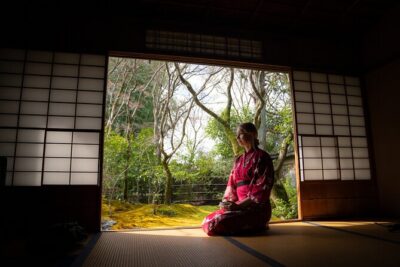
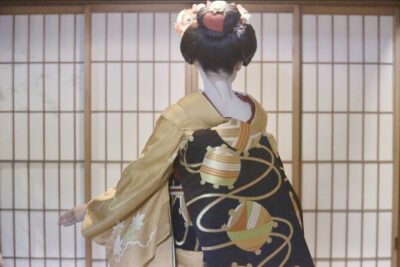
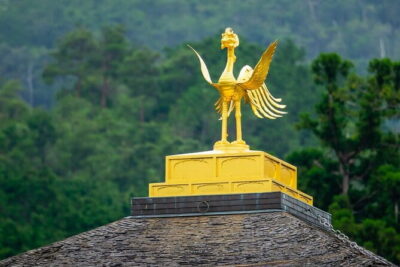
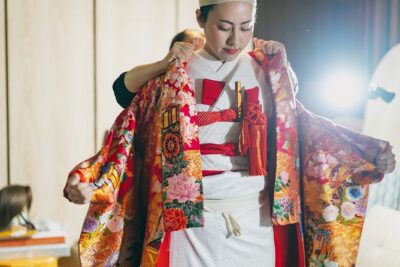
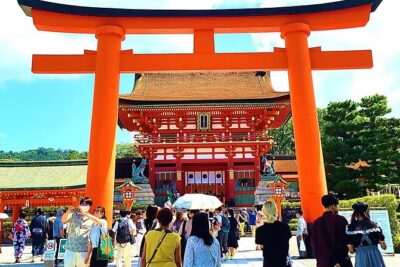
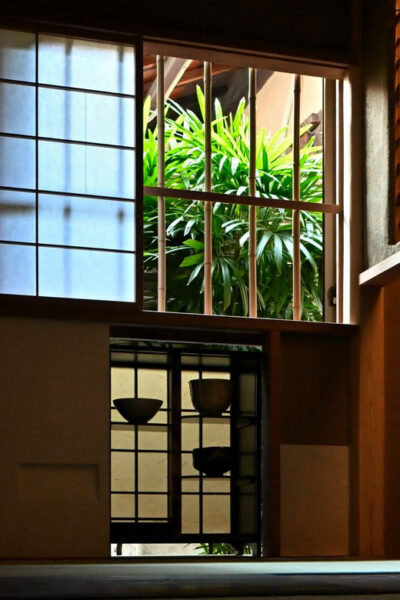
Arashiyama and the Bamboo Grove, side by side.
 ★ 4.8Fushimi Inari, Kinkakuji, Bamboo Grove 1 Day Bus TourFrom $1224,316 reviews
 ★ 4.1Osaka/Kyoto:Kinkakuji,Arashiyama,FushimiInariShrine,NaraParkFrom $661,596 reviews
 ★ 4.7Kyoto/Osaka: Nara, Fushimi Inari Taisha, Arashiyama Bus TourFrom $521,275 reviews
 ★ 5.0Kyoto Arashiyama Walking Tour: Bamboo, Monkeys, Gardens & SecretsFrom $651,216 reviews
 ★ 4.8Arashiyama Bamboo, Temple, Monkeys, or Secret Sake BreweryFrom $87886 reviews
 ★ 4.4Osaka/Kyoto: Arashiyama, Nara & Fushimi Inari Shrine w/LunchFrom $61754 reviews
 ★ 5.0Nijo, Kinkaku-ji, Arashiyama, Kiyomizu & Fushimi InariFrom $51699 reviews
 ★ 5.0Kyoto Ghost Tour: Dark Tales, Urban Legends, Bamboo Forest NightFrom $43625 reviews
Filed on these lists too