
REVIEW · SHOW
Japanese Traditional Music Show in Tokyo
Small room, huge Japanese sound.
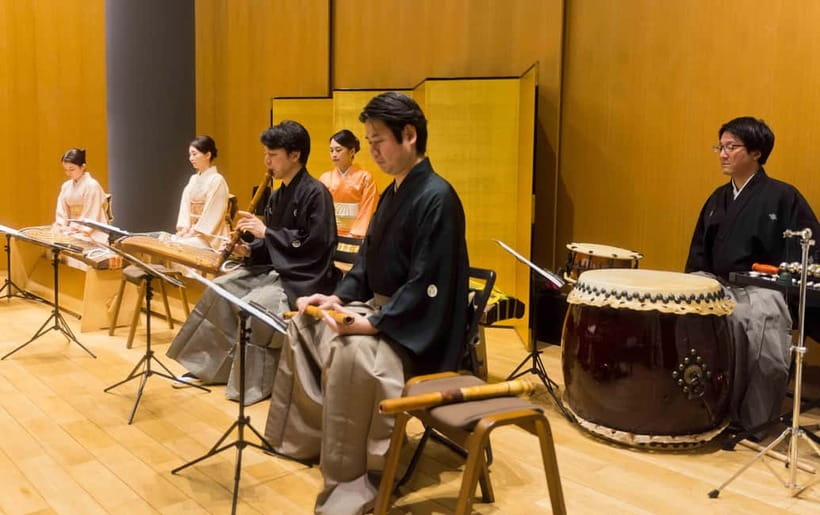
In Tokyo, ZAKURO SHOW at Hall 60 turns traditional wagakki music into something you can actually follow, with the musicians right in front of you and a host guiding the story as you listen. You get koto, shamisen, shakuhachi, and taiko in a tight, numbered-seat setting.
I especially love the instrument walkthrough built into the concert, including history and how each instrument works. I also like the smart programming, mixing ancient and modern pieces with a Western pop cover so the sounds click fast for first-timers.
One possible drawback: it is only one hour, and the room is small, so this is best if you want focus and closeness, not a long evening with lots of wandering or pre-show activities.
In This Review
- Key reasons to go
- Hall 60 near Meiji-Jingumae and Harajuku, how to arrive smoothly
- Reserved seat in a small numbered audience, what that changes
- How the host makes wagakki music feel understandable
- Koto, shamisen, shakuhachi, and taiko, what to listen for
- Ancient and modern pieces, plus the surprise Western hit
- Photos, videos, and how the musician meet-and-photo moment works
- Price and value: is $38 for a one-hour concert worth it
- Who should book this show in Tokyo
- Should you book ZAKURO SHOW in Tokyo
- FAQ
- How long is the Japanese Traditional Music Show?
- How much does it cost?
- Where is the meeting point?
- What instruments are performed?
- Is there a host or greeter, and what languages are available?
- Can I take photos or videos?
- Is the venue wheelchair accessible and what is the cancellation window?
Key reasons to go
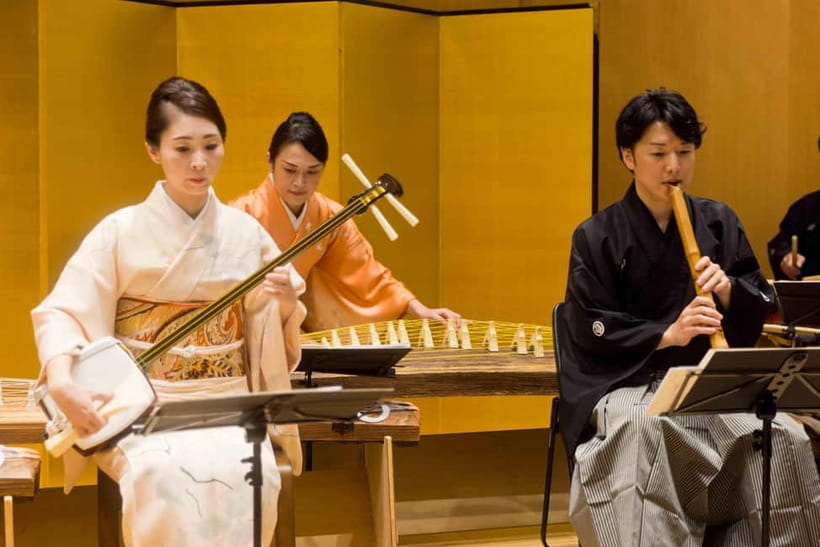
- Up-close wagakki performance in a small numbered audience where you can see hands, breath, and rhythm details.
- English and Japanese narration that explains what you are hearing as the pieces change.
- A full instrument cast: koto, shamisen, shakuhachi, and taiko, each treated with its own context.
- Ancient plus modern programming, with a Western hit included to compare textures and style.
- Photo and video friendly, plus optional photos with the musicians after the show.
Still weighing up options in Tokyo? These are the ones our reviewers rated highest.
- Mt Fuji and Hakone 1-Day Bus Tour Return by Bullet Train
★ 5.0 · 26,383 reviews - 1-Day Tokyo Bus Tour
★ 5.0 · 14,250 reviews - Tokyo: teamLab Planets TOKYO Digital Art Museum Entry Ticket
★ 4.6 · 9,779 reviews - Mt Fuji & Hakone Cruise, Drum Show Bullet Train 1 Day from Tokyo
★ 4.0 · 7,413 reviews
Hall 60 near Meiji-Jingumae and Harajuku, how to arrive smoothly
This show is easy to tack onto a Harajuku or Omotesando day because the meeting point is close to major stations. You’ll meet at Hall 60 near Meiji-Jingumae Station (Exit 7), about a 1-minute walk, or you can use JR Harajuku Station (Omotesando Exit), about a 5-minute walk.
I suggest arriving a few minutes early simply because the venue is small and you’ll want to settle into your reserved seat without rushing. Also, if you plan to use your phone for photos and video, get your settings ready before the music starts so you are not fiddling later.
If you are using public transit, aim to travel light. With a compact audience and musicians close by, it is just easier when you are not squeezing past people with big bags.
Reserved seat in a small numbered audience, what that changes
This is not a “big theater from far away” kind of concert. Your seating is reserved, and the show is designed for an intimate audience where you can feel the music instead of just hearing it.
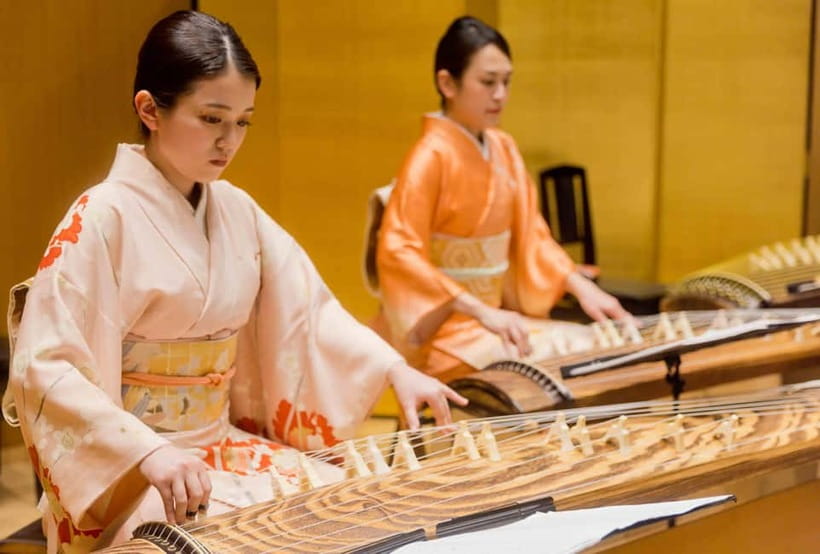
That matters for wagakki. Koto, shamisen, shakuhachi, and taiko are not just sound. They are technique: finger pressure, how the performer shapes tone, and how rhythm lands in the room. Up close, those details become part of the experience rather than background.
One thing to keep in mind is that intimate spaces can feel warmer and more “close quarters” than you expect. If you run hot, bring water or plan for a comfortable layer. If you prefer personal space, go in with the right expectation and you will enjoy it more.
How the host makes wagakki music feel understandable
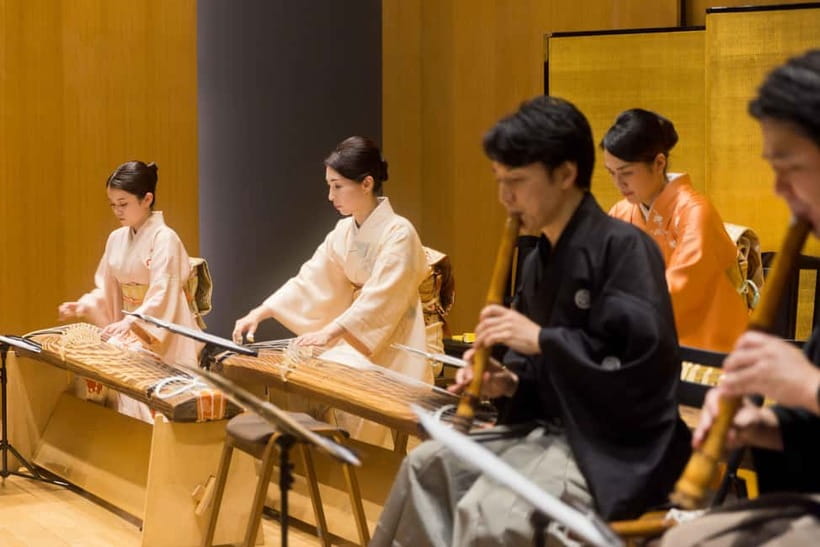
A big reason this show works for both visitors and Japanese residents is the structure: each tune is paired with context, and the host helps you follow along. You’ll hear the history of the musical instruments involved, and the explanations are interspersed between performances so you do not get stuck in a lecture.
The host and greeter speak English and Japanese, which is a lifesaver if your Japanese is limited. Even if you do not catch every musical term, you will understand what is happening and why it matters.
I also like the pacing. Instead of dumping information first, the show teaches you in small beats, then immediately lets you hear the result. That turns “traditional music” from a concept into something you can recognize by sound.
- Mt Fuji and Hakone 1-Day Bus Tour Return by Bullet Train★ 5.0 · 26,383 reviews
- 1-Day Tokyo Bus Tour★ 5.0 · 14,250 reviews
- Tokyo: teamLab Planets TOKYO Digital Art Museum Entry Ticket★ 4.6 · 9,779 reviews
- Mt Fuji & Hakone Cruise, Drum Show Bullet Train 1 Day from Tokyo★ 4.0 · 7,413 reviews
- Tokyo: Shinjuku Food Tour (13 Dishes at 4 Local Eateries)★ 5.0 · 6,603 reviews
Koto, shamisen, shakuhachi, and taiko, what to listen for
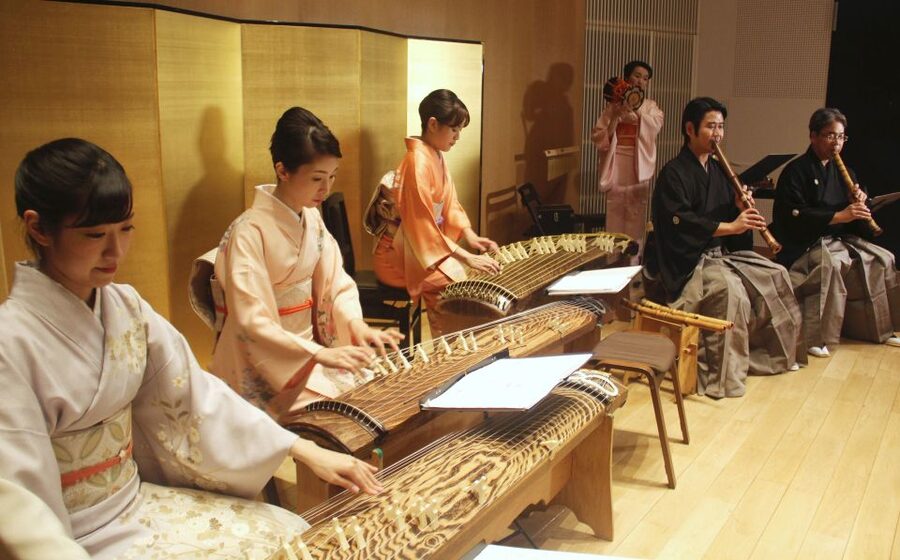
The program features several of the best-known wagakki instruments, and you will hear more than one flavor of Japanese music in the same hour. Expect musicians in kimono, performing with the instruments positioned right in front of you.
Here’s what to listen for as the instruments change:
Koto
The koto is all about bright clarity and controlled resonance. When it comes in, pay attention to how notes bloom and fade, especially when the melody gets faster or shifts mood.
Shamisen
The shamisen brings a punchier, rhythmic character. You’ll likely notice sharper attacks and a more “story-like” phrasing, with the rhythm helping you track the shape of the piece.
Shakuhachi
This flute is breath-driven, so the tone feels airy but intentional. When it plays, listen for how pauses and subtle dynamics matter as much as the notes themselves.
Taiko
Taiko is the physical side of the concert. Even in a small venue, you can feel the pulse. Watch how the rhythm locks into the group, then changes intensity as the piece builds.
The show also includes a cover of a Western hit. That is not random, it is a comparison tool. It helps your ears map unfamiliar timbres to a melody you might already know, so the Japanese instruments feel less like a wall and more like a door.
Ancient and modern pieces, plus the surprise Western hit
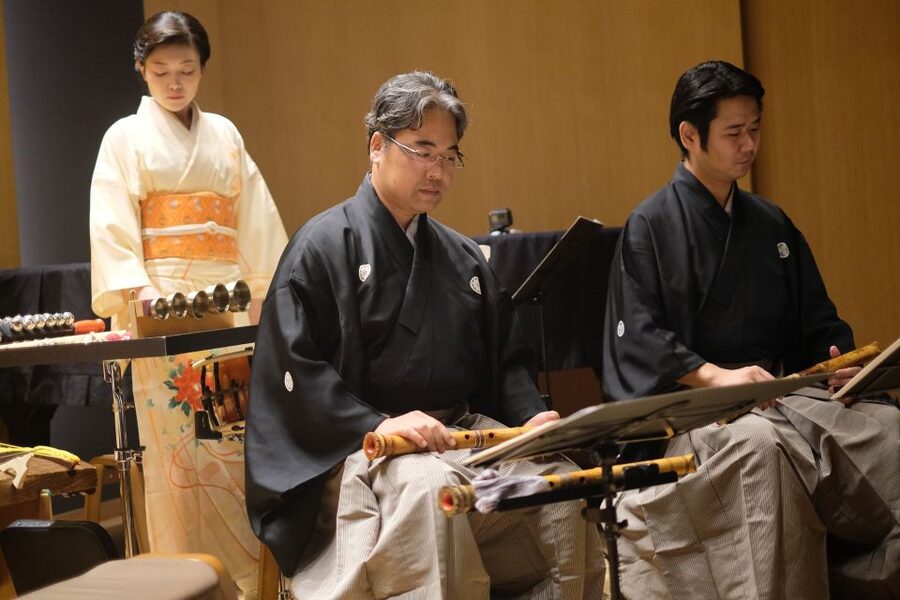
The set list is designed to move across time, not just repeat a single style. You’ll hear both ancient and modern Japanese traditional music, with each tune selected for context.
That balance is what makes the hour satisfying. Ancient pieces give you the sense of roots, while modern selections show that wagakki is not frozen in time. If your goal is to leave Tokyo with something meaningful but not overwhelming, this mix is a good fit.
Then there is the Western hit cover. In practice, it works like a musical translator. You may recognize the melody right away, and the fun is hearing it re-expressed through Japanese instrument techniques. It turns curiosity into a grin, and it gives you an easy memory hook for later.
Some programs also lean into melodies that feel familiar to people who know Japanese media styles, including movie or anime-like themes. Even when you do not know the exact origin, you’ll still catch the idea: traditional instruments can speak in many modern voices.
Photos, videos, and how the musician meet-and-photo moment works
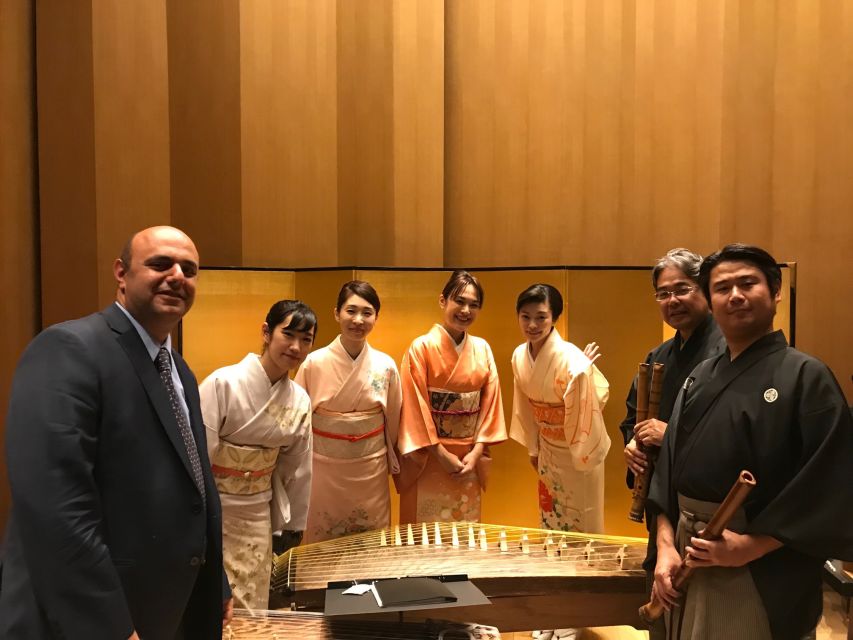
This is a practical, photographer-friendly experience. You can take photos and videos during the show, and afterward you can take photos together with the musicians.
I recommend having a plan before you start recording. If the room is small and everyone is holding up phones, you will have a better time if you alternate short clips with real viewing. You’ll enjoy the music more when you are not staring through a screen the whole time.
Also, be ready for the after-show moment. That is where the intimacy pays off, because you are not just hearing craft, you are meeting the people behind it. Keep your phone charged, and if you are bringing a tripod or bulky gear, reconsider. In a numbered audience, simpler is kinder.
Price and value: is $38 for a one-hour concert worth it
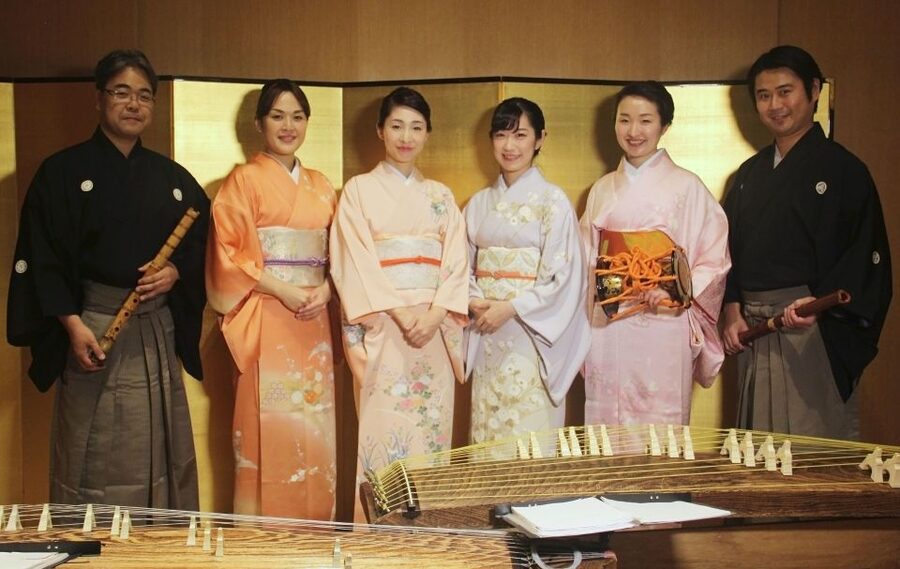
At $38 per person for a one-hour program, the ticket price might look steep if you compare it to casual street music. But this is not background entertainment. You are paying for a professional ensemble, a tight venue, reserved seating, and a host who turns the concert into an educational experience in real time.
Here is the value logic that convinced me this is fair:
- You get multiple instruments in one show, not a single-instrument performance.
- You get instrument history and explanation threaded into the music, not just a program note.
- You get photo and video time plus optional photos afterward.
If you are traveling with kids or teens, this format is also practical. One hour is long enough to stay engaged but short enough that everyone can stay patient. And because the host explains what you are hearing in English or Japanese, the show does not become a puzzle.
If your travel style is “long dinner, long evening,” this is the opposite. But if you want a meaningful cultural stop that does not take over your night, $38 can be a solid use of your Tokyo time.
Who should book this show in Tokyo
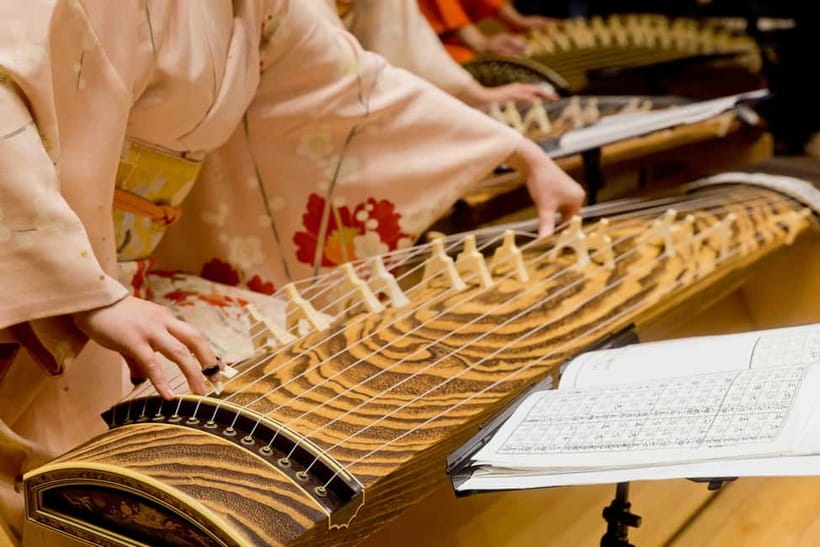
This show is a great match if you fall into any of these buckets:
- You want a first-timer friendly introduction to wagakki, with explanations that do not require advanced music knowledge.
- You like live craft and want to watch technique up close.
- You want something cultural that still feels fun, especially with the Western cover.
- You are traveling with teens, because the short duration and phone-friendly format help keep attention.
It might be less ideal if you want a huge production with elaborate staging, or if you prefer your learning to happen entirely before the performance. The strength here is the close listening, guided context, and quick emotional payoff.
If you are also planning a full day around Harajuku and Omotesando, this slots in nicely as an anchor activity, because you are already near the right transit corridors.
Should you book ZAKURO SHOW in Tokyo
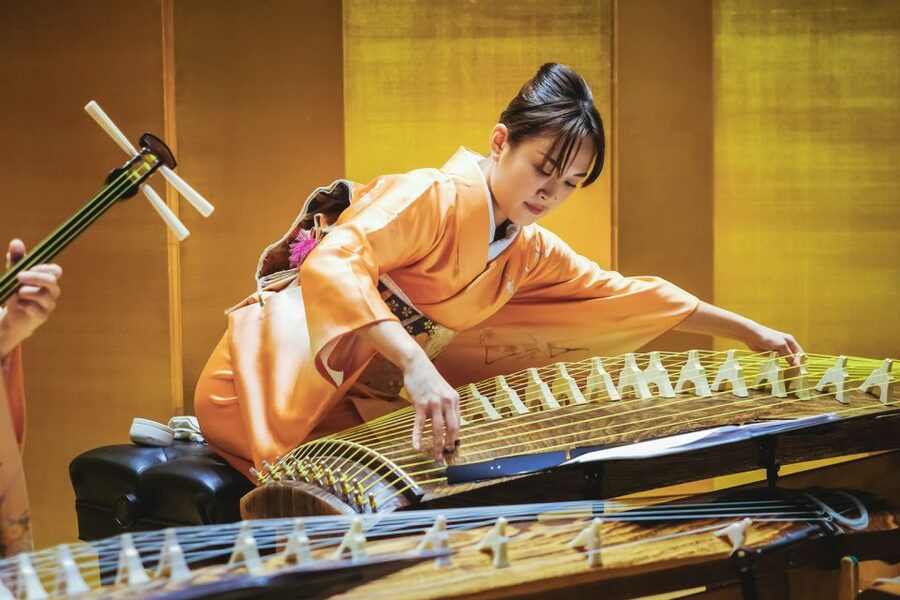
I’d book it if you want a compact, high-impact cultural night. For the money, you are buying three things at once: real live wagakki from top players, plain language explanation in English or Japanese, and an intimate setting that lets you see the instruments do their magic.
If you are on the fence, think about your “Tokyo priorities” list. If you want one experience that is easy to understand, fun to remember, and different from the usual sightseeing loop, this one fits well.
FAQ
How long is the Japanese Traditional Music Show?
The concert program lasts one hour.
How much does it cost?
The price is $38 per person.
Where is the meeting point?
Meeting point is Hall 60 near Meiji-Jingumae Station (Exit 7, about 1-minute walk) or JR Harajuku Station (Omotesando Exit, about 5-minute walk).
What instruments are performed?
The show includes Japanese harp, shamisen, shakuhachi flute, and taiko drums.
Is there a host or greeter, and what languages are available?
Yes. There is an English and Japanese host or greeter.
Can I take photos or videos?
Yes, you can take photos and videos during the show, and you can also take photos next to the musicians afterward.
Is the venue wheelchair accessible and what is the cancellation window?
The venue is wheelchair accessible. You can cancel up to 24 hours in advance for a full refund.
Newest Tokyo write-ups from the Loving Japan desk


Show, side by side.
 ★ 4.0Mt Fuji & Hakone Cruise, Drum Show Bullet Train 1 Day from TokyoFrom $1497,413 reviews
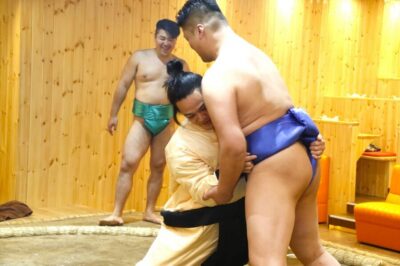 ★ 4.8Sumo Show Experience with Chicken Hot Pot and a PhotoFrom $1036,678 reviews
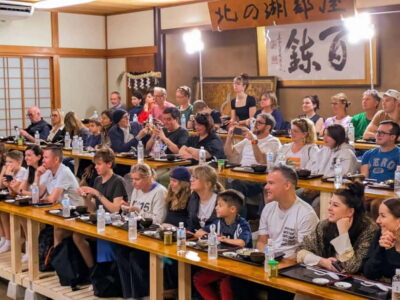 ★ 4.8Sumo Show and Dining ExperienceFrom $792,742 reviews
 ★ 5.0the SUMO showFrom $891,960 reviews
 ★ 5.0Tokyo Shinjuku Sumo Show & Experience with PhotoFrom $791,750 reviews
 ★ 4.5Samurai Restaurant Show Ticket with 2 DrinksFrom $551,307 reviews
 ★ 4.0Mt Fuji & Hakone Cruise, Drum Show Bus 1 Day from TokyoFrom $1221,287 reviews
 ★ 4.8Sumo Show and Experience in ShinjukuFrom $691,001 reviews