
REVIEW · DESSERT TOURS
Japanese Traditional Sweets making
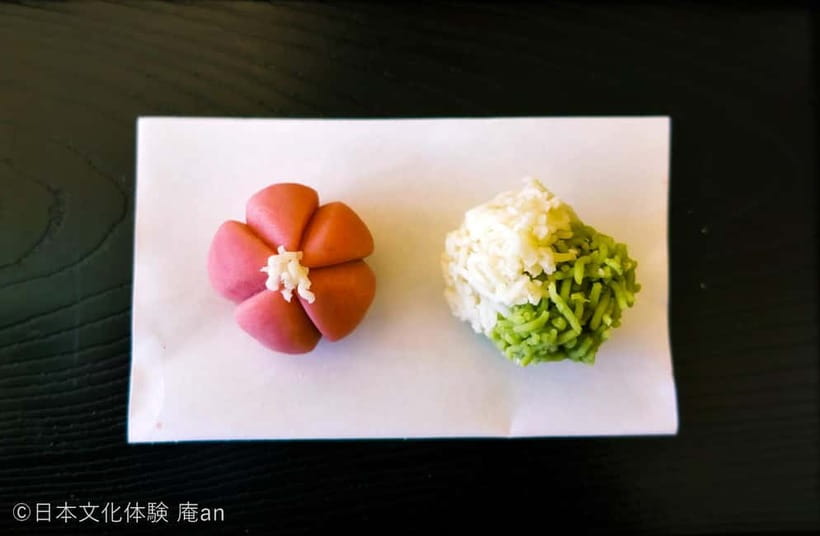
Sugar, but make it art. In this Nerikiri workshop, you shape real Japanese sweets using Kyoto-made white and red bean paste, then learn two seasonal designs. I like that you actually get to eat what you make, with on-the-spot tasting built into the schedule.
You’ll get a clear sequence, start with an introduction to traditional sweets, then make a flower-shaped Nerikiri and a Kinton Nerikiri (65 minutes total). One thing to consider: some classes can feel rushed, and if you sit toward the back you may struggle to see fine details, so aim to get a good view when you arrive.
In This Review
- Key things to know before you go
- Why Nerikiri feels different from a regular cooking class
- Kyoto bean paste, real ingredients, and what that means for the taste
- The 65-minute rhythm: what happens first, second, and last
- Flower-shaped Nerikiri: your first chance to get the hang of it
- Kinton Nerikiri: the second sweet that changes the technique
- Picture time and instant satisfaction after you finish
- Taste time: eating on the spot, or taking sweets with you
- Timing, room setup, and how to avoid the “too fast” feeling
- Price and value: does it justify $11?
- Who this workshop suits best
- Where the workshop starts: meeting point in Tokyo
- Should you book this Nerikiri class at AN Tokyo?
- FAQ
- What is the duration of the Japanese Traditional Sweets making experience?
- How much does it cost?
- What sweets will I make during the class?
- Are the ingredients included?
- Can I eat the sweets after making them?
- Are there any extra costs during or after the class?
- Is there an English translation?
- Where is the meeting point?
- What are the operation hours?
Key things to know before you go
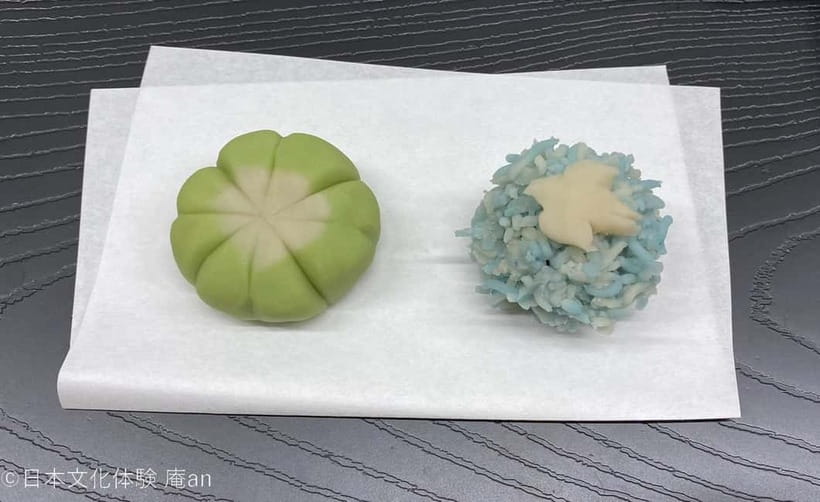
- Two seasonal sweets made by you: a flower-shaped Nerikiri plus Kinton Nerikiri
- Kyoto bean paste is part of the experience, using white and red paste from long-established shops
- Hands-on shaping where the final look is part of the skill, not just the flavor
- Eat immediately after finishing, so the workshop stays fun and satisfying
- Short class timing that moves through steps quickly, so show up ready to work
Still weighing up options in Tokyo? These are the ones our reviewers rated highest.
- Mt Fuji and Hakone 1-Day Bus Tour Return by Bullet Train
★ 5.0 · 26,383 reviews - 1-Day Tokyo Bus Tour
★ 5.0 · 14,250 reviews - Tokyo: teamLab Planets TOKYO Digital Art Museum Entry Ticket
★ 4.6 · 9,779 reviews - Mt Fuji & Hakone Cruise, Drum Show Bullet Train 1 Day from Tokyo
★ 4.0 · 7,413 reviews
Why Nerikiri feels different from a regular cooking class
Japanese traditional sweets are not just snacks. They’re tiny edible designs, and Nerikiri is one of the best examples. The paste itself is pliable, but it sets your “canvas,” so your shaping choices matter.
I like this format because it helps you slow down without needing expert experience. You’re not trying to cook, bake, or troubleshoot heat. Instead, you learn hand skills, proportions, and how to make the surface look intentional.
Kyoto bean paste, real ingredients, and what that means for the taste
This workshop uses white and red bean paste produced by long-established shops in Kyoto. That detail matters, because Nerikiri depends on the paste texture as much as the final look. Good paste makes shaping easier and helps the sweet hold its form while you work.
You’ll use the paste to create two sweets that match the season. Seasonal sweets are a big deal in Japan, because the design usually reflects what people associate with the time of year. Even if you are new to Japanese sweets, this is a smart way to learn how seasonal thinking shows up in food.
The 65-minute rhythm: what happens first, second, and last
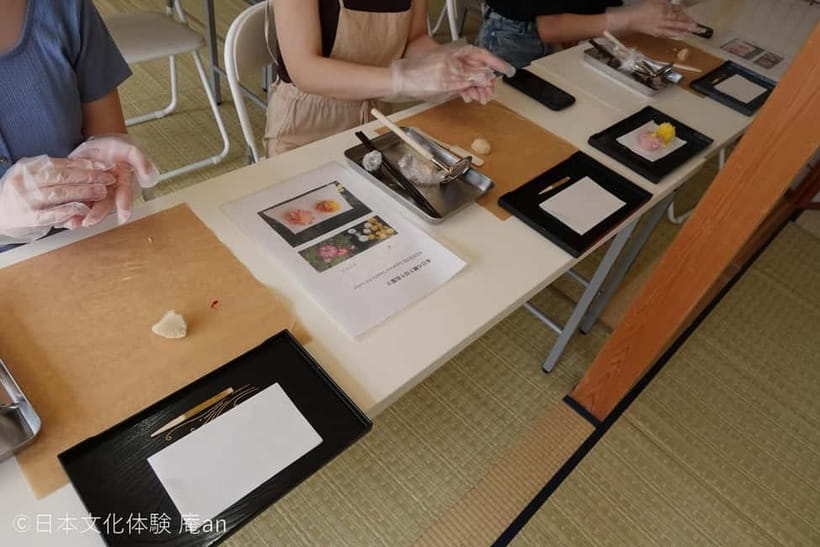
The class runs 65 minutes, with a structured flow that keeps everything moving. You start with a quick introduction, then you jump into making, finishing, and finally eating your sweets.
It’s helpful to think of it as three phases: learn, make, enjoy. If you go in with that mindset, you’re less likely to feel stressed when the instructor moves to the next step.
- Mt Fuji and Hakone 1-Day Bus Tour Return by Bullet Train★ 5.0 · 26,383 reviews
- 1-Day Tokyo Bus Tour★ 5.0 · 14,250 reviews
- Tokyo: teamLab Planets TOKYO Digital Art Museum Entry Ticket★ 4.6 · 9,779 reviews
- Mt Fuji & Hakone Cruise, Drum Show Bullet Train 1 Day from Tokyo★ 4.0 · 7,413 reviews
- Tokyo Mt Fuji 5th St & Hakone Cruise Bus Tour w/Bullet Train★ 4.4 · 5,024 reviews
Flower-shaped Nerikiri: your first chance to get the hang of it
The session begins with an explanation of Japanese traditional sweets. Then you make your first sweet, a flower-shaped Nerikiri.
This is where you’ll notice the “art” part right away. You’re not just mixing ingredients, you’re shaping and refining the surface. Expect to focus on details such as how you form the shape and how you finish the look before it’s time to plate.
A practical tip: keep your workspace clear. When your hands are busy, the fewer things you’re juggling, the easier it is to follow the pace.
Kinton Nerikiri: the second sweet that changes the technique
After the flower-shaped sweet, you make Kinton Nerikiri. This second sweet matters because it builds on what you learned in the first round. The design shift forces you to adjust your technique rather than repeating the exact same motions.
In a good Nerikiri class, you feel your confidence grow between the first and second sweets. Even if you end up with a slightly imperfect finish, you’ll usually leave with one or two pieces that look proudly “yours.”
Picture time and instant satisfaction after you finish
Once you finish, there’s time for photos. Then you move into the eating portion.
This is a key point for value. Many food experiences end at the cooking stage, and the eating is an afterthought. Here, the schedule builds in tasting time, so you can enjoy the results while the experience is still fresh.
You can also try your handmade sweets right there in the room. That means no waiting, no “save it for later,” and no awkward packaging moment before you get to enjoy what you made.
Taste time: eating on the spot, or taking sweets with you
The class includes eating time, so you can enjoy your Nerikiri immediately. If you want to bring something home, there is an optional sweets takeout box for 100 JPY.
There’s also an optional completion certificate. If you want it, it costs 300 JPY. If you’d like your name printed on a nominative certificate, you should send your names in advance. Otherwise, the certificate may be left blank where your name would go.
Timing, room setup, and how to avoid the “too fast” feeling
Some people love this class for how fun and social it is, and the overall rating reflects that. Others have pointed out that the pace can feel quick, with very short windows for each step and an instructor moving through stages briskly.
If you’re worried about rushing, here’s how to stack the odds in your favor:
- Arrive early so you’re not scrambling when you sit down.
- Try to get a seat where you can clearly see the instructor’s hands and tools.
- Keep your phone and bag situation simple, so you can focus the moment the class starts.
There’s also a practical comfort issue to consider: coat storage can be awkward, with limited space to hang items. If you’re visiting in cold weather, wear layers you can manage without needing a lot of hanging space.
Price and value: does it justify $11?
For $11 per person and 65 minutes, the value is strong if you’re looking for a hands-on workshop rather than just tasting. You’re making two sweets and using bean paste sourced from well-known Kyoto shops, and your time is guided by an instructor.
This is also one of those experiences where “included” is clean and straightforward. You get the Nerikiri making experience set. Optional add-ons like the takeout box and certificate cost extra, but you can ignore them if you just want the class itself.
If you compare it to typical paid activity costs in Tokyo, the main reason it feels worth it is that you leave with tangible results, plus you taste what you make before you go.
Who this workshop suits best
This is a great fit if you want a focused, creative activity without needing cooking skills. You’ll enjoy it if you like careful hand work, like seeing food treated as design, and like learning how tradition shows up in everyday craft.
It also works well for solo travelers. The format is guided and communal, so it’s easier to talk with other participants than in some sit-and-watch activities.
Who might want to think twice: if you strongly prefer slow, unhurried instructions, or if you’re easily frustrated when sessions move quickly, you might find the pacing less comfortable. The class is short, and it expects you to keep up.
Where the workshop starts: meeting point in Tokyo
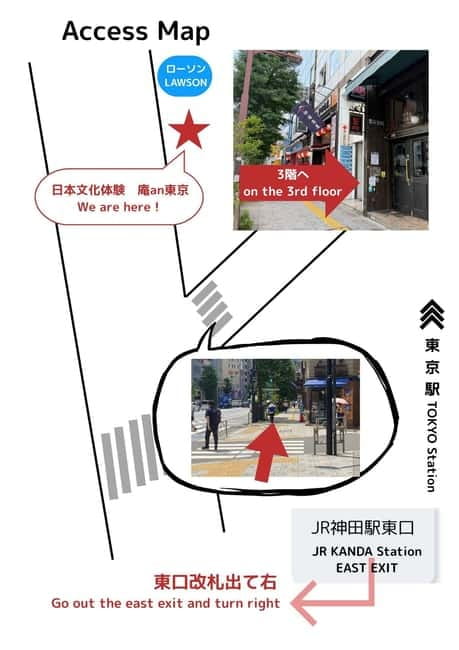
The meeting point is AN TOKYO Japanese Culture Experience, with coordinates 35.6916541, 139.7715022. When you arrive, plan to settle in fast, because the experience begins promptly and delays can’t always be accommodated.
If your schedule is tight, build in extra time for transit and walking. This is not a “show up whenever” type of class.
Should you book this Nerikiri class at AN Tokyo?
Book it if you want a high-value, hands-on Japanese craft that ends with real satisfaction, not just a photo. The combination of two seasonal Nerikiri sweets, Kyoto bean paste, and built-in tasting is exactly the kind of thing that makes short workshops memorable.
Skip it or adjust expectations if you hate rushing. The class is designed to run tightly, and some people find the pace intense. If that sounds like you, request the best viewing spot you can and come ready to move.
If you want a creative souvenir that’s also delicious, this is a solid choice.
FAQ
What is the duration of the Japanese Traditional Sweets making experience?
The experience lasts 65 minutes.
How much does it cost?
The price is listed as $11 per person.
What sweets will I make during the class?
You will make two seasonal Japanese traditional sweets called Nerikiri, including flower-shaped Nerikiri and Kinton Nerikiri.
Are the ingredients included?
Yes. The class uses white/red bean paste produced by Kyoto’s long-established shops, as part of the experience.
Can I eat the sweets after making them?
Yes. There is eating time, and you are welcome to try the sweets on the spot.
Are there any extra costs during or after the class?
Yes. A sweets takeout box costs 100 JPY, and an experience completion certificate costs 300 JPY.
Is there an English translation?
English translation is provided as much as possible. You can contact the organizer if you want to add English support.
Where is the meeting point?
The meeting point is AN TOKYO Japanese Culture Experience, coordinates 35.6916541, 139.7715022.
What are the operation hours?
Operations run from 10:00 to 17:00. Reservations received after 17:00 are processed the next day. Cancellation is free up to 24 hours in advance for a full refund.
Newest Tokyo write-ups from the Loving Japan desk






Dessert Tours, side by side.
 ★ 5.0Matcha Making Class in Tokyo with Authentic Japanese Sweets SetFrom $21744 reviews
 ★ 5.0Matcha Making Class in Osaka with Authentic Japanese Sweets SetFrom $21509 reviews
 ★ 4.9Matcha Making Experience with Mochi Sweets in AsakusaFrom $22388 reviews
 ★ 4.4Japanese Traditional Sweets Making and Tea CeremonyFrom $18314 reviews
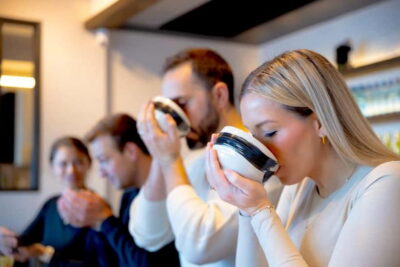 ★ 5.0Matcha Making Experience with Japanese SweetsFrom $22146 reviews
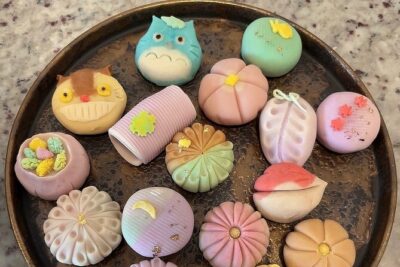 ★ 5.0Make Traditional Nerikiri Sweets & Matcha experience in ShibuyaFrom $60130 reviews
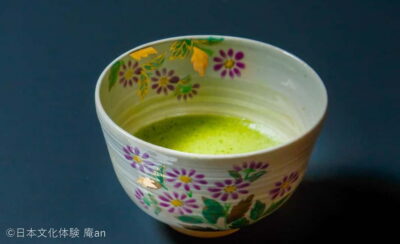 ★ 4.7Japanese Traditional Sweets Making and Tea CeremonyFrom $18118 reviews
 ★ 5.0Private Mochi Sweets Making class near Shibuya areaFrom $7993 reviews
Filed on these lists too