

REVIEW · SHIBUYA, SHINJUKU AND HARAJUKU WALKS
Private Mochi Sweets Making class near Shibuya area
Mochi tastes different when you shape it yourself. In Sakura’s home class near Shibuya, you’ll make mochi and dango by hand, then eat your creations with green tea or matcha. The setting feels like everyday Tokyo life, not a staged studio.
I especially like how small group size keeps things personal, so you are not just watching. I also like the mix of cooking plus context, including mochi’s cultural history and traditional recipes explained in a way you can actually remember.
The one thing to consider: it takes place in a home on the second floor, and there is a dog in the house, so plan accordingly if stairs or dog allergies are an issue.
In This Review
- Key highlights worth your time
- A cozy Tokyo class in Sangenjaya, close enough to Shibuya
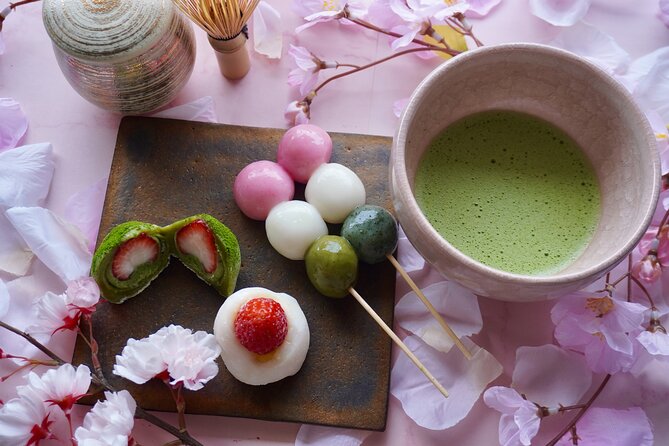
- What you make: mochi and dango, plus fruit daifuku
- The real value: you learn the steps, not just the result
- Tea tasting and the mochi story behind the sweets
- How the 2 hours usually feel, from first steps to eating time
- Group size and English support that actually help
- A quick word about the home, the dog, and the stairs
- What is included, and what to plan around
- Price and value: is $79.28 fair for what you get?
- Who this class is best for (and who might skip it)
- Quick booking checklist before you go
- Should you book Sakura’s mochi and dango class near Shibuya?
- FAQ
- What is the duration of the mochi sweets making class?
- How much does the class cost?
- What is included with the class?
- What sweets will I learn to make?
- Is there anything special about dietary ingredients?
- Is the location easy to access?
Key highlights worth your time
- Hands-on mochi and dango instead of a demo, so you do the real work
- Small group (max 8) for more one-on-one guidance during shaping and cooking
- Tea tasting with matcha or green tea, plus decaf black tea if you want it
- Cultural stories around mochi’s meaning and when it shows up in Japanese life
- Take-out bag and leftovers: you get to bring extra sweets home
Other routes through the west side of Tokyo, compared
- Tokyo: Shinjuku Food Tour (13 Dishes at 4 Local Eateries)
★ 5.0 · 6,603 reviews - Tokyo Bar Hopping Tour in Shinjuku (All-You-Can-Drink + Dinner)
★ 5.0 · 3,587 reviews - Official Street Go-Kart in Shibuya
★ 5.0 · 3,435 reviews - Tokyo: Shinjuku Food Tour (15 Dishes and 4 Eateries)
★ 4.9 · 2,033 reviews
A cozy Tokyo class in Sangenjaya, close enough to Shibuya
This experience takes place in Sakura’s own home in the Sangenjaya area, Setagaya City, which puts you in a great slice of Tokyo life. It is not on a tourist strip. The walk in the neighborhood can be part of the fun, especially if you like seeing local streets instead of only station exits.
From a practical standpoint, you should treat the meeting point as your anchor: 1-chōme-11-13 Sangenjaya, Setagaya City. You are back there at the end, so you can plan your Shibuya evening without guessing how transportation will work.
One detail I really like is the “small group inside a home” format. In practice, that means the instructor can slow down when someone needs extra help, whether you are making your first mochi or you just want your shaping to look better than your phone photos.
What you make: mochi and dango, plus fruit daifuku
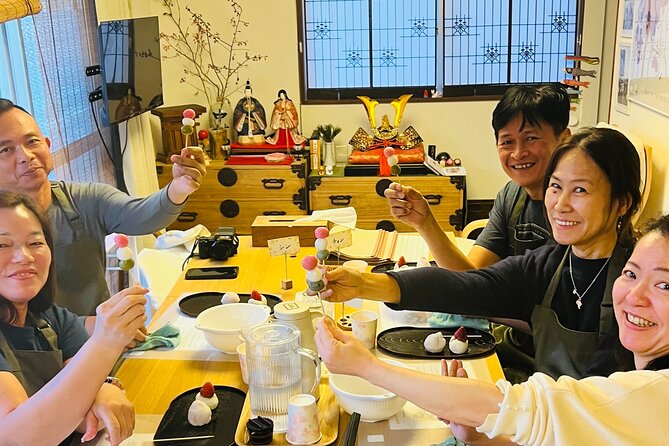
The class is designed around making mochi and dango by hand with guidance every step of the way. You will shape and cook your own sweets, not just follow a slideshow while someone else does the hot work.
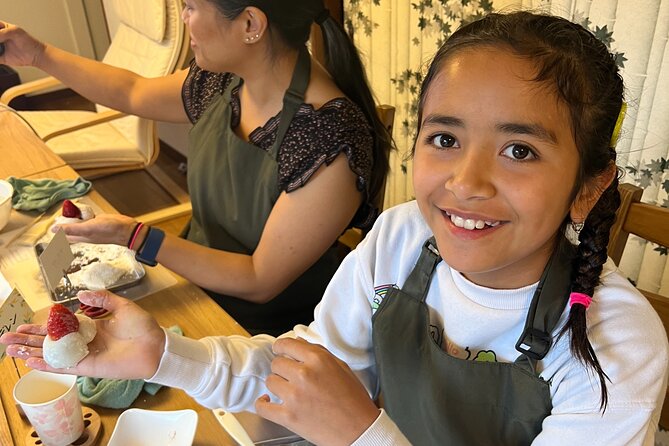
You can expect fruit daifuku-style mochi sweets, along with dango. The dango taught in this class is described as having no gluten, no alcohol, and no additives, which is a big deal for travelers who worry about ingredient surprises.
If you are wondering what that means for taste and texture, mochi is chewy and elastic, and daifuku is that mochi wrapped around a sweet filling. Dango is more like gentle, bite-size dumpling comfort, usually served with tea-friendly flavor pairings. The class also includes tasting your own creations, so you learn what “correct” feels like when you bite in.
The real value: you learn the steps, not just the result
A lot of food classes end the second you plate. This one focuses on technique. You are guided through the process, step by step, so you understand what changes when the dough feels right, when shaping goes smooth, and when timing matters.
That matters for value because you do not just leave with a sweet. You leave with something you can replicate later at home. Several participants noted that the ingredients are ones you can find abroad, which is what you want if you are thinking beyond a one-time souvenir.
Also, the instructor’s teaching style comes through. Sakura is described as patient and gentle, including for kids. You are less likely to feel rushed, and you are more likely to enjoy the whole process instead of worrying about whether you can keep up.
Make something to take home. Other workshops
- Tokyo Shinjuku Chopsticks Making Class★ 5.0 · 1,763 reviews
- Chopstick Making Workshop in Ginza★ 4.8 · 1,366 reviews
- Tokyo Sumo Experience: Chanko & Mochi with a Former Pro★ 4.8 · 567 reviews
- Kintsugi Experience: Art of Golden Joinery in Tokyo★ 5.0 · 467 reviews
- Tokyo Chopstick Making Workshop with Artisan★ 5.0 · 466 reviews
Tea tasting and the mochi story behind the sweets
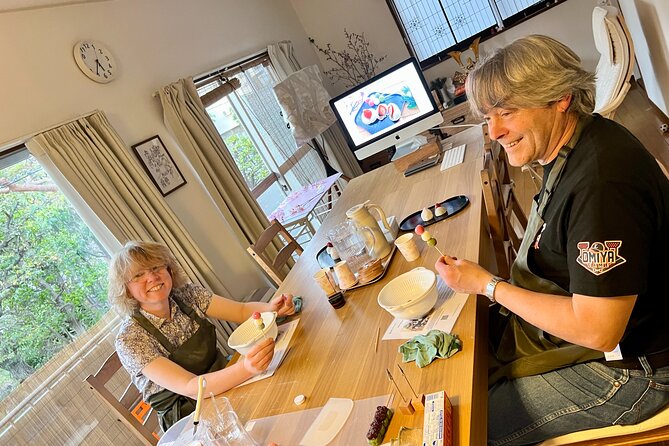
After you cook, you sample what you made with Japanese green tea or matcha. The class provides caffeine options too: if you do not like caffeine, you will get decaffeinated black tea. That is a small inclusion, but it makes the tasting portion comfortable for more people.
The cultural part is not random trivia. You get a real explanation of what mochi means in Japanese tradition, plus stories about when Japanese people eat mochi. You will also hear traditional recipe context, which helps you connect the dessert to the wider Japanese food culture.
In other words, you are not just learning how to make something. You are learning why it shows up again and again, and what the different sweets represent in everyday life.
How the 2 hours usually feel, from first steps to eating time
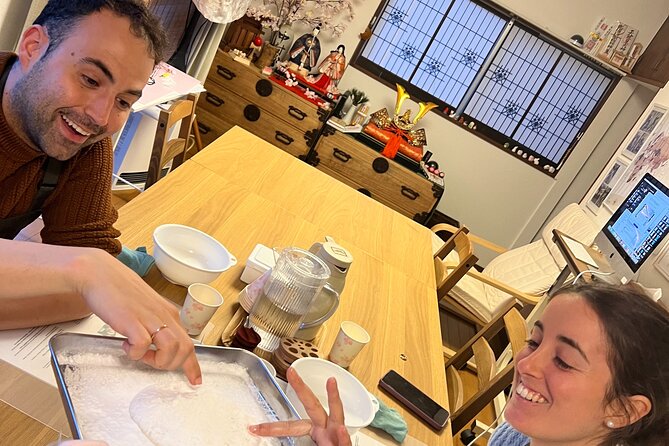
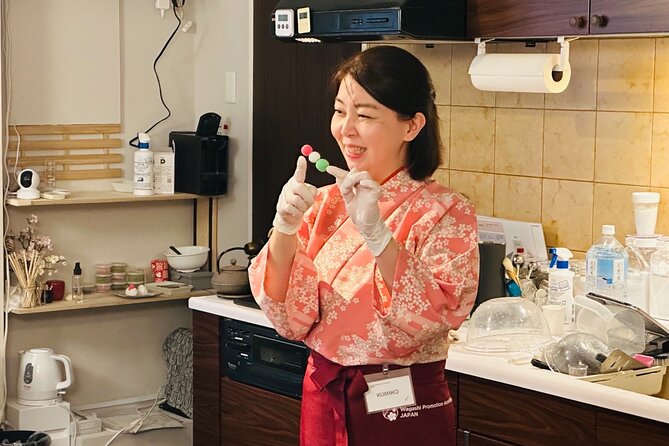
The class runs about 2 hours. In that time, you should expect a flow that starts with an intro and preparation, then moves into hands-on shaping and cooking. You will have an apron available to rent, so you can focus on the work instead of worrying about mess.
Because it is taught in a home setting, timing feels more natural than in a big classroom. You are given room to ask questions, and the instructor can correct small techniques before they become big problems, like uneven shaping or fillings that do not sit the way you want.
Then comes the best part: eating your own mochi and dango with tea. You get the satisfying feedback loop of making it, tasting it, and understanding why it worked.
Group size and English support that actually help
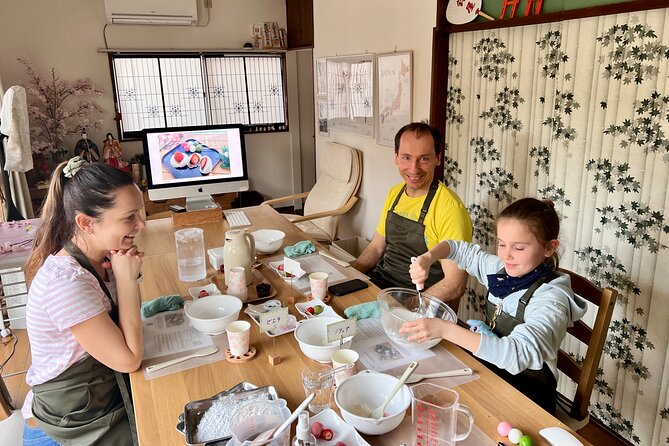
This is a maximum of 8 travelers, which is perfect for a hands-on food lesson. You are not in a crowd, and you can still see what you need to see, right at the station or kitchen space.
Sakura is described as having good English, and she uses explanations and guidance that help beginners. That matters because cooking classes can be frustrating if instructions are vague. Here, the teaching style seems built for clarity, not just performance.
If you want a class that feels family-friendly but not watered down, this is the kind of size and approach that lets you move at a comfortable pace.
A quick word about the home, the dog, and the stairs
This is in a private home, so the practical details matter. The venue is on the second floor, and you need to go up stairs. If you are traveling with mobility constraints, plan for that in advance.
There is also a dog in the house. The guidance is straightforward: people with a dog allergy are not recommended to take the class. Service animals are allowed, but if you are allergy-prone, you should take that note seriously.
One more practical point: you will get a take-out bag, which is handy if you want to enjoy the last bites later or bring them back for someone who did not join.
What is included, and what to plan around
Included basics are covered well for a short class: coffee and/or tea is served (including matcha options), there is a take-out bag, and aprons are available for rent. That means you can show up without doing extra shopping for drinks or supplies.
What is not included is also useful to know. Private transportation is not provided, and bottled water, brunch, soda/pop, and alcoholic beverages are not included.
So if you are coming from Shibuya, plan on public transit. If you tend to get thirsty during food activities, you might want to carry water or grab it before you arrive, since bottled water is not listed as included.
Price and value: is $79.28 fair for what you get?
At $79.28 per person for about 2 hours, this is not the cheapest option in Tokyo, but it also is not just a cookie-cutter class. The value comes from three things that are hard to fake:
First, you cook for real. Hands-on mochi and dango making takes time, attention, and heat, and it is the main reason the price makes sense.
Second, the group limit to 8 helps you get personalized instruction. In a larger class, the same fee would often translate to more waiting and less correction. Here, the small size keeps the learning efficient.
Third, you get more than food. You get cultural context, tea tasting, and the cozy home setting. It is the kind of experience where you remember the process and the atmosphere, not only the flavor.
Who this class is best for (and who might skip it)
This fits best if you want an authentic, local-feeling food activity that goes beyond a quick snack stop. I would especially recommend it for:
- Families, because the instruction style is described as gentle and effective, including for children
- Couples or small groups who like interactive experiences more than tours with walls of text
- First-timers who want to learn mochi and dango technique with clear guidance
- Matcha fans, since tea tasting is a core part of the experience
You might skip it if you cannot do stairs, if dog allergies are a concern, or if you strongly prefer restaurant-style experiences over a private home setting.
Also consider your timing. Because it is near Shibuya but not inside Shibuya itself, you will want to plan a smooth start, then a relaxing end back at the meeting point.
Quick booking checklist before you go
Here is what I would verify before you commit, using the details that matter most:
- You are comfortable with a second-floor venue and going up stairs
- You are not dealing with a dog allergy
- You like green tea and matcha, or you are fine with decaffeinated black tea
- You are okay with no private transportation being included
- You want a hands-on lesson where you shape and cook your own sweets
If those boxes check out, this is the kind of short activity that can turn into a highlight.
Should you book Sakura’s mochi and dango class near Shibuya?
Yes, if you want a small, hands-on cooking experience in an actual Tokyo home, not just a demo. The biggest reasons to book are the hands-on steps, the small group limit, and the fact that you leave with mochi and dango you helped make, plus a tea tasting and cultural stories that make the food feel meaningful.
I would hesitate only if stairs or the presence of a dog are deal-breakers for you. If those are not issues, this is one of the more satisfying ways to spend two hours in Tokyo, especially if you want something that feels personal and practical.
FAQ
What is the duration of the mochi sweets making class?
The class is about 2 hours.
How much does the class cost?
The price is $79.28 per person.
What is included with the class?
You’ll have coffee and/or tea served (Japanese green tea or matcha, plus decaffeinated black tea if you do not like caffeine), a take-out bag, and aprons are available for rent.
What sweets will I learn to make?
You will learn to make mochi and dango by hand, including fruit daifuku and dango.
Is there anything special about dietary ingredients?
The provided information states that the dango contains no gluten, no alcohol, and no additives.
Is the location easy to access?
The venue is on the second floor, so you need to go up stairs. It is near public transportation, but private transportation is not included. Also, there is a dog in the home, and people with a dog allergy are not recommended to attend.
Made by Hand, and Yours to Keep

West Tokyo on Foot: Seven More



Newest Tokyo write-ups from the Loving Japan desk



Shibuya, Shinjuku and Harajuku Walks, side by side.
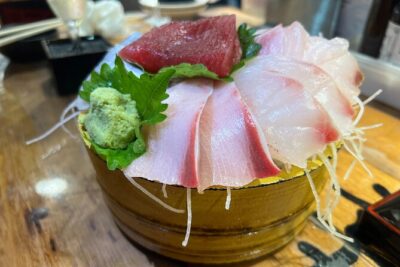 ★ 5.0Shinjuku Food Tour (13 Dishes at 4 Local Eateries)From $866,603 reviews
 ★ 5.0Tokyo Bar Hopping Tour in Shinjuku (All-You-Can-Drink + Dinner)From $1063,587 reviews
 ★ 5.0Official Street Go-Kart in ShibuyaFrom $763,435 reviews
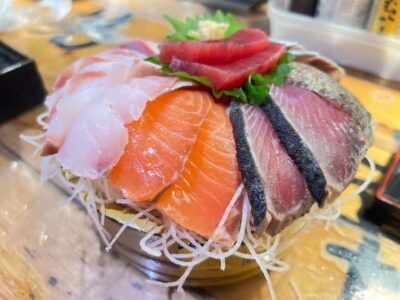 ★ 4.9Shinjuku Food Tour (15 Dishes and 4 Eateries)From $852,033 reviews
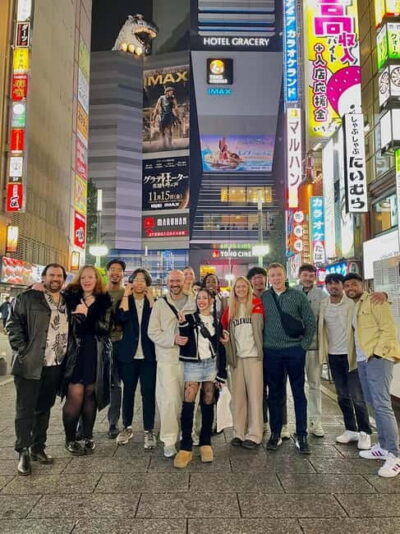 ★ 4.9Shinjuku Local Bar and Izakaya Guided Walking TourFrom $341,794 reviews
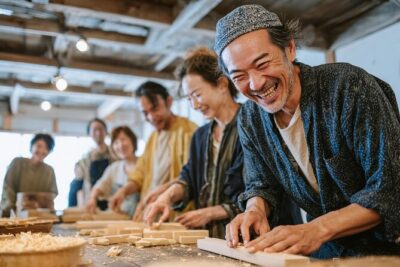 ★ 5.0Tokyo Shinjuku Chopsticks Making ClassFrom $201,763 reviews
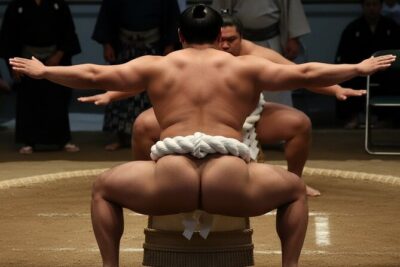 ★ 5.0Tokyo Shinjuku Sumo Show & Experience with PhotoFrom $791,750 reviews
 ★ 4.9Street Kart Experience in ShibuyaFrom $741,484 reviews