
REVIEW · KAMAKURA, THE GREAT BUDDHA AND ENOSHIMA
Kamakura Bamboo Forest and Great Buddha Private Tour
Kamakura feels different when the day is planned for you. I especially like the Hokoku-ji bamboo forest with a matcha break and the Great Buddha storytelling that gives you context while you look. The one real catch: you should be ready for a full day of walking on uneven temple paths.
This is a true private outing for just your family and friends, with an English-speaking professional guide. You also get pickup within Tokyo’s 23 wards, and the route runs on public transportation, so you are not stuck guessing trains or where to stand when things get busy.
The pacing is sightseeing-heavy, with five main stops plus time on Komachidori. If you prefer a slow, café-and-park day, this may feel like a workout. Still, if you want the classic Kamakura hits in one managed day, it is a solid value.
In This Review
- Key points to know before you go
- A focused Kamakura day, without the guessing
- Tokyo pickup and public transit: the real comfort factor
- Stop 1: Hasedera Temple for seasonal views and garden atmosphere
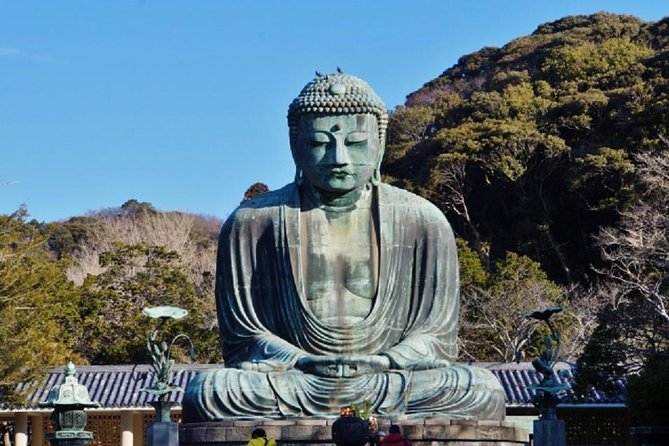
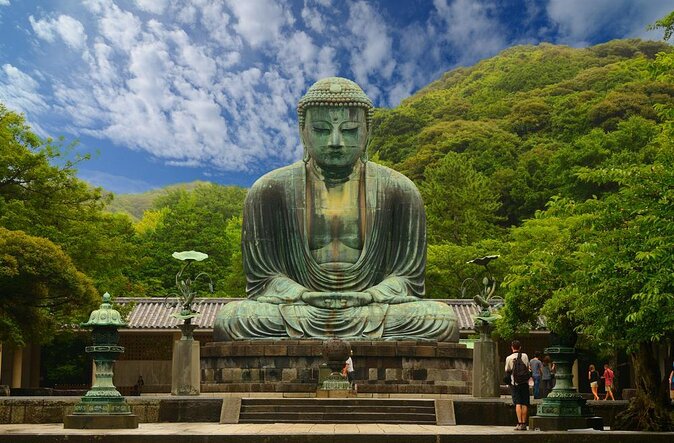
- Stop 2: Kotoku-in and the Great Buddha you can’t ignore
- Stop 3: Hokoku-ji Bamboo Forest for a cool, quiet reset
- Stop 4: Tsurugaoka Hachimangu Shrine and the urban heart of Kamakura
- Stop 5: Komachidori for food and unique shops
- What the guides do best, and the one thing to confirm
- Price and logistics: what you’re really paying for
- Who this Kamakura private tour fits best
- My practical advice to make the day go smoothly
- Should you book this Kamakura Bamboo Forest and Great Buddha private tour?
Key points to know before you go
- Private, family-and-friends format: no sharing with strangers, and your guide can shape the flow around your group.
- Tokyo pickup within the 23 wards: fewer hassles on a day trip that already includes transit.
- Hokoku-ji bamboo garden + matcha moment: a cool, atmospheric stop built around the bamboo.
- Kotoku-in Great Buddha with guided history: you are not just taking photos, you are understanding what you are seeing.
- A temple-shrine mix: Hasedera, Kotoku-in, Hokoku-ji, and Tsurugaoka Hachimangu cover multiple styles of sacred Kamakura.
- Built for public transportation: you get help navigating trains between Tokyo and Kamakura and around town.
Still in Arashiyama? Keep going west
- Buddha, Bamboo & Zen – Bespoke Kamakura Private Walking Tours
★ 5.0 · 25 reviews
A focused Kamakura day, without the guessing
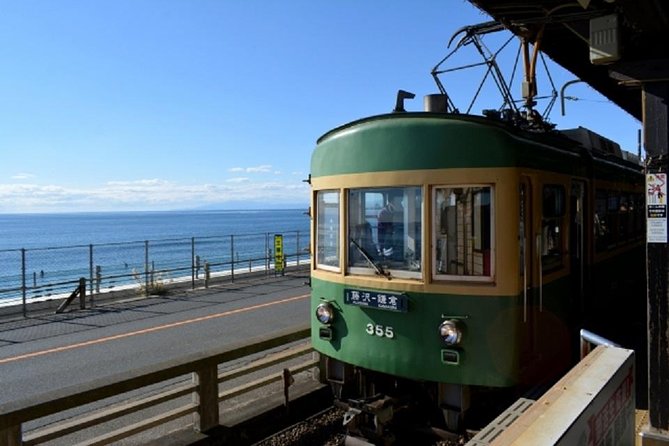
Kamakura is one of those places where the “getting there” is easy, but the “getting around” can be messy. This tour solves that with a private guide and a planned order of stops, so you spend your energy looking instead of decoding routes.
Because the trip uses public transportation, you get a more local way of moving through the area. Your guide also helps you handle the practical pieces, like where to connect and how to move between sights once you are in Kamakura.
The most consistently praised part is the way guides keep things organized without rushing you through the big moments. Guides like Kono-san and Akira stood out in the feedback for friendly, structured explanations and for making transit feel manageable.
One more thing I appreciate: you are not just jumping between temples. You also get a street stretch on Kamakura’s Komachidori, which is where the day becomes more than monuments.
Tokyo pickup and public transit: the real comfort factor
Hotel pickup in the Tokyo 23 wards is a huge deal on a long day. It means you start with less stress, and you avoid burning time meeting at a station or finding the right departure point while half-awake.
Once you are on the move, the tour leans on trains and local connections. That matters because Kamakura’s major sites are clustered, but not next to each other. A guide keeps the schedule realistic, so you do not waste time backtracking.
The tour also includes a mobile ticket, which is handy when you are juggling transit times and crowds. It is the kind of small convenience that becomes worth it when you are on a tight 9-hour day.
If you have mobility limits or you do not like walking over temple stairs and paths, you should think carefully. One of the clearest cautions from the experience info is that the day can be tiring on the legs.
Stop 1: Hasedera Temple for seasonal views and garden atmosphere
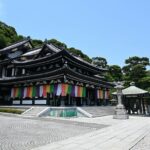
Hasedera is often compared to other top Kamakura sites because it delivers that classic temple-and-garden feel. This stop is timed at about an hour, which is enough to take in the main highlights without feeling like you are trapped in a slow queue.
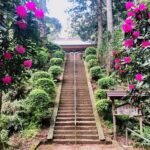
What makes Hasedera worth including is how it reads differently depending on the season. Flowers change, and the temple has long been known for its flower reputation, so you get a visual theme before you head into the Great Buddha area.
Practical tip for this stop: wear shoes you trust. Temple grounds mean stone steps, slopes, and walking that starts before you even reach the most photogenic views.
If your group likes to take photos while still understanding what you are seeing, a guided hour here is a good setup. It also helps break up the day, so the later sites do not feel like a nonstop monument marathon.
Coast and temples south of Tokyo, compared
- Tokyo: Kamakura & Enoshima Day Trip including Temple Tickets★ 4.5 · 1,375 reviews
- From Tokyo: Kamakura & Enoshima 1-Day Bus Tour★ 4.5 · 189 reviews
- Kamakura Historical Walking Tour with the Great Buddha★ 5.0 · 129 reviews
- Kamakura Private Tour: Temples, Nature, and the Great Buddha★ 5.0 · 121 reviews
- Kamakura Walking Tour – The City of Shogun★ 5.0 · 100 reviews
Stop 2: Kotoku-in and the Great Buddha you can’t ignore
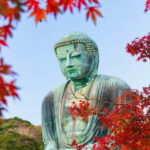
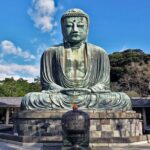
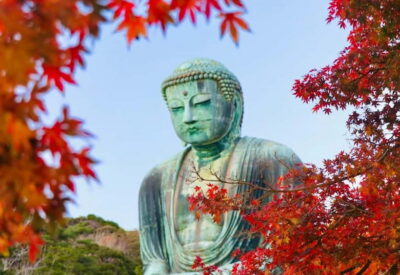
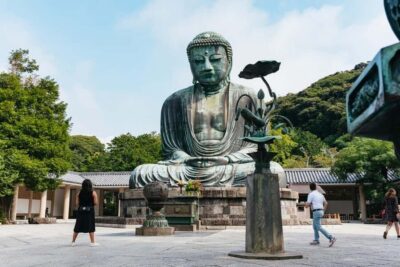
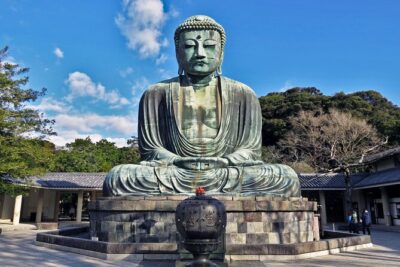
Kotoku-in is synonymous with Kamakura’s Big Buddha, and it is not subtle once you arrive. This stop runs about an hour, giving you time to look closely and also to listen to the historical context without feeling rushed.
The real value here is the guide’s framing. The experience description emphasizes detailed explanations from guides with national qualifications, and that shows up in the way the tour is praised for making the visit more meaningful than a quick photo stop.
Even if you have seen Buddha statues in other cities, Kamakura’s Great Buddha has its own scale and mood since it sits outdoors. That changes how you experience it, and it is exactly the kind of place where context helps you notice details you might otherwise skip.
Two watch-outs:
- Admission is not included, so factor in the ticket cost for your total day budget.
- This is a stone-and-walk sort of stop, so the best “comfort strategy” is pacing yourself and taking breaks when you can.
Stop 3: Hokoku-ji Bamboo Forest for a cool, quiet reset
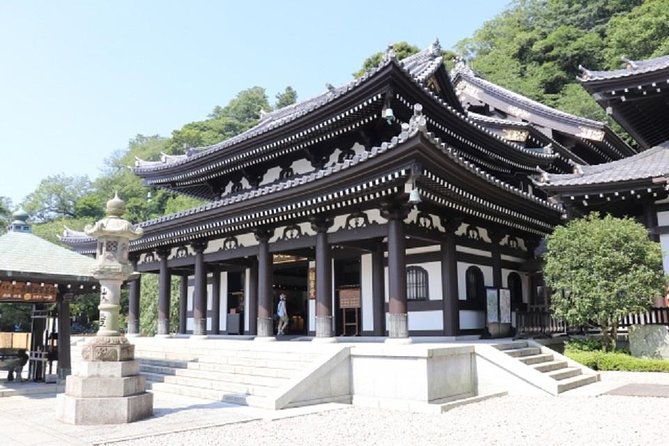
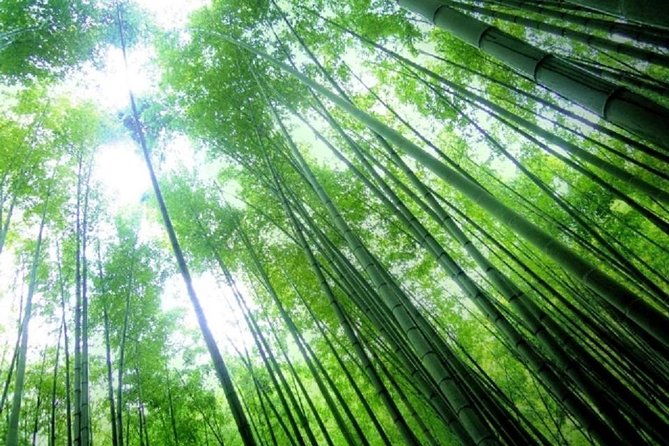
If you want one stop that feels like it belongs in a different world, it is Hokoku-ji. The bamboo garden here is famous, and the tour is built around the feeling you get walking among it.
This stop is about an hour, and you are also told you can drink matcha while watching the bamboo. That is a small detail, but it changes the experience. You do not only pass through the bamboo, you slow down and take a breather.
The tour description also calls out a large bamboo presence, around 2,000 bamboo groves, which helps explain why the atmosphere can feel so concentrated. In other words, this is not a tiny “one photo” bamboo stop. It’s designed to be a full sensory moment.
One practical thought: bamboo temples can mean damp air and cooler conditions. Even in comfortable weather, bring a light layer if you run cold easily. And yes, you should still plan for walking.
If your group loves atmosphere and photography, this is usually the part people remember most because it feels like an experience, not just a sight.
Stop 4: Tsurugaoka Hachimangu Shrine and the urban heart of Kamakura
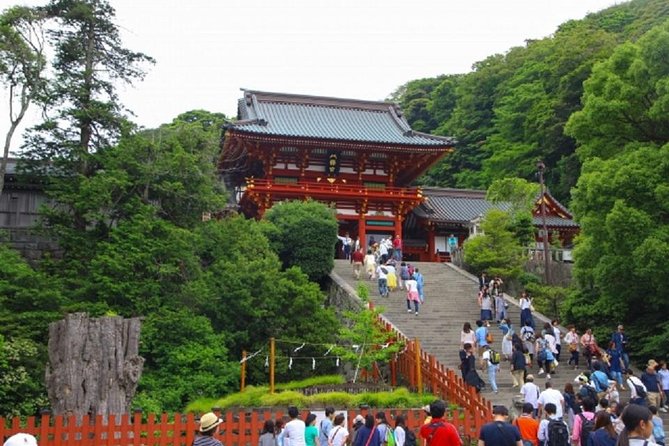
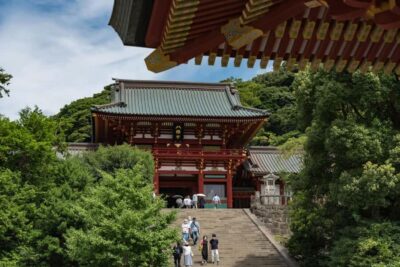
After the calm of Hokoku-ji, Tsurugaoka Hachimangu shifts the mood back to the city. This is the shrine in Kamakura’s center, and it matters because it connects the town’s everyday energy to its long-standing religious importance.
This stop is also about an hour. It gives enough time to appreciate the shrine setting, and it is timed so you do not end the day without something grounded and “Kamakura-core.”
The tour info emphasizes that the shrine has been venerated for centuries and is associated with the gods of war. That is a strong theme for understanding why you see certain details and why the place feels ceremonial rather than casual.
Practical tip: expect crowds around major shrine areas, especially on good weather days. A guide helps keep your group moving, and it reduces the stress of deciding where to go next when you are surrounded by other people.
If you like your tours with interpretation, this is another solid stop because the guide’s historical explanations give you better “read” on the site while you walk.
Stop 5: Komachidori for food and unique shops
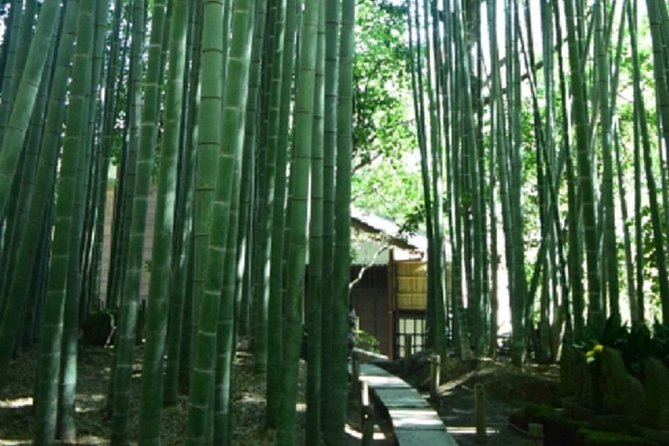
Komachidori is the fun, flexible part of the day. You get about 30 minutes on the street for food and unique shops, and that short window is intentional. It’s not meant to replace a full shopping day. It’s meant to give you a taste of Kamakura’s street life.
This is also a smart time to grab snacks or simple souvenirs because you already have the big sights behind you. You can let the day end lighter and more casual.
If you have been walking since morning, think of this as your chance to reset your energy. Share desserts, try a small bite, or simply browse. The best use of 30 minutes is choosing one thing to do well rather than trying to do everything.
What the guides do best, and the one thing to confirm
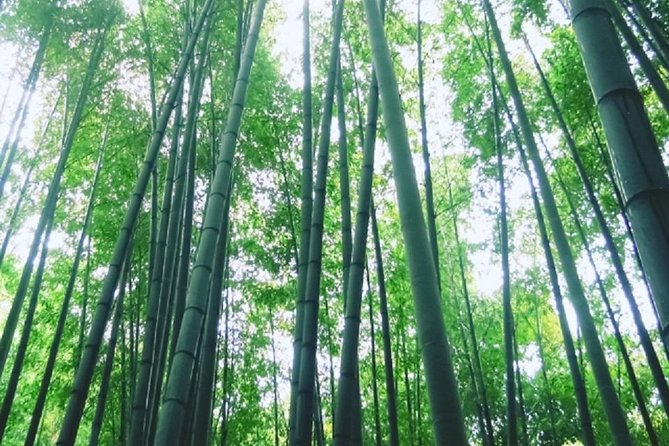
One theme in the feedback is that the guides are friendly, organized, and good at keeping the day smooth. Names like Kono-san and Akira show up as strong examples of guides who provide detailed information at each stop and help with getting around using trains and local routes.
That said, at least one guide experience pointed to English that was more limited, which can matter if you like asking follow-up questions that go beyond the prepared talking points. If you are traveling with someone who wants deep conversation, it is worth confirming that the guide’s English level works for your group.
The best guide moments usually happen when you can ask a question and get an answer on the spot, not just a script. This tour’s structure should still work even with lighter conversation, but your enjoyment will be higher with a guide who can flex.
In short: great guides can turn a statue and a bamboo grove into a story you understand. The tour relies on that.
Price and logistics: what you’re really paying for
At $176.37 per person for a roughly 9-hour day, the cost is not cheap in absolute terms. But private tours are rarely about saving money. They are about saving time, reducing stress, and getting value out of limited hours.
You are paying for:
- A private guide who manages the sequence of top Kamakura sights
- English-speaking interpretation
- Pickup in Tokyo’s 23 wards
- A route designed around public transportation and short, efficient stop times
Admission fees and food are not included, so your day budget should account for ticket prices at the major temple areas and whatever you choose to eat.
The best “value logic” here is simple. If you try to replicate this day on your own, you’ll spend time planning transit, figuring out where to go in what order, and dealing with uncertainties that eat up your limited day. This tour builds that planning into the price.
If you have a small group, private format can also make the per-person cost feel more reasonable compared to piecing together multiple independent guides or separate day activities.
Who this Kamakura private tour fits best
This tour is a great fit if you want the classic Kamakura highlights in one organized day. It works especially well for families and friend groups who want a clear plan, but still want personal attention.
Choose this if:
- You like guided context while you visit temples and shrines
- You want Hokoku-ji’s bamboo and the Great Buddha without day-tripping confusion
- You want Tokyo pickup and help navigating public transport
Consider something else if:
- Your group has limited walking tolerance
- You prefer long, unstructured wandering with frequent long breaks
- You want fully included admission and meals, not just guiding and transit help
The tour is marked as generally suitable for most travelers, but the walking reality is still the biggest variable. Plan accordingly.
My practical advice to make the day go smoothly
Start your day ready to move. Bring comfortable shoes, plan for stairs, and hydrate early. Temple days feel longer than you expect, and this route stacks multiple major sites.
Aim to keep your pace steady rather than sprinting for the best photo. The order of stops is designed for a reason, and rushing usually makes you miss the guide’s best explanations.
At Hokoku-ji, treat the bamboo stop like a moment, not a pit stop. The matcha break is part of why this tour works, so if you can, slow down there and let the atmosphere do its job.
At Komachidori, decide in advance how much shopping you want. Thirty minutes disappears fast, and the street is tempting.
Finally, if you care about deeper history questions, ask early in the day when your guide has your attention and before the schedule tightens.
Should you book this Kamakura Bamboo Forest and Great Buddha private tour?
Book it if you want a stress-light, private way to hit Kamakura’s top sites with an English guide and pickup from Tokyo. The strongest payoff is the combination of Hokoku-ji bamboo + matcha and the Great Buddha visit with guided context, plus the fact that someone else handles transit logistics.
Don’t book it if walking all day is a problem for your group, or if you expect admission fees and meals to be included in the price. Also, if your group needs highly conversational English for lots of follow-up questions, it is smart to confirm language comfort before you go.
If you match those expectations, this is a very practical way to spend one unforgettable day in Kamakura.
South to Kamakura and the Coast
Further Into Arashiyama
Newest Kamakura write-ups from the Loving Japan desk
Kamakura, the Great Buddha and Enoshima, side by side.
 ★ 4.5Kamakura & Enoshima Day Trip including Temple TicketsFrom $581,375 reviews
 ★ 4.5Mt. Fuji, Kamakura, Big Buddha, & Lake Ashi Day TripFrom $49867 reviews
 ★ 4.5From Tokyo: Kamakura & Enoshima 1-Day Bus TourFrom $66189 reviews
 ★ 5.0Kamakura Historical Walking Tour with the Great BuddhaFrom $98129 reviews
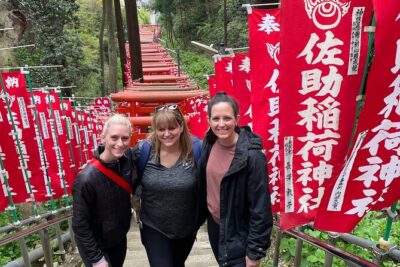 ★ 5.0Kamakura Private Tour: Temples, Nature, and the Great BuddhaFrom $98121 reviews
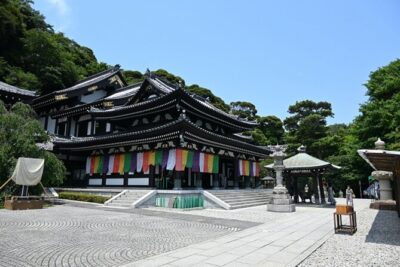 ★ 5.0Kamakura Walking Tour – The City of ShogunFrom $35100 reviews
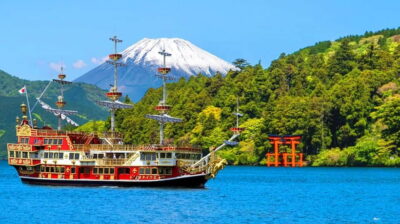 ★ 4.9Sea of Mount Fuji, Hakone Ropeway, Ōwakudani, EnoshimaFrom $5084 reviews
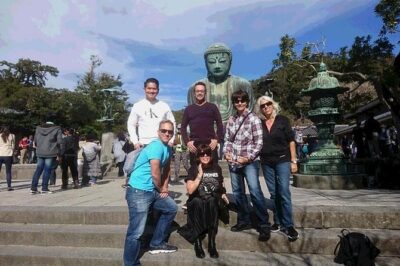 ★ 5.0Kamakura 8 hr Private Walking Tour with Licensed Guide from TokyoFrom $20180 reviews
Filed on these lists too