
REVIEW · PRIVATE DRIVERS AND CUSTOMISABLE ITINERARIES
Kyoto Customized Private Tour: See Top Attractions in 1 Day
Kyoto in one day, tailored to you. This private tour lets you shape a half-day or full-day route with a guide, so you are not stuck on someone else’s script. I love the chance to hit Golden Pavilion and Fushimi Inari efficiently, and I love how guides like Hiro explain Shinto and Buddhist practice in plain, useful ways. One catch: entrance fees, transportation costs, and lunch are not included, so budget a bit extra.
You start at Kyoto Station’s Kyo-Navi and then your guide helps you get from stop to stop without wasting daylight. Guides such as Saeko have even adjusted plans for mobility concerns, and Mishima’s help with train timing is the kind of skill that keeps a day from turning into a stress test.
It is rain or shine, and there is a moderate amount of walking, so bring comfortable shoes. If you like structure but want control, this is a nice middle ground.
In This Review
- Key takeaways before you go
- Private Kyoto, built around your pace and interests
- Price and what you should budget for
- Meeting point, pickup, and how the day ends
- Building your half-day or full-day route (2 to 3 stops vs 3 to 4)
- Kinkaku-ji Golden Pavilion: the photo you remember
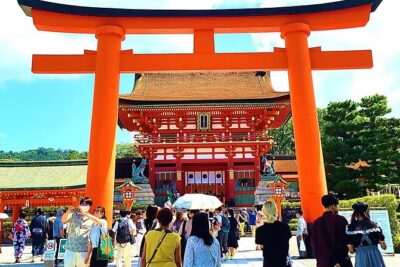
- Fushimi Inari Taisha and its thousand torii: spiritual stairway energy
- Ryoan-ji Zen garden: quiet rules for one famous viewpoint
- Arashiyama bamboo grove and Tenryu-ji: nature break without the long detour
- Gion: old streets and the geisha district vibe
- Kiyomizu-dera and the Higashiyama lanes: temple views plus people-watching
- Nishiki Market: Kyoto kitchen stops for snacks and souvenirs
- Nijo Castle and Pontocho: history walls plus a dinner atmosphere
- Kyoto Imperial Palace, Philosopher’s Path, Nanzen-ji, and Ginkaku-ji: calmer options
- Why a great guide makes or breaks the day
- Who should book this tour, and how to choose your stops
- Should you book this 1-day customized private Kyoto tour?
- FAQ
- How long is the Kyoto private tour?
- How many stops will I see in a half-day vs full-day?
- Is hotel pickup and drop-off included?
- Are entrance fees included?
- Is lunch included?
- Do I need to pay for transportation between stops?
- Where do we meet and where does the tour end?
- Is the tour a walking tour?
- Does the tour run in bad weather?
- Is there free cancellation?
Key takeaways before you go
- Choose your stop count: half-day usually means 2 to 3 stops, full-day usually 3 to 4 from the listed options.
- Private, not packed: it is only your group, so you can slow down, ask questions, and move when it makes sense.
- Top Kyoto anchors are built in: Kinkaku-ji, Fushimi Inari Taisha, Kiyomizu-dera, and Gion are among the core choices.
- Some stops cost extra: several temples have admission fees that are not included, while Fushimi Inari is free.
- Your guide affects the day: strong guiding showed up again and again, from crowd navigation to train logistics.
Build the day yourself. Other private options
- Kyoto: Arashiyama Customized Rickshaw Tour & Bamboo Forest
★ 5.0 · 432 reviews - Kyoto: Private Customized Walking Tour with a Local Insider
★ 4.8 · 383 reviews - Kyoto Customized Private Tour: See Top Attractions in 1 Day
★ 5.0 · 342 reviews - Kyoto: Private Customizable Day Tour with Guide and Vehicle
★ 4.9 · 334 reviews
Private Kyoto, built around your pace and interests
Kyoto can feel like it has 1,000 plans competing for your attention. This tour helps you narrow it down fast. Before you start, you talk through your interests with your guide, then you plug those preferences into a menu of major sights and classic neighborhoods.
That customization is not just “nice to have.” It changes how you experience Kyoto. If you love photography, your guide can prioritize sightlines and timing. If you want culture context, your guide can spend more time on what shrines and temples mean and how they fit into Japanese life.
The best version of this tour is when you use that control actively. Tell your guide what you care about most, plus what you want to avoid. A few guides in the tour mix, like Takuma, are specifically praised for balancing context with time to actually absorb the places in front of you. That balance matters because Kyoto is pretty, but it can also be exhausting if your day becomes a sprint.
Price and what you should budget for
The price is $132.65 per person, and that is reasonable for a one-day private guide setup, especially in a city where transport, guide time, and timed admission can add up. You are paying for two big things: a person to shape the day and the ability to keep your itinerary fluid.
Now the not-so-fun part: entrance fees, transportation fees, and lunch (for you and the guide) are not included. That is important because Kyoto’s “must-sees” include a mix of paid and free places.
A simple way to budget: treat the tour price as the guide and routing cost, then add a rough allowance for temple admissions and any transit charges between neighborhoods. Also, if you are traveling as a solo guest, it is especially worth asking for clarity about any extra transit payments during the tour, since at least one solo traveler reported unexpected guide transit costs mid-day. You do not want a money surprise on a holiday-vibes day.
Meeting point, pickup, and how the day ends
Your start point is the Kyoto Tourist Information Center Kyo-Navi Japan on the second floor of Kyoto Station, at the station building address listed in the tour. Your tour ends back at the meeting point.
That said, hotel pickup and drop-off are included as an option. So for many people, the “meeting point” is mainly a reference for coordination, while the actual start and end are at your hotel. Either way, confirm what pickup location you are using so you do not lose time.
- PERFECT KYOTO 1-Day Bus Tour★ 5.0 · 13,518 reviews
- Kyoto: Fushimi Inari, Kinkakuji, Bamboo Grove 1 Day Bus Tour★ 4.8 · 4,316 reviews
- Kyoto: Tea Ceremony in a Traditional Tea House in Kiyomizu★ 4.9 · 3,519 reviews
- Kyoto Geisha Walking Tour: Gion District & Hidden Gems★ 4.7 · 3,273 reviews
- Kyoto: Tea Ceremony Ju-An at Jotokuji Temple★ 4.9 · 3,207 reviews
Building your half-day or full-day route (2 to 3 stops vs 3 to 4)
Here is the practical reality: Kyoto highlights are popular, so the number of stops matters.
- Half-day option: plan on about 2 to 3 stops.
- Full-day option: plan on 3 to 4 stops.
This is ideal for first-time visitors who want the core hits without trying to swallow Kyoto in one gulp. It also works well for repeat visitors who want a focused “greatest hits plus one specialty stop” day.
A good guiding style showed up in the mix of reviews. People praised guides who kept the pace relaxed while still covering the main sights. A few guides even stayed flexible, such as Osamu, who went beyond the booked time to help with extra time around the bamboo area. That is not guaranteed, but it is a sign that the better guides treat the tour like a real day out, not a rigid checklist.
Kinkaku-ji Golden Pavilion: the photo you remember
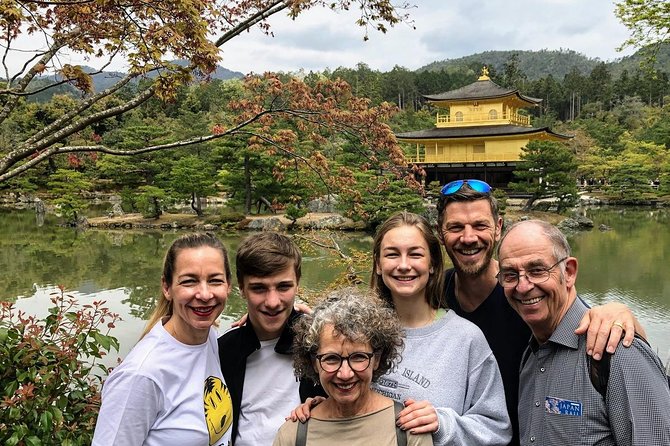
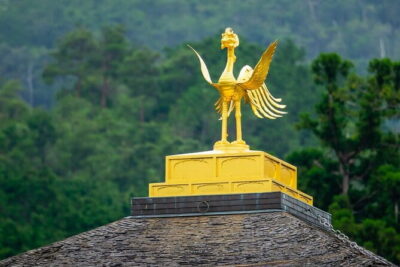
Kinkaku-ji, the Golden Pavilion, is a top start for a reason. In a single view, you get the temple, the reflecting pond, and the layered rooflines people come from across the world to see.
In this tour, it is typically a 30-minute stop, and admission tickets are not included. That means you should expect extra cost here and plan a little buffer for the line or ticket purchase process.
What to watch for
- Go in with realistic photo expectations. The best views are often crowded.
- If your guide is good at timing, you get more calm moments around the edges of the main crowd.
Potential drawback
If you choose too many paid sites back-to-back, you can feel the money and time add up quickly. For paid stops, ask your guide what order makes the most sense for your day.
Fushimi Inari Taisha and its thousand torii: spiritual stairway energy
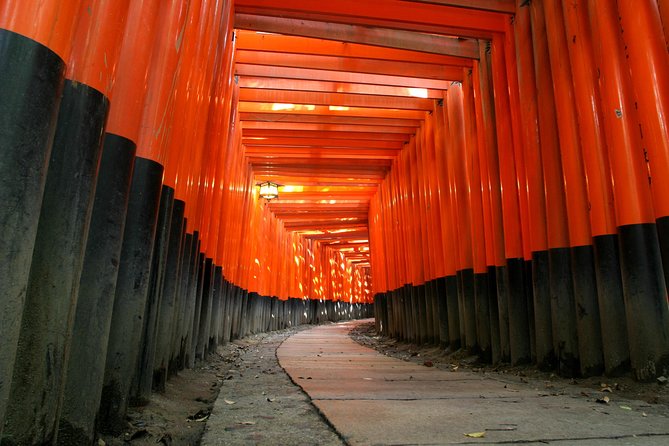
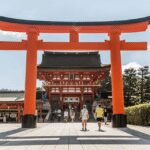
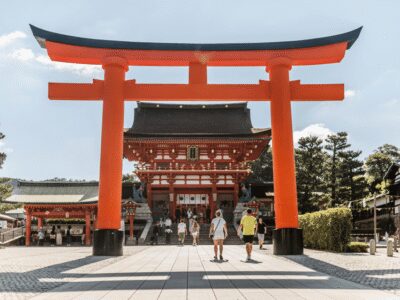
Fushimi Inari Taisha is free for visitors, and in the tour schedule it is typically a 45-minute stop. The torii gates create a long visual rhythm that changes as you walk. Up close, it is not just a landmark, it is a whole experience of space and movement.
Why this stop fits a customized tour
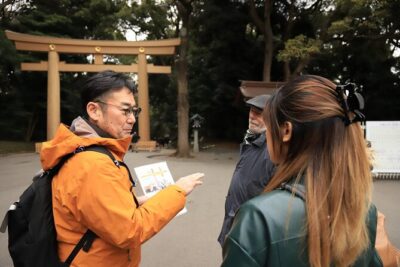
If you like atmosphere, you can stay at a steady pace and let the guide explain what you are seeing. Guides such as Hiro are praised for connecting temples and shrines to everyday Japanese beliefs, and that kind of context turns the torii tunnel into more than a photo backdrop.
A practical tip
Bring the mindset that this is a walk, not just a checkpoint. Comfortable shoes matter here. Also, if you pick a half-day, this is one of the best single anchors because it gives you a huge payoff in about an hour.
Ryoan-ji Zen garden: quiet rules for one famous viewpoint
Ryoan-ji is where the mood shifts. This Zen temple’s highlight is its famous dry landscape garden, a place that looks simple until you start paying attention.
In this tour, it is typically a 30-minute stop, and admission tickets are not included.
What you should do with your time
- Keep your expectations grounded. Zen gardens reward patience.
- Ask your guide what you are looking at. Some guides do an excellent job connecting the design to how people practice reflection and observation.
Potential drawback
If you only have a short day, Ryoan-ji can feel like a “sit and look” moment when you want maximum walking. If that sounds like you, consider pairing it with a nearby food or street stop rather than stacking too many temple interiors.
Arashiyama bamboo grove and Tenryu-ji: nature break without the long detour
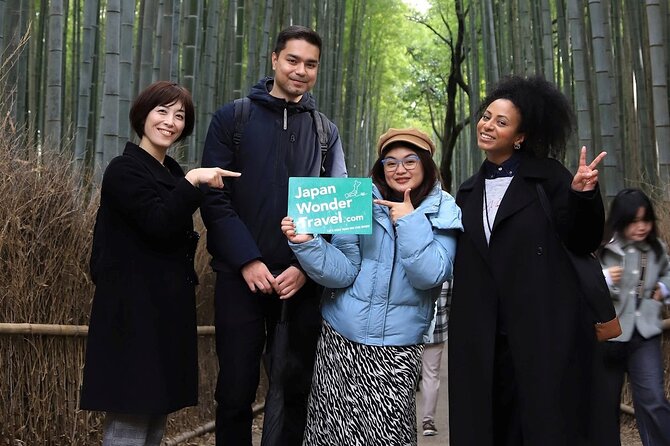
The Arashiyama Bamboo Grove area is included as a stop with a 45-minute time window, and admission is free for the grove itself. This is the Kyoto moment that feels instantly recognizable, mostly because the visuals are so strong.
Tenryu-ji is also offered as an option, and it is described as a UNESCO World Heritage Zen temple. The tour text lists it as a short stop, so think of it as a quick add-on rather than a deep museum-style visit.
Why this is a smart add
Kyoto days can get temple-heavy. Bamboo and gardens provide a reset. In reviews, people singled out Tenryu-ji gardens and the bamboo forest as memorable highlights, especially when their guide balanced time and pacing.
Potential drawback
The bamboo grove can get crowded. If that matters to you, ask your guide how they plan the order and timing.
Gion: old streets and the geisha district vibe
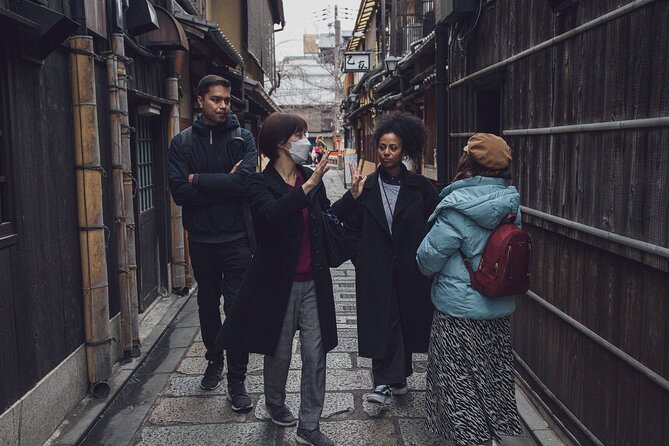
Gion is included as a stop, usually 30 minutes, and admission is free. This neighborhood is known for traditional wooden machiya houses and tea houses, and it is closely tied to geisha culture.
In practice, Gion works best as part of a route that also includes a major temple area. When you combine a shrine or temple stop with Gion, your brain gets a fuller picture of Kyoto as both sacred and social.
What to do
- Walk slowly through the lanes.
- Use your guide for context on what you are seeing and why the architecture and street patterns matter.
Potential drawback
If you go right after a big temple, you might feel like you are “between highlights” unless your guide keeps the pacing interesting.
Kiyomizu-dera and the Higashiyama lanes: temple views plus people-watching
Kiyomizu-dera is a major UNESCO-listed temple, typically 30 minutes, and admission tickets are not included.
Then you get the classic historic street pair, Sannenzaka and Ninenzaka, usually 45 minutes, and admission is free. These streets are steep and lively with traditional wooden houses and shops, which makes them a fun contrast to the more structured temple grounds.
Why you will like this combo
You get both vertical drama and street-level texture. The temple gives you the wide, iconic view. The old streets give you the slow wandering feeling that makes Kyoto feel like Kyoto.
Practical note
This part of the day can include a lot of steps. Plan to wear shoes that can handle uneven pavement and slopes.
Nishiki Market: Kyoto kitchen stops for snacks and souvenirs
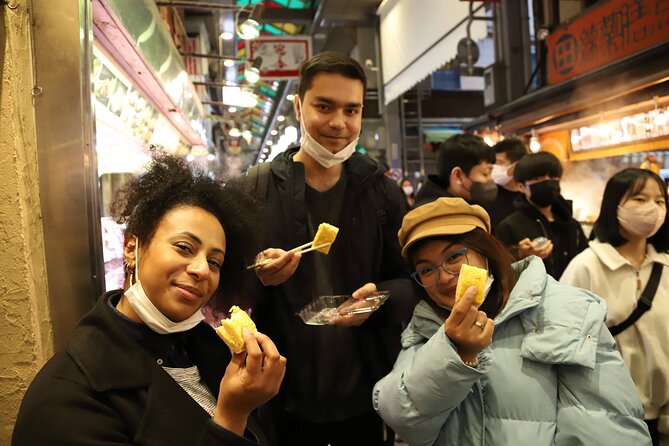
Nishiki Market is on the list as a 45-minute stop with admission marked free. It is described as Kyoto’s kitchen, a marketplace known for food shopping and traditional stalls.
This is a great stop when you want something sensory but not heavy. You can snack, browse ingredients, and pick up small gifts without committing your entire day to a seated meal.
What I’d do
- Keep your shopping tight. You have limited time.
- Use your guide for recommendations based on what you actually like, not just what looks good on the first stall.
Potential drawback
If you are sensitive to crowds, this is one of the busier-feeling areas on the list. Time it well with your guide’s plan.
Nijo Castle and Pontocho: history walls plus a dinner atmosphere
Nijo Castle is included with a 45-minute stop, and admission tickets are not included. It is described as a castle tied to samurai power, with famous artworks and gold leaf ceilings.
Pontocho is offered as an additional stop. It is described as a historic and dining district along the Kamo River, with narrow alleys lined with traditional teahouses.
How to use this pairing
Nijo gives you the structured, official side of Kyoto. Pontocho gives you the evening energy side. If your full-day plan includes both, it sets you up well to turn the day into dinner with minimal extra planning.
Potential drawback
If you visit Nijo Castle without much time, it can feel like you are rushing through details like the gold-leaf interiors. If you care about interiors, consider using more of your time on fewer stops.
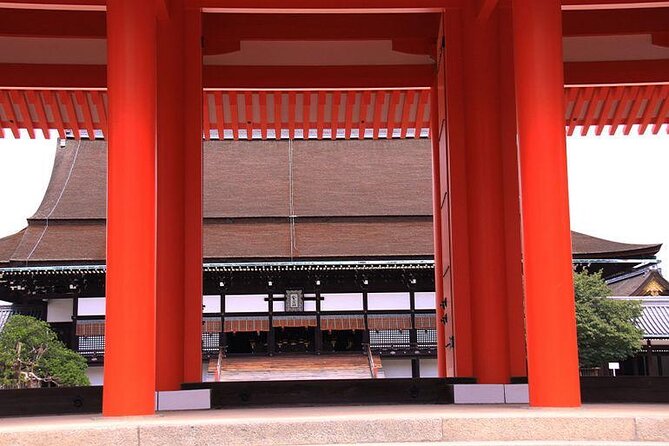
Kyoto Imperial Palace, Philosopher’s Path, Nanzen-ji, and Ginkaku-ji: calmer options
This tour also includes several options that help you steer away from the most crowded circuits.
- Kyoto Imperial Palace: listed as a very short stop with admission free.
- The Philosopher’s Path: described as about a 2-kilometer scenic canal walk near Ginkaku-ji.
- Nanzen-ji Temple: included as an option.
- Ginkaku-ji Temple: Ginkaku-ji, also known as the Silver Pavilion, is described as a celebrated temple with serene beauty and elegant Zen gardens.
These can work well in a half-day if you want a quieter Kyoto feel, or in a full-day if you want variety beyond the Golden Pavilion and torii gates.
Practical reality
Since several of these are listed with very short stop durations, do not treat them like deep visits. Treat them like “see and orient yourself,” then if something really hits you, save it for a future return.
Why a great guide makes or breaks the day
This tour is only as good as the person guiding it, and the reviews show a pattern: the best guides do more than point. They manage time, explain meaning, and help you move smarter.
You’ll see that in the range of guide styles in the tour mix:
- Hiro is praised for sharing context on Shinto and Buddhist practices.
- Mishima is praised for helping navigate the city and train schedule.
- Saeko is praised for tailoring the itinerary around mobility issues while keeping things fun.
- Yuka is praised for using time efficiently and making smart use of multiple transportation modes.
- Kiyoto Noda is praised for English strength, knowing where to photograph, and helping avoid tourist lines.
- Osamu is praised for accommodating heat and even continuing beyond the scheduled window for bamboo time.
- Mika is praised for making the day work smoothly even with a 10-year-old.
You can also ask for small practical help. One guide (Josh) was mentioned for assisting with souvenirs and even helping a partner with a salon visit by explaining what to ask for in Japanese. That is not the whole tour, but it shows the best guides act like real local helpers when you need it.
Who should book this tour, and how to choose your stops
I think this tour fits best when you match at least one of these situations:
- You have limited time and want a greatest-hits plan without doing guesswork.
- You want a private guide who can adjust based on your interests, not just your arrival time.
- You want a first Kyoto trip that includes anchors like Kinkaku-ji, Fushimi Inari, and Kiyomizu-dera, plus a neighborhood like Gion or Pontocho.
If you are a first-timer, a solid half-day pattern is:
- One big temple anchor (Kinkaku-ji or Kiyomizu-dera)
- One “Kyoto icon walk” (Fushimi Inari or the historic lanes)
If you are a food-and-streets person, build around:
- Nishiki Market for a food browsing block
- Then Gion or Sannenzaka/Ninenzaka for that street-level atmosphere
If you are a zen and gardens person, try:
- Ryoan-ji plus either Ginkaku-ji or Tenryu-ji, and save the crowds-heavy spots for another day
If you are visiting with mobility limits, ask ahead about a route that minimizes steep walking and offers efficient pacing. Saeko’s example shows the guides can adapt when the need is clearly communicated.
Should you book this 1-day customized private Kyoto tour?
I’d book it if you want a guided day with control. The value is strongest when you pick a tight number of stops and let your guide help you connect the dots between shrines, temples, neighborhoods, and daily culture.
Before you confirm, do two things:
- Ask what you should expect to pay for admissions and any transit charges during the day, since those are not included.
- Decide your priority in advance: sacred icons, street scenes, gardens, or food. When you give your guide a clear target, the itinerary stops feeling random and starts feeling like your Kyoto.
If you hate walking at all, this might still be too much. But if you can handle moderate walking and you like having a plan that can breathe, this is a strong way to see Kyoto in one day.
FAQ
How long is the Kyoto private tour?
The duration is listed as 4 to 8 hours (approx.), depending on whether you choose a half-day or full-day style route.
How many stops will I see in a half-day vs full-day?
The tour notes suggest half-day trips usually include 2 to 3 spots, while full-day trips usually include 3 to 4 spots.
Is hotel pickup and drop-off included?
Hotel pickup and drop-off are included, and the tour is private so it is just your group.
Are entrance fees included?
Entrance fees are not included in the tour price.
Is lunch included?
Lunch is not included (for you and the guide).
Do I need to pay for transportation between stops?
Transportation fees are not included.
Where do we meet and where does the tour end?
The meeting point is Kyoto Tourist Information Center Kyo-Navi Japan inside Kyoto Station (second floor). The tour ends back at the meeting point.
Is the tour a walking tour?
Yes, it includes a moderate amount of walking. Comfortable walking shoes are recommended.
Does the tour run in bad weather?
The tour runs rain or shine.
Is there free cancellation?
Yes, free cancellation is available up to 24 hours in advance for a full refund.
Your Driver, Your Route Through Kyoto
Newest Kyoto write-ups from the Loving Japan desk

Private Drivers and Customisable Itineraries, side by side.
 ★ 4.9Mount Fuji Full-Day Private Tour from Tokyo (Customizable)From $3931,470 reviews
 ★ 5.0Tokyo Customized Private Tour: See Top Attractions in 1 DayFrom $1451,351 reviews
 ★ 5.0Tokyo Private Sightseeing Tour by Car- English speaking chauffeurFrom $2681,004 reviews
 ★ 5.0Tokyo Private Tour by Vehicle with English-Speaking ChauffeurFrom $468504 reviews
 ★ 4.8From Tokyo: Mount Fuji Full-Day Customizable Private TourFrom $483451 reviews
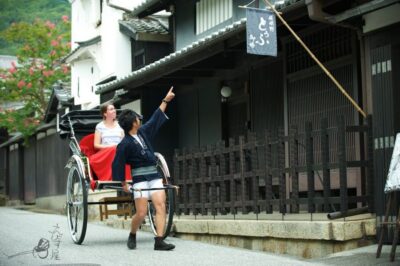 ★ 5.0Arashiyama Customized Rickshaw Tour & Bamboo ForestFrom $51432 reviews
 ★ 4.8Private Customized Walking Tour with a Local InsiderFrom $64383 reviews
 ★ 4.9Private Customizable Day Tour with Guide and VehicleFrom $382334 reviews
Filed on these lists too