
REVIEW · ARASHIYAMA AND THE BAMBOO GROVE
Kyoto: Descending Arashiyama (Private)
Arashiyama can be chaos if you go without a plan. This private, small-group tour strings together the best-known spots and the quieter ones, with a guide who helps you move efficiently through Kyoto’s most famous nature-and-temple area. I especially like the way it focuses on specific sights like the Togetsukyo Bridge, Tenryu-ji, and the rare stone-buddha temples, so you are not just chasing crowds.
I also like the practical pacing. You get about 7.5 hours to cover a lot of ground, plus breaks like tea at an Edo-period cafe, without feeling like you are sprinting from one selfie stop to the next. One consideration: you need to budget extra for admissions, and the tour is built for walking at a moderate pace.
In This Review
- Key points at a glance
- Why a guided Arashiyama route beats winging it
- Meeting at Randen Arashiyama and what the day really costs
- The first stop at Togetsukyo Bridge, and how to start your day smart
- Tenryu-ji Temple: one of Japan’s earliest Zen garden masterpieces
- Otagi Nenbutsu-ji Temple: walking among 1,200 stone buddhas
- Tea at Ayuchaya Hiranoya: an Edo-period break that resets your pace
- Adashino Nembetsu-ji: memorial stones, then a small bamboo grove
- Gio-ji Temple: a former nunnery, a moss garden, and bamboo around you
- Okochi Sanso Garden: estate views that make the walking worth it
- Sagano Bamboo Grove trail: the iconic finish, with less stress
- The guide factor: learning the meaning, not just the sights
- Walking, strollers, and how to set yourself up comfortably
- Should you book this Arashiyama private tour?
- FAQ
- How much is the Kyoto: Descending Arashiyama private tour for a group?
- How long is the tour?
- What time does the tour start, and where do we meet?
- Do I need to pay for admission tickets during the tour?
- Is lunch included, and is there a spending limit?
- Is the tour stroller-friendly?
- What if weather is bad?
Key points at a glance
- Maximum 7 travelers for a more personal feel, even while covering many stops
- Private format means only your group participates
- A guide-led route helps you navigate so you can focus on sights
- Temple highlights include Tenryu-ji and Otagi Nenbutsu-ji with its 1,200 stone buddhas
- More than bamboo with Adashino Nembetsu-ji memorial stones and Gio-ji’s moss garden
- Mobile ticket for easier check-in at the start
Still in Arashiyama? Keep going west
- Kyoto: Fushimi Inari, Kinkakuji, Bamboo Grove 1 Day Bus Tour
★ 4.8 · 4,316 reviews - Osaka/Kyoto:Kinkakuji,Arashiyama,FushimiInariShrine,NaraPark
★ 4.1 · 1,596 reviews - Kyoto/Osaka: Nara, Fushimi Inari Taisha, Arashiyama Bus Tour
★ 4.7 · 1,275 reviews - Kyoto Arashiyama Walking Tour: Bamboo, Monkeys, Gardens & Secrets
★ 5.0 · 1,216 reviews
Why a guided Arashiyama route beats winging it
Arashiyama is one of those places where the main attractions get very popular, very fast. If you arrive with no order in mind, you end up doing the worst kind of sightseeing, backtracking and losing time while you hunt for the next place.
What I like about this tour is that it is designed as a route. You start at the postcard spot, then work through temples and gardens that people often skip when they only have time for bamboo photos. The guide also matters here. You can put your map away and let your day unfold in a logical path, which keeps your energy for what you actually want to see: gardens, stone memorials, and the quiet mood that Kyoto does so well.
There is also an off-the-beaten-path angle. The itinerary leans into lesser-known but very memorable places, like Otagi Nenbutsu-ji and Adashino Nembetsu-ji, so you get Arashiyama’s signature scenery plus a more grounded cultural experience.
Meeting at Randen Arashiyama and what the day really costs
The tour starts at Randen Arashiyama Station Center at 9:30 am, then loops back to the same meeting point at the end. Duration is listed at about 7 hours 30 minutes, so plan your Kyoto day around it.
Price is $690 per group for up to 4 people. That can be great value if you are traveling as a small group and want your own pace. Even if the guide time is the same, your per-person cost drops as you fill the group limit.
Two extra costs are important:
- Each guest needs to bring 5,000 yen cash for admission tickets.
- Lunch is not included, and the tour notes your lunch cost should not exceed 1,500 yen per guest.
If you like to plan, this is helpful. You are not guessing what to spend on temples or wondering how expensive lunch will get. Do bring cash for admissions, since the requirement is explicit.
The first stop at Togetsukyo Bridge, and how to start your day smart
You begin at Togetsukyo Bridge, one of Kyoto’s most recognizable views. This is a good early start because the bridge is photo-friendly, but it also sets your orientation for the rest of the area. Once you see it, everything you do later makes more sense spatially, especially as your walk heads through the Arashiyama temple and garden cluster.
It is also a quick win: the stop is about 20 minutes, and admission is free. So you can get your bearings, take a few photos, then move on without burning half your morning.
- PERFECT KYOTO 1-Day Bus Tour★ 5.0 · 13,518 reviews
- Kyoto: Fushimi Inari, Kinkakuji, Bamboo Grove 1 Day Bus Tour★ 4.8 · 4,316 reviews
- Kyoto: Tea Ceremony in a Traditional Tea House in Kiyomizu★ 4.9 · 3,519 reviews
- Kyoto: Tea Ceremony Ju-An at Jotokuji Temple★ 4.9 · 3,207 reviews
- Kyoto: 45-Minute Tea Ceremony Lesson Experience★ 4.3 · 2,378 reviews
Tenryu-ji Temple: one of Japan’s earliest Zen garden masterpieces
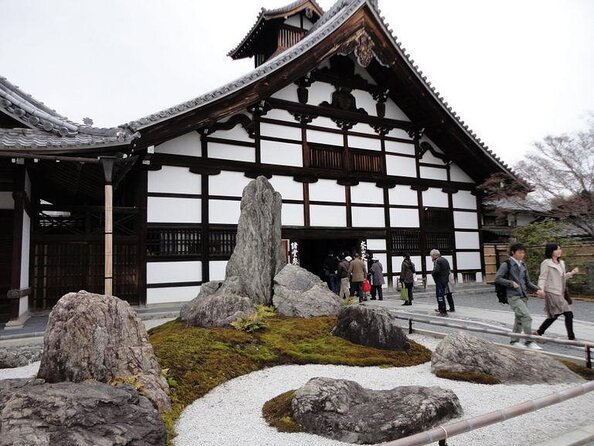
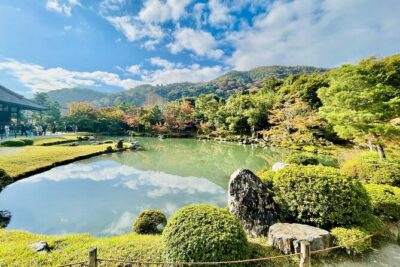
Next is Tenryu-ji Temple, a stop that runs about 1 hour. This is one of the first Zen temples in Japan, and it is known for its Zen garden. Admission is not included, but the payoff is that the guide can point out what to look for, so you do not just wander and hope the garden clicks.
A Zen garden is not like a museum where you follow labels. It is more about trained looking: how the space is arranged, how water and stone guide your eye, and how the garden feels different depending on your viewpoint. Having a guide for this kind of stop is especially useful because you typically do not get that depth on a rushed group visit.
If you are visiting during a season with strong light, you will likely notice the way the garden mood changes over time. The hour gives you space to see it without feeling pressured.
Otagi Nenbutsu-ji Temple: walking among 1,200 stone buddhas
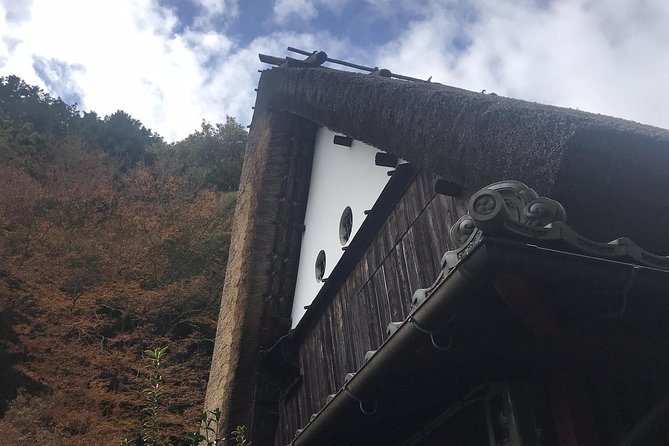
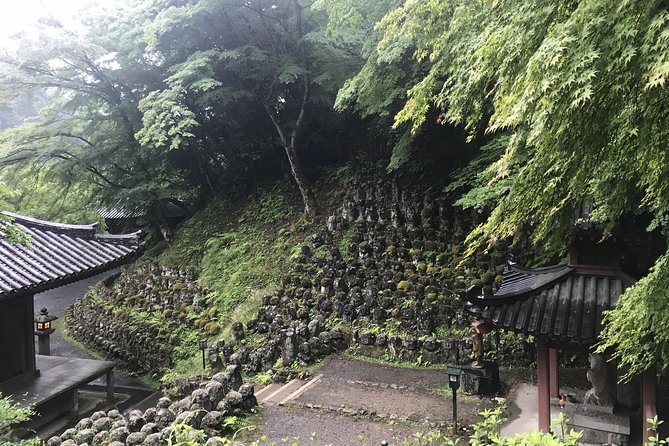
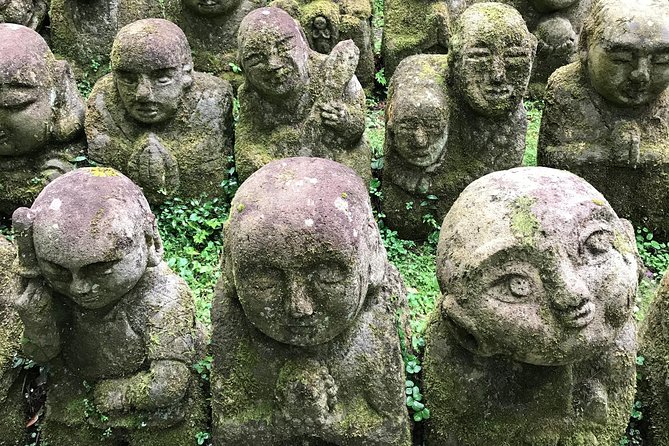
Stop three is Otagi Nenbutsu-ji Temple, and it is the kind of place you remember. You spend about 1 hour here, walking the grounds while your guide explains the site’s long timeline, going back to the Heian period. The headline feature is the 1,200 stone buddha statues.
This is where the tour earns its name “descending Arashiyama.” You are moving through a series of garden and temple moments rather than just hitting points on a map. The stone buddhas can feel overwhelming if you are trying to photograph everything. With a guide, you can slow down at key spots and actually understand what you are seeing.
One practical tip for this stop: wear shoes you can stand in, because you will likely want to linger and keep reading the scene with your eyes, not your feet.
Tea at Ayuchaya Hiranoya: an Edo-period break that resets your pace
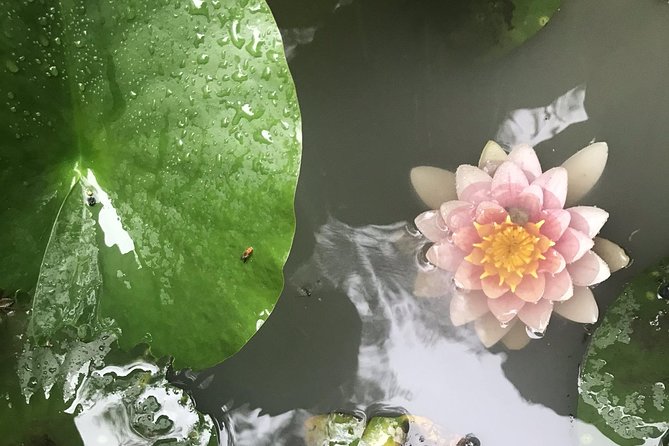
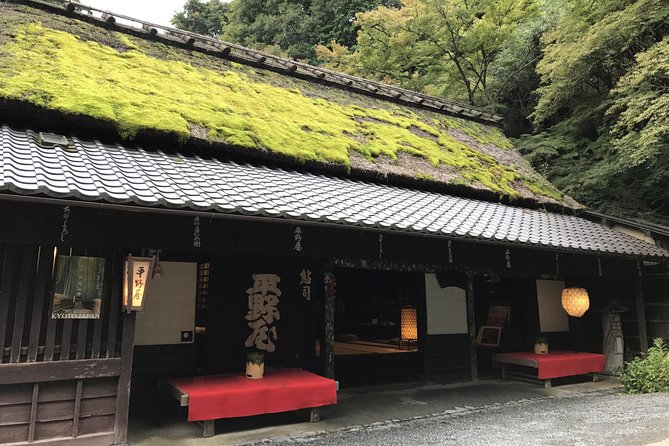
Then comes a more relaxed interlude at Ayuchaya Hiranoya, a cafe connected to an Edo-period origin. You get about 1 hour. Admission is not included, but this is not really about an entrance fee. It is about atmosphere and a breathing moment between temple-heavy stops.
Tea and sweets work well here because they help you shift gears. After walking through stone and moss and garden layouts, your brain needs a slower input. A cafe stop also keeps the day from turning into a nonstop checklist.
You will also appreciate having a fixed break time. When you self-plan, tea breaks often become frantic or overpriced. Here, it is part of the structure.
Adashino Nembetsu-ji: memorial stones, then a small bamboo grove
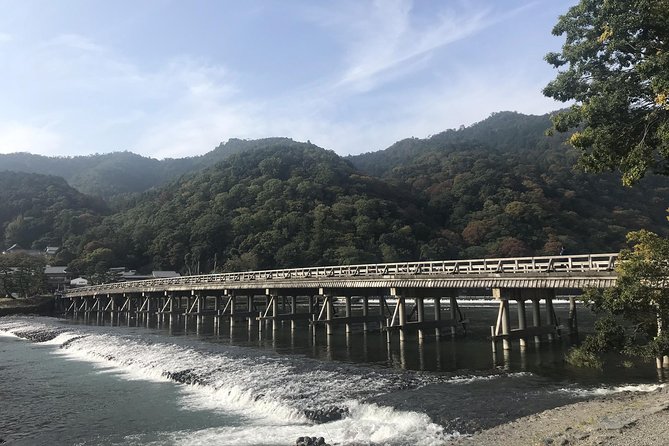
Stop five is Adashino Nembetsu-ji Temple. You spend about 1 hour, and this is a very different emotional tone from the more famous bamboo photos.
The big draw is scale and symbolism: you will see over 8,000 memorial stones gathered from surrounding mountains. You walk through this site and then get a small bamboo grove that feels picturesque without trying to be the most famous thing in Kyoto.
This is one reason I think this tour feels less like a checklist and more like a story. The day moves through different kinds of Arashiyama. You are not only looking at scenic nature, you are also seeing how the area holds memory, spirituality, and landscape together.
Gio-ji Temple: a former nunnery, a moss garden, and bamboo around you
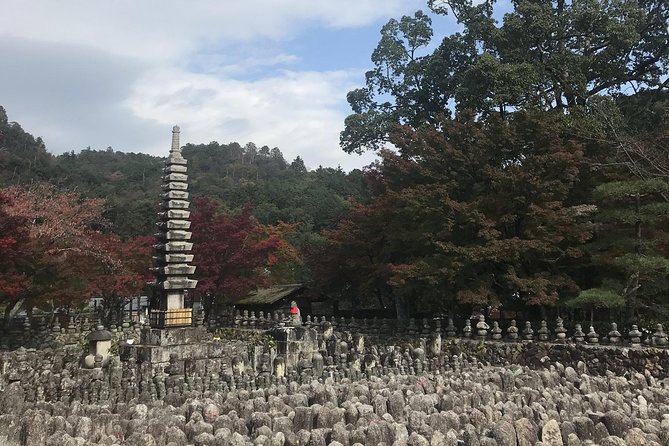
Next is Gio-ji Temple, listed as a 30-minute stop. It was once a nunnery, founded by two ex-geisha, and it is known for a moss garden surrounded by bamboo.
The time here is shorter, so you will want to use it well. This is a great spot for quiet looking, because moss gardens reward slow attention. If you rush, you miss the texture and the subtle composition.
The bamboo setting matters too. Even though the Sagano Bamboo Grove gets the headlines, bamboo here frames the garden in a softer, more contemplative way. It is one of those stops where the mood often lands even if you are not a hardcore temple person.
Okochi Sanso Garden: estate views that make the walking worth it
Stop seven is Okochi Sanso Garden, an estate associated with a well-known silent film actor. You spend about 1 hour, and the views from this garden are described as some of the best in all of Arashiyama.
This is where the “descending” part starts to feel tangible. As you move through the day, you build up to this higher-view payoff, and gardens are often arranged so you see certain angles more clearly from particular points.
Even if you think you already know what Arashiyama looks like, Okochi Sanso can change your perspective. It is scenic, yes, but it is also carefully laid out as a viewing experience. This is one stop that helps justify a guide beyond just saving you from getting lost.
Sagano Bamboo Grove trail: the iconic finish, with less stress
Your last major nature moment is the Bamboo Forest Trail, which corresponds to Sagano Bamboo Grove. This stop is listed at about 30 minutes.
This is the place people come to see, so you will likely notice how busy it can be. The advantage of having a planned slot is that you are not stuck there with your whole day. You can enjoy the atmosphere, take photos, and still keep your momentum for the final leg of the route.
Also, by the time you reach Sagano, you have already seen bamboo in other forms, moss, stone, and temple gardens. So your eyes are more informed. You are not just looking at vertical stalks. You are noticing how bamboo frames space and changes the feel of a place.
The guide factor: learning the meaning, not just the sights
The best praise for this tour is consistent: people love that it is not too touristy, and they walk away feeling like they understood what they saw. That usually comes down to how the guide explains places.
In past departures, the guide Andrew has been singled out for strong knowledge and a storytelling style that makes garden design easier to read. He also spends effort connecting your visit to people who work with or care for the gardens, which adds a human layer beyond the page facts.
You should expect your guide to do more than recite dates. The temples and gardens on this route are visual, so the guide’s job is to help you look in the right direction. You leave with a sense of why things are arranged the way they are, and not just the names of what you passed.
That is also why this tour works for first-timers and repeat visitors. First-timers get structure. Repeat visitors get the satisfaction of revisiting Arashiyama with more context and fewer wasted minutes.
Walking, strollers, and how to set yourself up comfortably
This is a walking day with moderate physical fitness recommended. The itinerary includes multiple temple grounds and garden paths, not just street-level sightseeing.
If you bring a stroller, the tour notes that strollers are available, but you will not be allowed inside the sites themselves. You can store strollers at the reception desk of each site. That is a workable system, but it also means you will still need some ability to handle stairs or uneven paths at each stop.
If you are traveling with older family members, plan your footwear carefully. You will be on your feet for many segments, and your comfort will shape how much you enjoy the garden moments.
Should you book this Arashiyama private tour?
Book it if you want Arashiyama to feel organized and meaningful. The blend is strong: the famous view at Togetsukyo Bridge, serious Zen garden time at Tenryu-ji, and the rare, memorable stone-buddha experience at Otagi Nenbutsu-ji. Add emotional stops like Adashino Nembetsu-ji and the mossy quiet of Gio-ji, then finish with the Sagano Bamboo Grove trail.
Skip or consider alternatives if you are determined to do Arashiyama on your own with zero extra spending. This tour adds value through guidance and a packed route, but it is not designed for travelers who want to wander freely and decide everything minute by minute.
If you are traveling as a small group of up to four, this private format can be a smart move. You pay for the group experience, then you get a day that feels stitched together instead of scattered.
FAQ
How much is the Kyoto: Descending Arashiyama private tour for a group?
The price is $690 per group (up to 4 people).
How long is the tour?
It runs for about 7 hours 30 minutes.
What time does the tour start, and where do we meet?
The tour starts at 9:30 am at Randen Arashiyama Station Center, 20-2 Tsukurimichi-cho, 嵯峨天龍寺芒ノ馬場町 右京区 京都市 京都府 616-8384, Japan. It ends back at the meeting point.
Do I need to pay for admission tickets during the tour?
Yes. Each guest is required to bring an additional 5,000 yen in cash for admission tickets.
Is lunch included, and is there a spending limit?
Lunch is not included. The lunch cost should not exceed 1,500 yen per guest.
Is the tour stroller-friendly?
Strollers will be available as you walk between sites, but strollers will not be allowed inside the sites themselves. You can store strollers at the reception desk of each site.
What if weather is bad?
This experience requires good weather. If it is canceled due to poor weather, you’ll be offered a different date or a full refund.
Further Into Arashiyama

Newest Kyoto write-ups from the Loving Japan desk
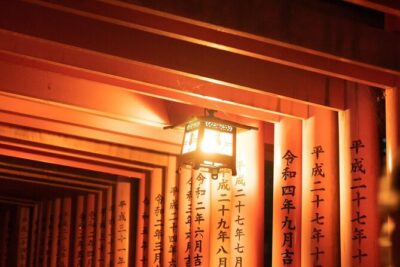
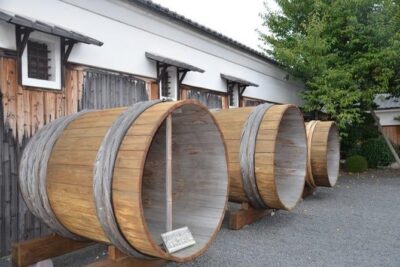
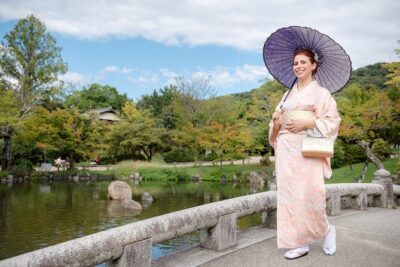
Arashiyama and the Bamboo Grove, side by side.
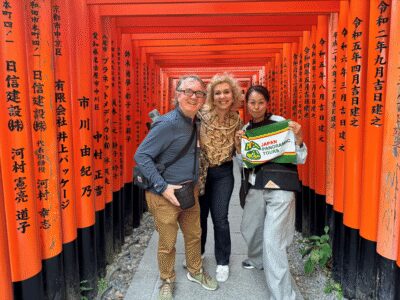 ★ 4.8Fushimi Inari, Kinkakuji, Bamboo Grove 1 Day Bus TourFrom $1224,316 reviews
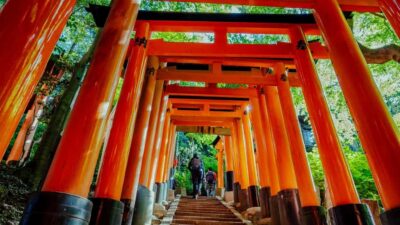 ★ 4.1Osaka/Kyoto:Kinkakuji,Arashiyama,FushimiInariShrine,NaraParkFrom $661,596 reviews
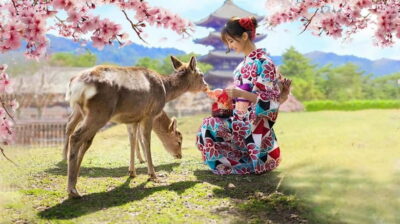 ★ 4.7Kyoto/Osaka: Nara, Fushimi Inari Taisha, Arashiyama Bus TourFrom $521,275 reviews
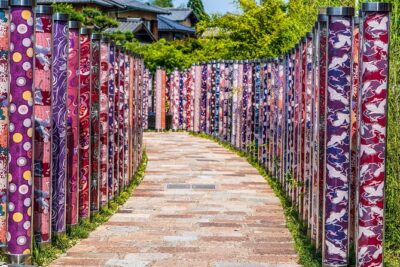 ★ 5.0Kyoto Arashiyama Walking Tour: Bamboo, Monkeys, Gardens & SecretsFrom $651,216 reviews
 ★ 4.8Arashiyama Bamboo, Temple, Monkeys, or Secret Sake BreweryFrom $87886 reviews
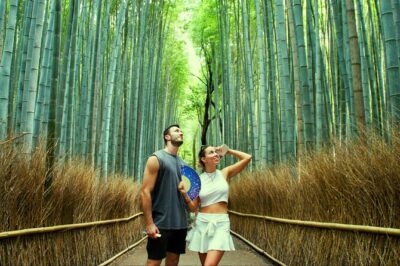 ★ 5.0Arashiyama Bamboo Forest, Monkeys, Matcha & Temple TourFrom $53759 reviews
 ★ 4.4Osaka/Kyoto: Arashiyama, Nara & Fushimi Inari Shrine w/LunchFrom $61754 reviews
 ★ 5.0Nijo, Kinkaku-ji, Arashiyama, Kiyomizu & Fushimi InariFrom $51699 reviews
Filed on these lists too