
REVIEW · CYCLING AND E-BIKE TOURS
Kyoto: Full Day Bike Tour
Kyoto by bike sounds like a treat for your legs and your eyes. This full-day ride stitches together famous temples with quieter neighborhood lanes, so you feel like you are moving through real Kyoto, not just ticking boxes. I especially like the mix of major sights and back-street detours, and the fact that the route keeps you rolling at a fun pace instead of waiting around. One thing to weigh, though, is that this is truly a full day on a bike, so comfort matters, and the tour does not run in all weather.
My other big reason to recommend this tour is the human touch. The guides are English-fluent and have lived in Japan for a while, and you might get leaders such as Shawn, Juan, Karl, or Jay depending on the day. From what I’ve learned, the best part is how they connect what you are seeing to everyday Kyoto life, with patient explanations that work even if you are not a temple person.
The main drawback is simple: you need to be a confident bike rider, and you should plan for a long 450-minute day starting at 9:30 AM sharp. If you are not comfortable on two wheels, or you cannot handle a steady sequence of stops and rides, this will feel more work than joy.
In This Review
- Key highlights in plain terms
- Why biking Kyoto works so well on this 450-minute route
- Meeting at Cycle Kyoto: bike fitting, safety, and what to pack
- Toji and Nishi Honganji: the oldest Kyoto start, then a smooth ramp-up
- Sanjo arcade, Shinsen-en gardens, and Kitano Tenmangu: Kyoto beyond the postcard
- Kinkakuji Golden Pavilion: what you gain from included entry time
- Lunch near the Imperial Palace: a break that actually changes the day
- Kamo River photos and Gion back streets: the Kyoto vibe shift
- Tofukuji photo stop and Fushimi Inari’s Senbon Torii finish
- Bikes, pace, and what the day feels like in motion
- Price and value: why $116 feels fair for an all-day format
- Who should book, and who should skip this bike tour
- Should you book the Kyoto Full Day Bike Tour?
- FAQ
- What time does the Kyoto Full Day Bike Tour start?
- Where does the tour start?
- How long is the tour?
- What’s included in the price?
- Can I request an e-bike instead of a standard bike?
- How big is the group?
- What should I bring, and what is not allowed?
- Does the tour run in heavy rain?
Key highlights in plain terms
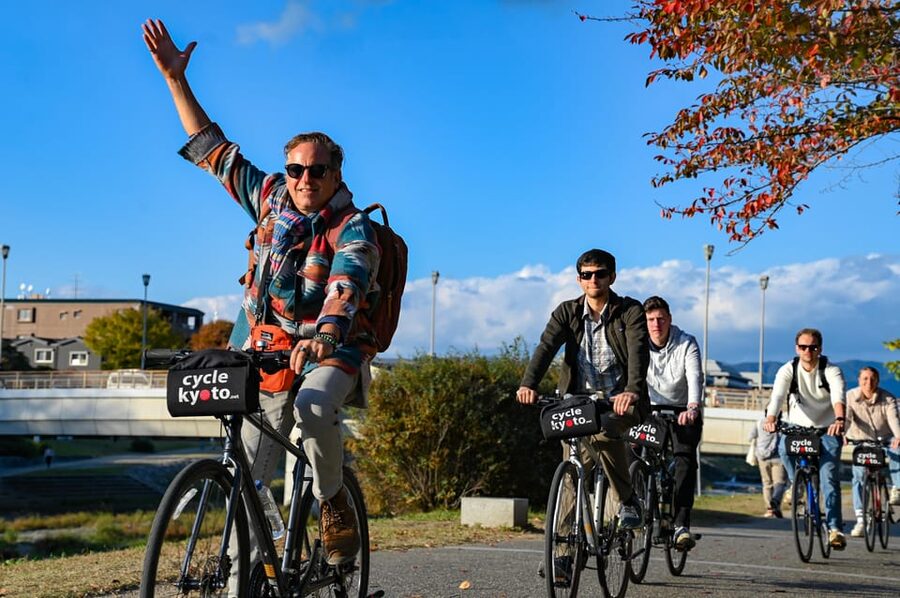
- Small groups up to 9 keeps the ride calm and the pacing manageable
- Bike rental with helmets plus dependable Giant and Trek cross bikes
- Golden Pavilion entry included so you avoid ticket hassle at the busiest stop
- E-bikes on request for anyone who wants extra help
- A lunch stop that feels local, not something you would easily find on your own
Cover Kyoto on two wheels instead
- Arashiyama Bamboo Forest & Hidden Gems Bike Tour (Early Bird)
★ 5.0 · 613 reviews - 5 Top Highlights of Kyoto Full Day Bike Tour (E-bike option)
★ 5.0 · 511 reviews - Full Day Biking Tour Exploring the Best of Kyoto
★ 5.0 · 498 reviews - E-Bike Tours of the highlights of Kyoto!!!
★ 5.0 · 291 reviews
Why biking Kyoto works so well on this 450-minute route
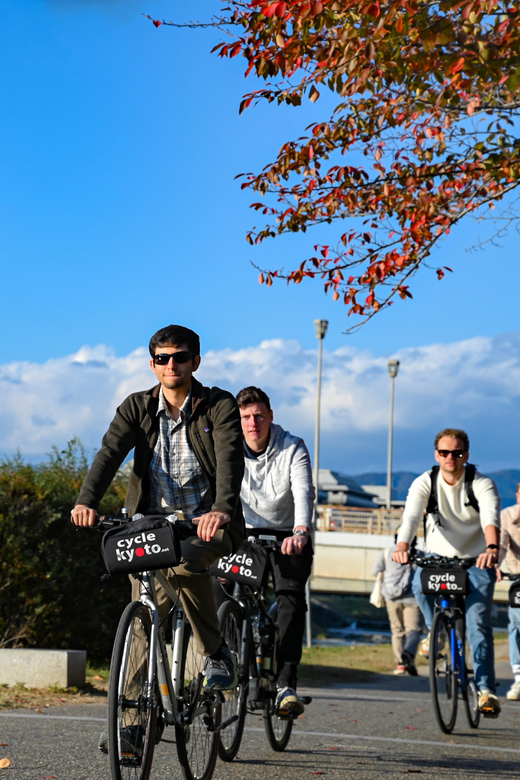
Kyoto is a city where the best moments often hide between headline stops. A bike tour helps because you can get that in-between feeling, the quick turn that reveals a lane, the short ride that drops you near a shrine gate, the way a neighborhood changes after you crest one small stretch of road. This route is built for that style of sightseeing.
You also get a smart balance of famous and lesser-seen. You start with top temples and finish with the big ticket photo moment at Fushimi Inari, but you spend plenty of time where the city feels lived-in. That is what makes a bike tour feel different from buses, and it is why a long day still feels like it is moving.
The day is structured to keep your energy in mind, with guided time inside major sites and photo stops where you can linger without being stuck walking for hours.
Meeting at Cycle Kyoto: bike fitting, safety, and what to pack
The day begins at Cycle Kyoto, and you’ll want to arrive early. The start time is 9:30 AM sharp, so plan to be there about 15 minutes ahead for bike fitting and setup. The tour includes a 25-minute safety briefing at the first temple stop area, which is a good use of time because it sets expectations for riding in a busy city.
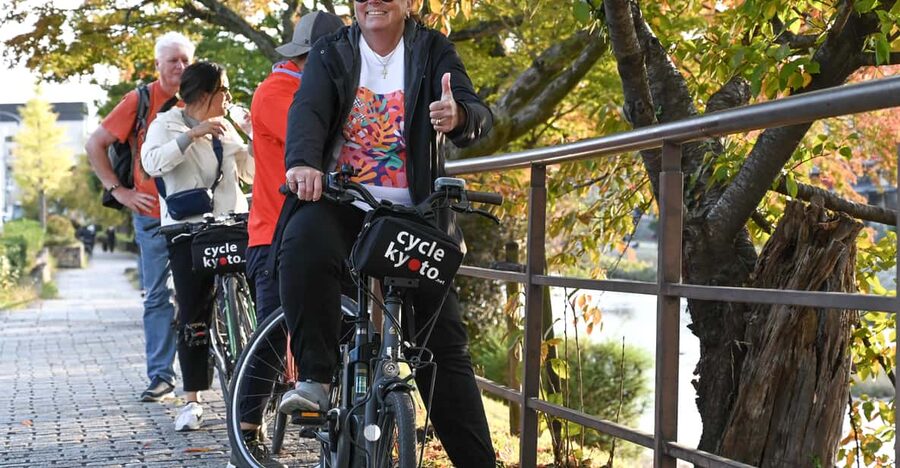
Bikes are well-maintained cross bikes from Giant and Trek, and you can request an e-bike if you want assistance. You’ll also get a helmet, which makes a bike day feel safer right away.
For what to bring, keep it simple:
- Comfortable shoes and clothing suited for biking
- A hat, sunscreen, water, and a camera
- Minimal personal belongings, because storage space on bikes is limited
- If you have larger luggage, you can leave it in the shop’s secure space during the tour
One practical note: the tour does not allow high-heeled shoes or smoking. If you are coming straight from nightlife or shopping, switch footwear before you join.
Toji and Nishi Honganji: the oldest Kyoto start, then a smooth ramp-up
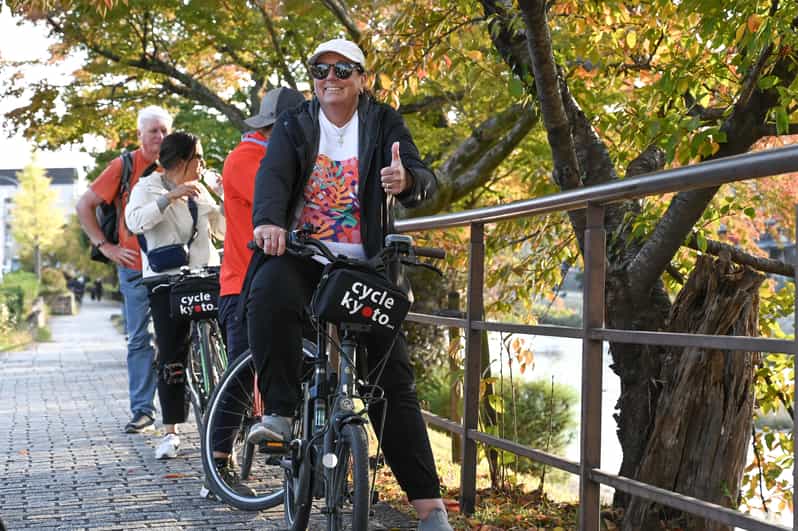
The route kicks off at Toji, Kyoto’s oldest temple. This is a strong first stop because it sets a historical tone without asking you to start tired. You’ll get your safety briefing and then a guided temple visit, with about 30 minutes there for you to look around properly.
After that, you ride for a short time to Nishi Honganji. This is where the tour’s rhythm clicks into place: quick ride segments, then focused time at religious sites. Nishi Honganji is described as awe-inspiring, and the guided portion runs about 50 minutes. That extra guided time matters because temples can feel overwhelming if you are not sure what to notice. Having an English guide helps you spot the details you might otherwise miss.
If you like structure, this is a good early setup. If you get impatient with long temple stops, the timing still feels reasonable because you are riding between sites rather than waiting for transport.
- PERFECT KYOTO 1-Day Bus Tour★ 5.0 · 13,518 reviews
- Kyoto: Fushimi Inari, Kinkakuji, Bamboo Grove 1 Day Bus Tour★ 4.8 · 4,316 reviews
- Kyoto: Tea Ceremony in a Traditional Tea House in Kiyomizu★ 4.9 · 3,519 reviews
- Kyoto Geisha Walking Tour: Gion District & Hidden Gems★ 4.7 · 3,273 reviews
- Kyoto: Tea Ceremony Ju-An at Jotokuji Temple★ 4.9 · 3,207 reviews
Sanjo arcade, Shinsen-en gardens, and Kitano Tenmangu: Kyoto beyond the postcard
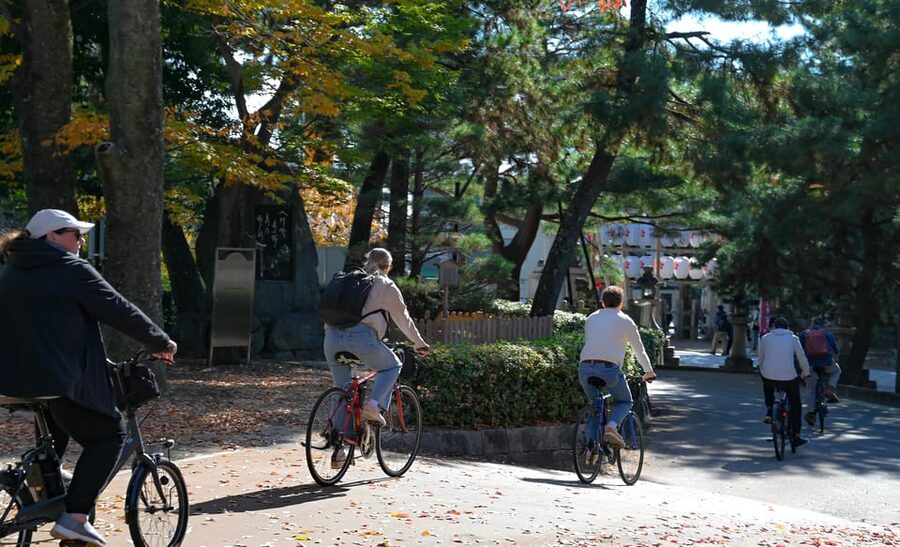
Next comes a ride north through the Sanjo Shopping arcade. This is a nice palate cleanser between temple stops because it reminds you that Kyoto is also shopping streets, errands, and daily life. You are not just passing through; you are moving through.
Then you make a quick stop at Shinsen-en gardens. The time is shorter here, so think of it as a breather where you can reset your legs and take in a calmer setting. Gardens can be tricky on a schedule, but even a short visit helps break up the day and adds variety.
From there, you reach Kitano Tenmangū Shrine. This portion is guided for about one hour, and the grounds are worth walking at an unhurried pace. Shrine visits are often where guides can explain meaning without turning it into a lecture. It also helps that the tour is designed to keep you out of constant dead time, so you stay engaged instead of feeling rushed.
Kinkakuji Golden Pavilion: what you gain from included entry time
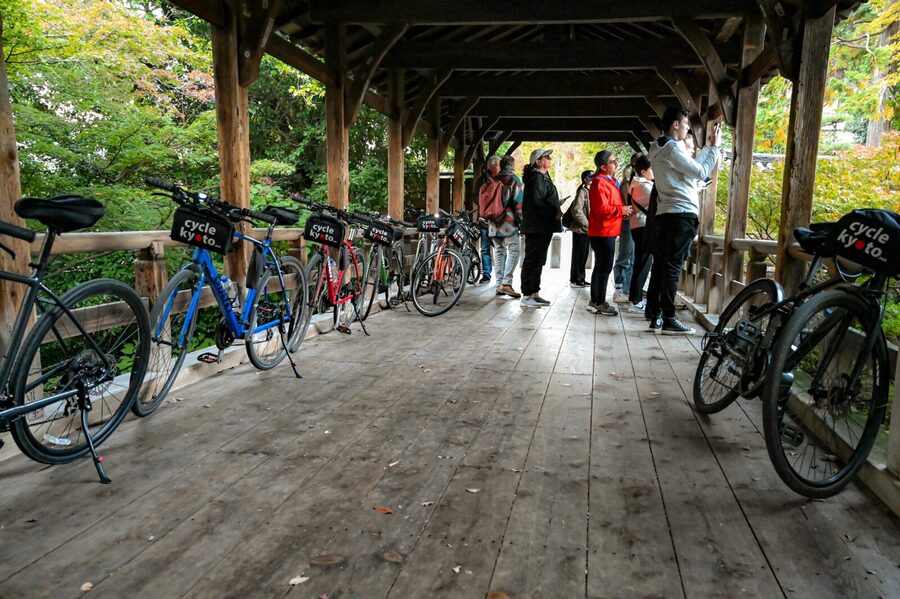
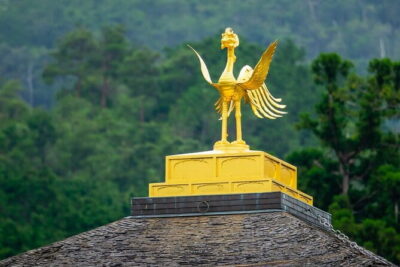
The Golden Pavilion, Kinkaku-ji, is one of those stops where you either plan ahead or you lose time in ticket lines. Here, the entrance fee is included, and you get time to explore for about 25 minutes once you are inside.
That half-hour window is a practical sweet spot. It is enough to see the main views, get your photos, and notice how the atmosphere shifts as you move around the grounds. It is also short enough that you are not stuck in one spot for the whole day.
If you are the type who likes to get the must-sees done early, this stop works well. If you prefer to linger, you may want to take a quick look first, then come back to the exact angle you care about.
Lunch near the Imperial Palace: a break that actually changes the day
After Kinkaku-ji, the tour heads toward the Imperial Palace area with a traditional Japanese lunch stop on the way. You get about one hour here for the meal and a breather.
Lunch is included, and the restaurant is traditional. One of the most praised parts of the tour is that the lunch location is somewhere you might not pick on your own, which matters because Kyoto has plenty of options, and it can be hard to choose a place that fits dietary needs and timing when you are sightseeing all day.
The Imperial Palace visit comes after lunch, with about one hour there. This sequence helps. Food resets you after a major temple, and the palace area offers a different kind of sightseeing, more open and airy compared with dense temple lanes.
Kamo River photos and Gion back streets: the Kyoto vibe shift
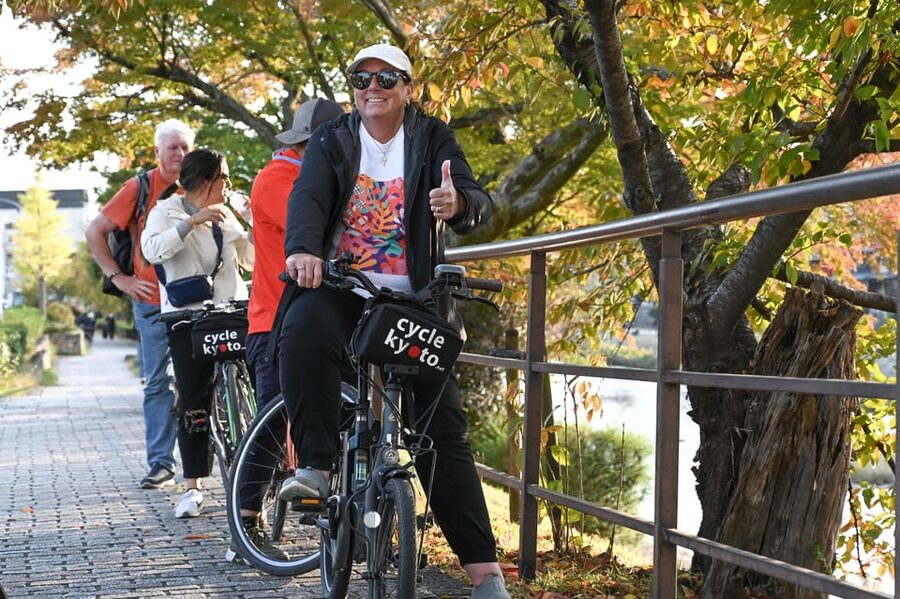
Now the tour leans into atmosphere. You pick up the Kamo River and get a photo stop for about 40 minutes. A photo stop sounds simple, but it gives you space to slow down, reposition, and enjoy river views without having to sprint to the next gate.
Then comes Gion, the famous geisha district. The guided portion is about one hour, and the route focuses on back streets rather than only the main thoroughfares. That detail is a real value. You see the area with less of the rush feel, and it becomes more about texture, doorways, street scenes, and small rhythms than just staring at famous storefronts.
If you are hoping to understand why Kyoto looks the way it does, Gion is one of the better places for that. The guide’s context helps you read what you see, from historic architecture cues to how the neighborhood functions.
Tofukuji photo stop and Fushimi Inari’s Senbon Torii finish
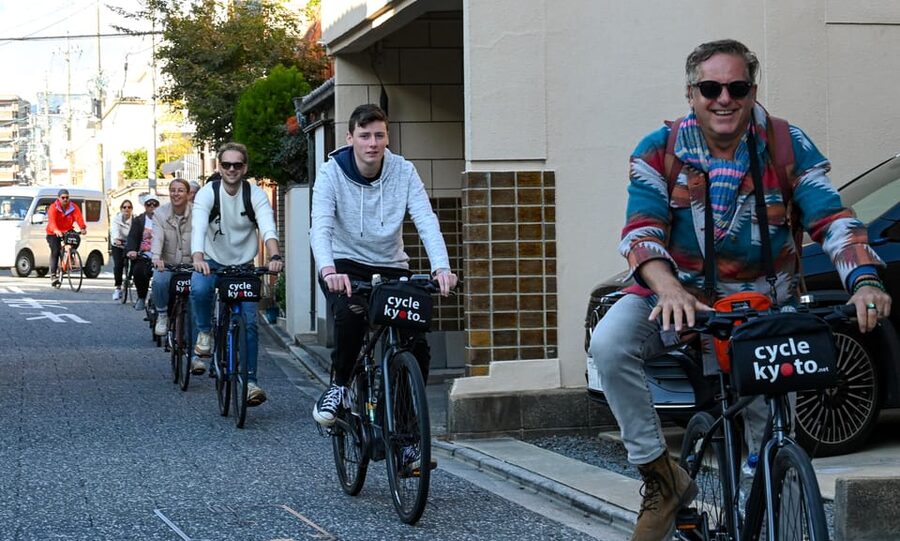
After Gion, the tour includes a photo stop at Tofukuji Temple for about 30 minutes. Photo stops are quick by design, but they serve a purpose: they let you get a strong sense of place without turning the day into nonstop walking.
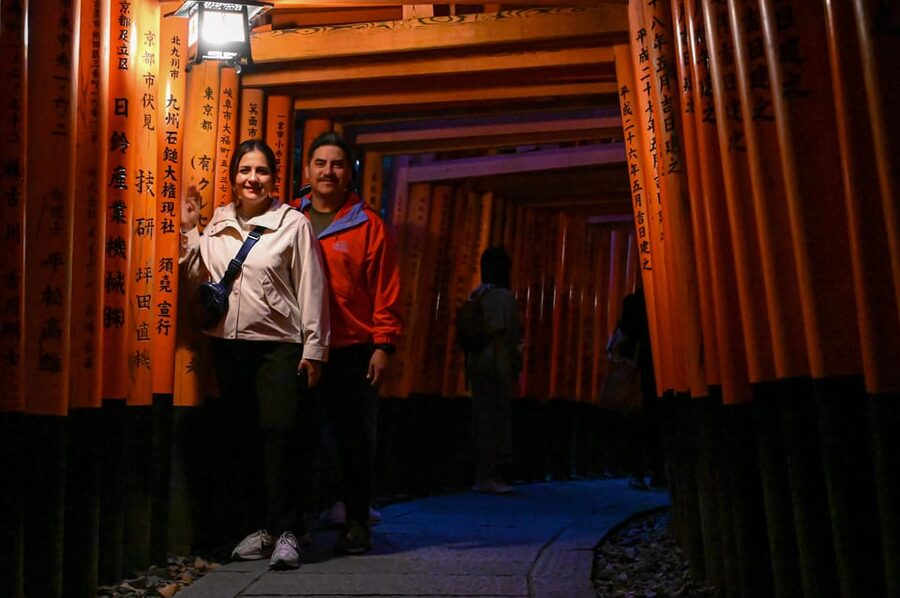
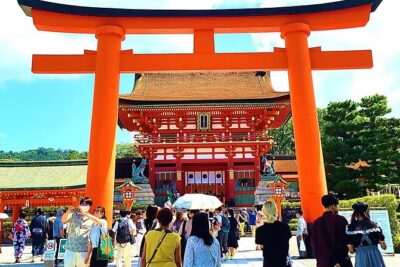
Then you end with Fushimi Inari Taisha and its Senbon Torii gates. This is the spectacular finish, with about one hour guided. The torii gates are the kind of visual you do not forget once you start seeing the repeated arches and the path through them.
This finale works well psychologically. By the time you reach Fushimi Inari, you have already built a mental map of Kyoto’s temple language. So when you arrive, you are not just chasing photos. You’re seeing the structure and rhythm of shrine spaces in a way that connects back to earlier stops.
Bikes, pace, and what the day feels like in motion
The route is designed for a cycling rhythm: ride segments between sites, then guided or photo time where you can focus. The tour length is 450 minutes, and in practice that is a full day, not a quick taste.
One detail that helps you plan is that a recent group finished with a little over 18 miles of cycling plus walking through mini sites. That lines up with the idea that you should expect both pedaling and short foot exploration.
It also helps that the small group size is capped at 9 participants. Fewer people means less bunching up on narrow lanes, and it makes bike handling easier for the group overall.
If you are considering regular bikes versus e-bikes, here is the practical approach: if you expect to be tired at the end of the day, or you simply want to conserve energy for walking and photos, request the e-bike. If you are fit and comfortable on standard bikes, regular cross bikes should feel manageable since the route prioritizes safe riding streets and clear guidance.
Price and value: why $116 feels fair for an all-day format
The price is $116 per person, which sounds straightforward until you break down what is included. You are getting bike rental, a helmet, entrance to the Golden Pavilion, and a traditional Japanese lunch. You are also getting an English live guide and a route that takes in major and not-so-major places across Kyoto.
For a full-day experience, that package can be good value because you are paying for more than transportation. The guide time is what turns a pile of stops into a connected day. The included entrance is what saves you time at the Golden Pavilion, which is often the stop where schedules get complicated.
Also, the group size matters. With a maximum of 9 people, you’re more likely to get help when you need it, and the ride is less chaotic than big-group formats.
Who should book, and who should skip this bike tour
This tour fits best if you:
- Can ride a bike comfortably for a full day
- Like seeing multiple neighborhoods, not just one cluster of sights
- Enjoy guided explanations that help you understand temples and shrines as you go
- Want a lunch stop included in the schedule, and you like food recommendations that feel local
It is not suitable for people who cannot ride a bike. It also is not aimed at children under 12 or pregnant women, based on the tour’s listed restrictions.
If you are on the fence, think about your own biking comfort first. This is not a gentle stroll. It is active touring, and the best outcomes come when you are physically ready and mentally willing to ride.
Should you book the Kyoto Full Day Bike Tour?
Book it if you want a high-energy day that still feels personal, with an English guide who can connect what you see to Kyoto life. The included Golden Pavilion entry and the lunch stop are practical wins, and the emphasis on back streets means you will come away with more than just iconic photos.
Skip it if you want a slow, mostly seated sightseeing day, or if you are not confident riding in city settings. The timing starts early, the day is long, and weather can affect operations.
If you do book, come prepared with comfortable shoes, water, and minimal luggage. Arriving 15 minutes early helps the fit and briefing go smoothly, and it sets you up to enjoy the ride right away.
FAQ
What time does the Kyoto Full Day Bike Tour start?
The tour starts at 9:30 AM sharp. You should be there about 15 minutes early.
Where does the tour start?
The starting location is Cycle Kyoto.
How long is the tour?
The duration is 450 minutes, which is a full-day format.
What’s included in the price?
Bike rental, a helmet, the entrance fee to the Golden Pavilion, and a traditional Japanese lunch are included.
Can I request an e-bike instead of a standard bike?
Yes. E-bikes are provided upon request.
How big is the group?
The group is small, limited to 9 participants.
What should I bring, and what is not allowed?
Bring comfortable shoes, a hat, a camera, sunscreen, and water. High-heeled shoes are not allowed, and smoking is not allowed.
Does the tour run in heavy rain?
The tour does not operate in all weather conditions. In case of heavy rain, it is cancelled and refunds are provided.
Bicycles and E-Bikes We Have Ridden
Newest Kyoto write-ups from the Loving Japan desk

Cycling and E-Bike Tours, side by side.
 ★ 5.0Hidden Kyoto E-Biking tourFrom $1161,843 reviews
 ★ 5.0Tokyo Guided Small-Group Biking TourFrom $1061,250 reviews
 ★ 5.0Tokyo Great Cycling TourFrom $99811 reviews
 ★ 5.0Tokyo Top Highlights 3h Guided E-bike TourFrom $63714 reviews
 ★ 5.03h Tokyo E-Bike Tour: Hidden Gems, and Local Life with guideFrom $63670 reviews
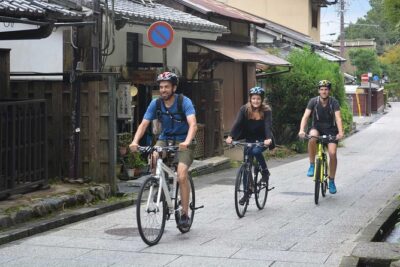 ★ 5.0Arashiyama Bamboo Forest & Hidden Gems Bike Tour (Early Bird)From $106613 reviews
 ★ 5.05 Top Highlights of Kyoto Full Day Bike Tour (E-bike option)From $172511 reviews
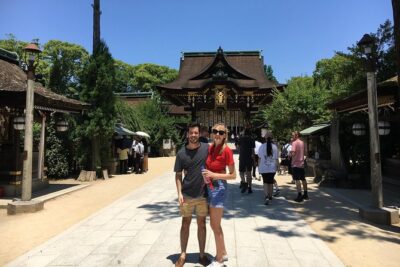 ★ 5.0Full Day Biking Tour Exploring the Best of KyotoFrom $119498 reviews
Filed on these lists too