
REVIEW · CYCLING AND E-BIKE TOURS
Kyoto: Full-Day City Highlights Bike Tour with Light Lunch
Kyoto looks different at bike speed. I love the Arashiyama Bamboo Grove with its endless shades of green, and I love the Fushimi Inari vermilion torii lined across trails. The whole day runs as a calm, guided ride, with you stopping long enough to actually look, not just snap photos.
One thing to plan for: this is a full-day cycling outing, about 44 km (27 mi). If your fitness is low or your bike skills are rusty, you will feel it, even with a leisurely pace.
In This Review
- Key Points You’ll Care About
- Why Kyoto Highlights Look Better by Bike
- Starting at Saga-Arashiyama Station: The Day Begins With Fit and Safety
- Arashiyama Bamboo Grove: The Calm-Then-Crowd Reality
- Fushimi Inari Taisha: Torii Gates and Fox Statues Off the Main Track
- Gion and Hanamikoji Street: Kyoto’s Theater District Feel
- Kiyomizu-dera: The UNESCO View With Otowa Spring Meaning
- Kinkaku-ji Golden Pavilion: When Light Turns a Temple Into a Mirror
- The Ride Itself: How Hard Is 44 km in Real Life?
- Price and Value: What $167 Really Includes
- What to Bring (and What Not to Wear)
- Who This Bike Tour Suits Best
- Should You Book This Tour?
Key Points You’ll Care About
- Small group (up to 8) keeps the ride smooth and the route flexible
- Arashiyama Bamboo Grove first means you start with that iconic green before the city crowds build
- Fushimi Inari Senbontorii trail time lets you go past the main cluster to the side paths
- Gion street atmosphere on two wheels gives you a better rhythm than hopping on and off transit
- Kiyomizu-dera plus Otowa Spring adds meaning beyond the famous viewpoint
- Kinkaku-ji Golden Pavilion at pond level turns a temple stop into a light-and-reflection moment
Cover Kyoto on two wheels instead
- Arashiyama Bamboo Forest & Hidden Gems Bike Tour (Early Bird)
★ 5.0 · 613 reviews - 5 Top Highlights of Kyoto Full Day Bike Tour (E-bike option)
★ 5.0 · 511 reviews - Full Day Biking Tour Exploring the Best of Kyoto
★ 5.0 · 498 reviews - E-Bike Tours of the highlights of Kyoto!!!
★ 5.0 · 291 reviews
Why Kyoto Highlights Look Better by Bike

Kyoto is famous for its temples, shrines, and old neighborhoods. But on foot or in a bus, your day can feel like a sequence of doorways: get off, look up, move along. A bike day changes that. You feel the distance between places, and you also feel the neighborhoods in between.
I like that this tour is built around “see, ride, repeat.” You get a guide to keep you moving smoothly, and you also get time at each major stop to actually take things in. That matters at places like the bamboo grove and Fushimi Inari, where the best moments often happen when you slow down and notice details.
It’s also a value play. At $167, you are not just paying for sightseeing. The price includes the bilingual guide, your bike, helmet, bottled water, entry fees, and a light lunch. That package makes it easier to compare against the real cost of transit, tickets, and food if you build your own day.
Starting at Saga-Arashiyama Station: The Day Begins With Fit and Safety
You meet outside JR Saga-Arashiyama Station. Your guide wears a bike helmet and a Kyoto Bike Tour shirt, so it’s usually easy to spot the group quickly.
Before you start rolling, you go through a safety briefing and a bike fitting. That sounds basic, but it’s the difference between a day that feels manageable and a day where your body complains. A proper bike fit helps you pedal comfortably for hours, especially when you are in and out of traffic and stopping often.
Because the group is capped at 8 participants, the guide can manage the ride with less waiting around. That also means you spend less time circling for regrouping and more time enjoying what you came for.
Arashiyama Bamboo Grove: The Calm-Then-Crowd Reality
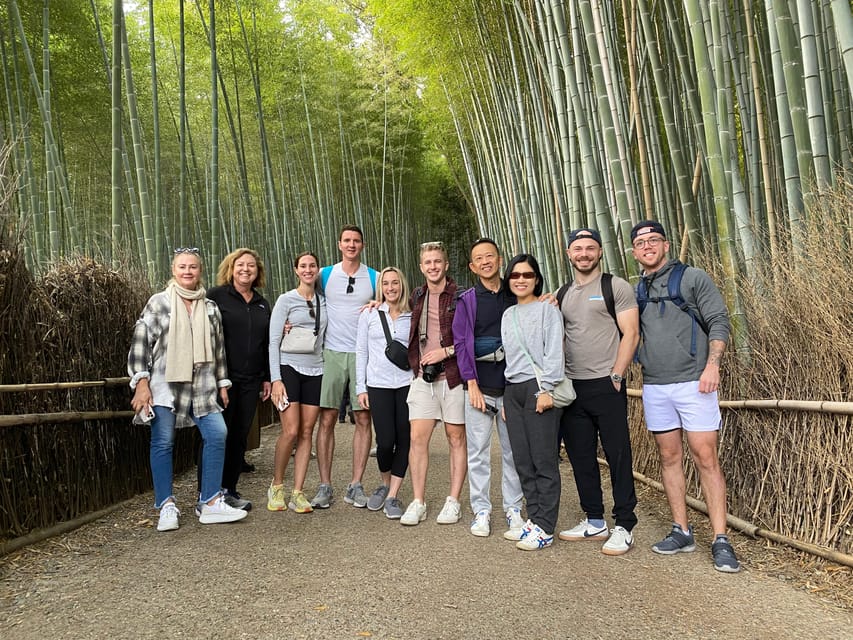
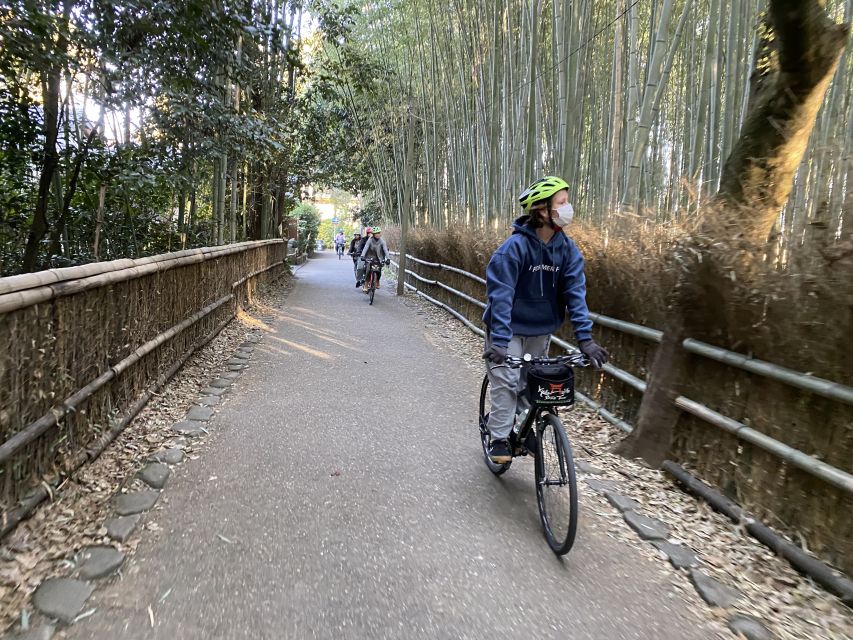
Arashiyama Bamboo Grove is one of Kyoto’s most photographed places for a reason. When you cycle among those tall stalks, it stops being a postcard scene and starts feeling like a moving corridor. The “many shades of green” effect is real, and the light bounces off the leaves in a way that makes even ordinary photos look good.
This stop starts with a guided ride and sightseeing time, so you can choose your pace. If you want wide views, you’ll find spots that frame the grove. If you want the close-up textures, you’ll also have time to slow down and look at the bamboo stalk patterns and the way people flow through the paths.
A practical tip: wear comfortable shoes and be ready for some waiting at the most popular angles. Even with a bike tour advantage, Arashiyama has its busiest moments, so your best bet is to enjoy the grove first and save your “perfect shot” obsessing for when the group pauses.
- PERFECT KYOTO 1-Day Bus Tour★ 5.0 · 13,518 reviews
- Kyoto: Fushimi Inari, Kinkakuji, Bamboo Grove 1 Day Bus Tour★ 4.8 · 4,316 reviews
- Kyoto: Tea Ceremony in a Traditional Tea House in Kiyomizu★ 4.9 · 3,519 reviews
- Kyoto Geisha Walking Tour: Gion District & Hidden Gems★ 4.7 · 3,273 reviews
- Kyoto: Tea Ceremony Ju-An at Jotokuji Temple★ 4.9 · 3,207 reviews
Fushimi Inari Taisha: Torii Gates and Fox Statues Off the Main Track
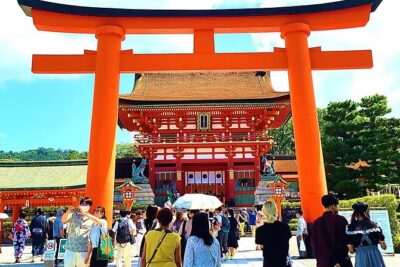
Then you ride to Fushimi Inari Taisha, famous for the vermilion torii gates. The highlight isn’t just the iconic front area. The best part is the network of trails behind the main buildings, where the gates stretch into the distance and you start walking through what feels like an endless path.
You’ll get time for sightseeing along the shrine grounds. One of the fun cultural details here is the fox theme. There are multiple fox statues you can look for as you move through the shrine area, and it’s a great “spot them all” activity to keep you engaged while the setting gets more atmospheric.
The tradeoff: this is a place where crowds can build, and the steps and pathways can be a bit uneven in spots. A bike tour helps you arrive in the right area, but once you are in shrine lanes, you still need to be comfortable walking for a while.
Gion and Hanamikoji Street: Kyoto’s Theater District Feel
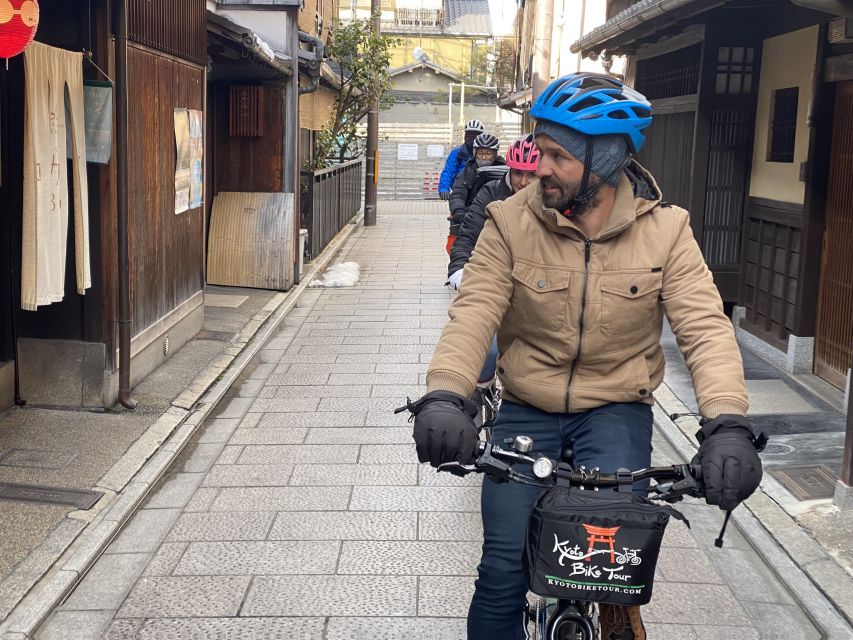
After lunch, the tour moves into the Gion area, Kyoto’s well-known entertainment district. You ride through streets where you may notice hostesses in colorful kimonos and see the wooden Tatsumi Bridge area as part of the flow of the neighborhood.
A key benefit here is rhythm. On a bike, you move at a human speed through the streets, so you can notice shopfronts, restaurant signs, and the general layout of the neighborhood without feeling like you’re rushing to beat the next bus.
A second focus is the vibe on Hanamikoji Street and nearby lanes. This is where Kyoto looks like it’s been here a long time, because it has. You’re not just seeing buildings, you’re seeing how people use space in daily life, from storefront traffic to the quiet pockets between the busiest streets.
One consideration: Gion is a magnet. If you’re sensitive to crowd density, choose your time wisely in your own day. The bike tour handles the route and timing, but your comfort still depends on how you like navigating busy pedestrian areas.
Kiyomizu-dera: The UNESCO View With Otowa Spring Meaning

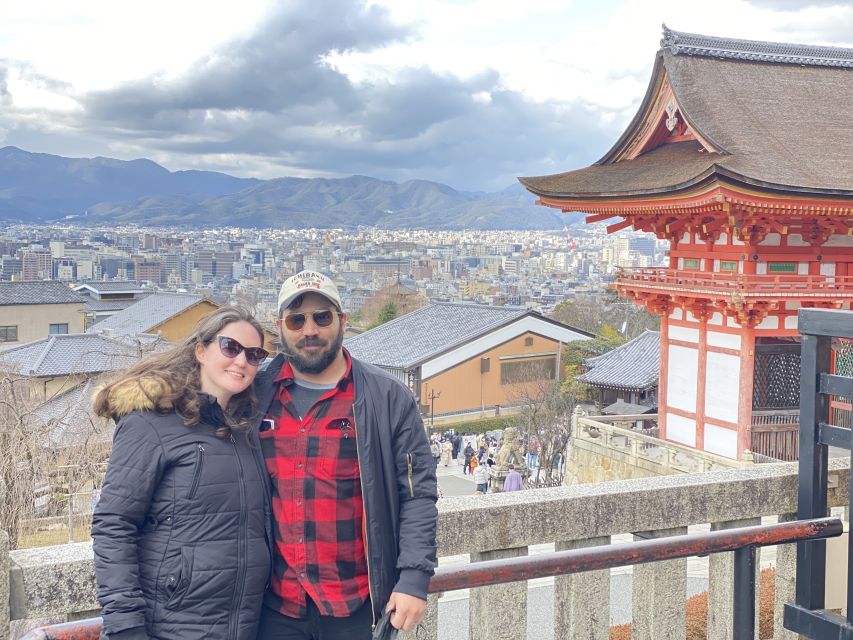
Next comes Kiyomizu-dera, a UNESCO World Heritage Site on the eastern side of Kyoto. This temple is known for its viewpoint, yes, but it’s also known for the medicinal pure waters of the Otowa Spring.
What makes this stop special is how it blends spectacle and ritual. You might come for the famous vantage points, but the Otowa Spring adds texture to the experience. It’s one of those details that makes the site feel connected to living tradition, not just a scenic platform.
You’ll have a guided chunk of time here, which is important. Kiyomizu-dera can be confusing if you try to do it alone, because the site is layered and your best sightlines often depend on where you stand and when you move.
The other reality: you’ll be walking in temple grounds. This matters for your shoe choice and your energy level late in the day. Wear shoes you would happily walk in for hours, not just for photos.
Kinkaku-ji Golden Pavilion: When Light Turns a Temple Into a Mirror
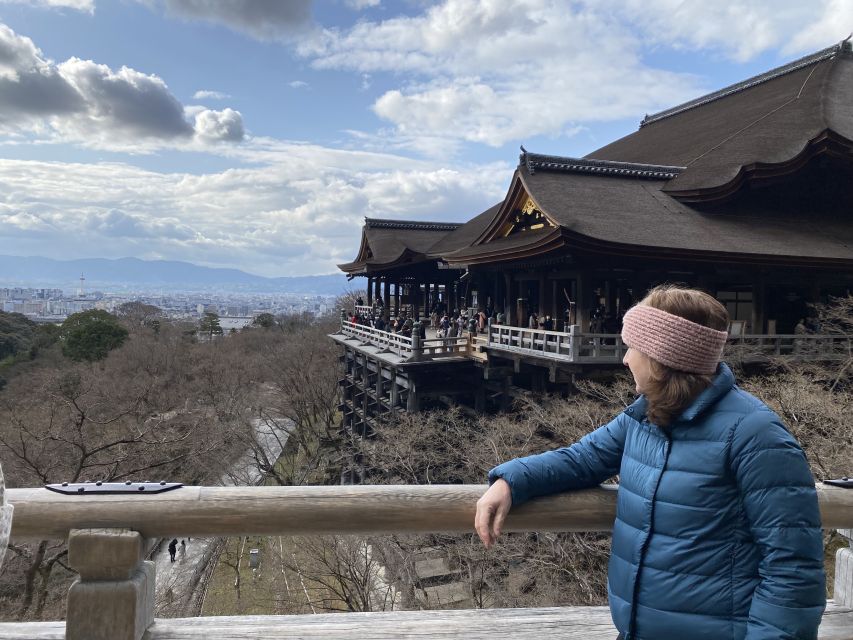
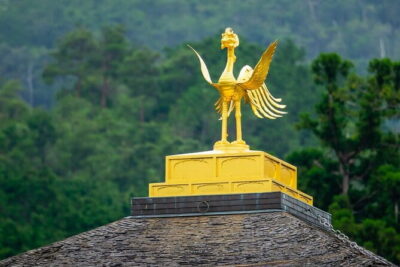
Finally, you ride to Kinkaku-ji, the Golden Pavilion. The wow factor is immediate. The temple rises above its reflecting pond like an apparition, and it’s easy to see why people talk about this place in “light-and-moment” terms.
Here’s what I like about this stop on a bike tour: you arrive with enough momentum from the day that you can still enjoy it, not feel drained. The route planning also helps you get to the pavilion at a satisfying time of day so you can see the shine and the reflections without feeling like you’re sprinting.
A practical tip: take a moment to look at the pond reflections before you commit to your main photo angle. When you do both, the Golden Pavilion stops being only “the building” and turns into “building plus water plus atmosphere.”
The Ride Itself: How Hard Is 44 km in Real Life?
The tour runs about 8 hours and includes roughly 44 km (27 mi) of cycling. Even if the pace is leisurely, that is still a real distance. So this is not a casual “easy sightseeing” ride.
If you cycle regularly, you’ll likely find it manageable. If you don’t, you might be fine with a good bike day rhythm, but you should expect your legs to feel it. The reviews you’ll read tend to point out the same reality: it’s a long day, so strength and comfort matter.
Also, this is not a tour for people who cannot ride a bike. It’s not for children under 14. And it’s not a good fit if you have back problems or mobility impairments. That’s not just “policy.” It’s because you’re on the road and you need a stable, repeatable motion for hours.
Weather matters too. During winter months (December to February), stops are made shorter to finish before sunset. That helps you avoid getting stuck in low-light conditions, but it also means you get less lingering time at each spot than you would in warmer seasons.
Price and Value: What $167 Really Includes
At $167 per person, this is not the cheapest way to see Kyoto. But it can be one of the best value ways to see “big hitters” without losing your whole day to transit.
Here’s what you do get for that money:
- Bilingual guide (English language)
- Bicycle and helmet
- Bottled water
- Entry fees
- Light lunch
- Small group size (limited to 8 participants)
And what you don’t get:
- Hotel pickup and drop-off, so you need to get yourself to Saga-Arashiyama Station.
The value math is simple. Kyoto entry fees and guided time add up fast if you DIY it. Plus, you save on local transit costs and the mental load of coordinating multiple stops across town. A bike also puts you in motion, which reduces that “waiting around” feeling that bus tours can bring.
If you are unsure about your comfort level, the best advice is to consider pedal-assist help if it is available to you when booking. Some groups have mentioned choosing e-bikes because it reduces strain on longer stretches while keeping you actively pedaling.
What to Bring (and What Not to Wear)
You’ll enjoy this day more if you dress for the ride, not for fashion.
Bring:
- Comfortable shoes
- Comfortable clothes
- Weather-appropriate layers
Not allowed:
- High-heeled shoes
- Sandals or flip flops
- Boots
- Loose clothing
That dress guidance is practical. Loose clothing can catch or flap near the bike parts, and sandals can be miserable if you end up walking more than expected.
Also bring a real attitude adjustment: this tour is an all-day activity. Even if the guide keeps the pace relaxed, you are still outdoors, moving, and stopping. That means you’ll get more out of the day if you treat it like an activity day, not like a casual sightseeing morning.
Who This Bike Tour Suits Best
This is a great choice if you want:
- Kyoto highlights in one day without bouncing between transit lines
- A guided route with time at the major sites
- More street-level feel than bus touring
It’s especially good for solo travelers who want structure but still want a more personal experience than a large group. The small group size helps you feel less lost, and you can ask questions without getting drowned out.
It’s not for:
- Kids under 14
- People who cannot ride a bike
- Anyone with low fitness or back problems
- People with mobility impairments
If you fit the “can ride and can walk a bit” category, you will likely love the flow from Arashiyama to Fushimi Inari to Gion to eastern Kyoto temples, all in a single coherent day.
Should You Book This Tour?
Book it if you want Kyoto highlights with real time to look, and you like the idea of seeing both landmarks and the streets between them. The included entry fees, lunch, and small-group format make the $167 feel more reasonable, not just “expensive because it’s Kyoto.”
Skip it if you dread long cycling days, have any back or mobility issues, or you know your bike skills are shaky. You’ll enjoy Kyoto more with a pace that fits your comfort level, not by pushing through discomfort for the sake of checking boxes.
If you are on the fence, choose the version of the day that protects your energy. This tour’s big strength is the quality of each stop. When your body is comfortable, you get to actually enjoy Arashiyama’s bamboo greens, Fushimi Inari’s torii trails, and that reflective gold at Kinkaku-ji.
Bicycles and E-Bikes We Have Ridden
Newest Kyoto write-ups from the Loving Japan desk

Cycling and E-Bike Tours, side by side.
 ★ 5.0Hidden Kyoto E-Biking tourFrom $1161,843 reviews
 ★ 5.0Tokyo Guided Small-Group Biking TourFrom $1061,250 reviews
 ★ 5.0Tokyo Great Cycling TourFrom $99811 reviews
 ★ 5.0Tokyo Top Highlights 3h Guided E-bike TourFrom $63714 reviews
 ★ 5.03h Tokyo E-Bike Tour: Hidden Gems, and Local Life with guideFrom $63670 reviews
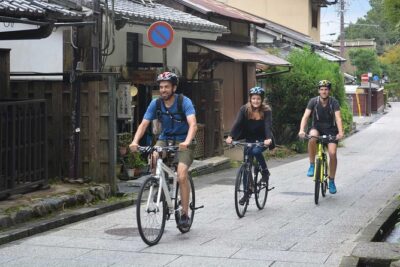 ★ 5.0Arashiyama Bamboo Forest & Hidden Gems Bike Tour (Early Bird)From $106613 reviews
 ★ 5.05 Top Highlights of Kyoto Full Day Bike Tour (E-bike option)From $172511 reviews
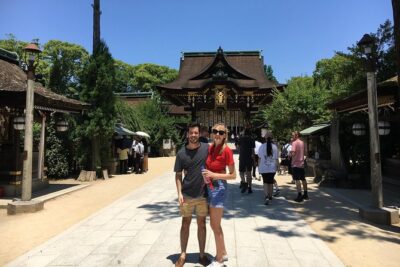 ★ 5.0Full Day Biking Tour Exploring the Best of KyotoFrom $119498 reviews
Filed on these lists too