
REVIEW · FUSHIMI INARI AND THE TEMPLES OF KYOTO
Kyoto Fushimi-Inari Night Walking Tour
Red gates feel different after dark. This Kyoto Fushimi-Inari night walk trades daytime chaos for a calmer, glow-at-dusk feel, and I love that it runs as a small-group tour (max 12). You also get real context for what you are seeing, not just gate photos, which is a big part of why this tour is worth the ticket. One thing to plan for, though, is that you are walking mountain paths in low light, so grippy shoes and a bit of comfort with uneven steps matter.
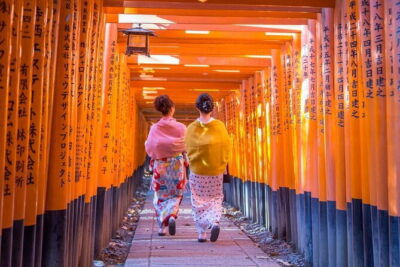
The best part is how the shrine changes as the light fades. The torii gates are famous in Kyoto, but at night the area feels more human-sized, and your guide helps you notice details you would otherwise speed past. A guided walk also means you spend less time guessing where the meaningful spots are, especially when the path turns into a maze of gates and side routes.
You’ll also meet guides who genuinely know how to make the place click. Names that come up again and again in the tour experience are Jem, Tammy, Masaki, Hiro, Caleb, and Yessi, and the common thread is how they explain Inari worship in plain language, while still keeping the pace friendly. If you like asking questions, this style of tour is a good match.
In This Review
- Key Highlights That Matter (Not Just the Obvious Gates)
- Enter Fushimi-Inari When the Crowd Energy Drops
- Meeting at the Fox Statue, Then Getting Oriented Fast
- Stop 1: Fushimi Inari-taisha Shrine, the Torii Route With Meaning
- What you will see and why it matters
- What your guide adds to the walk
- The uphill “small hike” reality
- Night Lighting and Photo Stops: How to Get the Best Experience
- Small-Group Size, Max 12, Changes Everything
- Price and Value: Why $43.11 Can Make Sense
- Practical Tips That Will Save Your Night
- Who This Tour Suits Best (and Who Might Skip It)
- Should You Book the Kyoto Fushimi-Inari Night Walking Tour?
- FAQ
- How long is the Kyoto Fushimi-Inari night walking tour?
- What is the group size for this tour?
- Where does the tour start?
- Is shrine admission included?
- How do I get the ticket?
- Is this tour hard to walk?
- Is free cancellation available?
Key Highlights That Matter (Not Just the Obvious Gates)
- Small group, max 12, so you can actually hear your guide and keep up comfortably
- After-crowds timing, which makes torii photos and quiet moments feel possible
- Inari context, from the god of rice, agriculture, and business to why people pray there
- A night-scenic route on lit paths, with time for photos and stopping when it counts
- Practical guidance for worship spots, including how rituals can differ at separate sites
Which temple to give the morning to, reviewed
- Kyoto: Fushimi Inari, Kinkakuji, Bamboo Grove 1 Day Bus Tour
★ 4.8 · 4,316 reviews - Kyoto/Osaka: Nara, Fushimi Inari Taisha, Arashiyama Bus Tour
★ 4.7 · 1,275 reviews - Kyoto: Nijo-jo Castle and Ninomaru Palace Guided Tour
★ 4.7 · 1,020 reviews - Osaka/Kyoto: Arashiyama, Nara & Fushimi Inari Shrine w/Lunch
★ 4.4 · 754 reviews
Enter Fushimi-Inari When the Crowd Energy Drops
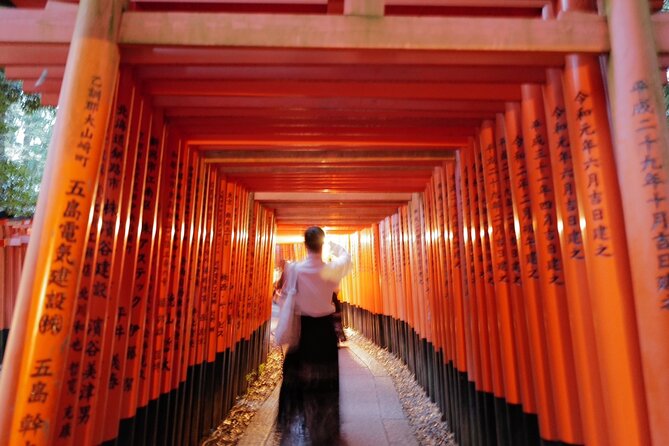
Fushimi-Inari-taisha Shrine is one of those places where your first reaction is wow, then your second reaction is where did everyone come from. During the day, the torii gates can turn into a slow moving crowd corridor. This night tour works because it lets you see the same shrine in a quieter emotional register, when the atmosphere feels more reflective and less like a photo line.
I especially like that the tour is designed around dusk into the evening. That timing hits a sweet spot: you get the red gates with softer light, then the path transitions into darker stretches where the lantern and lighting do the heavy lifting. Even if you think you only want the famous gate photos, you will get more out of this if you care about what the place means.
And yes, the famous torii are still the star. But the real win is that a guide turns the walk into a story about Inari worship. Once you know what you are looking at, the whole route feels less random.
Meeting at the Fox Statue, Then Getting Oriented Fast
Your walk starts at the fox statue at the entrance to Fushimi-Inari Taisha Shrine. That matters more than it sounds. Fushimi-Inari is easy to get distracted in, because there are gates, side shrines, and pathways that look inviting but lead you away from the main flow.
Your guide’s job here is not just to lead your group. It is to help you get your bearings early, so you do not spend the night wandering around trying to figure out which parts connect to the shrine’s main spiritual logic. In a place like this, that orientation is a kind of time saver. It also helps you feel more confident when the route goes dark.
Also, the meeting point is close to public transportation, which is useful if you are building the rest of your Kyoto evening around this. You end back at the meeting point, so you are not stuck plotting a return while everyone’s tired.
Stop 1: Fushimi Inari-taisha Shrine, the Torii Route With Meaning
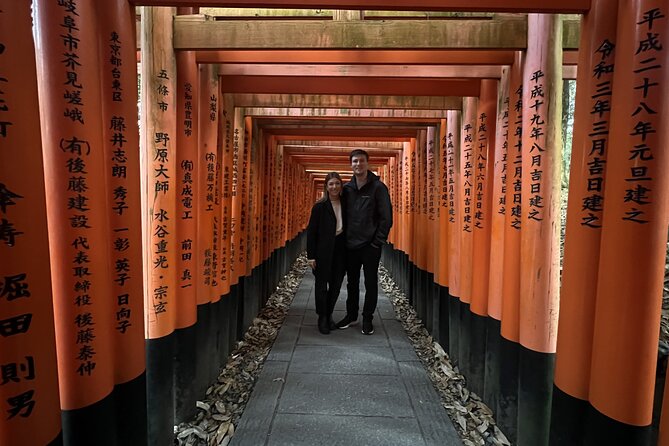
This tour’s focus is one place, and that is a good thing. When you only have a set amount of time, you do not want to split attention across too many stops. You put your energy into walking the shrine properly and understanding what is going on along the way.
- PERFECT KYOTO 1-Day Bus Tour★ 5.0 · 13,518 reviews
- Kyoto: Fushimi Inari, Kinkakuji, Bamboo Grove 1 Day Bus Tour★ 4.8 · 4,316 reviews
- Kyoto: Tea Ceremony in a Traditional Tea House in Kiyomizu★ 4.9 · 3,519 reviews
- Kyoto Geisha Walking Tour: Gion District & Hidden Gems★ 4.7 · 3,273 reviews
- Kyoto: Tea Ceremony Ju-An at Jotokuji Temple★ 4.9 · 3,207 reviews
What you will see and why it matters
Fushimi-Inari is dedicated to Inari, the god of rice, agriculture, and business. People come to pray for success, health, and happiness. Once you hear that clearly, the torii gates stop being just a visual theme. They become part of a living religious landscape where people offer prayers and intentions.
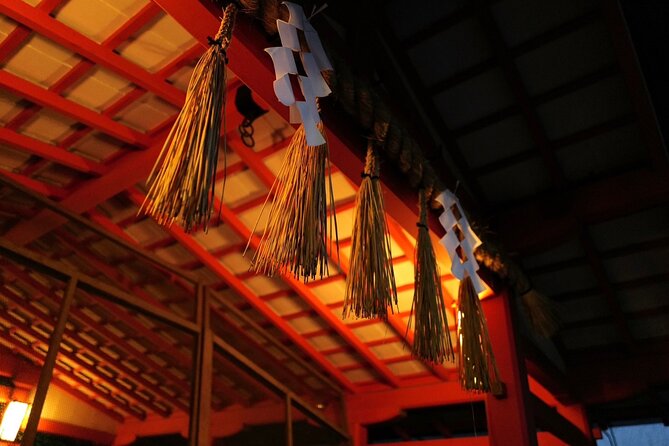
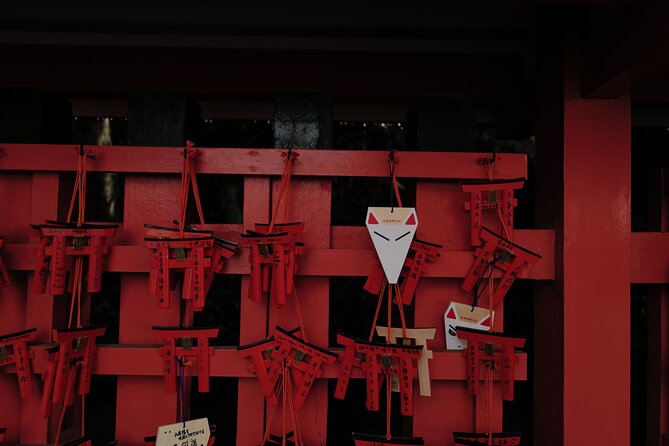
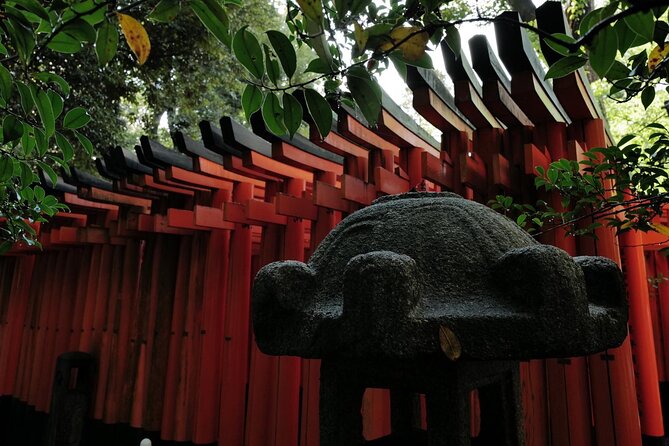
As you move through the gates and toward the mountain paths, you will also come across smaller shrines and stone fox statues. The fox statues are part of the shrine’s visual language, and your guide helps connect them to the broader belief system rather than treating them like random ornaments.
What your guide adds to the walk
This is where the tour consistently gets praised. Guides are credited with explaining traditions and prayers in a way that feels organized, not like a lecture you are trapped in. People also mention that guides keep the group together well, answer questions confidently, and help you take photos without the awkward rush.
Some guides also go a step further by showing how to pray at different sites and pointing out items you might walk past without a second glance. That practical religious context is the difference between looking at a shrine and actually understanding what you are participating in, even if you are simply watching respectfully.
The uphill “small hike” reality
Do not let the word shrine fool you into thinking this is flat. You will be walking up and along mountain paths through the torii. One review notes it as a small hike and specifically recommends walking shoes. Another points out that part of the tour can be in proper nighttime, so you should expect dark sections where you rely on lighting.
If you are comfortable walking for 1.5 to 2 hours, you will be fine. If you are not, you might find the pace and steps tiring. Either way, the guide’s pacing keeps the group moving steadily rather than racing.
Night Lighting and Photo Stops: How to Get the Best Experience
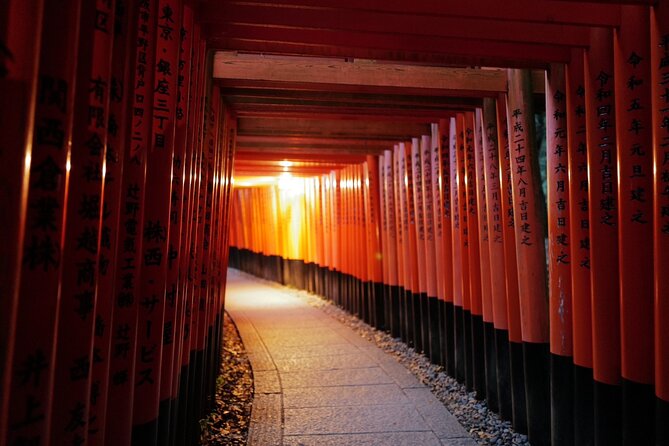
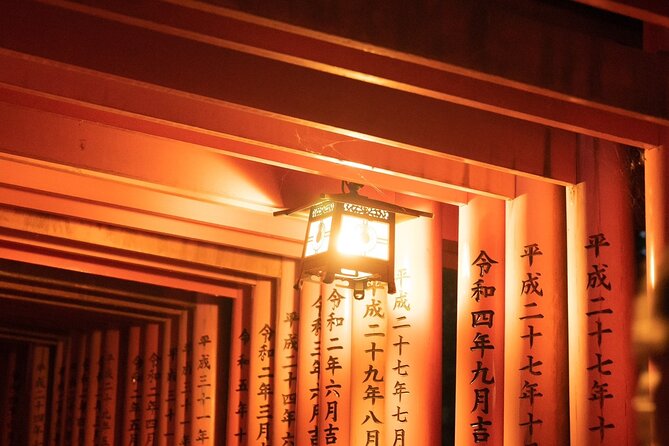
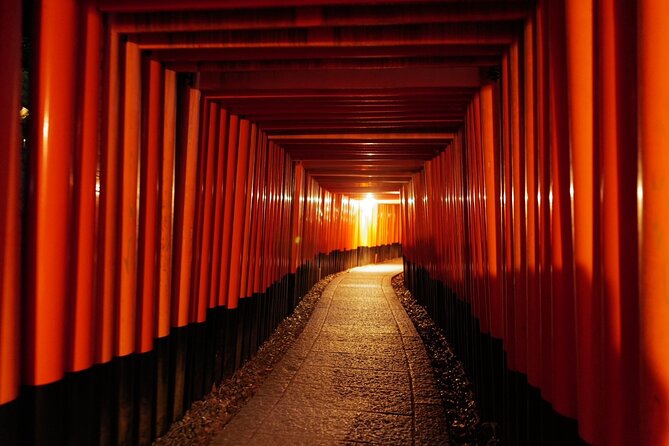
The torii gates at night are a different animal. Daytime gives you bright detail and crowd scale. Night gives you mood. Lantern and path lighting help soften shadows, and the red gates look more dramatic as the eye adapts to darker surroundings.
What I like about this tour is that you are not just marched forward. People mention that guides are patient while participants stop for photos. That is important because the best shots often take an extra minute to reposition, especially when you want to include the gate depth or lines of lantern light rather than only a close-up of red wood.
If you care about photos, wear something that lets you move easily. Expect you might be lifting your phone or camera while walking, so stable footing matters more than you think.
One more timing note: at least one group started around 6pm and found the sun dropped shortly after beginning, with the path lights taking over. That is a good way to think about the experience. You will likely see dusk, then you will mostly be in evening light by the time you are higher in the gate route.
Small-Group Size, Max 12, Changes Everything
Max 12 travelers might sound like a marketing line, but here it has real effects. With fewer people, you can actually hear your guide when they explain the significance of the torii, the meaning behind Inari worship, and why certain side areas matter.
It also means your guide can manage your group in a maze of gates. Fewer bodies makes it easier to stay together, and you lose less time “waiting for the stragglers.” People also highlight that guides keep a relaxed feel, which is what you want at night when your energy is lower and your attention span is shorter.
For families, this small-group size can work well too. One review mentions the guide handled a tour with kids by keeping information easy to understand and interactive.
In short, you get the benefits of a guided experience without feeling swallowed by a large crowd.
Price and Value: Why $43.11 Can Make Sense
At $43.11 per person for about 1 hour 30 minutes to 2 hours, this tour is not the cheapest thing on your Kyoto list. But it also does not try to be. It is paying for a guide-led interpretation at a time when you would normally be stuck in crowds.
Two value points stand out:
1) You skip the daytime crowd problem. Your money buys access to a quieter experience at one of Kyoto’s most famous sites. That alone can be worth it if daytime feels exhausting.
2) Fushimi-Inari admission is free for the shrine itself, so your fee is essentially for the guide, the route, and the structured understanding. That is a fair trade if you want to learn what you are seeing.
If you are someone who likes to walk and look, you can still DIY this on your own. But if you want the meaning behind the fox statues, the rituals, and why the shrine is dedicated to Inari, the guide is what you are really paying for.
Practical Tips That Will Save Your Night
Based on what people consistently bring up, here is how to set yourself up well:
- Wear walking shoes. Expect a small uphill hike and dark footing in parts of the route.
- Bring layers. Even in warmer months, evenings can cool down, and one review specifically recommends layers for a winter visit.
- Plan for photos, not just walking. Your guide should allow time to stop for pictures, but you will still move efficiently.
- If rain happens, be ready for slower footing. One review mentions a tour in rain with only a few people, and the guide was praised for being kind and patient.
- Ask questions. Guides are credited with answering questions clearly, and the best parts happen when you ask what you actually want to know.
And if you get a little turned around easily, this is another reason a guided route helps. At night, Fushimi-Inari can feel like a branching maze. Having someone lead saves energy and keeps you from missing the key moments.
Who This Tour Suits Best (and Who Might Skip It)
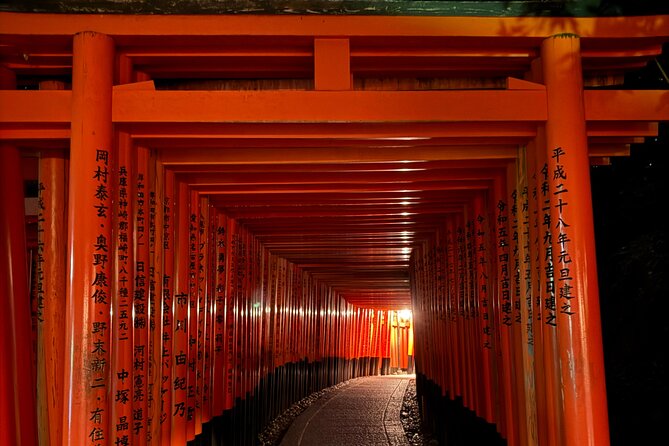
This tour is a great match if you want a calmer Kyoto evening and you like learning while you walk. It is also a good fit if you prefer small group experiences, because max 12 is a comfortable size for hearing explanations and keeping pace.
You might consider a different option if:
- You hate uphill walking, even for a short time.
- You only want a quick bucket list photo and do not care about shrine meaning.
- You need fully bright, step-by-step lighting the whole way. Some parts can be in proper nighttime depending on your start time.
For most people who enjoy shrines, culture, and atmosphere, this is one of those “do it once the right way” experiences.
Should You Book the Kyoto Fushimi-Inari Night Walking Tour?
I would book it if you want to experience Fushimi-Inari with space, guidance, and context. The small group size, the after-crowds timing, and the way guides explain Inari worship and the route details are what turn this from a famous place into a memorable one.
I would not book it if you are only chasing a fast photo pass and you are not interested in learning what you are seeing. In that case, you might be just as happy doing a daytime visit and moving on.
If you are deciding between night and day, and you care about meaning as much as scenery, this night tour is the smarter choice.
FAQ
How long is the Kyoto Fushimi-Inari night walking tour?
It runs about 1 hour 30 minutes to 2 hours.
What is the group size for this tour?
The tour has a maximum of 12 travelers.
Where does the tour start?
It starts at the fox statue at the entrance to Fushimi Inari Taisha Shrine in Kyoto, Japan.
Is shrine admission included?
The information provided notes that admission ticket is free for this experience.
How do I get the ticket?
You receive a mobile ticket.
Is this tour hard to walk?
It involves walking on paths that can include mountain routes and darkness at night. Most travelers can participate, and wearing walking shoes is a good idea.
Is free cancellation available?
Yes, free cancellation is available if you cancel at least 24 hours in advance for a full refund.
Which Kyoto Temple Gets Your Morning



Newest Kyoto write-ups from the Loving Japan desk
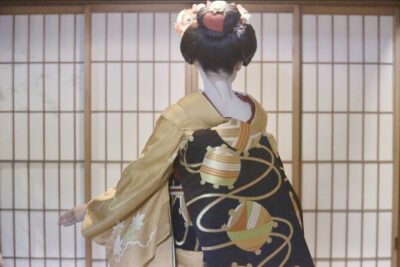
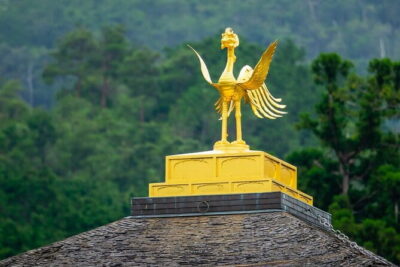

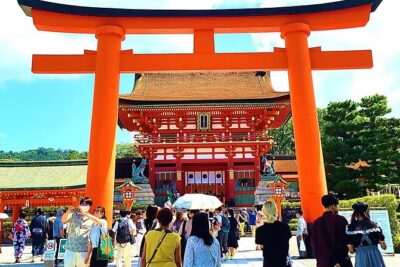
Fushimi Inari and the Temples of Kyoto, side by side.
 ★ 4.8Fushimi Inari, Kinkakuji, Bamboo Grove 1 Day Bus TourFrom $1224,316 reviews
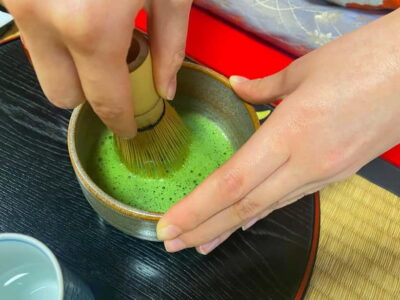 ★ 4.9Tea Ceremony in a Traditional Tea House in KiyomizuFrom $493,519 reviews
 ★ 4.7Kyoto/Osaka: Nara, Fushimi Inari Taisha, Arashiyama Bus TourFrom $521,275 reviews
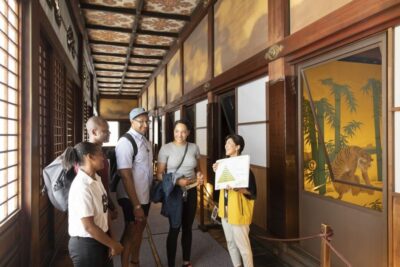 ★ 4.7Nijo-jo Castle and Ninomaru Palace Guided TourFrom $161,020 reviews
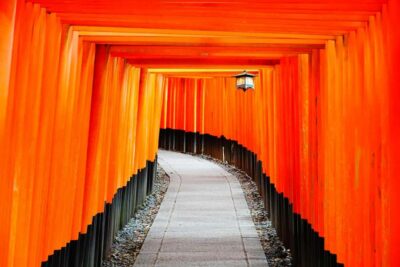 ★ 4.4Osaka/Kyoto: Arashiyama, Nara & Fushimi Inari Shrine w/LunchFrom $61754 reviews
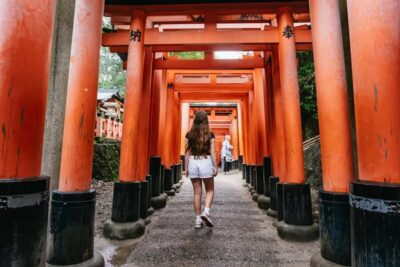 ★ 4.7Nijo Castle, Kiyomizu & Fushimi Inari Guided TourFrom $54700 reviews
 ★ 5.0Nijo, Kinkaku-ji, Arashiyama, Kiyomizu & Fushimi InariFrom $51699 reviews
 ★ 4.7Imperial Palace & Nijo Castle Guided Walking TourFrom $49453 reviews
Filed on these lists too