
REVIEW · FUSHIMI INARI AND THE TEMPLES OF KYOTO
Kyoto: Half-day Guided Bike Tour with Fushimi Inari
Big temples and quiet backstreets, in one ride. This half-day bike tour links Toji, Gion, and Fushimi Inari into a route that feels efficient without feeling rushed. I love that the group stays small, and I love how guides like Jay, Julian, Indra, and Sean bring the city to life with practical, on-the-ground context. One thing to consider: it is a real bike tour, so you need to be comfortable riding for the full circuit, including getting through busy temple approaches on a bike.
You start with a short safety briefing and then move through South Kyoto like a local, using canals and river paths to break up the sightseeing. You will see UNESCO-listed Toji first, then continue to major temple grounds like Higashi-Honganji, before rolling into the teahouse streets of Gion. The route ends with the iconic orange torii gates at Fushimi Inari Taisha, where your guide helps you get your bearings fast. If weather turns, bring warm layers, because you are outside for most of the experience.
With bikes included, helmets on, and water provided, this is a strong value way to do a lot of Kyoto without stacking transit plans. At $77 for about 3.5 hours, it is not a cheap activity, but you are paying for guided navigation, bike logistics, and the time-saving route linking multiple top sights.
In This Review
- Key points that make this tour worth your time
- A half-day route that keeps Kyoto from feeling like a checklist
- Getting set up at Cycle Kyoto near Kyoto JR Station
- Toji: the UNESCO start that sets the tone
- Higashi-Honganji: a large temple stop that feels impressive up close
- Takase Canal and Kamo River: the ride that lowers the stress level
- Gion backstreets: seeing the famous district without getting stuck
- Tofukuji: a photo-oriented temple stop that keeps your camera busy
- Fushimi Inari Taisha: the torii maze done with a plan
- Pace, bikes, and what you should expect from the ride itself
- Price and value: does $77 buy you enough?
- What to bring, and how to avoid a miserable weather morning
- Who this tour is perfect for, and who should pick another plan
- Should you book this guided bike tour of South Kyoto?
- FAQ
- How long is the Kyoto half-day guided bike tour?
- Is a guide included, and what language do they speak?
- Are bicycles and helmets provided?
- How big is the group?
- What are the main stops on the route?
- Does this tour include meals?
- What should I bring with me?
- What is the minimum age to join?
- Can I upgrade to an e-bike?
- Is the tour suitable for people with back problems?
Key points that make this tour worth your time
- Small-group pacing (up to 8) keeps the ride calmer and easier to manage at temple entrances and in narrow streets
- UNESCO Toji plus two major temple stops gives you balance between big sights and calmer photo moments
- Canal and river riding makes the transfers between temples feel scenic instead of stressful
- Gion backstreets guided on purpose so you spend time in the right lanes and not just on the busiest main streets
- Fushimi Inari after you get oriented means less confusion when you hit the torii maze and want to explore efficiently
- Bike quality and sizes are handled with helmets provided, and multiple reviews note bikes in great condition
Which temple to give the morning to, reviewed
- Kyoto: Fushimi Inari, Kinkakuji, Bamboo Grove 1 Day Bus Tour
★ 4.8 · 4,316 reviews - Kyoto: Tea Ceremony in a Traditional Tea House in Kiyomizu
★ 4.9 · 3,519 reviews - Kyoto/Osaka: Nara, Fushimi Inari Taisha, Arashiyama Bus Tour
★ 4.7 · 1,275 reviews - Kyoto: Nijo-jo Castle and Ninomaru Palace Guided Tour
★ 4.7 · 1,020 reviews
A half-day route that keeps Kyoto from feeling like a checklist
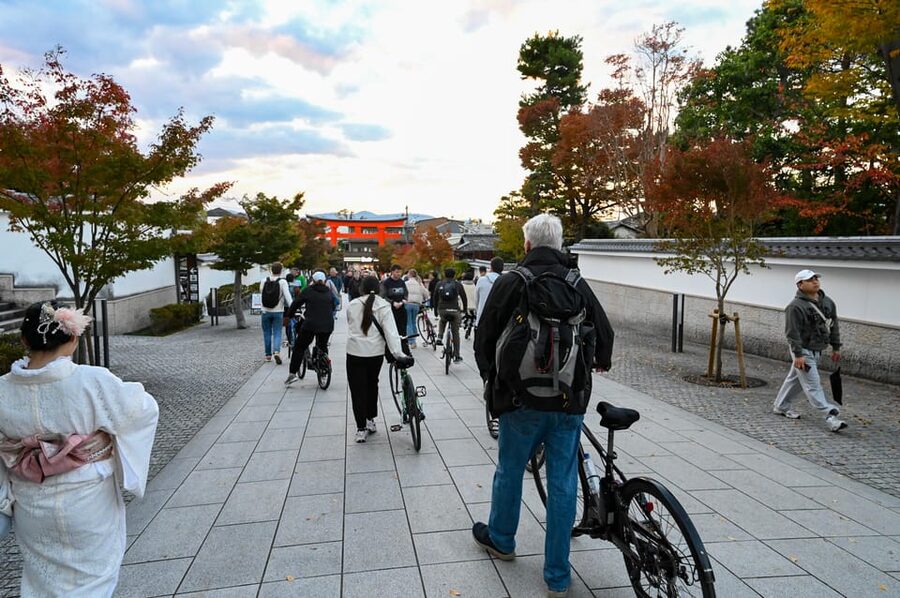
Kyoto can be a tricky city to do “efficiently” without turning your day into a bus schedule. This tour works because it strings together South Kyoto’s key icons, but it also includes the in-between texture that makes Kyoto feel Kyoto. You are not only seeing temples and shrines, you are riding through the edges of neighborhoods, across river scenery, and past the lanes that connect these places.
The itinerary is built around flow. You begin with Toji, then hit Higashi-Honganji, and then you let the Takase Canal and Kamo River guide you toward Gion. That matters because it breaks up the long, repetitive feeling of going shrine to shrine with constant backtracking. You also end in the right place for maximum wow, Fushimi Inari, where the orange torii gates take over your attention the moment you arrive.
Getting set up at Cycle Kyoto near Kyoto JR Station
The meeting point is practical if you are already basing yourself around Kyoto Station. From Kyoto JR Station, you go past Avanti, cross one set of traffic lights, then after the Daily Yamazaki convenience store, you take the next left to reach Cycle Kyoto.
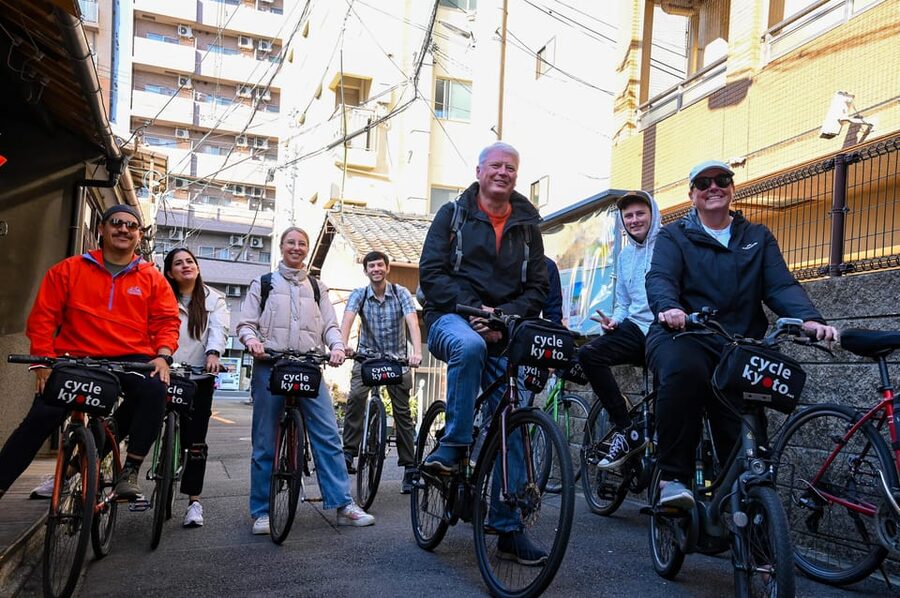
You start with a 15-minute safety briefing before riding. That short block is not just about rules, it also helps you settle into traffic flow and bike handling so you can relax later. This is also where you will confirm your bike size, helmet fit, and where you can stash personal items. One helpful detail: the bikes include a small pouch for your belongings.
The tour provides bicycle rental and a helmet, plus water. So you can travel lighter. I always like tours that solve the gear problem for you, because it means one less moving part in a day that already involves navigating multiple stops.
Toji: the UNESCO start that sets the tone
Your first real temple stop is Toji, Kyoto’s oldest temple. That alone gives the morning a sense of direction. Instead of starting with a shrine where you might wonder what you are looking at, you begin with a major historical landmark and then keep building context as the ride continues.
The guided time at Toji is about 35 minutes. In a short slot like that, the value is not trying to see everything. It is learning what to notice, what parts matter, and how the temple connects to Kyoto’s broader story. When a guide is sharp on explanations, you end up with more than photos, you end up with understanding.
Then you move on, rather than spending the rest of the tour stuck on the same spot. That pacing is a big part of why this half-day feels worth doing.
Cover Kyoto on two wheels instead
- Hidden Kyoto E-Biking tour★ 5.0 · 1,843 reviews
- Arashiyama Bamboo Forest & Hidden Gems Bike Tour (Early Bird)★ 5.0 · 613 reviews
- 5 Top Highlights of Kyoto Full Day Bike Tour (E-bike option)★ 5.0 · 511 reviews
- Full Day Biking Tour Exploring the Best of Kyoto★ 5.0 · 498 reviews
- E-Bike Tours of the highlights of Kyoto!!!★ 5.0 · 291 reviews
Higashi-Honganji: a large temple stop that feels impressive up close
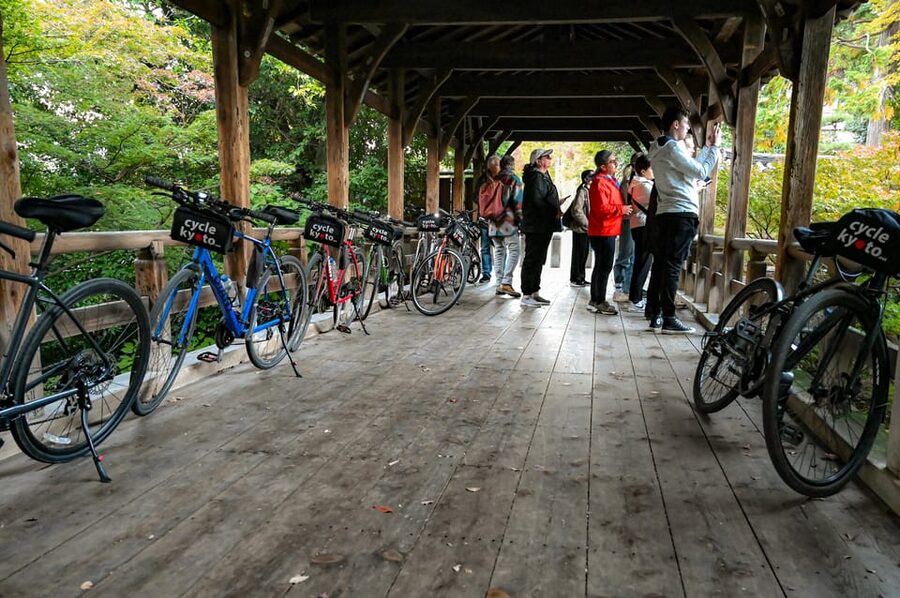
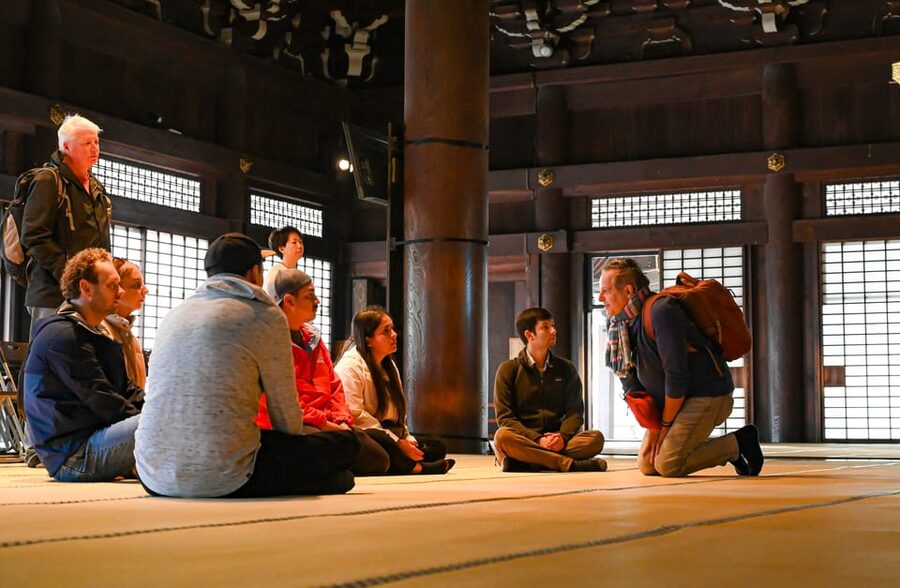
Next is Higashi-Honganji Temple, another main attraction, and one of Japan’s largest temples. This is the kind of stop where scale can surprise you. Even if you have seen photos, being there changes the feeling, especially when you are in the middle of the grounds rather than viewing from afar.
You get another 35 minutes with a guide here. For me, the best use of time at a huge complex is to learn where to look and why. A good guide helps you avoid wandering in circles, which is easy to do at big temple sites if you are on your own.
One practical plus: since you are riding between stops, you also avoid the “hour of transit, hour of crowds” trap that can happen in Kyoto when you pick sights that are far apart.
Takase Canal and Kamo River: the ride that lowers the stress level
Between major temple sites, you get breaks that feel like part of the sightseeing. You stop to visit the Takase Canal for about 10 minutes, and then you spend around 15 minutes at the Kamo River.
These are not just photo breaks. They help reset your brain and give you a calmer visual rhythm while you transition toward Gion. And riding along water corridors in Kyoto is often easier on the senses than bouncing from one dense street to another.
If you are thinking about comfort, these short visits matter. They give you a chance to park the bike, stand still for a moment, and take in the area before you roll back into the faster streets.
Gion backstreets: seeing the famous district without getting stuck
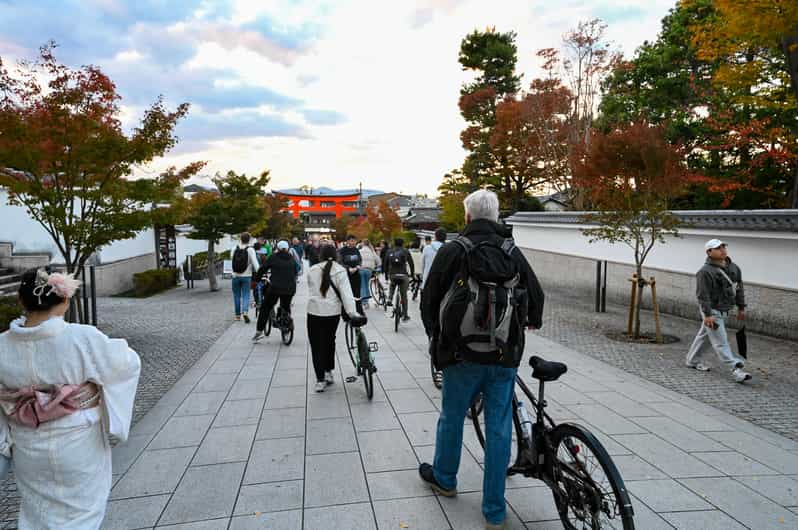
Gion is one of Kyoto’s most famous areas, and it can also be one of its most crowded if you do it wrong. The tour’s approach is to head through backstreets of Gion during a 30-minute guided segment.
This timing and guided routing matter. You get to see the teahouse and geisha district character, but you are not spending all your energy in the busiest lanes. Also, Gion feels better when you move. Slow walking can become stop, shuffle, stop again. On a bike with a guide, you can actually cover the feeling of the neighborhood.
This is also where guides seem to shine in the reviews. People praised guides for sharing insider context and for choosing spots that felt less crowded and more comfortable to experience. Names that came up include Indra, Juan, and Mayco, and the common thread was that their explanations made the streets feel readable, not random.
A quick consideration: Gion streets are narrow and busy in places. You will be on a bike, so you need to stay alert and follow the guide’s directions. If you are uneasy in tight traffic, this is the part where you will feel it most.
Tofukuji: a photo-oriented temple stop that keeps your camera busy
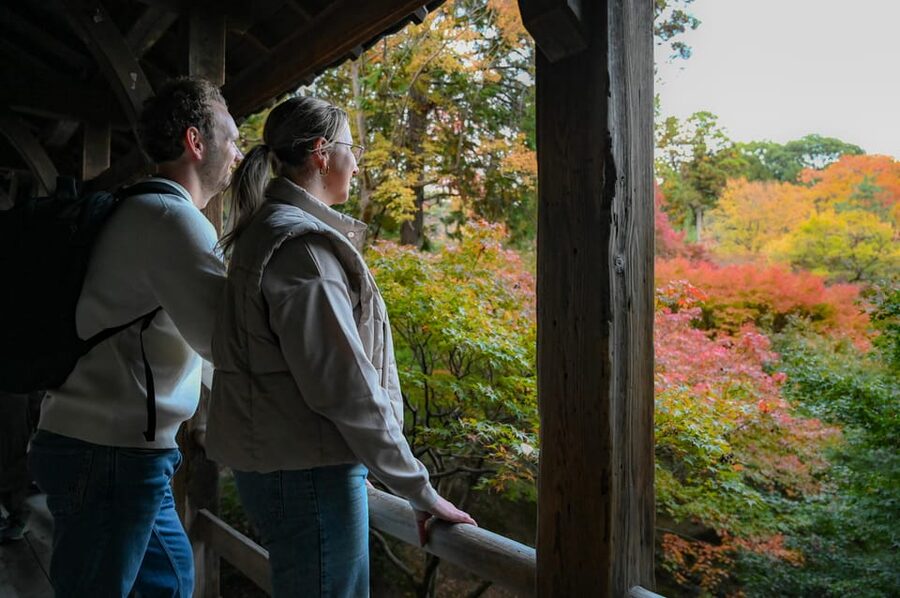
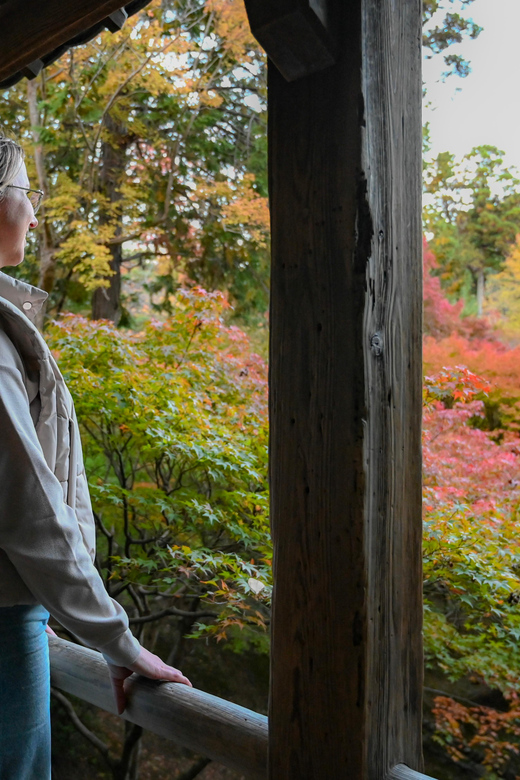
After Gion, you roll to Tofukuji Temple for a photo stop lasting about 30 minutes. This works well because it gives you freedom within a guided day. You get a moment to frame shots at your pace while still staying on schedule for the big finish.
Tofukuji is described as stunning, and the tour is designed so you can get your pictures without feeling like you are racing through the grounds. The tradeoff with a photo stop is that it is not as teaching-heavy as longer guided temple blocks. If you love deep explanations, you may want your camera ready and then ask your guide a question or two when you get a chance.
In my experience, photo stops are best when your guide gives you just enough orientation. Then you spend your time composing rather than wondering where to stand.
Fushimi Inari Taisha: the torii maze done with a plan
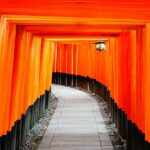
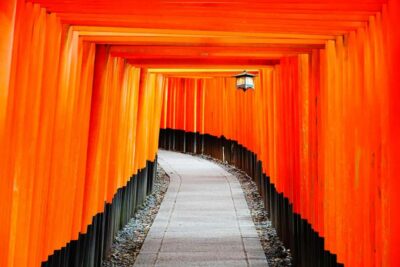
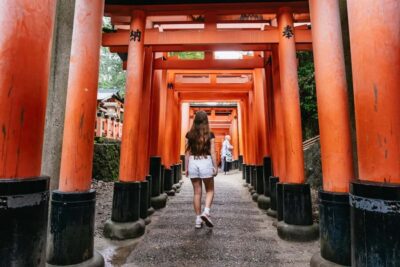
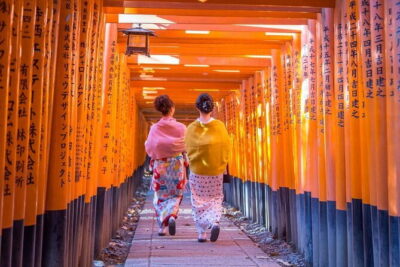
The highlight finale is Fushimi Inari Taisha, the most visited attraction in Japan, and a place most people picture instantly thanks to the orange torii gates.
You get about 45 minutes here with a guide, which is the right amount of time for the first encounter. The real value of the guided portion is orientation. Fushimi Inari can feel endless, because the torii gates create a tunnel-like effect as you wander. When you arrive already oriented, you spend less time deciding where to go and more time enjoying the experience.
You also get a stroll around the torii gates, and the guide helps you understand what you are seeing as you move through the complex. That is one of the best ways to turn a famous photo spot into something more meaningful, because the place is doing more than looking good in pictures.
If it is your first time in Kyoto, this is the kind of finish that gives your day a clean emotional arc: start with historical weight, roll through neighborhood texture, and end with the iconic Kyoto image.
Pace, bikes, and what you should expect from the ride itself
The total tour duration is 210 minutes, which is about 3.5 hours. That includes the safety briefing, guided stops, visits, and the photo and torii time. In practice, you are moving for a significant part of the day, not just sitting in temples.
A review noted that the ride covered more than 15 km. You should treat that as a helpful indicator, not a guarantee, but it gives you a realistic sense of effort. This is not an easy stroll disguised as sightseeing. You are cycling, and you will feel it, especially if it is a warm day.
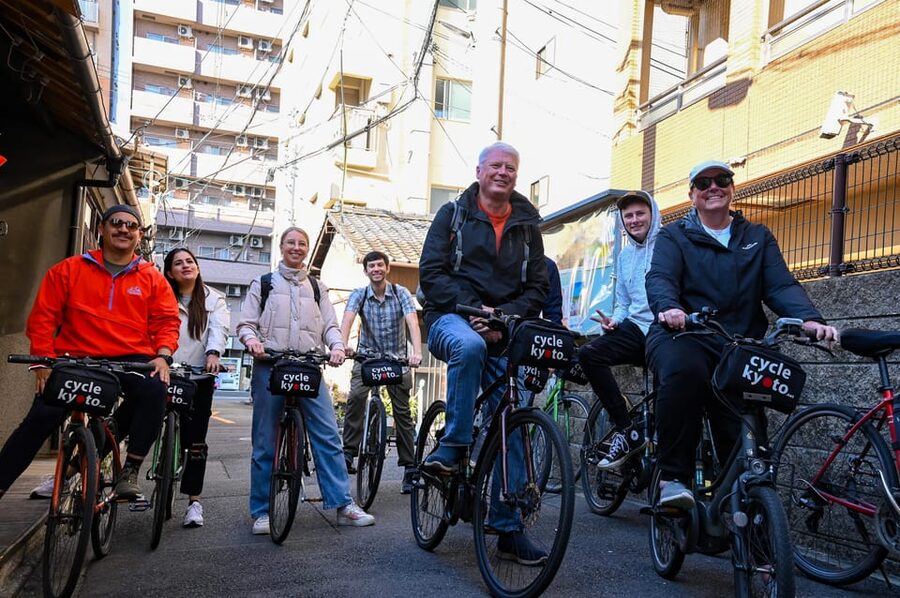
The tour is limited to small groups of up to 8 participants. That matters when you ride in traffic and in crowded zones. Smaller groups tend to string out less, and guides can manage pacing better.
E-bikes are available upon request for an upgrade fee of 3000 yen. If you want to preserve energy for the walking parts at temples, the option can make the day more comfortable. It is also a good backup if you know you will be tired from other Kyoto days.
Bikes and helmets are provided. Multiple reviews mentioned that bikes are in great condition and that there is a variety of sizes. That helps you avoid the common problem of being stuck with the wrong fit.
Also, the tour is not for everyone. It is not suitable if you have back problems or if you cannot ride a bike. Minimum age is 13 for public tours. If you are worried about balance, bring your confidence, because this is a moving day.
Price and value: does $77 buy you enough?
At $77 per person for about 3.5 hours, you are paying for a few specific things: bike rental, helmet use, guide time, and a route that strings together multiple major sites. You also get water, so you are not responsible for that small cost.
If you tried to recreate this on your own, you would still have to solve bike rental, map planning, and the question of where to focus your time inside temples and shrines. A guided day compresses those decisions. It also reduces the risk of losing time in Kyoto’s maze of streets, where one wrong turn can cost you a lot of distance.
Where you might feel the price is less worth it is if you are the type who hates bike days or if you already know exactly how you want to pace these sights without help. But for many people, $77 is reasonable because you are not just seeing one attraction, you are linking five big moments: Toji, Higashi-Honganji, Gion, Tofukuji, and Fushimi Inari.
What to bring, and how to avoid a miserable weather morning
The tour notes suggest comfortable shoes, warm clothing, a camera, sunscreen, and comfortable clothes suitable for biking. That is solid advice, and it matters because you will be outside for most of the ride.
Also bring something for comfort. You will want a layer for temperature swings, especially early in the day. One review praised how a guide made the tour work even when the weather was not great, which suggests the guide experience includes adapting pacing and helping you keep moving.
You cannot smoke or bring alcohol or drugs. That is standard, but it also means you will be riding in a calmer group environment.
One more practical note: there is a pouch on the bike for personal items. Pack light so you do not end up with an awkward bag situation.
Who this tour is perfect for, and who should pick another plan
This is a great fit if you:
- Want a guided route through South Kyoto’s top sites without transit headaches
- Like the idea of cycling between sights, using canals and river paths as your connectors
- Prefer a small group so you feel less rushed and less lost
- Want insider context from English-speaking guides, including named guides like Jay, Julian, Indra, Juan, Sean, and Mayco
I would skip this tour if you:
- Cannot comfortably ride a bike for several hours
- Have back problems or mobility limits that make cycling unsafe
- Want a slow, purely walking experience where you stop whenever you want, take longer shrine time, and wander without a schedule
Also, if your priorities are extremely niche, you might want a more specialized walking tour. But for most first-time or returning Kyoto visitors, this bike circuit hits a smart mix of icons and neighborhood feel.
Should you book this guided bike tour of South Kyoto?
I think you should book if you want a high-value half-day with the big Kyoto hits plus the street-level atmosphere that photos do not capture. The strongest reasons to choose it are the small-group setup, the route flow through canals and rivers into Gion, and the fact that the finish at Fushimi Inari is guided, so you get oriented instead of stuck guessing.
You might hesitate if you are not confident biking in busy areas like Gion, or if you would rather pay for comfort with an e-bike and need it arranged in advance. If that is you, ask about the e-bike option when booking so you can plan for the effort level you want.
If you are willing to pedal, this is one of the more enjoyable ways to see multiple Kyoto highlights in a single morning without feeling like you are sprinting between stops. And once you are rolling under those torii gates at Fushimi Inari, you will understand why this part of Kyoto is worth the extra coordination.
FAQ
How long is the Kyoto half-day guided bike tour?
The tour runs for about 210 minutes, or roughly 3.5 hours.
Is a guide included, and what language do they speak?
Yes, the tour includes a live guide who speaks English.
Are bicycles and helmets provided?
Yes. Bicycle rental and a helmet are included, along with water.
How big is the group?
The tour is limited to a small group of up to 8 participants.
What are the main stops on the route?
You will visit Toji, Higashi-Honganji, the Takase Canal, the Kamo River, Gion, Tofukuji Temple, and Fushimi Inari Taisha.
Does this tour include meals?
No, meals are not included.
What should I bring with me?
Bring comfortable shoes, warm clothing, a camera, sunscreen, and comfortable clothes suitable for biking.
What is the minimum age to join?
The minimum age is 13 for public tours.
Can I upgrade to an e-bike?
E-bikes are available upon request for an upgrade fee of 3000 yen.
Is the tour suitable for people with back problems?
No. The tour is not suitable for people with back problems, and it also is not suitable for people who cannot ride a bike.
Bicycles and E-Bikes We Have Ridden

Which Kyoto Temple Gets Your Morning


Newest Kyoto write-ups from the Loving Japan desk
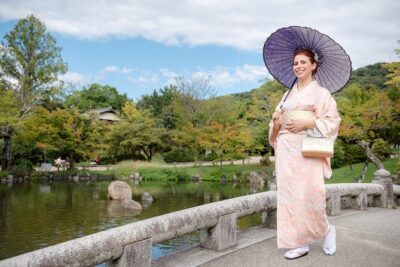
Fushimi Inari and the Temples of Kyoto, side by side.
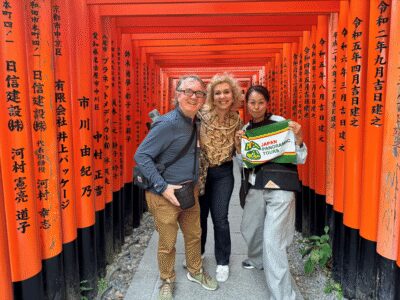 ★ 4.8Fushimi Inari, Kinkakuji, Bamboo Grove 1 Day Bus TourFrom $1224,316 reviews
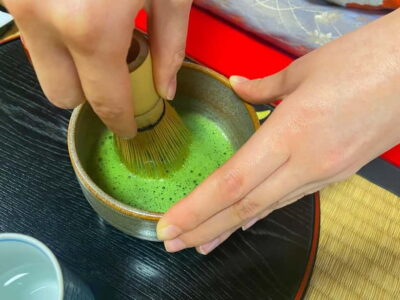 ★ 4.9Tea Ceremony in a Traditional Tea House in KiyomizuFrom $493,519 reviews
 ★ 4.7Kyoto/Osaka: Nara, Fushimi Inari Taisha, Arashiyama Bus TourFrom $521,275 reviews
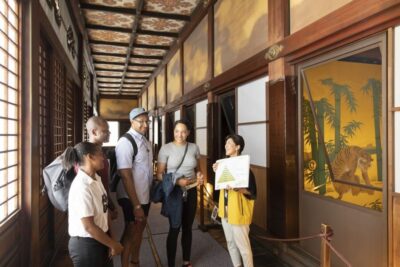 ★ 4.7Nijo-jo Castle and Ninomaru Palace Guided TourFrom $161,020 reviews
 ★ 4.4Osaka/Kyoto: Arashiyama, Nara & Fushimi Inari Shrine w/LunchFrom $61754 reviews
 ★ 4.7Nijo Castle, Kiyomizu & Fushimi Inari Guided TourFrom $54700 reviews
 ★ 5.0Nijo, Kinkaku-ji, Arashiyama, Kiyomizu & Fushimi InariFrom $51699 reviews
 ★ 4.7Imperial Palace & Nijo Castle Guided Walking TourFrom $49453 reviews
Filed on these lists too