
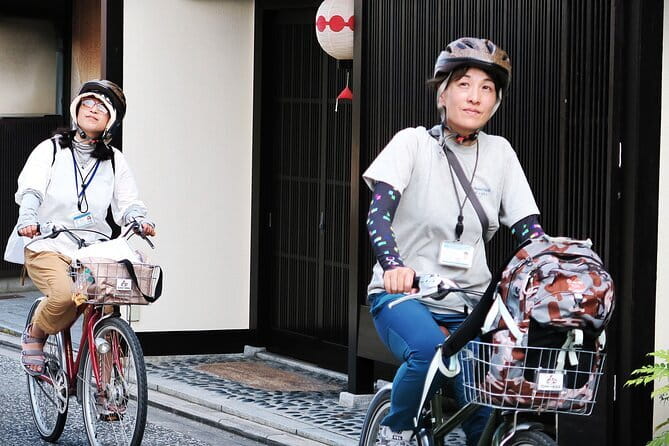
REVIEW · CYCLING AND E-BIKE TOURS
Kyoto Shogun Cycling Tour
Golden temples plus two wheels.
This Kyoto Shogun Cycling Tour is an easy, downhill-feeling route that strings together the key symbols of Ashikaga and Tokugawa power in a way you can actually enjoy on foot-free legs. You’ll see the Golden Pavilion (Kinkakuji), then continue to a quieter temple experience and finish at Nijo Castle, where the story turns toward the end of the shogun era.
What I like most is how the tour mixes big-name Kyoto sights with smaller, calmer moments, without turning your day into a rushed checklist. I also like the guide factor, since past guests highlighted strong English and story-telling from guides like Seiya, Makoto, and Nozomi, which matters a lot when you want meaning, not just photos.
One possible drawback to plan for is that it runs in rain, and while you get ponchos and a bike option, weather can still affect comfort and visibility on the road.
In This Review
- Key highlights that make this ride worth your time
- Kyoto’s Shogun story, pedaled in 3.5 hours
- Price and logistics: what you really pay for
- Start and finish points you can plan around
- Stop 1: Kinkakuji Golden Pavilion, power seen through gold
- Stop 2: Toji-in Temple, wabi-sabi quiet with a tea-house feel
- Stop 3: Nijo Castle, ornate walls tied to the shogun era’s end
- The ride itself: easy downhill, but bring road sense
- How the guides shape the whole experience
- Rain in Kyoto: ponchos on bikes, or a transit walk plan
- What’s included versus what you’ll pay for
- Who should book this Kyoto Shogun Cycling Tour
- Should you book it or skip it?
- FAQ
- How long is the Kyoto Shogun Cycling Tour?
- What is the meeting point and where does the tour end?
- What’s included in the price?
- What is not included?
- Does the tour run in rain?
- Is this a private tour?
- Who can join, and is there a minimum age?
- How big is the group for each guide?
Key highlights that make this ride worth your time
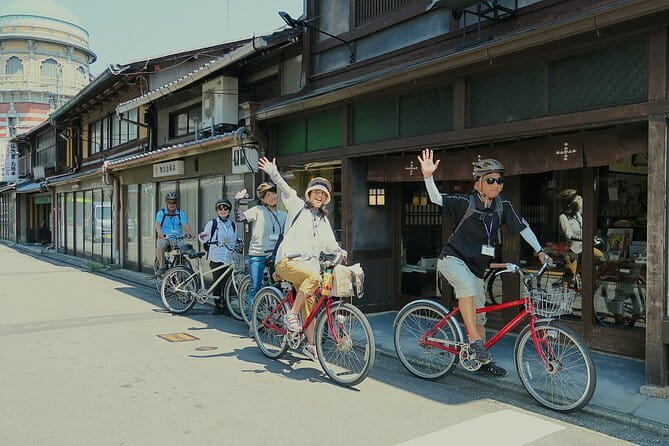
- Golden Pavilion (Kinkakuji) plus garden walking, with admission built in
- Toji-in Temple for a quieter tea-house vibe and wabi-sabi style calm
- Nijo Castle grounds that connect architecture to shogun politics
- Easy downhill feel designed for a wide range of riders, with helmets and rainwear included
- Private group cycling (not a huge bus crowd), led by a guide with standout English
- Rain plan that keeps you moving, with a walking option via public transit if needed
Cover Kyoto on two wheels instead
- Hidden Kyoto E-Biking tour
★ 5.0 · 1,843 reviews - Arashiyama Bamboo Forest & Hidden Gems Bike Tour (Early Bird)
★ 5.0 · 613 reviews - 5 Top Highlights of Kyoto Full Day Bike Tour (E-bike option)
★ 5.0 · 511 reviews - Full Day Biking Tour Exploring the Best of Kyoto
★ 5.0 · 498 reviews
Kyoto’s Shogun story, pedaled in 3.5 hours
Kyoto has a way of making history feel personal. This tour takes that idea and gives it wheels, so you get to cover multiple “chapters” without spending your whole day battling transit lines and uphill walks.
The time window is about 3 hours 30 minutes, which is a sweet spot. You get enough time at each stop to slow down and actually look around, but not so long that you feel cooked in the heat. It also helps that it’s described as an easy, downhill route, so the overall effort stays reasonable for most people who can ride a bike confidently.
Price and logistics: what you really pay for
At $153.50 per person, this is not a budget-only activity. But when you break down what’s included, the value makes more sense.
You get:
- a bicycle
- helmet
- rainwear
- admission tickets at the three major stops
What’s not included is matcha service. In practice, that means if you want the full ceremonial snack moment, you’ll need to pay separately once you’re there.
Also pay attention to the tour setup. It’s a private tour/activity, meaning only your group rides with the guide. Minimum group size is 2, and the maximum is 6 guests per guide (so it stays controlled and personal). If your group is larger, an extra guide can be arranged.
Start and finish points you can plan around
Your ride starts at Wara Tenjin mae in Kita Ward (Kyoto, 603-8351). Your finish is at Kyoto Cycling Tour Project (Kyoto Station Cycle Terminal) in Shimogyo Ward (Kyoto, 600-8235).
That end point is a big practical win. Ending near Kyoto Station makes it easier to connect to your next plan, whether that’s train travel or just grabbing dinner without crossing the city on foot again.
It’s also noted that the meeting area is near public transportation, so you’re not stuck solving a last-mile puzzle before your tour begins.
- PERFECT KYOTO 1-Day Bus Tour★ 5.0 · 13,518 reviews
- Kyoto: Fushimi Inari, Kinkakuji, Bamboo Grove 1 Day Bus Tour★ 4.8 · 4,316 reviews
- Kyoto: Tea Ceremony in a Traditional Tea House in Kiyomizu★ 4.9 · 3,519 reviews
- Kyoto: Tea Ceremony Ju-An at Jotokuji Temple★ 4.9 · 3,207 reviews
- Kyoto: 45-Minute Tea Ceremony Lesson Experience★ 4.3 · 2,378 reviews
Stop 1: Kinkakuji Golden Pavilion, power seen through gold
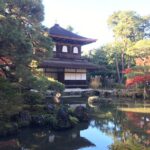
The first stop is Kinkakuji Temple, the iconic Golden Pavilion. Even if you’ve only seen it in photos, seeing it in person tends to hit differently. The gold lining is part visual wow, but the more useful part for your brain is understanding what the site represents.
You’ll walk through the gardens around the temple building with your guide and get admission included. This is a key moment because gardens are where Kyoto often reveals its logic. Paths guide your viewing angles, and the setting helps explain why this place mattered politically, not just aesthetically.
What I like about putting Kinkakuji early is how it sets the theme fast. The tour frames the Golden Pavilion as once tied to the Ashikaga shoguns, which turns the visit from I saw the golden building into I get why rulers cared about this kind of statement.
A consideration: it’s a major landmark, so expect busy viewing pockets. The guide’s pacing helps here, and having your bike waiting means you’re not trapped in a long queue mindset all day.
Stop 2: Toji-in Temple, wabi-sabi quiet with a tea-house feel
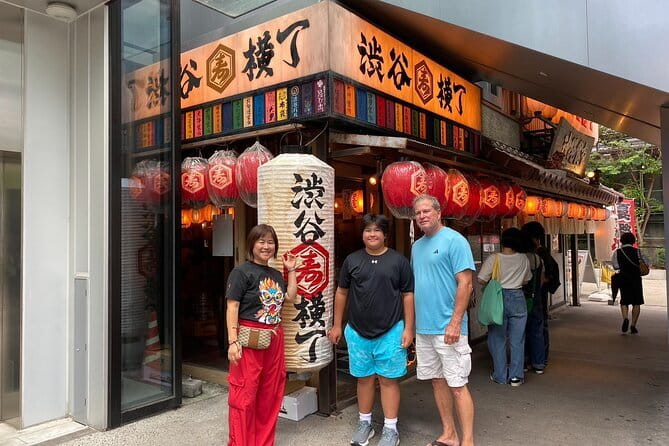
Next comes Toji-in Temple, a calmer change of tempo. This is the part of the day that feels more like Kyoto’s inner voice.
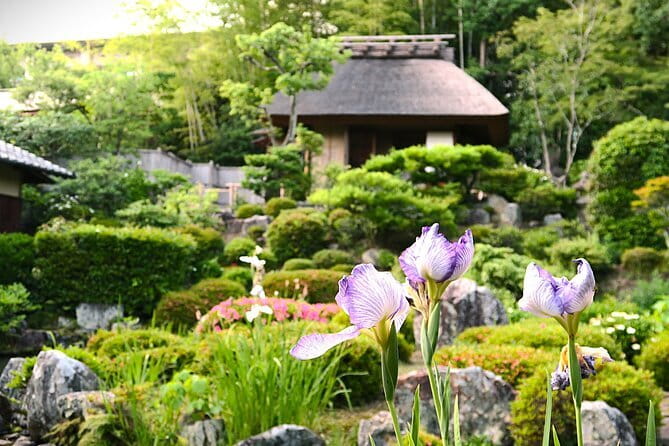
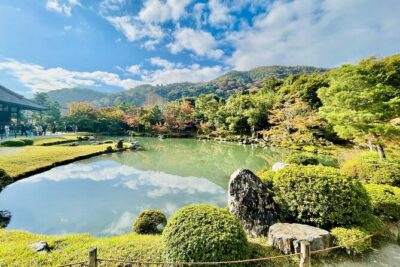
You’ll spend about one hour with your guide, including time inside the temple areas. The focus here is the temple interiors plus its garden and quaint tea house feel. The tour also connects this stop to wabi-sabi, which is the Japanese aesthetic tied to simplicity, age, and quiet imperfections.
This is the stop I think is most valuable if you’re trying to experience Kyoto beyond the headline attractions. Kinkakuji is a spectacle. Toji-in is a reset. It gives you a place to slow down, look at details, and let the history feel less like a lecture and more like atmosphere.
One practical note: “quiet” is literal here. If you’re the type who likes to keep moving nonstop, you may find this part slower than a typical sightseeing sprint. But if you like a pause, it’s exactly the right ingredient.
Stop 3: Nijo Castle, ornate walls tied to the shogun era’s end
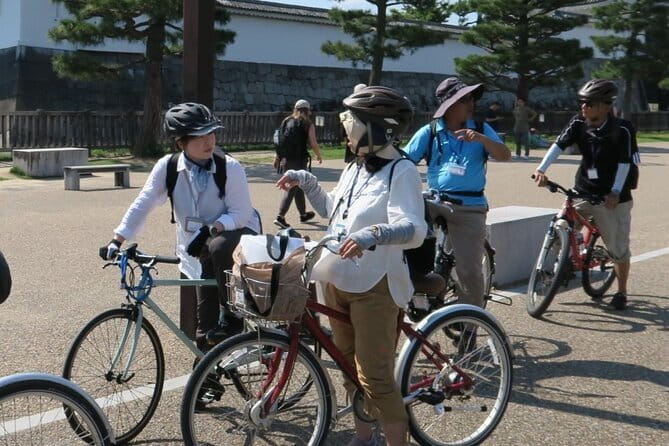
The final major stop is Nijo Castle, a fortress-like compound that connects directly to the Tokugawa shogunate in Kyoto. This is where the narrative shifts from the splendor of established power toward the tensions at the end of the shogun era.
You’ll spend about 1 hour 30 minutes on the grounds with your guide, with admission included. The castle is described as having magnificent buildings and ornamental carvings, and there’s a strong historical thread to how the place functioned as the residence of the final shoguns in Kyoto.
Why this stop works so well on bikes: you approach it with momentum, but the castle grounds still give you room to slow down. The extra time compared to the earlier stops matters because castles aren’t just one view. They’re layers, and they reward time spent looking at details in the structures.
A consideration for your comfort: castles and compound grounds often mean uneven surfaces and outdoor walking. The bike portion saves your legs on transit between sites, but you still do real walking once you arrive.
The ride itself: easy downhill, but bring road sense
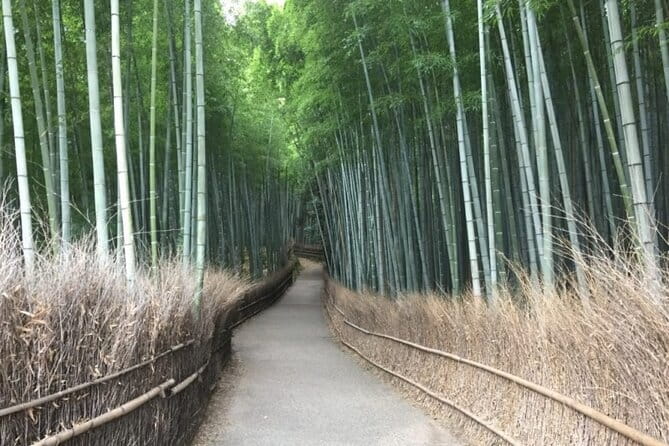
This tour is set up as an easy downhill route suitable for everyone, and that’s the promise. Still, the actual requirement is practical: children must be at least 10 years old, 145 cm or above, and able to ride safely on the road unassisted.
So for adults, the message is simple. If you’re comfortable riding a bike in traffic-adjacent areas and can balance through turns, you’ll be fine. If you’ve only ridden on flat bike paths, you might want to assess your comfort level before committing.
I also like that everyone gets helmets and rainwear. That’s not a small thing. Kyoto weather can change fast, and when it does, you want to stay focused on steering, not getting soaked.
How the guides shape the whole experience
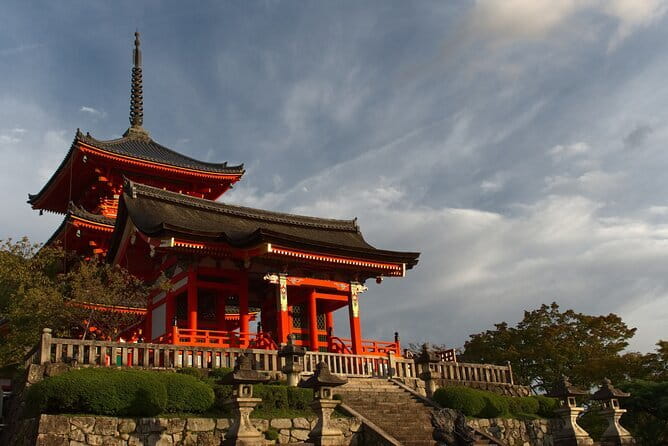
A cycling tour lives or dies on the guide. Here, the guide quality is a standout theme in the comments I saw, with names like Seiya, Yanai-San, Makoto, Yutaka Kaneda, Nozomi, Kaz, JJ, and Yasunobu Yagyu coming up for strong English and smart pacing.
In particular, I’d pay attention to the way guides can personalize the route and timing. One example from past feedback is a guide making room for an on-the-ground festival moment, which is exactly what you want from a local city expert.
The practical takeaway: you’re not just being taken to monuments. You’re getting context and transitions, which makes the history stick. In a place like Kyoto, explanations are the difference between seeing sights and understanding why they mattered.
Rain in Kyoto: ponchos on bikes, or a transit walk plan
This tour operates in rain. The good news is you get options.
You can:
1) continue on bikes with rain poncho (free of charge)
2) switch to a walking tour using bus or metro (included in the tour fee)
This is smart planning. Rain doesn’t mean the day is ruined. It just means the format adapts. Since you also get rainwear included, you’re not stuck improvising with a cheap umbrella you’ll hate.
If you’re sensitive to wet and cold, I’d still plan for discomfort on the road. Ponchos help, but you’ll feel the difference when the weather turns.
What’s included versus what you’ll pay for
Here’s where the value math gets clear.
Included:
- bicycle
- helmet
- rainwear
- admission tickets at Kinkakuji, Toji-in, and Nijo Castle
Not included:
- matcha service
So if you love matcha treats, decide in advance whether you want a stop-style purchase, or you prefer just walking through the tea-house atmosphere without ordering. Either approach is fine, and you won’t feel forced.
Also, the tour uses a mobile ticket, which is convenient if you don’t want to handle paper.
Who should book this Kyoto Shogun Cycling Tour
This is a strong match for:
- couples or small groups who want a shared, private day
- travelers who like history but hate standing still for long stretches
- riders who are comfortable on a bike and want to cover Kyoto efficiently
- people who appreciate “big iconic stop, then calmer stop, then big finale” pacing
It’s less ideal if:
- you want zero street cycling, no matter the weather
- you’re a brand-new cyclist and you cannot handle road turns and pacing
- your group is only one person, since the minimum is 2 guests per guide
Should you book it or skip it?
I’d book this if you want Kyoto history with momentum. The structure is practical: Golden Pavilion first, a quiet Toji-in pause, then Nijo Castle for the era shift. Add in included admissions, helmet and rainwear, and a guide team that gets praised for English and city knowledge, and you have a day that feels efficient without feeling rushed.
I’d reconsider if you’re not comfortable riding outdoors, or if you know rain ruins your travel mood. The tour has a plan for bad weather, but you still need to tolerate the feel of a wet day.
If you’re on the fence, think of it this way: a cycling tour is the kind of experience you rarely repeat. When Kyoto is good, it’s hard to beat. This one gives you a clean way to ride through its shogun-era storyline in a single half-day.
FAQ
How long is the Kyoto Shogun Cycling Tour?
The tour lasts about 3 hours 30 minutes.
What is the meeting point and where does the tour end?
It starts at Wara Tenjin mae, Kinugasa Oharaicho, Kita Ward, Kyoto, 603-8351 and ends at Kyoto Cycling Tour Project (Kyoto Station Cycle Terminal), 552-13 Higashiaburanokōjichō, Shimogyo Ward, Kyoto, 600-8235.
What’s included in the price?
The tour includes bike use, a helmet, rainwear, and admission tickets for the listed stops.
What is not included?
Matcha service is not included.
Does the tour run in rain?
Yes, it operates in rain. You can either continue on bikes with a rain poncho or switch to a walking tour using bus or metro, which is included in the tour fee.
Is this a private tour?
Yes. It’s a private tour/activity, so only your group participates.
Who can join, and is there a minimum age?
Children must be at least 10 years old, at least 145 cm, and able to ride a bicycle safely on the road unassisted.
How big is the group for each guide?
The tour accepts minimum 2 and maximum 6 guests per guide. If your group is 7 to 12, an extra guide can be arranged.
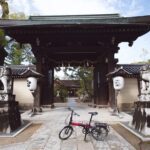
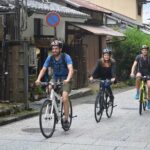
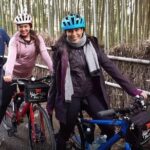
Bicycles and E-Bikes We Have Ridden
Newest Kyoto write-ups from the Loving Japan desk
Cycling and E-Bike Tours, side by side.
 ★ 5.0Hidden Kyoto E-Biking tourFrom $1161,843 reviews
 ★ 5.0Tokyo Guided Small-Group Biking TourFrom $1061,250 reviews
 ★ 5.0Tokyo Great Cycling TourFrom $99811 reviews
 ★ 5.0Tokyo Top Highlights 3h Guided E-bike TourFrom $63714 reviews
 ★ 5.03h Tokyo E-Bike Tour: Hidden Gems, and Local Life with guideFrom $63670 reviews
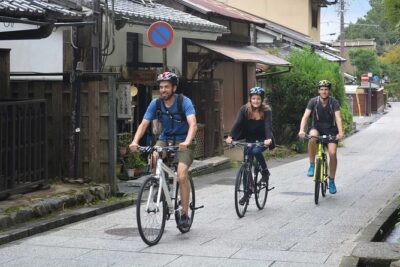 ★ 5.0Arashiyama Bamboo Forest & Hidden Gems Bike Tour (Early Bird)From $106613 reviews
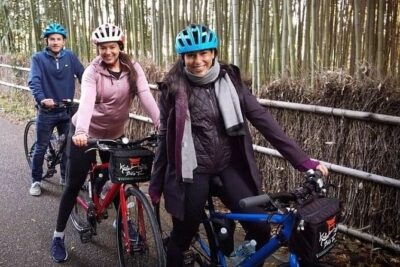 ★ 5.05 Top Highlights of Kyoto Full Day Bike Tour (E-bike option)From $172511 reviews
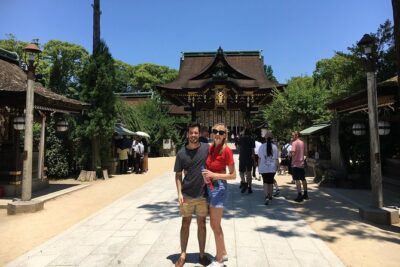 ★ 5.0Full Day Biking Tour Exploring the Best of KyotoFrom $119498 reviews
Filed on these lists too