
REVIEW · CYCLING AND E-BIKE TOURS
No. 1 E-Bike Tour for Up to 5 Guests in Kyoto with a Local!
Kyoto moves fast, but this ride keeps it calm. On an e-bike, you cover key sights in about 4 hours while a local guide connects the landmarks to how Kyoto works and why each place matters. I like that it is a small group, so the pace feels human, not rushed.
I also like the way the route blends big-name temples with quieter moments outdoors. You get a breather along the Kamo River, plus culturally important stops like Nishi Honganji, Gion, and Nanzen-ji. One possible drawback: you still need to be comfortable cycling for a solid stretch, since it is not a stop-and-go walking tour.
If you care about language support, you will want to plan ahead. Some guides can speak German, Dutch, Bangladeshi, Hindu, and Urdu, and you can request a preference before you book. Either way, you’ll start with a cycling briefing and hand-sign basics, then meet up at the Clew share-cycle port near Seikouin Wagatazizou.
In This Review
- Key highlights you will actually feel on the ride
- Meeting your guide at the Clew port near Seikouin Wagatazizou
- Why this Kyoto e-bike route feels efficient and still relaxed
- Nishi Honganji: starting with a major temple complex
- Kagiyacho: the odd, fun contrast of Kyoto and Nintendo
- Gion Shirakawa area: tea-house streets and river-side views
- Kiyamachi Street and the city-side pulse
- Nanzen-ji area and the Lake Biwa Canal story
- Heian Shrine: the red torii and the anniversary connection
- Nanzen-ji Temple: one of Kyoto’s Five Mountains
- Kamogawa River: the cool-down moment that makes the day feel complete
- How the included e-bike setup improves your Kyoto day
- The big watch-out: fit and comfort still matter
- Guide energy: Yuki’s fun factor makes the stories land
- Should you book this Kyoto e-bike tour?
- FAQ
- What time does the tour start, and where does it meet?
- How long is the Kyoto e-bike tour?
- What is the group size limit?
- What’s included in the price?
- Are admission tickets required for the sights?
- Can children join the tour?
- Do guides speak languages other than English?
- What happens if weather is bad?
- What is the cancellation policy?
Key highlights you will actually feel on the ride
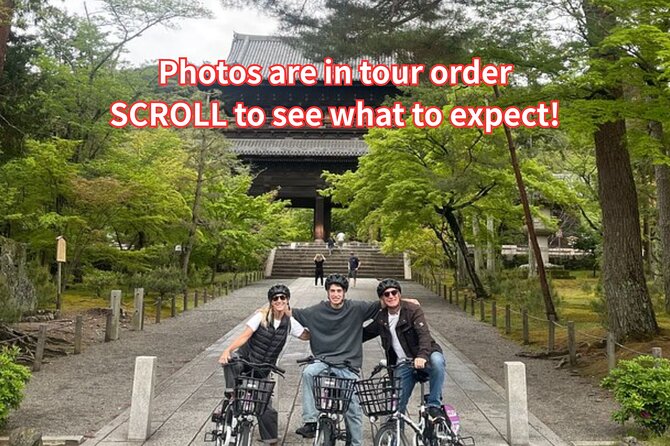
- Up to 5 people, which keeps questions easy and the pace relaxed
- Helmet and e-bike included, so you do not waste time sorting gear
- Temple and shrine stops are paired with cycling flow, not random driving breaks
- Gion and the old riverside atmosphere, with photo-friendly streets and traditional buildings
- Kamo River time, including a chance to cool off by putting your feet in the water
- Language flexibility, with options depending on the guide you get
Cover Kyoto on two wheels instead
- Arashiyama Bamboo Forest & Hidden Gems Bike Tour (Early Bird)
★ 5.0 · 613 reviews - 5 Top Highlights of Kyoto Full Day Bike Tour (E-bike option)
★ 5.0 · 511 reviews - Full Day Biking Tour Exploring the Best of Kyoto
★ 5.0 · 498 reviews - E-Bike Tours of the highlights of Kyoto!!!
★ 5.0 · 291 reviews
Meeting your guide at the Clew port near Seikouin Wagatazizou
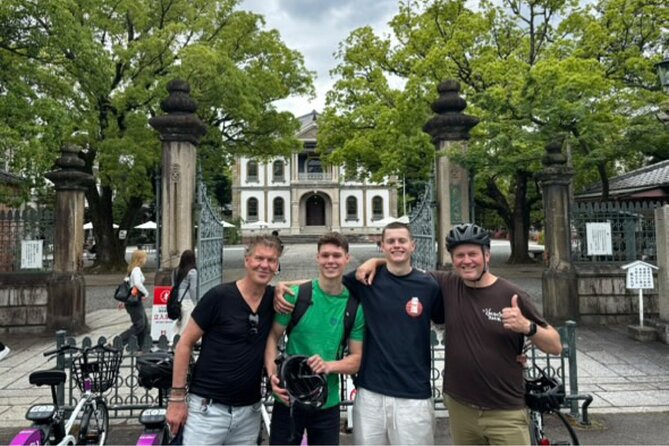
The tour starts in the Shimogyo Ward area, with the official meeting point at Times Car Rental, 682 Higashishiokōjichō. Start time is 1:00 pm, and you end back at the same meeting point.
Before you roll, your guide meets you at the share-cycle Clew port located in front of Seikouin Wagatazizou, which is behind the hotel near the start area. There is a short briefing, including cycling hand-signs. It sounds small, but it sets the tone. You are not guessing. You get a shared rhythm, and that matters when you are moving through busy Kyoto streets.
A practical note that can save stress: before departure, your guide sends a message through Viator (Tripadvisor). Check your inbox ahead of time so you know exactly where to go when you arrive.
Why this Kyoto e-bike route feels efficient and still relaxed
This is a 4-hour ride designed to hit major sights without turning your day into a sprint. The tour is built around electric assistance, so you can keep your energy for enjoying the places you stop at, not just getting there.
The group size is capped at 5 travelers, which changes everything. With fewer people, the guide can slow down when you want a better look at a temple gate or a street scene, and you spend less time waiting for the whole group to regroup.
Also, this tour includes stretches that feel different from each other. You have temple precinct moments, old-town street scenes, and a river interlude. That variety is one of the reasons it works as a first or mid-trip activity, especially if you want a wide overview without spending your whole day walking.
Nishi Honganji: starting with a major temple complex
One of the first major stops is Nishi Honganji, also referred to as Hongan-ji. This is the head temple of the Jodo Shinshu Hongwanji-ha sect, and it is known for historical buildings, including registered World Heritage structures.
What makes this stop worth your time on an e-bike tour is the scale. You are not just seeing a gate from the outside. You get about 30 minutes to take in the temple space. Since you arrive under your own power rather than bus-style drops, you are in better shape to look around and absorb details at a comfortable pace.
The admission for this stop is listed as free on the tour schedule, which keeps the day simple. You can focus on the experience instead of hunting for additional tickets.
- PERFECT KYOTO 1-Day Bus Tour★ 5.0 · 13,518 reviews
- Kyoto: Fushimi Inari, Kinkakuji, Bamboo Grove 1 Day Bus Tour★ 4.8 · 4,316 reviews
- Kyoto: Tea Ceremony in a Traditional Tea House in Kiyomizu★ 4.9 · 3,519 reviews
- Kyoto Geisha Walking Tour: Gion District & Hidden Gems★ 4.7 · 3,273 reviews
- Kyoto: Tea Ceremony Ju-An at Jotokuji Temple★ 4.9 · 3,207 reviews
Kagiyacho: the odd, fun contrast of Kyoto and Nintendo
After Nishi Honganji, the route passes through Kagiyacho. Here, you will notice a huge building that stands out as the old headquarters of Nintendo.
This is a good reminder that Kyoto is not frozen in time. Even in areas tied to long traditions, modern companies still shape the city’s presence. On a bike, this kind of contrast lands naturally. It breaks up the temple-heavy momentum without feeling like random sightseeing.
You get around 20 minutes here. That is enough time to register what you are seeing, take a few photos if you want, and then move on without losing the rhythm of the day.
Gion Shirakawa area: tea-house streets and river-side views
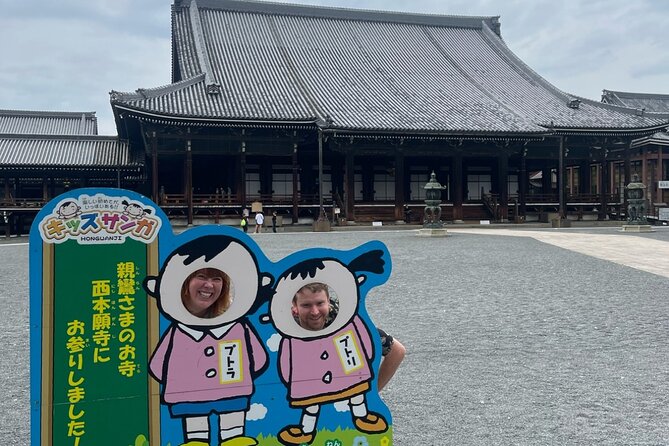
Next comes Gion, where the tour aims at that classic Kyoto feeling: old buildings along the water, traditional street atmosphere, and the idea of chaya-mati, the tea-house district style of neighborhood.
The tour time at Gion is about 30 minutes. It is long enough to slow down, look at the street fronts, and get a sense of how the area feels seasonally. The tour description also points to seasonal plants like cherry blossoms, so if you are visiting during a peak season, you may catch the area at its prettiest.
A small but real advantage of visiting by bike: you can arrive with a sense of movement. You are not only standing still. You are cycling through connected areas, so the day feels like a coherent route rather than a set of separate taxi rides.
Admission for this stop is also listed as free on the schedule.
Kiyamachi Street and the city-side pulse
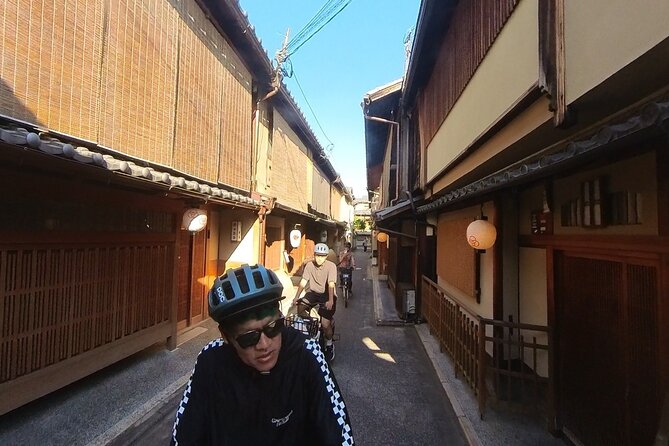
The overall tour experience includes a stroll through Kiyamachi Street, described as lively. Even without extended time there, this kind of stop is valuable because it adds everyday Kyoto to the mix.
Temples give you meaning. Street time gives you texture. Kiyamachi is where you start to feel how people actually move through the city between big sights, and it helps balance out a day that otherwise centers on landmarks.
Nanzen-ji area and the Lake Biwa Canal story
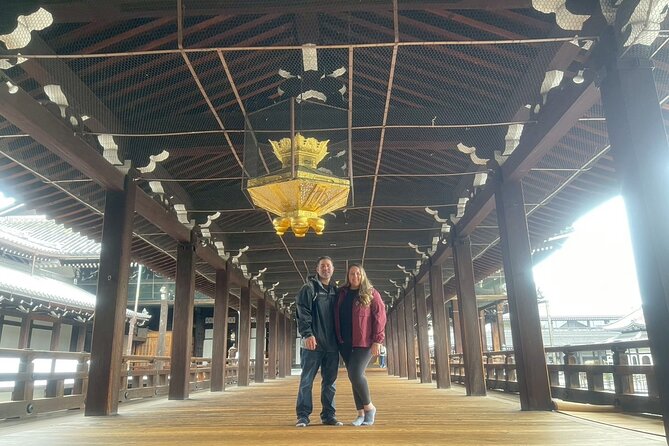
After Gion, the ride brings you into the Nanzen-ji side of Kyoto, with two connected stops focused on the Lake Biwa Canal.
Stop 5 is in Nanzenji Kusakawachō, with about 20 minutes. You ride through the city where you will notice a long river-like waterway called the Lake Biwa Canal. The canal played a role in Kyoto’s development by supplying water to the city.
Stop 6 is in Nanzenji Fukuchichō, with about 50 minutes. This longer stretch is where the waterway’s engineering and the elevation difference between Kyōto and Lake Biwa becomes part of the story. Even if you only absorb a few key points, it helps you see the canal as infrastructure with history, not just a pretty stretch of water.
This is exactly the kind of stop that fits an e-bike format. You are moving enough to stay engaged, and you are stopping long enough to actually understand what you are looking at. Admission for these stops is listed as free on the schedule.
Heian Shrine: the red torii and the anniversary connection
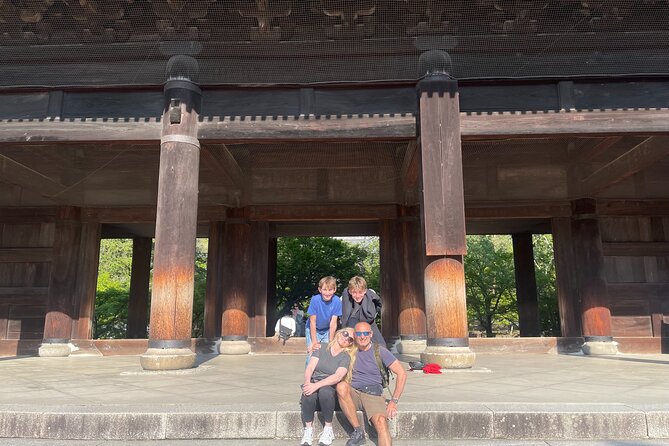
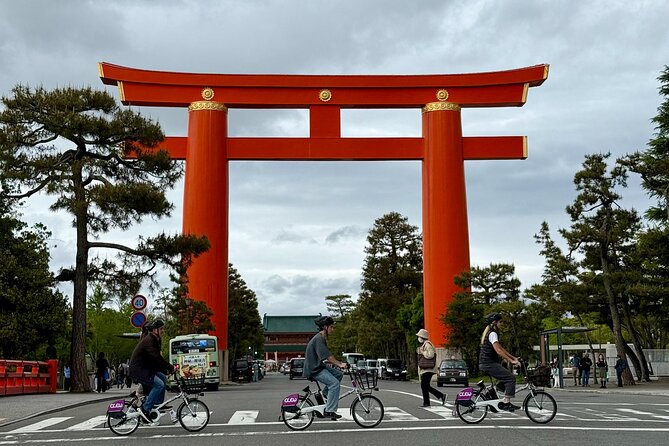
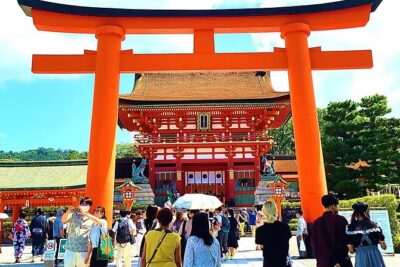
Heian Shrine is built to commemorate the 1100th anniversary of the transfer of the capital to Heian-kyo, with Emperor Kanmu as its enshrined deity. The tour description also highlights the large red torii gate as a standout highlight.
You spend time here as part of the mid-to-late portion of the ride. Even if you are not an architecture superfan, torii gates are visual language in Japan. The red gate gives you a clear focal point, and the commemoration theme gives context to why the shrine exists in this form.
This stop can be a nice mental break after the canal and waterway explanation, because it shifts the day toward an iconic landmark moment rather than an infrastructure story.
Nanzen-ji Temple: one of Kyoto’s Five Mountains
Then it is Nanzen-ji Temple, described as particularly special among the Five Mountains of Kyoto. The tour notes the main temple and gate as big presence points.
You get about 20 minutes at Nanzen-ji. That is not a full day at the precinct, but on an e-bike tour, it is the right length to take in the main structures, appreciate the setting, and still stay on track for the final river break.
Again, admission for this stop is listed as free on the schedule, so your time is spent on looking and learning, not buying.
Kamogawa River: the cool-down moment that makes the day feel complete
The tour ends with a ride to the Kamo River area. This is a famous spot in Kyoto, and the experience here is simple in the best way: spend a moment to relax in the riverbed along the river or enjoy cycling on the riverbank.
You get about 10 minutes here, and the tour description specifically says you can get your feet in the water to cool down at the end. That means this is not just a scenic pass-through. It is a built-in break that turns the ride from sightseeing into a small reset for your body and mood.
Admission is listed as free, and the structure makes sense. By the time you reach the river, you have already seen temple gates and street scenes. The cool-down lets you end the tour feeling lighter.
How the included e-bike setup improves your Kyoto day
The tour includes an installed cycling helmet, bike rental, a cycling guide, and use of the bicycle. That matters more than it sounds.
Kyoto can be tricky for DIY cycling. You need the bike sorted quickly, you need it safe, and you need routes that flow. By providing the bike and helmet upfront, the tour reduces the friction that often kills half-day plans.
Also, this tour is priced per person at $99.08. That price becomes easier to justify when you look at what you actually get in 4 hours: multiple major sights, free admission listed for the stops, and a guide who is there during your cycling time, not just at checkpoints.
The value is strongest if you want an overview of Kyoto without committing to a long day of planning, map work, and transport juggling.
The big watch-out: fit and comfort still matter
Electric biking helps, but it does not remove the need to be comfortable on a bike.
This tour moves through Kyoto by road and along riverbank areas, and it includes several stops where you ride, then park the bike, then return to cycling. If you have knee issues, balance concerns, or you simply do not like riding in traffic-adjacent spaces, this could feel challenging even with electric assistance.
The good news is that the small group size supports pacing. The guide can handle the group more easily when there are only a few people, and the briefing at the start helps you understand the flow.
Guide energy: Yuki’s fun factor makes the stories land
One of the standout details from the feedback is that guides get appreciated for keeping the experience fun while still educational. A guide named Yuki is specifically mentioned as one of the best tour guides people have had across their travels.
That kind of praise matters because on a cycling tour, you do not just want facts. You want a guide who connects what you see to something you can remember later. When the route is packed with famous names like Nishi Honganji, Gion, and Nanzen-ji, the difference between an average tour and a memorable one often comes down to how the guide tells the stories while you ride.
Also, the language detail is worth taking seriously. If you want German, Dutch, Bangladeshi, Hindu, or Urdu, you should contact the provider before booking and share your preference. Some guides can speak multiple languages, so asking early gives you a better chance.
Should you book this Kyoto e-bike tour?
Book this if you want:
- A 4-hour Kyoto overview that hits major sights without feeling like a checklist race
- A format that blends temples, old streets, and a relaxing river moment
- An option with a small group size that keeps the ride comfortable
- A guided experience where you learn while you move, and you end with a real cool-down by the Kamo River
Skip it or think twice if:
- You are not comfortable riding a bike for a few hours
- You need a fully walking-based day, since this experience includes cycling between stops
- You prefer very long time inside a single precinct, because most stops are sized to fit a half-day route
If your goal is to see a lot of Kyoto in one smart shot, this is a strong choice. You get a guided route, a real mix of iconic and meaningful stops, and the kind of pacing that works well when you want your day to feel fun, not frantic.
FAQ
What time does the tour start, and where does it meet?
The tour starts at 1:00 pm. The meeting point is Times Car Rental, 682 Higashishiokōjichō, Shimogyo Ward, Kyoto, 600-8216, Japan, and your guide meets you at the nearby Clew share-cycle port in front of Seikouin Wagatazizou.
How long is the Kyoto e-bike tour?
The tour duration is about 4 hours.
What is the group size limit?
The tour has a maximum of 5 travelers.
What’s included in the price?
Included items are a cycling helmet, bike rental, a cycling guide, and use of the bicycle.
Are admission tickets required for the sights?
The schedule lists admission as free for the stops included in the tour.
Can children join the tour?
Children under 10 can participate if they are taller than 140 cm and can ride a bicycle. The fee is the same as an adult.
Do guides speak languages other than English?
Some guides can speak German, Dutch, Bangladeshi, Hindu, and Urdu. If you have a language preference, you should contact before booking.
What happens if weather is bad?
The tour requires good weather. If it is canceled due to poor weather, you will be offered a different date or a full refund.
What is the cancellation policy?
You can cancel for a full refund up to 24 hours in advance of the experience start time. If you cancel less than 24 hours before, the amount paid is not refunded.
Bicycles and E-Bikes We Have Ridden
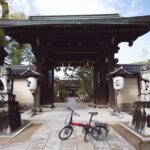
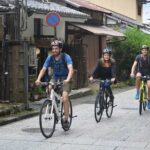
Newest Kyoto write-ups from the Loving Japan desk

Cycling and E-Bike Tours, side by side.
 ★ 5.0Hidden Kyoto E-Biking tourFrom $1161,843 reviews
 ★ 5.0Tokyo Guided Small-Group Biking TourFrom $1061,250 reviews
 ★ 5.0Tokyo Great Cycling TourFrom $99811 reviews
 ★ 5.0Tokyo Top Highlights 3h Guided E-bike TourFrom $63714 reviews
 ★ 5.03h Tokyo E-Bike Tour: Hidden Gems, and Local Life with guideFrom $63670 reviews
 ★ 5.0Arashiyama Bamboo Forest & Hidden Gems Bike Tour (Early Bird)From $106613 reviews
 ★ 5.05 Top Highlights of Kyoto Full Day Bike Tour (E-bike option)From $172511 reviews
 ★ 5.0Full Day Biking Tour Exploring the Best of KyotoFrom $119498 reviews
Filed on these lists too