
REVIEW · PRIVATE CAR WITH DRIVER
Private car tour Let’s uncover secrets of majestic Kyoto history
Kyoto without the crush. This private 7-hour car tour strings together classic Kyoto sights with quieter temple stops, and it runs smoothly from start to finish with hotel pickup and drop-off plus a small group (up to 10). I especially like how the plan stays flexible, so your day does not feel like a stampede schedule. One possible snag to plan for is the ¥3,000 per person admission fee that is not included, even if several stops are listed as free.
I like that the itinerary is built around atmosphere, not just checkboxes. You start with Fushimi Inari-taisha’s famous torii tunnels, then shift into moss gardens, rock arrangements, and smaller sites that are easier to enjoy at a calm pace. And when you hit Arashiyama territory, you get a sweet break built into the flow.
If you want the main targets like the Golden Pavilion, you can get that too. Just know the real value here is the way the route balances big icons with off-main-path stops, and how that changes your photo chances and your walking comfort.
In This Review
- Key points before you go
- Private Kyoto by car, and why it changes the whole day
- The smooth logistics that make temples actually enjoyable
- Stop 1: Fushimi Inari-taisha and the torii tunnel rhythm
- Stop 2: Kennin-ji Temple, plus the fun of the name you hear on the day
- Stop 3: Ryōan-ji Temple and the feeling behind the rocks
- Stop 4: Adashino Nembutsu-ji, where history feels close
- Stop 5: Kinkaku-ji’s golden pavilion effect, plus perspective-shifting context
- Stop 6: Otagi Nenbutsu-ji and the garden that feels like an art studio
- Stop 7: Monkey Park Iwatayama and a sweet reset
- Stop 8: Kibune Shrine, koi pond calm, and neighborhood rhythm
- Lunch and dessert planning with local recommendations
- Price and value: what $108.58 per person buys you
- Best fit: who will love this and who might not
- Should you book this private Kyoto car tour?
- FAQ
- Is this a private tour?
- How long is the tour?
- Does the tour include hotel pickup and drop-off?
- What is included in the price?
- What is not included?
- Which stops are included in the itinerary?
Key points before you go
- Hotel pickup and drop-off so you skip the time-wasting transit puzzle
- Private car for up to 10 meaning you can actually move at your pace
- A flexible itinerary that can shift when weather, energy, or interests change
- Less-crowded temple stops that make Kyoto feel peaceful, not rushed
- Dessert sampling built into the day around Monkey Park Iwatayama
- A guide who can explain the stories behind the sites, not just name the places
Still weighing up options in Kyoto? These are the ones our reviewers rated highest.
- PERFECT KYOTO 1-Day Bus Tour
★ 5.0 · 13,518 reviews - Kyoto: Fushimi Inari, Kinkakuji, Bamboo Grove 1 Day Bus Tour
★ 4.8 · 4,316 reviews - Kyoto: Tea Ceremony in a Traditional Tea House in Kiyomizu
★ 4.9 · 3,519 reviews - Kyoto Geisha Walking Tour: Gion District & Hidden Gems
★ 4.7 · 3,273 reviews
Private Kyoto by car, and why it changes the whole day
A car tour in Kyoto is not just about comfort, it is about control. When you are not following a big group bus timetable, you can arrive when the site feels right, linger when the garden mood is perfect, and leave before your legs feel like they are done.
This tour is designed for small groups up to 10, so you get the social comfort of traveling with people you chose, while still getting the smooth logistics of a local driver and route planning. The air-conditioned vehicle is a real plus, especially on hot days when Kyoto can turn into a sweat workout.
The best part is the balance: you do not only get the famous hits. You also get tucked-in temple time where the magic shows up when there are fewer people around.
The smooth logistics that make temples actually enjoyable
Hotel pickup and drop-off sounds like a simple perk. In Kyoto, it is often the difference between having a relaxed day and losing your morning to stations, buses, and walking with a map that keeps flipping on you.
With pickup, you start fresh. You also avoid the stress of trying to meet in the right spot with strangers at a busy intersection. The tour includes air-conditioned transport, plus gas and parking fees up to 3,000 yen per day, so the vehicle cost does not become an extra surprise.
If you like structure but hate rushing, this is a good match. It is still a set route with set stops, but the operator highlights that the itinerary can be adjusted to your preferences. In practice, that often means swapping order, spending a bit more time at what grabs you, and moving along when something is not your style.
Stop 1: Fushimi Inari-taisha and the torii tunnel rhythm
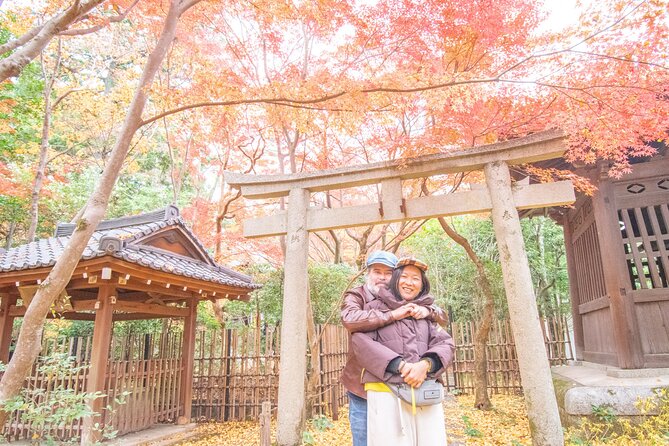
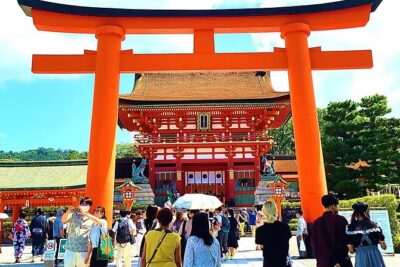
Fushimi Inari-taisha is the kind of place that pulls you forward, even before you understand why. Thousands of vermilion torii gates climb across the hillside, creating a tunnel effect that shifts from bright and busy to quieter as you walk deeper.
You get about 2 hours here, which is key. If you only have 30 minutes, you mainly see the entry scene. With more time, you can walk far enough to feel the change in the space, and you can also take breaks without the fear of holding everyone up.
What I would focus on: look for small details in the shrine grounds, not just the big gate wall. Kyoto shrines often reward you when you slow down and notice. There is also a bamboo forest taril area and peaceful birds chirping described as part of the site experience, which helps the mood change from crowd energy to nature calm.
Practical tip: wear shoes you trust. This is shrine walking, not stroll walking.
- PERFECT KYOTO 1-Day Bus Tour★ 5.0 · 13,518 reviews
- Kyoto: Fushimi Inari, Kinkakuji, Bamboo Grove 1 Day Bus Tour★ 4.8 · 4,316 reviews
- Kyoto: Tea Ceremony in a Traditional Tea House in Kiyomizu★ 4.9 · 3,519 reviews
- Kyoto Geisha Walking Tour: Gion District & Hidden Gems★ 4.7 · 3,273 reviews
- Kyoto: Tea Ceremony Ju-An at Jotokuji Temple★ 4.9 · 3,207 reviews
Stop 2: Kennin-ji Temple, plus the fun of the name you hear on the day
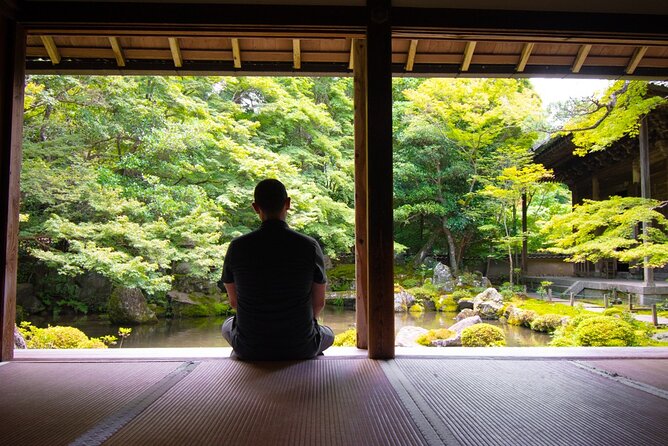
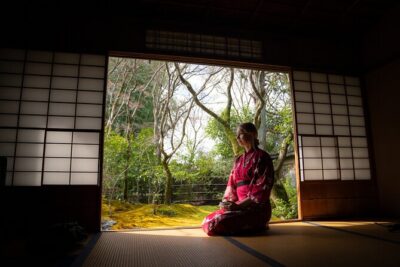
Kennin-ji Temple is known for a moss garden that you will probably remember long after the photos. The tour description frames it as a stop that is not visited by many people due to distance and convenience, which is a polite way of saying: you may get more quiet time here than you would at the headline shrines.
You also get an interesting twist: the temple name is kept as a “secret temple” until the tour. That can make the experience feel more like a discovery day than a sightseeing checklist. It also nudges you to pay attention to the scenery in front of you, instead of mentally benchmarking what it should look like.
You have about 1 hour. That is enough to take in the garden atmosphere, read any available signage, and step back and let the space sink in.
Possible drawback to consider: if you are the type who likes lots of context before you walk in, tell the guide what you prefer. You can request more background as you arrive, so you feel oriented before you start wandering.
Stop 3: Ryōan-ji Temple and the feeling behind the rocks
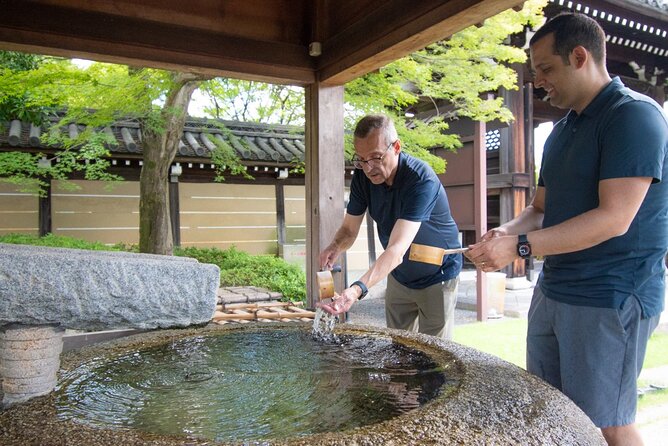
Ryōan-ji Temple is famous for its rock arrangement. The tour description notes millions of tiny rocks organized into a big garden pattern, and you can also connect it to the history of Buddhism in Japan through the lens of broader schisms and development.
Even if you do not consider yourself a Buddhism history person, the garden layout tends to work on you. From certain angles, you notice how the composition changes. It is one of those experiences where the site makes you slow down and look again.
You get about 1 hour. That is a good amount of time, because you can wait for your own sightline moment. Some gardens feel different at different times of day, and with a private guide, you are not stuck watching a line move like a conveyor belt.
Practical tip: give yourself time to sit or stand still for a few minutes. If you rush this stop, you miss the point.
Stop 4: Adashino Nembutsu-ji, where history feels close
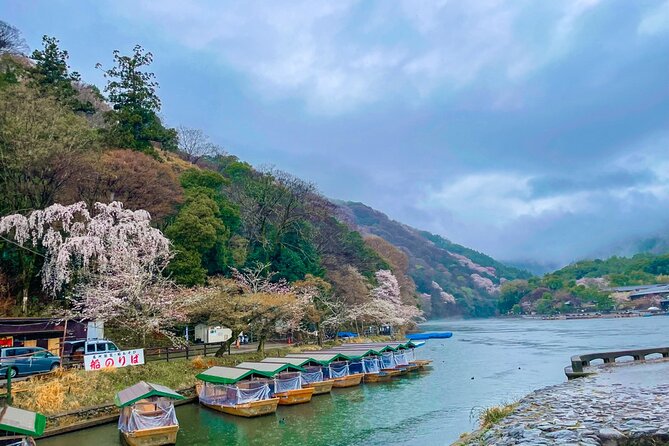
Adashino Nembutsu-ji is shorter on the clock, about 30 minutes, but it comes with strong historical flavor. The tour highlights that it was originally erected by the Hatashi group, described as having Korean-rooted ethnic background in the 5th to 6th century.
There is also mention of a burn-down in the 8th century, and the way the site has continued from there. That mix of origin story plus survival makes the stop more than just a pretty temple photo moment.
This is the kind of stop that rewards attention to what you see and what you are told. Because it is brief, you will get more out of it if you ask questions. A private guide format makes that easier, especially if the group size is small.
Good to know: this is a short stop, so do not plan for long wandering at this one. Let the guide show you the key areas and keep things moving.
Stop 5: Kinkaku-ji’s golden pavilion effect, plus perspective-shifting context
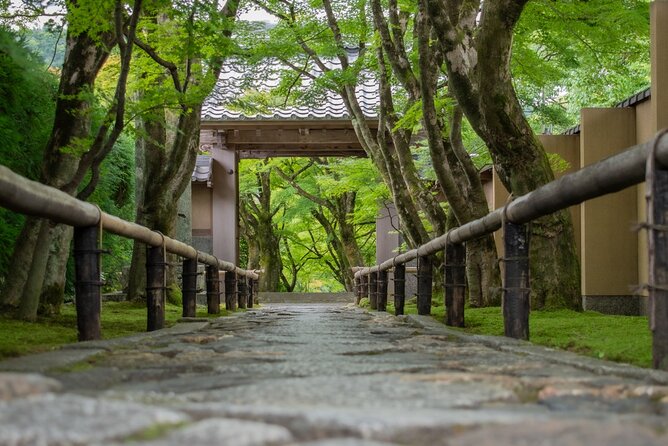
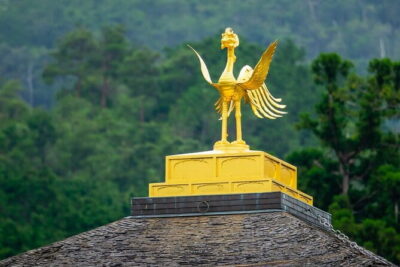
The tour lists Yasakanoto alongside Kinkakuji, the Golden Pavilion. It explains that it was once the villa of Shogun Yoshimitsu Ashikaga (1358-1408), then converted into a temple after his death. The iconic feature is the building’s two top floors covered with gold leaf.
This is the stop where Kyoto goes full postcard. But the value here is not only seeing gold leaf. It is understanding what it meant in the historical setting and how it fits into the wider Ashikaga story.
You have about 1 hour. That should be enough to see the pavilion area, take in the reflections you can catch depending on conditions, and still avoid the time pressure that big bus schedules create.
Reality check: at the Golden Pavilion, crowds can happen. Your best advantage is that the tour is private and you can manage your time inside the site more smoothly than you can on a mega-group route.
Stop 6: Otagi Nenbutsu-ji and the garden that feels like an art studio
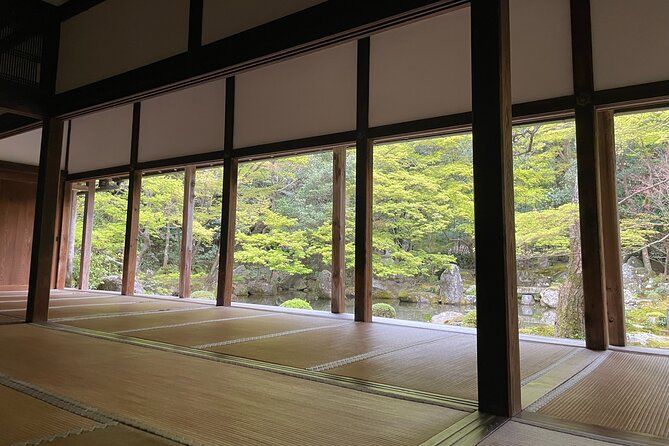
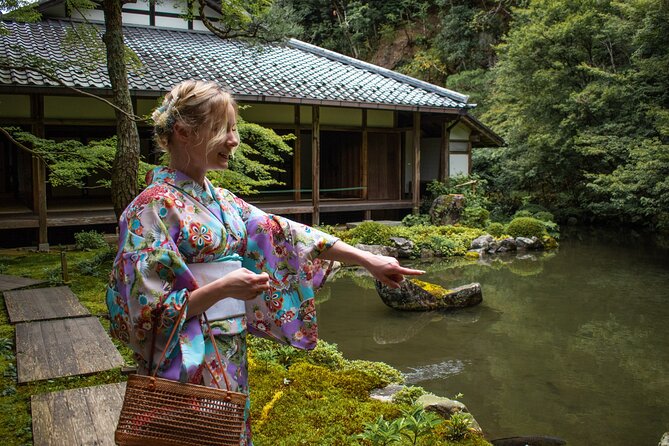
Otagi Nenbutsu-ji is described as an art master’s property, connected to arts like tea ceremony and calligraphy. The garden experience is tied to that creative spirit, with details like tea ceremony items and the way the space is planted and arranged.
This stop is about 30 minutes. That length is right for this kind of location because it is visual and atmospheric. You do not need hours to enjoy the garden’s tone, but you do want enough time to walk slowly and notice the craft-like touches.
If you enjoy tea culture, this is a stop where the connection might feel more personal. Instead of thinking of tea as a ritual somewhere else, you see it as part of how people shaped and expressed their surroundings.
Practical tip: if you care about photos, say so. You want a few clean picture moments here, and you do not want to be late for the next stop.
Stop 7: Monkey Park Iwatayama and a sweet reset
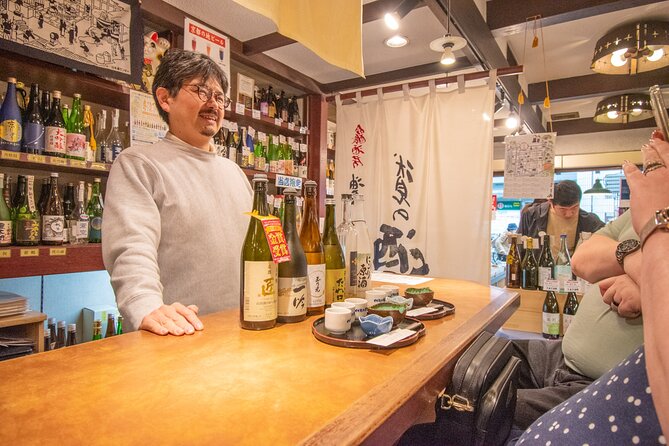
Monkey Park Iwatayama is paired with a dessert stop in the flow. The tour notes a local dessert shop and describes Kyoto-styled sweets like mochi with different textures, plus shaved ice flavored with yuzu or match.
You also get about 30 minutes here. The way this is scheduled works well because it breaks up temple walking with something lighter. Even if you are not a dessert person, a quick treat can keep your energy up for the next shrine stop.
This stop can also add a nature angle to the day. You are near Arashiyama territory, so the environment often feels more open than the center. That shift is part of why the route works.
Food tip: go for one Kyoto-style sweet and one drink if you are hungry, then keep space for whatever lunch you choose. Otherwise, you might undo the lunch appetite.
Stop 8: Kibune Shrine, koi pond calm, and neighborhood rhythm
Kibune Shrine is described as a shrine erected by the powerful Hatashi tribe and beloved by nearby households. The highlight you can plan around is the large koi fish pond, where visitors are allowed to feed the fish.
You get about 30 minutes. That is enough to enjoy the pond moment, walk the shrine spaces, and then still keep the day from stretching too long.
This stop works especially well because it closes on a softer note. Fushimi Inari gives you the shrine scale and movement. The temple gardens give you stillness and craft. Kibune ends with simple, calming action that feels local and relaxed.
Practical tip: if you plan to feed koi, wear shoes that handle water and take care not to drop crumbs where you should not.
Lunch and dessert planning with local recommendations
Lunch is not automatically included. The tour states that depending on your request and situation, it is possible to stop at a guide-recommended local restaurant or dessert shop during the tour.
That flexibility matters in Kyoto because what you want for lunch depends on your day. After shrine walking, you might want something quick and hearty. If you are chasing a specific vibe, like a traditional set meal, your guide can often match the area and the pace.
I like the fact that dessert is built into the day at the Monkey Park stage, so you are not stuck searching for snacks with tired feet. For lunch, you just need to decide what you want, and then ask clearly when you are hungry.
Good question to ask your guide: what is the easiest lunch option near our current route that still feels Kyoto? If you ask that, you typically get a better match than asking for the most famous place.
Price and value: what $108.58 per person buys you
At $108.58 per person, you are paying for private transportation, hotel pickup and drop-off, the guide experience, and vehicle costs like gas and parking up to 3,000 yen per day. For many travelers, that is the real value: you are buying time and stress reduction.
Now the fine print you should budget for. The tour notes that an admission fee of ¥3,000 per person is not included. Even though several stops are listed as free with admission tickets, you should still plan for that additional amount so you do not end up annoyed mid-day.
The upside is that you are not doing this by train plus walking plus multiple ticket lines. You also get the private group structure. If you have a family, a small friend group, or two couples traveling together, paying for a shared car is often far better than splitting taxis between multiple stops.
Who pays for this well: people who hate transit hassle, people who want a calmer Kyoto pace, and people who prefer seeing fewer sites more thoughtfully.
Best fit: who will love this and who might not
This tour is a strong match if you want Kyoto history and temple beauty without turning the day into a race. With stops like Fushimi Inari-taisha, Ryōan-ji, and Kinkaku-ji, you still get the big-name icons. With the rest, you get variety, quieter mood, and more space to take it in.
I would especially recommend it if:
- you are traveling in a group of up to 10 and want the comfort of one private vehicle
- you have limited time in Kyoto and want fewer decision points
- you want a guide who can translate site meaning into plain talk, not just lists
If you are chasing a very packed agenda of many more than eight major stops, or if you want long free time at each location, you might feel the schedule is still structured. In that case, you might want a more flexible day design, or you can ask your guide to adjust time allocation early.
Should you book this private Kyoto car tour?
Yes, if your ideal Kyoto day looks like a mix of famous shrines plus smaller, calmer temple moments, wrapped in the comfort of hotel pickup and a private vehicle. The route makes sense for first-time visitors who still want to escape the worst crowd pressure.
Before you book, do two things. First, set your budget knowing there is an admission fee of ¥3,000 per person not included. Second, tell the guide what you care about most, walking pace, photo time, and lunch style, so the flexibility actually works for you.
If that sounds like your kind of day, you will likely appreciate the value more than you expect.
FAQ
Is this a private tour?
Yes. It is private and your group is the only group participating, with a maximum size of up to 10 people.
How long is the tour?
The tour duration is about 7 hours.
Does the tour include hotel pickup and drop-off?
Yes. Hassle-free hotel pickup and drop-off in Kyoto are included.
What is included in the price?
The included items are a completely private and personalized experience, tips for local good restaurants for lunch and dessert shops, an air-conditioned vehicle, gas and parking fees up to 3,000 yen per day, and hotel pickup and drop-off.
What is not included?
Lunch is not included, though a stop for a guide-recommended restaurant or dessert shop may be possible if time and conditions allow. Also, an admission fee of ¥3,000 per person is not included.
Which stops are included in the itinerary?
The itinerary includes Fushimi Inari-taisha Shrine, Kennin-ji Temple (the temple name is disclosed on the tour), Ryōan-ji Temple, Adashino Nembutsu-ji Temple, Kinkaku-ji (noted with Yasakanoto), Otagi Nenbutsu-ji Temple, Monkey Park Iwatayama with a dessert shop stop, and Kibune Shrine.
Newest Kyoto write-ups from the Loving Japan desk

Private Car with Driver, side by side.
 ★ 5.0Tokyo Private Sightseeing Tour by Car- English speaking chauffeurFrom $2681,004 reviews
 ★ 5.0Tokyo Private Tour by Vehicle with English-Speaking ChauffeurFrom $468504 reviews
Mt FUJI Day Tour with Private Car and English Speaking GuideFrom $440433 reviews
★ 5.0Tokyo Private Tour by Vehicle with English-Speaking ChauffeurFrom $468504 reviews
Mt FUJI Day Tour with Private Car and English Speaking GuideFrom $440433 reviews
 ★ 5.0Private Car Tour to Mt. Fuji Lake Kawaguchiko or HakoneFrom $1,286360 reviews
 ★ 5.0Kyoto Private Car Tour – Full Day with Local Guide & Nara OptionFrom $170169 reviews
 ★ 5.0Private car tour in Kyoto (up to 4)From $132123 reviews
 ★ 5.0Mt Fuji Exclusive Tour with Private Car English GuideFrom $445116 reviews
 ★ 5.0Tokyo Private Customizable Tour with English Speaking ChauffeurFrom $27392 reviews
Filed on these lists too