
REVIEW · KAMAKURA, THE GREAT BUDDHA AND ENOSHIMA
Private Car Tour to see Highlights of Kamakura, Enoshima, Yokohama from Tokyo
Kamakura in one long, comfortable day. This private car tour strings together samurai-era Kamakura, seaside Enoshima, and modern Yokohama, with a local Japanese guide shaping the day around your pace and interests. You also get an air-conditioned ride, pickup offered, and a mobile ticket to keep things simple.
I like the built-in variety: temple quiet time with matcha, scenic shrine streets, plus big-city bay views. I also like that guides can be flexible, with people like Ken, Yoshimi, and Masae highlighted for friendly, clear explanations and adapting when the day gets crowded. One thing to plan for: many of the ticketed sites, and lunch, are not included, so your total cost can climb depending on what you choose to enter.
In This Review
- Key highlights worth aiming for
- Private car comfort for a Tokyo day trip that actually feels like a trip
- How the itinerary stays flexible without turning into chaos
- Kotoku-in and the Great Buddha: the classic start that sets the tone
- Hokoku-ji bamboo grove and matcha sweets: a calm break that feels local
- Hasedera and Meigetsuin: flower seasons that turn temples into picture galleries
- Tsurugaoka Hachimangu and the Zen temples: two styles of calm
- Komachidori shopping street and Zeniarai Benten: small stops that add personality
- Tokeiji Temple and the anime railroad photo stop
- Yokohama Minato Mirai and skyline views: switch from temple quiet to bay energy
- Sankeien Garden: the traditional-style garden break that balances the day
- Enoshima island: sea air, caves, and possible Mount Fuji
- Optional food stops: Cup Noodles Museum and Shinyokohama ramen museum
- Price and value: what you are paying for, and what can add up
- Who this private day trip fits best
- Should you book this private Kamakura, Enoshima, Yokohama tour?
- FAQ
- How long is the tour?
- What group size is this tour for?
- Is pickup included?
- Do I need to pay entrance fees separately?
- Is lunch included?
- Can I request vegetarian food?
- How many sites will we visit?
- What happens if weather affects visibility?
- Can I cancel for a refund?
Key highlights worth aiming for
- Private car, not train juggling, with highway tolls, parking, and fuel handled for you
- Kamakura temples plus matcha breaks, including Hokoku-ji’s bamboo grove tea experience
- Seasonal flower stops, like Hasedera in bloom season and Meigetsuin’s hydrangeas
- Enoshima for sea air and views, with Fuji possible on clear days
- Yokohama skyline and gardens, including Minato Mirai and Sankeien Garden
- Hands-on food add-ons, such as the Cup Noodles Museum and Shinyokohama ramen museum
Coast and temples south of Tokyo, compared
- Tokyo: Mt. Fuji, Kamakura, Big Buddha, & Lake Ashi Day Trip
★ 4.5 · 867 reviews - Tokyo:Sea of Mount Fuji, Hakone Ropeway, Ōwakudani, Enoshima
★ 4.9 · 84 reviews - Kamakura 8 hr Private Walking Tour with Licensed Guide from Tokyo
★ 5.0 · 80 reviews - Tokyo: Kamakura & Enoshima Day Tour with Pickup & Train Ride
★ 4.1 · 61 reviews
Private car comfort for a Tokyo day trip that actually feels like a trip
A lot of day trips out of Tokyo fail at one basic thing, logistics. You end up rushing trains, walking with luggage of your own expectations, and losing the best parts to transit delays.
This tour is built around the opposite idea. A private vehicle means you can start from Tokyo and keep moving without constantly checking transfers. It is also air-conditioned, which matters when summer heat hits or rain makes walking unpleasant. Bottled water is included too, so you do not have to play store-hunt math during the day.
For your time, that is huge. You get roughly 10 hours, and you can focus on places that need a bit of time on-site, like temple grounds and gardens, instead of feeling like you are speed-running stations.
How the itinerary stays flexible without turning into chaos
The schedule is designed as a menu, not a forced march. The plan lists many possible stops, but the guidance says you can select around 4 to 6 sites. That detail matters because Kamakura and Enoshima can take longer than first-time visitors expect, especially during peak seasons.
In practice, this is where the “private” part pays off. Your guide can route you so you spend the best hours in the right places, then swap in free areas (like Komachidori) when crowds get heavy. It is also where a good guide really shows. People like Taisho and Taiji come through in the way they stay responsive to what the group wants to see, rather than pushing a fixed checklist.
One small caution: because the day is customizable, you should decide early what kind of traveler you are. Are you here for Buddha and temple interiors, or are you here for views and photo stops? If you try to do everything, you will spend the day feeling behind.
Kotoku-in and the Great Buddha: the classic start that sets the tone
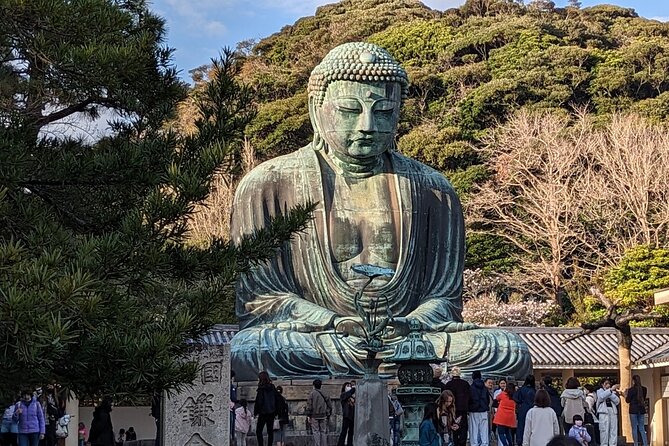
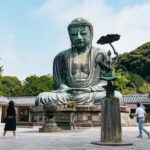
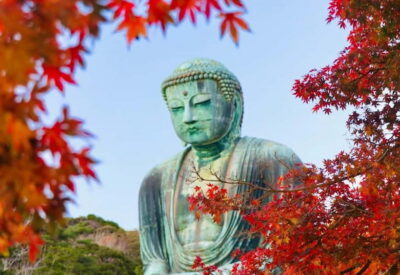
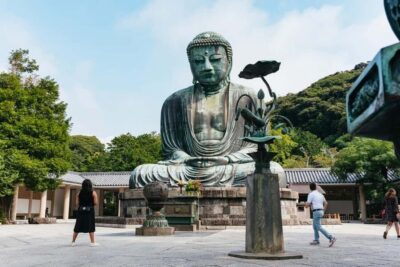
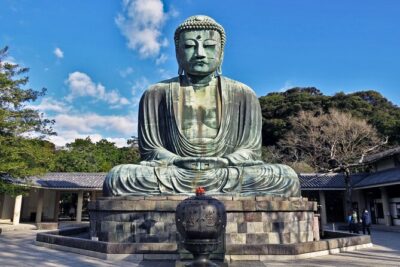
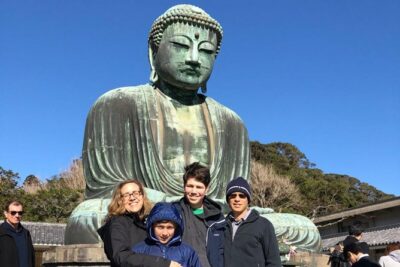
You start in Kamakura at Kotoku-in, home to the Great Buddha. This is one of those sites where the first 30 seconds do the explaining. The statue is massive, and it is set up for open-air viewing rather than museum-style containment.
Here is what makes the experience practical:
- You can get the main view quickly, then decide if you want the extra option to enter inside the body
- The stop is planned at about 30 minutes, which is enough time to look, take photos, and still move on without feeling rushed
There is an admission fee for Kotoku-in, and the inside option costs extra, so budget for it if you care about stepping into the physical scale of the statue.
If you are traveling with kids or a mixed-age group, this is a strong opener. It is iconic, easy to understand, and not dependent on peak flower season.
An easy hop down the bay. More Yokohama
- Narita Airport: One Way Private Transfer to Tokyo|Yokohama Hotels★ 4.5 · 69 reviews
- Tokyo: Private One-Way Transfers to/from Yokohama Port★ 4.5 · 50 reviews
- Private Car Tour to see Highlights of Kamakura, Enoshima, Yokohama from Tokyo★ 5.0 · 48 reviews
- Haneda Airport: One Way Private Transfer to Tokyo|Yokohama Hotels★ 4.0 · 28 reviews
Hokoku-ji bamboo grove and matcha sweets: a calm break that feels local
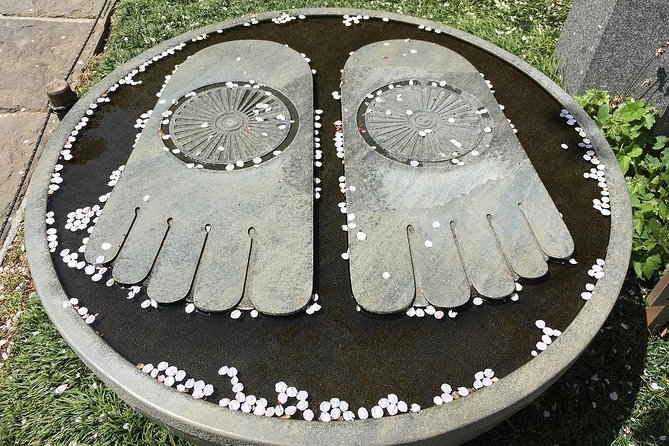
Next comes Hokoku-ji, famous for its bamboo grove. Bamboo in Japan does two things well. It creates shade, and it makes sound feel different, like the area has its own quiet soundtrack.
What I like here for your day:
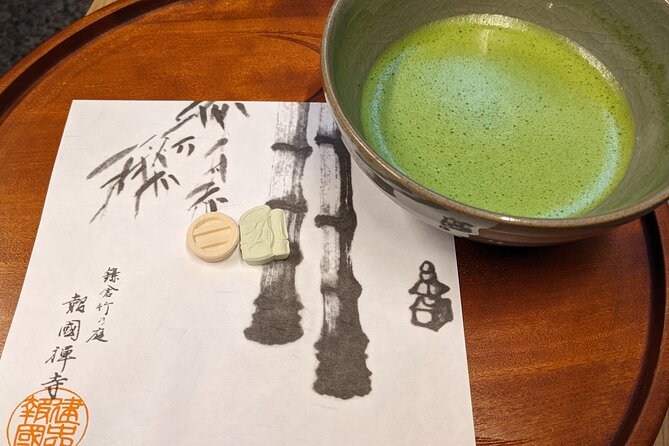
- The tea stop is not an afterthought. You can enjoy matcha green tea and a Japanese sweet in a teahouse overlooking the bamboo
- The planned time is short enough to stay fresh, but long enough to actually taste the moment
You should expect a ticket fee, and the package includes matcha and sweet as part of that admission. If you want a break from photo-hunting and screens, this is one of the most satisfying stops on the route because you slow down on purpose.
Hasedera and Meigetsuin: flower seasons that turn temples into picture galleries
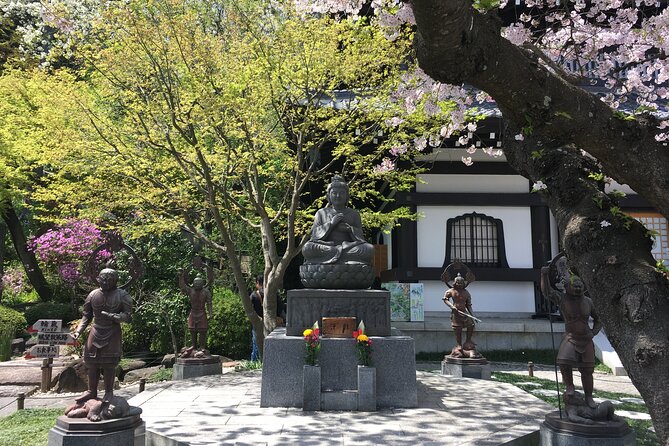
Kamakura temples are often grouped by story and style, but you can also experience them through the seasons.
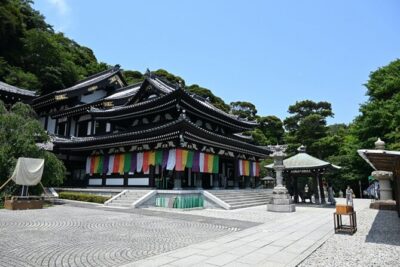
Hasedera Temple is known as a temple of flowers. Depending on when you go, it can be:
- Cherry blossoms in spring
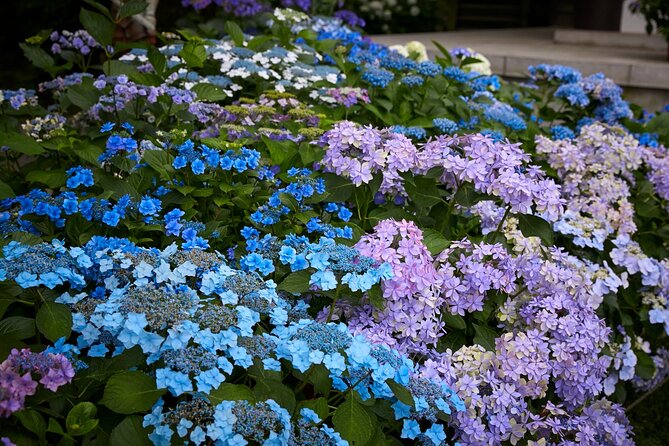
- Hydrangeas from late May to late June
- Maple leaves in autumn
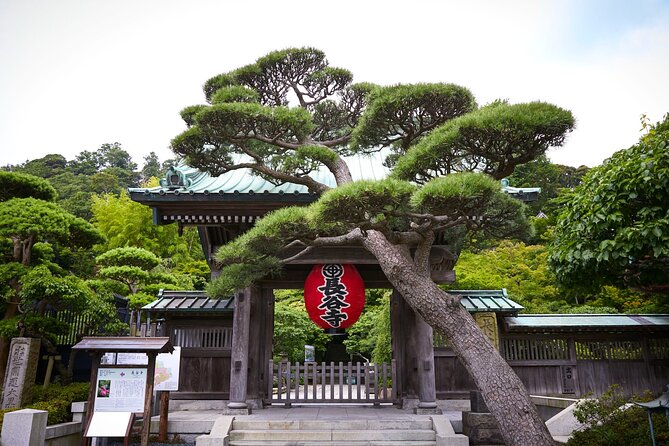
It also features a large gilded wooden statue of Kannon, the goddess of mercy. The stop is timed for around 30 to 60 minutes, so you can do the main walk, then pause where the light and views look best.
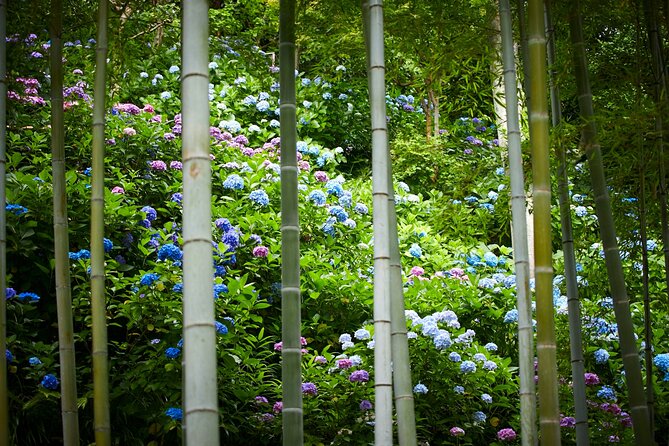
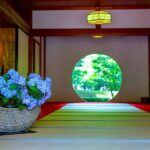
Then later you may visit Meigetsuin (often called the hydrangea temple). This is a strong seasonal pick because of the blue hydrangeas from late May to late June. The layout also includes a famous photo framing spot, a circular window that frames the garden behind it.
Ticket fees apply here. If hydrangeas and window views are your priority, this is one of the days where picking the right time of year matters more than anything else.
Tsurugaoka Hachimangu and the Zen temples: two styles of calm
Tsurugaoka Hachimangu Shrine is a key Kamakura landmark and a Shinto shrine dedicated to the god of war and the samurai in general. It is popular for weddings and it looks especially good during azalea or cherry blossom season.
Even if you are not there for flowers, it still works because:
- The shrine area gives you a sense of Kamakura’s ceremonial side
- You can enjoy it at a relaxed pace since the admission is free
After the shrine, you get contrast with Zen temples:
- Kencho-ji, described as the oldest and highest-ranking Zen temple in Kamakura, with occasional meditation practice on certain dates
- Engaku-ji, the second important Zen temple, known for its big gate and bell, plus a notable connection to film director Yasujiro Ozu
Engaku-ji also has a café within the compound on certain dates. That detail can help if you want a built-in moment for lunch or a sweet and matcha drink, instead of hunting for food between stops.
Both temples have admission fees. The upside is that you are buying into places that feel different from street shopping. They are also easy to understand once your guide frames what you are looking at.
Komachidori shopping street and Zeniarai Benten: small stops that add personality
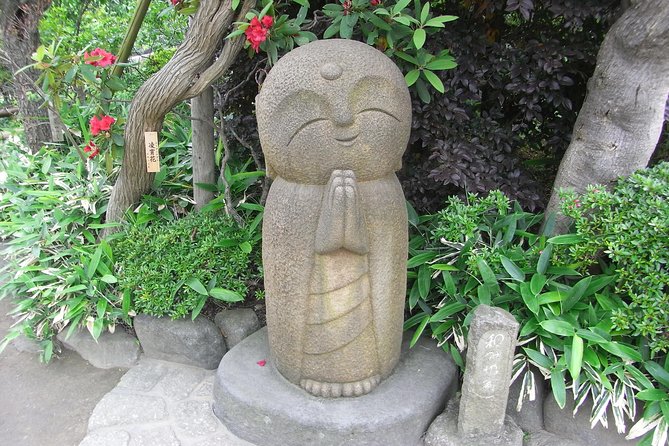
Between major temples, your day needs texture. Two of the stops are built for that.
Kamakura Komachidori is a shopping street near Tsurugaoka Hachimangu. Expect plenty of snacks and souvenirs, with ideas like:
- Kamakura-bori lacquerware
- Toshimaya Hato sable (pigeon-shaped cookies)
- Kamakura mameya bean snacks
This area is good for 20 to 80 minutes depending on your shopping mood. If you mostly want a quick break and snack, you can keep it short. If you want to bring things home, it is one of the best places to browse without backtracking.
Then there is Zeniarai Benten Shrine, tied to the belief that washing coins in its holy water can increase income. It is a short, easy stop and a fun change of pace from the bigger temple entrances. You can treat it like a quick ritual-and-photos moment.
Tokeiji Temple and the anime railroad photo stop
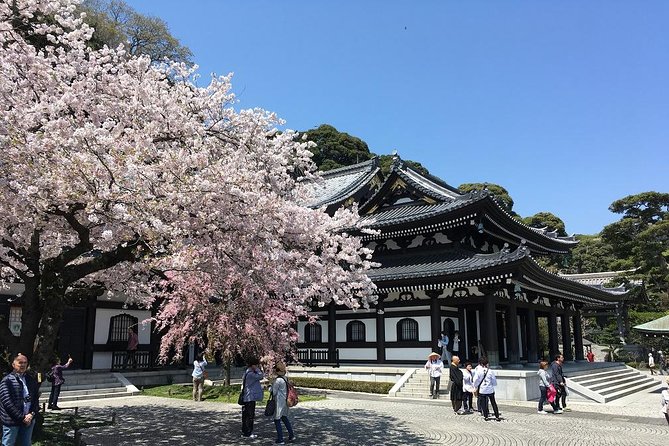
Kamakura’s quieter corners are often the most memorable, and Tokeiji Temple is one of those. It served as a shelter for women who suffered abuse and sought divorce at a time when only men could request it. That makes the visit heavier than many “pretty temple” stops, but it also gives the day a human side.
The gardens include flowers year-round, like plums early in spring, iris and climbing hydrangea in June, and general seasonal blooms across the year.
After that, you may get a short photo stop at a photogenic railroad crossing with the blue sea in the background. It was used in the opening sequence of the anime Slam Dunk. The stop is brief, but if you are an anime fan, it is a neat pop of modern Japanese pop culture mixed into a day of ancient sites.
Yokohama Minato Mirai and skyline views: switch from temple quiet to bay energy
Once you shift from Kamakura to Yokohama, the feel changes fast. In a car, the switch is easy, which is why this pairing works.
In Minato Mirai 21, you can see big bay views and major landmarks like the Landmark Tower and the Red Brick Warehouses area. The tour includes time for the waterfront atmosphere, plus possible views from viewpoints depending on which ticketed option you choose.
If you want a true high view, the Yokohama Landmark Tower Sky Garden is an add-on. It offers panoramic views of the bay area and, on clear days, a view of Mount Fuji. Ticket fees apply. This is best for:
- Photo lovers who want a wide sweep
- People who like skyline moments more than garden walks
Then you can stroll in Yamashita Park, a place locals use for relaxing with coffee, with street performers appearing on weekends. Short stops like this are perfect if you do not want another full-ticket attraction.
Two other quick seafront viewing areas include:
- Osanbashi Yokohama International Passenger Terminal, known for very scenic views of Minato Mirai
- Minato-no-mieru Oka Park, with an English garden and another bay landmark perspective
These are the kinds of stops that work because they do not require you to “buy” the experience with more time. You get the view quickly, then you move.
Sankeien Garden: the traditional-style garden break that balances the day
If your day is getting too fast, Sankeien Gardens is the pause button. It is a Japanese-style garden designed by a wealthy businessman, with 17 buildings transferred from Kyoto and other places arranged to suit the garden’s beauty.
What I like for your planning:
- It is the kind of stop where your pace slows naturally
- It gives variety after temple-heavy mornings and bay-view afternoons
It has an admission fee and the tour time is planned for up to 90 minutes, so it can fit both light walkers and people who like to linger.
Enoshima island: sea air, caves, and possible Mount Fuji
Enoshima Island is where the day turns into ocean time. Depending on what you want to prioritize, you can focus on:
- Shrines on the island
- Aquarium
- Botanical garden
- Observation tower
- Caves
Mount Fuji can be visible from various places if the weather cooperates. Since weather can be changeable, I treat Fuji as a bonus rather than a requirement.
The tour includes a flexible time window for Enoshima, from about 30 minutes to longer, which is a smart setup. If you want quick sea photos, you can keep it short. If you want to actually walk and explore, you can spend more time without feeling like someone is yanking you forward.
Optional food stops: Cup Noodles Museum and Shinyokohama ramen museum
If you love food experiences that feel hands-on, the Yokohama section offers two fun add-ons.
At the Cup Noodles Museum Yokohama, you learn about instant noodle history and the idea of topping and making your own noodle. You can also try different tastes from around the world and shop for souvenirs that are only available there. Admission is required.
Then there is the Shinyokohama Ramen Museum, a focused ramen spot with multiple ramen styles under one roof. The plan includes time for you to try what looks best. Admission is required here too.
These two places are not just “food stops.” They are also a way to break up a long day with something active. If you have kids, or if your group enjoys quirky, modern Japan alongside temples and shrines, these are good fits.
Price and value: what you are paying for, and what can add up
The price is $1,183.65 per group, up to 8 people, for about 10 hours. That sounds like a big number until you break it down by the real cost of time, stress, and coordination in Japan.
You are paying for:
- A private vehicle with highway tolls, parking, gasoline, and bottled water included
- A driver and professional guide service for a full day
- Less time dealing with transit friction
Where value can shift is in add-on costs. Lunch is not included, and many entrances are not included either, including major ticket sites like Kotoku-in, Hasedera, Hokoku-ji, Kencho-ji, Engaku-ji, Meigetsuin, Sankeien Gardens, Landmark Tower Sky Garden, Cup Noodles Museum, and Shinyokohama Ramen Museum.
A practical approach: decide which 4 to 6 ticketed highlights you truly want. If you skip one pricey add-on, you can still keep the day balanced with free sights like Komachidori, Tsurugaoka Hachimangu, Zeniarai Benten, and the bay parks.
Also note gratuities are listed as typically 5 to 20%, so keep that in your mental budget.
Who this private day trip fits best
This tour fits best if:
- You want a one-day blend of Kamakura temples, Enoshima ocean vibes, and Yokohama city views
- You prefer private transport over train hopping and station transfers
- Your group has different interests, like one person wanting Buddha and shrines, another wanting gardens, and someone else wanting ramen
- You like the idea of a guide adjusting the day when crowds or timing make something less ideal
It can also work nicely for families. One strength is that iconic stops are easy for kids to recognize, while the gardens and shrine grounds give adults plenty to see without constant backtracking.
If you are the type who loves moving at your own rhythm, the customization part is key. People connected to this tour, including Sumiko and Toshi, have been praised for keeping the day un-rushed even when there were large crowds.
Should you book this private Kamakura, Enoshima, Yokohama tour?
I would book it if your priority is maximum sightseeing with minimum transport stress, and you want a guide to connect the dots between samurai-era sites, Zen temple gardens, and Yokohama’s bay skyline. The private format is what turns the day from a tiring commute into a smooth experience.
I would think twice if you hate paying separate entrance fees and you prefer fully free sightseeing days. Since lunch and most major admissions are not included, your final total depends heavily on how many paid sites you pick.
Final decision tip: choose your season anchor. If you care about hydrangeas, prioritize Meigetsuin and plan Hasedera around your bloom timing. If you care about skyline views, keep the Landmark Tower Sky Garden on your list. Then let the guide fill the gaps with free streets, parks, and quick rituals like Zeniarai Benten.
FAQ
How long is the tour?
The tour runs for about 10 hours.
What group size is this tour for?
It is priced per group for up to 8 people.
Is pickup included?
Pickup is offered.
Do I need to pay entrance fees separately?
Yes. Entrance fees for several stops are not included, including Hase-dera Temple, Hokokuji, Kotoku-in, and other ticketed sites listed in the tour details.
Is lunch included?
No, lunch is not included.
Can I request vegetarian food?
Yes. A vegetarian option is available, and you should advise the provider about dietary requirements at booking.
How many sites will we visit?
The itinerary is flexible. You’re told to select around 4 to 6 sites.
What happens if weather affects visibility?
The tour will not be cancelled or refunded if some spots are not fully visible due to weather. The schedule can still change due to weather or traffic conditions.
Can I cancel for a refund?
Yes. You can cancel up to 24 hours in advance for a full refund. If you cancel less than 24 hours before the start time, it is not refunded.
Down the Bay to Yokohama


South to Kamakura and the Coast
Newest Tokyo write-ups from the Loving Japan desk
Kamakura, the Great Buddha and Enoshima, side by side.
 ★ 4.5Kamakura & Enoshima Day Trip including Temple TicketsFrom $581,375 reviews
 ★ 4.5Mt. Fuji, Kamakura, Big Buddha, & Lake Ashi Day TripFrom $49867 reviews
 ★ 4.5From Tokyo: Kamakura & Enoshima 1-Day Bus TourFrom $66189 reviews
 ★ 5.0Kamakura Historical Walking Tour with the Great BuddhaFrom $98129 reviews
 ★ 5.0Kamakura Private Tour: Temples, Nature, and the Great BuddhaFrom $98121 reviews
 ★ 5.0Kamakura Walking Tour – The City of ShogunFrom $35100 reviews
 ★ 4.9Sea of Mount Fuji, Hakone Ropeway, Ōwakudani, EnoshimaFrom $5084 reviews
 ★ 5.0Kamakura 8 hr Private Walking Tour with Licensed Guide from TokyoFrom $20180 reviews
Filed on these lists too