
REVIEW · JAPANESE COOKING CLASSES
Shimbashi Tastes & Stories A Culinary Foodie Tour By Local Guide
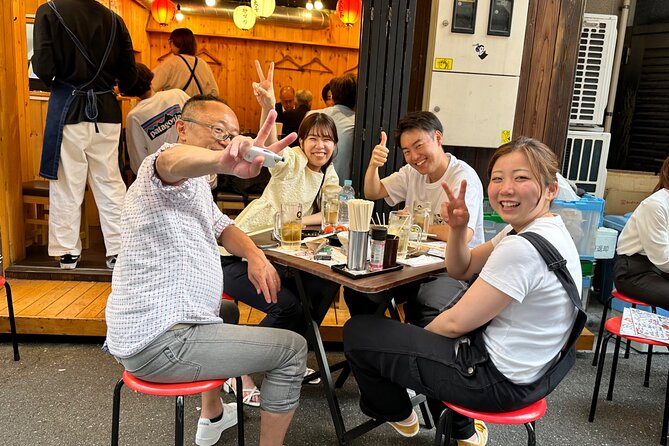
Shimbashi tastes beat the big-name crowds. I love how the route pulls you through real everyday station-area Tokyo and into the kind of side streets most visitors skip. I also love the hands-on food focus with sushi, seafood, and Japanese beef wagyu, paired with an English-speaking local guide who explains what you are seeing and eating.
This tour is mainly food and neighborhood context, not big-ticket sightseeing. If you are hunting for iconic photo stops all day, you might find the pace more low-key and more about small moments.
In This Review
- Quick hits before you go
- Why Shimbashi is a smart food base (even if you are only in Tokyo a few days)
- The 4-hour format, max 15 people, and how to set expectations
- SL Square and Old Shimbashi Station: rail history that actually helps you understand the neighborhood
- Karasumori-jinja: a quieter stop that breaks up the eating pace
- New Shimbashi Building and the Tanuki Alley story you will want to remember
- Shiodome City Center and NTV Plaza: getting your bearings in modern Minato
- What you will actually eat: sushi, seafood, wagyu, desserts, and soft drinks
- The guide makes or breaks it, and this one gets strong praise
- Price and value: what $171 buys in real Tokyo terms
- Practical tips to make your day smoother
- Who should book this Shimbashi food tour
- Should you book Shimbashi Tastes and Stories?
- FAQ
- What is the duration of the Shimbashi Tastes and Stories tour?
- How much does the tour cost?
- What food and drinks are included?
- Is alcohol included?
- Where do you meet for the tour?
- How big is the group?
- What is the cancellation window?
Quick hits before you go
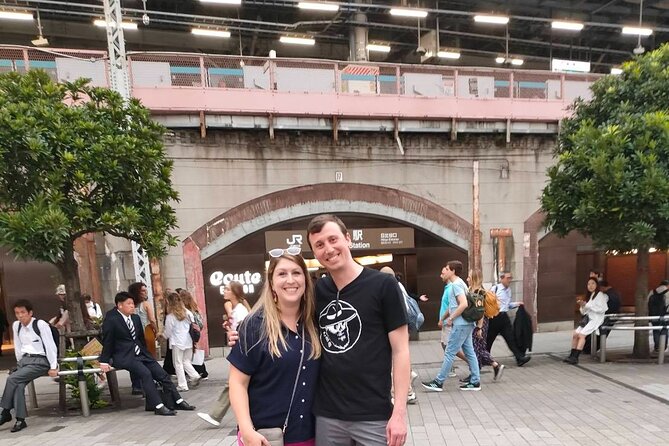
- A salaryman-food Tokyo setting: Shimbashi is tied to after-work meals and quick, satisfying bites.
- Old rail and station culture: You start with Old Shimbashi Station and SL Square before you even reach the food streets.
- One local shrine stop: Karasumori-jinja is described as a shrine mostly visited by locals.
- Tanuki Alley backstory: You learn how the area used to be a bar district and why the New Shimbashi Building exists.
- Multiple meal tastes: Plan on sampling two great meals, plus desserts and soft drinks.
Cook it yourself instead. Other kitchens in Tokyo
- Tokyo: Roll and Authentic Sushi Making Class in Asakusa
★ 4.9 · 1,957 reviews - Tokyo: Sushi Making Class in a Happi Coat near a Famous Spot
★ 4.9 · 1,377 reviews - Tokyo Sushi Making Class in Tsukiji with Professional Chef
★ 5.0 · 1,177 reviews - Ramen & Gyoza Cooking Class in Tokyo with Local Supermarket Visit
★ 5.0 · 823 reviews
Why Shimbashi is a smart food base (even if you are only in Tokyo a few days)
Most first-time Tokyo plans sprint through Shibuya, Shinjuku, and Ginza. Shimbashi gives you a different angle, still central, but more grounded. The whole feel is built around commuting life and quick dinners, so the food you try tends to be practical, portioned right, and made for people with schedules.
What I like about Shimbashi is how easy it is to pair with your bigger Tokyo plans. Old Shimbashi Station sits in Minato Ward, about a 10-minute walk from Ginza, and it is south of Tokyo Station. So even if you are staying elsewhere, this area usually fits without turning into a full day of transit.
The 4-hour format, max 15 people, and how to set expectations
This is a guided walking and culture tour about 4 hours long, with a maximum group size of 15 travelers. That matters because smaller groups tend to move with less chaos, and you can actually hear the guide over restaurant noise. It also helps you ask questions as you go, instead of rushing past each stop.
You start and end back at the meeting point near SL Square. It uses a mobile ticket, so you should be comfortable pulling it up on your phone and keeping it handy as you check in. Also, your food pace is part of the design, not an afterthought. The included soft drinks, water, and desserts help keep the tour balanced, so you are not constantly buying extras.
One more expectation check. Alcoholic drinks are not included, but you can purchase them. If you like to taste sake or beer with dinner, build that into your budget. If you do not drink, you are still fine, since the included drinks cover the essentials.
SL Square and Old Shimbashi Station: rail history that actually helps you understand the neighborhood
The tour begins with Old Shimbashi Station. Even if you are not a rail nerd, this stop gives you context fast. Shimbashi is a major interchange railway station in Tokyo’s Minato Ward, and that transportation role shapes where people eat and how the area grew. You get the feeling of why this is such a natural food hub for commuters.
Then you move to SL Square. The name is tied to a 1972 setup that celebrated the 100th anniversary of Japan’s railway transport system. That is not just trivia. It helps you read Shimbashi like a lived-in transit district, not just a backdrop. When you understand that the area was shaped by rail travelers and daily schedules, it makes the food stops feel more meaningful.
- Mt Fuji and Hakone 1-Day Bus Tour Return by Bullet Train★ 5.0 · 26,383 reviews
- 1-Day Tokyo Bus Tour★ 5.0 · 14,250 reviews
- Tokyo: teamLab Planets TOKYO Digital Art Museum Entry Ticket★ 4.6 · 9,779 reviews
- Mt Fuji & Hakone Cruise, Drum Show Bullet Train 1 Day from Tokyo★ 4.0 · 7,413 reviews
- Tokyo Mt Fuji 5th St & Hakone Cruise Bus Tour w/Bullet Train★ 4.4 · 5,024 reviews
Karasumori-jinja: a quieter stop that breaks up the eating pace
After the station-and-squares start, Karasumori-jinja gives you a reset. The shrine is described as one of the oldest, and importantly, it is visited mainly by locals. That is the kind of contrast I always appreciate on a food tour. It keeps the walk from turning into pure shopping and street food hopping.
You spend about 45 minutes here, so it is not a two-minute photo break. You have time to slow down, notice how people behave in that space, and hear what your guide says about local customs around shrines. Even if you are not a temple person, this stop adds texture to your Tokyo day, especially in an area that can feel busy just because trains run everywhere.
New Shimbashi Building and the Tanuki Alley story you will want to remember
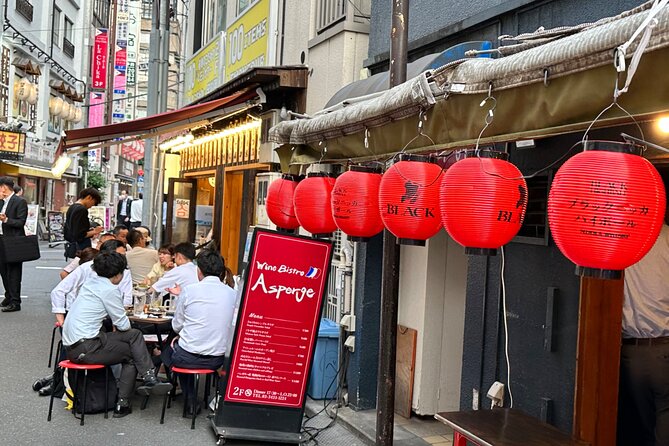
Next up is the New Shimbashi Building, and this is where the tour’s culture angle really snaps into focus. The site was originally a bar district called Tanuki Alley, named for raccoon dogs. Later, an urban restructuring project created the current building after the 1964 Tokyo Olympics.
Why does this matter for a food tour? Because it explains the relationship between nightlife, daily work rhythms, and the way areas get remodeled. A lot of Tokyo neighborhoods are shaped by modernization, but the food culture lingers. You can feel that in Shimbashi, where the mood is still tied to the end of the workday and people finding a dependable meal nearby.
You also spend about 30 minutes here, which is long enough to connect the dots without dragging. If you like tours that explain the why behind the where, this is a strong stop.
Shiodome City Center and NTV Plaza: getting your bearings in modern Minato
Shiodome City Center is different energy from the older station-snapshots. This stop centers on the NTV Plaza in front of the NTV Tower, home to the main studios and offices of NTV, one of Japan’s large television broadcasters. You get a quick sense of how media power and corporate Tokyo share space with commuter life.
From a visitor point of view, I love this transition because it makes Shimbashi feel like a real neighborhood, not a museum set. You walk from rail history and a locals shrine into modern office and media territory, all in a compact area.
You then get an overview of Shimbashi station itself from your guide. That kind of orientation helps later, because after the tour you will recognize how the station connects and where to go next.
What you will actually eat: sushi, seafood, wagyu, desserts, and soft drinks
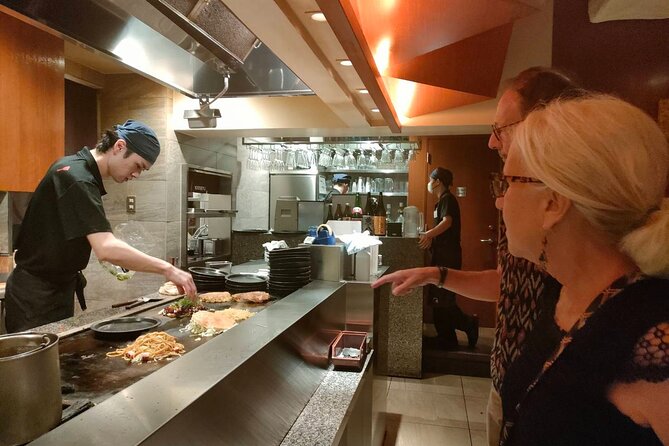
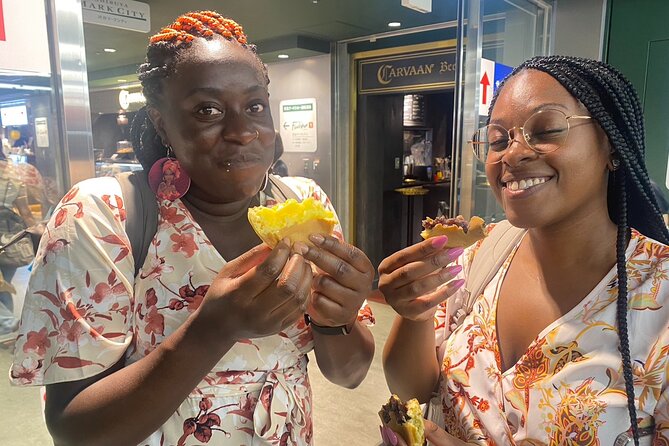
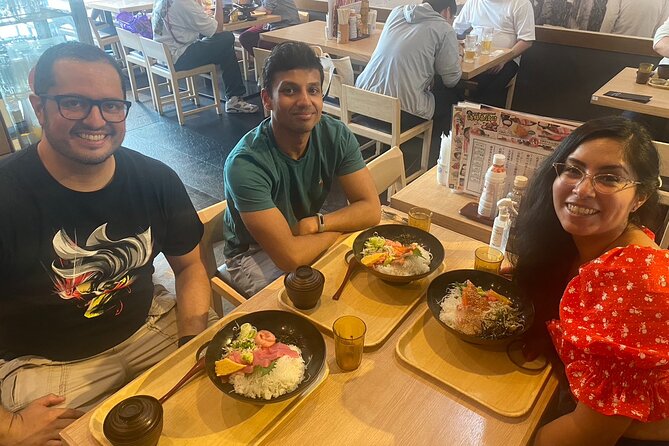
The food part is the point, and the included menu is clear. Your tour includes sushi, seafood, and Japanese beef wagyu, plus desserts. You also get two soft drinks and water. Alcohol is the only big category not included, and that is simply because you can purchase it if you want.
One practical thing: this tour is built around multiple eateries, not one fixed restaurant. That is why the included items can feel varied. Sampling sushi and seafood in one place, then shifting to wagyu in another, gives you a broader taste of what Shimbashi-style dining can be.
In the guide storytelling, expect commentary that ties the food to local habits. For example, the area is known for salaryman culture, meaning people often come looking for meals that are filling, fast enough, and consistent. That helps you understand why certain dishes and flavors are common in this part of Tokyo.
Also, the tour includes desserts, which is a small but important win. In Japan, desserts often feel lighter and more refined than a late-night sugar bomb. You end the tour with a sweet finish instead of feeling like you have to hunt for something on your own.
The guide makes or breaks it, and this one gets strong praise
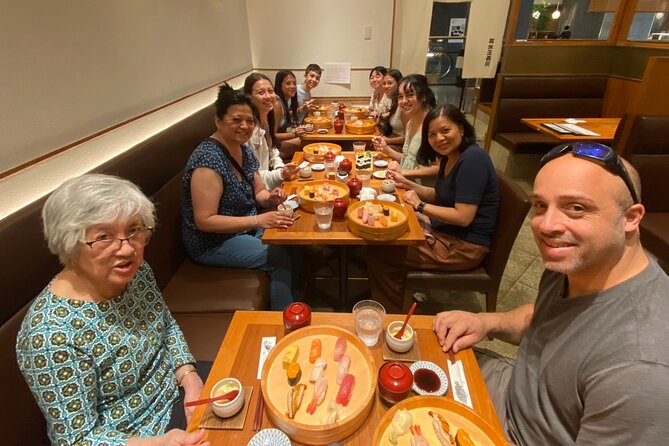
Food tours can go two ways. Either the guide is just a translator who reads names off menus, or the guide helps you understand why these places exist. This tour leans hard toward the second option, with a professional Japanese speaking English tour guide.
I especially value guides who can explain what you are looking at between meals. The tour has several non-food stops, and those only work if the guide connects them to food culture and daily life. Based on strong guide mentions like Akira and Kaori, the standout pattern is clear: guests are often impressed by the guide’s ability to find great places and keep the experience comfortable.
You can also tell this tour aims for personal attention. One note from a past experience emphasized extra help when someone was unsure at the meeting point, and that kind of responsiveness matters in Tokyo, where streets can look similar block to block.
Price and value: what $171 buys in real Tokyo terms
At $171 per person for about 4 hours, you are paying for three things at once: walking guidance, access to specific eateries, and built-in drinks and desserts. In Tokyo, that combination can be hard to replicate on your own without time-consuming research.
It also includes the kind of foods that are not always cheap when you order à la carte. Sushi, seafood, and wagyu are typically not budget items, and the tour folds those costs into one price. On top of that, you get soft drinks and water without having to negotiate menu choices at every stop.
If you enjoy food planning and hate guessing, this is good value. If you are the type who prefers to build your own route and order exactly what you want, then you might prefer independent dining. But the tour is designed for people who want efficiency and local context, not restaurant roulette.
Practical tips to make your day smoother
Wear comfortable walking shoes. Even with stops, this is a city-walk tour and you will be on your feet most of the time.
Come hungry, but not ravenous. The menu includes multiple tasting moments, and you also get desserts. If you start the tour with a big breakfast, you may enjoy the story parts but feel less wowed by the food.
Bring a phone with data if you are using the mobile ticket. You do not want to scramble when you are trying to check in at SL Square.
If you do not eat seafood or beef, consider asking ahead. The included foods explicitly center on sushi, seafood, and wagyu, so you will want to know whether substitutions are possible.
Who should book this Shimbashi food tour
Book it if you want:
- A Shimbashi-focused day that feels local, not checklist-tour Tokyo.
- Food plus culture in one package, including station-area history and shrine context.
- An English-speaking local guide who can connect dishes to daily life.
Skip it if:
- You mostly want famous sights with minimal walking.
- You want alcohol included in the price.
- You have strict dietary needs that the tour menu may not accommodate.
Should you book Shimbashi Tastes and Stories?
In my view, this is a strong choice when you want a change from the usual Tokyo highlights. Shimbashi gives you commuter-energy Tokyo, and the itinerary supports that with rail landmarks, a locals shrine, and the Tanuki Alley history behind the New Shimbashi Building. Then the food delivers with sushi, seafood, wagyu, desserts, and soft drinks, guided by an English-speaking professional.
If you like tours where the guide helps you understand what you are tasting and seeing, this one is worth the price and the time. If your goal is major sightseeing only, you may feel this is more slow and sensory than spectacle.
FAQ
What is the duration of the Shimbashi Tastes and Stories tour?
The tour lasts about 4 hours.
How much does the tour cost?
The price is $171.00 per person.
What food and drinks are included?
The tour includes sushi, seafood, Japanese beef wagyu, desserts, and 2 soft drinks plus water.
Is alcohol included?
Alcoholic drinks are not included, but they are available to purchase.
Where do you meet for the tour?
The meeting point is SL Square, 2-chōme-7-先 Shinbashi, Minato City, Tokyo 105-0004, Japan.
How big is the group?
The maximum group size is 15 travelers.
What is the cancellation window?
You can cancel for a full refund up to 24 hours in advance. If you cancel within 24 hours, the amount paid is not refunded.
Kitchens You Can Book Into

Newest Tokyo write-ups from the Loving Japan desk






Japanese Cooking Classes, side by side.
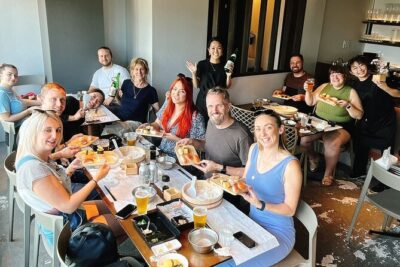 ★ 5.0Sushi Making Tokyo Roll and Authentic Japanese Sushi ClassFrom $593,971 reviews
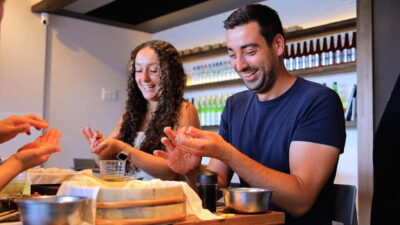 ★ 4.9Roll and Authentic Sushi Making Class in AsakusaFrom $581,957 reviews
 ★ 5.0Ramen Cooking Class at Ramen Factory in KyotoFrom $1311,937 reviews
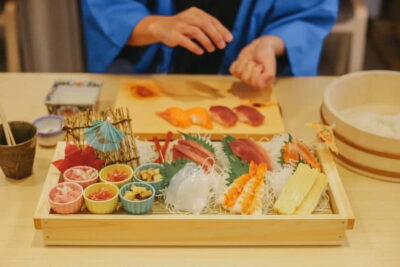 ★ 4.9Sushi Making Class in a Happi Coat near a Famous SpotFrom $421,377 reviews
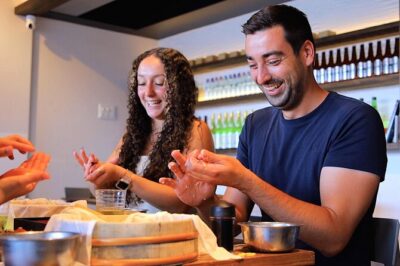 ★ 5.0Sushi Making Osaka Roll and Authentic Japanese Sushi ClassFrom $311,220 reviews
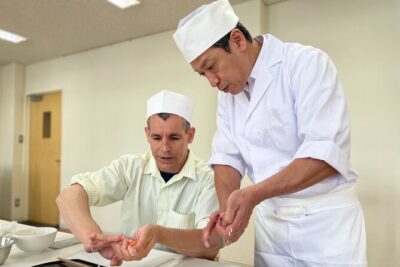 ★ 5.0Tokyo Sushi Making Class in Tsukiji with Professional ChefFrom $491,177 reviews
 ★ 5.0Ramen & Gyoza Cooking Class in Tokyo with Local Supermarket VisitFrom $122823 reviews
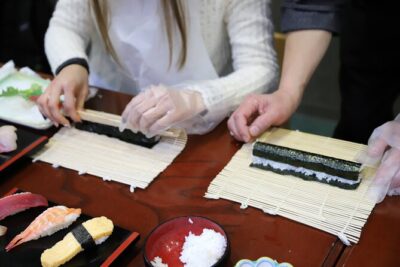 ★ 5.0Tsukiji Fish Market Guided Tour and Sushi Making with Pro ChefFrom $104775 reviews
Filed on these lists too