
REVIEW · TSUKIJI AND TOYOSU FISH MARKETS
Tokyo Tsukiji Fish Market Food Tour: 15 Stops & Walk Local Street
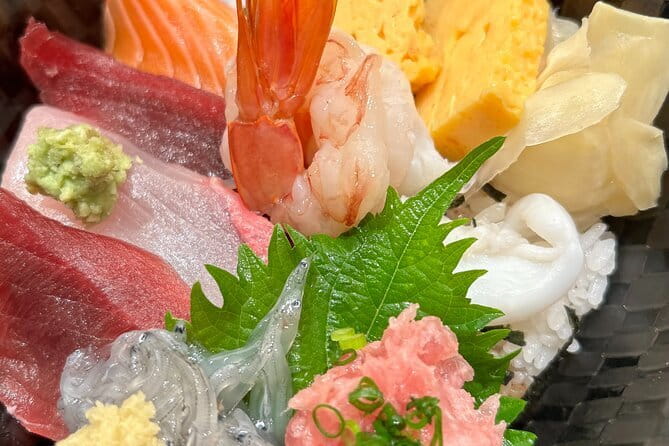
Tokyo can be a lot. Tsukiji can be a lot more. This walk turns the Tsukiji Fish Market area into a guided circuit with 15 stops and clear food-culture context, not just random wandering. I like that you get a Japanese guide who steers you through the sights and explains how to eat and behave around the market crowds.
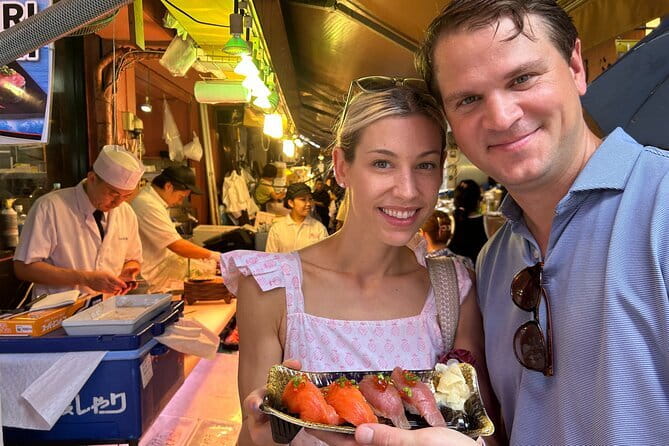
My second big win is the added value that people often forget: you get photos taken during the tour sent to you afterward. That means you spend less time fiddling with your phone and more time actually looking at what you came for, like the fish counters and the shrines along the way.
One drawback to plan for: even though the tour highlights food tastings, the details also list Food as not included. A couple of reviews called out the mismatch in expectations, so you should treat tastings as part of the experience, but still budget for extra snacks if you end up hungry.
In This Review
- Key Things You’ll Notice on This Tsukiji Walk
- Tsukiji in 2 to 3 Hours, Not a Half-Day Lost in Lines
- Starting at Tsukiji Hongan-ji Temple: A Quick Reset Before the Market
- Tsukiji Jogai Market Streets and Over 400 Shops
- Passing the Tsukiji Fish Market Area and a Mini Wholesale View
- Namiyoke Inari Shrine: Warding Off Disasters and Waves
- The Food Tastings Question: What to Expect and How to Avoid Regret
- Sushi-Eating Etiquette and Japan Food Culture Tips You Can Use Again
- Why Photos and a Capped Group Feel Like Real Value
- Weather, Closures, and How the Guide Handles the Real World
- Price and Value: Does $80 Make Sense Here?
- Who This Tour Fits Best, and Who Might Feel Unhappy
- Should You Book This Tsukiji Fish Market Food Tour?
- FAQ
- How long is the Tokyo Tsukiji Fish Market Food Tour?
- How many stops are included?
- How much does the tour cost?
- What is included in the tour price?
- Are food tastings included?
- Is hotel pickup or drop-off included?
- Is there an admission fee for the temple and shrine stops?
- Where do I meet the guide?
- Is transportation to the meeting point included?
- How will the tour provider contact me on the day of the tour?
Key Things You’ll Notice on This Tsukiji Walk
- Small group cap of 15 keeps the pace manageable and questions easy to ask
- 15 stops in about 2 to 3 hours helps you cover more than a casual self-walk
- Photos included means you get a little recap without extra effort
- Guide-led etiquette tips focus on how to eat, not just what to eat
- Multiple market-style stops give you a “full area” view, not only one counter
- WhatsApp contact is used for day-of communication, so download it ahead
Hungry earlier than that? Other market breakfasts we tried
- Tokyo Tsukiji Fish Market Food and Culture Walking Tour
★ 5.0 · 3,184 reviews - Tokyo: Tsukiji Fish Market Food and Walking tour
★ 5.0 · 1,724 reviews - Tokyo: Tsukiji Fish Market Guided Walking Tour
★ 4.9 · 1,397 reviews - Tokyo Sushi Making Class in Tsukiji with Professional Chef
★ 5.0 · 1,177 reviews
Tsukiji in 2 to 3 Hours, Not a Half-Day Lost in Lines
This tour is built for people who want Tsukiji without turning the whole day into a navigation puzzle. You have a set route with 15 stops, so you are not stuck guessing where to go next or which storefront to approach. The group stays capped at 15 travelers, which matters in Tsukiji because moving, stopping, and listening all take more space than you think.
The pace is active. Think short walks, quick pauses, and steady guidance. The upside is that you get variety within a tight window, including temple and shrine stops, plus market sights and food-culture explanations.
The thing to watch is timing. Even if the tour runs about 2 to 3 hours, you will feel the walking part. If you are sensitive to cold or long standing, wear layers and shoes you can stand in comfortably.
Starting at Tsukiji Hongan-ji Temple: A Quick Reset Before the Market
You start at Tsukiji Hongan-ji Temple, meeting in front of the entrance. You also get a short visit here, around 15 minutes, with admission listed as free. I like this choice because it acts like a reset button. Before you hit the market noise, you get a calmer entry point to the area’s rhythm and spirituality.
It is also a nice “scenery shift.” You are not going straight from subway stairs into fish crates and shoppers. Instead, you start with a cultural landmark, which makes the later etiquette talk feel less random and more grounded.
Practical note: this is a guided start, so arrive a few minutes early. The tour ends back at the meeting point, so you are not finishing somewhere far away and then trying to retrace steps.
Tsukiji Jogai Market Streets and Over 400 Shops
Next comes Tsukiji Jogai Market, where you spend about 1 hour 30 minutes. The description emphasizes a shopping street with over 400 shops, and the stop is labeled admission free. This is the part of the walk that feels most like a local stroll. You get to see the variety of shops and the “everyday” side of Tsukiji, not only the fish counters.
One practical way to think about this stop: it is where you can calibrate your hunger. The tour text suggests you will enjoy a meal as you go, but Food is listed as not included in the details. So treat this as time to browse and decide where you want your own bite rather than assuming a full meal is automatically part of the price.
I also like that this stop gives you time to ask the guide questions. If you are unsure what to try or how to approach small counters, this is a good moment to get real-time guidance before you move back toward the fish market core.
- Mt Fuji and Hakone 1-Day Bus Tour Return by Bullet Train★ 5.0 · 26,383 reviews
- 1-Day Tokyo Bus Tour★ 5.0 · 14,250 reviews
- Tokyo: teamLab Planets TOKYO Digital Art Museum Entry Ticket★ 4.6 · 9,779 reviews
- Mt Fuji & Hakone Cruise, Drum Show Bullet Train 1 Day from Tokyo★ 4.0 · 7,413 reviews
- Tokyo: Shinjuku Food Tour (13 Dishes at 4 Local Eateries)★ 5.0 · 6,603 reviews
Passing the Tsukiji Fish Market Area and a Mini Wholesale View
Then you move into the Tsukiji Fish Market zone for about 30 minutes. The description says you pass by a mini wholesale market, where you can see hundreds of kinds of fresh fish. Even in a short window, this is the “headline” section of the experience.
What you gain from doing this with a guide is simple: you are not wandering through a maze. You get to see the market sights in an order that makes sense, with explanations attached. That matters here, because markets are not set up like museums. The details are there, but you need someone to point them out and explain what you are looking at.
There is also a real-world bonus. One review mentioned that parts of the market had some closure due to a holiday, and the guide pivoted quickly to keep the experience working. That is worth taking seriously. In a place like this, schedules can shift, and a good guide knows how to adjust on the fly.
Namiyoke Inari Shrine: Warding Off Disasters and Waves
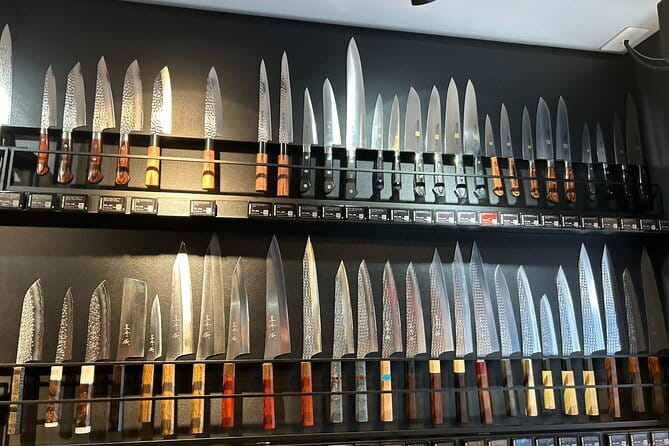
After the market area, you go to Namiyoke Inari Shrine for about 15 minutes. The shrine is described as enshrining Namiyoke Inari, the deity said to ward off disasters and weathers the waves. Admission is listed as free.
This stop is small, but it gives the walk texture. You are not only learning food and shopping. You are also seeing the religious layer that runs through everyday Japanese life. In a market context, that meaning feels practical, not theatrical. It helps you understand why people treat this area with respect beyond business.
If you like quiet moments during busy trips, this is a good one. If you do not, it still works as a breather where you can regroup and think about what you want to eat next.
The Food Tastings Question: What to Expect and How to Avoid Regret
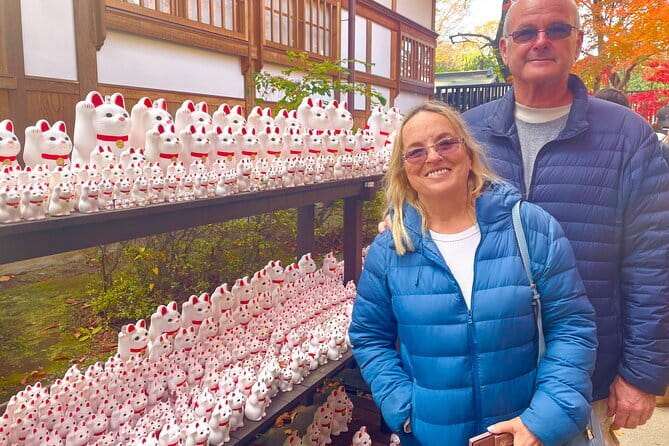
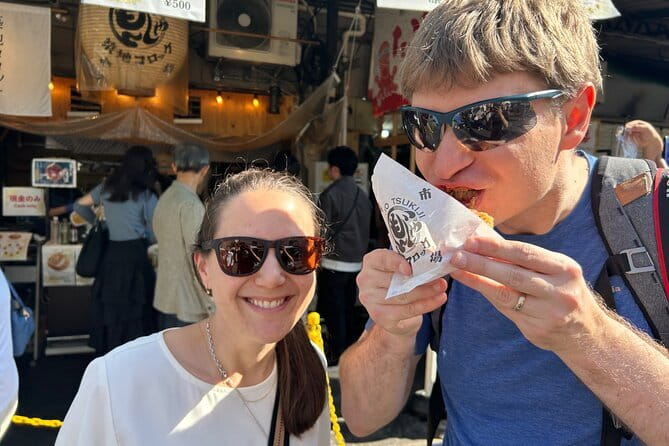
Here is the part you should plan for carefully. The highlights say you get the perk of food tastings included, and the overview talks about trying items like sushi or Japanese oysters. But the included and not included sections list Food as not included.
That mismatch showed up in at least one review. The reviewer said they booked expecting food to be included and felt disappointed. Another review was more positive and described lunch as fantastic, with lots of good conversation and advice on what to try.
So how do you protect yourself?
- Assume tastings may be limited compared to a full meal.
- Bring extra spending money for your own purchases, especially if you tend to eat large.
- If food is your main reason for booking, message the provider before you go and ask what exactly is included as tastings on your date.
In other words, do not book this like an all-you-eat deal. Book it like a guided market orientation with food moments, plus expert help on what to choose.
Sushi-Eating Etiquette and Japan Food Culture Tips You Can Use Again
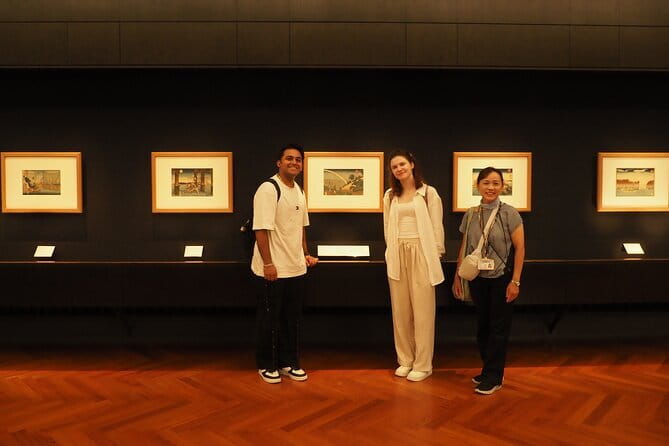
One of the best parts of this kind of tour is the etiquette coaching. In a review, the guide Sakura San shared insight into sushi-eating and other dining etiquette. That is the kind of knowledge that pays off immediately, because you can apply it the next time you sit down at a sushi counter.
The tour also promises explanations about food etiquette, culture, and history as you walk. Even if you already know basic basics, having someone point out what matters in the moment helps you avoid common awkward errors, like not knowing how to handle small tastings or how to approach ordering in a market setting.
This is also why the guide matters more than you might think. Without guidance, you might look at fish and think you get it. With guidance, you understand the logic behind what you are doing and why certain places expect certain behavior.
Why Photos and a Capped Group Feel Like Real Value
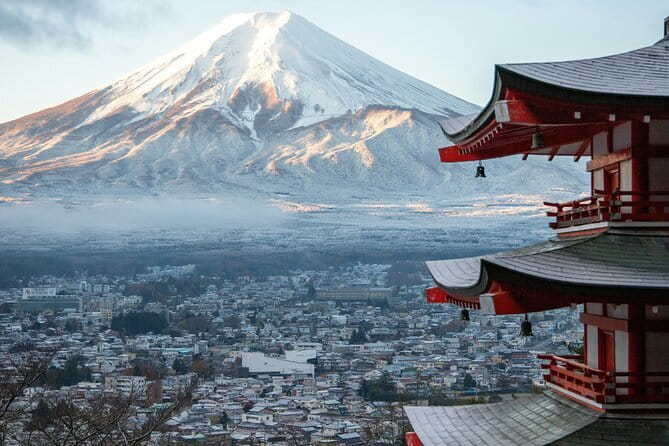
The tour includes photos taken during the tour, sent after. That is a small line in the details, but it changes the experience. You are less focused on capturing everything and more present while the guide shows you what to notice. It also helps if you are traveling solo and want a record of the day.
The group cap of 15 travelers helps in two ways. First, it keeps the walking pace realistic. Second, it keeps you from fading into the crowd. When you can stay close enough to hear, you actually get the etiquette and food explanation.
And because you end back at the meeting point, you do not waste time at the finish trying to figure out what train to catch next. You leave the experience feeling organized.
Weather, Closures, and How the Guide Handles the Real World
Markets do not care about your schedule. One review described cold weather and partial closure due to a holiday, yet the guide adjusted quickly and kept things fun. That tells me this tour is not rigidly scripted into failure.
When a stop changes, what you really want is someone who can re-balance the priorities. The good sign here is that the guide did not just shrug and speed-walk. They made a real pivot.
If you are planning around weather, dress for standing outside. Bring layers, keep your hands warm, and keep your expectations flexible. A guided market walk is always a little weather-dependent.
Price and Value: Does $80 Make Sense Here?
At $80 per person, this tour sits in the mid-range for Tsukiji walks. You are paying for four main things:
- a guide who explains food culture and etiquette
- 15 stops within about 2 to 3 hours
- photos included
- the chance for food tastings as part of the experience
Some self-guided walks are cheaper. And some tours are more food-centric. The right way to judge this is to ask yourself what you want most.
If you want a guided walkthrough that helps you interpret what you see, this price can feel fair. The guide time plus the photos add real value. If you mainly want lots of food for the money, you should be cautious because Food is listed as not included and at least one review flagged confusion about food expectations.
My advice: treat this as a guided experience first, with food as a bonus moment. If that matches your style, $80 is easier to justify.
Who This Tour Fits Best, and Who Might Feel Unhappy
This tour is a good fit if you want structure. If Tokyo feels overwhelming and you like knowing you are heading in the right direction, you will probably enjoy the 15-stop route.
You will also like it if you enjoy learning. The etiquette guidance, including sushi-eating tips from Sakura San, is the kind of practical information that improves your next meals.
It may not fit you perfectly if food is your one non-negotiable. Because the details conflict about food inclusion, you could end up wanting more tastings or fuller items than you expected.
If you are traveling with someone who is picky about spending time on culture stops, you may want to confirm how much of the tour feels “food-forward” on your date.
Should You Book This Tsukiji Fish Market Food Tour?
I would book it if you want a guided Tsukiji circuit with a knowledgeable Japanese guide, a manageable group size, and the extras like photos. It is especially appealing if you like etiquette tips and want help choosing what to try.
I would think twice if your expectation is that $80 covers a full meal with lots of included food, because the documentation around Food versus tastings is not perfectly aligned. To avoid disappointment, plan to spend a little extra for your own bites, and consider asking what tastings are included for your specific departure.
If you want Tsukiji with less stress and more context, this is a solid, practical choice.
FAQ
How long is the Tokyo Tsukiji Fish Market Food Tour?
It runs about 2 to 3 hours.
How many stops are included?
The tour includes 15 stops.
How much does the tour cost?
The price is $80.00 per person.
What is included in the tour price?
Included items are photos taken during the tour (sent after), explanation from a Japanese guide, and the guided tour itself.
Are food tastings included?
The highlights mention food tastings included, but Food is also listed as not included. Because of this mismatch, you may want to plan for additional food purchases.
Is hotel pickup or drop-off included?
No, hotel pickup and drop-off are not included.
Is there an admission fee for the temple and shrine stops?
The listed temple and shrine stops show admission ticket free.
Where do I meet the guide?
You meet at Tsukiji Hongan-ji Temple, 3-chōme-15-1 Tsukiji, Chuo City, Tokyo 104-8435, Japan.
Is transportation to the meeting point included?
No. Transportation fee to the meeting point is not included.
How will the tour provider contact me on the day of the tour?
For day-of communication, you should download WhatsApp, since it will be used for contact.
Market Mornings We Have Reviewed

Newest Tokyo write-ups from the Loving Japan desk


Tsukiji and Toyosu Fish Markets, side by side.
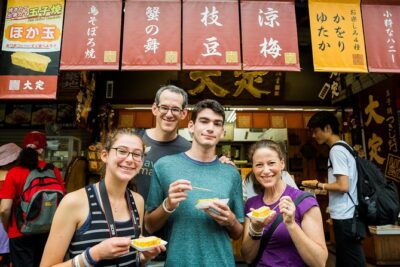 ★ 5.0Tokyo Tsukiji Fish Market Food and Culture Walking TourFrom $993,184 reviews
 ★ 5.0Tsukiji Fish Market Food and Walking tourFrom $301,724 reviews
 ★ 4.9Tsukiji Fish Market Guided Walking TourFrom $221,397 reviews
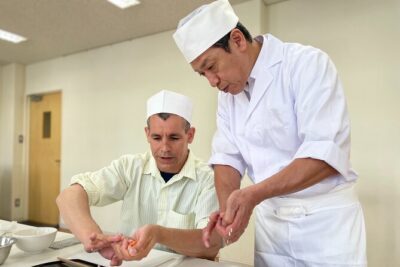 ★ 5.0Tokyo Sushi Making Class in Tsukiji with Professional ChefFrom $491,177 reviews
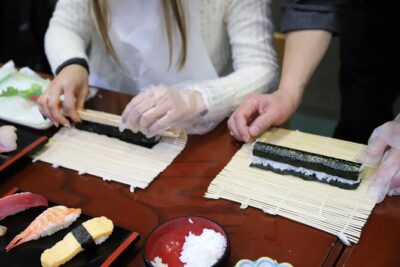 ★ 5.0Tsukiji Fish Market Guided Tour and Sushi Making with Pro ChefFrom $104775 reviews
★ 4.7Tsukiji Fish Market Food and Culture Walking TourFrom $96757 reviews
★ 5.0Tsukiji Fish Market Guided Tour and Sushi Making with Pro ChefFrom $104775 reviews
★ 4.7Tsukiji Fish Market Food and Culture Walking TourFrom $96757 reviews
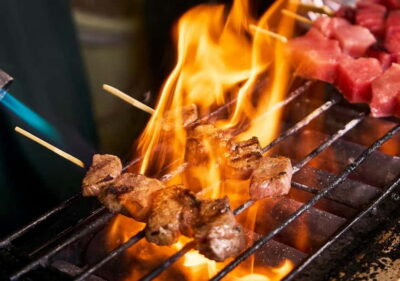 ★ 5.0Tsukiji Fish Market: Street Food & Culture Walking TourFrom $33669 reviews
 ★ 5.0Tsukiji Fish Market Small-Group Food Walking TourFrom $87621 reviews
Filed on these lists too