
REVIEW · JAPANESE COOKING CLASSES
Tokyo Washoku 4-hour Cooking Class: From Market to Table
Cooking in Tokyo starts at the supermarket. I love the market shopping with a real pro, plus the way you practice hands-on knife skills before the food ever hits the pan. You’ll move from a local store near Iriya Station to a dedicated studio, then cook and eat a full set of Japanese favorites in just about 4 hours.
One thing to keep in mind: they cannot guarantee an allergy-free experience, and substitutions may depend on what they can find at each stop. Also, being late matters, since missing the group can mean you cannot join and no refund applies.
In This Review
- Key things you’ll remember from Tokyo Washoku
- Market-to-table in a half-day: the flow that makes it worth it
- Starting near FamilyMart: where to meet and what to do with your timing
- The supermarket part: how shopping like a pro changes your cooking
- Knife practice in the studio: what you learn beyond the recipe
- The dishes you make: classic flavors, built from scratch
- Cooking, eating, and drink pairings: the fun part with a purpose
- Recipes to take home: how to make this more than a one-off meal
- Small group size: why max 7 matters
- Dietary needs and substitutions: what you can plan for, and what you should double-check
- Budget and value: is $79.59 for 4 hours a fair deal?
- Should you book this Tokyo Washoku cooking class?
- FAQ
- How long is the Tokyo Washoku cooking class?
- Where do I meet for the tour?
- Is the meeting point near public transportation?
- Do they offer vegan or vegetarian options?
- What if I cannot eat eggs?
- How many people are in a group?
- What if I’m late for the start time?
- FAQ
- Can I change my date or time after booking?
- What happens if the tour is canceled due to weather?
Key things you’ll remember from Tokyo Washoku
- Market-first shopping near Iriya Station, focused on ingredient quality and what to look for
- Hands-on knife practice with traditional techniques, not just watching from the sidelines
- A full meal you can recreate, with take-home recipes for multiple dishes
- Sake and beer pairing during the cooking and dining portion for a more Tokyo-style finish
- Small group size (max 7), so questions actually get answered
- Vegan and vegetarian welcome if you notify them at least one day ahead
Cook it yourself instead. Other kitchens in Tokyo
- Tokyo: Roll and Authentic Sushi Making Class in Asakusa
★ 4.9 · 1,957 reviews - Tokyo: Sushi Making Class in a Happi Coat near a Famous Spot
★ 4.9 · 1,377 reviews - Tokyo Sushi Making Class in Tsukiji with Professional Chef
★ 5.0 · 1,177 reviews - Ramen & Gyoza Cooking Class in Tokyo with Local Supermarket Visit
★ 5.0 · 823 reviews
Market-to-table in a half-day: the flow that makes it worth it
This class is built like a mini food trip, not a sit-and-smile demonstration. You start by choosing ingredients in a local supermarket, then you turn those choices into classic dishes in a cooking studio, and finally you sit down together to eat. The whole thing is designed to teach you the logic behind Japanese home cooking, not just the final plating.
It also works well if you only have one day to spare. Four hours sounds short until you realize it includes shopping, active cooking, and eating with drink pairings. That time compression is part of the value.
Starting near FamilyMart: where to meet and what to do with your timing
Your meeting point is a FamilyMart at 2-chōme-1-10 Shitaya, Taito City, Tokyo 110-0004, Japan, with a 10:00 am start. The tour is near public transportation, and you’ll finish back at the meeting point.
My practical advice: arrive early enough to calm your nerves. The rules are strict about starting on time. If you’re more than 5 minutes late and you do not contact them, it’s treated like cancellation with no refund. So plan for train delays, crowd crush, and that last-minute decision to grab water.
You’ll also want to factor in Tokyo’s weather extremes. The tour notes summer highs can reach around 40°C (110°F), and winters can drop near -5°C (20°F). Wear layers in winter, and choose breathable clothes in summer. You’ll likely walk between stops and spend time standing while cooking.
The supermarket part: how shopping like a pro changes your cooking
The smartest part of this experience is that you don’t start with a cutting board. You start with a supermarket. Your guide takes you through ingredient selection with a pro mindset, teaching what makes Japanese pantry items and produce worth buying.
This is where the course becomes practical. Once you understand what you’re looking for, you can replicate results at home. For example, Japanese cooking often depends on the quality of base ingredients and the balance of seasonings. Shopping first helps you see that relationship, rather than treating recipes like magic formulas.
And because it’s a small group, you get more chances to ask questions while you’re still looking at the real item. That means you’re less likely to get stuck later wondering what went wrong because an ingredient was the wrong type, not just the wrong technique.
- Mt Fuji and Hakone 1-Day Bus Tour Return by Bullet Train★ 5.0 · 26,383 reviews
- 1-Day Tokyo Bus Tour★ 5.0 · 14,250 reviews
- Tokyo: teamLab Planets TOKYO Digital Art Museum Entry Ticket★ 4.6 · 9,779 reviews
- Mt Fuji & Hakone Cruise, Drum Show Bullet Train 1 Day from Tokyo★ 4.0 · 7,413 reviews
- Tokyo: Shinjuku Food Tour (13 Dishes at 4 Local Eateries)★ 5.0 · 6,603 reviews
Knife practice in the studio: what you learn beyond the recipe
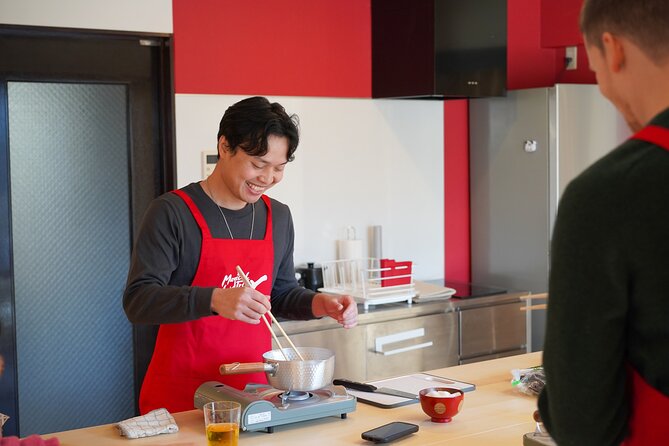
After the shopping, you move to a dedicated cooking studio. This is where the class becomes hands-on in a serious way: you learn and practice traditional Japanese knife and cooking techniques.
A lot of cooking classes skip the “how to cut” part because it slows things down. This one treats cutting as part of the skill set, and that makes your food both easier to cook and better to eat. The instructors also encourage you step-by-step, and multiple guides mentioned in the class reviews for pacing and clarity include April, Yuri, Masai, Minnie, Mihori, Alice, Suzy, and Taka. You can see the pattern: guides who explain what you’re doing and why you’re doing it get the best marks.
In other words, if you’ve ever felt like you can follow a recipe but your knife skills hold you back, this is exactly the kind of class where you can fix that gap. You’ll get more time actually doing the work, not just watching someone else.
The dishes you make: classic flavors, built from scratch
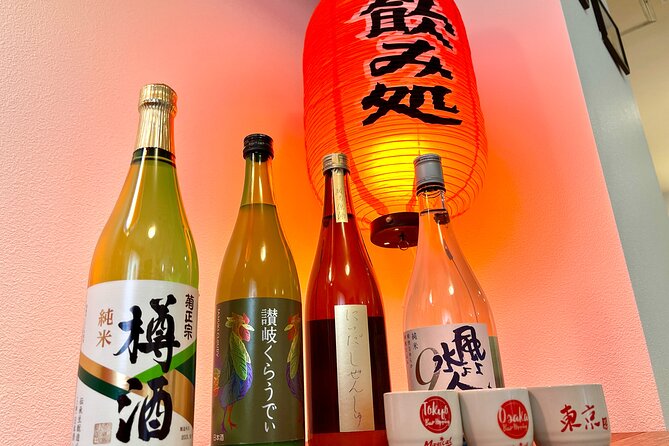
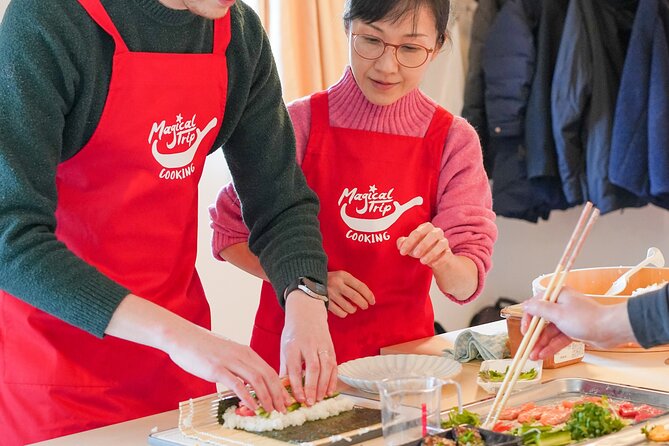
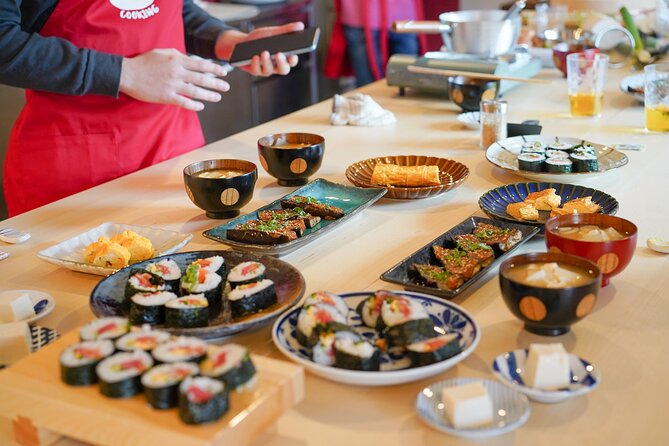
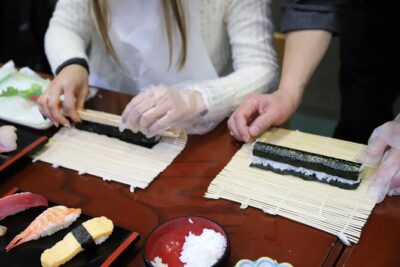
You’ll cook several traditional Japanese dishes from scratch. The class description specifically calls out makisushi (rolled sushi), miso soup, dashimaki tamago (rolled omelet), and nasu dengaku (grilled eggplant skewers). You’ll also make egg rolls and more, depending on the session plan.
Here’s the useful part: each dish trains a different cooking skill.
- Makisushi (rolled sushi) teaches you texture control and careful assembly. Rolling might look fancy, but it’s really about technique and consistency.
- Miso soup reinforces how Japanese flavor builds. It’s a good dish to learn because it’s simple in concept but can taste wildly different depending on ingredients and process.
- Dashimaki tamago (rolled omelet) is technique-heavy, especially for getting a smooth texture and even roll. If you’ve struggled with omelets at home, this is the kind of structured practice that helps.
- Nasu dengaku (grilled eggplant skewers) is a lesson in balancing a cooked vegetable with seasoning and sauce style flavors. It also gives you a non-fish, non-meat option that still feels classic.
- Egg rolls and additional dishes round out the meal so you’re not stuck learning only one category of food.
Food variations matter. The tour notes that if you cannot eat eggs, your selection reduces from four types to three. They also say they will arrange vegan and vegetarian options and the cooking process, but you need to inform them at least one day ahead for any dietary requests or allergies to mention. Requests made on the day of the tour cannot be accommodated.
So if you have a strong allergy, be cautious. The class also states they cannot guarantee allergy-free cooking because the kitchens do not belong to MagicalTrip and are shared. They will make every effort to compensate at different stops, but you should plan based on what they can reliably source.
Cooking, eating, and drink pairings: the fun part with a purpose
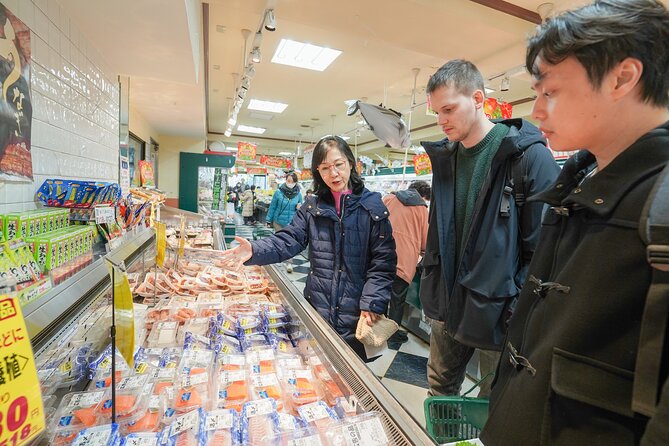
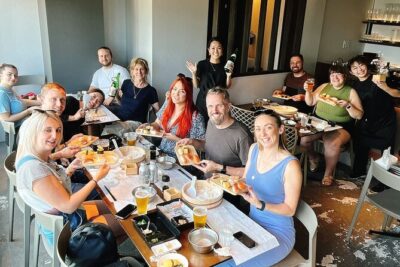
Once the work is done, you eat what you make in a friendly group setting at the studio. A standout feature from the experiences described is drink pairing. Many sessions include beer and sake tasting during the lesson, and you might experiment with different sake or other drink pairings when it’s time to enjoy your meal.
This part matters because it gives you a feel for Japanese dining style. In Japan, drinks often interact with food in subtle ways. When you taste alongside the dishes you just cooked, you connect the dots between flavor balance and what you choose to drink. You also get an easy social rhythm, which helps if you’re traveling solo or you just want a break from museum mode.
The studio itself also shows up in the positive feedback, described as spacious and well set up. That means you are not packed in like a kitchen sardine, and you can focus on your own station.
Recipes to take home: how to make this more than a one-off meal
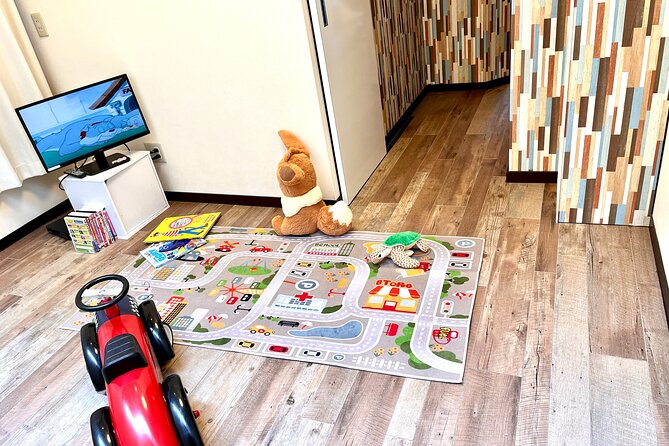
You receive recipes for the dishes to take home and perfect your skills. That sounds standard, but in practice it’s what turns the class from entertainment into a useful skill.
My advice is simple: use the recipes as a training checklist for your next try at home. Don’t aim for restaurant perfection on day one. Aim for repeating the same steps, especially the parts the guide emphasized, like knife technique and the cooking method logic.
Because the class is built around making multiple dishes, you’ll likely go home with a small “starter set” of Japanese cooking skills. Even if you only cook one item again, you’ll be better at how Japanese flavors come together than you were before.
Small group size: why max 7 matters
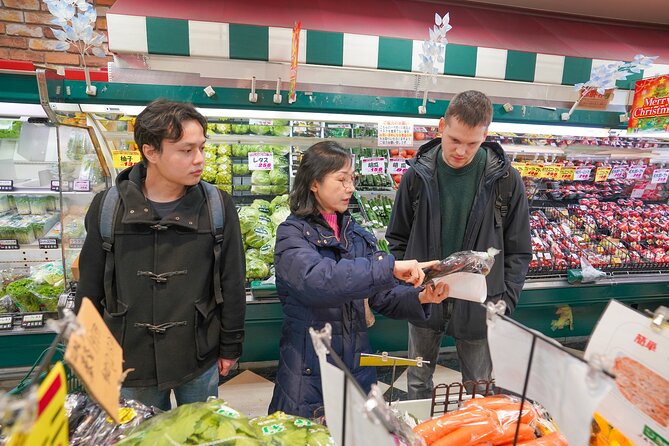
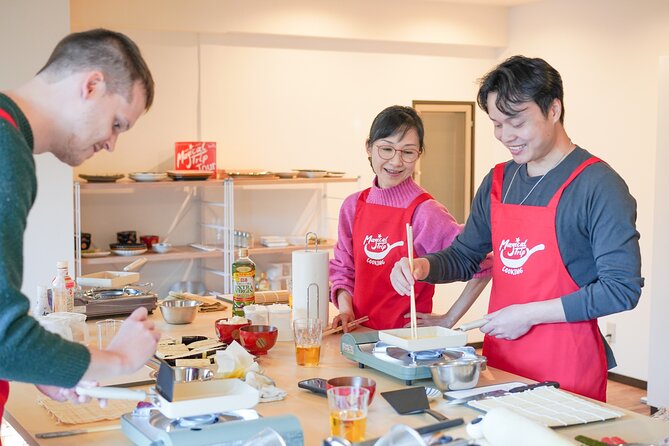
A max of 7 travelers changes the whole experience. You get more direct attention when you’re cutting, mixing, and cooking. You can ask questions and actually get answers while you still have ingredients and momentum.
This is especially helpful with technique-focused tasks. Knife work and rolled dishes get easier when someone adjusts your method in real time. The class also explicitly says you can ask questions, and that the experience can be tailored to your needs. With a small group, there’s a decent chance your question actually lands.
Dietary needs and substitutions: what you can plan for, and what you should double-check
The class welcomes vegan and vegetarian guests and arranges ingredients and the cooking process. But the timing matters. You must inform them at least one day before the tour if you have dietary requests or allergies to mention. Day-of requests cannot be accommodated.
Also:
- If you cannot eat eggs, expect reduced variety, from four types to three.
- Allergy-free guarantees are not available. Kitchens used for preparation are not owned by MagicalTrip, and shared spaces can affect ingredients.
- Substitutions are not guaranteed at every stop, but they will try to compensate at different points throughout the tour.
So here’s the balanced approach: if you’re flexible with non-allergic preferences, you’ll likely have a good experience. If you have a serious allergy, message them before booking and plan with extra caution.
Budget and value: is $79.59 for 4 hours a fair deal?
At $79.59 per person for about 4 hours, this class sits in the “worth it” zone if you care about skills. You’re paying for three things at once: guided shopping, hands-on instruction, and a meal you eat together with drink pairings.
If you were to recreate this alone, you’d spend money on ingredients, likely make mistakes on techniques, and lose the structure that tells you what to do next. Here, you get recipes to take home, plus the chance to fix your method while you’re still in the class environment.
It’s also not a massive group experience, which keeps instruction useful. For many people, that small group plus multiple dishes plus drink pairing is the combination that makes the price feel reasonable.
Should you book this Tokyo Washoku cooking class?
Book it if you want a practical Tokyo experience that goes beyond watching. I’d choose it if you like the idea of learning market-to-table habits, getting hands-on knife time, and leaving with recipes you’ll actually use. It’s also a good pick for travelers who enjoy structured activities with plenty of chances to ask questions.
Think twice if you have strict allergies and need an allergy-free kitchen. The class can’t guarantee that, and substitutions may vary. Also, if you tend to run late on tours, plan extra buffer. Starting on time is non-negotiable.
If you do book, you can also consider visiting Kappabashi Dougu Street afterward on your own, since you’ll have just learned why good tools and technique matter.
FAQ
How long is the Tokyo Washoku cooking class?
The class runs for about 4 hours.
Where do I meet for the tour?
You meet at FamilyMart, 2-chōme-1-10 Shitaya, Taito City, Tokyo 110-0004, Japan.
Is the meeting point near public transportation?
Yes, it is near public transportation.
Do they offer vegan or vegetarian options?
Yes, vegan and vegetarian are welcome. You need to inform them at least one day before the tour about dietary requests or allergies. Requests made on the day of the tour cannot be accommodated.
What if I cannot eat eggs?
If you cannot eat eggs, your food selection is reduced from four types to three.
How many people are in a group?
The tour has a maximum of 7 travelers.
What if I’m late for the start time?
You must arrive on time. If you are more than 5 minutes late without contacting them, it is considered a cancellation and no refund is provided.
FAQ
Can I change my date or time after booking?
Yes. Free date and time changes are available up to 24 hours before the tour starts.
What happens if the tour is canceled due to weather?
This tour requires good weather. If it’s canceled due to poor weather, you will be offered a different date or a full refund.
Kitchens You Can Book Into


Newest Tokyo write-ups from the Loving Japan desk



Japanese Cooking Classes, side by side.
 ★ 5.0Sushi Making Tokyo Roll and Authentic Japanese Sushi ClassFrom $593,971 reviews
 ★ 4.9Roll and Authentic Sushi Making Class in AsakusaFrom $581,957 reviews
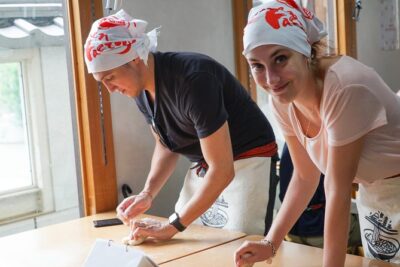 ★ 5.0Ramen Cooking Class at Ramen Factory in KyotoFrom $1311,937 reviews
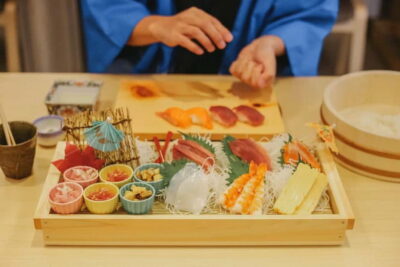 ★ 4.9Sushi Making Class in a Happi Coat near a Famous SpotFrom $421,377 reviews
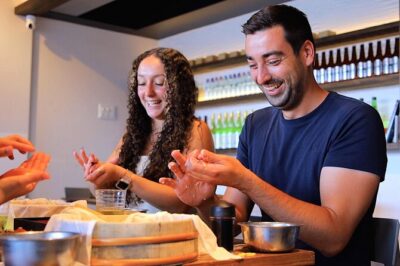 ★ 5.0Sushi Making Osaka Roll and Authentic Japanese Sushi ClassFrom $311,220 reviews
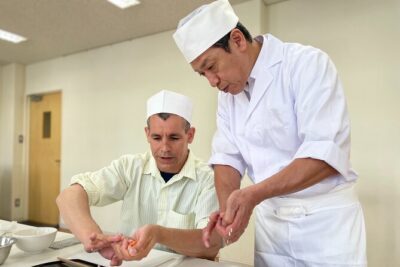 ★ 5.0Tokyo Sushi Making Class in Tsukiji with Professional ChefFrom $491,177 reviews
 ★ 5.0Ramen & Gyoza Cooking Class in Tokyo with Local Supermarket VisitFrom $122823 reviews
 ★ 5.0Tsukiji Fish Market Guided Tour and Sushi Making with Pro ChefFrom $104775 reviews
Filed on these lists too