
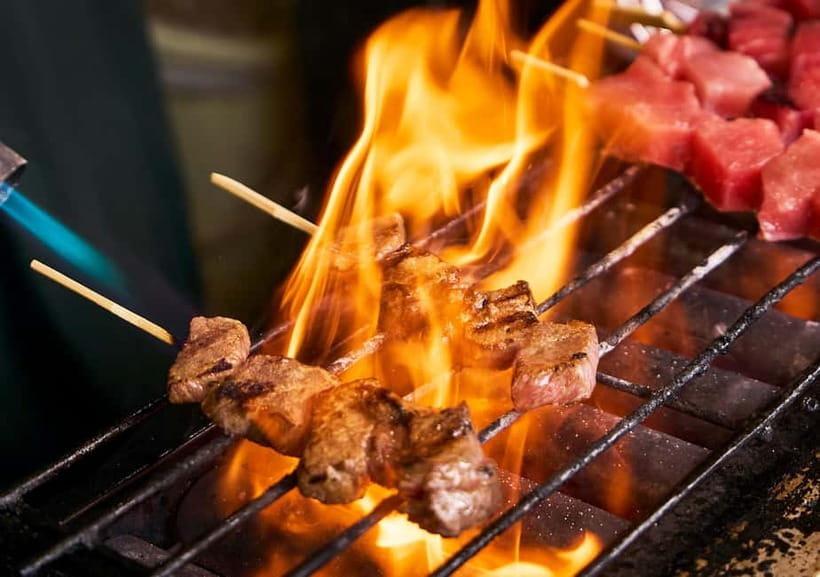
REVIEW · TSUKIJI AND TOYOSU FISH MARKETS
Tsukiji Fish Market: Street Food & Culture Walking Tour
Tokyo’s fish market turns eating into a sport. I love how this Tsukiji street food walk gives you real market rhythm, not just photo stops, with a special wasabi set that makes the flavors pop. I also like that you get guided food tastings plus ingredient talk that helps you understand what you are eating and why. One consideration: on Wednesdays, Sundays, and national holidays, about half of the Outer Market shops may be closed, so the experience can feel a bit different.
You start with a short visit to Tsukiji Hongwan-ji (Hongan-ji), a temple stop that slows things down and gives context before you step into the market’s everyday food world. Then you move through the Outer Market where you will taste, ask questions, and learn how Japanese cooking treats freshness and umami as serious business.
This is a 2-hour, English small-group tour priced at $22 per person. It is also a cash-on-hand kind of outing, and it works best if you want help picking what to try, rather than just wandering and guessing.
In This Review
- Key highlights you should care about
- Tsukiji Hongwan-ji Temple: the calm start that makes the market make sense
- Tsukiji Outer Market food tastings: how you learn to order, not just snack
- The wasabi set and the seafood focus: why this tour’s flavors feel different
- Umami and preservation techniques: the cooking logic behind the market
- The itinerary in plain English: what happens in each chunk
- 1) Tsukiji Hongwan-ji temple, about 20 minutes
- 2) Outer Market with guided tour and tastings, about 80 minutes
- 3) Extra guided time in the Outer Market, about 20 minutes
- Pace, comfort, and what to bring for a smooth 2-hour walk
- Should you go on a tour or wander Tsukiji on your own?
- When half the shops are closed: how to still make the day work
- Should you book this Tsukiji Fish Market street food tour?
- FAQ
- How long is the Tsukiji Fish Market street food and culture walking tour?
- How much does the tour cost?
- Where does the tour start?
- What language is the guide in?
- Is the tour wheelchair accessible?
- Do I need cash?
- What happens on Wednesdays, Sundays, or national holidays?
- Is there free cancellation?
- Is reserve now and pay later available?
- What kind of group size should I expect?
Key highlights you should care about
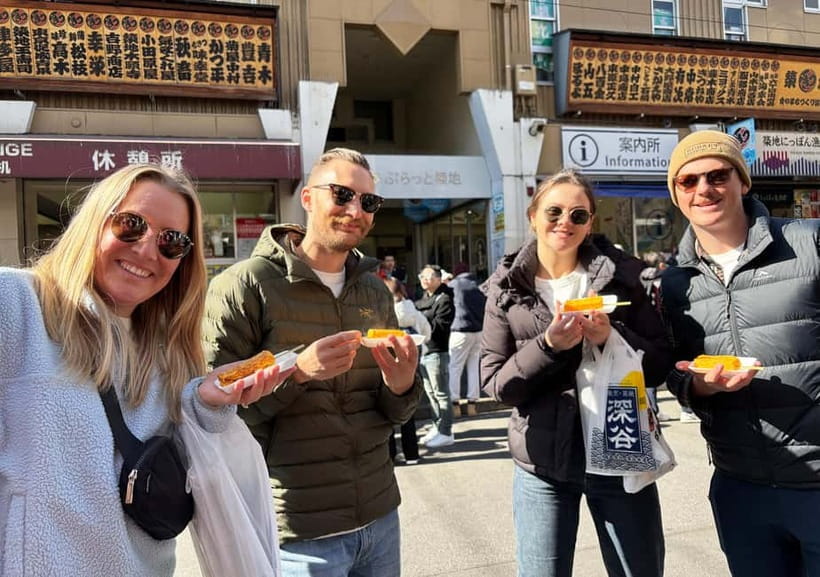
- Tsukiji Hongwan-ji Temple first, so you understand the food and ritual side of the neighborhood before you eat
- Outer Market food tasting, guided so you do not waste time aiming at the wrong stalls
- Fresh wasabi added as a special touch, a simple step that changes how tuna and other seafood taste
- Tuna, wagyu, and classic street foods, with explanations that connect ingredients to flavor and technique
- Small-group format, which usually means you can ask more questions and move more smoothly
- Historical context plus cooking insights, so the market feels like culture, not chaos
Hungry earlier than that? Other market breakfasts we tried
- Tokyo Tsukiji Fish Market Food and Culture Walking Tour
★ 5.0 · 3,184 reviews - Tokyo: Tsukiji Fish Market Food and Walking tour
★ 5.0 · 1,724 reviews - Tokyo: Tsukiji Fish Market Guided Walking Tour
★ 4.9 · 1,397 reviews - Tokyo Sushi Making Class in Tsukiji with Professional Chef
★ 5.0 · 1,177 reviews
Tsukiji Hongwan-ji Temple: the calm start that makes the market make sense
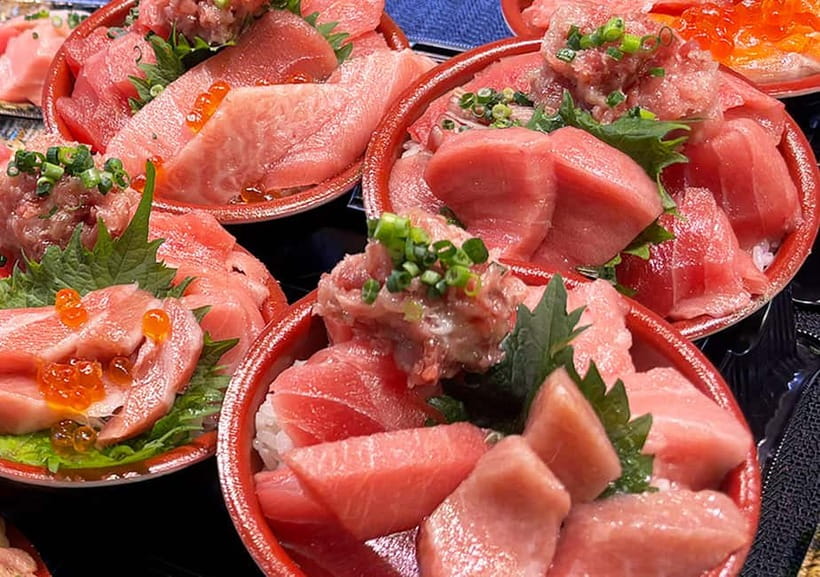
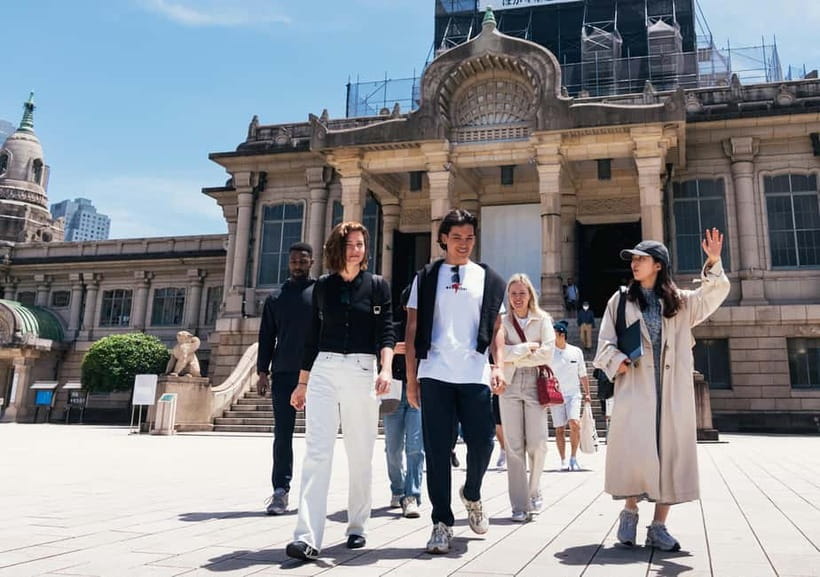
The tour begins at Tsukiji Hongwan-ji, a temple stop that works as more than a quick landmark photo. The guide uses the space to set the tone: you learn how this area is tied to everyday life in Tokyo and how people think about food, preparation, and respect for process.
Even in a short visit, this start gives you a mental reset. After that, the market feels less like random eating and more like a place with purpose. You’ll also notice why the temple matters for the neighborhood, with carvings and architecture that create a quiet contrast to the street-level pace you will hit soon after.
Tsukiji Outer Market food tastings: how you learn to order, not just snack
Once you are in the Outer Market, you are there for the practical part: how to taste your way through Tokyo seafood without getting lost or overpaying. The tour includes time to explore the market while the guide steers you toward what to try and how to think about the ingredients.
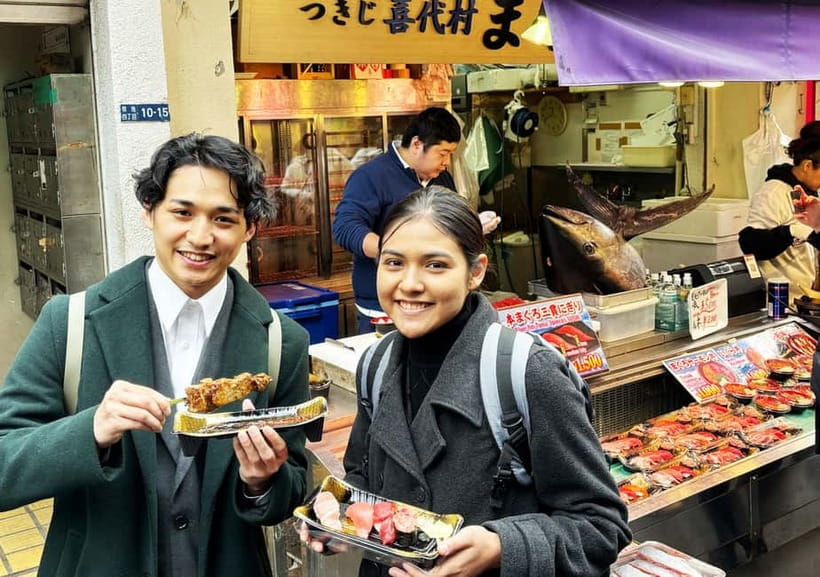
What you can expect to taste centers on the market’s signature items: fresh tuna, wagyu, and a range of traditional street foods. From what people highlight in their feedback, you may run into favorites like grilled seafood, eel-style bites, tuna sushi, and cooked snacks you can eat on the go. One guide detail that keeps showing up is how they guide you through decisions in a friendly way, so even if you are unsure about something, you still have a clear recommendation in front of you.
This is also where the tour saves you time. Without a guide, you can spend a long stretch comparing stalls, reading limited signage, and taking a shot in the dark. With a guide, you spend more of your 2 hours tasting and less of it standing still.
The wasabi set and the seafood focus: why this tour’s flavors feel different
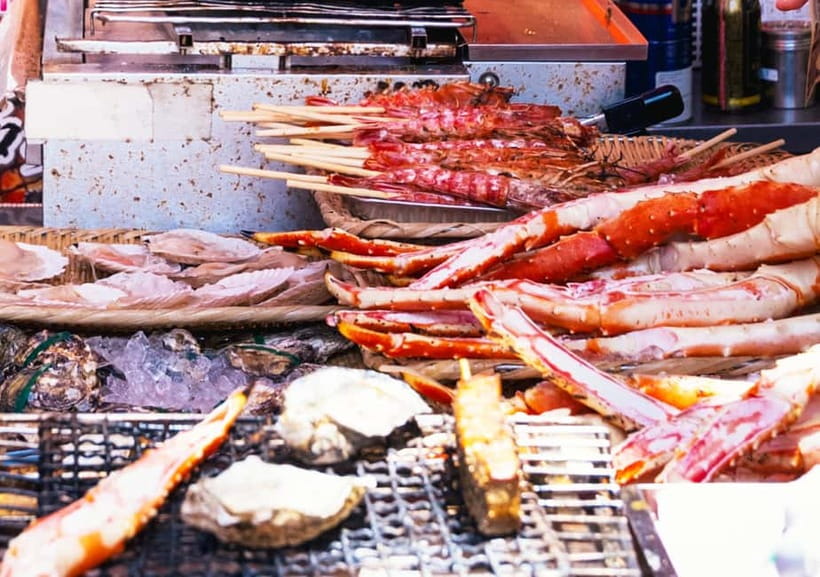
A standout in the tour concept is the wasabi. You are not just eating fish and moving on. You get a special wasabi set that adds a sharper, fresher edge to the bites, and several past guests call out how the experience feels upgraded because of it.
Wasabi matters because it changes how you perceive fat and sweetness in seafood. Tuna can feel clean and bright, while wagyu can feel rich. Add fresh wasabi and your palate resets between bites, so you can actually notice differences instead of getting dulled by the same flavor profile over and over.
And the guide helps make those differences noticeable. Expect ingredient talk that connects what you taste to how it is made or preserved. This is not food trivia. It is the kind of context that turns a snack into a lesson you can carry with you when you eat later around Tokyo.
- Mt Fuji and Hakone 1-Day Bus Tour Return by Bullet Train★ 5.0 · 26,383 reviews
- 1-Day Tokyo Bus Tour★ 5.0 · 14,250 reviews
- Tokyo: teamLab Planets TOKYO Digital Art Museum Entry Ticket★ 4.6 · 9,779 reviews
- Mt Fuji & Hakone Cruise, Drum Show Bullet Train 1 Day from Tokyo★ 4.0 · 7,413 reviews
- Tokyo: Shinjuku Food Tour (13 Dishes at 4 Local Eateries)★ 5.0 · 6,603 reviews
Umami and preservation techniques: the cooking logic behind the market
Tsukiji is famous for freshness, but the tour leans into something deeper: how Japanese food culture builds umami even when you are dealing with real-world logistics. You will hear about traditional preservation methods that help strengthen flavor and keep seafood tasting vivid.
This part is surprisingly useful if you usually eat Japanese food as a list of dishes. You start thinking in terms of technique. Why does one bite taste deeper than another? Why does a simple seasoning hit harder? Even if you do not memorize the science, you walk away with better instincts about what to look for and what to ask about when you are shopping or ordering later.
The itinerary in plain English: what happens in each chunk
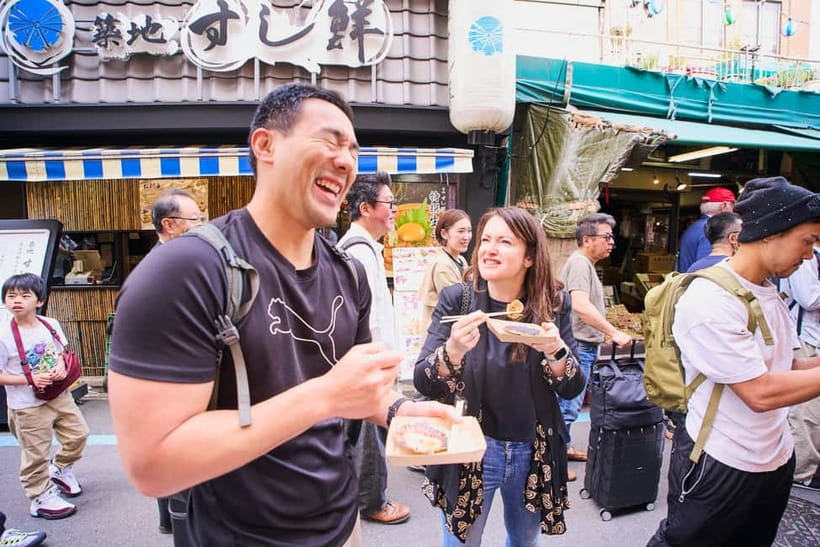
Here is how the flow usually lands for you, based on the tour structure and what guests emphasize.
1) Tsukiji Hongwan-ji temple, about 20 minutes
You get a guided introduction and a short look inside. The goal is to give you context fast, not to turn this into a long sightseeing detour. You’ll come away with a better sense of why this neighborhood has such a strong food identity.
2) Outer Market with guided tour and tastings, about 80 minutes
This is the main event. You walk through the Outer Market and stop often enough to sample a variety of foods. The guide keeps you moving while still giving you time to eat, ask questions, and understand what you are looking at.
A theme in the feedback is that some guides help manage lines, so you do not spend your limited time waiting. That can be a big deal in Tsukiji, where popular stalls can get slow.
3) Extra guided time in the Outer Market, about 20 minutes
The last stretch feels like a second pass with purpose. It is a chance to catch anything you missed, grab a final favorite, or get shopping direction before you leave.
Pace, comfort, and what to bring for a smooth 2-hour walk
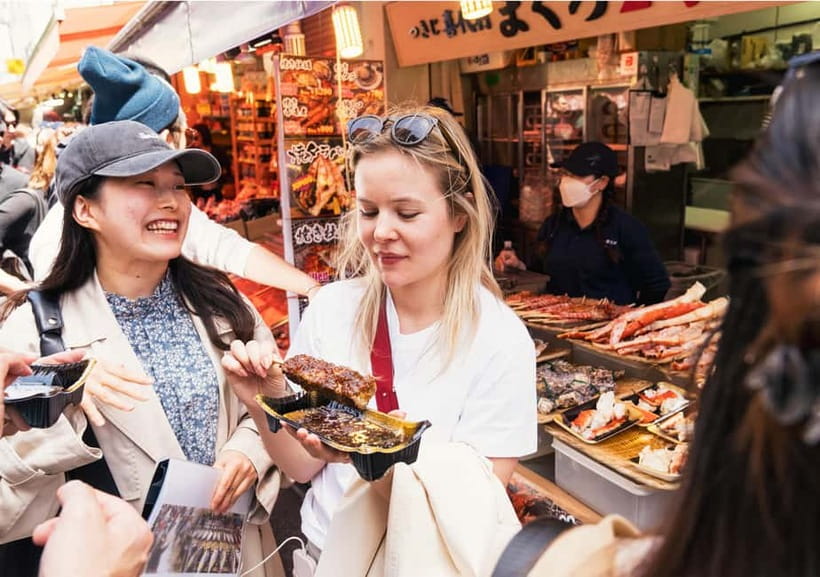
This tour is short, so the pace is intentionally efficient. You are walking and eating at the same time, which means comfort matters.
Bring cash. The tour specifically notes cash, and the market is not always set up for card payments the way some tourists expect. If you want to buy extra snacks or small items, having bills on hand keeps you from doing last-minute problem solving.
Wear shoes you can stand in. Tsukiji’s floors and crowd flow mean you want grip and cushioning. Also plan for weather. The tour is outside for much of the time, and guides do not control the temperature.
At $22 for 2 hours, the price feels fair if you count what you get: guided walking, temple context, tastings, and ingredient explanations. It is not a buffet price where you automatically overeat. You are paying for direction and for the ability to taste smart.
One more practical note: the tour is listed as small group and English guided, which usually means you spend less time trying to figure out where to stand and more time actually eating.
Should you go on a tour or wander Tsukiji on your own?
If you are the kind of traveler who loves unstructured discovery, it is tempting to skip the guide. You can absolutely walk Tsukiji and pick stalls yourself.
But for many people, this tour is worth it because it solves three common problems:
- Choosing what to try without wasting time
- Understanding ingredient logic, not just copying dish names
- Handling market friction like lines and stall differences
Guests repeatedly mention that guides help them find the best places to sample and to do it at reasonable prices. Some also mention guides stepping in to help with ordering and line wait. That is hard to replicate when you are reading menus in a hurry.
So my rule of thumb is simple. If you want to eat your way through Tsukiji with less guesswork, book this. If you already know exactly where you want to go and you speak confidently about food choices, then free wandering can work.
When half the shops are closed: how to still make the day work
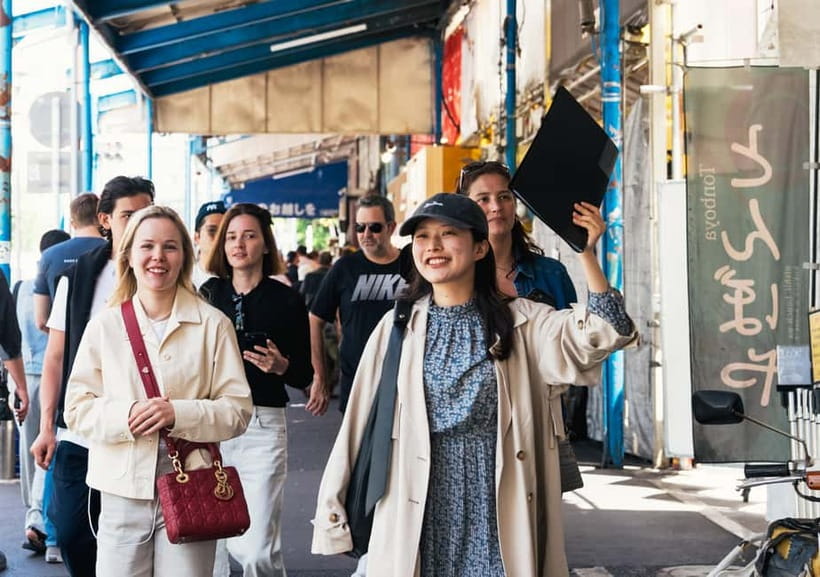
On Wednesdays, Sundays, and national holidays, about half of the Tsukiji Outer Market shops may be closed. That can affect what you see and what you can taste.
Still, tours can continue because some shops remain open. The experience just may differ from the usual pattern. If you are flexible, this is when you pick a different day. If your schedule cannot change, treat this as a tasting and food-logic walk through what is operating that day, not a guarantee of every stall you dreamed about.
Should you book this Tsukiji Fish Market street food tour?
I think you should book it if:
- you want a 2-hour, English plan that is easy to follow
- you care about what to eat and why, not just where to stand
- you like the idea of a wasabi highlight and a guide who helps you order
- you prefer a small group experience in a market environment
Skip it or choose another option if:
- you are only available on Wednesdays, Sundays, or national holidays and you are expecting to see every stall and tasting stop exactly as in a perfect scenario
- you hate walking and standing in compact areas, even with a guide helping you move efficiently
If you want Tsukiji to feel like Tokyo food culture, not a stressful scavenger hunt, this tour is a strong fit.
FAQ
How long is the Tsukiji Fish Market street food and culture walking tour?
It lasts 2 hours.
How much does the tour cost?
The price is $22 per person.
Where does the tour start?
The meeting point can vary by the option booked. The listed coordinates are 35.66661467955698, 139.77199430835137, and one starting option is Tsukiji Hongwan-ji (築地本願寺本堂).
What language is the guide in?
The tour has an English-speaking live guide.
Is the tour wheelchair accessible?
Yes, it is listed as wheelchair accessible.
Do I need cash?
Yes, the tour notes that you should bring cash.
What happens on Wednesdays, Sundays, or national holidays?
About half of the shops in the Tsukiji Outer Market may be closed. Some shops remain open, and the tour still runs, but the experience may differ from usual.
Is there free cancellation?
Yes, you can cancel up to 24 hours in advance for a full refund.
Is reserve now and pay later available?
Yes, you can reserve now and pay later.
What kind of group size should I expect?
Small group is available.
Market Mornings We Have Reviewed



Newest Tokyo write-ups from the Loving Japan desk



Tsukiji and Toyosu Fish Markets, side by side.
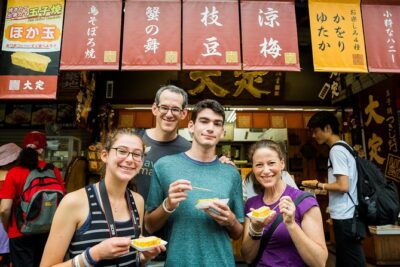 ★ 5.0Tokyo Tsukiji Fish Market Food and Culture Walking TourFrom $993,184 reviews
 ★ 5.0Tsukiji Fish Market Food and Walking tourFrom $301,724 reviews
 ★ 4.9Tsukiji Fish Market Guided Walking TourFrom $221,397 reviews
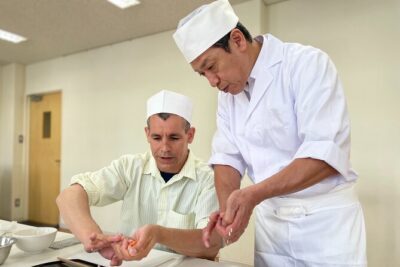 ★ 5.0Tokyo Sushi Making Class in Tsukiji with Professional ChefFrom $491,177 reviews
 ★ 5.0Tsukiji Fish Market Guided Tour and Sushi Making with Pro ChefFrom $104775 reviews
★ 4.7Tsukiji Fish Market Food and Culture Walking TourFrom $96757 reviews
★ 5.0Tsukiji Fish Market Guided Tour and Sushi Making with Pro ChefFrom $104775 reviews
★ 4.7Tsukiji Fish Market Food and Culture Walking TourFrom $96757 reviews
 ★ 5.0Tsukiji Fish Market: Street Food & Culture Walking TourFrom $33669 reviews
 ★ 5.0Tsukiji Fish Market Small-Group Food Walking TourFrom $87621 reviews
Filed on these lists too