
REVIEW · SUMO WRESTLING EXPERIENCES
Chair Seat Guaranteed SUMO Practice +Photo +Culture Option
Close-up sumo beats the usual tourist show. This small-group practice gives you guaranteed chair seating so you can watch comfortably, and a guide explains the customs and history that shape sumo training. One possible drawback: the stable runs on rules, so you must stay quiet and follow instructions (no talking, no eating or drinking, and no videos).
I like that the format is simple: meet at a clear subway exit, get front-row sightlines, then learn what you are actually seeing before you leave. You will also get a group photo and an opportunity for Q&A, so it feels like more than just sitting in the audience for an hour.
In This Review
- Quick hits before you go
- Finding Kiyosumi Shirakawa Station Exit B1 (and not panicking)
- Guaranteed chair seating at a sumo stable: why it changes everything
- Watching the morning practice up close for 1 hour 40 minutes
- The talk-and-photo window with active wrestlers (the human moment)
- Culture session with a local guide: what makes sumo make sense
- The Q&A with a sumo wrestler: ask the practical questions
- Group photo included, plus the stability of a small-group schedule
- Price and value: $102.47 for seats, context, and real interaction
- Who this suits best (and who should think twice)
- Should you book this Tokyo sumo practice?
- FAQ
- What time does the tour start?
- How long does the experience last?
- Where do I meet the group?
- Is the seating on the floor?
- Can I take photos during the practice?
- Do I get to interact with wrestlers?
- What is the group size limit?
- What is the cancellation policy?
Quick hits before you go
- Chair Seat Guaranteed so you are not stuck on the floor during practice
- Small group size (up to 10) for a calmer experience and easier guidance
- Up-close practice time where you can observe training at very close range
- Opportunity to talk and take photos with active sumo wrestlers after the session
- Local guide culture session focused on history, context, and sumo customs
- Included Q&A and group photo so you get personal answers, not just observations
Morning practice or an evening show. Both reviewed
- Tokyo: Sumo Show and Dining Experience
★ 4.8 · 2,742 reviews - the SUMO show
★ 5.0 · 1,960 reviews - Tokyo Shinjuku Sumo Show & Experience with Photo
★ 5.0 · 1,750 reviews - Tokyo: Sumo Show and Experience in Shinjuku
★ 4.8 · 1,001 reviews
Finding Kiyosumi Shirakawa Station Exit B1 (and not panicking)
The tour starts at 8:00am at Kiyosumi Shirakawa Station, in Koto City. This matters because sumo practice is time-sensitive, and you are arriving before the day gets loud. The meeting spot is specific: use Exit B1, head to street level, and meet where a Family Mart is nearby.
Kiyosumi Shirakawa is a junction station served by the Oedo Line and the Hanzomon Line, so you can usually reach it without complicated transfers. Also, the tour is near public transportation, which is a big deal in Tokyo where “close” can still mean a trek.
Practical tip: arrive a few minutes early, especially if it is your first time finding Exit B1. If you are even slightly late, it can turn into unnecessary stress because the stable visit does not pause for stragglers.
Guaranteed chair seating at a sumo stable: why it changes everything
This practice is set up so you skip sitting on the floor. Instead, you get comfy chair seating, and that is not a small detail. Sumo stables have a very traditional feel, and that often means visitors can end up with awkward seating. With chair seating guaranteed, you can focus on what matters: watching the wrestlers warm up, train, and go through routines.
The stable rules also shape how the experience feels. During the long viewing block, there is no talking, no eating or drinking, and no problem with taking pictures. The silence can feel strict at first, but it also helps you see the real rhythm of training: you hear footwork, slaps, and the steady cadence of preparation.
One more consideration: even with chairs, the stable setting can involve short stretches of waiting. If you have knee or leg concerns, chair seating is a real advantage. If you are expecting a casual, chat-friendly tour, this is not that kind of visit.
Watching the morning practice up close for 1 hour 40 minutes
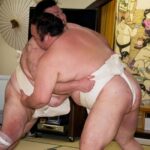
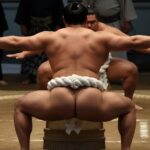
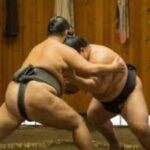
The main viewing part is long enough that you do not just catch a few moments. After you meet, you settle in and watch the morning practice unfold in close proximity. The viewing block is 1 hour 40 minutes, which is a gift for first-time sumo watchers.
Here is what you can expect during that time:
- wrestlers warming up and working through training routines
- close observation of technique and movement
- a quiet viewing environment where your attention stays on the sport
Because you are so near, you start noticing the small things that make sumo different from other sports. It is not only about strength. It is about timing, stance, grip, and how training builds muscle memory. You also get a clearer sense of how formal and practiced everything looks, from how the wrestlers move to how the session is run.
Photography is allowed during this practice window. That is important. It means you can capture the moment without feeling like you need to sneak shots.
- Mt Fuji and Hakone 1-Day Bus Tour Return by Bullet Train★ 5.0 · 26,383 reviews
- 1-Day Tokyo Bus Tour★ 5.0 · 14,250 reviews
- Tokyo: teamLab Planets TOKYO Digital Art Museum Entry Ticket★ 4.6 · 9,779 reviews
- Mt Fuji & Hakone Cruise, Drum Show Bullet Train 1 Day from Tokyo★ 4.0 · 7,413 reviews
- Tokyo Mt Fuji 5th St & Hakone Cruise Bus Tour w/Bullet Train★ 4.4 · 5,024 reviews
The talk-and-photo window with active wrestlers (the human moment)
After the main practice viewing, the tour includes a short segment where you get a chance to interact. You will have about 20 minutes for an opportunity to talk with active sumo wrestlers and potentially take photos.
This is often the part people remember most, because it changes the experience from spectator to participant. You are not just watching tradition, you are getting a quick human connection with someone living the routine you were observing.
The photo moment also has a fun angle. Your picture can end up being associated with the wrestler as their rank changes in the future. Even if you treat that as a nice thought rather than a promise, it gives extra meaning to why you are taking photos at that exact time.
What to expect etiquette-wise:
- you may be asked to follow specific instructions on when and how to approach
- you likely will not have long conversations
- photos are allowed, but the stable environment stays orderly
Culture session with a local guide: what makes sumo make sense
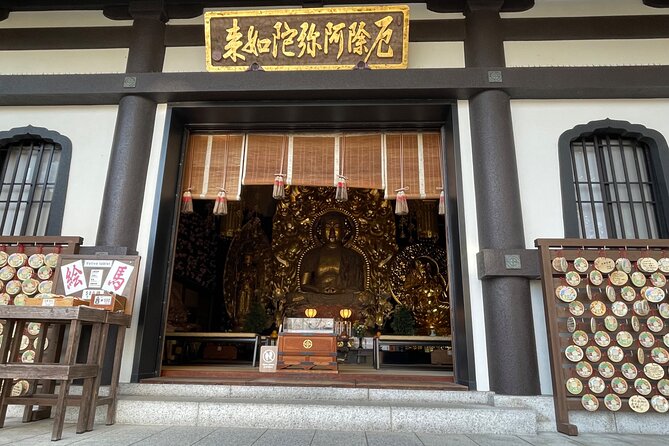
One reason this practice feels more satisfying than a basic ticket is the built-in teaching block. You get a local guide-led session focused on the history and context of sumo. The culture talk runs for about 25 minutes.
This is not just trivia. It helps you decode what you are seeing while you sit there. Sumo has rituals, customs, and a social structure that can look mysterious if you only watch the action. A good explanation turns random movements into something you can name and understand.
In the experience format you are getting:
- you learn what sumo is and where it came from
- you learn the context behind techniques and traditions
- you get a framework for understanding training as a way of life, not just competition
English-speaking guides are mentioned as bringing clarity, with some guides (like Max) described as US-educated and very engaging. Another guide, Masao, also comes up in the provided feedback as entertaining and passionate. Your exact guide may vary, but the key is consistent: you get real context, not vague commentary.
The Q&A with a sumo wrestler: ask the practical questions
The tour includes an exclusive Q&A session with a sumo wrestler. That is huge value. Watching from a distance gives you admiration. Q&A gives you understanding.
Because it is a Q&A, your best questions are the ones that help you connect training to real life. Think along the lines of:
- what training looks like day to day
- how wrestlers approach routines and discipline
- how they think about tradition and rank
The format also keeps things grounded. You are not guessing. You are hearing directly from someone inside the system.
Also, since the tour group is limited to a maximum of 10 travelers, you are more likely to get attention and a smoother experience than you would in a large crowd setting.
Group photo included, plus the stability of a small-group schedule
You get a group photo included as part of the session. You will also likely take individual photos during the interaction window. The tour is designed so that photo moments are built into the flow rather than tacked on at the end.
Why that matters: if you treat photos as an afterthought, people rush, and you get messy results. Here, you have time carved out for it.
The schedule also includes time to move between the meeting point and the stable. There is about 20 minutes for transfers to and from the sumo stable. That helps you plan your morning. You are not sprinting across Tokyo at 8:00am hoping you found the right platform.
Net effect: the tour runs for about 3 hours, with the structured practice, culture session, interaction time, and Q&A all fitting into that window.
Price and value: $102.47 for seats, context, and real interaction
At $102.47 per person, this is not the cheapest activity in Tokyo. But it is also not just a ticket to watch. You are paying for a bundle that is hard to replicate on your own:
- Guaranteed chair seating so you avoid the floor-stamina problem
- Stable access plus a structured viewing period
- Local guide who adds context to what you observe
- Q&A with a wrestler, which is typically the difference between a “cool photo” and a “real understanding”
- Group photo included, so you do not scramble for proof later
- Small group size up to 10, which makes the experience feel more controlled
If you are a first-time Tokyo visitor, this kind of value usually lands because it compresses “getting there, figuring out the rules, and learning what you just watched” into one morning package. You do not need to research stable etiquette for hours, and you do not have to guess which sections are best for viewing.
The main value question is whether you want a guided culture element. If you just want action and are fine with silence rules, you might feel it is more educational than expected. If you want both sport and context, it hits the sweet spot.
Who this suits best (and who should think twice)
This tour fits best if you:
- want an authentic sumo training experience with close viewing
- need chair seating because kneeling and floor seating are not your thing
- like a mix of sport and culture, where the guide explains the why behind the what
- want real interaction, including Q&A and an opportunity to talk and take photos with active wrestlers
- are okay with stable rules during the practice window (no talking, no eating or drinking, and no videos)
It can also work well for families, especially if you set expectations before you arrive. The rules are part of the experience. Once you understand that, it is easier for kids to follow along and still enjoy watching the intensity up close.
Who might think twice:
- you dislike quiet instruction time and photo etiquette
- you want a “walk and chat” style tour rather than a stable-centered schedule
- you struggle with early mornings, since the start is 8:00am
Should you book this Tokyo sumo practice?
I would book it if you want a sumo experience that is both close up and explained. The guaranteed chair seating alone makes it more comfortable than many options. Add the guide session, the included group photo, and the Q&A, and you get a morning that feels focused rather than chaotic.
Skip it only if you are looking for casual conversation during the practice, or if you feel strongly against strict stable rules. Otherwise, this is one of those Tokyo activities where you leave with photos, but also with a clearer sense of what sumo training actually means.
FAQ
What time does the tour start?
The tour starts at 8:00am.
How long does the experience last?
The experience takes about 3 hours (approx.).
Where do I meet the group?
Meet at Kiyosumi Shirakawa Station. Use Exit B1, go to ground level, and look for the nearby Family Mart.
Is the seating on the floor?
No. This ticket guarantees chair seating, so you do not need to sit on the floor.
Can I take photos during the practice?
Yes. Taking pictures is perfectly fine during the practice time. The rules during the session include no talking, no eating, and no drinking.
Do I get to interact with wrestlers?
Yes. You get an opportunity to talk with active sumo wrestlers and there is also an included Q&A session.
What is the group size limit?
The maximum group size is 10 travelers.
What is the cancellation policy?
You can cancel for a full refund if you cancel at least 24 hours before the experience starts. If you cancel less than 24 hours before the start time, the amount paid is not refunded.
Practice Rooms and Show Nights

Newest Tokyo write-ups from the Loving Japan desk


Sumo Wrestling Experiences, side by side.
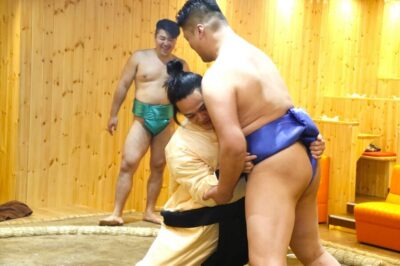 ★ 4.8Sumo Show Experience with Chicken Hot Pot and a PhotoFrom $1036,678 reviews
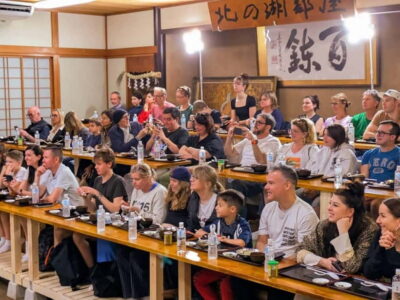 ★ 4.8Sumo Show and Dining ExperienceFrom $792,742 reviews
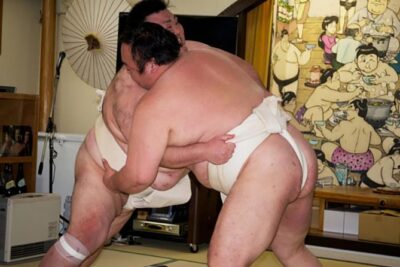 ★ 5.0the SUMO showFrom $891,960 reviews
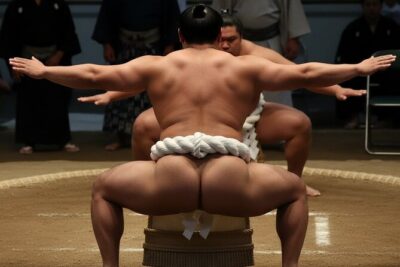 ★ 5.0Tokyo Shinjuku Sumo Show & Experience with PhotoFrom $791,750 reviews
 ★ 4.8Sumo Show and Experience in ShinjukuFrom $691,001 reviews
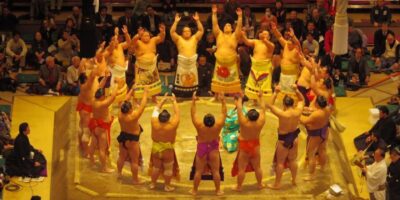 ★ 4.6Sumo Tournament Tour with Chair Seat TicketsFrom $141753 reviews
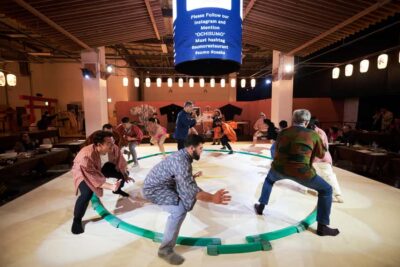 ★ 4.5Sumo Show & Experience w/ Optional Kimono & Hot PotFrom $77609 reviews
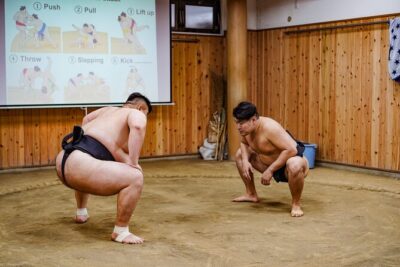 ★ 5.0Authentic Sumo Experience in Tokyo: Enter the SanctuaryFrom $171603 reviews
Filed on these lists too