
REVIEW · SUMO WRESTLING EXPERIENCES
Exclusive Sumo Morning Practice in Tokyo with Photo Opportunity
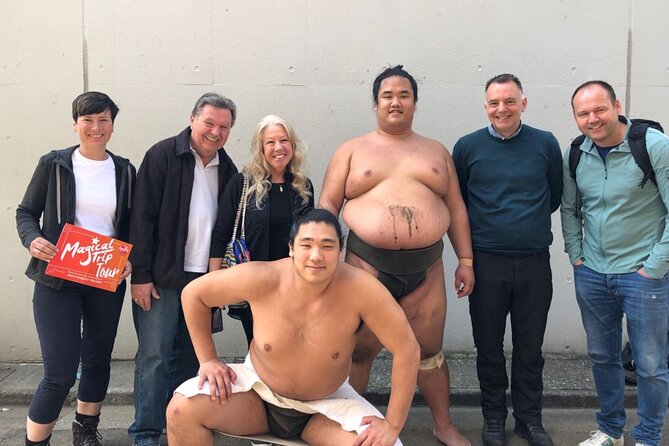
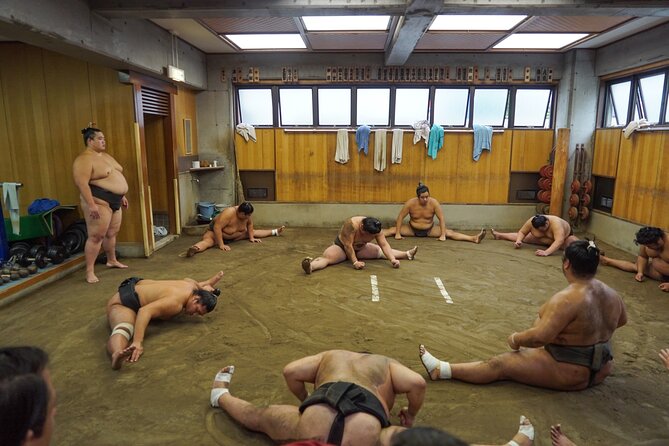
Sumo practice at 8:00 am feels unreal. This exclusive visit takes you into a working sumo stable for morning warmups and sparring, and you get a photo opportunity with wrestlers. It is one of those Japan experiences that most people never get to see, because the training happens off the public stage.
I love how small-group this is, with a max of 10 people, so the guide can actually explain what you are watching. The one drawback to note is seating is first come first serve, so arriving right on time matters if you want the front rows rather than 2 or 3 rows back.
In This Review
- Key highlights before you go
- Oshiage Station at 8:00 am, and why this timing works
- Your small-group setup, and how it shapes the experience
- Entering a Tokyo sumo stable: rules you must follow
- The morning practice itself: warmups, sparring, and real intensity
- Photo time with wrestlers: how to get great shots
- Your guide in English: what you gain beyond watching
- Price and value: is $99.10 for 2 hours reasonable
- What you should bring (especially in summer)
- Who should book this sumo morning practice
- Should you book this sumo morning practice?
- FAQ
- How long is the sumo morning practice tour?
- Where do we meet, and what time does it start?
- Is the group size limited?
- Can I take photos during the practice?
- Are there areas in the sumo stable that I cannot enter?
- Is the tour in an area that is easy to reach with transit?
- What should I bring for summer weather?
- Is there a cancellation option for a refund?
Key highlights before you go
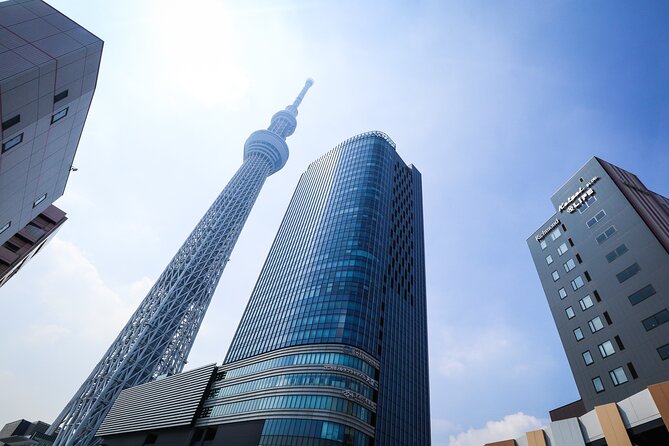
- Oshiage Station meeting point around Tokyo Skytree, with an early 8:00 am start
- Maximum 10 people in the stable area, for more personal guide time
- Morning practice access that is more about training than tournament spectacle
- Photo time and posing with wrestlers (within stable rules)
- Follow the stable boundaries, off-limits everywhere except the tatami areas
Morning practice or an evening show. Both reviewed
- Tokyo: Sumo Show and Dining Experience
★ 4.8 · 2,742 reviews - the SUMO show
★ 5.0 · 1,960 reviews - Tokyo Shinjuku Sumo Show & Experience with Photo
★ 5.0 · 1,750 reviews - Tokyo: Sumo Show and Experience in Shinjuku
★ 4.8 · 1,001 reviews
Oshiage Station at 8:00 am, and why this timing works
This tour is built for the morning, starting at 8:00 am at the taxi stand area inside Oshiage Station in Sumida City. You will be near public transportation, so you can plan your day without a long commute that eats your energy. The Skytree area is a good base because it is easy to connect to other parts of Tokyo after you are done.
Morning sumo is different from what most people picture. Instead of the bright, choreographed feeling of a tournament day, you see the wrestlers before the cameras and crowds. You get the rhythm of training, the focus, and the way they warm up as a unit. If you are a sports person, it is satisfying in a very practical way: you watch techniques being drilled and adjusted, not just performed for a match.
One more reason the timing matters is simple logistics. The stable experience is short, about 2 hours, and seating is first come first serve. That means you should treat the meeting time as real time, not a suggestion. If you arrive late, you can end up sitting further back, which makes photos less tight and details harder to catch.
Your small-group setup, and how it shapes the experience
With a maximum of 10 travelers, you are not trying to fight your way through a crowd. That changes everything in a stable setting, where space is limited and attention needs to be managed. You will also get more back-and-forth opportunities with the guide, especially for questions that pop up once you see the intensity up close.
The guide part is a big reason this tour feels worth the money. You are not just standing there watching bodies move. The explanations connect what you are seeing to the cultural meaning behind sumo practice. In the guide lineup, English-speaking guides like Kentake, Hana, and Yuki have been highlighted for clear explanations and a professional approach.
Small-group also helps with the photo moment. You are given time to photograph the wrestlers and to pose for pictures with them, but that only works smoothly when the group is not too large. You can expect more orderly transitions, less waiting, and better use of the limited time inside the stable.
Entering a Tokyo sumo stable: rules you must follow
Once you are at the stable, there is one safety rule that is not optional: all areas in the sumo stable are off-limits except the tatami (straw flooring) areas. That means you should keep your feet planted where you are directed and follow any boundary markers your guide points out.
This restriction is not there to be fussy. It is how the stable keeps training space respectful and protected. If people start wandering around, it disrupts practice and creates problems for the wrestlers. So the best way to enjoy the experience is to be calm, observe, and move only when your guide gives guidance.
You will also want to remember that this is still a working environment. You may feel the urge to rush for photos, but the stable setting works best when everyone stays patient. When you follow the rules, you get the best chance at getting good close-up views from your allowed area, without turning the whole visit into a chaos problem.
- Mt Fuji and Hakone 1-Day Bus Tour Return by Bullet Train★ 5.0 · 26,383 reviews
- 1-Day Tokyo Bus Tour★ 5.0 · 14,250 reviews
- Tokyo: teamLab Planets TOKYO Digital Art Museum Entry Ticket★ 4.6 · 9,779 reviews
- Mt Fuji & Hakone Cruise, Drum Show Bullet Train 1 Day from Tokyo★ 4.0 · 7,413 reviews
- Tokyo: Shinjuku Food Tour (13 Dishes at 4 Local Eateries)★ 5.0 · 6,603 reviews
The morning practice itself: warmups, sparring, and real intensity
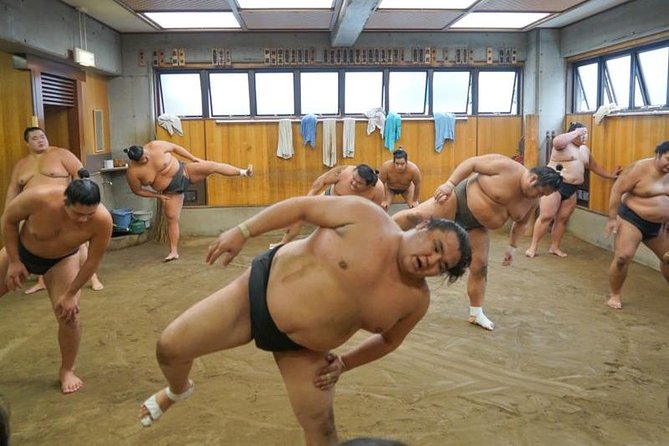
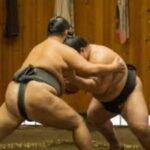
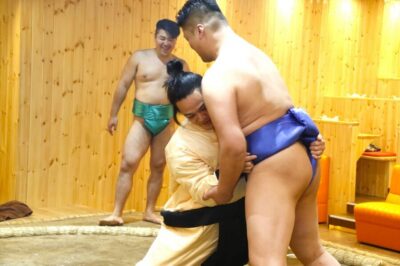
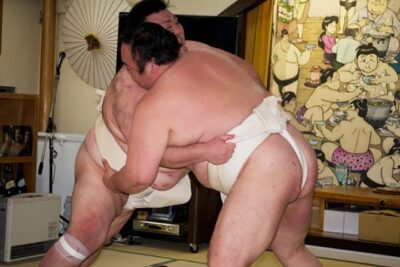
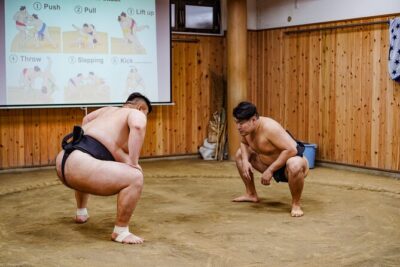
The core of the experience is the training session. You will see wrestlers warm up and spar with each other during morning practice. This is the part that tends to land with sports fans, because it is not a show put on for tourists. It is training, and the concentration shows.
From what you can expect, the intensity is very noticeable. The wrestlers stay focused, with quick bursts of action and then steady resets to refine timing and balance. You get the sense that they are young and strong, not in a casual way, but in the disciplined way you see in serious athletes across all sports. It can also surprise you if your mental image of sumo is outdated. The athleticism and control are the story.
The downside, if you are coming in expecting constant variety, is that training can feel repetitive. Practice involves repetition by design, so you might notice patterns as the session goes on. One hour can be enough for some people, and the remaining time can feel like more of the same, just with small changes. Still, if you pay attention, the small changes are where the value is: how they adjust grip, footwork, and posture as they move from warmup into sparring.
Photo time with wrestlers: how to get great shots
The tour includes a photo opportunity, with time to photograph the wrestlers and to pose for pictures with them. The practical trick here is to plan for limitations. Inside a stable, you are working with controlled space, allowed areas, and a short window where everyone wants photos.
So arrive ready to shoot. Bring your camera or phone charged, set it to a fast focus mode if you have it, and check your photo storage before you go in. Once you are on the tatami area, listen closely to your guide, because they will likely position you so you get shots without blocking anyone.
Also, keep your expectations realistic about angles. If you are in the back rows because you did not get there early, you can still get photos, but they may be less close. This is another reason to take the first come first serve seating note seriously. If your top priority is tight portraits, give yourself extra time to meet at Oshiage and get seated promptly.
Finally, keep the moment respectful. Use the time you have, capture what you want, then step aside when your guide signals. That keeps the mood good for everyone, including the wrestlers.
Your guide in English: what you gain beyond watching
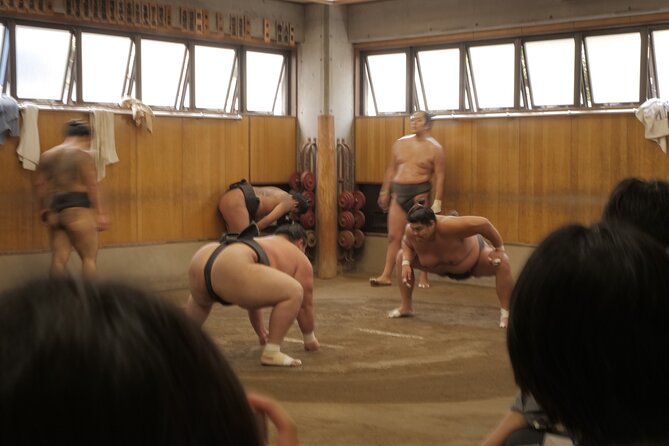
A sumo stable is fascinating, but it can also be confusing if you do not know the “why” behind the movements. This tour is designed to close that gap with a guide who explains the background and meaning of training.
Multiple guides have been praised for clarity and professionalism. Kentake has been described as sharing lots of information about sumo history and wrestlers, with fluent English that makes it easy to follow along. Hana is noted for being enthusiastic and knowledgeable about sumo practices. Yuki is praised for explaining context and emphasizing how serious training is, not just a staged performance.
What I think you will appreciate is that the explanations help you watch smarter. Instead of just seeing large bodies moving, you start noticing patterns: how balance gets trained, how sparring fits into the day’s plan, and why the rituals and rules matter even when no match is happening. That added context is what turns an interesting video into a memory you can actually understand later.
If you enjoy sports, this is also a learning experience. If you are more culture-focused, it still works, because sumo is both athletic and traditional. The guide ties those two sides together in plain language, which makes the experience feel grounded, not like a lecture.
Price and value: is $99.10 for 2 hours reasonable
At $99.10 per person for about 2 hours, this is not the cheapest thing on a Tokyo morning. But the value comes from access and time quality, not just from the duration.
Here is what you are paying for:
- Exclusive stable access to morning practice, which is not the same as watching a match at a public arena.
- A small group (max 10), so you are not lost in a crowd.
- A guide who explains what you are seeing in English.
- Photo time and posing opportunities.
If you have ever tried to “figure out” a working sumo stable on your own, you know how hard it can be to get something that is both respectful and well-timed. This tour simplifies that. You show up, you get placed, you follow the rules, and you get guided context without wasting time hunting for the right place and the right moment.
Could you spend less in Tokyo? Sure. But for a rare, training-based behind-the-scenes experience with photos, this price starts to make sense. It is basically buying a focused window of access, plus interpretation, plus help with logistics so your morning stays smooth.
What you should bring (especially in summer)
Japan summers can hit hard with heat and humidity, and the stable visit happens in the morning. Even then, you should prepare like it is warm outside because waiting and walking around stations can add up.
Bring:
- Water
- A hat to help prevent heat stroke
Also wear comfortable clothes and shoes you can stand in. You will likely spend time moving from the meeting point into the stable area and standing while the practice happens. Since the stable has off-limits areas, you should keep your posture and movement controlled, meaning practical footwear helps.
If you get easily flustered about meeting points, do yourself a favor and plan an easy visual. The start is at the taxi stand inside Oshiage Station, and the exact look of a station area can confuse you at first. Getting there a touch early makes everything calmer.
Who should book this sumo morning practice
This is a good fit if you want:
- Sports plus culture, not one or the other
- A short morning activity that still feels meaningful
- A small-group setup with guide explanations in English
- A photo opportunity that is part of the experience, not just a quick “one and done” stop
It may be less ideal if you need a long, varied agenda. The practice can be repetitive because training is repetition. You also need to be comfortable following stable rules about where you can stand.
Most people can participate, but you should keep in mind that the experience is based around tatami areas and off-limits zones. So it is not the kind of thing where you can wander freely or take detours for photos whenever you want.
Should you book this sumo morning practice?
Book it if you want a rare look at sumo training up close, with an English guide and organized photo time, in a group capped at 10. The best part is that you get the seriousness of the practice, not just a match-day spectacle, and the guide work makes it easier to understand why the wrestlers do what they do.
Skip or reconsider if you are trying to maximize variety in a short window. If your ideal Tokyo morning is constant change and big set pieces, training is more repetitive than that. But if your idea of a perfect experience is calm, focused, and close to the real sport, this one is hard to beat.
FAQ
How long is the sumo morning practice tour?
It runs for about 2 hours.
Where do we meet, and what time does it start?
You meet at the taxi stand inside Oshiage Station in Tokyo. The start time is 8:00 am.
Is the group size limited?
Yes. The activity has a maximum of 10 travelers.
Can I take photos during the practice?
Yes. There is a photo opportunity, including time to photograph the wrestlers and to pose for pictures with them.
Are there areas in the sumo stable that I cannot enter?
Yes. All areas are off-limits except the tatami (straw flooring) areas.
Is the tour in an area that is easy to reach with transit?
Yes. It is near public transportation.
What should I bring for summer weather?
Bring water and wear a hat, since summer in Japan is very hot and humid.
Is there a cancellation option for a refund?
You can cancel up to 24 hours in advance for a full refund. If you cancel less than 24 hours before the experience starts, the amount paid is not refunded.
Practice Rooms and Show Nights

Newest Tokyo write-ups from the Loving Japan desk

Sumo Wrestling Experiences, side by side.
 ★ 4.8Sumo Show Experience with Chicken Hot Pot and a PhotoFrom $1036,678 reviews
 ★ 4.8Sumo Show and Dining ExperienceFrom $792,742 reviews
 ★ 5.0the SUMO showFrom $891,960 reviews
 ★ 5.0Tokyo Shinjuku Sumo Show & Experience with PhotoFrom $791,750 reviews
 ★ 4.8Sumo Show and Experience in ShinjukuFrom $691,001 reviews
 ★ 4.6Sumo Tournament Tour with Chair Seat TicketsFrom $141753 reviews
 ★ 4.5Sumo Show & Experience w/ Optional Kimono & Hot PotFrom $77609 reviews
 ★ 5.0Authentic Sumo Experience in Tokyo: Enter the SanctuaryFrom $171603 reviews
Filed on these lists too