
REVIEW · HIROSHIMA AND MIYAJIMA DAY TRIPS
Hiroshima: Best of Hiroshima Guided Bike Tour
Hiroshima looks different when you ride through it. This guided bike route stacks major sights, quiet garden time, and respectful storytelling into one 3.5-hour loop. I like that you get a flat, easy ride with real access to places that are awkward to reach on foot.
The biggest drawback to plan around is the emotional weight at the Peace Memorial sites, plus the fact that the experience depends on weather. If you want a lighter pace the whole time, you might want to mentally prep yourself before you roll into Peace Park.
In This Review
- Key highlights before you pedal
- Why biking the City of Peace feels different than walking
- Meeting at Cycle Hiroshima HQ, bikes that fit, and a route that stays flat
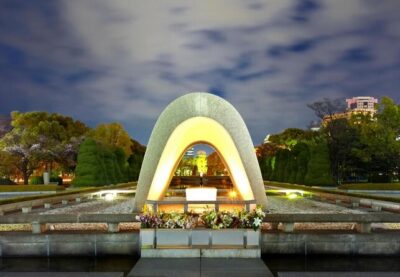
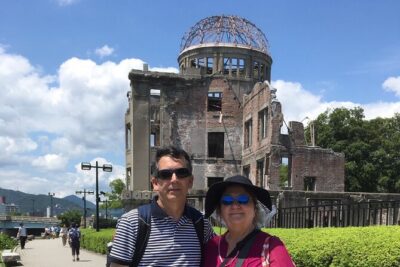
- Peace Memorial Park and the Atomic Bomb Dome, with time to ask questions
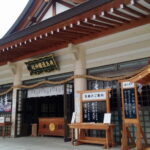
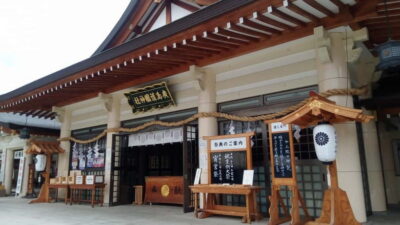
- Riding north to Gokoku Jinja, the Shinto contrast that changes the mood
- Hiroshima Castle grounds, samurai echoes on a modern city ride
- Shukkei-en Garden, why the Edo-style calm is the perfect ending
- Pacing, time on the saddle, and what 210 minutes really means
- Bikes, helmets, and who this tour is best for
- Price and value for a guided 3.5-hour bike tour
- Guides and the tone of the day, respectful storytelling you can ask about
- Practical tips so your ride is smooth
- Should you book this Hiroshima best-of bike tour?
- FAQ
- Where do I meet for the Hiroshima bike tour?
- How long is the guided bike tour?
- What’s included in the price?
- Is the cycling route flat and beginner-friendly?
- Which places does the tour visit?
- Who is this tour not suitable for?
- Is hotel pickup and drop-off included?
Key highlights before you pedal
- Peace Park to Atomic Bomb Dome with pauses for questions and photos
- Flat route for most abilities, with options like step-throughs and e-bikes
- Shinto and samurai-era stops beyond the usual Peace Park only route
- Hiroshima Castle grounds for a quick sense of the city’s older past
- Shukkei-en Garden entry included, a calm finish built in the Edo Period
Pairing the city with Miyajima. Other itineraries
- Hiroshima: Hiroshima and Miyajima UNESCO Sites 1-Day Tour
★ 4.9 · 2,330 reviews - Hiroshima / Miyajima Full-day Private Tour with Government Licensed Guide
★ 5.0 · 1,298 reviews - Hiroshima Historical Walking Tour – Why A-Bomb was Dropped
★ 4.8 · 893 reviews - Hiroshima Peace (Heiwa) Walking Tour at World Heritage Sites
★ 5.0 · 872 reviews
Why biking the City of Peace feels different than walking
In Hiroshima, you can feel the city’s memory and recovery faster when you are not stuck in traffic or spending your legs on long walks. A bike gives you a smooth line from place to place, and it makes short gaps of quiet time feel natural, not rushed.
I also really like that this tour does not treat the Peace Memorial area like a quick photo stop. You are guided through the monuments with context that helps you understand what you are looking at, then you get time to ask questions before you move on.
One more thing I appreciate: you get variety. The day includes Shinto space at Gokoku Jinja, a look around Hiroshima Castle grounds, and then a garden built for slow strolling. If you only focus on Peace Park, Hiroshima can start to feel one-note. This ride keeps it balanced.
Meeting at Cycle Hiroshima HQ, bikes that fit, and a route that stays flat
You start at Cycle Hiroshima HQ, the shop with the big Cycle Hiroshima sign out front. Arrive with a little buffer so you can do the quick orientation and bike fitting without feeling rushed.
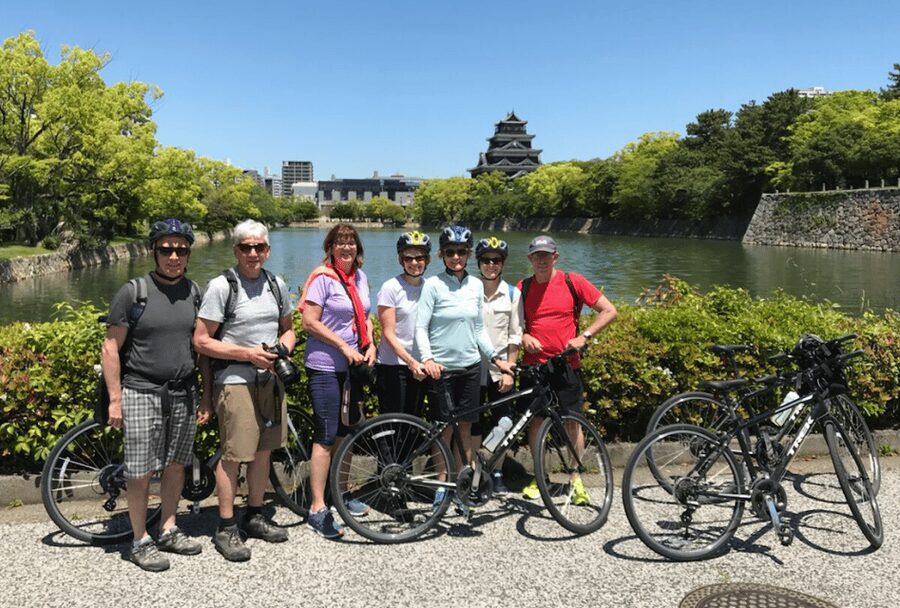
The route is designed to be flat and rider-friendly. That matters because Hiroshima is not a place you want to fight uphill fatigue while you are trying to absorb serious history. The tour also offers a range of bikes, including Trek models, plus step-through bikes, e-bikes, and child-sized options, so you can match the bike to your comfort.
I like that you also get a helmet and bottled water. Small things, yes, but when you are cycling for a few hours, they help you focus on the experience rather than the logistics.
A practical note: bring comfortable shoes and comfortable clothes. You are not doing a fashion show here. You will want fabric that handles warm weather, cool weather, and the kind of stop-and-start rhythm that happens when a guide is sharing details at each stop.
Peace Memorial Park and the Atomic Bomb Dome, with time to ask questions
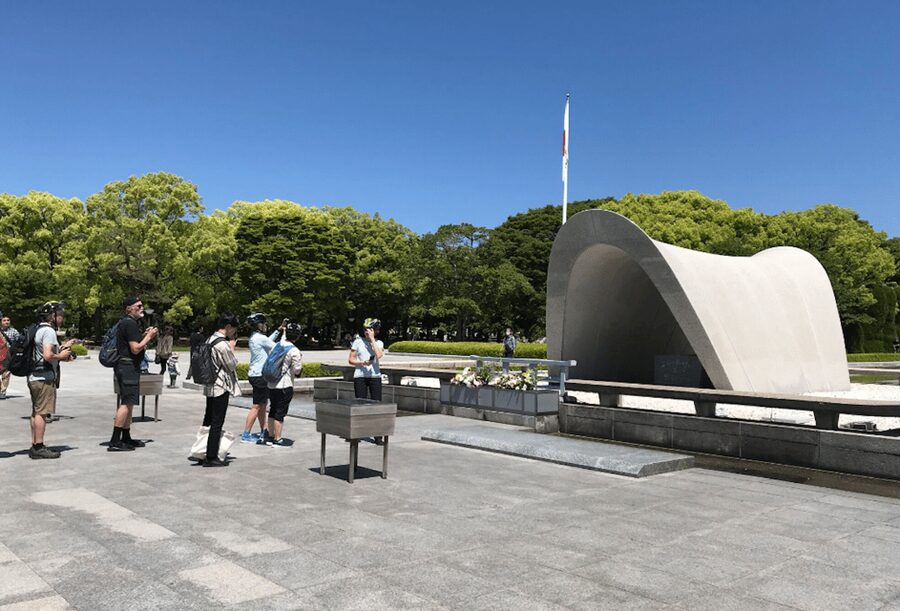
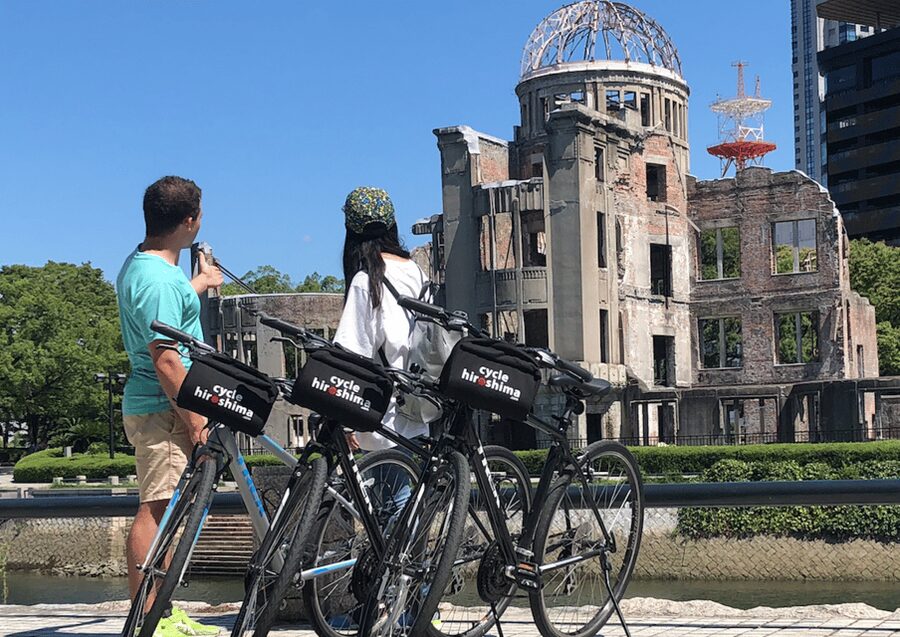
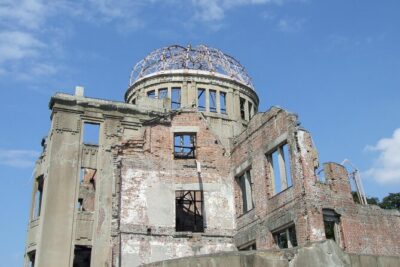
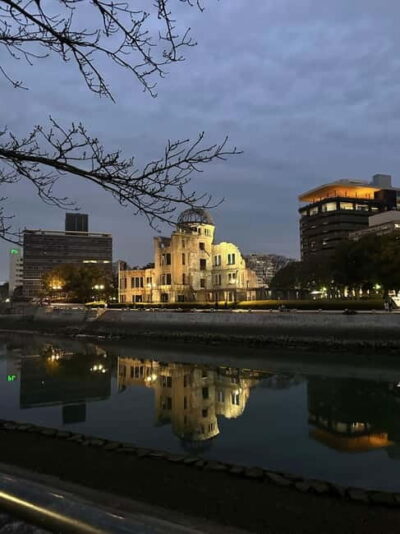
After your fitting and a relaxed riverside ride, you arrive at Hiroshima’s Peace Memorial Park area, the emotional core of the city. This is where the tour visits several key monuments connected to August 6th, 1945, and where you spend time at the Atomic Bomb Dome, a UNESCO World Heritage Site.
What makes this part work is pacing plus respect. You are not just guided along the perimeter. Your guide talks through what happened, what you are seeing now, and how the city has transformed into a place dedicated to peace. Then there is time to ask questions, which is huge because the Dome and surrounding structures raise real, personal questions for most people.
I especially like that the tour encourages you to absorb the place before you move. Even if you have read about the bombing before, standing here tends to shift how the story lands. From there, you roll onward with a guided thread that keeps the rest of the day from feeling disconnected.
If you do not handle heavy topics well, plan your mental energy. This part is not background music. It is the main event.
Cover Hiroshima on two wheels instead
- Hiroshima 2hr Peace Cycling Tour with Local Guide★ 5.0 · 321 reviews
- Hiroshima 3hr Peace Cycling Tour with Local Guide★ 5.0 · 131 reviews
- Hiroshima: Best of Hiroshima Guided Bike Tour★ 4.9 · 89 reviews
Riding north to Gokoku Jinja, the Shinto contrast that changes the mood
Once you leave Peace Memorial Park, the ride continues north to Gokoku Jinja, described as the most popular Shinto shrine in Hiroshima. The contrast is striking in a useful way. You go from global tragedy and remembrance to a living religious site that has been part of Hiroshima life for a long time.
The tour’s format helps you keep moving while still having context. You do not sit through a long lecture, but you also do not rush through the shrine with no framework. You get to see how Hiroshima’s cultural and spiritual landscape fits alongside its memorial landscape.
This stop is also a reminder that Hiroshima is not frozen in 1945. It is a functioning city with daily rhythms, and the shrine gives you a glimpse of that continuity.
Hiroshima Castle grounds, samurai echoes on a modern city ride
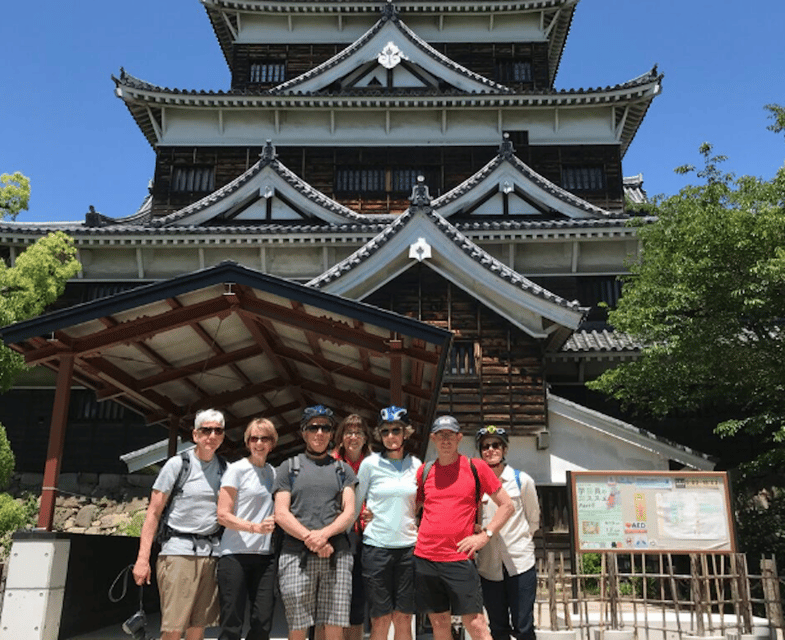
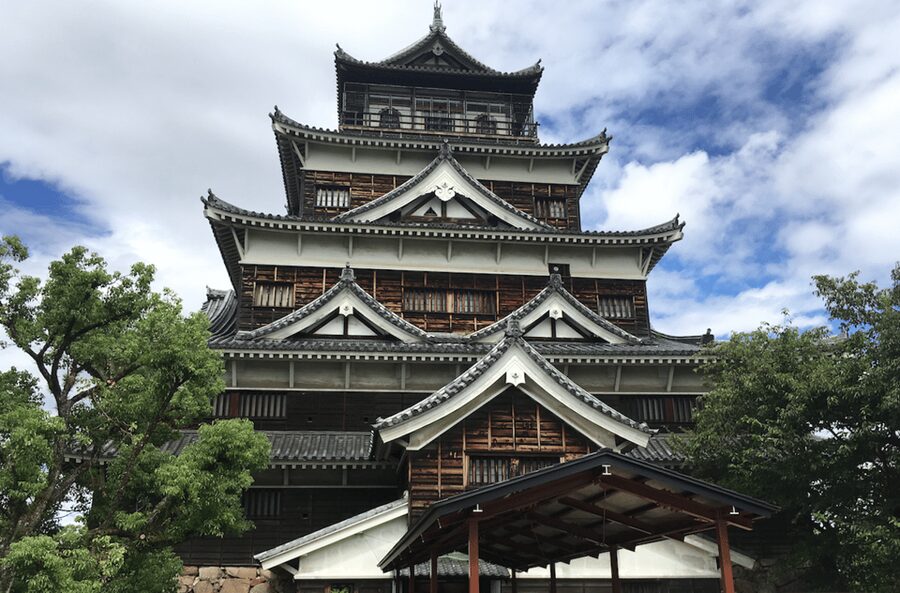
From Gokoku Jinja, you continue through the grounds of Hiroshima Castle. You are not just looking at a landmark from the outside, you are getting a glimpse into the samurai-era atmosphere people associate with Japanese castles.
The castle stop is brief compared to Peace Park, so treat it as a perspective switch. The guide’s storytelling helps connect why castles matter in Japan, and what it means to see that kind of history after the city’s modern transformation.
Cycling also changes how the castle feels. Instead of approaching by a single straight road or a set of crowded viewpoints, you arrive from the flow of neighborhoods. That is often the difference between seeing a place and actually getting oriented in it.
Shukkei-en Garden, why the Edo-style calm is the perfect ending
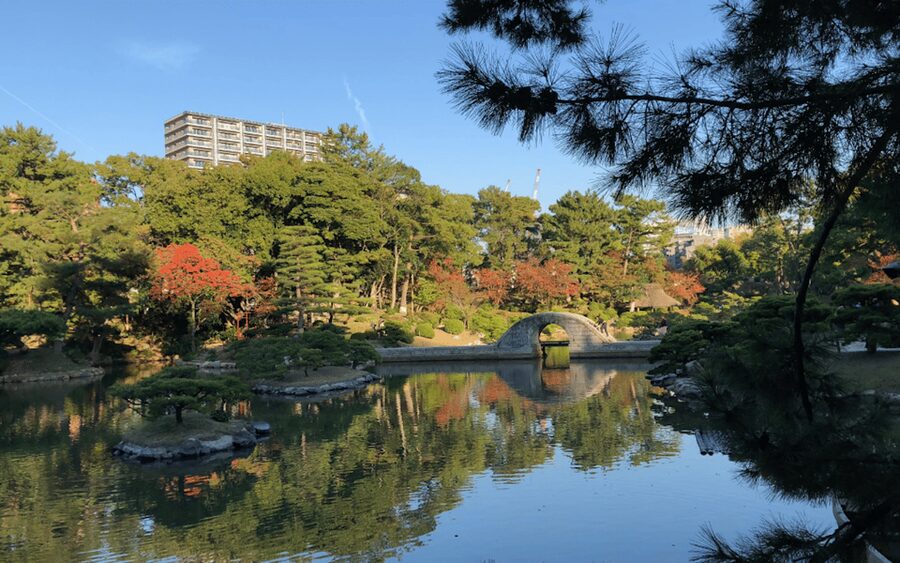
Your final major stop is Shukkei-en Garden, built in the Edo Period and regarded as the most beautiful traditional garden in Western Japan. This garden is included, so you do not have to budget or queue for the ticket while the day is already full.
If Peace Park gives you the hard facts and emotional context, Shukkei-en gives you the release valve. Gardens in Japan are not just pretty scenery. They are designed for pacing, viewpoints, and a kind of quiet attention that makes you slow down naturally.
I like that the tour ends here because it lets the story settle. You finish the day not with another monument, but with space to breathe and reflect.
Some guides also add extra time for photos and small pauses, which works well in a garden setting where you want to look up, not just forward.
Pacing, time on the saddle, and what 210 minutes really means
The tour runs 210 minutes, so you are out for a half-day block. That sounds long until you ride it. With setup, cycling, and multiple stops, the time adds up quickly, but the pace stays gentle because the route is flat and designed for an easy ride.
From guides and riders who have done the tour, you can expect something like around 10 km of riding on a hot day. Stops and photo breaks stretch the schedule, but they also keep you from feeling like you are simply being transported from one point to another.
It is also worth noting that this tour keeps things small. The tour info limits the group to 8 participants. In practice, that size makes it easier for a guide to check that everyone is comfortable on their bike and ready before moving to the next stop.
This is not a race. It is a guided circulation through Hiroshima’s most important memories and a few cultural anchors, with enough time for questions that you do not feel like you are just collecting stamps.
Bikes, helmets, and who this tour is best for
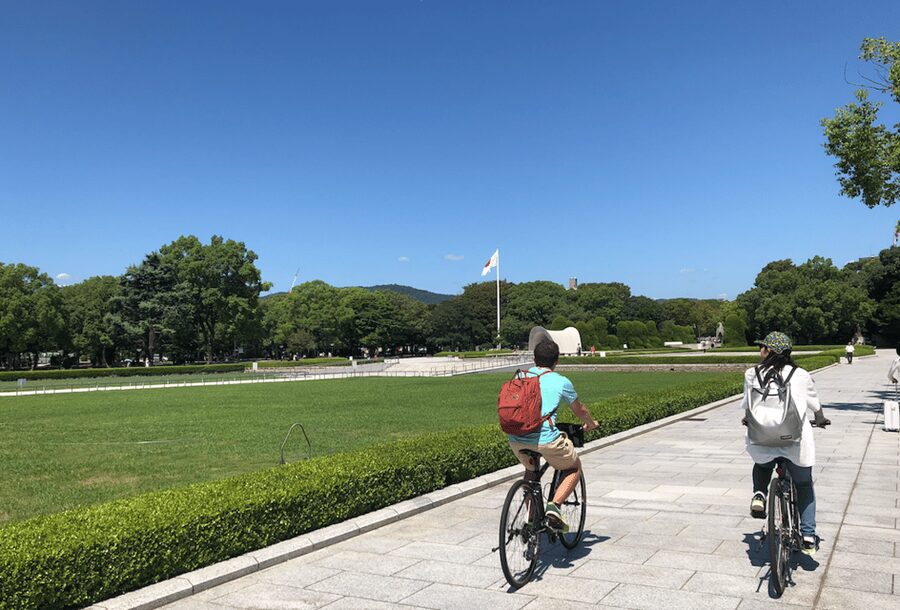
The bikes are described as high quality, and you get a helmet and bottled water. Helmets matter here, because even on flat routes you are mixing with city spaces. You are also more likely to feel confident when your bike fits well.
The tour is designed for people who can ride a bike comfortably. It is not aimed at people who want to learn from scratch. If you have not biked in years, you might feel fine on a flat route, but you will still want coordination and balance.
There are also clear limits. The experience is not suitable for children under 12, pregnant women, people with back problems or heart problems, people under 140 cm (4 ft 6 in), or anyone with pre-existing medical conditions. If any of those apply, skip this and choose a different way to see Hiroshima.
Good fits tend to be:
- Visitors who want the big Hiroshima sights without spending your whole day on foot
- People comfortable cycling on city paths, even if you are not a cyclist
- Anyone who wants guided context at Peace Memorial Park, not just a self-guided loop
Price and value for a guided 3.5-hour bike tour
At $70 per person, this is not a bargain-basement activity. But it also is not a generic city bus tour in costume. You are paying for a few things that are hard to DIY in a short time: a small-group guide, a fitted bike and helmet, bottled water, and included entry to Shukkei-en Garden.
Also, you are buying time. In one afternoon you get Peace Park, Atomic Bomb Dome, Gokoku Jinja, Hiroshima Castle grounds, and the Edo Period garden. If you were to try doing that by transit, you would spend more time waiting, walking, and reorienting than you would like.
The other value factor is safety and comfort. Reviews describe routes that often avoid busy road segments, plus regular pauses on hot or rainy days. Even if you are an occasional cyclist, this structure helps you see more without feeling stressed about getting between locations.
If you have only a day or two in Hiroshima, this tends to make financial sense because it compresses the best “you should not miss this” sights into one efficient loop.
Guides and the tone of the day, respectful storytelling you can ask about
A big part of why people love this tour is how the guides tell the story. Names that have led recent departures include Miyu, James, Hasan, Aimee, Ehsan, Levi, Melissa, Sage, Alex, Awais, Ali, and more. Across those different guides, one pattern shows up again and again: careful explanation at stops, room for questions, and a tone that treats the memorial sites with seriousness.
That matters because Peace Memorial Park is not a place where you want a loud, throwaway approach. You want someone who can explain what you are looking at, while also acknowledging the human weight of the topic.
If you care about nuance, you will probably appreciate how some guides share perspectives beyond a single viewpoint, prompting you to think rather than just absorb facts. You also get a practical benefit: your guide helps you understand why Hiroshima looks the way it does today, including how parts of the city were preserved and how the city rebuilt its identity.
If you want your tour photos to come out better, you may be offered help taking them. Several guides are described as taking photos or videos during stops, which is a real quality-of-life upgrade if you are traveling as a couple or solo.
Practical tips so your ride is smooth
Here is how I’d prep if you want this to feel easy, not effortful.
Wear comfortable clothes you can move in. Bring shoes you can stand in briefly at each stop. And plan to slow down mentally when you hit Peace Memorial Park, because it is the emotional center of the route.
Arrive early enough to get your bike properly fitted. Several riders stress that the setup phase makes the rest of the ride feel effortless. If you are tempted to show up at the last second, resist. A good fit means less awkward pedaling and fewer mid-route adjustments.
If the day is hot, expect more frequent short breaks. Guides appear to build in pause time based on conditions, including time to cool down and to take photos without rushing the explanation.
If weather is bad enough to cancel, the tour info says you’ll be offered a different date or a full refund. That is worth considering when you plan the rest of your Hiroshima schedule, especially if you have limited time.
Should you book this Hiroshima best-of bike tour?
I think you should book if you want an efficient way to see the highlights of Hiroshima without turning your legs into a full-time job. The mix of Peace Memorial Park plus Atomic Bomb Dome, cultural stops like Gokoku Jinja, and the calm ending at Shukkei-en Garden makes this a strong “great first day” option.
I would not book if you are sensitive to heavy subject matter and you need your sightseeing to stay light the whole time. Also, skip it if any of the medical or mobility limits apply, or if biking for a few hours is not realistic for you.
If you are a first-time visitor and you want a guided route that gives you both historical context and an easy ride, this tour is one of the best uses of a half-day in Hiroshima. It gets you oriented fast, with time to ask questions, then lets you finish in a place meant for quiet.
FAQ
Where do I meet for the Hiroshima bike tour?
You meet at Cycle Hiroshima HQ. The shop has a big Cycle Hiroshima sign at the front.
How long is the guided bike tour?
The tour duration is 210 minutes, which is about 3.5 hours.
What’s included in the price?
The tour includes an English-speaking guide, high quality bike and helmet rental, bottled water, and entry to Shukkei-en Garden.
Is the cycling route flat and beginner-friendly?
The route is described as completely flat, and it is suitable for anyone who can ride a bike. The tour also offers different bike options, including step-throughs and e-bikes.
Which places does the tour visit?
You’ll visit Peace Memorial Park, the Atomic Bomb Dome, Gokoku Jinja, Hiroshima Castle grounds, and finish at Shukkei-en Garden.
Who is this tour not suitable for?
It is not suitable for children under 12, pregnant women, people with back problems, people with heart problems, people under 140 cm (4 ft 6 in), and people with pre-existing medical conditions.
Is hotel pickup and drop-off included?
No. Hotel pickup and drop-off are not included.
Bicycles and E-Bikes We Have Ridden

Hiroshima and Miyajima Together
Newest Hiroshima write-ups from the Loving Japan desk
Hiroshima and Miyajima Day Trips, side by side.
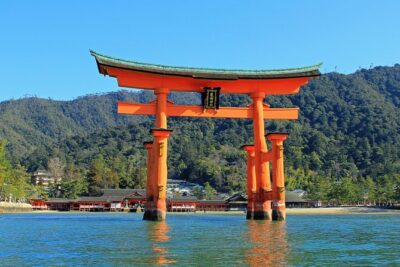 ★ 5.0Peaceful Hiroshima & Miyajima UNESCO 1 Day Bus TourFrom $1295,309 reviews
 ★ 4.9Hiroshima and Miyajima UNESCO Sites 1-Day TourFrom $1222,330 reviews
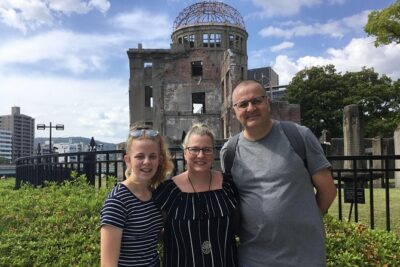 ★ 5.0Hiroshima / Miyajima Full-day Private Tour with Government Licensed GuideFrom $2021,298 reviews
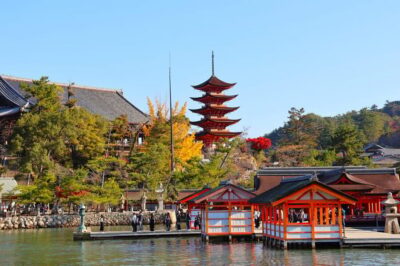 ★ 4.7Osaka/Kyoto: Hiroshima Miyajima Bus Tour & Shinkansen TicketFrom $277919 reviews
 ★ 4.8Hiroshima Historical Walking Tour – Why A-Bomb was DroppedFrom $35893 reviews
 ★ 5.0Hiroshima Peace (Heiwa) Walking Tour at World Heritage SitesFrom $94872 reviews
 ★ 5.0Hiroshima in a Nutshell: Morning Bike AdventureFrom $72524 reviews
 ★ 5.0Hiroshima City 4hr Private Walking Tour with Licensed GuideFrom $122437 reviews
Filed on these lists too