
REVIEW · HIROSHIMA AND MIYAJIMA DAY TRIPS
Hiroshima 2hr Peace Cycling Tour with Local Guide
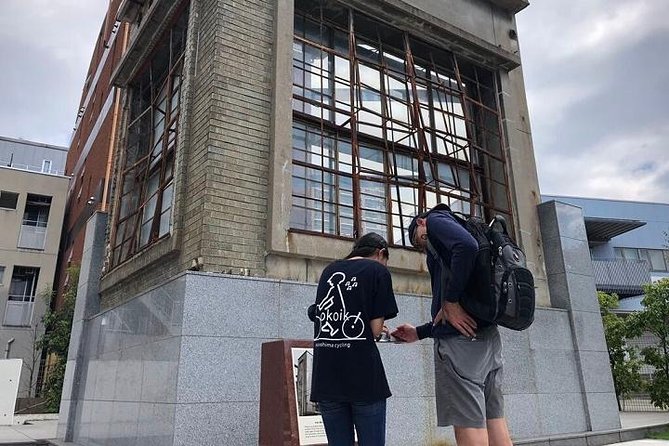
One brisk ride through Hiroshima Peace Park can change you. This 2-hour Peace Cycling Tour mixes UNESCO sights with local stories, including guide Shin’s family perspective and Kana’s personal, city-raised insights. I especially loved how easy the electric bikes made it, and how the guide pointed out details you’d likely miss if you just wander on your own.
You also get to see the A-Bomb Dome area in a way that feels more like a lived city than a photo spot. You’ll bike past major memorials (not only the usual stops), and your guide ties it all to Hiroshima then and now. The only real caution, besides the emotional topic, is that you’ll need to pedal and steer a bike safely, and the tour can shift or switch to walking if weather turns.
In This Review
- Quick hits before you book
- Entering Hiroshima Peace Park by electric bike
- Start point and first 5 minutes at the Rest House
- UNESCO Peace Memorial Park, 55 minutes of guided meaning
- Seeing the A-Bomb Dome from smarter city viewpoints
- The memorials you’ll bike past, not just look at
- A short ride into Hiroshima’s living city
- Rainy day options that still keep the message intact
- Price and value: what $59.69 buys you
- Logistics that can make or break a smooth ride
- What a great guide does here
- Who this 2-hour peace cycling tour suits best
- Should you book this tour?
- FAQ
- How long is the Hiroshima peace cycling tour?
- Where does the tour start and end?
- What major sites will I see during the ride?
- Are museum or site admission tickets included?
- What happens if it rains?
- Are electric bikes used, and who can ride them?
- What if I’m late to the meeting point?
Quick hits before you book
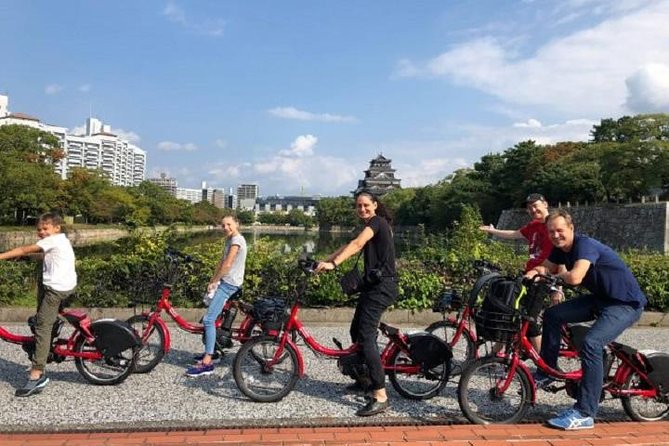
- Small group, up to 10 people, so you’re not stuck in a giant crowd loop
- Electric bikes keep the ride relaxed and smooth, even in cool weather
- Peace Park is guided beyond the museum, so you connect the monuments to what people actually lived through
- A-Bomb Dome viewpoints off the main path, not just one single angle
- A short city ride too, with local context that goes beyond the memorial zone
- Rain plan is built in, with a walking option that still hits key sites
Pairing the city with Miyajima. Other itineraries
- Hiroshima: Hiroshima and Miyajima UNESCO Sites 1-Day Tour
★ 4.9 · 2,330 reviews - Hiroshima / Miyajima Full-day Private Tour with Government Licensed Guide
★ 5.0 · 1,298 reviews - Hiroshima Historical Walking Tour – Why A-Bomb was Dropped
★ 4.8 · 893 reviews - Hiroshima Peace (Heiwa) Walking Tour at World Heritage Sites
★ 5.0 · 872 reviews
Entering Hiroshima Peace Park by electric bike
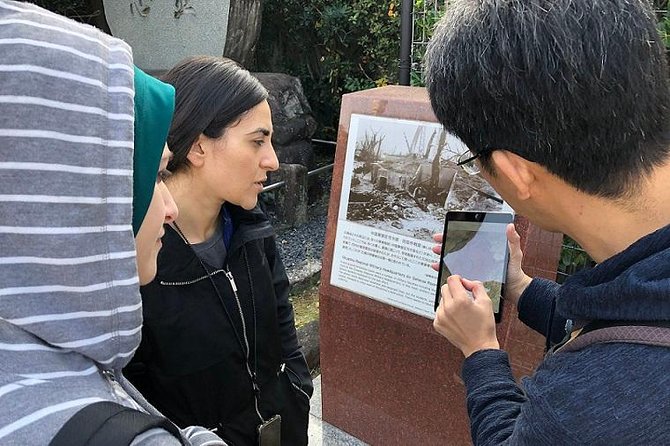
This tour is built around a simple idea: you get the emotional weight of the Peace Memorial sites, but you move under your own steam on a bike. That changes the feel right away. Walking can be quiet and heavy, and the museum can be closed indoors, but cycling lets you keep a steady pace while the guide keeps the story connected to real places.
You’ll start at the Hiroshima Peace Memorial Park Rest House, then ride through the UNESCO Peace Memorial Park zone and beyond. It’s still respectful and serious, but the electric bikes make the “getting there” part surprisingly enjoyable. In the reviews, guides like Shin and Kana stood out for answering hard questions and sharing personal family connections, which is why this isn’t just a checklist tour.
Start point and first 5 minutes at the Rest House
Your meeting point is the Hiroshima Peace Memorial Park Rest House at Nakajimacho 11, Hiroshima. The schedule lists two start times, 11:00 and 15:00, and you’ll meet there about five minutes before the main ride begins.
That first stop is short and includes no admission ticket. It’s basically where you confirm you’ve got the right bike and where your guide sets expectations for pace and route. If you’re coming from the city center, you’ll find it convenient because the meeting area is near public transportation.
One practical note: the tour uses a mobile ticket, and confirmation is received at booking. Plan on arriving a few minutes early so you’re not stressed about bike adjustments. If you show up late without prior notice, the tour can be cancelled and you could face a fee on the day, so build in buffer time.
UNESCO Peace Memorial Park, 55 minutes of guided meaning
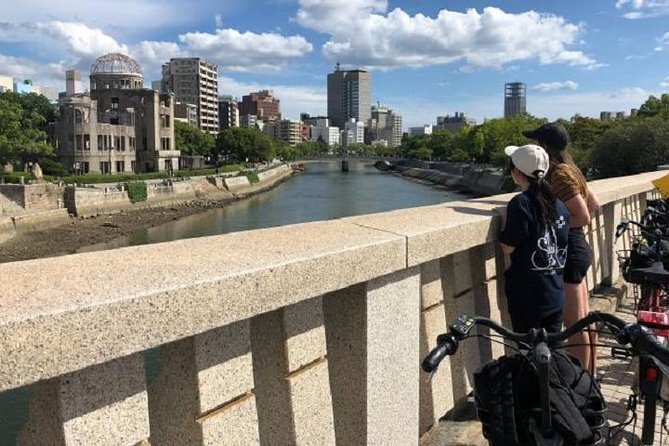
The heart of the tour is Hiroshima Peace Memorial Park. You’ll spend about 55 minutes here, and the park time notes that admission is not included for this segment. In practice, the main value is the guided interpretation, since you’re not just seeing monuments, you’re hearing what memories are stored in them and what happened 70 years ago.
Expect your guide to help you read the space. The Peace Park isn’t arranged like a normal sightseeing park. Each monument points you toward a specific piece of the story, and your guide connects them so you don’t feel like you’re just looking at symbols.
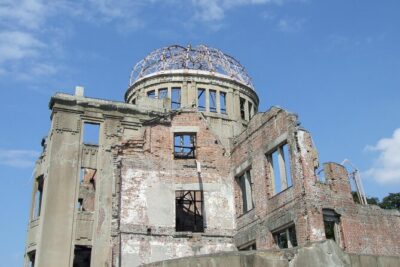
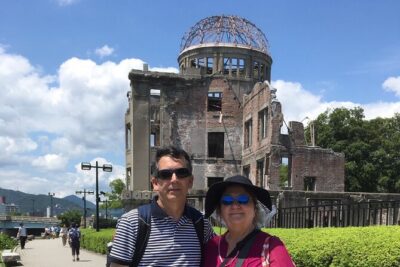
Even if you’ve seen photos of the A-Bomb Dome, I’d still do this part. You learn where the dome fits into the overall memorial layout, and you get a sense of how the city and the memorials are intertwined.
Cover Hiroshima on two wheels instead
- Hiroshima 2hr Peace Cycling Tour with Local Guide★ 5.0 · 321 reviews
- Hiroshima 3hr Peace Cycling Tour with Local Guide★ 5.0 · 131 reviews
- Hiroshima: Best of Hiroshima Guided Bike Tour★ 4.9 · 89 reviews
Seeing the A-Bomb Dome from smarter city viewpoints
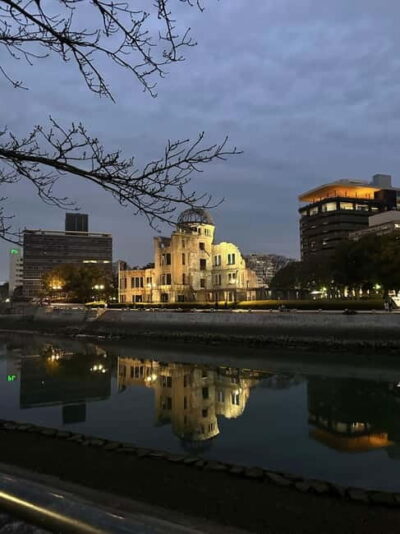
The tour highlights include seeing the A-Bomb Dome from city viewpoints off the main path. That matters because if you only look from one spot, you miss how the dome sits inside Hiroshima’s geography and everyday street life.
One of the strongest things I took from guides in the reviews is that they don’t treat the dome like a museum exhibit. Guides such as Tomas and Bella were praised for making the history feel personal, with family stories that tie the monument to a human timeline rather than a textbook timeline. This is where the cycling helps, because you’re moving through the viewpoints as the guide builds the context.
You’ll also hear about the bomb’s impact on Hiroshima’s inhabitants, then and now. That “then and now” framing is important. It keeps the story from freezing in 1945 and helps you understand why Hiroshima pushes for peace today.
The memorials you’ll bike past, not just look at
The route is designed to hit the key memorials within the UNESCO site. From the tour overview, you’ll go to stops including:
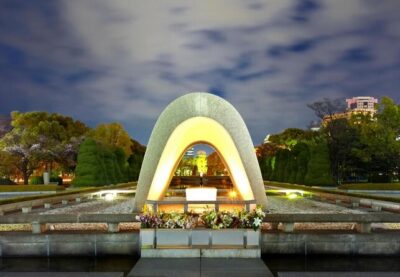
- The Cenotaph
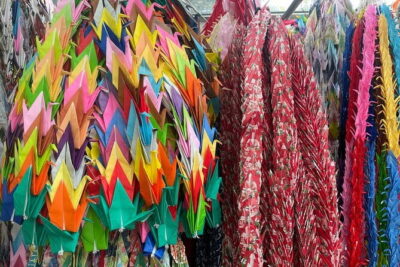
- Children’s Peace Monument
- The Peace Bell
- Plus the A-Bomb Dome viewing elements around the park
Even though the itinerary list is structured around time blocks, the practical takeaway is that you’re getting a guided loop through the main peace memorial points, with an interpreter who can tell you what each site is trying to communicate. That’s exactly the kind of value that’s hard to replicate with self-guided wandering, because the monuments are powerful but not always self-explanatory.
The reviews back up this point repeatedly: people loved how guides kept things moving well while still giving in-depth explanations at each place. Kana was repeatedly mentioned for excellent English, fast answers to questions, and for giving context people felt they couldn’t get just by reading signs.
A short ride into Hiroshima’s living city
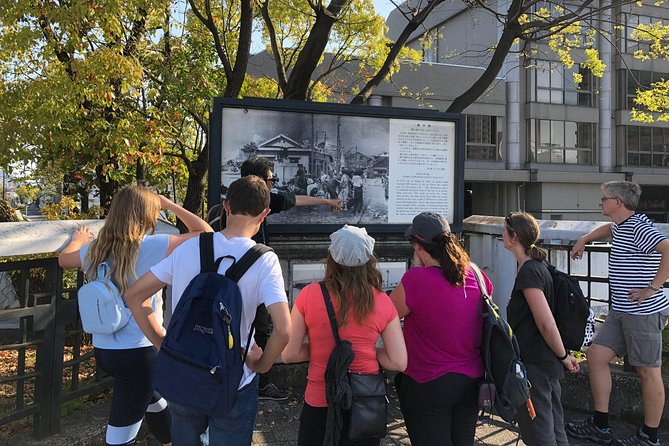
After the Peace Park segment, the tour shifts from the memorial core into a ride around Hiroshima. The schedule shows about one hour for this part, starting around 12:00 in the morning or 16:00 in the afternoon.
One specific detail the guide brings up is the story of the A-bombed streetcars, described as a train that still runs today that survived the atomic bombing. Your guide will show you Hiroshima’s townscape and help connect what you’ve just learned to what the city looks like now.
This is where the tour feels like more than a solemn walk. You’re not only absorbing tragedy. You’re also seeing reconstruction and daily life. In the reviews, that balance shows up again and again, with people calling it both fun and serious, and praising the way guides wove personal anecdotes into factual history.
Also, because Hiroshima is relatively easy to navigate compared with mega-cities, biking feels manageable. The route is designed for small-group pacing, and even people who aren’t daily cyclists reported that the ride is manageable, especially with the electric assist.
Rainy day options that still keep the message intact
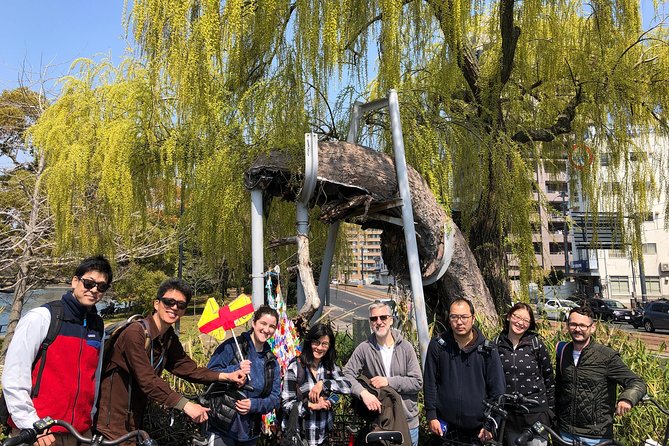
This tour requires good weather, so don’t assume you’ll bike no matter what. If rain disrupts the plan, you’ll have choices.
One listed alternative is a Rainy Day Limited Peace Route. It still focuses on major sites, with a sequence that includes Peace Memorial Park, the Atomic Bomb Dome, Hypocenter, Former Bank of Japan, Fukuromachi Elementary School, and the Main street area. That route ends earlier (around 13:00 or 17:00, depending on your start time).
If the conditions are unsafe for cycling, you can also switch to a walking tour for rainy days only, centered around the hypocenter area and walking radius of about 0.5 km to 1 km. So you still get the key ground-level experience, just without the bike.
That flexibility is a real practical benefit. You’re less likely to end up with a wasted half-day if weather turns ugly.
Price and value: what $59.69 buys you
At $59.69 per person, this tour isn’t cheap in the “just tickets” sense. But it is strong value if you factor in what you get: an electric bike, a local guide for two hours, and a route that covers the Peace Park plus city-context stops without you having to plan the connections yourself.
Small group size matters here. Up to 10 people means you’re more likely to ask questions and get specific answers. The reviews repeatedly mention guides like Shin, Kana, Mimi, Bella, and Tomas for being thoughtful, energetic, and able to answer questions. That human factor is hard to quantify, but it changes how the sites land.
Also, admission coverage isn’t fully uniform. The schedule flags the Peace Memorial Park portion as “admission ticket not included,” while other segments like the Rest House meeting are free. So your total cost may depend on what you personally need to pay at sites. Still, the guided interpretation is the main product you’re paying for, and that’s where the reviews focus their praise.
Finally, electric bikes reduce friction. You’re not thinking about gear, hills, or endurance. That matters because this is a tour where you want your attention on the story, not on whether your legs are going to survive.
Logistics that can make or break a smooth ride
Bikes are available to most travelers, but there are specific requirements. The adult electric bicycle requires a height of 145 cm or more. There are also children’s bikes for kids with height between 110 cm and 145 cm, and the tour notes different rules for child seating weight and under-22 kg, under-115 cm.
If you’re traveling as a family, this can be good news. The tour allows two children’s bicycles* for one booking, and children under 15 can use adult bikes at the child rate if they meet height needs.
On top of that:
- The group is a mixed tour up to 10 people, and the pace can be adjusted for guests not accustomed to cycling.
- Free Wi-Fi is not provided on the tour, but Hiroshima Free Wi-Fi is available around the city.
- Luggage storage isn’t available at the Rest House, but there are coin lockers at the International Conference Center Hiroshima and Hiroshima Peace Memorial Museum, about a 6-minute walk away.
For me, the key takeaway is simple: bike comfort and safety come first. Wear something you can move in, and keep your phone accessible for photos, since you’ll be given data of photos taken on the day.
What a great guide does here
This tour rises and falls on the guide, and the pattern in the reviews is very clear. People loved when guides shared real family connections and local perspective, like Shin, described as connected to survivors through his family, and sharing how his family lived the events or related generational stories. Kana and Bella were praised for personal anecdotes tied to factual context and for having English skills that kept the whole group following.
You also get something less common in standard sightseeing: the ability to ask questions and get direct answers. The guides are praised for keeping things moving while still giving enough time and attention at each stop. That’s a delicate balance on a tour that is both emotional and educational, and it’s exactly why this feels worth doing even if you’ve already seen the dome area.
Who this 2-hour peace cycling tour suits best
This fits best if you want:
- A small-group peace experience with more than one viewpoint
- A guide who can explain the meaning of the monuments and how Hiroshima rebuilt
- An easier ride thanks to electric bikes
- A mix of solemn history plus a look at Hiroshima today
If you’re the type who gets more from walking explanations than reading signs, this is a strong choice. If you already did the Peace Museum, you’ll still benefit because the tour focuses on places and connections around the park and beyond. If you’re sensitive to the topic, treat it seriously and plan for an emotional couple of hours, but remember you’re also walking toward a message of peace with the city as a living backdrop.
Should you book this tour?
I think you should book it if you want to understand Hiroshima beyond the obvious photo stops, and you value hearing stories from people who grew up here. The electric bike makes it practical, and the route gives you multiple memorial touchpoints plus a bit of city context.
I’d skip it or choose another option if you strongly prefer a quiet self-paced visit only, or if you’re not comfortable riding an adult or children’s bike even with electric assistance. This tour is designed to be approachable, but it still requires you to ride and keep up with a small-group pace.
If you’re in Hiroshima for a short time and want a high-impact, well-guided experience in about two hours, this one is a very smart use of your time.
FAQ
How long is the Hiroshima peace cycling tour?
It lasts about 2 hours.
Where does the tour start and end?
It starts at the Hiroshima Peace Memorial Park Rest House and ends back at the same meeting point.
What major sites will I see during the ride?
You’ll cycle around Hiroshima Peace Memorial Park and go to areas including the A-Bomb Dome viewpoints, the Cenotaph, Children’s Peace Monument, and the Peace Bell.
Are museum or site admission tickets included?
The itinerary shows admission ticket free for the Rest House meeting, and it lists the Peace Memorial Park portion as not included. The other listed segment shows admission ticket free.
What happens if it rains?
If the tour can’t be held due to rain, you can choose a Rainy Day Limited Peace Route or a refund. The provider can also switch to a walking tour for rainy days only, focusing on the hypocenter area.
Are electric bikes used, and who can ride them?
Adult electric bikes require a height of 145 cm or more. Children can use children’s bicycles for heights 110 cm to 145 cm, with additional rules about child seating weight and height.
What if I’m late to the meeting point?
If you are late for the meeting time without prior notice, the tour will be cancelled and a 100% cancellation fee will be incurred on the day of the tour and is non-refundable. The provider may also cancel due to other guests’ circumstances.
Bicycles and E-Bikes We Have Ridden


Hiroshima and Miyajima Together
Newest Hiroshima write-ups from the Loving Japan desk
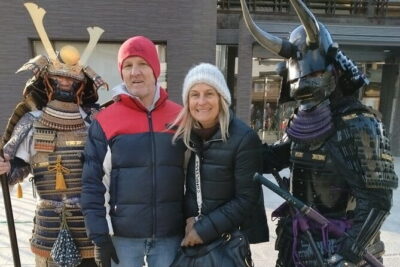
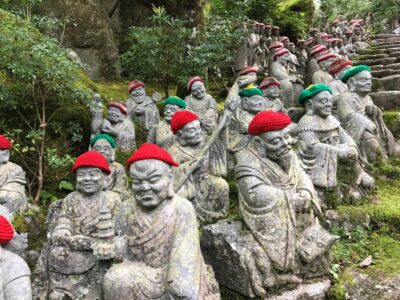
Hiroshima and Miyajima Day Trips, side by side.
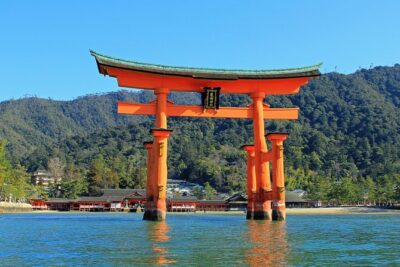 ★ 5.0Peaceful Hiroshima & Miyajima UNESCO 1 Day Bus TourFrom $1295,309 reviews
 ★ 4.9Hiroshima and Miyajima UNESCO Sites 1-Day TourFrom $1222,330 reviews
 ★ 5.0Hiroshima / Miyajima Full-day Private Tour with Government Licensed GuideFrom $2021,298 reviews
 ★ 4.7Osaka/Kyoto: Hiroshima Miyajima Bus Tour & Shinkansen TicketFrom $277919 reviews
 ★ 4.8Hiroshima Historical Walking Tour – Why A-Bomb was DroppedFrom $35893 reviews
 ★ 5.0Hiroshima Peace (Heiwa) Walking Tour at World Heritage SitesFrom $94872 reviews
 ★ 5.0Hiroshima in a Nutshell: Morning Bike AdventureFrom $72524 reviews
 ★ 5.0Hiroshima City 4hr Private Walking Tour with Licensed GuideFrom $122437 reviews
Filed on these lists too