
REVIEW · HIROSHIMA AND MIYAJIMA DAY TRIPS
Hiroshima 3hr Peace Cycling Tour with Local Guide
Cycle through Hiroshima’s past and present. This 3-hour Hiroshima Peace Cycling Tour blends an easy ride with real local context, so you can see a lot without feeling rushed. It also keeps the group small, up to 10 people, which matters when the topic gets heavy.
I like that entrance fees are included, so you do not have to juggle tickets at stops around the Peace area. I also like the way the guide connects places to lived experience, with guides like Shin and Moe praised for sharing family memories tied to August 6, 1945.
My only watch-out is that this is a solemn route, not casual sightseeing. If you are not comfortable on a bicycle yet, or if your group needs extra time, the pace can slow, especially in shared tours.
In This Review
- Key things that make this ride worth your time
- Why a 3-hour Peace Ride feels like the right amount of time
- Meeting at Hiroshima Peace Memorial Park Rest House, then getting rolling
- Hiroshima Castle and Gokoku Shrine: context before the impact
- Central Park to Aioi Bridge and Atomic Bomb Dome: the route that matches the story
- Motoyasu River and Higashisenda Park: remembrance written into nature
- Red Cross hospital remnants, surviving rail, and bridges that mark the reach
- The weeping willow tree highlight and Peace Boulevard’s present-day city
- Price and value: why $85.89 can feel fair here
- Comfort, safety, and who the e-bike route suits best
- Should you book this Hiroshima Peace Cycling Tour?
- FAQ
- FAQ
- How long is the Hiroshima Peace Cycling Tour?
- Where do I meet for the tour?
- Is the tour limited to a small group?
- Are entrance fees included?
- What kind of bicycle do adults use?
- What bicycle options are available for children?
- Is Wi-Fi provided during the tour?
- What if I have luggage?
- What happens in rainy weather?
- What is the cancellation window?
Key things that make this ride worth your time
- Small group up to 10 people for better listening and smoother safety checks
- E-bike friendly route with gentle cycling between major landmarks
- Entrance fees included, including stops where admission is required
- A guide with personal local perspective, often rooted in family stories
- Smart 3-hour timing, leaving you free for more Hiroshima after you finish
Pairing the city with Miyajima. Other itineraries
- Hiroshima: Hiroshima and Miyajima UNESCO Sites 1-Day Tour
★ 4.9 · 2,330 reviews - Hiroshima / Miyajima Full-day Private Tour with Government Licensed Guide
★ 5.0 · 1,298 reviews - Hiroshima Historical Walking Tour – Why A-Bomb was Dropped
★ 4.8 · 893 reviews - Hiroshima Peace (Heiwa) Walking Tour at World Heritage Sites
★ 5.0 · 872 reviews
Why a 3-hour Peace Ride feels like the right amount of time
Hiroshima can overwhelm your senses fast, even when you are trying to be respectful. This tour hits a useful sweet spot: enough time to connect the dots across multiple sites, but short enough that you are not stuck “touring” the whole day.
The cycling part is not just for fun. It is practical. You glide from one key location to the next with a small amount of effort, so you spend more time looking closely and less time navigating streets on your own.
You also get a guide who can explain what you are seeing and why it mattered, then tie it to what Hiroshima rebuilt after the war. Past guide names that show up in experiences include Shin, Toma, Kana, Thomas, and Moe, and the common thread is how personal the stories feel. Expect facts plus human perspective, not just dates and names.
Meeting at Hiroshima Peace Memorial Park Rest House, then getting rolling
The ride starts right at the Hiroshima Peace Memorial Park Rest House. You meet there around 10:00 to 10:05 for greetings, introductions, route explanation, and basic safety procedures, including temperature checks.
This early start helps. You beat the thick mid-morning crowd buildup around the Peace area, and you have time to take breaks without feeling like you are late for the next stop. The tour is also designed for a mixed group, so you get a shared pace rather than a sprint.
Bring what makes biking easier on you: grippy shoes and a light layer. You do not get free Wi-Fi on the bike tour itself, though Hiroshima offers free city Wi-Fi, so plan on using your own connection if you need it.
Also think about your time buffer. If you arrive late without notice, the tour can be canceled, and in that case fees can be non-refundable. Bottom line: show up early and you will avoid stress.
Hiroshima Castle and Gokoku Shrine: context before the impact
The tour moves from the Peace Park area toward sites that broaden the story beyond the bomb itself. First up is Hiroshima Castle, where your guide explains how the area relates to military history and how early reports were made about the atomic bomb.
You get a set window here, about 20 minutes. That is enough time to take in the setting and hear the explanation, but it is not long enough to treat it like a deep museum visit. If you love wandering slowly and taking photos, you may want to come back later on your own after the guided portion ends.
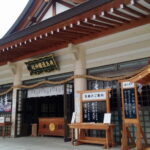
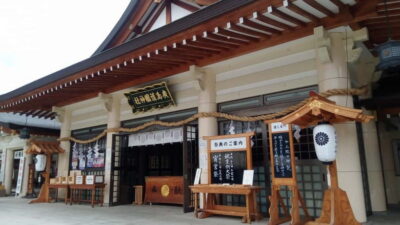
Next comes Hiroshima Gokoku Shrine and the shrine gate. This stop tends to land because it includes details many people miss. Your guide points out features like the Guardian Dog statue and the Gokoku Shrine gate that withstood the atomic bomb.
That combination, military context plus a landmark that endured, helps you understand the shock of what happened and how places survived in unexpected ways.
Cover Hiroshima on two wheels instead
- Hiroshima 2hr Peace Cycling Tour with Local Guide★ 5.0 · 321 reviews
- Hiroshima 3hr Peace Cycling Tour with Local Guide★ 5.0 · 131 reviews
- Hiroshima: Best of Hiroshima Guided Bike Tour★ 4.9 · 89 reviews
Central Park to Aioi Bridge and Atomic Bomb Dome: the route that matches the story
After the pre-impact context, the ride leans into the core locations people come to Hiroshima for. You pass through a green stretch of the city at Hiroshima Central Park (about 20 minutes), which gives your mind a reset between heavier stops.
Then the ride brings you to Aioi Bridge, a key target associated with the blast. This is a short stop, around 10 minutes, and it is meant to be a quick, focused look. The real value is how your guide explains why this bridge and river area matters to the bombing story and how the “before and after” contrast still shows up in the urban fabric.
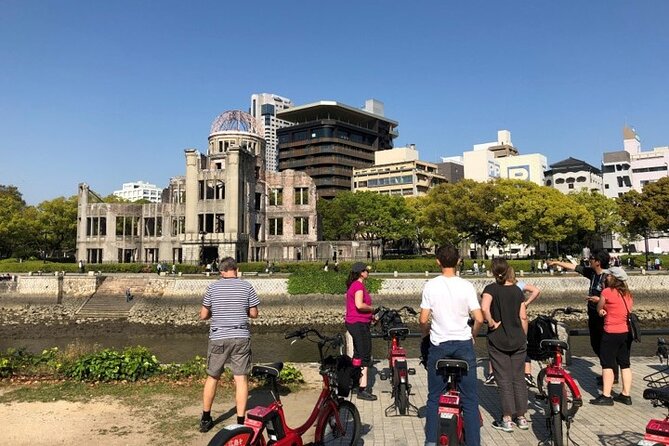
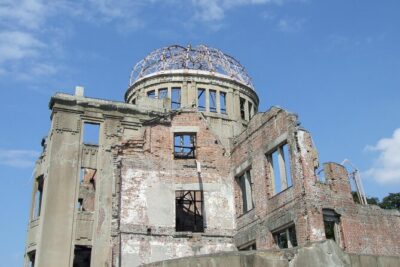
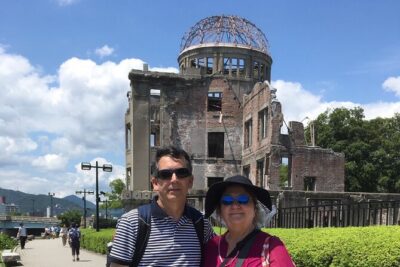
Right after that, you reach the Atomic Bomb Dome. Expect about 15 minutes here. This is the stop that many people already recognize from photos, but your guide adds the human and local layer: what people remembered, how Hiroshima talks about the day, and what the landmark symbolizes today.
One small practical tip: keep your eyes moving. Do not just look at the Dome. Look at nearby edges, angles, and the way the surrounding area was rebuilt. The dome feels like a frozen moment, and the city around it tells you the rest of the story.
Motoyasu River and Higashisenda Park: remembrance written into nature
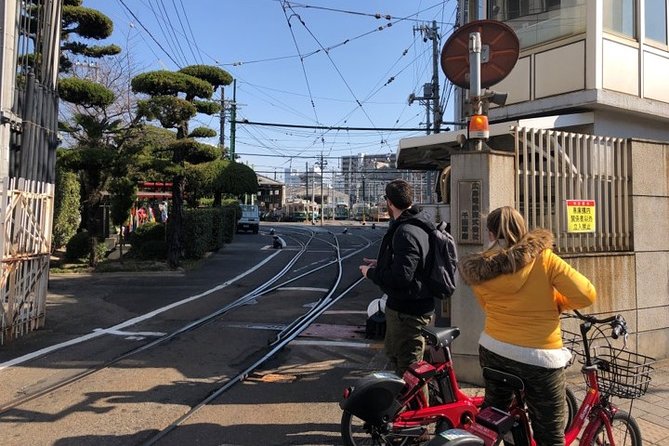
From the Dome area, the tour heads toward a more open, riverside feel. You ride toward Motoyasu River and the Peace Bridge, then keep going to Higashisenda Park. The timing stays gentle, with around 15 minutes for the river stop and about 20 minutes for the park.
What makes the river segment worthwhile is the change in tone. After standing in a symbolic “shock zone,” you see life continuing along the water. Your guide explains the area as you pass it, so you are not just cycling through scenery.
Higashisenda Park adds a powerful visual. It sits about 1 km from the center of the blast and includes trees sent from countries around the world. Your guide shares stories tied to this site, and you start to see how remembrance turned into global participation.
This is where the bicycle format helps again. You get those in-between transitions without the fatigue of long walks. Your brain gets time to absorb without being forced to rush to the next checkpoint.
Red Cross hospital remnants, surviving rail, and bridges that mark the reach
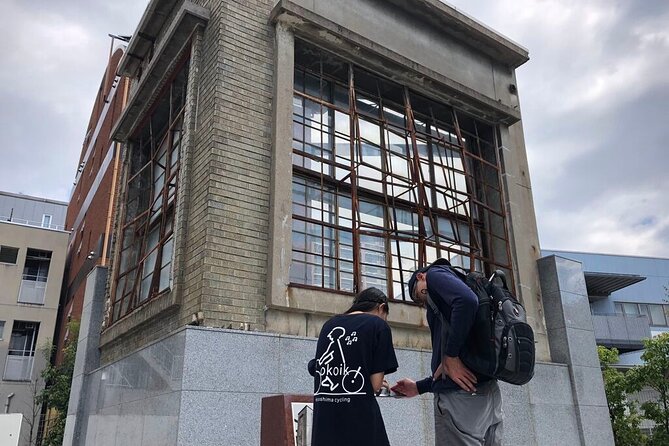
Next the tour points you toward the physical evidence of how strong the bomb was. You stop at the Hiroshima Red Cross Hospital remnants, described as the Atomic Bomb Window Frame Monument area. You get roughly 20 minutes here.
This is not a “pretty photo” stop. It is a reality stop. Even though it is brief, it hits because you are looking at a structure remnant tied directly to the blast’s force, and your guide explains what it meant for people nearby.
From there, you move to the Hiroshima Railway area, about 10 minutes. Your guide tells you that two trains survived that blast and are still used today. That detail makes the recovery story feel more grounded. Instead of thinking of rebuilding as an abstract idea, you see how transportation and daily life came back.
Finally, the route includes Miyuki Bridge and Kobayashi River around 10 minutes. This segment connects the edge of the blast reach to a displayed picture showing the difference between then and now. It is short, but the guided explanation helps you read the space like a map, not just a street view.
The weeping willow tree highlight and Peace Boulevard’s present-day city
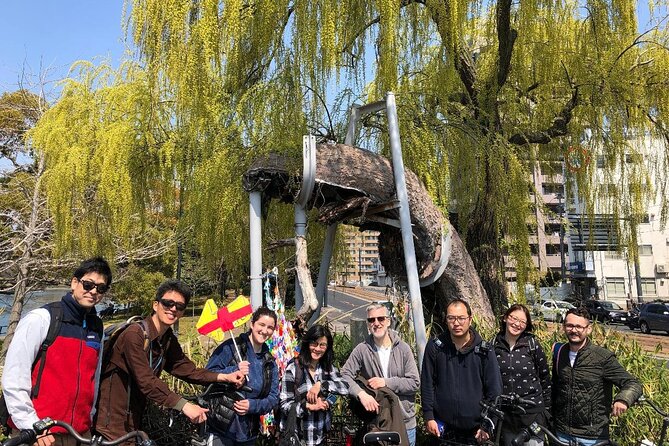
The tour’s highlight comes near the end. You visit a surviving weeping willow tree around 10 minutes. This tree continued to grow despite rumors that it would not live for at least 70 years. Your guide explains why this matters, and it becomes a quiet moment of resilience.
Right after, you ride along Peace Boulevard with a short stop strategy, about 10 minutes. Your guide points out various monuments and trees linked to Hiroshima’s history while also showing that this is a working city, not a memorial set.
The tour wraps back at Hiroshima Peace Memorial Park. You finish around 13:00 for the 10:00 departure, or you can find the afternoon timing is set differently for a separate slot.
If you are planning the rest of your day, that “finish by early afternoon” rhythm is a big advantage. You can keep exploring Hiroshima on your own while the guided story is still fresh in your mind.
Price and value: why $85.89 can feel fair here
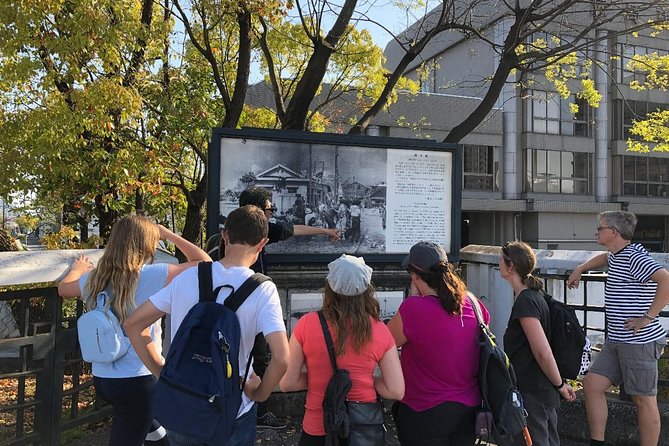
At $85.89 per person, this tour is not a budget impulse buy. But the value is tied to what you get bundled.
First, entrance fees are included for the stops that require them, such as Hiroshima Castle, the shrine, the Atomic Bomb Dome, and the Red Cross Hospital remnants area. Second, your insurance for bicycle accidents is included, which is a small thing people forget to check for.
Third, you are paying for a local guide’s time and interpretation, not just movement between dots on a map. The most praised experience feature across guides like Shin and Moe is the blend of facts and family stories. That combination is hard to replicate with self-guided browsing alone.
Finally, you are getting an e-bike format tied to physical comfort. The participation requirement lists adult electric bicycles for riders 145 cm or more in height, which helps many people handle Hiroshima streets with less strain, especially in warmer months.
If you only have limited time and want the Peace Park area plus additional “recovery and context” stops, this price starts to feel less like a tour cost and more like a shortcut to understanding.
Comfort, safety, and who the e-bike route suits best
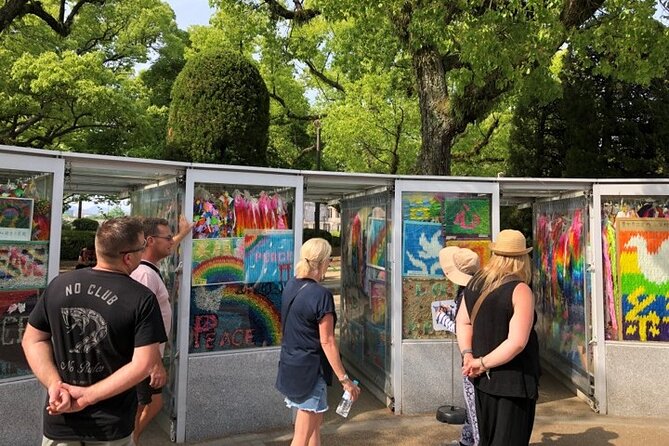
This experience is for people who can ride an adult bicycle (electric) if they are 145 cm or more. If you are traveling with kids, the tour offers children’s bicycles (cross bike type) and bike capacity rules for children under specific weight and height ranges. There are also child bicycles with seats for younger kids with stated limits.
The ride is designed as gentle cycling between major sites, but you still need basic balance and comfort. Electric assistance helps, and people often pick this because it feels manageable, including during summer heat.
Shared tour pacing is another real factor. The tour can adjust if other members of the group are not accustomed to cycling, especially if children are involved. That is a good thing, but it also means you might not get a breakneck schedule.
Luggage is handled simply: there is no place to leave your luggage at the Rest House. Coin lockers are available at the International Conference Center Hiroshima and at the Hiroshima Peace Memorial Museum, which are about a 6-minute walk away. Plan on storing bags before you meet up.
Rain matters too. The tour requires good weather, and if it gets canceled for safety, you can choose a Rainy Day Limited Peace Route or a refund. On rainy days, the route can also be switched to a walking format focusing around the hypocenter area within about 0.5 km to 1 km.
Should you book this Hiroshima Peace Cycling Tour?
Book it if you want a 3-hour way to connect the Peace Memorial Park core sites with additional context like Hiroshima Castle and the shrine gate details. It is also a strong choice if you prefer learning from a local guide rather than relying on plaques and guidebooks alone.
Do not book it if you cannot ride a bike comfortably, even with electric assist, because the experience still depends on staying mobile between stops. Also consider skipping if you want a purely museum-style format or if you prefer lots of free time at each site rather than guided pacing.
For me, the deciding factor is the pairing: small group size plus a guide who explains how Hiroshima moved from destruction to rebuilding, down to specific survivals like the weeping willow tree and the surviving train detail.
FAQ
FAQ
How long is the Hiroshima Peace Cycling Tour?
The tour is about 3 hours.
Where do I meet for the tour?
You meet at the Hiroshima Peace Memorial Park Rest House, located at 730-0811 Hiroshima, Naka Ward, Nakajimachō, 11, Hiroshima Peace Memorial Park Rest House.
Is the tour limited to a small group?
Yes. It is a shared tour with a maximum of 10 travelers.
Are entrance fees included?
Entrance fees are included, so you do not need to worry about paying on the spot at required stops.
What kind of bicycle do adults use?
Adult bicycle electric is provided, with a height requirement of 145 cm or more.
What bicycle options are available for children?
Children under 15 can use children’s bicycles and also adult bicycles at child rate, if they meet the height rules. The tour also mentions bicycles with seats for children under stated weight and height limits, depending on the child.
Is Wi-Fi provided during the tour?
No, there is no free Wi-Fi provided with the tour. Hiroshima Free Wi-Fi is available throughout the city.
What if I have luggage?
There is no place to leave luggage at the Rest House. Coin lockers are available at the International Conference Center Hiroshima and at the Hiroshima Peace Memorial Museum, about a 6-minute walk away.
What happens in rainy weather?
If the tour cannot be held due to rain, you can choose to change to a Rainy Day Limited Peace Route or receive a refund. The tour can also be changed to a walking tour for rainy days only if you want that option.
What is the cancellation window?
Free cancellation is available if you cancel up to 24 hours in advance for a full refund. Canceling less than 24 hours before the experience start time is not refunded.
Bicycles and E-Bikes We Have Ridden

Hiroshima and Miyajima Together
Newest Hiroshima write-ups from the Loving Japan desk
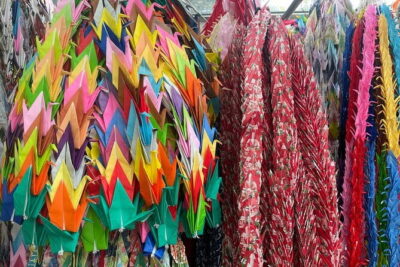
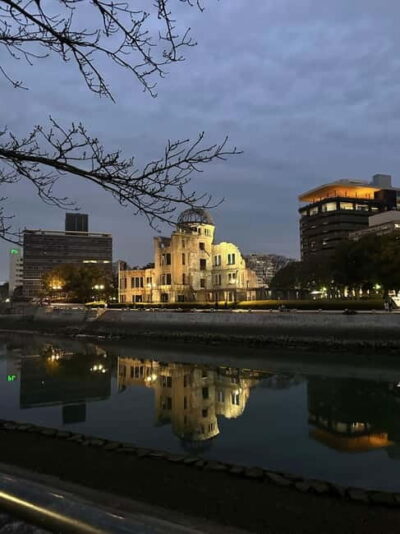
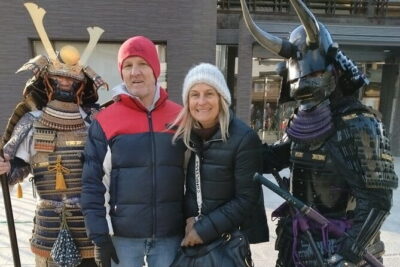
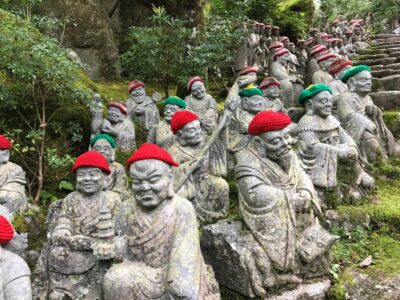
Hiroshima and Miyajima Day Trips, side by side.
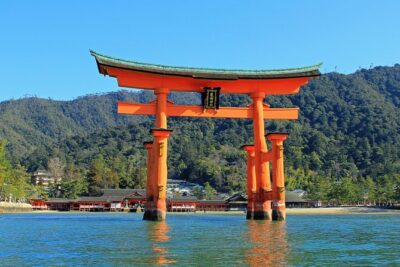 ★ 5.0Peaceful Hiroshima & Miyajima UNESCO 1 Day Bus TourFrom $1295,309 reviews
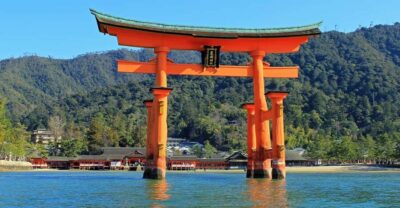 ★ 4.9Hiroshima and Miyajima UNESCO Sites 1-Day TourFrom $1222,330 reviews
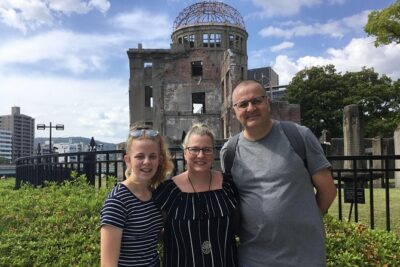 ★ 5.0Hiroshima / Miyajima Full-day Private Tour with Government Licensed GuideFrom $2021,298 reviews
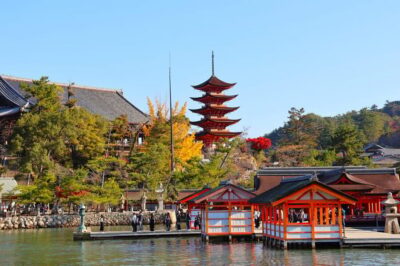 ★ 4.7Osaka/Kyoto: Hiroshima Miyajima Bus Tour & Shinkansen TicketFrom $277919 reviews
 ★ 4.8Hiroshima Historical Walking Tour – Why A-Bomb was DroppedFrom $35893 reviews
 ★ 5.0Hiroshima Peace (Heiwa) Walking Tour at World Heritage SitesFrom $94872 reviews
 ★ 5.0Hiroshima in a Nutshell: Morning Bike AdventureFrom $72524 reviews
 ★ 5.0Hiroshima City 4hr Private Walking Tour with Licensed GuideFrom $122437 reviews
Filed on these lists too