
REVIEW · JAPANESE CRAFT AND CALLIGRAPHY WORKSHOPS
Japanese Sweets (Mochi & Nerikiri) making at a Private studio
Turn dessert into skill at a Tokyo home studio. You’ll make mochi and delicate nerikiri wagashi step by step, then end with tasting and a matcha moment.
Two things I really like: the class is taught in English by instructors such as Yukka and Miyuki Suyari (clear, patient guidance), and you get a take-home English recipe sheet plus aprons so you can actually practice later. One thing to consider: this is a seated, hands-on workshop, and observers are not allowed to sit in class.
You also don’t just learn recipes, you learn meaning. The lesson ties wagashi to seasonal festivals and motifs, and it connects tasting and tea through omotenashi and chado (tea ceremony). My only caution for planning is that the experience happens at a private home address in Meguro, so give yourself a little extra time to get there.
In This Review
- Key Points Before You Go
- A Private Wagashi Studio in Meguro (Not a Showroom)
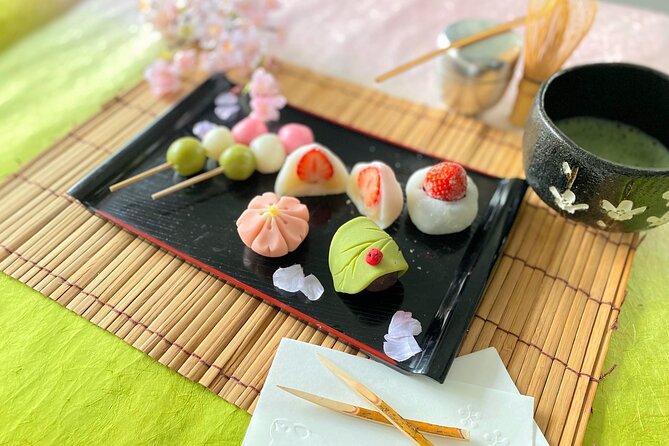
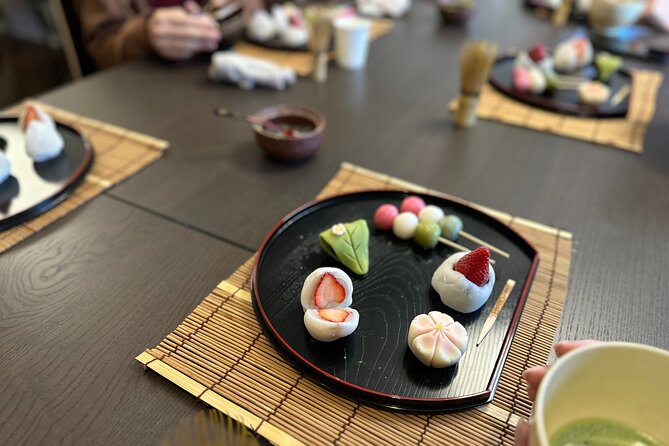
- What You’ll Make: Strawberry Daifuku, Three-Color Dango, and Nerikiri
- Strawberry daifuku mochi
- Three-color dango (mochi balls on skewers)
- Nerikiri wagashi, with a seasonal motif
- The Class Flow: From Mochi Traditions to Shaping Your Own Sweets
- 1) A short traditions and festivals presentation
- 2) Hands-on mochi making: strawberry daifuku and dango
- 3) Nerikiri dough, then coloring and shaping
- 4) Matcha tasting and a quick tea culture connection
- Teaching Style That Makes You Feel Capable
- Ingredients, Food Notes, and What You Should Know
- Price and Value for a 2.5-Hour Small-Group Workshop
- Morning or Afternoon: Picking the Right Time Slot
- Where This Fits Best in Your Tokyo Trip
- Should You Book the Mochi and Nerikiri Home Class?
- FAQ
- How long is the Japanese sweets (Mochi and Nerikiri) class?
- Where does the class take place?
- What is the group size limit?
- What sweets will I learn to make?
- Is matcha included?
- Are ingredients gluten-free?
- Is the class good for beginners?
- What supplies are provided?
- Is there a minimum age?
- Can I bring someone to watch the class?
- What is the cancellation policy?
Key Points Before You Go
- Small group (max 8) means you are not lost in the crowd.
- Private home in Meguro gives a rare look at everyday Tokyo life.
- You make both mochi and nerikiri including nerikiri coloring and shaping.
- Matcha tasting is included, with non-caffeinated tea as an option.
- English recipe sheet + apron helps you recreate what you made after the class.
Make something to take home. Other workshops
- Tokyo Shinjuku Chopsticks Making Class
★ 5.0 · 1,763 reviews - Chopstick Making Workshop in Ginza
★ 4.8 · 1,366 reviews - Tokyo Sumo Experience: Chanko & Mochi with a Former Pro
★ 4.8 · 567 reviews - Kintsugi Experience: Art of Golden Joinery in Tokyo
★ 5.0 · 467 reviews
A Private Wagashi Studio in Meguro (Not a Showroom)
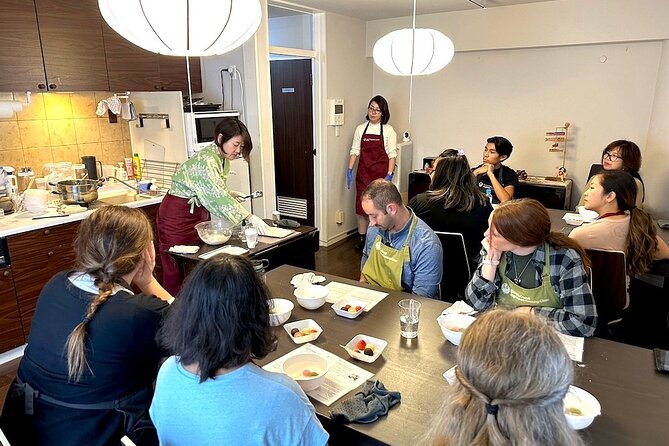
This experience is set up as a small, welcoming workshop held at a private Tokyo home. That matters more than it sounds. In a dedicated studio, you can feel like you are watching a performance. In a home setting, you feel like you are borrowing a workspace for the afternoon, with the instructor focused on your hands, not just your photos.
The location is in Meguro, with a specific meeting point at プレジデント目黒ハイツ in Meguro City, Meguro. The listing notes it is near public transportation, which is helpful, because you will want to get there without turning the workshop into an all-day logistics project.
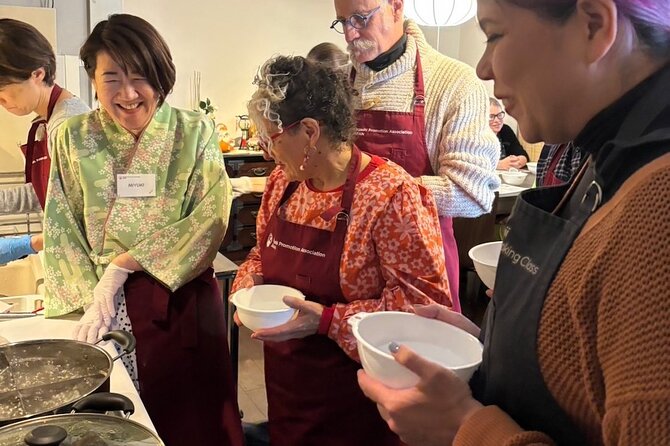
The class is also capped at a maximum of 8 travelers. In my book, that is the sweet spot for a food craft. You get help when your mixture or dough looks off, and you’re not stuck waiting while others take their turn.
What You’ll Make: Strawberry Daifuku, Three-Color Dango, and Nerikiri
This is not just one sweet. You make a small set of classic Japanese wagashi, with different textures and techniques so you actually learn the craft.
Strawberry daifuku mochi
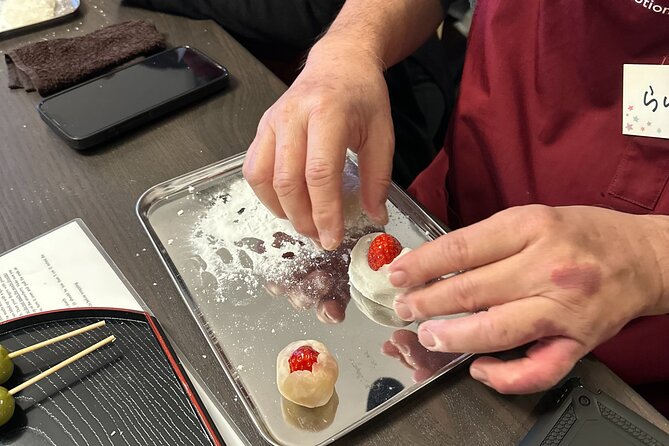
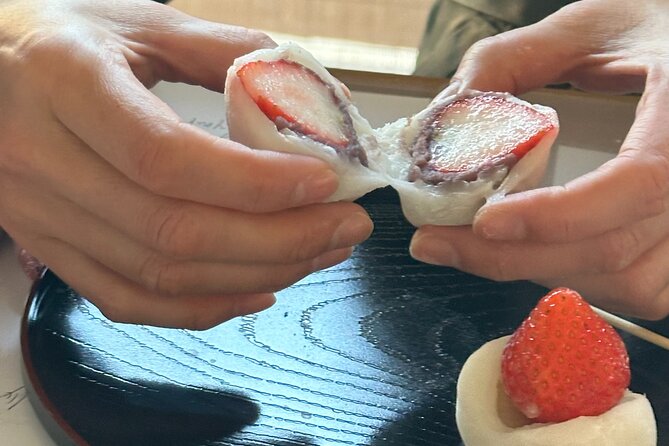
You start by making strawberry daifuku mochi. The key skill here is getting mochi dough to the right consistency before shaping and filling. Even if you’ve never touched mochi before, the structure of the class helps you understand why timing and texture matter.
- Mt Fuji and Hakone 1-Day Bus Tour Return by Bullet Train★ 5.0 · 26,383 reviews
- 1-Day Tokyo Bus Tour★ 5.0 · 14,250 reviews
- Tokyo: teamLab Planets TOKYO Digital Art Museum Entry Ticket★ 4.6 · 9,779 reviews
- Mt Fuji & Hakone Cruise, Drum Show Bullet Train 1 Day from Tokyo★ 4.0 · 7,413 reviews
- Tokyo Mt Fuji 5th St & Hakone Cruise Bus Tour w/Bullet Train★ 4.4 · 5,024 reviews
Three-color dango (mochi balls on skewers)
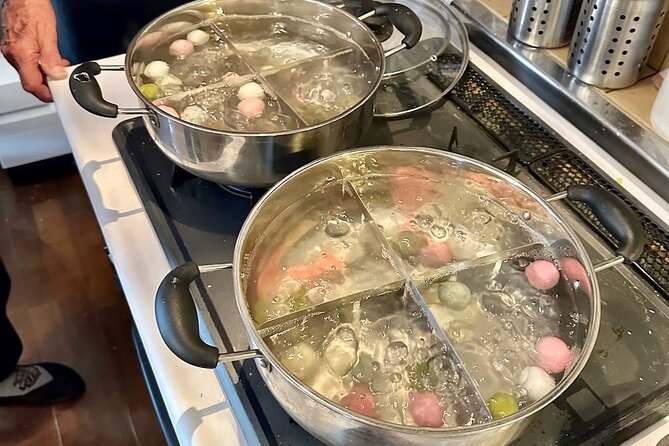
Next up is three-color dango. These mochi balls on skewers are perfect for learning shaping without needing fancy equipment. You’ll get to work with the idea of color and form, which comes back again later during nerikiri.
Nerikiri wagashi, with a seasonal motif
Then the main event shifts to nerikiri dough and wagashi shaping. Nerikiri is the more art-forward section, where you color, shape, and form a motif. You’ll learn how to make the nerikiri dough first, then move into coloring and shaping your own seasonal design.
One of the strongest themes from the class experience is symbolism. People leave talking about how the colors and shapes are not random. They connect to seasons and tradition, which makes the finished sweets feel like small, edible stories.
The Class Flow: From Mochi Traditions to Shaping Your Own Sweets
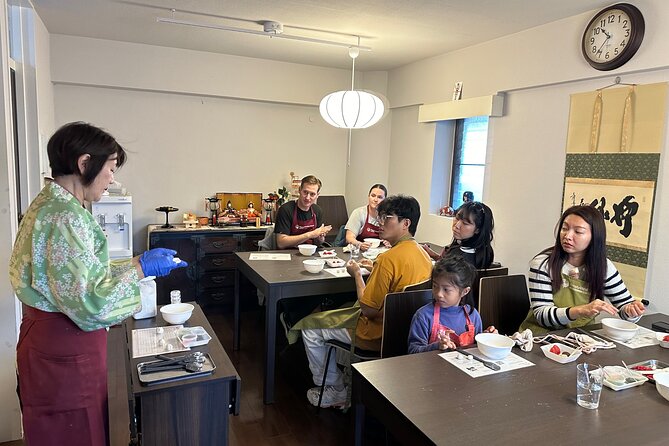
The session runs about 2 hours 30 minutes. It’s organized, with a presentation at the beginning and hands-on time throughout. This pacing is a big deal, because wagashi has steps where you can’t rush, and some parts need time for the dough to reach the right feel.
1) A short traditions and festivals presentation
You start with a brief talk about the tradition and festivals tied to mochi, and why mochi is important in Japanese culture. This is not a long lecture. It’s the kind of intro that makes your later work feel more meaningful, because you understand what you are making and where it fits.
Instructors like Yukka are noted for giving a short presentation by season, so you get a mental map of how mochi changes through the year.
2) Hands-on mochi making: strawberry daifuku and dango
After the intro, the class moves into making the sweets. You learn the steps from mixing ingredients to kneading, and you get guidance on how the dough should look and feel as you go. Multiple students highlight that the instructor takes time and stays patient, especially for first-timers.
This is one of those experiences where you’ll probably realize how different professional technique is from guessing from YouTube.
3) Nerikiri dough, then coloring and shaping
Once you’ve made your mochi sweets, you shift into nerikiri. The instructor demonstrates how to make the nerikiri dough. Then you color and shape your own nerikiri wagashi into a seasonal motif.
This part is where you slow down and focus. The fun is that you are not only making something you can eat, you are learning a craft language: pattern, shape, and color placement.
4) Matcha tasting and a quick tea culture connection
The class ends with tasting your sweets alongside matcha green tea, and you also learn how to make matcha. If caffeine is not your thing, you can choose other non-caffeinated tea.
Then you get a short talk on omotenashi (the hospitality spirit) and how it connects to chado (tea ceremony). People often expect tea as a side note. Here, it’s part of the meaning of the sweets you made.
Teaching Style That Makes You Feel Capable
A lot of cooking classes are “watch and hope.” This one is structured to help you succeed.
The instructor is described as fluent in English, and reviews point to very patient, step-by-step teaching. Names that show up include Waka, Satoko San, Miho, Kaoru, and Miyuki Suyari. The consistent thread is clarity, plus the practical ability to troubleshoot when your consistency is slightly off.
Also, the class is “eyes-on,” meaning you’re working while the instructor keeps an eye on what you’re doing. That matters when you’re handling dough that changes as you knead.
And yes, it’s set up for real beginners. One review even notes how much comfort students felt in the home, and how confident they felt about recreating the steps later thanks to the pace and instruction.
Ingredients, Food Notes, and What You Should Know
The class states that all ingredients are plant-derived and gluten-free. That is useful if you avoid gluten, and it also means the class is oriented toward plant-based components rather than dairy or meat-centered cooking.
Aprons are provided. An English recipe sheet is also included, which is the difference between tasting a good sweet once and actually being able to repeat it at home.
In terms of what you should bring: the experience provides the needed materials for the lesson. Your main job is showing up ready to get hands-on.
And it is non-smoking, which helps keep the experience pleasant in a home setting.
Price and Value for a 2.5-Hour Small-Group Workshop
At $91.96 per person for about 2 hours 30 minutes, this is not the cheapest thing you can do in Tokyo. But for what’s included, the value is pretty straightforward.
You are paying for:
- a small group class with close attention (max 8),
- a private home setting,
- guided hands-on work for multiple sweets (not just one),
- matcha tea included,
- aprons and an English recipe sheet to take home,
- and English instruction from a certified nerikiri instructor.
I like workshops that give you both a skill and a souvenir that is actually useful. The take-home recipe sheet and the fact that you learn both mochi and nerikiri techniques make this feel like a memory you can reproduce, not just a snack you ate.
If you want a single craft experience that teaches you something distinct and Japan-specific, this is a strong candidate.
Morning or Afternoon: Picking the Right Time Slot
The class offers a choice of morning or afternoon, so you can match it to the rest of your Tokyo plan. That flexibility matters because cooking classes work best when you are not rushing across town right before it starts.
If you’re planning a busy day, I’d lean toward the slot that keeps you calm on arrival. Since it’s in Meguro and the address is specific, you’ll want the time margin to get there without stress.
Where This Fits Best in Your Tokyo Trip
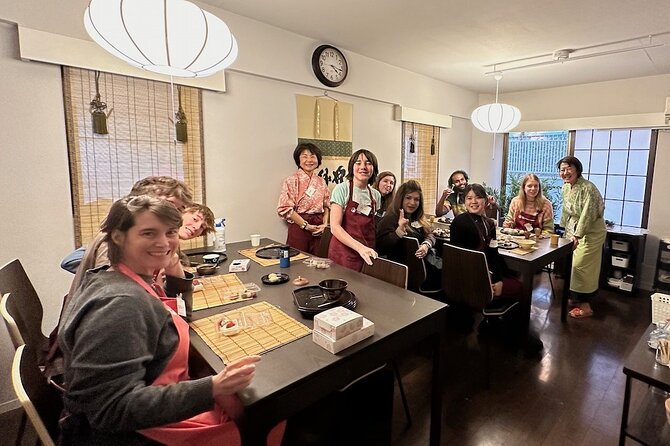
This is a great choice if you want more than sightseeing photos. It’s also a good fit if you like learning cultural context along with technique.
It tends to suit:
- couples who want a shared activity,
- families with kids age 4 and up,
- food lovers who want a hands-on craft,
- travelers who enjoy tea culture and seasonal Japanese traditions.
If you are the type who likes to understand the why, not just the how, the mochi traditions intro and the omotenashi discussion are a real plus.
And if you are traveling with kids, multiple reviews mention enjoying the class together, including a 7-year-old and families with teenagers. Just remember the safety rule: children under 4 are not allowed in the class.
Should You Book the Mochi and Nerikiri Home Class?
Book it if you want an experience that is practical, cultural, and hands-on, with enough time and attention to actually learn the techniques. The best reason to go is the combination of mochi and nerikiri, plus the finishing touch of matcha and the short connection to omotenashi and tea ceremony.
Skip it if you mainly want passive entertainment, or if you’re hoping to have friends watch from a seated spot. Observers are not allowed to sit in class.
If you like making things with your hands and leaving with a recipe you can use again, this private Tokyo wagashi workshop is an easy yes.
FAQ
How long is the Japanese sweets (Mochi and Nerikiri) class?
The class is about 2 hours 30 minutes.
Where does the class take place?
The meeting point is in Meguro, at プレジデント目黒ハイツ in Meguro City, Meguro (Meguro City, Meguro 1-chōme−3−16). The activity ends back at the meeting point.
What is the group size limit?
The class has a maximum of 8 travelers.
What sweets will I learn to make?
You will learn to make Strawberry daifuku mochi, Three-color dango (mochi balls on skewers), and nerikiri wagashi, including coloring and shaping into a seasonal motif.
Is matcha included?
Yes. You’ll taste the sweets with matcha green tea, and other non-caffeinated tea is available.
Are ingredients gluten-free?
Yes. The class states that ingredients are plant-derived and gluten-free.
Is the class good for beginners?
The experience is taught with step-by-step instruction, and aprons plus an English recipe sheet are included to help you follow along and take notes.
What supplies are provided?
Aprons are provided, and you receive an English recipe sheet to take home.
Is there a minimum age?
Yes. The minimum age to attend is 4 years old, and children under 4 are not allowed in the class due to safety reasons.
Can I bring someone to watch the class?
No. Observers are not allowed to sit in class.
What is the cancellation policy?
You can cancel for a full refund up to 24 hours before the experience starts. If you cancel less than 24 hours before, the amount paid is not refunded.
Made by Hand, and Yours to Keep


Newest Tokyo write-ups from the Loving Japan desk






Japanese Craft and Calligraphy Workshops, side by side.
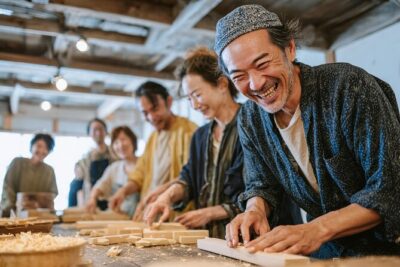 ★ 5.0Tokyo Shinjuku Chopsticks Making ClassFrom $201,763 reviews
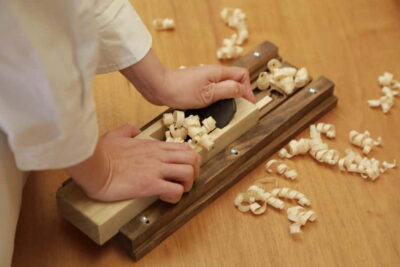 ★ 4.8Chopstick Making Workshop in GinzaFrom $251,366 reviews
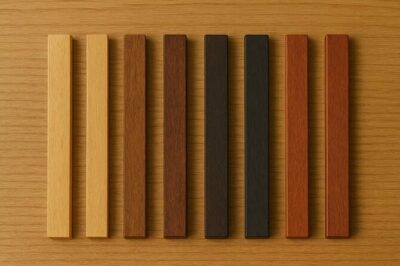 ★ 5.0Chopsticks Making Workshop in Gion with Engraving OptionFrom $15958 reviews
 ★ 4.8Tokyo Sumo Experience: Chanko & Mochi with a Former ProFrom $103567 reviews
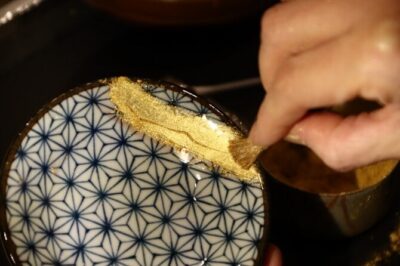 ★ 5.0Kintsugi Experience: Art of Golden Joinery in TokyoFrom $59467 reviews
 ★ 5.0Tokyo Chopstick Making Workshop with ArtisanFrom $26466 reviews
 ★ 4.9Matcha Making Experience with Mochi Sweets in AsakusaFrom $22388 reviews
 ★ 4.8Authentic knife making experience at a blacksmith in KyotoFrom $154350 reviews
Filed on these lists too