
REVIEW · SHIBUYA, SHINJUKU AND HARAJUKU WALKS
Kintsugi Workshop Class in Shibuya, Tokyo with mon cadeau
A broken dish can turn into art in Tokyo. This kintsugi workshop in Shibuya with mon cadeau pairs calm craft time with tea, small-group attention, and a take-home result you will actually keep.
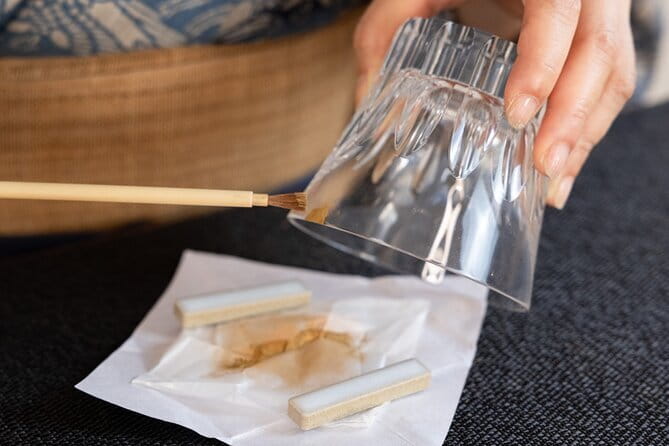
I especially like how the class is paced and personal, with hands-on step-by-step help from hosts Michiko-san and Yuki-san. You are not just watching, you are repairing your own chosen piece while learning the origins and traditions behind kintsugi.
One thing to think about: you will pick from the provider’s crockery collection, not your own heirloom bowl. If you want to repair a specific item you brought, you should ask first.
In This Review
- Key highlights you will feel right away
- Kintsugi in Shibuya: a calmer kind of Tokyo craft time
- Your two-hour flow: matcha, demos, then your hands on the repair
- Picking your crockery: choosing the piece you will restore
- The meaning of kintsugi: history and tradition, not just technique
- Hands-on coaching with Michiko-san and Yuki-san
- Matcha and sweets: why the snack break is part of the design
- Is the $145.35 price fair for a Shibuya workshop?
- Where you meet in Shibuya, and how to plan your arrival
- Who should book this kintsugi class, and who might skip it
- Should you book the Mon Cadeau kintsugi workshop in Shibuya?
- FAQ
- Where is the meeting point for the kintsugi workshop?
- How long is the workshop?
- How much does the workshop cost?
- What group size should I expect?
- Do I repair a piece I bring, or do I choose something there?
- Is matcha tea and snacks included?
- Is this a private class?
- Do I receive a mobile ticket?
- Can service animals attend?
- What is the cancellation or change policy?
Key highlights you will feel right away
- Small group size (max 6) for real guidance, not a hurried factory line
- Matcha tea and local sweets to set a slow, focused mood
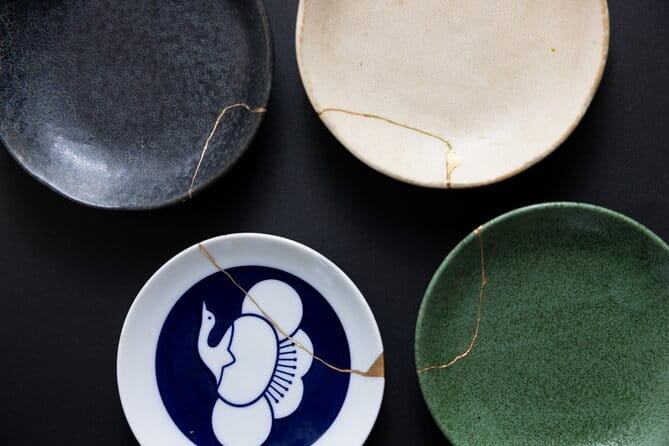
- Choose your own crockery from mon cadeau’s collection to repair on the spot
- Origins and traditions of kintsugi, plus the meaning behind the technique
- Patient, friendly coaching from Michiko-san and Yuki-san at every step
- Take home your restored piece after the two-hour workshop
Other routes through the west side of Tokyo, compared
- Tokyo: Shinjuku Food Tour (13 Dishes at 4 Local Eateries)
★ 5.0 · 6,603 reviews - Tokyo Bar Hopping Tour in Shinjuku (All-You-Can-Drink + Dinner)
★ 5.0 · 3,587 reviews - Official Street Go-Kart in Shibuya
★ 5.0 · 3,435 reviews - Tokyo: Shinjuku Food Tour (15 Dishes and 4 Eateries)
★ 4.9 · 2,033 reviews
Kintsugi in Shibuya: a calmer kind of Tokyo craft time
Shibuya is where Tokyo likes to go fast. This experience does the opposite. You meet in Shinsenchō, part of Shibuya, for a workshop that feels more like a gentle hands-on lesson than another “check a thing off” activity.
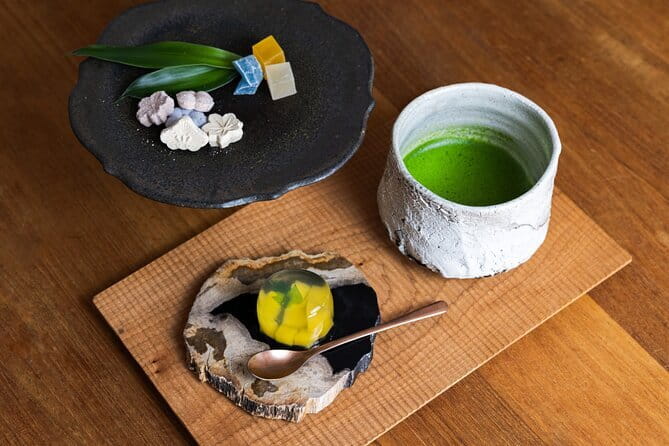
The tone matters. Kintsugi is already a philosophy built around repair and acceptance, not perfection. So the workshop starts by getting your mind into that frame before you touch anything. You are given matcha tea, plus local sweets, and the group stays small enough that you can actually pay attention.
Also, you are in good hands with mon cadeau. Their class is designed for first-timers and hands-on learners. The reviews are very consistent on one point: the instructors are kind, welcoming, and patient, and they guide you step-by-step so you do not feel lost.
Your two-hour flow: matcha, demos, then your hands on the repair
The workshop runs about two hours, and it follows a simple rhythm. First comes the calm start. Then you get instruction and demonstrations. After that, you do the work yourself, with coaching as needed.
Here is what you should expect in plain terms:
- You begin with matcha tea and snacks to settle in.
- The instructor explains the process and the meaning of kintsugi.
- You watch step-by-step demonstrations.
- You move to the workbench to repair the crockery piece you chose.
- You get personalized guidance so you can finish confidently.
- At the end, you leave with your restored crockery.
The big advantage of this structure is how it reduces stress. Kintsugi takes careful handling, and if you are left to figure things out alone, it turns into a frustrating craft. Here, the class is set up so your hands have a script to follow, and your questions have time to land.
Picking your crockery: choosing the piece you will restore
This class is built around a great idea. You do not arrive and hope your luck holds with a random kit. You choose your own piece of crockery from mon cadeau’s collection.
That choice changes the whole experience. If you pick something that speaks to you visually or emotionally, you will care more during the delicate steps. You also get a souvenir that feels earned. It is not generic shopping. It is your repair work, done with instruction and good timing.
Practical tip: look for a piece where the repair area feels manageable. Even if you do not know kintsugi yet, you will be able to judge what looks straightforward to handle during a two-hour class. If you are drawn to a more complex break, choose it only if you are comfortable slowing down.
Make something to take home. Other workshops
- Tokyo Shinjuku Chopsticks Making Class★ 5.0 · 1,763 reviews
- Chopstick Making Workshop in Ginza★ 4.8 · 1,366 reviews
- Tokyo Sumo Experience: Chanko & Mochi with a Former Pro★ 4.8 · 567 reviews
- Kintsugi Experience: Art of Golden Joinery in Tokyo★ 5.0 · 467 reviews
- Tokyo Chopstick Making Workshop with Artisan★ 5.0 · 466 reviews
The meaning of kintsugi: history and tradition, not just technique
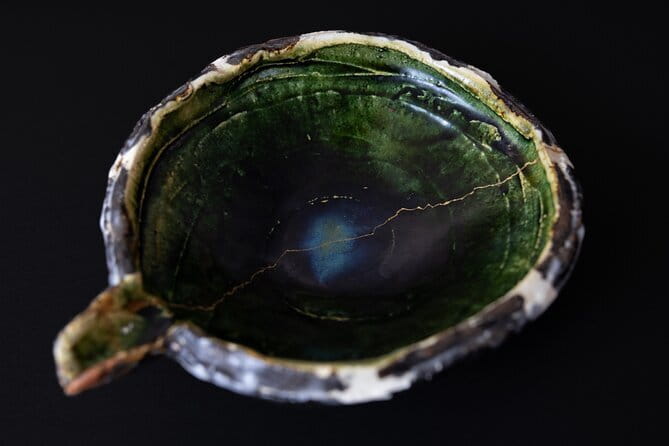
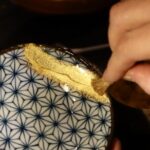
Kintsugi comes from a long Japanese tradition of repairing broken pottery in a way that makes the break part of the beauty. The workshop explains the origins and traditions behind this practice, including the idea of using gold glue to join what has fractured.
What you get out of this part is surprisingly useful. It turns a craft project into a story you can tell later, and it helps you understand why the final look is supposed to highlight the repaired lines instead of hiding them.
From the reviews and workshop focus, you can expect the instructors to talk about more than procedures. They also connect the art to a life philosophy, including the feeling that repairing something broken can be a form of respect, patience, and acceptance. That is one reason people leave with more than a pretty object. They leave with a new way to think about imperfections.
Hands-on coaching with Michiko-san and Yuki-san

The most praised aspect is the teaching style. Michiko-san and Yuki-san come up again and again in the feedback for a reason: they are friendly, engaged, and patient while you work.
Here is what that likely looks like for you during the class:
- They give clear step-by-step demonstrations.
- They check in as you work.
- They provide guidance so you can keep going when you hesitate.
- They make the whole thing feel welcoming, not intimidating.
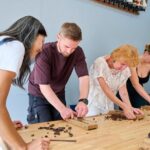
A small group helps a lot here. With no more than 6 travelers, the instructors can spend time with each person rather than splitting attention across a crowd. If you are the type who learns better by doing, this is a great setup.
If you have a partner, this is also nice. You can both take it at your own pace, ask questions, and still enjoy the shared craft time. One review even notes the experience being scheduled with a daughter, which suggests it can work well as a meaningful family activity, assuming everyone is comfortable with a hands-on lesson.
Matcha and sweets: why the snack break is part of the design
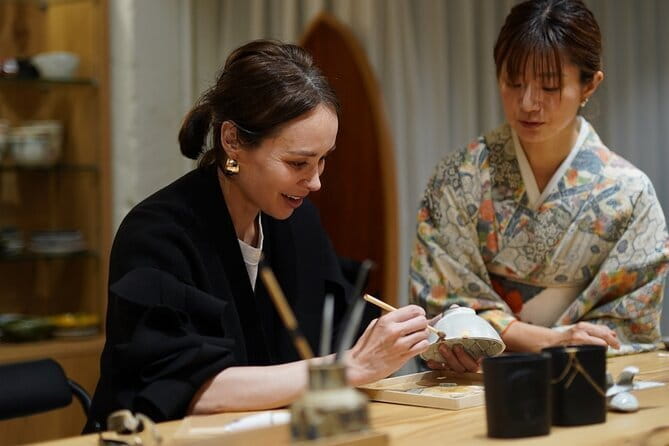
Yes, matcha tea is nice. But in this workshop, it also serves a practical purpose. It slows the moment down.
You start with tea before you touch the repair. Then snacks and tea are part of the experience while you learn and work. That matters because kintsugi demands patience. If you rush in hungry or keyed up from Tokyo walking, your hands and focus tend to suffer.
From the reviews, the tea and snacks are not treated like an afterthought. People describe them as excellent. So you get a small cultural treat that fits the craft theme instead of feeling tacked on.
Is the $145.35 price fair for a Shibuya workshop?
At $145.35 per person, you are paying for three things: instruction, a guided repair process, and a take-home result.
For value, the key question is what you get at the end. Here, you leave with your own restored crockery piece. You are not paying for a lecture. You are paying to sit with an instructor, learn the tradition, repair your selected item, and walk away with something you can use or display.
You also get a small group limit (max 6). That usually costs more than a big class, because it means more time per person. Add in matcha and local sweets, and the overall package starts to feel coherent.
If you are the type who already does a lot of crafts at home, you might compare it to a hobby class. But if you want a Japan-specific hands-on cultural workshop, where the meaning matters and the teaching is personal, this feels like a solid price.
Where you meet in Shibuya, and how to plan your arrival
The workshop meets at Central Hospital, 25-1 Shinsenchō, Shibuya, Tokyo 150-0045, Japan. It ends back at the meeting point.
Because it is near public transportation, you can keep your plan simple. Still, I recommend building in a little buffer time. Craft classes are easier when you arrive calm and ready, not sprinting from the station.
A couple of practical pointers that will make your life easier:
- Wear comfortable clothes you do not mind getting a little crafty.
- Give yourself enough time to find the meeting point without stress.
- If you have dietary preferences, you might want to mention them when you book, since tea and sweets are part of the experience.
Also, you will have a mobile ticket, which is convenient if you are using a phone for reservations in Tokyo.
Who should book this kintsugi class, and who might skip it
You should book if:
- You want a meaningful Tokyo activity that is hands-on, not just sightseeing.
- You like small-group experiences where you can ask questions.
- You enjoy crafts but want them guided.
- You want a take-home souvenir with a story and a purpose, not just a store-bought trinket.
You might hesitate if:
- You want to repair a specific item you already own. This class is about choosing from mon cadeau’s collection, so confirm your options if that matters to you.
- You prefer passive activities. This is a work-with-your-hands kind of class, and it takes attention.
- You are looking for something long and complex. Two hours is enough for a guided experience, but it is still a short session.
Should you book the Mon Cadeau kintsugi workshop in Shibuya?
If you want a Tokyo experience that feels thoughtful and personal, I think this is a strong yes. The combination of small group size, welcoming instruction from Michiko-san and Yuki-san, and the chance to create a repaired piece you can take home is exactly the kind of activity that turns travel into something you keep, not just something you photograph.
Book it especially if you like craft work and want the philosophy behind it explained clearly, not just glossed over. And if you are the kind of person who worries about doing things wrong, this class is set up to reduce that worry with step-by-step guidance.
If your heart is set on repairing your own heirloom dish, do a quick check before you go. Otherwise, take this for what it is: a calm, guided kintsugi lesson that fits beautifully into a Shibuya day.
FAQ
Where is the meeting point for the kintsugi workshop?
The workshop starts at Central Hospital, 25-1 Shinsenchō, Shibuya, Tokyo 150-0045, Japan.
How long is the workshop?
It runs for about 2 hours.
How much does the workshop cost?
The price is $145.35 per person.
What group size should I expect?
The experience is limited to a maximum of 6 travelers, which keeps it intimate.
Do I repair a piece I bring, or do I choose something there?
You choose your own piece of crockery to repair from mon cadeau’s collection.
Is matcha tea and snacks included?
Yes. The workshop begins with matcha tea and includes local sweets.
Is this a private class?
Yes. Only your group will participate, so it is private for your party.
Do I receive a mobile ticket?
Yes, you receive a mobile ticket.
Can service animals attend?
Service animals are allowed.
What is the cancellation or change policy?
This experience is non-refundable and cannot be changed for any reason. If it is canceled because a minimum traveler requirement is not met, you will be offered a different date or experience, or a full refund.
Made by Hand, and Yours to Keep
West Tokyo on Foot: Seven More



Newest Tokyo write-ups from the Loving Japan desk


Shibuya, Shinjuku and Harajuku Walks, side by side.
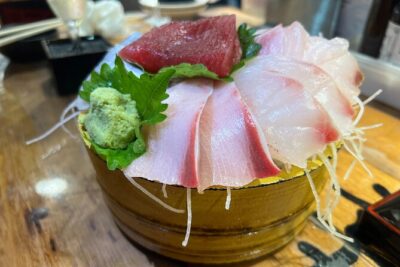 ★ 5.0Shinjuku Food Tour (13 Dishes at 4 Local Eateries)From $866,603 reviews
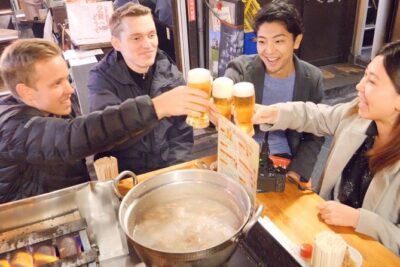 ★ 5.0Tokyo Bar Hopping Tour in Shinjuku (All-You-Can-Drink + Dinner)From $1063,587 reviews
 ★ 5.0Official Street Go-Kart in ShibuyaFrom $763,435 reviews
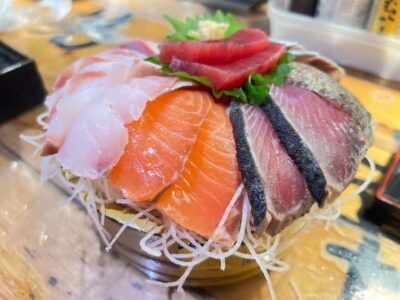 ★ 4.9Shinjuku Food Tour (15 Dishes and 4 Eateries)From $852,033 reviews
 ★ 4.9Shinjuku Local Bar and Izakaya Guided Walking TourFrom $341,794 reviews
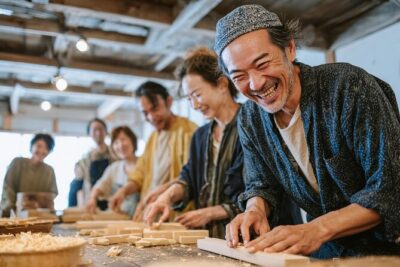 ★ 5.0Tokyo Shinjuku Chopsticks Making ClassFrom $201,763 reviews
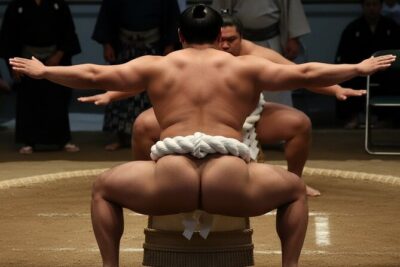 ★ 5.0Tokyo Shinjuku Sumo Show & Experience with PhotoFrom $791,750 reviews
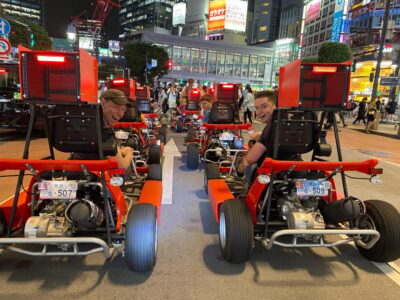 ★ 4.9Street Kart Experience in ShibuyaFrom $741,484 reviews
Filed on these lists too