
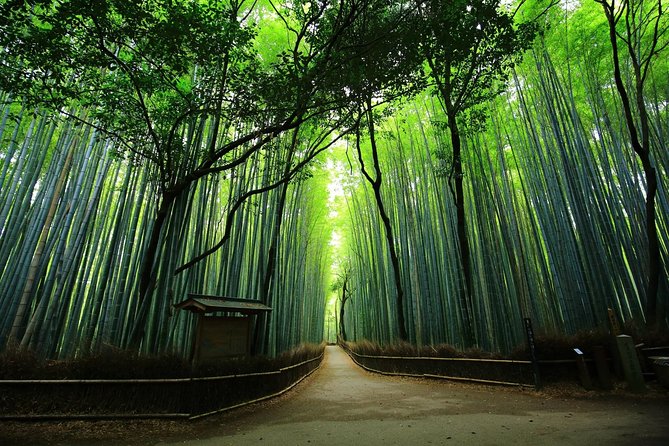
REVIEW · ARASHIYAMA AND THE BAMBOO GROVE
Kyoto Arashiyama & Sagano Bamboo Private Tour with Government-Licensed Guide
Kyoto’s bamboo gets way better. This private 6-hour walking tour in Arashiyama and Sagano pairs you with a government-licensed English-speaking guide, so you can focus on enjoying the sights instead of decoding Kyoto on your own. Expect iconic stops like Togetsukyo Bridge and Tenryu-ji, plus temple-and-garden variety throughout western Kyoto.
I really like the freedom built into the plan. You can customize the day by choosing 3 to 4 sites from the tour’s list, which means you can lean more toward temples, imperial gardens, or the statue temples without wasting time.
One thing to plan for: entrance fees are not included for most stops, and this is a walking day with plenty of hills and stairs. If you’re visiting in rain, expect slippery paths and wear grippy shoes.
In This Review
- Key highlights that make this tour worth your time
- Why Arashiyama and Sagano feel different with a licensed guide
- Price and time: what $157.82 gets you in 6 hours
- Getting around: pickup on foot and a walking-first day
- Arashiyama classics: Togetsukyo Bridge, bamboo forest street, and Tenryu-ji
- Togetsukyo Bridge, plus the seasonal cherry tree view
- Bamboo Forest Street, where the wind matters
- Tenryu-ji: the Zen temple with big garden energy
- Okochi Sanso: Arashiyama’s bamboo-side villa gardens
- Sagano hillside temples: Jojakkoji, Nisonin, and Gioji moss garden walks
- Jojakkoji: small, quiet, and maples-and-moss friendly
- Nisonin: bigger buildings, similar hillside calm
- Gioji: moss garden, thatched roofs, and a round window view
- Nenbutsuji statue temples: Adashino and Otagi’s stone faces
- Adashino Nenbutsuji: souls, hundreds of stone statues, and a bamboo path
- Otagi Nenbutsuji: 1200 rakan statues with different faces
- Imperial villa gardens: Shugakuin and Katsura, including the special viewing rules
- Shugakuin Imperial Villa: Upper, Middle, and Lower villa gardens
- Katsura Imperial Villa: circular trail, outside views only, and photo rules
- Optional reach into the northern mountains: Kurama-dera and Kibune River
- Kurama-dera and Kurama Onsen option
- Yoshimine-dera and Daikaku-ji as quieter temple alternatives
- Kibune River and Kifune Shrine water fortune ritual
- The “how to enjoy it” part: pacing, crowd avoidance, and smart questions
- Who should book this private Arashiyama and Sagano tour
- Should you book it? My honest take
- FAQ
- How long is the Kyoto Arashiyama and Sagano private tour?
- Is pickup included?
- Can I choose which places we visit?
- Are entrance fees included for temples and gardens?
- Do I need to download anything since it uses a mobile ticket?
- Is this tour private?
- What if the weather is bad or I need to cancel?
Key highlights that make this tour worth your time
- Government-licensed, English-speaking guide who can answer questions in real time
- Customize 3 to 4 sites so your day matches your interests
- Arashiyama bamboo and Togetsukyo Bridge handled with better pacing and context
- Temple variety in Sagano with moss, views, and quiet hillside walks
- Guides with strong crowd and timing instincts, including flexible pacing for slower guests
Still in Arashiyama? Keep going west
- Kyoto: Fushimi Inari, Kinkakuji, Bamboo Grove 1 Day Bus Tour
★ 4.8 · 4,316 reviews - Osaka/Kyoto:Kinkakuji,Arashiyama,FushimiInariShrine,NaraPark
★ 4.1 · 1,596 reviews - Kyoto/Osaka: Nara, Fushimi Inari Taisha, Arashiyama Bus Tour
★ 4.7 · 1,275 reviews - Kyoto Arashiyama Walking Tour: Bamboo, Monkeys, Gardens & Secrets
★ 5.0 · 1,216 reviews
Why Arashiyama and Sagano feel different with a licensed guide
Arashiyama and Sagano are famous for a reason, but the reputation can make you miss the details. When you have a government-licensed guide walking beside you, the trip becomes less about chasing photos and more about understanding why these places were chosen, who built them, and how the seasons change what you see.
I especially like that the guide isn’t just a walking app. You can ask what to notice, what connects the temples historically, and what order makes sense for where crowds typically form. That small shift turns a good sightseeing loop into a day that feels personal and explained.
Also, this tour is private. Only your group joins, so you can move at a sensible pace, stop for snacks without feeling rushed, and adjust when your knees, heat level, or energy dips.
Price and time: what $157.82 gets you in 6 hours
At $157.82 per person for a private tour lasting about 6 hours, you’re paying for three big things: guidance, direction, and time efficiency.
Here’s how that plays out for you:
- You avoid planning fatigue. Kyoto rewards curiosity, but Arashiyama can take effort to navigate well, especially if you try to string multiple temples together on your own.
- You get a real “why” for each stop. Tenryu-ji, imperial villas, and the statue temples each have a different cultural angle.
- You travel without a private vehicle. The tour lists no private vehicle, so the value is built around walking and using what’s nearby.
Entrance tickets and lunch are on you, and that’s the trade-off. But if you would otherwise spend money on taxis, wasted detours, and buying too many tickets without context, the guide can still be a smart value.
One more practical note: this tour is often booked about 65 days in advance. If you’re traveling in peak fall or cherry blossom season, earlier planning helps.
Getting around: pickup on foot and a walking-first day
This is a “meet up in Kyoto” type of tour, with pickup/drop off on foot. That matters because your day will be shaped by where you start, how long you walk between stops, and when you need short breaks.
Because transportation fees are not included for you or your guide and a private vehicle is not offered, you should expect to use public transit and walk as needed. If you hate transfers, tell your guide upfront when you book your 3 to 4 site choices, so they can keep the route sensible.
Since there’s no vehicle, you’ll also feel the weather. In summer heat, you’ll want water and a shade plan. In rain, paths up hills can get slick fast, especially near temple stairs.
Licensed guides working the same ground
- Kyoto 6hr Private Tour with Government-Licensed Guide★ 5.0 · 1,369 reviews
- Kyoto 4hr Private Tour with Government-Licensed Guide★ 5.0 · 629 reviews
- Kyoto: Private Tour with Local Licensed Guide★ 4.8 · 463 reviews
- Private Kyoto Tour with Licensed Guide & Vehicle (Max 15 persons)★ 5.0 · 417 reviews
- Nara 8hr Private Tour – Kyoto DEP. with Licensed Guide★ 5.0 · 115 reviews
Arashiyama classics: Togetsukyo Bridge, bamboo forest street, and Tenryu-ji
Most people come for Arashiyama’s signature moments. The good news is you don’t just get the postcard views, you get the context that makes them land.
Togetsukyo Bridge, plus the seasonal cherry tree view
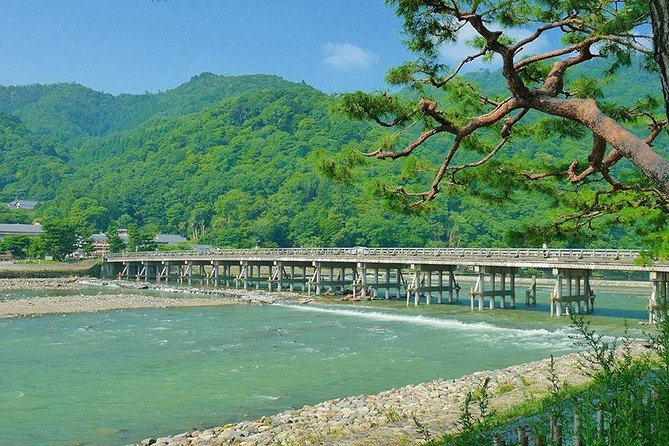
Togetsukyo Bridge is Arashiyama’s central landmark. It’s “Moon Crossing Bridge,” originally tied to the Heian Period, and most recently reconstructed in the 1930s. Adjacent to the bridge you’ll find a riverside park lined with cherry trees.
Two practical tips for you:
- Go slow here. The bridge looks simple, but the best views come from choosing your angle and letting the scenery frame the mountains behind it.
- If your goal is photos without stress, ask your guide about pacing and how to space out stops so you’re not always fighting peak crowd flow.
Bamboo Forest Street, where the wind matters
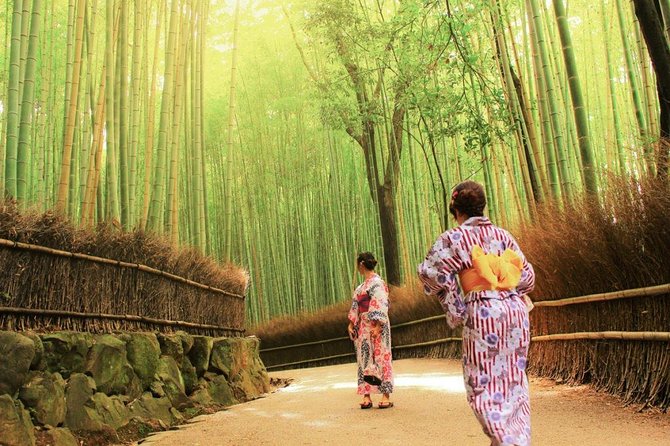
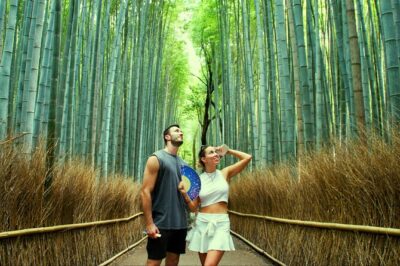
Then comes the bamboo groves. The walking paths through the stalks are especially pretty when there’s a light wind, because the tall bamboo sway gently and the whole space feels alive.
The guide helps here by pointing out what people typically rush past. You’ll also learn how bamboo has been used for products like baskets, cups, boxes, and mats for centuries, so the bamboo isn’t just scenery. It’s part of everyday craft history.
Tenryu-ji: the Zen temple with big garden energy
Tenryu-ji is one of Kyoto’s five great Zen temples and the largest major temple in Arashiyama. It’s also a UNESCO World Heritage Site. Beyond the main temple buildings, the gardens offer walking paths that help you slow down after the bamboo walk.
If you like gardens, this stop is usually a win. If you don’t, at least use it as a calmer reset before heading to the quieter hillside areas.
Okochi Sanso: Arashiyama’s bamboo-side villa gardens
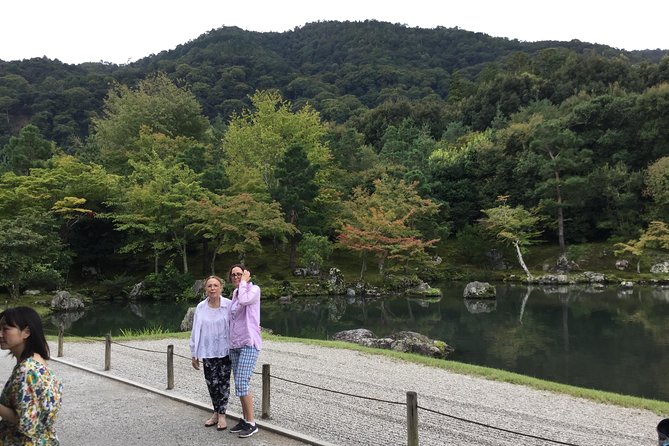
Okochi Sanso is the former villa of actor Okochi Denjiro. It sits behind the bamboo groves, and the setup is a mix of gardens and buildings like living quarters and tea houses.
Here’s what makes it satisfying for you:
- You get variety after the bamboo street. This feels more like wandering through a curated private world than a public temple route.
- You can view the buildings from the outside only, which naturally slows the pacing and keeps attention on the grounds.
If you’re choosing your 3 to 4 sites, this is a great option when you want something less standard than another temple gate photo.
Sagano hillside temples: Jojakkoji, Nisonin, and Gioji moss garden walks
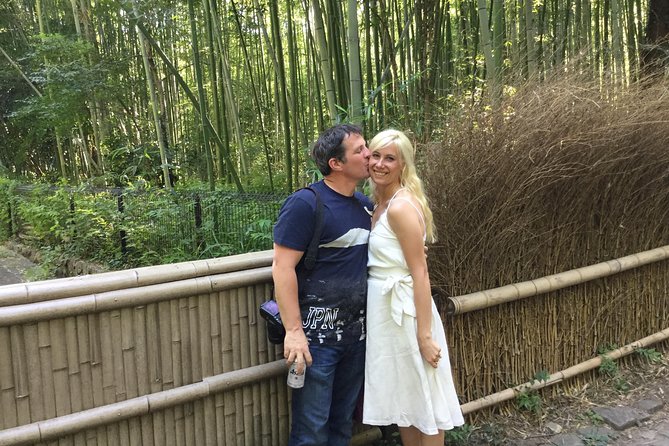
Sagano’s appeal is quiet beauty, not just famous attractions. This part of the tour shines if you like moss, shaded paths, and viewpoints.
Jojakkoji: small, quiet, and maples-and-moss friendly
Jojakkoji was founded in 1596 and sits on a hillside. The grounds are spread across paths and stairs, with maple trees and moss right beside the route. From several spots you can also look out over Kyoto.
If you want “feel the place” sightseeing, this is the kind of stop that does it. It’s also a nice pace change from heavier crowds near the bridge area.
Nisonin: bigger buildings, similar hillside calm
Nisonin is also a hillside temple, tied to the Tendai sect. It’s generally understated, partly due to overhanging trees along the approach. Founded in the mid 9th century, it offers views from the upper grounds.
If you like atmosphere, you’ll appreciate how the approach itself shapes the mood.
Gioji: moss garden, thatched roofs, and a round window view
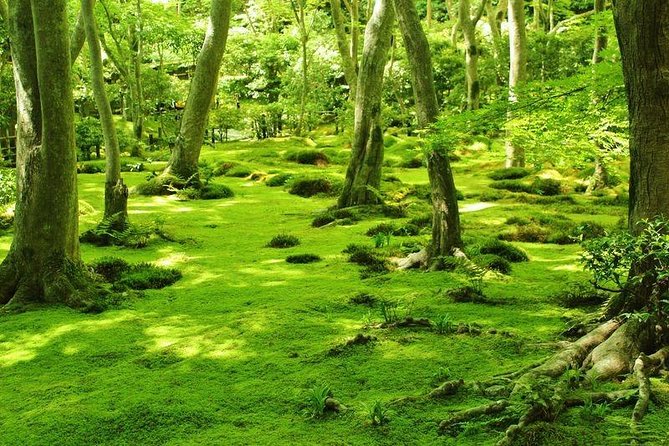
Gioji is even more forest tucked. It’s known for a moss garden punctuated with tall maple trees. The entrance gate and main hall have thatched roofs, and the main hall includes a round window looking into the gardens.
This stop is often the kind that makes a day feel intentional, not just busy. Plan it when you want to slow your pace and let the scenery do the talking.
Nenbutsuji statue temples: Adashino and Otagi’s stone faces
If you want something emotionally odd in a good way, the Nenbutsuji temples deliver.
Adashino Nenbutsuji: souls, hundreds of stone statues, and a bamboo path
Adashino Nenbutsuji sits at the end of the Saga-Toriimoto Preserved Street. The story is tied to Kobo Daishi, who placed stone statues for the souls of the dead there in the early 9th century. Today, the grounds are covered by hundreds of those statues.
There’s also a short path behind the temple that leads through a bamboo forest. So you get two textures in one stop, statues first, bamboo second.
Otagi Nenbutsuji: 1200 rakan statues with different faces
Otagi Nenbutsuji is famous for its 1200 stone statues of rakan devoted followers of Buddhism, each with a different facial expression. The statues were created relatively recently, in the 1980s and early 1990s.
This is one of the best “bring your camera, but expect it to be surprising” stops. The expressions turn the place into a walkable gallery of small human-like details.
Imperial villa gardens: Shugakuin and Katsura, including the special viewing rules
If gardens and architecture matter to you, don’t skip the imperial villa options. These are not just pretty grounds, they’re a window into how court culture shaped land design.
Shugakuin Imperial Villa: Upper, Middle, and Lower villa gardens
Shugakuin Imperial Villa was built in the 17th century by Emperor Gomizuno, and today it’s managed by the Imperial Household Agency. The villa has Upper, Middle, and Lower areas, each with gardens and buildings in traditional imperial style.
The name connects to a former temple on the same site built in the 10th century. If you like historical layering, this is a solid pick.
Katsura Imperial Villa: circular trail, outside views only, and photo rules
Katsura Imperial Villa is one of the finest examples of Japanese architecture and garden design. In its current form it was completed in 1645. Visiting requires joining a tour, which follows a circular walking trail around the central pond.
Two rules you should plan for:
- Palace buildings are viewable only from the outside.
- Photography is allowed only from designated spots.
English tours are available.
If you want Katsura, build your schedule around that internal tour timing. This stop can be a little stricter than a normal temple visit, so it helps to have your guide coordinating the flow.
Optional reach into the northern mountains: Kurama-dera and Kibune River
Even though the tour focuses on Arashiyama and Sagano, the site list includes northern mountain areas. That means your 3 to 4 choices can stretch beyond the core neighborhood, depending on what you select.
Kurama-dera and Kurama Onsen option
Kurama is a rural town in the northern mountains of Kyoto City, less than an hour from the city center. It’s known for Kurama-dera and the hot spring at Kurama Onsen.
Kurama Onsen day use options are listed as 2500 yen for outdoor plus indoor baths, or 1000 yen for just the outdoor bath (rotemburo). If you like a warm break after walking, this is one of the more restorative ways to use time on this kind of route.
Yoshimine-dera and Daikaku-ji as quieter temple alternatives
Yoshiminedera is a Tendai temple in Kyoto’s western mountains, built along the mountainside and looking out onto Kyoto. It was established in 1029 as a personal retreat by Gesan from Enryakuji, destroyed in the Onin War, and rebuilt in 1621. Its main worship objects include a Kannon statue carved by Gesan and another Kannon statue given by Emperor Gosuzaku in 1042.
Daikaku-ji is larger, in the northern part of Sagano. It began as Emperor Saga’s detached palace in the early 800s, later became a temple, and is tied to Shingon Buddhism. Historically, retired emperors lived there, and the temple hosted peace talks that reunited the Northern and Southern Imperial Courts after 50 years of civil war. It also has a large pond and a pagoda.
Kibune River and Kifune Shrine water fortune ritual
Kibune is a small town in a forested valley north of Kyoto. It developed around Kifune Shrine, tied to a legend about a goddess traveling by boat up the river from Osaka.
Kifune Shrine is dedicated to the god of water and rain. You can get omikuji fortunes written on paper slips, and the message reveals itself when you dip it into water. Okunomiya, the inner sanctum, lies about one kilometer further up the valley. It’s known for a large rock called the boat stone, said to be where the goddess’ yellow boat is buried.
If your group likes legends and rituals, Kibune can add a special flavor that feels different from the bamboo-and-temple rhythm.
The “how to enjoy it” part: pacing, crowd avoidance, and smart questions
This tour’s success depends on how you use it. With a private guide, you can treat the day like a conversation, not a checklist.
Here’s how to get more out of the time:
- Pick your 3 to 4 sites based on mood. If you want bamboo, gardens, and calm views, choose bamboo plus at least one moss garden temple like Gioji. If you want variety, add a statue temple like Otagi.
- Ask your guide to help with order. You’ll notice in the area that lines and crowd density change block by block. A guide can often adjust timing so your photos and walks feel less hectic.
- Plan a snack break and don’t rush it. One of the most appreciated guide traits here is making room for food and pacing, not just speeding from stop to stop.
- Bring the questions you actually care about. If you want history, ask for it. If you want how Kyoto worked during the seasons, ask that too. The tour is designed for direct access to your guide.
Heat and rain can change the day. If it’s hot, you’ll want more frequent stops and hydration. If it’s raining, keep your step careful on hillside paths.
Who should book this private Arashiyama and Sagano tour
This tour is a strong match if:
- You want a government-licensed English-speaking guide instead of self-planning.
- You care about context for bamboo, Zen temples, imperial gardens, and statue temples.
- You prefer a private pace, with time for questions and breaks.
- You’re visiting as a family, since guides here have handled kids’ interests like Arashiyama wildlife add-ons when families ask for them.
It may be less ideal if:
- You hate walking or stairs, and you tend to get fatigued quickly. You can still do it, but choose fewer hillside-heavy sites.
- You’re only interested in one or two famous attractions and nothing else, because the value comes from the variety and explanation across multiple stops.
Should you book it? My honest take
Book it if you want a guided, low-stress way to see Arashiyama and Sagano without turning your day into research. The price is high enough that you’ll feel it, but the guide time plus the flexibility to choose 3 to 4 sites is where the value shows.
Skip it or rethink if you’re trying to minimize entrance fees, since most stops require separate tickets for you. Also consider the weather factor. This experience depends on good conditions, and rain can make hillside walking more demanding.
FAQ
How long is the Kyoto Arashiyama and Sagano private tour?
It runs for about 6 hours.
Is pickup included?
Pickup is offered, and the pickup and drop off for the tour are on foot. You also meet the guide in Kyoto.
Can I choose which places we visit?
Yes. You can customize a walking tour of 3 to 4 sites from the listed What to expect options.
Are entrance fees included for temples and gardens?
No. Entrance fees for yourself are not included, and admission tickets are listed as not included for most stops (Togetsukyo Bridge is listed as free).
Do I need to download anything since it uses a mobile ticket?
A mobile ticket is included.
Is this tour private?
Yes. It’s private, and only your group participates.
What if the weather is bad or I need to cancel?
The experience requires good weather. If it’s canceled due to poor weather, you’ll be offered a different date or a full refund. You can cancel for a full refund up to 24 hours in advance.
Licensed Guides on the Same Ground
Further Into Arashiyama
Newest Kyoto write-ups from the Loving Japan desk

Arashiyama and the Bamboo Grove, side by side.
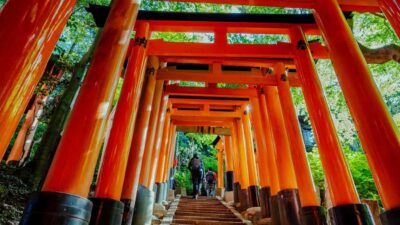
 ★ 4.8Fushimi Inari, Kinkakuji, Bamboo Grove 1 Day Bus TourFrom $1224,316 reviews
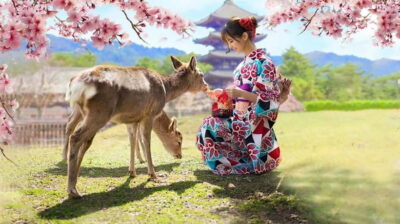
 ★ 4.1Osaka/Kyoto:Kinkakuji,Arashiyama,FushimiInariShrine,NaraParkFrom $661,596 reviews
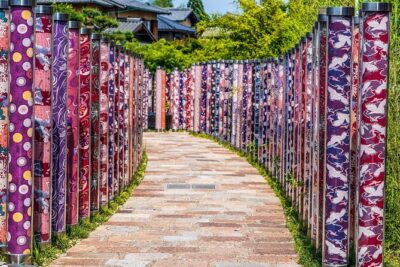
 ★ 4.7Kyoto/Osaka: Nara, Fushimi Inari Taisha, Arashiyama Bus TourFrom $521,275 reviews
 ★ 5.0Kyoto Arashiyama Walking Tour: Bamboo, Monkeys, Gardens & SecretsFrom $651,216 reviews
 ★ 4.8Arashiyama Bamboo, Temple, Monkeys, or Secret Sake BreweryFrom $87886 reviews
 ★ 5.0Arashiyama Bamboo Forest, Monkeys, Matcha & Temple TourFrom $53759 reviews
 ★ 4.4Osaka/Kyoto: Arashiyama, Nara & Fushimi Inari Shrine w/LunchFrom $61754 reviews
 ★ 5.0Nijo, Kinkaku-ji, Arashiyama, Kiyomizu & Fushimi InariFrom $51699 reviews
Filed on these lists too