
REVIEW · WALKING TOURS
Kyoto Early Bird Walking Tour
Beat Kyoto crowds before breakfast. This early-morning, guide-led walk starts at Kyoto Station and strings together three of the city’s top sights with crowd control built into the schedule, then you are done before midday. It is a private tour, so your group sets the pace inside a sensible plan.
I love the way the tour times Fushimi Inari-taisha’s torii tunnel for quieter walking and easier photos. I also like that you see Kinkaku-ji right after it opens, when the Golden Pavilion and pond area feel calmer, then head to Arashiyama bamboo before the heat and day-trippers arrive.
The main consideration is the early start and quite a bit of walking, plus extra costs for Kinkaku-ji and local transit. If you have a heart condition, this is explicitly not recommended, and comfortable shoes are a must.
In This Review
- Key things to know before you go
- Kyoto Station pickup, early start, and a half-day that frees your afternoon
- Fushimi Inari-taisha before the torii tunnel crowds
- Kinkaku-ji at opening time, Golden Pavilion calm in the morning
- Arashiyama bamboo forest before midday heat and day-trippers
- How much walking is really involved, and what to pack
- Price and extras: what you actually pay for this early-bird advantage
- Private group feel, guide style, and why names keep showing up
- Should you book the Kyoto Early Bird Walking Tour?
- FAQ
- What is the meeting point for the Kyoto Early Bird Walking Tour?
- How long is the tour?
- Is Kinkaku-ji Temple admission included in the price?
- Do I need to pay for transportation during the tour?
- Which attractions are visited?
- Where does the tour end?
- How does the early morning timing help?
- What should I wear or bring?
- What if the weather is bad?
Key things to know before you go
- Early timing wins, especially at Fushimi Inari and Kinkaku-ji, when lines have not fully formed.
- Morning light improves photos, because Kinkaku-ji is visited at opening time.
- Arashiyama bamboo is cooler early, and you get a more relaxed walk through the grove.
- Guide support saves stress, from routing between stops to practical help like water and restroom reminders.
- Expect extra fees, Kinkaku-ji admission and public transportation are not included.
- Private group feel, your group only participates, so it stays focused and easier to manage.
Still weighing up options in Kyoto? These are the ones our reviewers rated highest.
- PERFECT KYOTO 1-Day Bus Tour
★ 5.0 · 13,518 reviews - Kyoto: Fushimi Inari, Kinkakuji, Bamboo Grove 1 Day Bus Tour
★ 4.8 · 4,316 reviews - Kyoto: Tea Ceremony in a Traditional Tea House in Kiyomizu
★ 4.9 · 3,519 reviews - Kyoto Geisha Walking Tour: Gion District & Hidden Gems
★ 4.7 · 3,273 reviews
Kyoto Station pickup, early start, and a half-day that frees your afternoon
The tour meets at Kyoto Station in the building area labeled Building 901, at Higashishiokōjichō, Shimogyo Ward. You start in the early morning and you finish back at the same place, and that detail matters because it makes the rest of your day simpler to plan.
The full duration is about 5 hours 15 minutes, and the big payoff is that you end by noon. That means you can eat lunch without rushing, then choose whatever matches your energy level in the afternoon, instead of feeling locked into another sightseeing sprint.
This is also a mobile ticket tour with a private group setup. I like that combination because it usually cuts down on waiting, and it keeps the morning moving with fewer handoffs. It is also a good sign that many guides are described as punctual and organized at the meeting point.
Fushimi Inari-taisha before the torii tunnel crowds
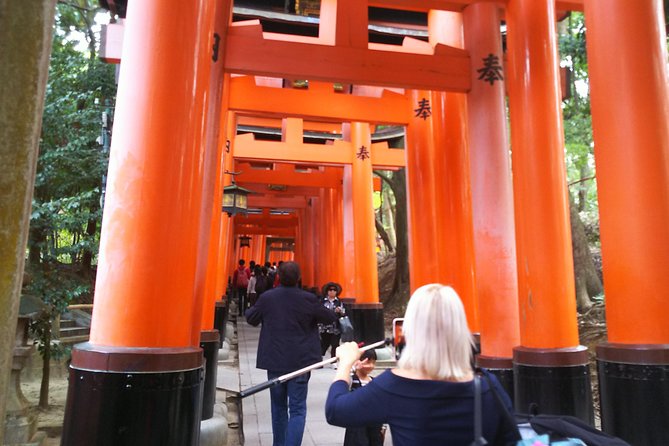
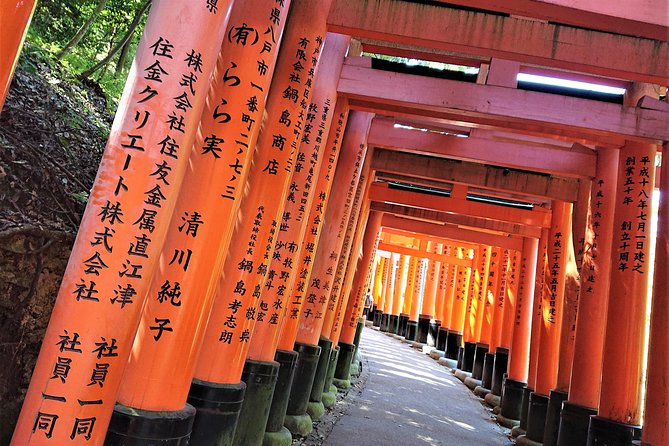
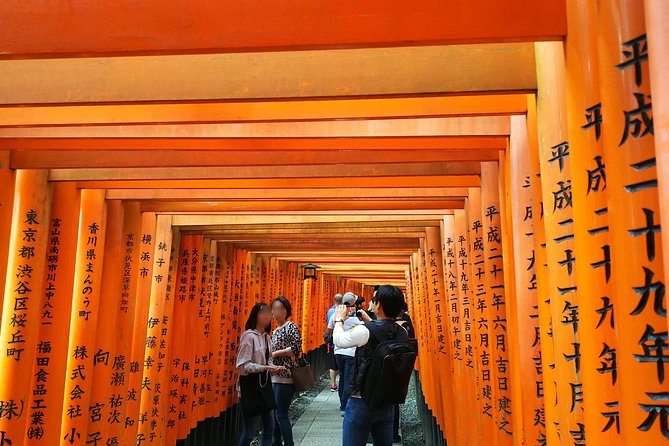
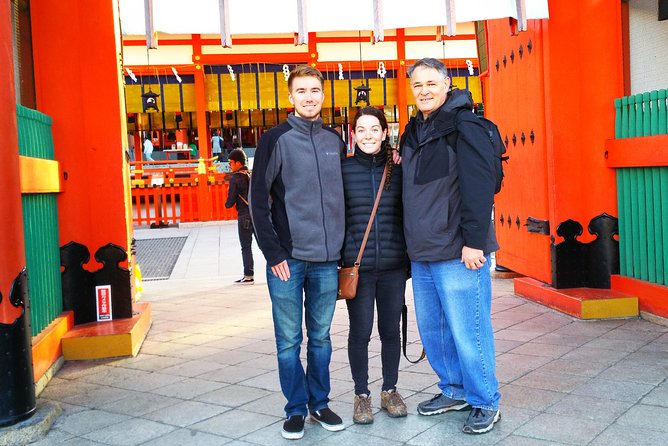
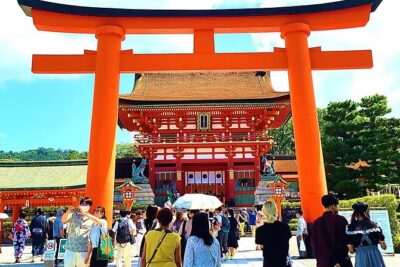
First stop is Fushimi Inari-taisha Shrine, with about an hour there. You get the most important advantage right away: you walk through the famous tunnel of thousands of vermilion torii gates before the crowds arrive in full force.
This is one of those places where the time of day changes everything. In the early window, the shrine feels more like a quiet pilgrimage route and less like a moving line of people. You can slow down, look for the best angles, and actually take in the rhythm of the gates as the path pulls you forward.
Fushimi Inari is free to enter on this tour, so you do not need extra ticket planning for the first stop. The guide also helps you make sense of what you are seeing, and several guides are praised for explaining how Shinto culture and the shrine work in everyday Kyoto life, not just reciting facts.
One practical note: there are lots of steps and surfaces, so you want shoes you trust. If your goal is photos, start thinking about them early, because the easiest viewpoints are often along the main route before it gets busy.
Kinkaku-ji at opening time, Golden Pavilion calm in the morning
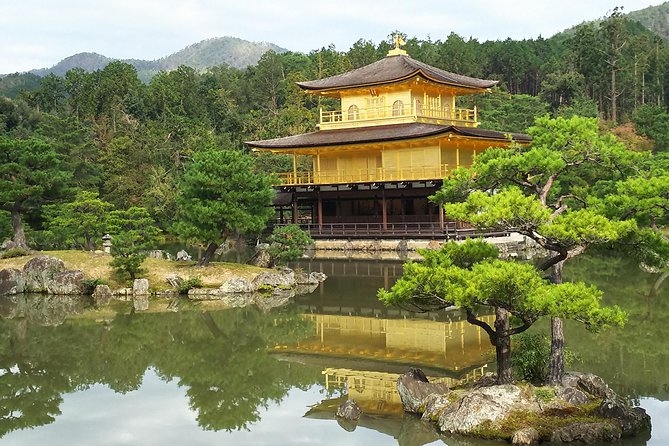
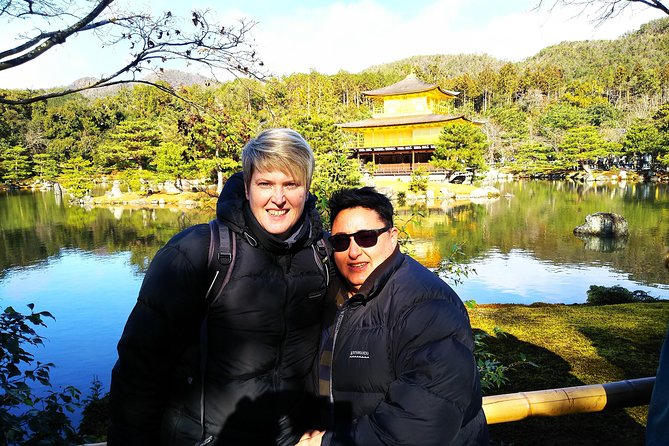
Next comes Kinkakuji Temple, usually for about an hour. This is the star everyone knows as the Golden Pavilion, and the tour’s timing is the whole point.
You arrive right after the site opens, when there are fewer people and you can take your time at the gilded building and the pond area. That quiet matters. When crowds swell later, you tend to rush just to keep moving, but in the opening window you can slow your eye down and really appreciate the details.
Admission for Kinkaku-ji is not included, and the listed fee is 500 yen per person. Budget for that, and do not let it surprise you mid-morning. The good news is that the temple visit is still one of the tour’s best value moments, because you are not paying extra for a long transfer or waiting time.
Guides are repeatedly praised for adding context around Japanese Buddhist culture and how the temple fits into broader Japanese traditions. That kind of explanation turns the Golden Pavilion from a postcard view into a place you understand while you are standing right in front of it.
If you want a simple strategy, focus on the area near the pond and the building first. Then use the rest of the hour for smaller looks around the grounds while the morning is still calm.
- PERFECT KYOTO 1-Day Bus Tour★ 5.0 · 13,518 reviews
- Kyoto: Fushimi Inari, Kinkakuji, Bamboo Grove 1 Day Bus Tour★ 4.8 · 4,316 reviews
- Kyoto: Tea Ceremony in a Traditional Tea House in Kiyomizu★ 4.9 · 3,519 reviews
- Kyoto Geisha Walking Tour: Gion District & Hidden Gems★ 4.7 · 3,273 reviews
- Kyoto: Tea Ceremony Ju-An at Jotokuji Temple★ 4.9 · 3,207 reviews
Arashiyama bamboo forest before midday heat and day-trippers
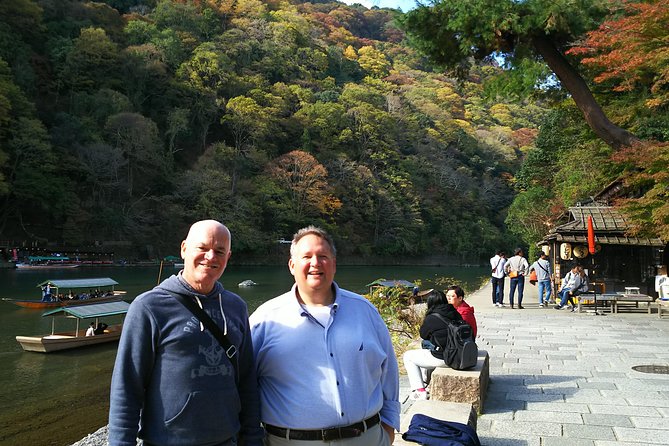
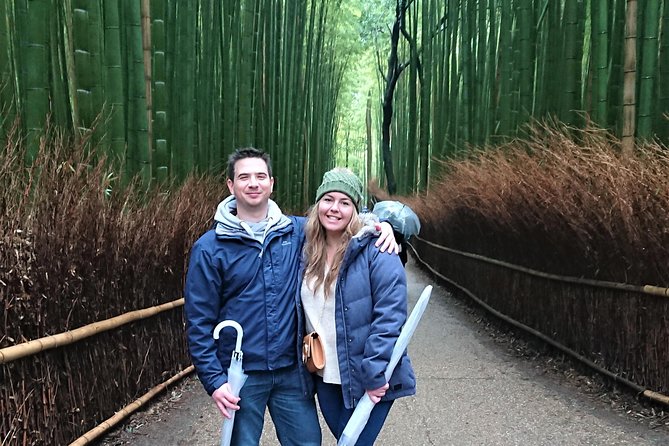
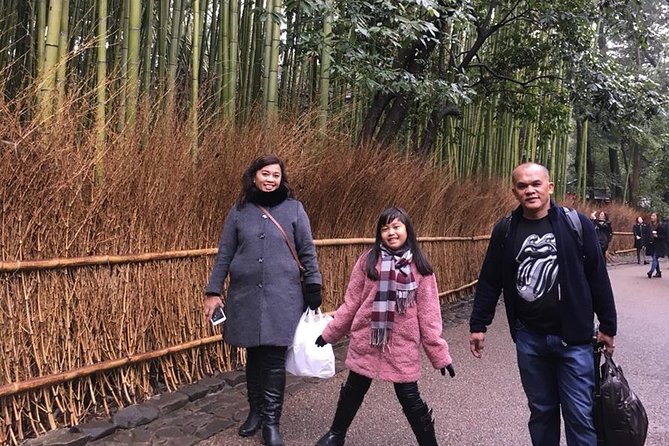
The last stop is Arashiyama, with about an hour in the bamboo forest. The tour is timed so you walk the famous grove in fresh morning air, before the temperature rises and the crowds build.
This is where you feel the difference that early timing makes. Bamboo walks can turn uncomfortable fast once the day gets hot and the crowd flow increases, but in the morning the grove feels cooler and easier to enjoy at a walking pace. You can also listen for the breeze through the stalks, which is exactly the kind of sensory detail that tends to get lost later when people speed past.
Admission is free for this stop, so your main cost pressure is already behind you after the Kinkaku-ji ticket. What you get here is a signature Kyoto experience that many first-time visitors want, but fewer manage without the chaos of peak hours.
Guides often point out practical photo spots as well as simple ways to move through the area without backtracking. In past tours, people also mention guides helping with small needs like water timing, and that matters in Arashiyama, since you can get warm once the morning turns into mid-day.
How much walking is really involved, and what to pack
The tour is described as requiring moderate physical fitness and a comfortable walking setup, and the key phrase here is that there is quite a bit of walking. If you like to sit often and you have limited stamina, you might feel the pace.
The good news is that the morning format is built for walking, not for standing in long lines. You are moving between three sites, each with about an hour on site, so your feet get a workout but your time stays structured.
For packing, think basics. Wear comfortable shoes with grip. Bring water if you run warm easily. One practical summer tip that comes up from guides and guests is a sun umbrella for bright, hot days. That is especially useful if your morning start still happens during peak sun.
Accessibility is listed as possible for people with limited eye sight and limited mobility. You should still plan around walking time and uneven surfaces at shrine and temple areas. The tour is not recommended for people with heart conditions, so if that applies, you will want a different plan.
Also, animals or pets are allowed. If you travel with a pet, confirm what that means for your specific comfort needs and walking pace before committing.
Price and extras: what you actually pay for this early-bird advantage
The tour price is $105.45 per person, and the included item is the guide fee. That sounds simple, but it is not just a “cheap tour” or a “premium tour” label, it is a value structure.
Here is what else you should plan to pay. Public transportation is listed at ¥1,220 per person, and Kinkaku-ji admission is ¥500 per person. Food and drink are not included.
So you are basically paying to remove friction. The guide handles timing, routing, and context, and you get the biggest advantage of all, access to calmer conditions at two of Kyoto’s most crowded stops. For many people, the money is worth it because it saves time you cannot buy back, plus it helps you avoid getting lost across Kyoto’s spread-out geography.
Several guides are praised for being attentive and efficient with logistics, including helping people catch the right train or bus connections and staying on time. That kind of planning becomes more valuable in the morning, when routes and crowds can turn even a simple trip into a puzzle.
If you are budgeting, add those extras to the base price and you will have a realistic number. Then compare it to the value of seeing three top attractions in one half-day with far less stress.
Private group feel, guide style, and why names keep showing up
Because this is a private tour for your group, you are not stuck behind a large mass of strangers. That usually helps conversations and small adjustments, like slowing down for photos or regrouping when someone needs a moment.
The guide experience comes through strongly in the tour feedback, with many people praising early start discipline and a smooth morning pace that does not feel rushed. Names like Akiko, Megumi, Kaz, Tomoko, Sumiko, Emiko, Hiro, Makoto, Miho, and Toshi appear often, and the common thread is that guides explain what you are seeing and help with practical needs like directions, photo viewpoints, and timing.
A lot of people also highlight that the tour is a strong first-day in Kyoto plan because it gives you bearings fast. You learn how things connect, how to move between areas, and what not to miss, without spending your morning reading maps under jet lag.
If you like learning, this is a good match. Some guides are specifically praised for tying shrine and temple sights to Japanese Buddhist and Shinto ceremonies, which helps the sites feel less random and more meaningful.
Should you book the Kyoto Early Bird Walking Tour?
Book it if you want the best shot at quieter Fushimi Inari and Kinkaku-ji, and you like the idea of a noon-finished morning that leaves real freedom for your afternoon. It is also a strong option if you are short on time, because three major attractions in one plan is hard to pull off well on your own without burning hours on logistics.
Pass or switch to a gentler option if you do not handle early starts well, or if your health limits long walking. This tour is not a slow stroll.
If you do book, bring good shoes, plan for the Kinkaku-ji ticket and transit costs, and treat the first two hours as your photo window. Start thinking about your favorite angles immediately at Fushimi Inari, then keep your eyes up for the Golden Pavilion experience right at opening.
FAQ
What is the meeting point for the Kyoto Early Bird Walking Tour?
The tour meets at Kyoto Station Building 901, located at 901 Higashishiokōjichō, Shimogyo Ward, Kyoto, 600-8216, Japan.
How long is the tour?
The duration is about 5 hours 15 minutes.
Is Kinkaku-ji Temple admission included in the price?
No. Kinkaku-ji admission is not included and is listed as ¥500 per person.
Do I need to pay for transportation during the tour?
Yes. Public transportation fare is listed as ¥1,220 per person and is not included.
Which attractions are visited?
The tour visits Fushimi Inari-taisha Shrine, Kinkaku-ji Temple, and Arashiyama bamboo forest.
Where does the tour end?
The tour ends back at the meeting point at Kyoto Station.
How does the early morning timing help?
The tour is designed for an early start to avoid crowds. It visits Fushimi Inari-taisha and Kinkaku-ji right after opening, and it reaches Arashiyama bamboo before the midday crowds.
What should I wear or bring?
The tour calls for comfortable shoes, and it involves quite a bit of walking. A moderate physical fitness level is recommended.
What if the weather is bad?
This experience requires good weather. If it is canceled due to poor weather, you will be offered a different date or a full refund.
Newest Kyoto write-ups from the Loving Japan desk

Walking Tours, side by side.
 ★ 4.7Kyoto Geisha Walking Tour: Gion District & Hidden GemsFrom $253,273 reviews
 ★ 5.0Tokyo Tsukiji Fish Market Food and Culture Walking TourFrom $993,184 reviews
 ★ 4.9Gion Magical Night Walking Tour with Geisha TriviaFrom $242,393 reviews
 ★ 5.0Imperial Palace and Shogun Historical Walking TourFrom $222,251 reviews
 ★ 4.7Gion Geisha District Walking Tour – Stories of GeishaFrom $202,187 reviews
 ★ 4.5Night Walk in Gion: Kyoto’s Geisha DistrictFrom $212,003 reviews
 ★ 4.9Shinjuku Local Bar and Izakaya Guided Walking TourFrom $341,794 reviews
 ★ 5.0Tsukiji Fish Market Food and Walking tourFrom $301,724 reviews
Filed on these lists too