
REVIEW · FUSHIMI INARI AND THE TEMPLES OF KYOTO
Kyoto: Fushimi Inari Hidden Hike (Private)
Torii gates are only half the story here. On this private Fushimi Inari Hidden Hike, you get a local English-speaking guide to steer you away from the busiest paths, while you soak in orange-red gates, bamboo, and mountain viewpoints tied to Kyoto’s Shinto world.
I especially like the undivided attention a private guide brings, because you are not just walking, you are getting commentary as you go. The second big win is the route itself: quieter Mt. Inari trails that feel calmer once you step off the main flow. One consideration is that this is a moderate hike for about 3 hours on uneven paths, and the tour does not include food or drinks, so you will want to plan accordingly.
In This Review
- Key things I’d mark on your map before you go
- Why this private Mount Inari walk feels different from the usual Fushimi Inari stop
- Meeting at Tofuku-ji, then climbing with Kyoto views
- What to watch for
- Fushimi Inari Taisha: torii gates, bamboo, and the main shrine route
- Admission detail that can save you time
- The quiet trails on Mount Inari: where the spiritual context really lands
- The photo angle: beauty plus meaning
- The return route: Tofuku-ji connects again, and the castle view adds wow
- DSLR photos and the guide’s pacing: turning a walk into a keepsake
- What you can expect from the experience length
- Price and logistics: does $62.26 per person make sense?
- Small logistics that affect comfort
- Who this Kyoto Fushimi Inari Hidden Hike is best for
- Weather, rain, and what to do if plans change
- Should you book this private Kyoto Essence Tours hike?
- FAQ
- How long is the Kyoto Fushimi Inari Hidden Hike (Private)?
- What are the meeting point and end point?
- What time does the tour start?
- Is this tour private?
- Is the shrine admission included?
- What is included in the tour price?
- What is not included?
- What happens if the weather is bad or I cancel?
Key things I’d mark on your map before you go
- Private guide, private pacing so you can move with purpose and ask questions as you walk.
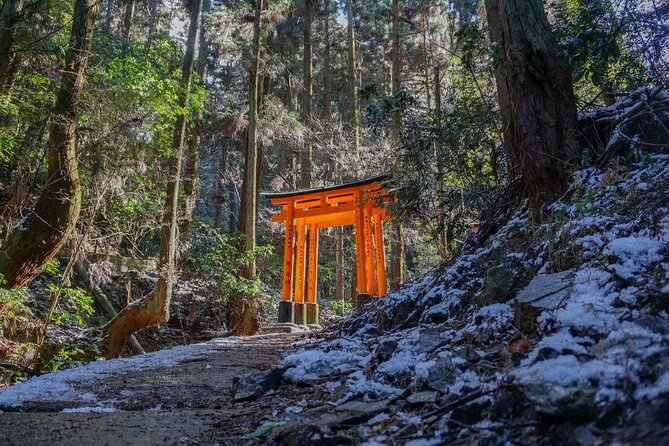
- Senbon Torii gates with breathing space, plus a calmer path that avoids the heaviest crush.
- Shinto-focused storytelling on the meaning behind the shrine and rituals you see up close.
- Tofuku-ji and castle viewpoints that turn a shrine visit into a real Kyoto landscape walk.
- Complimentary DSLR photos taken during the tour and shared afterward.
Which temple to give the morning to, reviewed
- Kyoto: Fushimi Inari, Kinkakuji, Bamboo Grove 1 Day Bus Tour
★ 4.8 · 4,316 reviews - Kyoto/Osaka: Nara, Fushimi Inari Taisha, Arashiyama Bus Tour
★ 4.7 · 1,275 reviews - Kyoto: Nijo-jo Castle and Ninomaru Palace Guided Tour
★ 4.7 · 1,020 reviews - Osaka/Kyoto: Arashiyama, Nara & Fushimi Inari Shrine w/Lunch
★ 4.4 · 754 reviews
Why this private Mount Inari walk feels different from the usual Fushimi Inari stop
Fushimi Inari Taisha is one of Kyoto’s most recognizable sights for a reason. You can stand in front of the iconic torii gates and feel the place pull you in. But if you only follow the busiest route, you miss the quieter rhythm of the mountain trails that make Inari feel more like a lived-in spiritual landscape than a photo stop.
That is where this private format changes everything. With your guide leading, you spend less time figuring out where to turn and more time noticing what is around you. The guide’s English narration is not just generic facts either. You get explanations tied to Japanese culture, history, and Shinto, which helps the torii pathway and shrine customs make sense instead of staying as symbols you recognize from postcards.
The other thing I like is the “hidden hike” framing. It is not about turning the tour into a mystery mission. It is about being intentional: stepping away from the main tourist paths so the mountain trails feel calmer, more focused, and more like you are walking within the shrine’s atmosphere.
Meeting at Tofuku-ji, then climbing with Kyoto views
The tour starts at 8:30 am at FamilyMart Nakai Tofukuji (12-chōme-232 Honmachi, Higashiyama Ward). It ends at Fushimi Inari Shrine Tower Gate (68 Fukakusa Yabunouchichō, Fushimi Ward), right in front of the Romon Gate, just before the main hall area.
That start location matters because it helps you get moving early. You spend your first stretch not by charging straight into the shrine crowds, but by building context. On the way up toward Mount Inari, you enjoy views of Tōfuku-ji, one of Kyoto’s Five Great Zen Temples.
Even if you have seen Tōfuku-ji before, the viewpoint from the route gives you a different angle of how Kyoto’s temple districts connect to the surrounding hills. It is a small moment, but it sets the tone for the rest of the hike. You are not just arriving at Fushimi Inari, you are transitioning into the mountain world that feeds the shrine’s spiritual geography.
What to watch for
Because there is no hotel pick-up or drop-off, you will want to make sure you can reach the meeting point easily using public transport. The tour is near public transportation, but you still need to get yourself there on time.
- PERFECT KYOTO 1-Day Bus Tour★ 5.0 · 13,518 reviews
- Kyoto: Fushimi Inari, Kinkakuji, Bamboo Grove 1 Day Bus Tour★ 4.8 · 4,316 reviews
- Kyoto: Tea Ceremony in a Traditional Tea House in Kiyomizu★ 4.9 · 3,519 reviews
- Kyoto Geisha Walking Tour: Gion District & Hidden Gems★ 4.7 · 3,273 reviews
- Kyoto: Tea Ceremony Ju-An at Jotokuji Temple★ 4.9 · 3,207 reviews
Fushimi Inari Taisha: torii gates, bamboo, and the main shrine route
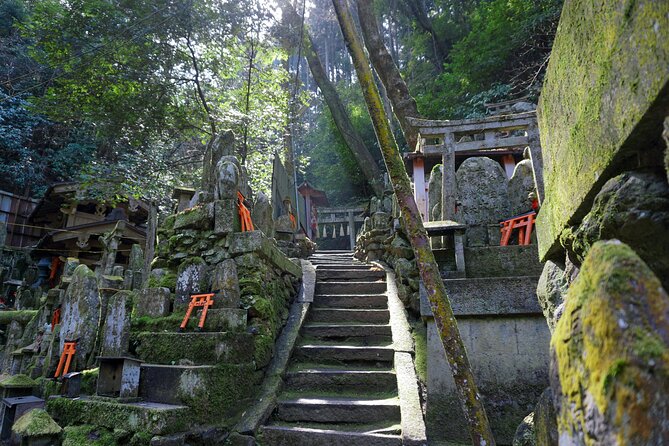
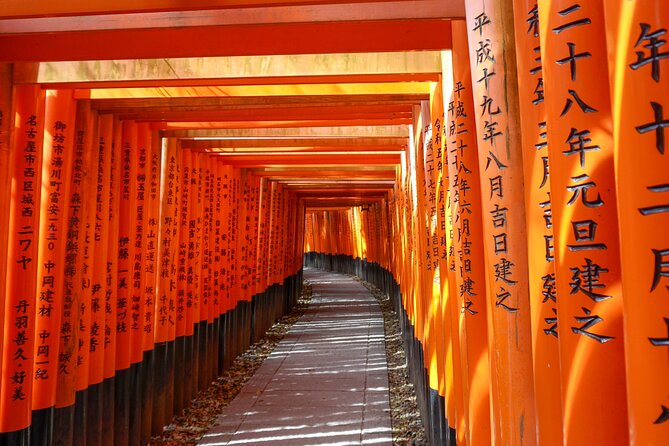
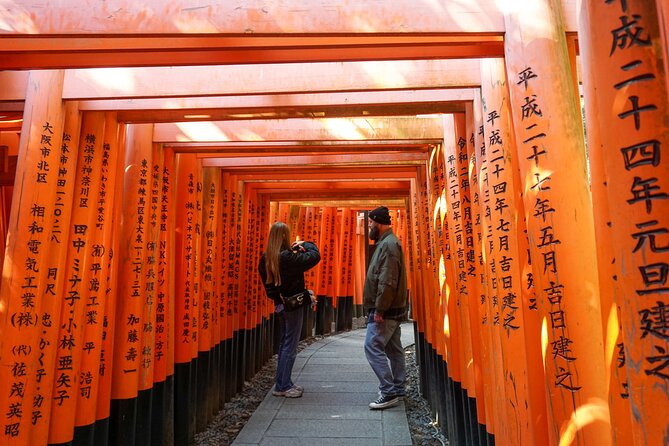
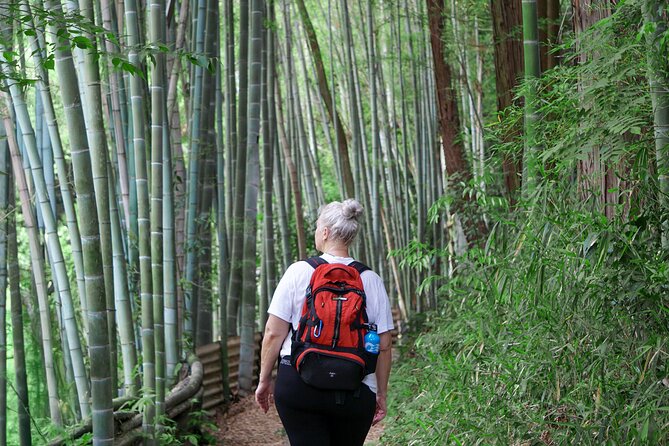
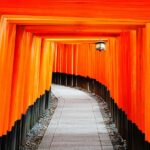
The first major stop is Fushimi Inari-taisha Shrine. Your guide leads you through a sequence of experiences, and the order helps. First you pass through vermilion torii gates, then move through wild bamboo groves along serene mountain paths before continuing on toward the iconic Senbon Torii (the thousands of torii gates) and the main shrine area.
Here is why this structure is valuable. If you walk straight to the biggest gates, you often miss the transition moments that make the place feel layered. The bamboo areas and the mountain paths create a psychological shift from city noise to mountain quiet. Then, when you reach the Senbon Torii gates, the sight hits harder, because you arrived there after slowing down.
You also get the added advantage of not having to guess how long to linger. You can focus on what you see: the pattern of torii, the way the trail curves, and the way the shrine’s setting changes as the path rises.
Admission detail that can save you time
The time at Fushimi Inari-taisha Shrine is listed at about 2 hours, and the admission ticket is free on this tour. That is helpful because you can keep the visit flowing without worrying about a paid entry gate at the shrine itself.
The quiet trails on Mount Inari: where the spiritual context really lands
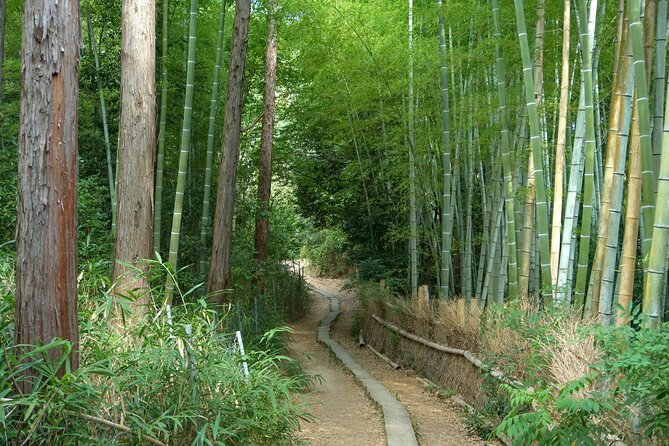
The heart of this experience is the quieter hike near Mount Inari. You go beyond the most obvious and crowded approach routes and instead walk trails that many first-time visitors never take.
This is not just a “less crowded” perk. It changes how the site feels. On the main paths, you move through the shrine like a visitor stream. On the calmer trails, you can actually notice details: how the torii line the path, how the scenery frames the shrine structures, and how the mountain atmosphere shapes the experience.
Your guide’s narration on Shinto helps you connect those details to meaning. You learn about Japanese culture and how Shinto beliefs show up in the landscape, not just in one building. That kind of context is what turns a famous place into something you understand.
The photo angle: beauty plus meaning
If photography is your thing, you will like how the tour balances iconic scenes with quieter pockets. The orange-red gates are obviously camera-friendly, but the quieter trails give you space to get photos without constantly repositioning around other people. The result is that your pictures tend to look more like scenes from a walk, not just a snapshot of a landmark.
The return route: Tofuku-ji connects again, and the castle view adds wow
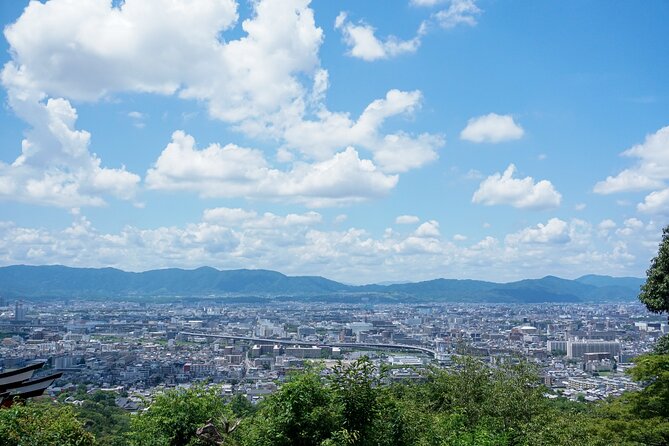
Coming back down is not an afterthought. On the way down to the main shrine area, you get scenic views of Fushimi Momoyama Castle from the mountainside.
That matters because it broadens the tour beyond “torii and shrine.” You are still in the Inari world, but you also get a Kyoto skyline and landmark reference that adds variety to the walk. It is a nice reminder that Kyoto’s religious sites are not isolated. They sit within a network of history, geography, and architecture that you feel while hiking.
It also helps keep energy steady during a 3-hour experience. The climb can be the most demanding part, depending on your comfort level. Having viewpoints on the way back gives your legs a break and gives your eyes something to focus on other than the ground under your feet.
DSLR photos and the guide’s pacing: turning a walk into a keepsake
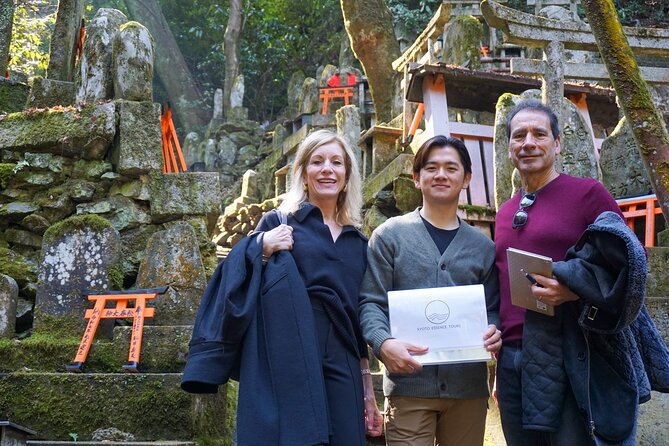
One included feature that I think is genuinely practical: complimentary photos taken with a DSLR camera, shared after the tour.
This is a real value add because it solves a common problem in Japan. You can find yourself with great scenery and then spend the whole time taking photos of yourself or asking strangers to shoot. A DSLR camera also tends to capture the colors of the torii and the greenery of bamboo with more clarity than a fast phone snapshot.
Just as important, your guide’s pacing supports the photography. You are not forced to sprint to the next viewpoint. Instead, you can pause when the light, angles, or crowds allow it, and still stay within the overall 3-hour timing.
What you can expect from the experience length
The tour runs about 3 hours. In that time, you cover:
- torii gates and the bamboo groves
- Senbon Torii area and the main shrine approach
- the quiet Mount Inari trails away from main paths
- viewpoint moments including Tōfuku-ji and Fushimi Momoyama Castle
That is enough time to feel you did more than a quick shrine stop, without turning the morning into an all-day hike.
Price and logistics: does $62.26 per person make sense?
At $62.26 per person, this private tour has a price tag that can look steep if you compare it to a basic public entrance or group tour. But you are not paying just for access to torii gates. You are paying for:
- a private English-speaking local guide
- commentary covering Japanese culture, history, and Shinto
- a planned route that intentionally includes quieter Mount Inari trails
- complimentary DSLR photos shared after the tour
For me, the value angle is simple. If you care about not getting lost, avoiding the most crowded paths, and understanding what you are seeing while you walk, you are effectively buying time and attention. That is what turns a famous place into a meaningful morning.
Also, the tour lists group discounts and a mobile ticket. If you are booking with at least one other person, the per-person cost may feel more reasonable because you share the guide experience.
Small logistics that affect comfort
- No food or drinks are included.
- No hotel pick-up or drop-off is included.
- You should have moderate physical fitness level.
None of this is a deal-breaker. It just means you should show up prepared for a steady walk and build your day around a proper start.
Who this Kyoto Fushimi Inari Hidden Hike is best for
This tour is a strong match if you want:
- a private guide experience rather than a group scramble
- Shinto context while you walk, not a quick spoken intro at the start
- quieter trails so the shrine feels more personal
- better photo results, especially if you want images that look like more than a selfie on the run
It can also work well if you are visiting during a time when Fushimi Inari is crowded, because the tour is designed to route you away from the main flows.
If you hate walking, or you need flat, fully paved terrain, you might find the moderate hike part challenging. The tour is still listed as moderate fitness, so you do not need to be a mountaineer, but you should be comfortable with steps and uneven paths.
Weather, rain, and what to do if plans change
Weather matters here. The tour notes that it requires good weather. If it is canceled due to poor weather, you are offered a different date or a full refund.
In practice, even when conditions are not perfect, the value of a guided quiet route can still shine. A calm route can keep the experience more focused than battling crowds. Still, if the forecast looks rough, plan to check weather and be ready for the tour to adjust.
Should you book this private Kyoto Essence Tours hike?
I think you should book this if you want Fushimi Inari Taisha with less noise and more meaning. The combination of quiet Mount Inari trails, Shinto explanations, and the included DSLR photos gives you a morning that feels both practical and memorable.
Skip it, or consider alternatives, if:
- you are hoping for a super easy walk with no moderate hiking component
- you do not want to handle your own transport to the meeting point
- you want food included, because this one is focused on the hike and shrine time, not dining
If you are the type who likes knowing why a place looks the way it does, and you want your photos to look like you actually had time to breathe, this tour is one of the more thoughtful ways to do Fushimi Inari beyond the standard rush.
FAQ
How long is the Kyoto Fushimi Inari Hidden Hike (Private)?
The tour duration is about 3 hours.
What are the meeting point and end point?
You meet at FamilyMart Nakai Tofukuji (12-chōme-232 Honmachi, Higashiyama Ward) and end in front of the Romon Gate at Fushimi Inari Shrine Tower Gate, just before the Main Hall of Fushimi Inari Taisha.
What time does the tour start?
The start time is 8:30 am.
Is this tour private?
Yes. It is a private tour, so only your group participates.
Is the shrine admission included?
The tour lists admission for Fushimi Inari-taisha as free.
What is included in the tour price?
Included are a private tour, an English-speaking local guide based in Kyoto, English narration on Japanese culture, history, and Shinto, visits to quieter Mt. Inari trails away from the main tourist paths, and complimentary photos taken with a DSLR camera shared after the tour.
What is not included?
Food and drinks are not included, and there is no hotel pick-up or drop-off.
What happens if the weather is bad or I cancel?
The experience requires good weather. If it is canceled due to poor weather, you are offered a different date or a full refund. You can cancel up to 24 hours in advance for a full refund.
Which Kyoto Temple Gets Your Morning



Newest Kyoto write-ups from the Loving Japan desk
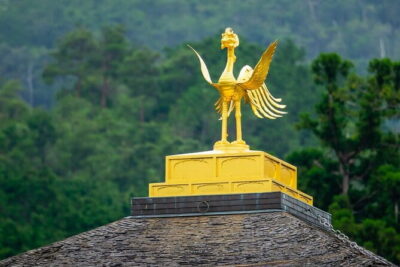

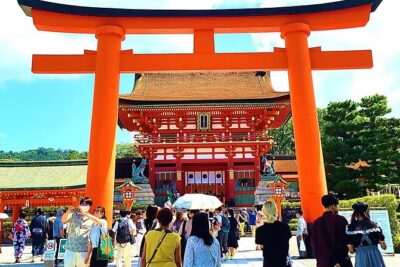
Fushimi Inari and the Temples of Kyoto, side by side.
 ★ 4.8Fushimi Inari, Kinkakuji, Bamboo Grove 1 Day Bus TourFrom $1224,316 reviews
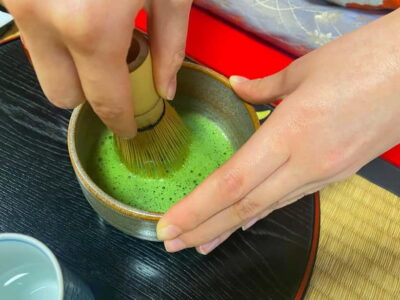 ★ 4.9Tea Ceremony in a Traditional Tea House in KiyomizuFrom $493,519 reviews
 ★ 4.7Kyoto/Osaka: Nara, Fushimi Inari Taisha, Arashiyama Bus TourFrom $521,275 reviews
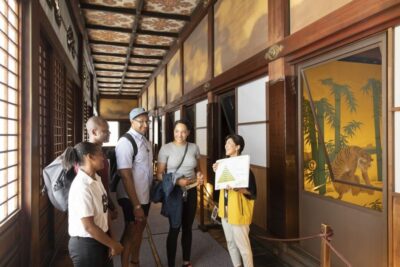 ★ 4.7Nijo-jo Castle and Ninomaru Palace Guided TourFrom $161,020 reviews
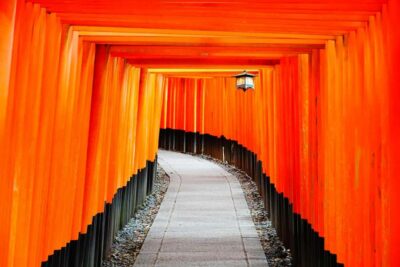 ★ 4.4Osaka/Kyoto: Arashiyama, Nara & Fushimi Inari Shrine w/LunchFrom $61754 reviews
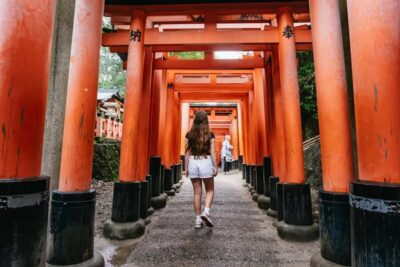 ★ 4.7Nijo Castle, Kiyomizu & Fushimi Inari Guided TourFrom $54700 reviews
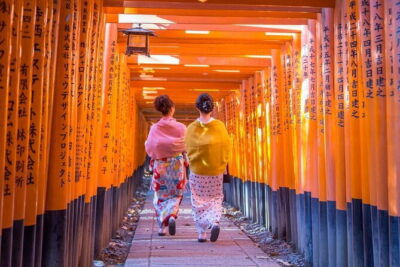 ★ 5.0Nijo, Kinkaku-ji, Arashiyama, Kiyomizu & Fushimi InariFrom $51699 reviews
 ★ 4.7Imperial Palace & Nijo Castle Guided Walking TourFrom $49453 reviews
Filed on these lists too