
REVIEW · GION, GEISHA AND MAIKO EXPERIENCES
Kyoto: Gion Magical Night Walking Tour
Gion at night changes everything. This Kyoto tour takes you through Gion’s streets before the big crowds, then connects you to the local world of geisha culture and temple life. I like that it is built around actual walking time and real landmarks, not just a quick photo stop.
Two things I especially like: first, the small-group size (capped at eight in the tour description, with the operator listing up to 10 travelers), which keeps the guide’s stories easy to hear. Second, you get to visit famous spots and quieter corners when the light is warmer and the streets feel calmer.
One drawback to plan for: there are slopes and stairs, so it is not ideal if you struggle with uneven pavement or uphill walking.
In This Review
- Key highlights
- Gion at night, and why the early timing matters
- The walking rhythm: how 1 hour 40 minutes plays out
- Where you start, where you end, and how to find the group
- Stop-by-stop: from Gionmachi Minamigawa to Yasaka Shrine
- Stop 1: Gionmachi Minamigawa (about 10 minutes)
- Stop 2: Yasui-Konpiragu (about 10 minutes)
- Stop 3: Sannenzaka and Ninenzaka (about 20 minutes)
- Stop 4: A WWII memorial with a large Kannon statue (time not specified)
- Stop 5: A 400-year-old mourning site with garden, tea house, and bamboo (time not specified)
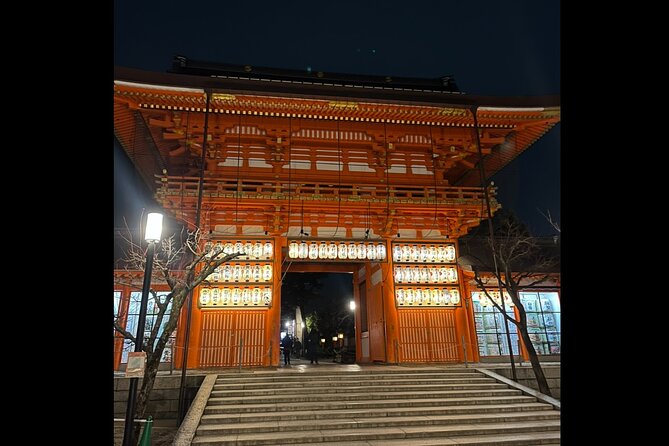
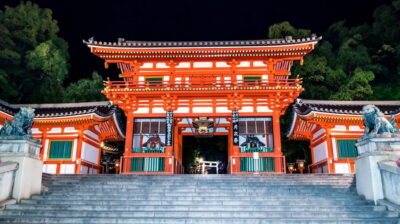
- Stop 6: Yasaka Shrine (about 10 minutes)
- Geisha culture and etiquette: what the guide helps you get right
- Photo-friendly moments, but bring the right mindset
- Price value: what $29.60 buys you in Kyoto time
- Who should book, and who should skip it
- Should you book the Kyoto Gion Magical Night Walking Tour?
- FAQ
- How long is the Kyoto Gion Magical Night Walking Tour?
- What is the group size limit?
- Where does the tour start and end?
- Do I get a mobile ticket?
- Is this tour difficult to walk?
- What should I do if I see a Maiko or Geiko?
- What places does the tour include?
- What if weather is bad or I need to cancel?
- Are service animals allowed?
Key highlights
- Early start in Gion to see a quieter side of the district
- Small-group format for a less intrusive, more personal experience
- Geisha culture and etiquette explained by your guide, with practical behavior tips
- Lantern-lit shrine and temple moments, plus multiple free-to-enter stops
- Guided photo opportunities while you learn what you are actually looking at
- Route that blends well-known streets with lesser-seen details
Evening walks through the old quarters, compared
- Kyoto Geisha Walking Tour: Gion District & Hidden Gems
★ 4.7 · 3,273 reviews - Kyoto: Gion Magical Night Walking Tour with Geisha Trivia
★ 4.9 · 2,393 reviews - Kyoto: Gion Geisha District Walking Tour – Stories of Geisha
★ 4.7 · 2,187 reviews - Best of Kyoto: Gion, Geisha, Pagodas & Cobblestones
★ 4.9 · 2,058 reviews
Gion at night, and why the early timing matters
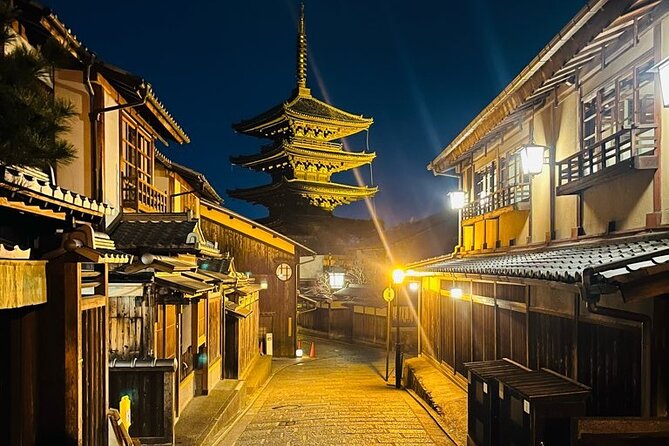
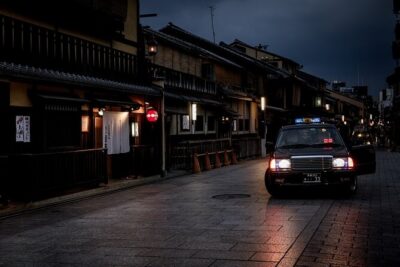
Gion is famous. That also means it can get crowded fast, especially in daylight hours when tour groups pour into the main streets. What makes this experience feel different is the timing. You are walking in the evening when the lighting is softer and the area is easier to read. In practical terms, you can actually look up at buildings, notice details in the architecture, and listen to your guide without constantly dodging elbows.
Night also changes the texture of the district. Shrines and smaller sacred spaces look warmer under lantern light, and street corners feel more intimate. Even if you have seen Gion in photos, you will notice how sound and movement slow down after dark. This tour leans into that.
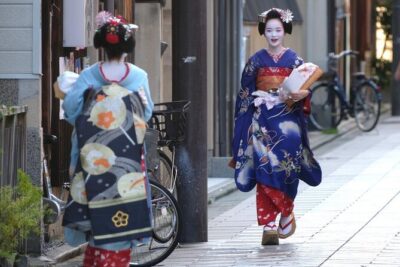
And yes, there is a chance you spot a Maiko or Geiko along the way, especially around the main Gion street. Your guide gives you a gentle, respectful way to handle that moment, so you are not just staring or rushing.
The walking rhythm: how 1 hour 40 minutes plays out
The tour runs about 1 hour 40 minutes and is built as a steady stroll with short stops. Expect “walk, pause, learn, walk again.” You are not crammed into long museum-style time at each location, but you also get enough time to absorb what matters and take photos.
The itinerary is fairly spread out across Gion and nearby streets, and the pace includes gentle uphill and downhill sections. The operator is clear that slopes and stairs are part of the route. If your comfort level is low for walking, this is the one thing that can turn a good evening into a stressful one. Wear shoes you trust.
You will also want to keep your expectations realistic about geisha sightings. This is a culture-and-streets walk, not a guarantee. The tour’s value is what you learn about the places and the etiquette around them, even if you do not spot a performer.
Where you start, where you end, and how to find the group
The meeting point is at Minamiza Theater in Kyoto (Higashiyama Ward, Nakanochō). It is a specific location, and the tour ends at Gionmachi Kitagawa, also in Higashiyama Ward.
It helps if you arrive a few minutes early, especially because night walks run on timing and you do not want to delay the whole group. Since the tour runs near public transportation, you can usually plan an easy transfer from most central areas. Once you are there, you will be able to spot your group and get oriented before you start moving.
One more small but useful detail: this is a mobile ticket experience. That matters in Kyoto, where getting things done quickly saves time.
- PERFECT KYOTO 1-Day Bus Tour★ 5.0 · 13,518 reviews
- Kyoto: Fushimi Inari, Kinkakuji, Bamboo Grove 1 Day Bus Tour★ 4.8 · 4,316 reviews
- Kyoto: Tea Ceremony in a Traditional Tea House in Kiyomizu★ 4.9 · 3,519 reviews
- Kyoto Geisha Walking Tour: Gion District & Hidden Gems★ 4.7 · 3,273 reviews
- Kyoto: Tea Ceremony Ju-An at Jotokuji Temple★ 4.9 · 3,207 reviews
Stop-by-stop: from Gionmachi Minamigawa to Yasaka Shrine
This walk is structured around several key stops, each with a different “why it matters” story. Most entrances are listed as free, which is a nice bonus. Your money goes mostly toward the guide’s time, context, and the route planning that helps you see more in less time.
Stop 1: Gionmachi Minamigawa (about 10 minutes)
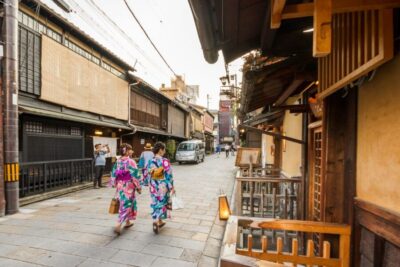
You start on one of Gion’s most famous streets. This is where you might see Maiko or Geiko if you are lucky. The practical tip is simple and respectful: if you spot one, greet with a smile and say konnichiwa.
What you get here is not just a street view. Your guide frames what you are seeing, so you understand why Gion looks the way it does and what to pay attention to beyond the obvious.
Potential drawback: because this is a famous corridor, you can still get traffic of people. The point of the timing is to keep it calmer than peak daytime, but you should still expect some presence.
Stop 2: Yasui-Konpiragu (about 10 minutes)
Next comes a shrine tied to relationships. The tour description explains that it is associated with helping men and women meet, cutting off bad relationships, and strengthening bonds for married couples.
This stop is a good example of how your guide translates religion into everyday meaning. You are not just walking past a building. You are learning how locals think about luck, repair, and commitment.
Practical note: shrines can feel crowded even at night. The time is short here, so you keep moving rather than lingering too long.
Stop 3: Sannenzaka and Ninenzaka (about 20 minutes)
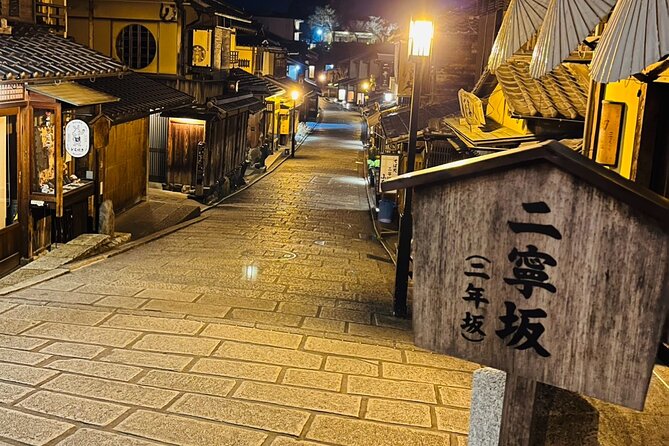
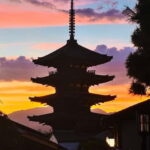
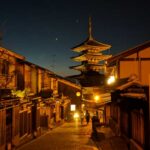
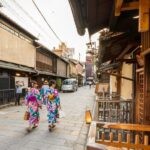
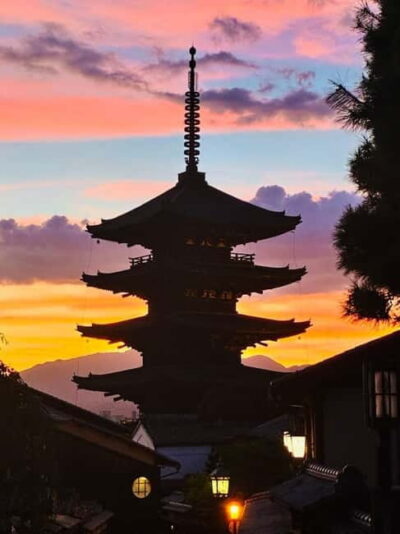
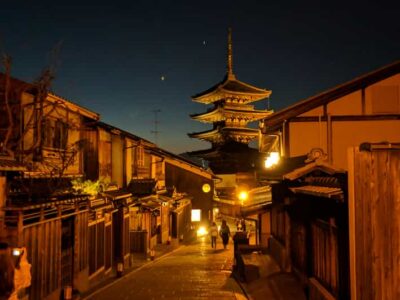
Then you head to the classic approach area near Kiyomizu-dera. The big reason people love these streets is the traditional townscape feel, with historic-looking buildings lining the route. Yasaka-no-to is especially popular in this zone.
At night, these streets can feel like a living set. Light pools on stone and wood, and the street details become more noticeable. This is also one of the better segments for photos, because your guide can point out angles and what to include so your pictures look intentional.
Potential drawback: you are still walking. If you are prone to leg fatigue, this 20-minute stretch may feel like more than it sounds, especially with any uphill sections leading into the area.
Stop 4: A WWII memorial with a large Kannon statue (time not specified)
One stop in the middle of the route shifts tone. It is a site built in 1955 to pray for the repose of the souls of World War II victims, and it features a very large Kannon statue.
This is a powerful contrast to the geisha-focused parts of the walk. It reminds you that Gion and Kyoto in general are not just about sightseeing. Spiritual places here are tied to real history, grief, and remembrance.
If you prefer a lighter, purely aesthetic route, this stop may feel more serious than the rest. But it also adds depth, because it shows how multiple layers of Kyoto life exist in the same city block.
Stop 5: A 400-year-old mourning site with garden, tea house, and bamboo (time not specified)
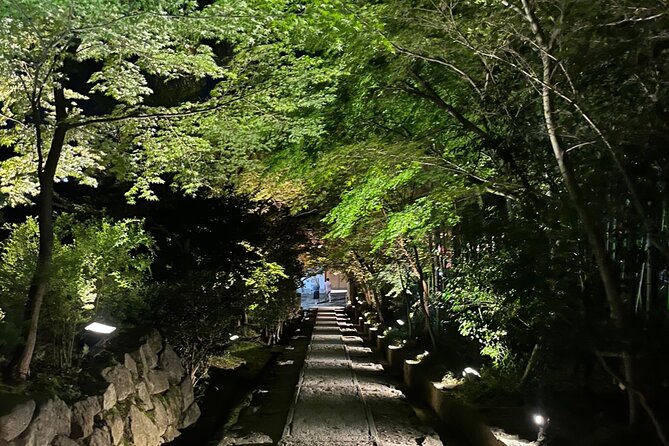
Another highlight is a place described as built about 400 years ago by the wife of a shogun to mourn her husband. You can enjoy the garden, a 400-year-old tea ceremony house, and a bamboo grove.
This segment feels like a pause button. Even without needing every detail, the setting gives you a different type of calm. The bamboo grove is the kind of visual that makes the night walk feel special, because it offers a break from the street scene.
Potential drawback: garden areas and paths can involve uneven surfaces. If you have mobility limits, this is something to keep in mind while you are still fresh in the walk.
Stop 6: Yasaka Shrine (about 10 minutes)
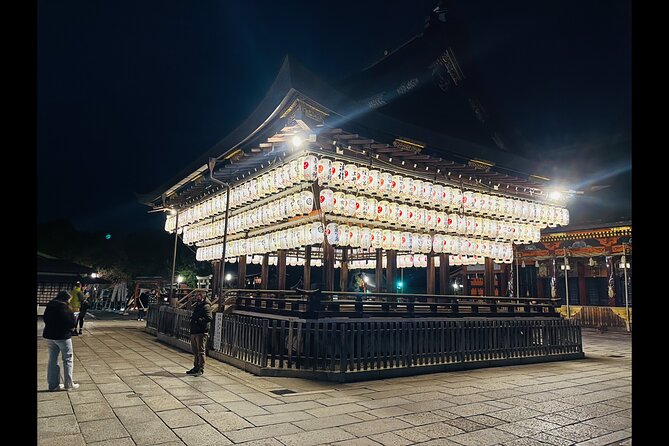
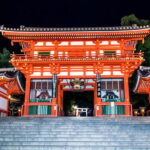
You finish at Yasaka Shrine, known as the head shrine of roughly 2,300 related shrines across Japan. It is also called Gion-san for blessings linked to warding off bad luck, bringing good luck, and promoting beauty.
This is a satisfying endpoint because you get both scale and meaning. It is easy to remember a single street name, but it is more memorable when you learn a shrine’s broader importance and the idea behind common hopes people pray for.
If you are the type who likes closure, this stop delivers. You can end your walk feeling like you understand what the district means beyond its scenery.
Geisha culture and etiquette: what the guide helps you get right
The tour’s core theme is geisha history, culture, and etiquette. That is not just “information for fun.” It helps you avoid the most common mistake visitors make, which is treating the people and traditions as a spectacle.
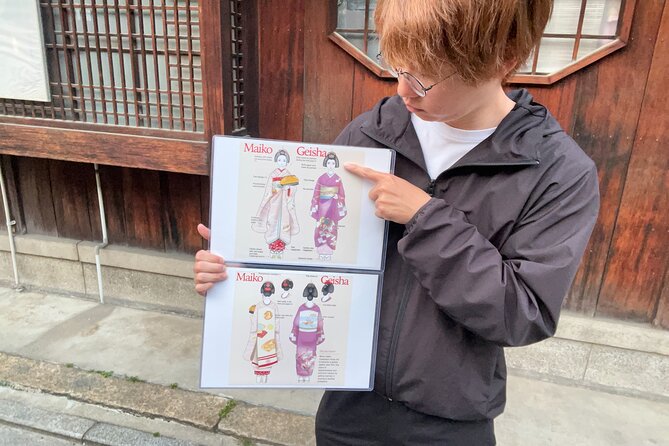
Your guide gives you practical behavior ideas, including what to do if you see a Maiko or Geiko. The guidance is simple: greet politely with a smile and say konnichiwa. That small action signals respect rather than intrusion.
You also learn about the broader role of geisha culture in Kyoto society, and how the tradition connects to the district itself. One theme that shows up in guide praise is the ability to explain relationships between the Meiko/Geiko world and everyday life. When that context clicks, the streets stop feeling like a movie set and start feeling like a lived-in neighborhood.
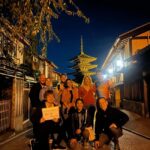
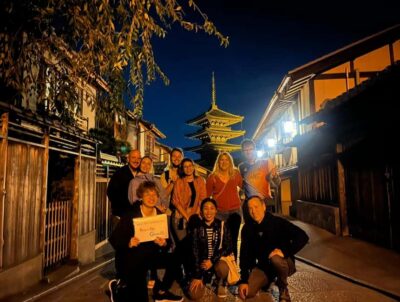
One more nice detail: the tour is set up so you are not steamrolled by large groups. With fewer people, you can ask follow-up questions and get clarification on what you are seeing.
Photo-friendly moments, but bring the right mindset
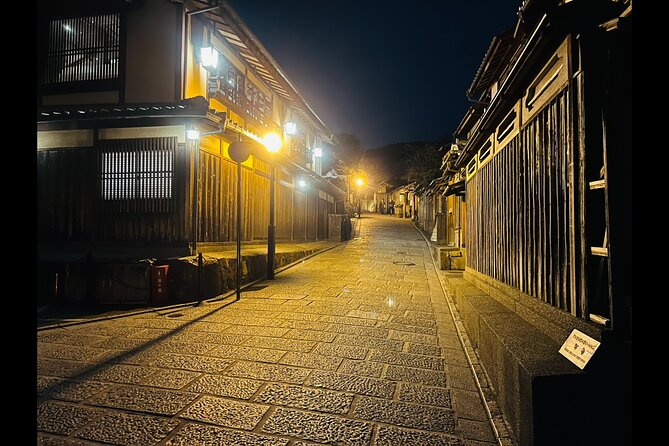
People take this tour for photos, but the better strategy is to take photos with context. If your camera time is limited, it helps to know what the guide wants you to notice: lantern glow, shrine details, the townscape lines, and the small street cues that tell you you are in the right place.
The evening lighting does a lot of work for you. Even if it is cloudy, streetlights and lanterns create a consistent mood across the route. If you happen to have light rain, the atmosphere can still work. Just do what you would do anywhere in Kyoto: keep water protection simple and do not slip.
Shoes matter again. You want stable footing so you can pause for a photo without turning it into a balance act.
Price value: what $29.60 buys you in Kyoto time
At $29.60 per person, you are paying for a guide-led walking plan that combines multiple free stops, cultural context, and a route that starts early enough to feel calmer. In other words, you are paying to save yourself from doing the “where do I go, what do I look for, and what does it mean” work alone.
This price also makes sense because the time investment is concentrated. You are not buying separate entries or scrambling to connect sites across long distances. Your stops are grouped into a walkable evening route with short time blocks that keep things moving.
The small-group limit is part of the value equation. When the group is capped around eight to ten people, the guide can spend time answering questions instead of rushing through scripts.
For me, the best value comes from the combo of practical etiquette plus place context. If you only wanted a pretty night stroll, you could wander Gion on your own. If you want the meaning behind what you see, a guided format is where the money earns its keep.
Who should book, and who should skip it
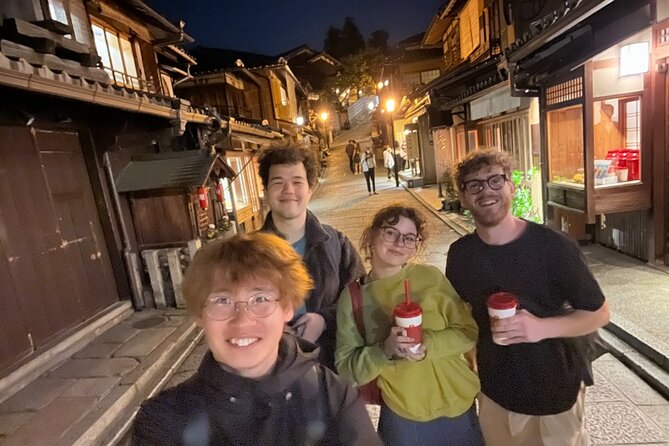
This tour is a strong match if you want a Kyoto night that is more than “walk and hope.” You like learning why places matter. You prefer a quieter pace than big bus-style tours. And you value a small group where you can ask questions.
It is also a good choice for people who are already doing other daytime sights and want something different in the evening. The route mixes Gion identity with shrine and temple elements, so it feels like a complete slice of Kyoto rather than one narrow angle.
Skip or reconsider if you know you struggle with stairs and slopes. The tour is not described as flat and wheelchair-friendly, and the route can include uneven ground. Comfortable walking shoes and basic stamina matter.
If you are traveling with kids, the tone still seems approachable based on guide interactions in past outings, but you would still need to judge how your group handles night walking distances and any uphill stretches.
Should you book the Kyoto Gion Magical Night Walking Tour?
Yes, if you want a small-group, early-evening Gion walk with real cultural context and a practical guide for respectful geisha etiquette. The price is reasonable for what you get: multiple meaningful stops, free-to-enter sites, and stories that help you read the district instead of just passing through it.
Maybe wait or choose something else if mobility is an issue for you. The route includes slopes and stairs, and that is not a detail to ignore. If you can handle a steady night walk, this tour is likely to feel like a smart use of your Kyoto evening.
If you do book, plan to wear supportive shoes, arrive on time at Minamiza Theater, and bring a calm, curious attitude. Kyoto rewards that kind of pacing, especially in Gion after dark.
FAQ
How long is the Kyoto Gion Magical Night Walking Tour?
It lasts about 1 hour 40 minutes.
What is the group size limit?
The tour is described as a small-group experience capped at eight people, and the operator lists a maximum of 10 travelers.
Where does the tour start and end?
It starts at Minamiza Theater in Kyoto (Higashiyama Ward, Nakanochō) and ends at Gionmachi Kitagawa (Higashiyama Ward, Kyoto).
Do I get a mobile ticket?
Yes, the tour uses a mobile ticket.
Is this tour difficult to walk?
There are slopes and stairs, so it is not recommended if you are not comfortable with walking.
What should I do if I see a Maiko or Geiko?
If you see a Maiko or Geiko, greet with a smile and say konnichiwa.
What places does the tour include?
The route includes stops around Gionmachi Minamigawa, Yasui-Konpiragu, Sannenzaka and Ninenzaka, a WWII memorial with a large Kannon statue, a 400-year-old mourning site with a garden and bamboo grove, and Yasaka Shrine.
What if weather is bad or I need to cancel?
The tour requires good weather. If it is canceled due to poor weather, you will be offered a different date or a full refund. You can also cancel for a full refund up to 24 hours in advance.
Are service animals allowed?
Yes, service animals are allowed.
Evenings in the Old Quarters
Newest Kyoto write-ups from the Loving Japan desk

Gion, Geisha and Maiko Experiences, side by side.
 ★ 4.7Kyoto Geisha Walking Tour: Gion District & Hidden GemsFrom $253,273 reviews
 ★ 4.9Gion Magical Night Walking Tour with Geisha TriviaFrom $242,393 reviews
 ★ 4.7Gion Geisha District Walking Tour – Stories of GeishaFrom $202,187 reviews
 ★ 4.9Best of Kyoto: Gion, Geisha, Pagodas & CobblestonesFrom $242,058 reviews
 ★ 4.5Night Walk in Gion: Kyoto’s Geisha DistrictFrom $212,003 reviews
 ★ 5.0Kyoto Night Foodie Tour in Gion (9+ dishes + 6 Sake tastings)From $1631,762 reviews
 ★ 5.0Kyoto Gion Geisha District Walking Tour – The Stories of GeishaFrom $251,441 reviews
 ★ 5.0Kyoto Gion: 2-Hour Geisha Culture & History Walking TourFrom $231,186 reviews
Filed on these lists too