
REVIEW · GION, GEISHA AND MAIKO EXPERIENCES
Kyoto Gion: 2-Hour Geisha Culture & History Walking Tour
Gion hits different after you hear the stories. This 2-hour walk turns famous streets into lived-in places, with a real focus on geisha culture and what makes the area tick.
I especially like the chance to spot a geisha in the right lanes, plus the guided stops that mix in shrines, temples, and classic old-town streets. You get more than views, you get context you can actually use as you wander on your own.
One thing to plan for: it’s an active stroll (moderate fitness), in a small group of up to 15, and it runs best when the weather is decent. Also, there are no built-in long breaks, so bring water if it’s hot.
In This Review
- Key Highlights You Will Actually Feel
- Gion is a District, Not a Photo Spot
- Start at Shijo-Ohashi, Then Let the Neighborhood Lead
- Hanamikoji Street: Where You Learn to Watch, Not Just Look
- What to keep in mind
- Sannenzaka and Ninenzaka: The Photo Street With the Story Behind It
- A practical note
- Yasaka Shrine: A 1,000-Year-Old Moment That Grounds the Walk
- Drawback to consider
- Hokan-ji Temple: The Photo Moment With a Reason Behind It
- Quick tip
- Pontocho and the Kamogawa River Pause: Classic Kyoto at Human Speed
- What you should do here
- Gion Shirakawa: Edo-Period Townhouses You Can Still Read
- Photo tip
- Yasui-Konpiragu: Shinto Worship as a Living Practice
- The 2-Hour Pace: Good for Getting Oriented
- Price Value: Why $23.88 Feels Reasonable
- Who Should Book This Gion Walk
- Quick Decision: Should You Book?
- FAQ
- How long is the Kyoto Gion 2-hour Geisha Culture & History Walking Tour?
- How much does the tour cost?
- Where do I meet, and where does the tour end?
- Are there admission fees for the stops?
- Do I need to bring anything for the ticket?
- What group size should I expect?
- What is the cancellation policy and what happens with bad weather?
Key Highlights You Will Actually Feel
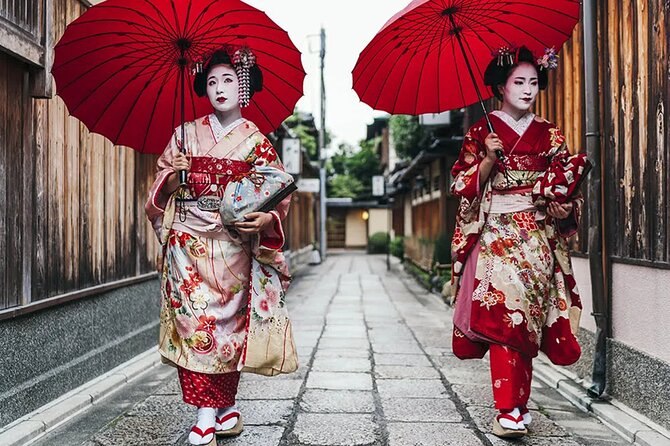
- Hanamikoji Street odds for a geisha sighting, plus practical background that makes what you see make sense
- A 1,000-year-old Yasaka Shrine visit that adds gravity to all the pretty-photo moments
- Old streets with fewer crowds, including Edo-period townhouses at Gion Shirakawa
- Photo-ready stops like Hokan-ji, paired with real-world tips on what to look for
- A Kamogawa River chill pause, so your walk does not feel like a nonstop checklist
Evening walks through the old quarters, compared
- Kyoto Geisha Walking Tour: Gion District & Hidden Gems
★ 4.7 · 3,273 reviews - Kyoto: Gion Magical Night Walking Tour with Geisha Trivia
★ 4.9 · 2,393 reviews - Kyoto: Gion Geisha District Walking Tour – Stories of Geisha
★ 4.7 · 2,187 reviews - Best of Kyoto: Gion, Geisha, Pagodas & Cobblestones
★ 4.9 · 2,058 reviews
Gion is a District, Not a Photo Spot
If you’ve only seen Gion from the main roads, you’ve seen the cover, not the book. On this walk, you spend time in the spaces where people once moved quietly through their daily lives. The best part is that you’re not just looking, you’re learning what you’re looking at.
The guide work is the real engine here. I like how guides such as Soyo and Uta (and also guides like Dan, Naoya, Alex, Kenta, Ukyo, and Oliver from past groups) tell the stories in a way that helps you read the neighborhood. You start noticing details: the rhythm of the streets, the cultural meaning behind certain spots, and why some places feel formal while others feel everyday.
Also, the group size matters. With a maximum of 15, it stays manageable, and you can move through side streets without feeling like you’re trapped in a line of camera phones.
Start at Shijo-Ohashi, Then Let the Neighborhood Lead
You meet at McDonald’s by Shijo-ohashi Bridge, at 105-1 Hashimotochō, Shimogyo Ward, Kyoto, 600-8011. It’s an easy landmark, and you’re near public transportation, which keeps your pre-walk stress low.
Because the tour loops back to the meeting point, it’s a clean plan for your day. You can pair it with a flexible evening afterward, or use it as a first “orientation walk” so the rest of Kyoto makes sense.
Hanamikoji Street: Where You Learn to Watch, Not Just Look
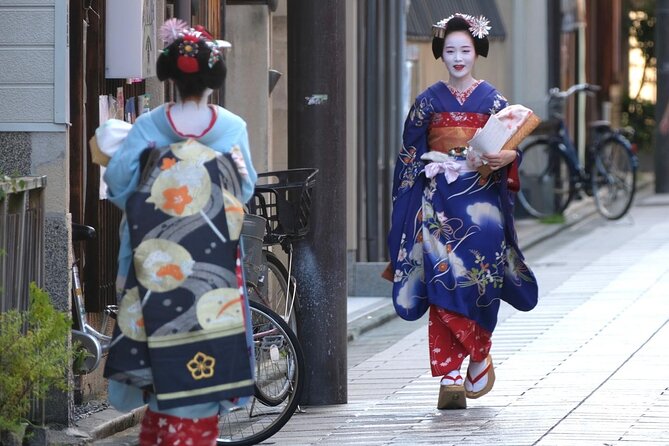
Your first stop is Hanamikoji Street, often described as the heart of Gion. This is where you get your bearings. You’re walking a street that’s famous for traditional culture, but the guide adds the missing layer: what geisha and apprentices are trained for, how the world works, and why the presentation is so controlled.
This is also your best built-in moment to try for a sighting. The tour is set up with the idea that you might spot a geisha if you’re lucky, and the guide’s context helps you understand what you are seeing instead of just guessing. A smart tip from guide-led pacing: the best chances often come when you’re there in the early evening hours, around the time the crowds shift.
- PERFECT KYOTO 1-Day Bus Tour★ 5.0 · 13,518 reviews
- Kyoto: Fushimi Inari, Kinkakuji, Bamboo Grove 1 Day Bus Tour★ 4.8 · 4,316 reviews
- Kyoto: Tea Ceremony in a Traditional Tea House in Kiyomizu★ 4.9 · 3,519 reviews
- Kyoto Geisha Walking Tour: Gion District & Hidden Gems★ 4.7 · 3,273 reviews
- Kyoto: Tea Ceremony Ju-An at Jotokuji Temple★ 4.9 · 3,207 reviews
What to keep in mind
Hanamikoji can still be visually busy. If your goal is only photos, you might leave feeling like it’s too busy. If your goal is culture, you’ll find it clicks fast once the guide frames the street.
Sannenzaka and Ninenzaka: The Photo Street With the Story Behind It
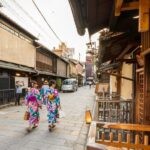
Next you move to Sannenzaka Ninenzaka, the kind of street people recognize instantly because it looks like Kyoto from a postcard. The famous part is the vibe. The useful part is what the guide does with it: they explain the rumor that if you fall here, you’ll die in two years, and what that story really means.
Even if you do not care about folklore, this stop helps you practice a Kyoto skill: spotting the difference between old-world aesthetic and living tradition. The sidewalks, the old slopes, the way buildings crowd the view, all teach you how Kyoto’s past still shapes how people walk today.
A practical note
This is a short stop, about 15 minutes. If you want time for photos, plan to move first, shoot second, and then enjoy. Don’t lose the tour rhythm to one perfect shot.
Yasaka Shrine: A 1,000-Year-Old Moment That Grounds the Walk
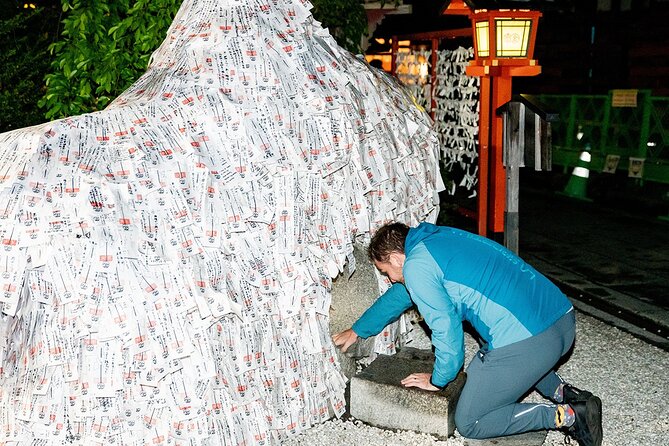
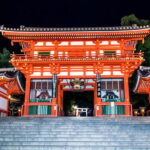
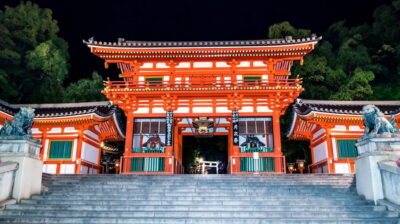
After the street scenery, you shift to something more solemn: Yasaka Shrine, a place your guide frames as about 1,000 years old. This is the contrast point that makes the geisha conversation feel real rather than theatrical.
In Japan, shrine visits are often tied to daily life, seasonality, and community. Here, the guide helps you see why this shrine matters in the broader Kyoto picture. Instead of rushing through a landmark, you slow down and understand what a shrine visit is meant to do, even if you do not follow every custom.
Drawback to consider
Shrine areas can involve uneven footing and crowds, depending on the day. You’ll want comfortable shoes and a little patience. The stop is only around 20 minutes, so use it to look up, not just stare at the main pathway.
Hokan-ji Temple: The Photo Moment With a Reason Behind It
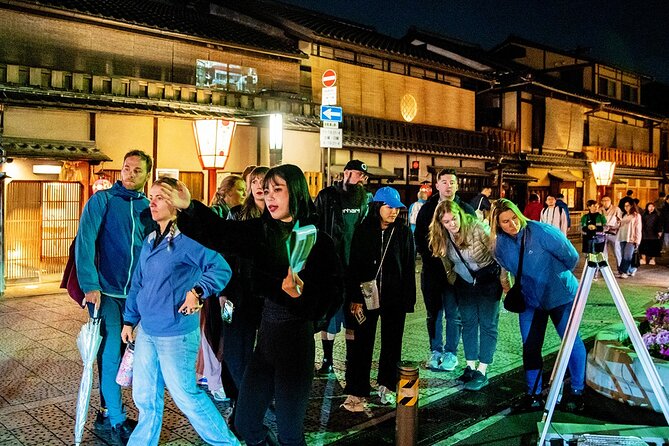
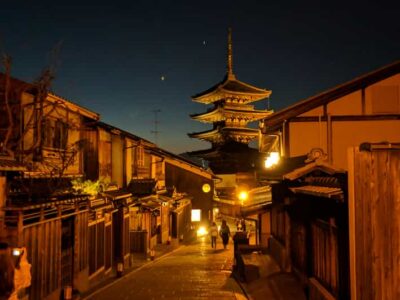
Then you hit Hokan-ji Temple, described as one of the most photogenic spots in Kyoto. Yes, it’s the kind of place where you’ll want a photo. But the best use of your time is to let the guide point out what makes the scene work, rather than spending the full 20 minutes trying to find the perfect angle.
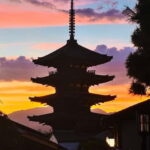
The guide’s storytelling usually helps you notice how the temple’s look relates to Kyoto’s wider aesthetic. It also gives you a calmer way to photograph. You stop, watch, learn a bit, then shoot. It feels less like tourism and more like a moment in the neighborhood.
Quick tip
If you care about pictures, time your camera instead of checking it every ten seconds. The more present you are, the more you’ll see.
Pontocho and the Kamogawa River Pause: Classic Kyoto at Human Speed
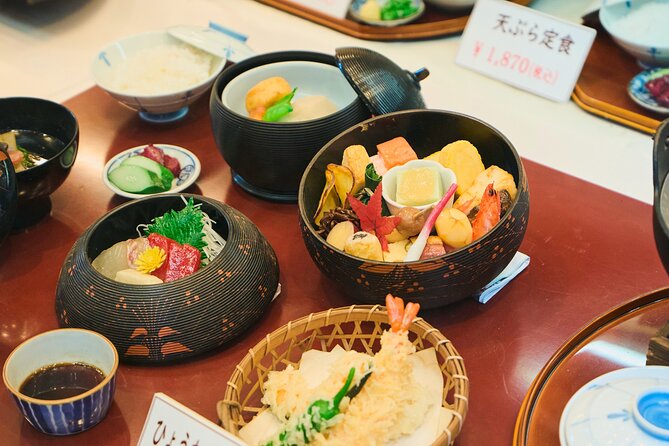
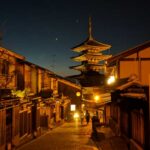
Next comes Pontocho, a historic gourmet street. Even if you do not plan a meal right now, this stop is about atmosphere. You get a feel for how the neighborhood presents itself at night and why Pontocho is often a go-to area for evening strolling.
Then you finish with time in a local chill-out spot by the Kamogawa River. This part matters more than it sounds. After temples and traditional lanes, a river pause brings your energy back. It also gives you a breather so you can process what you learned instead of just collecting sights.
What you should do here
Use the river time to slow down. If your guide offers restaurant or rooftop bar suggestions during the walk, this is a great moment to jot them down. In past groups, guides like Dan and Kenta and Ukyo have shared helpful food ideas and where the vibe matches what you want for the night.
Gion Shirakawa: Edo-Period Townhouses You Can Still Read
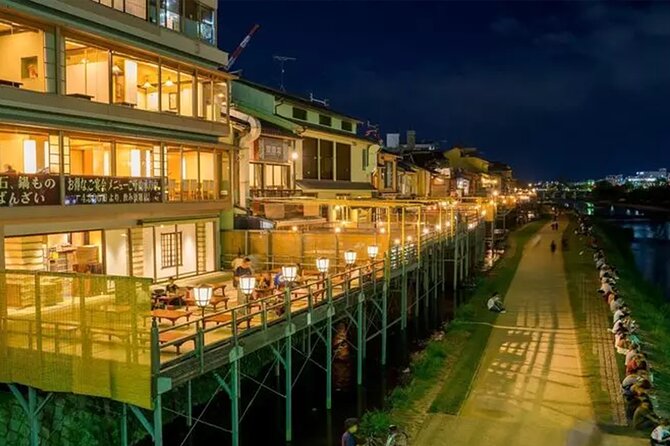
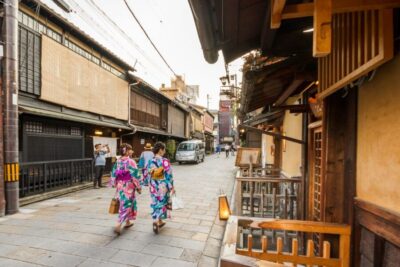
At Gion Shirakawa, the focus turns to buildings: Edo-period townhouses. This is one of those “you see it, but you don’t understand it” areas unless a guide gives you context. The guide explains how the houses relate to the district’s past and what makes the architecture feel distinctly old Kyoto.
I like this stop because it shifts the tour from culture-as-story to culture-as-physical place. When you understand why a building is shaped a certain way, you stop treating it like scenery and start treating it like history you can walk past.
Photo tip
Look at doorways, not only facades. Smaller details often sell the age of the place better than the biggest postcard angles.
Yasui-Konpiragu: Shinto Worship as a Living Practice
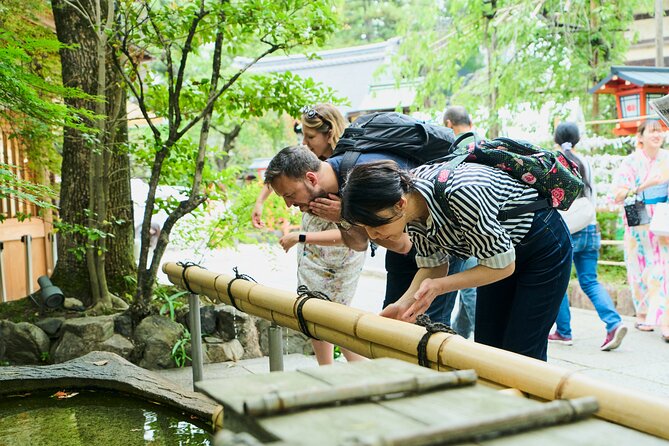
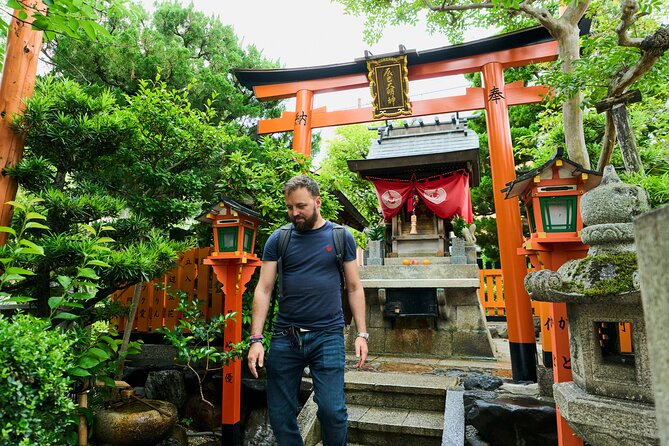
The final cultural stop is Yasui-Konpiragu, where you experience Shinto worship. This is a good counterweight to all the geisha-world talk. You’re reminded that these streets are not staged for tourists. They’re woven into belief, routine, and place.
In a short time, the guide helps you understand what you’re seeing without turning it into a lecture. You get a respectful introduction, then you move on.
The 2-Hour Pace: Good for Getting Oriented
Two hours sounds short because it is short. And that’s the point. This is a walk for orientation and first-time understanding, not a half-day deep study.
With moderate physical fitness as the requirement, you should expect a steady walking rhythm and some time in crowded spaces. It’s not a sprint, but you also won’t have long sit-down pauses. Plan for heat or rain accordingly.
Group size stays tight, max 15, so you’re not lost in a crowd. It also makes it easier for guides to keep an eye on everyone when moving between quieter lanes and photo spots.
Price Value: Why $23.88 Feels Reasonable
At $23.88 per person for about 2 hours, the cost is mostly paying for two things: a guide who can connect the dots, and access to a well-timed route through central Gion.
A big value point is that the listed stops come with free admission tickets. You are paying for the human translation, the pacing, and the route that moves you from street to shrine to temple without wasting time guessing where to go next.
It’s not a bargain tour. It is a fair-price cultural walk that helps you spend your Kyoto time smarter. If you tend to wander without context, a guided format like this often saves you hours of confusion.
Who Should Book This Gion Walk
This tour is a great fit if:
- You want geisha culture context, not just Kyoto scenery
- You like walking routes with short, meaningful stops
- You want a realistic shot at a geisha sighting by watching from the right lanes at the right kind of time
- You enjoy guides who tell stories with practical suggestions, like restaurant leads and where to go next at night
It’s less ideal if:
- You want lots of free time to linger in one place
- You hate walking in crowds or on uneven ground
- You prefer tours with a drink stop built in, because this walk does not list one
Quick Decision: Should You Book?
Yes, I’d book it if you’re in Kyoto for a limited time and want Gion to make sense fast. The route hits classic spots, but what really sells it is how the guide turns those places into a story you can carry with you.
If your main goal is a checklist of photos, you may find parts of the walk feel too short. But if your goal is cultural understanding, plus a chance to see traditional life in motion, this is a strong use of your evening time in Gion.
FAQ
How long is the Kyoto Gion 2-hour Geisha Culture & History Walking Tour?
It runs for about 2 hours.
How much does the tour cost?
The price is $23.88 per person.
Where do I meet, and where does the tour end?
You meet at McDonald’s – Shijo-ohashi Bridge (105-1 Hashimotochō, Shimogyo Ward, Kyoto 600-8011) and the tour ends back at the meeting point.
Are there admission fees for the stops?
The listed stops are marked as admission ticket free.
Do I need to bring anything for the ticket?
You’ll receive a mobile ticket.
What group size should I expect?
The maximum group size is 15 travelers.
What is the cancellation policy and what happens with bad weather?
You can cancel for free up to 24 hours in advance for a full refund. If it is canceled due to poor weather, you’ll be offered a different date or a full refund.
Evenings in the Old Quarters
Newest Kyoto write-ups from the Loving Japan desk

Gion, Geisha and Maiko Experiences, side by side.
 ★ 4.7Kyoto Geisha Walking Tour: Gion District & Hidden GemsFrom $253,273 reviews
 ★ 4.9Gion Magical Night Walking Tour with Geisha TriviaFrom $242,393 reviews
 ★ 4.7Gion Geisha District Walking Tour – Stories of GeishaFrom $202,187 reviews
 ★ 4.9Best of Kyoto: Gion, Geisha, Pagodas & CobblestonesFrom $242,058 reviews
 ★ 4.5Night Walk in Gion: Kyoto’s Geisha DistrictFrom $212,003 reviews
 ★ 5.0Kyoto Night Foodie Tour in Gion (9+ dishes + 6 Sake tastings)From $1631,762 reviews
 ★ 5.0Kyoto Gion Geisha District Walking Tour – The Stories of GeishaFrom $251,441 reviews
 ★ 5.0Chopsticks Making Workshop in Gion with Engraving OptionFrom $15958 reviews
Filed on these lists too