
REVIEW · GION, GEISHA AND MAIKO EXPERIENCES
Kyoto: Gion Night Walking Tour with Geisha Insight
A Gion night feels like Kyoto slowed down. This tour pairs an easy route with real context, so you can see Hanamikoji Street and the Shirakawa Canal area without wrestling a map. I also love that it is built for small groups, which keeps the walk personal and helps you get practical geisha and maiko spotting tips. The big upside is also the main trade-off, you may not actually see a geisha, even though you get the cultural know-how to understand what you are looking at.
One possible drawback to plan for: this is a night walk, and some parts are dim. If you go expecting perfect photos of geisha on command, you might leave a little frustrated. The tour does include geisha culture guidance, but it cannot guarantee sightings.
In This Review
- Key things I’d circle before you go
- Why a Gion night walk beats daytime sightseeing
- Meet at Tanaka Coffee Gion, then get your bearings fast
- Hanamikoji Street and Shirakawa Canal: the geisha-district walk
- Tatsumi Daimyojin Shrine and what you learn about geisha spotting
- Kawaramachidori and Shijo-Kawaramachi: old Kyoto meets modern street life
- Insider eating tips that actually help your next stop
- Price and logistics: what you get for $25
- Should you expect to see a geisha?
- Who this Kyoto night walk is best for
- Should you book this Kyoto Gion night walking tour?
- FAQ
- Where does the tour start and end?
- How long is the Kyoto Gion night walking tour?
- What is included in the tour price?
- How big is the group?
- Is a mobile ticket used?
- What is the cancellation policy?
Key things I’d circle before you go
- Small-group size up to 15 keeps the pace relaxed and the experience more personal.
- Lantern-lit Gion at night is a smart way to beat daytime crowds and street fatigue.
- Shrine time included at Tatsumi Daimyojin Shrine adds a quieter, cultural moment.
- Practical geisha and maiko insight helps you understand what you are seeing, even without a sighting.
- Kawaramachidori and backstreets show Kyoto’s old-and-new mix, plus local food ideas.
Evening walks through the old quarters, compared
- Kyoto Geisha Walking Tour: Gion District & Hidden Gems
★ 4.7 · 3,273 reviews - Kyoto: Gion Magical Night Walking Tour with Geisha Trivia
★ 4.9 · 2,393 reviews - Kyoto: Gion Geisha District Walking Tour – Stories of Geisha
★ 4.7 · 2,187 reviews - Best of Kyoto: Gion, Geisha, Pagodas & Cobblestones
★ 4.9 · 2,058 reviews
Why a Gion night walk beats daytime sightseeing
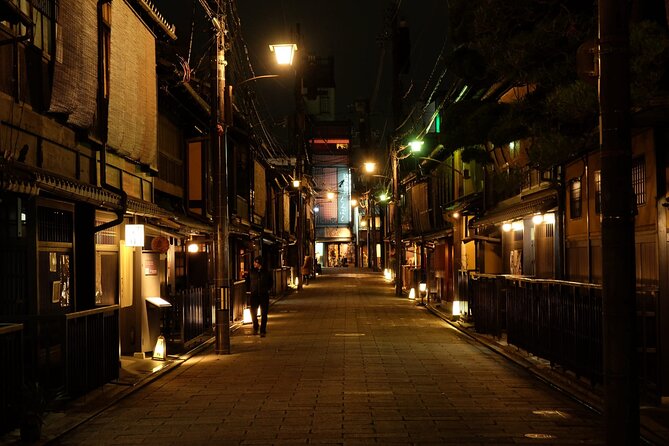
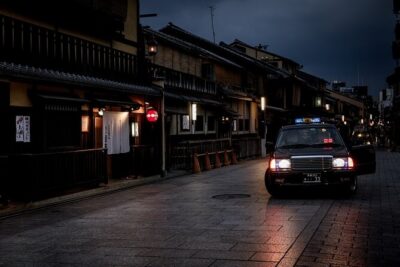
Kyoto by day can feel like a line that keeps moving. At night, the mood changes. You get softer light, quieter side streets, and that “how is this city this beautiful” feeling that is hard to chase when the crowds are thick.
This tour leans into the night properly. Instead of trying to cram ten neighborhoods in two hours, it focuses on Gion and then moves into the Shijo-Kawaramachi area, where Kyoto feels layered. The route also matters. Having a guide means you are not constantly stopping to check where you are, then getting pulled off course by every interesting alley.
For value, I like that the experience is simple: a guided walk, a small-group vibe, and insider recommendations for where to eat. For many visitors, that last part is what makes the night work. Walking alone in Kyoto is fun, but eating well is the part that can turn into guesswork.
Meet at Tanaka Coffee Gion, then get your bearings fast
You start at Tanaka Coffee Gion, with the full address listed as 605-0085 Kyoto, Higashiyama Ward, 新地末吉町993. The tour ends back at the same meeting point, so you are not left trying to navigate a maze after two hours of walking.
You also get a mobile ticket, which is helpful because Kyoto nights can be hectic and phone check-in is one less thing to manage. Confirmation is sent at booking, and participation is noted as possible for most travelers.
The group size cap is 15 travelers. That is big enough to feel lively, but small enough that your guide can keep an eye on the pace. It also helps with those short, key moments when you want explanation, not just photos.
Hanamikoji Street and Shirakawa Canal: the geisha-district walk
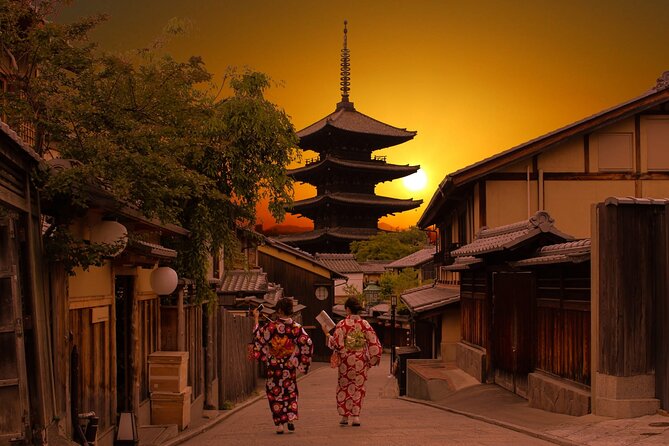
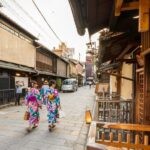
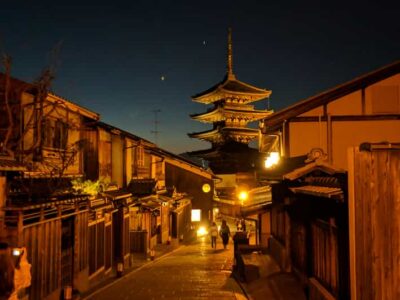
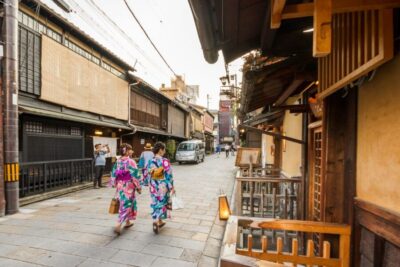
The tour’s first stretch is the core of Gion. You walk along Hanamikoji Street, which is the geisha district heart, lined with traditional wooden teahouses known as ochaya. Even if you have seen pictures, there is a big difference between looking at a postcard and walking the street after the day crowds thin out.
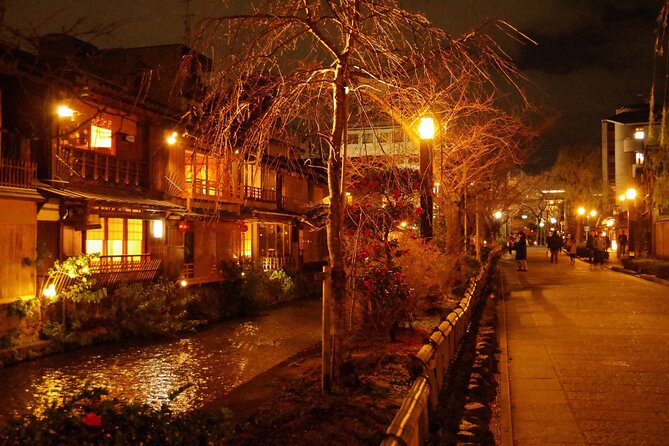
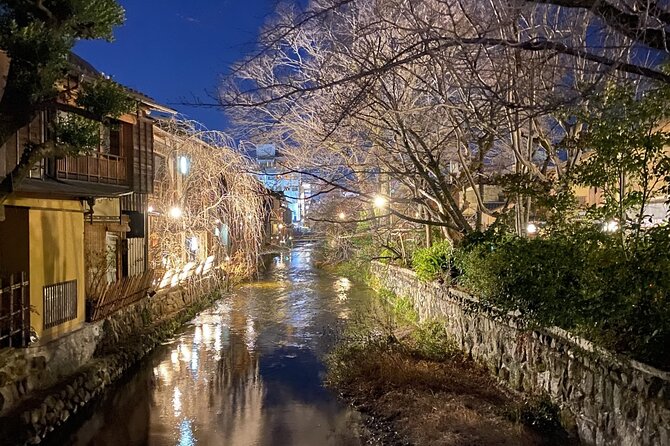
Next comes the Shirakawa Canal area. This is where the night atmosphere turns practical. Stone-paved alleys, red bridges, and willows create those perfect sightlines where you can slow down and actually look. It is also one of the reasons a guided night walk is worth it. Without context, you might rush through these photo corners and miss what makes them function as spaces for old Kyoto life.
What you should keep in mind at this stage: this is still a walking tour, not a sit-down show. You will want comfortable shoes and a calm pace mindset. If you treat it like a sprint, you will feel rushed the whole time.
- PERFECT KYOTO 1-Day Bus Tour★ 5.0 · 13,518 reviews
- Kyoto: Fushimi Inari, Kinkakuji, Bamboo Grove 1 Day Bus Tour★ 4.8 · 4,316 reviews
- Kyoto: Tea Ceremony in a Traditional Tea House in Kiyomizu★ 4.9 · 3,519 reviews
- Kyoto Geisha Walking Tour: Gion District & Hidden Gems★ 4.7 · 3,273 reviews
- Kyoto: Tea Ceremony Ju-An at Jotokuji Temple★ 4.9 · 3,207 reviews
Tatsumi Daimyojin Shrine and what you learn about geisha spotting
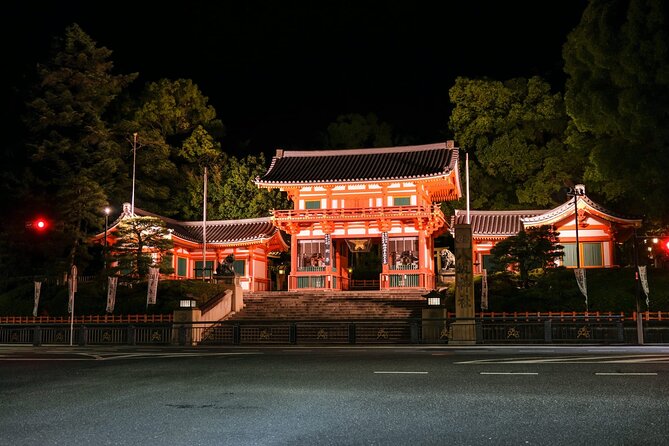
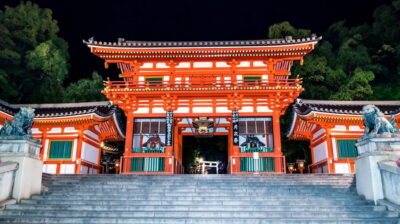
A nice surprise in the route is the stop at Tatsumi Daimyojin Shrine. It is described as small but culturally significant, tucked away in the backstreets. That matters, because night walks in Kyoto can become only street-front glamour. This gives you a quieter pause.
Shrines in Kyoto also help you reset your attention. You are not only searching for big sights, you are learning how the city’s traditions show up in everyday space. You also get an admission ticket included for this part of the experience, so you are not paying extra for the shrine visit.
Then the tour shifts into one of the main reasons people book: learning how to spot real geisha and maiko. The guidance is paired with practical “how to look” advice, and the tour notes that with some luck you may see one heading to an evening appointment.
Here is the honest takeaway you should plan around. Seeing a geisha is never guaranteed. Night is the right time to look, but it is not a performance. Also, lights are softer and darkness can limit photos. If you are going to shoot pictures, go in with realistic expectations and be ready to prioritize respectful watching over perfect shots.
A bonus is how the tour frames the spotting. When someone explains the tradition and practice, you stop treating it like a tourist hunt and start understanding what you are seeing.
Kawaramachidori and Shijo-Kawaramachi: old Kyoto meets modern street life
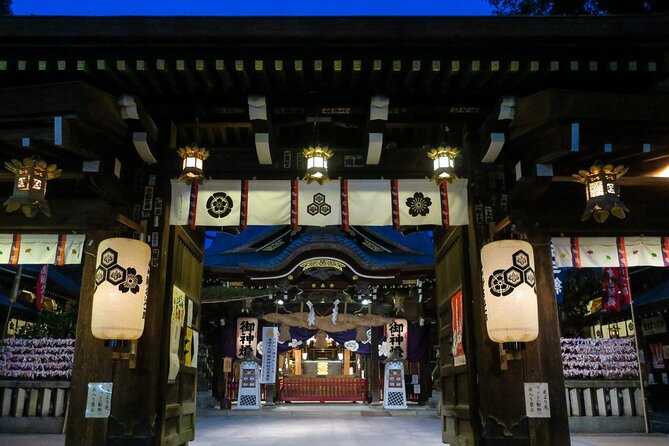
After Gion, the tour moves to Kawaramachidori and the area around the Shijo-Kawaramachi intersection. This is where Kyoto shows its second personality. Instead of only classic streets, you get the energy of modern Kyoto.
The route includes venturing into hidden backstreets and alleys known for cozy bars, eateries, and old machiya townhouses. This part is valuable because it changes the feel of your night. You are not only in “icon Kyoto,” you are in the city people actually move through.
Your guide also shares stories about how the area evolved. I like this approach. It turns the walk from a list of sights into a narrative you can remember. When you understand how the neighborhood changed over time, you also understand why the streets look the way they do now.
One practical point: this section can feel busier than Gion, even at night. Keep your pace steady and follow the guide close, especially if you want to hear the stories without losing the group.
Insider eating tips that actually help your next stop
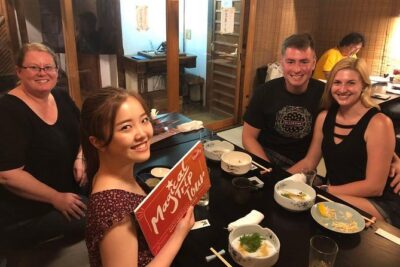
A big line-item promise here is insider tips for great places to eat, and that is not a small detail. Kyoto nights often end with a scramble: you find a street that looks promising, then spend twenty minutes deciding, and the restaurant with the best vibe is already full.
This tour builds food advice into the walk, so you have options in your head while you are still nearby. The best part is that you are not just handed random names. You get recommendations tied to the areas you are walking through, so the suggestions fit your route and your mood.
If you want to use this effectively, do two things. First, ask what the guide recommends for your style, quick and casual or sit-down and slow. Second, pay attention to the timing vibe. A recommendation that is perfect at 7:00 can feel wrong at 9:30 when you are tired and hungry.
Price and logistics: what you get for $25
At $25 per person for about 2 hours, this is the kind of tour that works best when you value two things: not getting lost and getting context fast. If you have ever planned a Kyoto evening only to realize you walked in circles, you already know why the guide matters.
The small-group size, up to 15 travelers, is part of the value. You are not pressed against a wall of strangers while trying to hear an explanation. It also gives the guide room to adjust pace and offer those small but useful “look over here” moments.
The tour includes the walking and insider recommendations, and an admission ticket is noted as included at the Gion shrine stop. It does not list other paid add-ons, and it uses a mobile ticket, which keeps the admin lightweight.
Another small but real value factor is how far you get in two hours. You see Hanamikoji Street, the Shirakawa Canal area, Tatsumi Daimyojin Shrine, and then the Shijo-Kawaramachi to Kawaramachidori zone. That is a lot of “right vibe, right distance” for the time.
Should you expect to see a geisha?
You should hope, not demand. The tour directly frames geisha spotting as something that might happen with luck, which is the correct mindset.
What you can control is your behavior. If you want your chances, stay patient and stay respectful. Do not crowd doorways. Do not block street flow. Keep movement subtle, and let your guide handle the pacing.
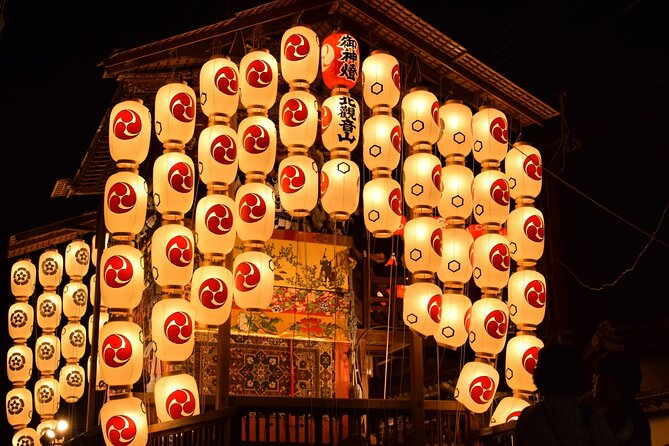
If your number one goal is photos, plan for disappointment. The tour runs at night, and the walk is described as lantern-lit, which means lighting is atmospheric but not always camera-friendly. Your best photos may be the canal scenes and street details, while the geisha, if spotted, may be more of a quiet sighting than a crisp photo moment.
For me, the real win is the learning. Even without a sighting, you walk away with a better sense of how geisha and maiko presence fits into Kyoto’s rhythm.
Who this Kyoto night walk is best for
This tour is especially good if you fit one or more of these:
- You want easy navigation through Gion and nearby streets without map stress.
- You like the idea of geisha culture, but you want guidance so you do not miss what matters.
- You prefer small groups and a pace that lets you hear stories and notice details.
- You want a plan for your night, including where to eat after the walk.
It might not be the best fit if you want guaranteed geisha sightings or you want a strict photography workshop. Also, if you dislike night walking in dim areas, it may feel slower or harder to photograph.
Should you book this Kyoto Gion night walking tour?
Book it if you want a guided way to experience Gion at its most atmospheric, plus a second neighborhood shift into Shijo-Kawaramachi and Kawaramachidori. The small-group size, shrine stop, and geisha culture insight make this more than a simple stroll. And the food recommendations can set up the rest of your evening.
Skip or rethink if your goal is guaranteed geisha photos. The tour is honest about luck, and night conditions can limit picture quality. If you go with the right mindset, you will probably enjoy the walk even without a sighting, because the context and street experience do the heavy lifting.
If you do book, wear comfy shoes, keep your expectations flexible, and ask for food ideas that match what time you want to eat. That is how you turn a good two hours into a great Kyoto night.
FAQ
Where does the tour start and end?
The tour starts at Tanaka Coffee Gion Japan in Higashiyama Ward, and it ends back at the same meeting point.
How long is the Kyoto Gion night walking tour?
The duration is approximately 2 hours.
What is included in the tour price?
The tour includes a walking tour and insider recommendations on local eateries. An admission ticket is included for the shrine stop on the itinerary.
How big is the group?
The tour has a maximum of 15 travelers.
Is a mobile ticket used?
Yes, the tour provides a mobile ticket.
What is the cancellation policy?
Free cancellation is available. You can cancel up to 24 hours in advance for a full refund.
Evenings in the Old Quarters
Newest Kyoto write-ups from the Loving Japan desk

Gion, Geisha and Maiko Experiences, side by side.
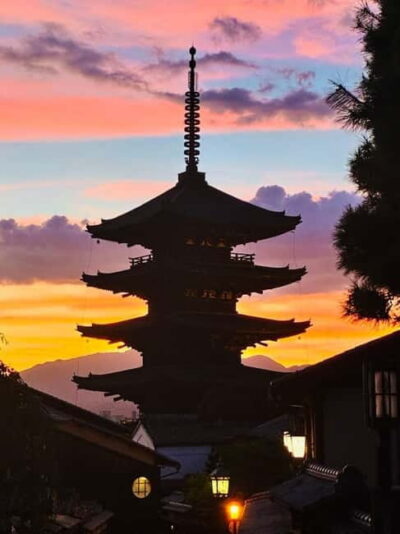 ★ 4.7Kyoto Geisha Walking Tour: Gion District & Hidden GemsFrom $253,273 reviews
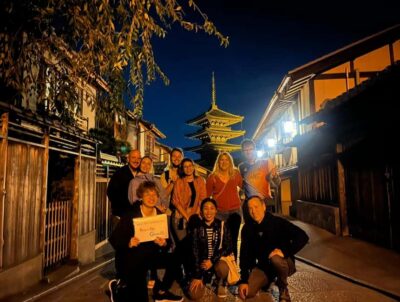 ★ 4.9Gion Magical Night Walking Tour with Geisha TriviaFrom $242,393 reviews
 ★ 4.7Gion Geisha District Walking Tour – Stories of GeishaFrom $202,187 reviews
 ★ 4.9Best of Kyoto: Gion, Geisha, Pagodas & CobblestonesFrom $242,058 reviews
 ★ 4.5Night Walk in Gion: Kyoto’s Geisha DistrictFrom $212,003 reviews
 ★ 5.0Kyoto Night Foodie Tour in Gion (9+ dishes + 6 Sake tastings)From $1631,762 reviews
 ★ 5.0Kyoto Gion Geisha District Walking Tour – The Stories of GeishaFrom $251,441 reviews
 ★ 5.0Kyoto Gion: 2-Hour Geisha Culture & History Walking TourFrom $231,186 reviews
Filed on these lists too