
REVIEW · GION, GEISHA AND MAIKO EXPERIENCES
Kyoto Gion Private Tour with a Local Guide – Geisha District
Gion feels clearer when someone reads it for you. This private walking tour pairs Kyoto’s lantern-lit streets and historic teahouses with a guide who shapes the route around your interests, like when guides such as Emi or Milo bring the neighborhood to life with their storytelling. I like the tailor-made planning (you fill out a questionnaire and message your host), and I love that the route mixes culture with photo-ready streets instead of only checking boxes. One drawback to know upfront: seeing geiko or maiko is never guaranteed, and it can be crowded, especially around evening.
You’ll spend about 2 to 3 hours moving on foot, with an option for pickup. The pace is set by your guide, and the meeting point is at Matsumoto Kiyoshi Kyoto Shijo Kawaramachi (Hashimotochō, Shimogyo Ward). You start there and end back at the meeting point, which keeps the plan simple after a walk through some of Kyoto’s most atmospheric areas.
Expect classic scenes: traditional machiya houses, narrow streets, and the old entertainment-district vibe in Gion, plus a stop at Yasaka Shrine and a finish in Pontocho Alley. It’s a smart way to understand why certain spots matter for Kyoto festivals, etiquette, and daily life, without getting lost in guidebook directions.
In This Review
- Key things I’d mark down before booking
- Entering Gion with a guide who actually explains what you see
- Timing, walking flow, and how the meeting point affects your day
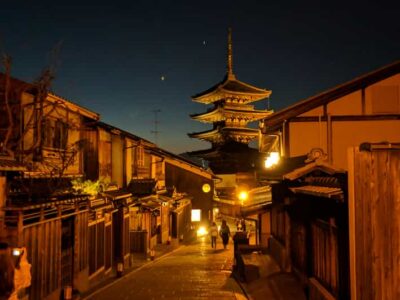
- Stop 1: Gion streets where machiya houses and lanterns do the talking
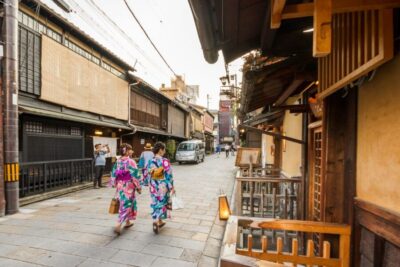
- Stop 2: Gion’s famous street of ochaya and Edo-period architecture clues
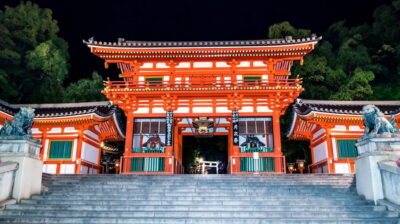
- Stop 3: Yasaka Shrine, 1,300 years of festivals in a convenient location
- Stop 4: Shinbashi Dori, Tatsumi Bridge, and the “easy to remember” photo spots
- Stop 5: Pontocho Alley to finish, with dinner energy close by
- The guide is the product: what the best hosts consistently do
- Price and value: why $101.57 can be fair for a private 2 to 3 hour walk
- Practical tips so you get the best experience in Gion and Pontocho
- Who this Kyoto Gion private tour suits best
- Should you book the Kyoto Gion Private Tour with a Local Guide?
- FAQ
- How long is the Kyoto Gion private tour?
- Is this tour private or shared?
- Is the tour mostly walking?
- Is pickup available?
- Where does the tour start?
- What’s included in the price?
- What is not included?
- Can I cancel for a full refund?
Key things I’d mark down before booking
- Private, not rushed: your group gets undivided attention for the full walk, with timing you can choose when booking.
- You help design the route: a pre-tour questionnaire plus direct messaging means the guide can steer toward history, food stops, or quieter streets.
- Gion with cultural context: you’re not just passing teahouses, you’re learning how the geiko and maiko world fits into Kyoto.
- Yasaka Shrine as the “why” stop: you get the shrine’s significance and how it connects to major festivals.
- Practical end point in Pontocho: you finish in an area that’s easy to turn into dinner plans.
- Most of it is walking: you’ll want comfortable shoes since there’s no private vehicle included.
Evening walks through the old quarters, compared
- Kyoto Geisha Walking Tour: Gion District & Hidden Gems
★ 4.7 · 3,273 reviews - Kyoto: Gion Magical Night Walking Tour with Geisha Trivia
★ 4.9 · 2,393 reviews - Kyoto: Gion Geisha District Walking Tour – Stories of Geisha
★ 4.7 · 2,187 reviews - Best of Kyoto: Gion, Geisha, Pagodas & Cobblestones
★ 4.9 · 2,058 reviews
Entering Gion with a guide who actually explains what you see
Kyoto can be visually stunning and still feel confusing. That’s the gap this kind of tour fills. In Gion, you can spot lanterns, wooden facades, and old teahouse buildings, but it takes local context to understand what you’re looking at and why certain streets and landmarks are treated with care.
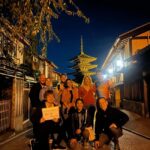
What I like about this format for you is that it is private. With a solo walk, you might take a few photos, read a sign, and still wonder what matters most. With a guide, you can ask quick questions as you go, and the tour can flex if your interests shift mid-walk, whether you want festival stories, architecture details, or simply the best angles for pictures.
The second big win is that the guide is built into the experience, not added on top. Even the planning step matters. The pre-tour questionnaire and direct communication let your host shape the route based on your preferences, so you spend your limited time in Kyoto on what you actually care about.
One reality check: geiko and maiko sightings are part of why many people book, but they are not something a guide can promise on a street-by-street basis. If you’re going in expecting certainty, you may feel disappointed. If you treat it as a possibility, the tour still has strong value because you’re learning the neighborhood’s cultural rules, symbols, and history.
Timing, walking flow, and how the meeting point affects your day
This is a walking experience built around neighborhoods that you can cover on foot, typically over 2 to 3 hours. There’s pickup offered, but the tour itself does not include a private vehicle. That matters because you’ll need to think about shoes and weather, and you may rely on public transport or a taxi between areas if your route requires it.
You’ll meet at Matsumoto Kiyoshi Kyoto Shijo Kawaramachi (103-2 Hashimotochō, Shimogyo Ward). The fact that the tour ends back at the meeting point can be a plus. After a short evening walk or a daytime cultural loop, you do not have to solve a complicated return plan.
Flexible start times also help. Gion can feel dramatically different at different hours. If you like quieter streets and a calmer pace for photos, aim for earlier. If you want more of the nightlife atmosphere in the finish area, choose a time that lines up with that mood.
Stop 1: Gion streets where machiya houses and lanterns do the talking
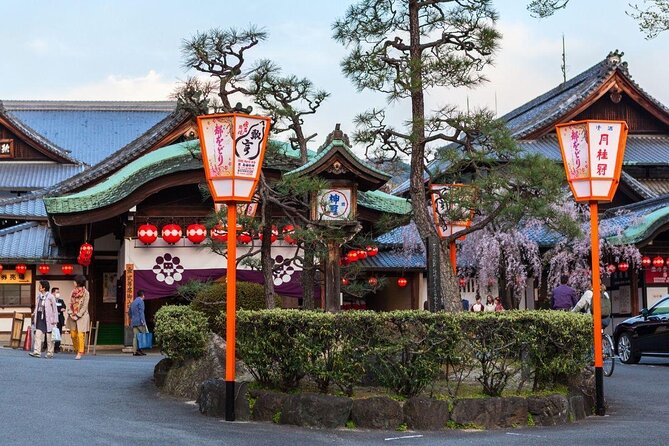
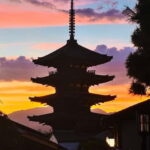
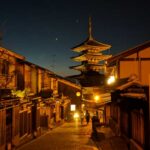
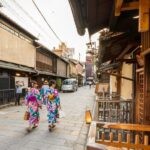
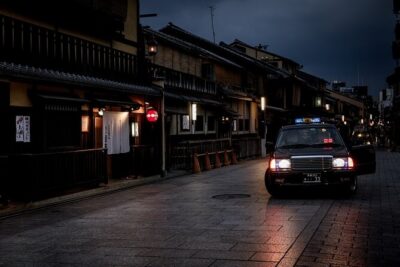
Your tour starts by placing you right in the heart of Gion, Kyoto’s most iconic traditional entertainment district. Here, narrow streets, paper lanterns, and the wooden facades of machiya townhouses create a visual “language” that only makes sense once someone explains it.
What this stop adds for you is orientation. A good Gion guide helps you notice small markers you would otherwise miss. You’re not just walking past old buildings. You’re learning how the neighborhood’s design and architecture connect to the entertainment district’s traditions, including the association with geiko and maiko culture.
This is also where a private guide matters most. You can slow down when something catches your eye, then speed up when you want to keep moving. Guides like Alexis (noted for engaging storytelling) and Ada (noted for tailored explanations) are the kind of hosts who turn a street walk into a mini education without turning it into a lecture.
Possible drawback here: crowds. Gion is popular, especially around evening. If you’re sensitive to busy sidewalks, pick your time carefully and be ready to share space with other visitors.
- PERFECT KYOTO 1-Day Bus Tour★ 5.0 · 13,518 reviews
- Kyoto: Fushimi Inari, Kinkakuji, Bamboo Grove 1 Day Bus Tour★ 4.8 · 4,316 reviews
- Kyoto: Tea Ceremony in a Traditional Tea House in Kiyomizu★ 4.9 · 3,519 reviews
- Kyoto Geisha Walking Tour: Gion District & Hidden Gems★ 4.7 · 3,273 reviews
- Kyoto: Tea Ceremony Ju-An at Jotokuji Temple★ 4.9 · 3,207 reviews
Stop 2: Gion’s famous street of ochaya and Edo-period architecture clues
Next you move along one of Gion’s well-known streets lined with preserved ochaya (teahouses) and Edo-period architecture. This part of the walk is where you start “reading” the details.
I like this segment because it’s not just pretty buildings. A good guide points out subtle cultural markers and explains what you should respect as you pass through. Kyoto has etiquette built into everyday spaces, and teahouse districts are no exception. Even if you never meet anyone in the scene, you learn why certain behaviors matter.
This is also a strong area for photos, but with a local in your ear, you’ll avoid the common mistake of standing in the most awkward spot or photographing in ways that annoy residents and staff. It’s a small thing, but it makes the difference between feeling like a respectful visitor and feeling like a disruption.
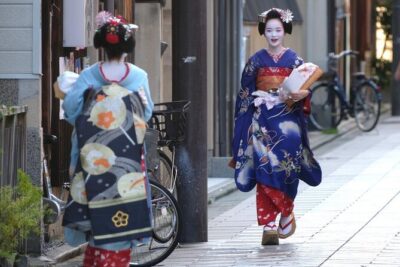
If you’re hoping for geiko or maiko sightings, this is the general zone where you might spot signs of activity. Still, keep your expectations flexible. The best way to enjoy this stop is to focus on the neighborhood’s culture and atmosphere, not the outcome.
Stop 3: Yasaka Shrine, 1,300 years of festivals in a convenient location
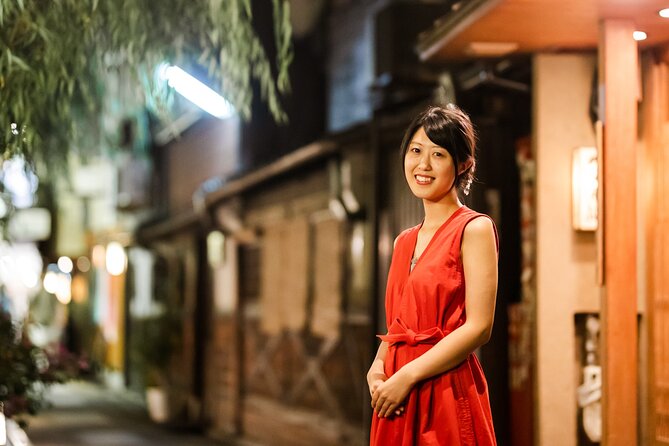
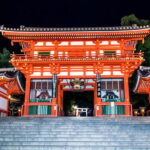
Then the tour adds a major cultural anchor: Yasaka Shrine. It sits between Gion and Higashiyama, so it works perfectly as a “bridge” stop that connects the entertainment district atmosphere to Kyoto’s larger spiritual and festival calendar.
The shrine is Shinto and has a history spanning more than a thousand years, and that long timeline makes it more than a quick photo stop. Your guide can help connect the shrine to why Kyoto festivals are so rooted in place.
Here’s what this stop can do for you: it gives you a frame for Kyoto beyond entertainment districts. If Gion is about tradition and performance culture, Yasaka Shrine is about ritual, community, and seasonal celebration. With that context, Kyoto starts to feel less like separate postcard zones and more like one connected city.
One consideration: if you’re visiting during peak festival seasons (or near busy hours), you might need patience around entrances and pathways. A private guide helps you manage that by adjusting the route slightly.
Stop 4: Shinbashi Dori, Tatsumi Bridge, and the “easy to remember” photo spots
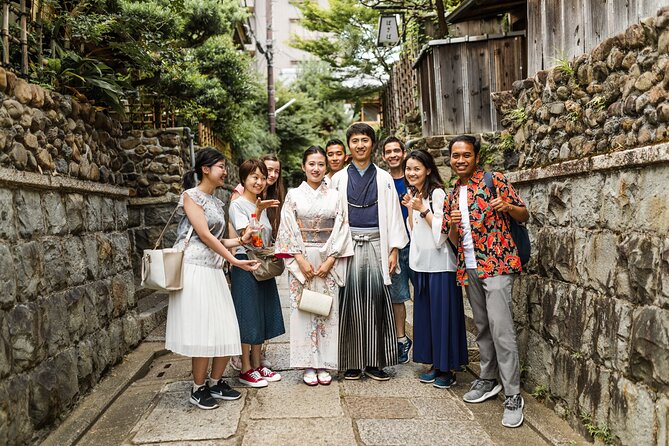
After the shrine, you walk along Shinbashi Dori, a picturesque street framed by willow trees and traditional facades. It’s the kind of Kyoto scene that photographs well, but only partly because the street is beautiful. The real value is knowing what you’re looking at and why people remember certain spots.
You pause at Tatsumi Bridge, a popular photo spot with local significance. This kind of stop is useful if you want your tour to end with more than just a handful of generic shots. With a guide pointing out how the area functions in local life, even your photos feel like they belong to a story.
If you want a bit of structure, this stop provides it. You have a shrine moment, a scenic street moment, then you continue toward the evening-lane vibe of Pontocho.
Stop 5: Pontocho Alley to finish, with dinner energy close by
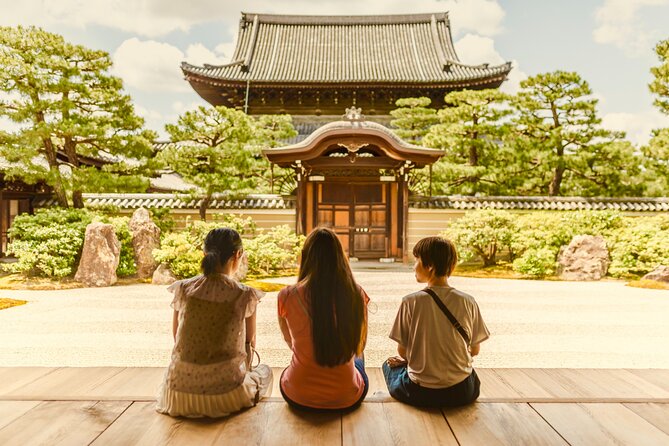
The tour concludes in Pontocho Alley, a narrow passage known for mixing traditional Kyoto charm with an active evening restaurant scene. This finish works well because you’re not stuck in transit after the tour. You can stay in the area and turn it into dinner plans right away.
Pontocho is famous for its lanes and the sense of Kyoto at night. Even if you do not have a reservation, you can use the guide’s local recommendations to choose where to eat, what to look for, and what to avoid if you want a comfortable experience.
A small detail that can matter: a few guides have been flexible about linking the tour with pre-booked plans nearby. For example, one guide finished at Gion Corner when the guest had bookings. If you already have something planned, ask your guide ahead of time in your messaging so they can align the ending point with your schedule.
The guide is the product: what the best hosts consistently do
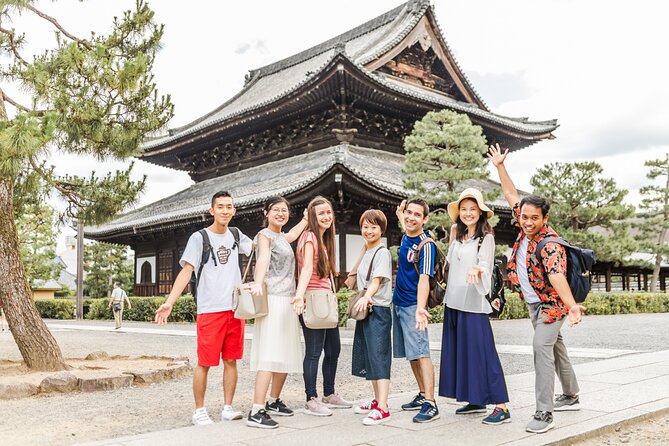
This tour is only as good as the guide. And the strong pattern in the names you might hear associated with this experience is how they communicate.
You’ll want a guide who:
- adjusts the walk based on what you ask for
- explains without rushing through the streets
- gives you practical context so the sights make sense
- keeps the pace comfortable for your group
Some guides named in past experiences include Emi, Alexis, Olan, Nisa, Ai, Milo, Toga, Kenta, Takaya-san, Brenda, Tess, Kenya, Michael, Ada, KOKORO, and Taichi. Different people, different styles, but the common thread is a focus on turning Gion into something you understand, not just something you walk through.
If you’re the type who asks questions and wants stories, this tour format fits you. If you prefer total silence and minimal conversation, you might need to tell your guide clearly during planning so they can match your comfort level.
Price and value: why $101.57 can be fair for a private 2 to 3 hour walk
At $101.57 per person, the math depends on what you compare against. If you compare it to a group tour, yes, it’s more. But you’re paying for a private experience with a guide who can tailor the route, answer questions, and give insider suggestions.
For value, look at these items included:
- private and personalized walking time
- a pre-tour questionnaire
- direct communication with your host for planning and local recommendations
- flexible start times you choose when booking
- a mobile ticket
Also, the tour is built for a place where local explanations matter. In Gion, the “what you see” is easy, but the “what it means” is harder. A good guide makes that meaning clear fast.
Your cost control matters too:
- Food, drinks, and attraction tickets are not included
- Transportation is not included, and you may use public transit or taxis at additional cost
- Gratuities are optional
So I’d treat this as a smart spend on interpretation, then budget separately for dinner and any optional entrances.
Practical tips so you get the best experience in Gion and Pontocho
A few things can make or break a short Kyoto walk.
First, wear shoes you trust. You’re mostly walking, and the streets around Gion can be uneven. Bring a thin layer too. Weather can flip quickly, especially around evening.
Second, manage crowd expectations. Gion and the surrounding areas attract lots of visitors. If you want calmer photos, choose earlier time slots. If you want the Pontocho evening vibe, accept that you’ll share the lane.
Third, be respectful with temple and shrine etiquette. You’re passing religious spaces and historic sites. Even when you are just walking by, follow signage and your guide’s prompts. One guest in past experiences complained about disrespect by vendors near temple areas, but the takeaway for you is simple: stay focused on your own behavior, avoid blocking paths, and keep your eyes on your guide’s instructions.
Finally, if you truly care about geiko or maiko sightings, add that to your questionnaire. Even then, you may not see them. Your best strategy is to enjoy the culture and architecture as the main event, while treating sightings as a bonus.
Who this Kyoto Gion private tour suits best
This tour fits you if:
- you want one guide working for your group, not a big group schedule
- you like history and cultural context, not just photos
- you want a short, efficient walk that ends near dinner options
- you enjoy asking questions and getting practical local tips
It might not fit you as well if:
- you need guaranteed geisha or maiko sightings (those are not something a guide can control)
- you dislike crowds and evening pedestrian traffic
- you want lots of ticketed attractions, because food and attraction entries are not included
Should you book the Kyoto Gion Private Tour with a Local Guide?
Yes, if you want a guided walk where Gion feels understandable and enjoyable, not just scenic. The combination of private time, a route tailored through a questionnaire, and a finish in Pontocho Alley is a strong value for a first or second day in Kyoto.
I’d book it with one mindset: you’re buying context. When the guide is a great fit, the lantern streets, ochaya-lined lanes, Yasaka Shrine significance, and Tatsumi Bridge photo moment all connect into one Kyoto story. If you go in only chasing geisha sightings, you might end up frustrated. But if you treat cultural learning and respectful wandering as the goal, this is a tour worth making time for.
FAQ
How long is the Kyoto Gion private tour?
The tour runs about 2 to 3 hours.
Is this tour private or shared?
It is a private tour. Only your group participates.
Is the tour mostly walking?
Yes. It is a walking experience, and a private vehicle is not included.
Is pickup available?
Pickup is offered.
Where does the tour start?
The meeting point is Matsumoto Kiyoshi Kyoto Shijo Kawaramachi, 103-2 Hashimotochō, Shimogyo Ward, Kyoto, 600-8011, Japan.
What’s included in the price?
A private personalized walking experience with insider tips, flexible durations and start times, a pre-tour questionnaire, and direct communication with your host.
What is not included?
Food, drinks, and tickets to attractions are not included. Transportation is also not included, and gratuities are optional.
Can I cancel for a full refund?
Yes. You can cancel up to 24 hours in advance for a full refund. If you cancel less than 24 hours before the start time, the amount paid is not refunded.
Evenings in the Old Quarters
Newest Kyoto write-ups from the Loving Japan desk

Gion, Geisha and Maiko Experiences, side by side.
 ★ 4.7Kyoto Geisha Walking Tour: Gion District & Hidden GemsFrom $253,273 reviews
 ★ 4.9Gion Magical Night Walking Tour with Geisha TriviaFrom $242,393 reviews
 ★ 4.7Gion Geisha District Walking Tour – Stories of GeishaFrom $202,187 reviews
 ★ 4.9Best of Kyoto: Gion, Geisha, Pagodas & CobblestonesFrom $242,058 reviews
 ★ 4.5Night Walk in Gion: Kyoto’s Geisha DistrictFrom $212,003 reviews
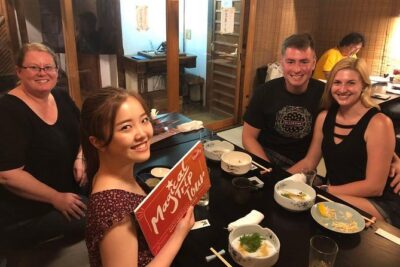 ★ 5.0Kyoto Night Foodie Tour in Gion (9+ dishes + 6 Sake tastings)From $1631,762 reviews
 ★ 5.0Kyoto Gion Geisha District Walking Tour – The Stories of GeishaFrom $251,441 reviews
 ★ 5.0Kyoto Gion: 2-Hour Geisha Culture & History Walking TourFrom $231,186 reviews
Filed on these lists too