
REVIEW · DOTONBORI AND OSAKA STREET FOOD
Kyoto: Hands-on Takoyaki and Okonomiyaki Cooking (1 Hour)
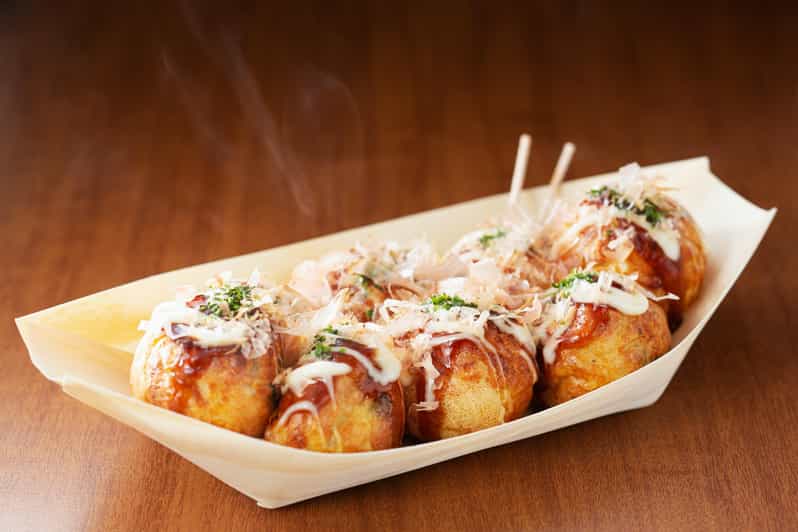
Kyoto food is fun when your hands are involved. In just one hour, you cook takoyaki and okonomiyaki with friendly guidance, not a sit-and-watch lecture. I like that it’s beginner-friendly, so you can jump in even if Japan cooking sounds intimidating.
What I really like is the value for time. You get rental aprons and utensils, the ingredients for a meal, and a small group size so you’re not lost in the crowd. One possible drawback is that, like any small operation, a class can occasionally feel less polished if timing or prep is off, though the December 2025 update aims to smooth the experience with instructors leading or supervising.
In This Review
- Key highlights to know before you go
- One-hour Kyoto cooking for takoyaki and okonomiyaki
- Getting to the class near Shijo and Karasuma
- What you actually do in the class
- Dietary options that actually matter: gluten-free, vegan, halal-friendly
- Instructors, language, and the small-group advantage
- Price and value: is $56 worth it?
- Who this class is for (and who should skip it)
- Small details that make the experience smoother
- Should you book this Kyoto takoyaki and okonomiyaki class?
- FAQ
- Where is the meeting point?
- How long is the cooking experience?
- What does the class include?
- Is transportation included?
- Is it beginner-friendly?
- Are gluten-free, vegan, or halal-friendly options available?
- How large is the group?
Key highlights to know before you go
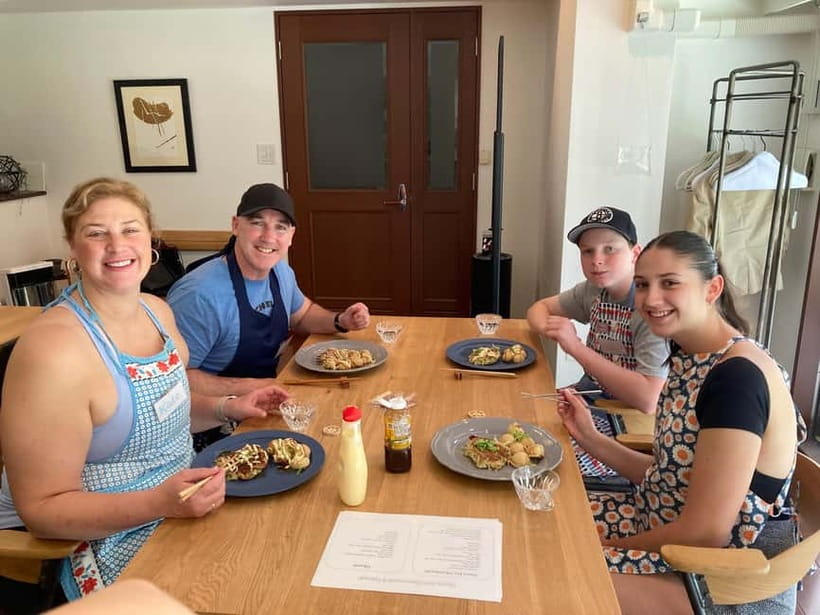
- Two classic Kansai comfort foods in one session: you make both okonomiyaki and takoyaki.
- Short, beginner-friendly format: hands-on cooking in just one hour.
- Super convenient location: about a 10-minute walk from Shijo Station or Karasuma Station.
- Dietary flexibility: gluten-free, vegan, and halal-friendly options are available with advance notice.
- Small group, more attention: limited to 6 participants.
- Stronger instructor oversight in Dec 2025: classes are now led or supervised by experienced instructors.
Still weighing up options in Kyoto? These are the ones our reviewers rated highest.
- PERFECT KYOTO 1-Day Bus Tour
★ 5.0 · 13,518 reviews - Kyoto: Fushimi Inari, Kinkakuji, Bamboo Grove 1 Day Bus Tour
★ 4.8 · 4,316 reviews - Kyoto: Tea Ceremony in a Traditional Tea House in Kiyomizu
★ 4.9 · 3,519 reviews - Kyoto Geisha Walking Tour: Gion District & Hidden Gems
★ 4.7 · 3,273 reviews
One-hour Kyoto cooking for takoyaki and okonomiyaki
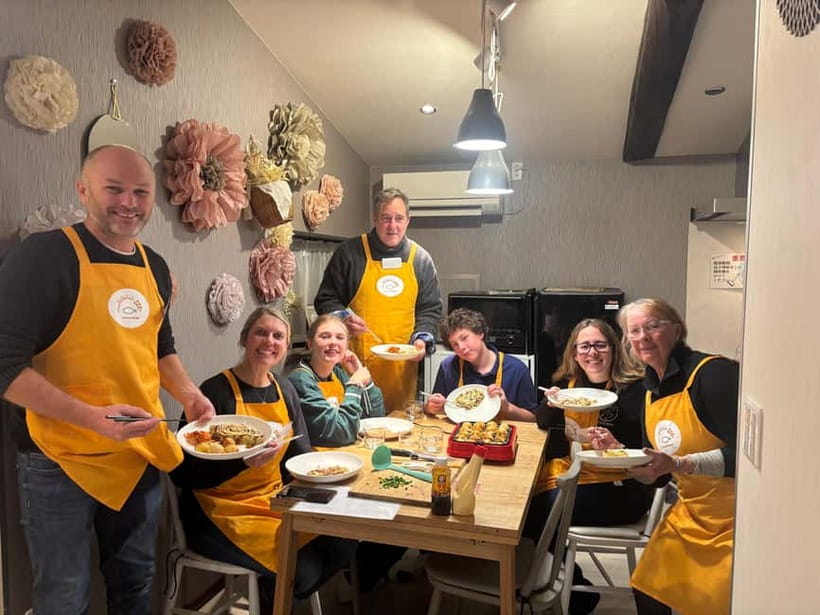
If your Japan plans include a few hours of “market wandering” but you still want something you can take home, this is a smart move. You’ll cook two street-food favorites that are everyday comfort in Japan, especially in the Kansai region.
What makes it interesting is the mix of familiar and practical. Okonomiyaki has been enjoyed since the Taisho era (1912 to 1926), and takoyaki goes back to the Showa era (1926 to 1989). That history matters less than the payoff: you learn how these dishes come together with real technique, not just a recipe.
I also like the pace. Because the focus is doing, not lecturing, you can learn by making mistakes, asking questions, and then applying what you just heard while the pan is still hot.
Getting to the class near Shijo and Karasuma
You don’t need heroic planning here. The meeting point is close to central Kyoto, about a 10-minute walk from either Shijo Station or Karasuma Station. It also sits within a reasonable reach from JR Kyoto Station, though you’ll have a short train or bus ride plus a walk.
The meeting instructions are very specific, which helps when you’re in a new neighborhood. Take the elevator to the third floor and press the doorbell for 302.
Two practical tips. First, give yourself an extra few minutes so you arrive calm, not flustered. Second, if you’re coming from Nishiki Market, count on a roughly 15-minute walk, and plan a quick snack gap so you’re hungry but not starving when you start cooking.
What you actually do in the class

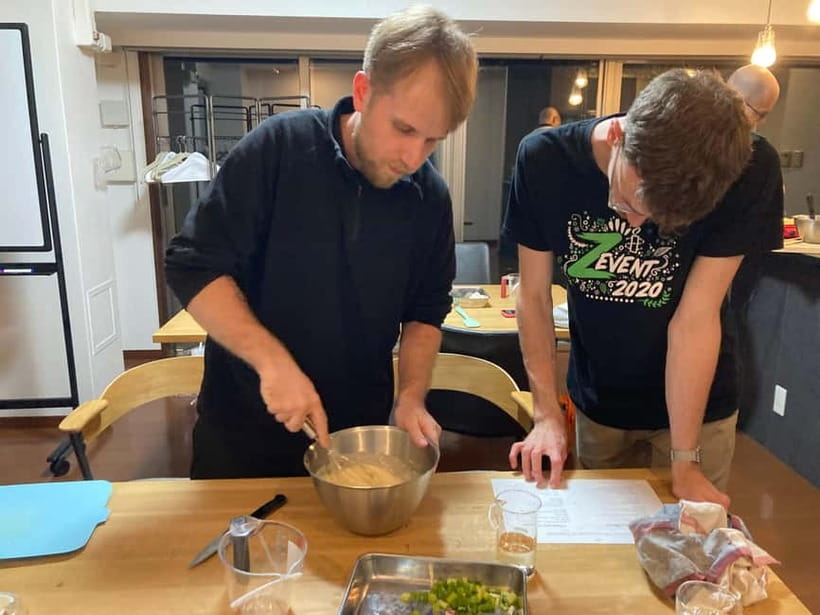
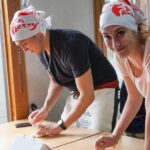
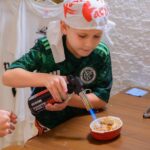
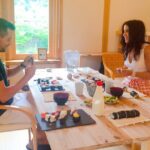
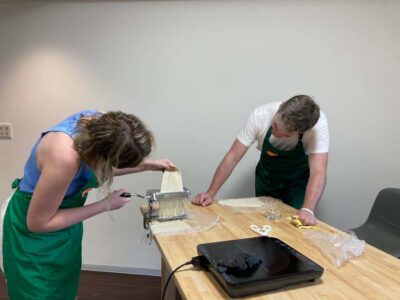
This is a straightforward hands-on cooking experience. You make two dishes: okonomiyaki and takoyaki. The instructor guides you as you cook at your own pace, and you can ask questions along the way.
Instead of a lecture-style class, expect a “show, then help” rhythm. That matters because these dishes have a feel to them. Knowing the general method is one thing, but watching how batter or toppings are handled, then doing it yourself, is how it sticks.
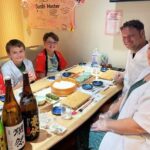
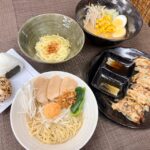
You’ll also end by eating what you cooked in a relaxed setting. It’s not fancy, and that’s the point. You get a meal you made, plus the confidence of knowing you can repeat it at home.
A detail I appreciate is that these two dishes overlap in ingredients and methods. That makes the one-hour format work. You’re not starting from zero twice, you’re building on what you learned in the first dish while switching to the second.
Cook it yourself instead. Other kitchens in Kyoto
- Ramen Cooking Class at Ramen Factory in Kyoto★ 5.0 · 1,937 reviews
- Sushi Making in Kyoto! Same-day bookings welcome!★ 5.0 · 713 reviews
- Kyoto: Ramen Cooking Class at a Ramen Factory with Souvenir★ 4.9 · 532 reviews
- Kyoto: Ramen, Gyoza, and Onigiri Cooking Class★ 5.0 · 445 reviews
- The Original Small-Group Sushi Making Class in Kyoto★ 5.0 · 436 reviews
Dietary options that actually matter: gluten-free, vegan, halal-friendly
One of the strongest reasons to book is the clear statement that gluten-free, vegan, and halal-friendly options are available. You just need to let the team know at booking if you have restrictions or allergies.
That doesn’t always happen with cooking experiences, especially smaller ones. Here, the plan is to adjust ingredients accordingly, so you’re not stuck hoping the chef will guess what you need at the last second.
If you’re traveling for dietary reasons, this is a big quality-of-life win. You get to participate fully, and you’re not stuck eating only sides while everyone else enjoys their creations.
My practical advice: when you book, be explicit and direct about what you avoid. If you’re gluten-free, mention it clearly. If you’re vegan or halal-friendly, say that too. The class is designed to be adjusted, so your advance details help everything run smoothly.
Instructors, language, and the small-group advantage
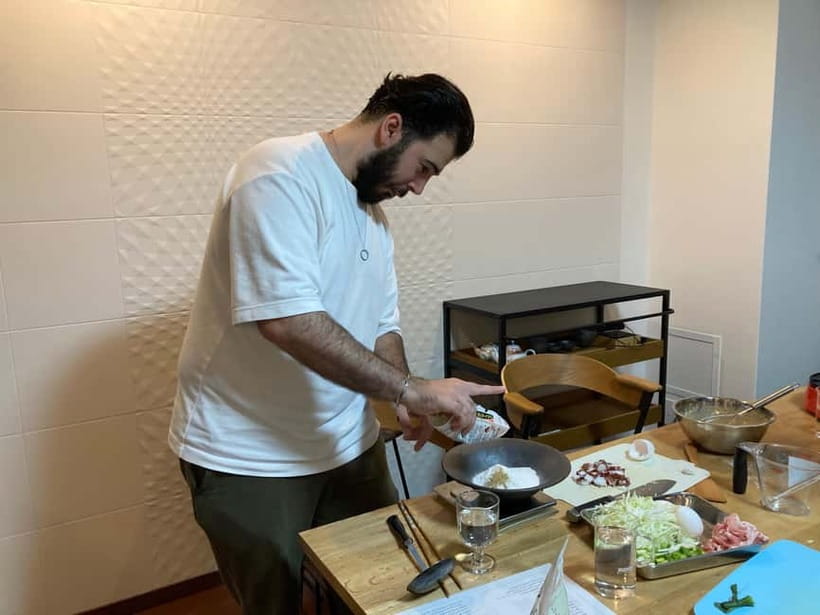
The class is taught with English and Japanese support, so you’re not forced into silence. You can ask questions in the language you feel most comfortable with, and that reduces the “I’m not sure what to do” stress.
Small group size is limited to 6 participants, which you feel right away. When there’s space, you get real feedback, not just generic tips. That makes a one-hour class much more effective because you can ask the one question you’re actually wondering about while you’re cooking.
In terms of instructor experience, there’s a useful update. Since December 2025, classes are led or supervised by experienced instructors, and the guidance flow has been refined to fit the tight time window.
Also, the human factor shows up in the real feedback. One guide named Marie was described as very kind and fun, and that personal tone seems to be part of the experience. Another highlight across experiences is that guides share local cooking know-how and are open to questions, including broader curiosity about Japan.
If you like learning through conversation, this format suits you.
Price and value: is $56 worth it?
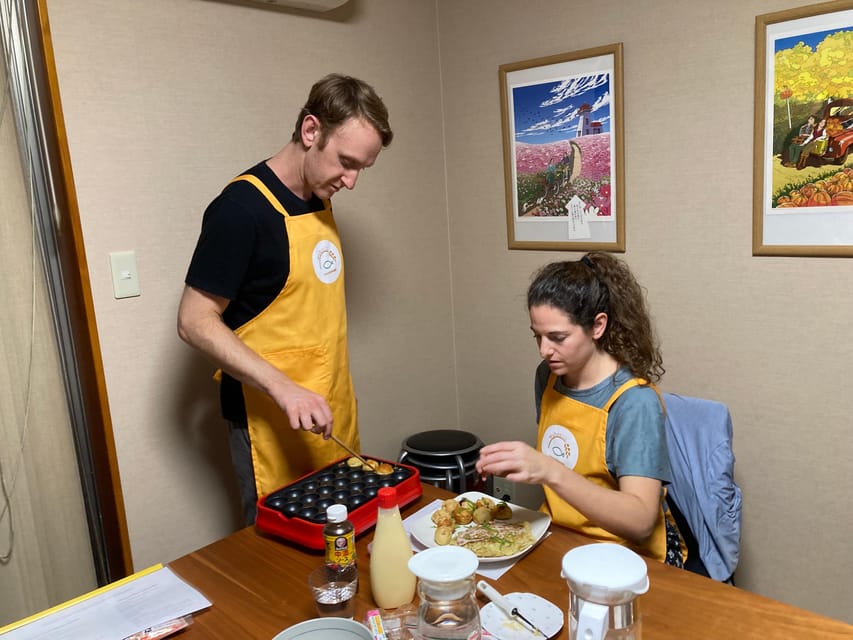
At $56 per person, this isn’t a free add-on. You’re paying for ingredients, rented equipment, and the instructor’s time, all inside a tight one-hour window.
Here’s why it can still be good value. You’re not just watching someone else cook. You’re making a meal, getting step-by-step guidance, and eating what you prepared. For travelers, that’s often the best kind of “pay once” activity because it reduces the guesswork of figuring out how to cook Japanese street foods on your own.
Included in the price are the experience cost, the ingredients (for lunch or dinner food), and aprons plus cooking utensils rental. What’s not included is round-trip transportation. That last point is normal, but it matters if you’re traveling from farther out.
My rule of thumb: if you’re the type of traveler who likes learning a technique you can repeat at home, this price makes sense. If you mainly want to sample food without touching a pan, you might prefer a tasting-focused experience instead.
Who this class is for (and who should skip it)
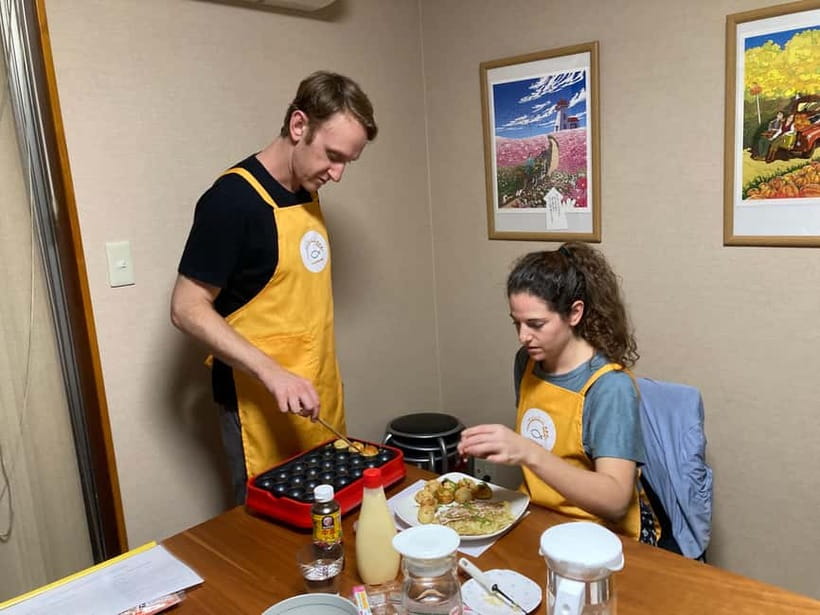
This class fits best if you want a hands-on memory. It’s especially good for first-time Japan visitors because it teaches everyday foods in a friendly setting rather than asking you to interpret everything by yourself.
It also works well for couples or small groups. One experience mentioned a private class feel when only two participants were involved, which likely means more interaction with the hosts and deeper Q and A.
You should consider a different option if you hate any chance of timing uncertainty. While the December 2025 update improves instructor oversight and the class flow, there is an example of how a host being late can throw off the first minutes. In other words, if your day is packed down to the minute, build in a buffer.
Small details that make the experience smoother
Keep your expectations practical. You’re learning two dishes in an hour, so you’re not aiming for restaurant-level plating. You’re aiming for understanding how the dough or batter works, how toppings are balanced, and what to watch for while cooking.
Arrive hungry but not overly rushed. You’ll sit down and eat after cooking, so if you arrive starving you’ll have a hard time focusing during prep. If you arrive too full, you’ll lose some of the pleasure of your own meal.
If dietary restrictions are part of your plan, write them clearly when booking. The class is designed to adjust ingredients, but the more specific you are about what you need, the easier it is for the kitchen to set you up right.
Should you book this Kyoto takoyaki and okonomiyaki class?
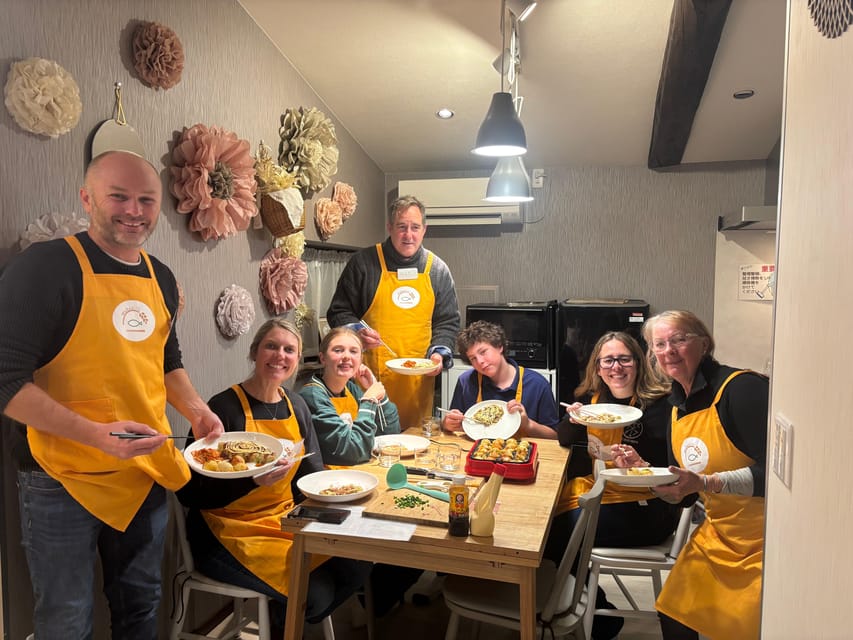
I think you should book if you want a high-reward food experience without spending half a day in transit or waiting around for “just a demonstration.” The small group, hands-on format, and chance to learn two Kansai classics in one go are exactly the kind of practical activity that makes Kyoto feel personal.
You might skip it if you’re mainly chasing a polished, tightly choreographed production every minute. There can be occasional hiccups in small operations, even with an improving instructor setup since December 2025.
If you fall somewhere in between, I’d still lean yes, because the core promise is simple and solid: make takoyaki and okonomiyaki, eat what you cooked, and leave with skills you can actually use again.
FAQ
Where is the meeting point?
Take the elevator to the third floor and press the doorbell for 302.
How long is the cooking experience?
It lasts one hour.
What does the class include?
The price includes the experience cost, ingredients for the lunch or dinner, and rental aprons and cooking utensils.
Is transportation included?
No, round-trip transportation to and from the location is not included.
Is it beginner-friendly?
Yes, it’s described as casual and beginner-friendly, with friendly guidance so you can follow along even as a first-time visitor.
Are gluten-free, vegan, or halal-friendly options available?
Yes. You can request gluten-free, vegan, or halal-friendly ingredients, and you should inform the team at booking about dietary restrictions or allergies.
How large is the group?
The class is a small group, limited to 6 participants.
Kitchens You Can Book Into
Newest Kyoto write-ups from the Loving Japan desk



Dotonbori and Osaka Street Food, side by side.
 ★ 4.8Shinsekai Food Tour with 13-15 Dishes at 5 EateriesFrom $532,204 reviews
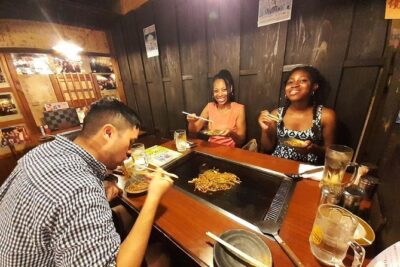 ★ 5.0Osaka Local Foodie Walking Tour in Dotonbori and ShinsekaiFrom $111985 reviews
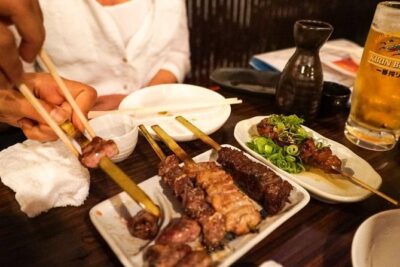 ★ 5.0Osaka Bar Hopping Night Walking Tour in Namba (3 bars, 6 tastes)From $98958 reviews
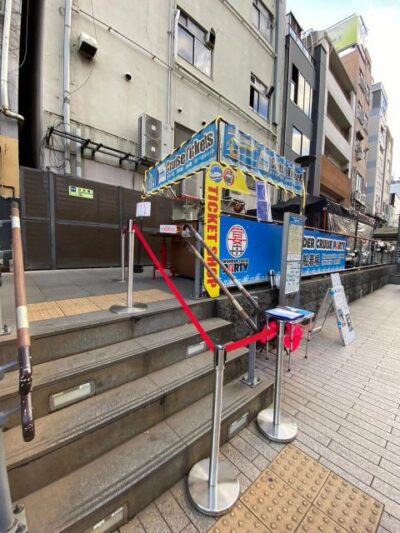 ★ 4.2Dotonbori District River Cruise with Drink DiscountFrom $12876 reviews
 ★ 5.0Ultimate Osaka Walking Tour: Castle, Dotonbori & Hidden GemsFrom $73862 reviews
 ★ 5.0Kuromon Market Food Walking Tour in Osaka (6 stops, 6 tastes)From $50550 reviews
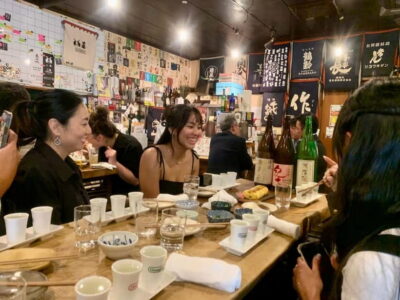 ★ 4.9Namba Pub Bar Crawl with a Local GuideFrom $30424 reviews
 ★ 5.0Ramen and Gyoza Cooking Class in DotonboriFrom $70378 reviews
Filed on these lists too