
REVIEW · JAPANESE COOKING CLASSES
Kyoto: Ramen Cooking Class at a Ramen Factory with Souvenir
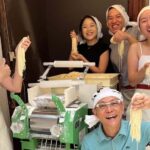
You make ramen noodles from scratch in Kyoto. At the Ramen Factory ramen school linked to Menbaka Fire Ramen, you fold dough over 100 times and shape a bowl you can actually repeat at home. I love that the class has you making noodles completely from flour, and I also love how you mix and taste Miso, Salt, and Soy so you understand what changes in flavor.
The one catch: the place is in a basement, and the entrance can be confusing at first (it is not the same as what you might see on Google Maps). If you expect “easy street-level storefront,” plan a moment to double-check.
In This Review
- Key things to know before you go
- Where the class fits in Kyoto, and why it works as a side trip
- Getting there: Demachiyanagi to the basement ramen school
- What happens in the first 10 minutes: outfits, overview, and your station
- The core skill: making noodles from flour (and what folding really teaches)
- Chicken seasoning and prep: building flavor before you choose your bowl
- The sauce lesson: tasting and mixing Miso, Salt, and Soy
- Your bowl assembly: toppings, egg, condiments, and your final choice
- Recipe email and the souvenir: what you take home that actually helps
- Language, group energy, and how instructors change the experience
- Price and value: is $127 for 90 minutes worth it
- Who should book this class, and who might skip it
- Should you book this Kyoto ramen cooking class?
- FAQ
- Where is the meeting point?
- How long is the Kyoto ramen cooking class?
- What is included in the price?
- Are drinks included?
- Do they offer dietary options?
- Can I cancel for a refund?
Key things to know before you go
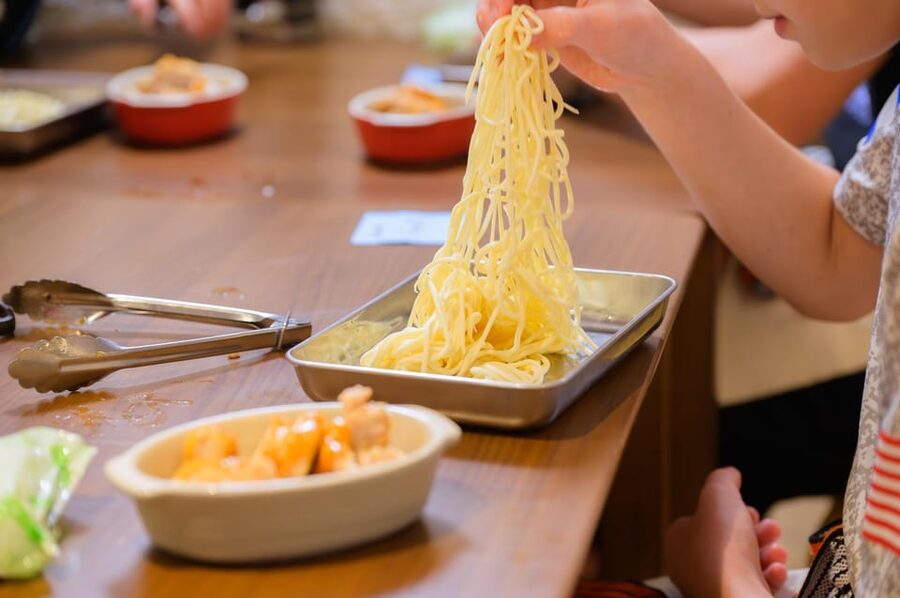
- Noodles from flour, step-by-step so you learn the technique, not just assembly.
- Three featured sauce flavors (Miso, Salt, Soy) you taste and mix to build your bowl.
- Your full recipe is sent by email, so you can cook again after the trip.
- You season and prep chicken and then choose your soup base and finishing oils.
- You eat your ramen right after making it, warm and personal to your choices.
- You get to pick from 4 souvenir options, plus the photo and memory factor.
Cook it yourself instead. Other kitchens in Kyoto
- Sushi Making in Kyoto! Same-day bookings welcome!
★ 5.0 · 713 reviews - Kyoto: Ramen Cooking Class at a Ramen Factory with Souvenir
★ 4.9 · 532 reviews - Kyoto: Ramen, Gyoza, and Onigiri Cooking Class
★ 5.0 · 445 reviews - The Original Small-Group Sushi Making Class in Kyoto
★ 5.0 · 436 reviews
Where the class fits in Kyoto, and why it works as a side trip
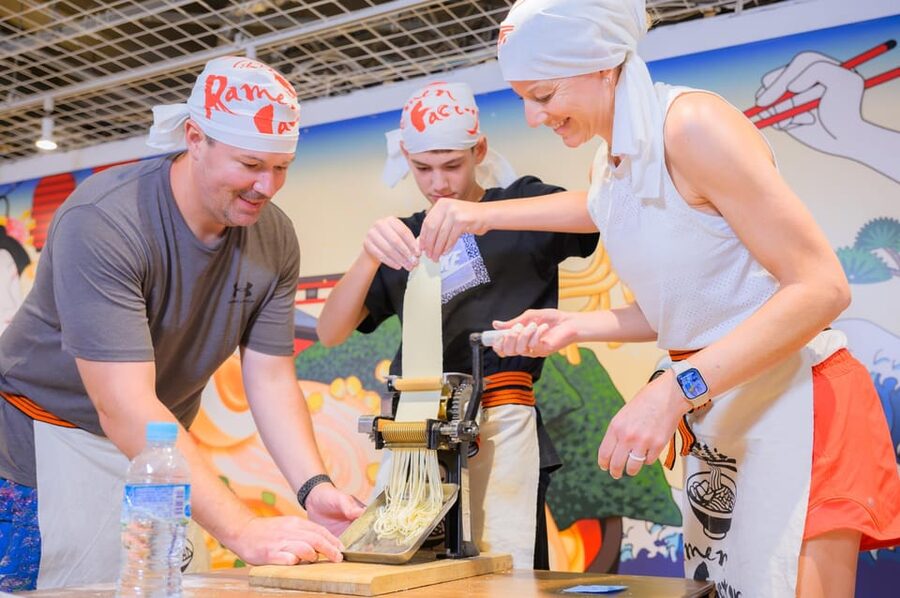
This is a 90-minute, hands-on ramen lesson built for real people with limited time. Kyoto can be overwhelming if you are stacking temples and shrines all day. This class is different. It is a focused food skill, and it lands near local transit, so it is a clean break between sightseeing blocks.
I like the pacing. You start with a short overview, then you move through the practical steps that actually matter: dough work, noodle shaping, soup and sauce choice, and finally assembling your bowl. You are not just learning “about ramen,” you are producing a finished bowl you can taste.
It also helps that the school is connected to a popular Kyoto ramen house, Menbaka Fire Ramen. That connection matters because it signals the kitchen standards they are trying to teach: ramen technique, not just crowd entertainment.
Getting there: Demachiyanagi to the basement ramen school
Your meeting point is simple on paper: a five-minute walk from Demachiyanagi station on the Keihan line. From the street, you head for the area by the supermarket, then take the stairs to the right and go down to the basement.
Plan for one extra minute at the start. The entrance is the one part that can trip people up, and once you find it, everything runs smoothly inside. If you are traveling with a group, this is worth clarifying before you step out, so nobody wanders.
Also note the media shooting notice. During your visit, you may be filmed or photographed as part of professional video productions or photo shoots. That is normal in some tour-style attractions in Japan, but it is good to know going in.
What happens in the first 10 minutes: outfits, overview, and your station
Once you arrive, you will get set up like you are joining a real kitchen workflow. You wear a ramen apron and headscarf, then watch an overview video that explains the process at a level you can actually follow during the hands-on part.
This early segment is not just filler. It gives you the mental map for what comes next, especially the sequence of noodle work, cooking prep, and how soup and sauce choices fit together.
Your class is taught by instructors who can work in English and Japanese. In practice, that means you can follow directions without guessing, and you can ask questions if you get stuck.
A bowl somewhere else in Kyoto
- Kyoto Ramen and Gyoza Cooking Class with Professional Chefs★ 5.0 · 282 reviews
- Home style Ramen and Homemade Gyoza in Kyoto★ 5.0 · 152 reviews
- Kyoto Michelin Ramen Workshop or Painting Ramen Essentials★ 4.9 · 100 reviews
- Kyoto Ramen Noodle Making Class★ 5.0 · 58 reviews
- Ramen Gyoza Onigiri Japanese Cooking Class in Kyoto★ 5.0 · 44 reviews
The core skill: making noodles from flour (and what folding really teaches)
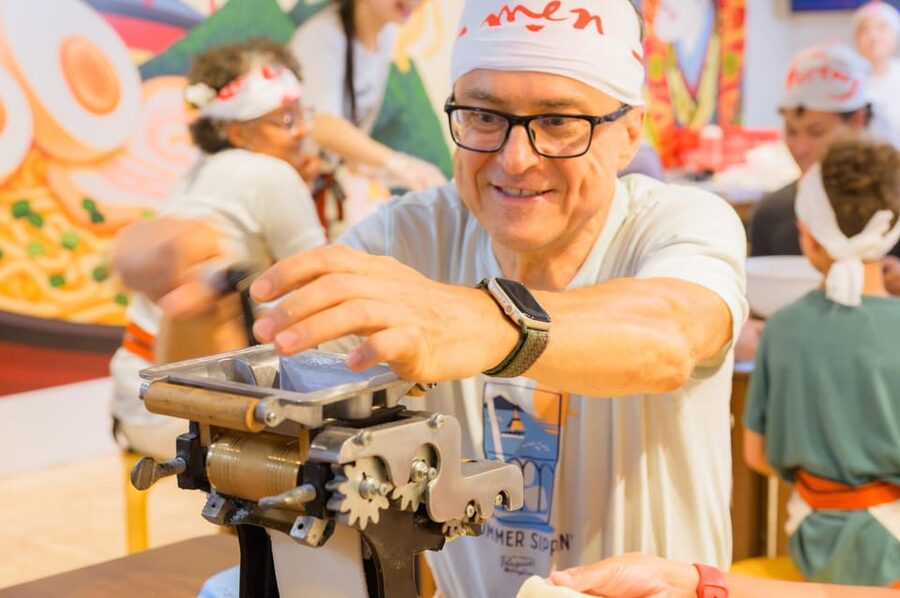
This is the part most people talk about, because it feels like real ramen craft. You start with dough and work through the motions that build texture and chew.
Here is what you can expect:
- You mix and handle the dough until it becomes workable.
- You learn the physical rhythm of folding the noodle dough over 100 times.
- You then proceed through the steps of kneading, draining, and shaking to form noodles.
That detail matters. Most ramen is made in systems where noodles are consistent. Here, they teach you how the dough changes under your hands. If you go in thinking this will be quick “food prep,” you will be surprised by how physical and satisfying it feels.
The class is also designed so it does not require previous cooking experience. You are not expected to invent a ramen style alone. You are guided step-by-step while the kitchen supports the timing so you can focus on technique.
Chicken seasoning and prep: building flavor before you choose your bowl
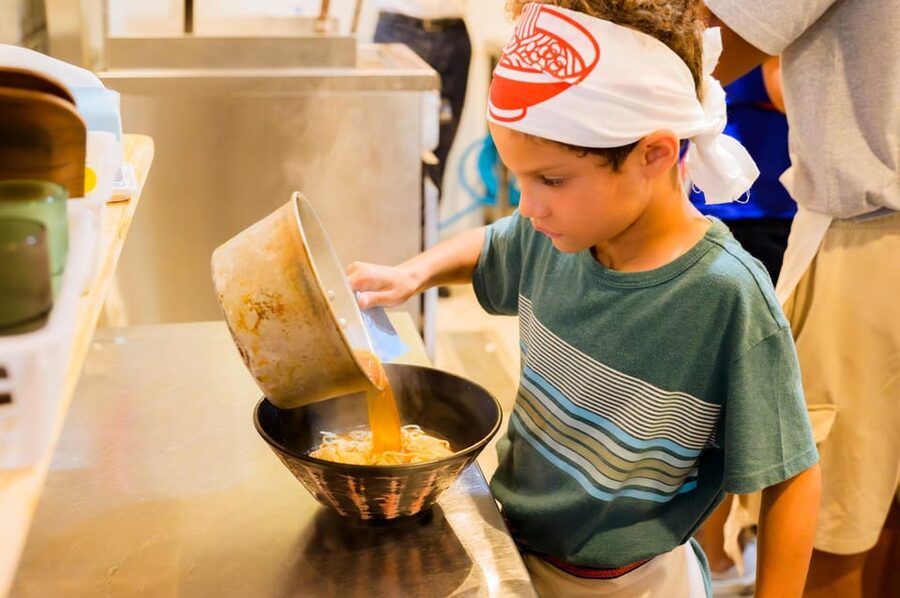
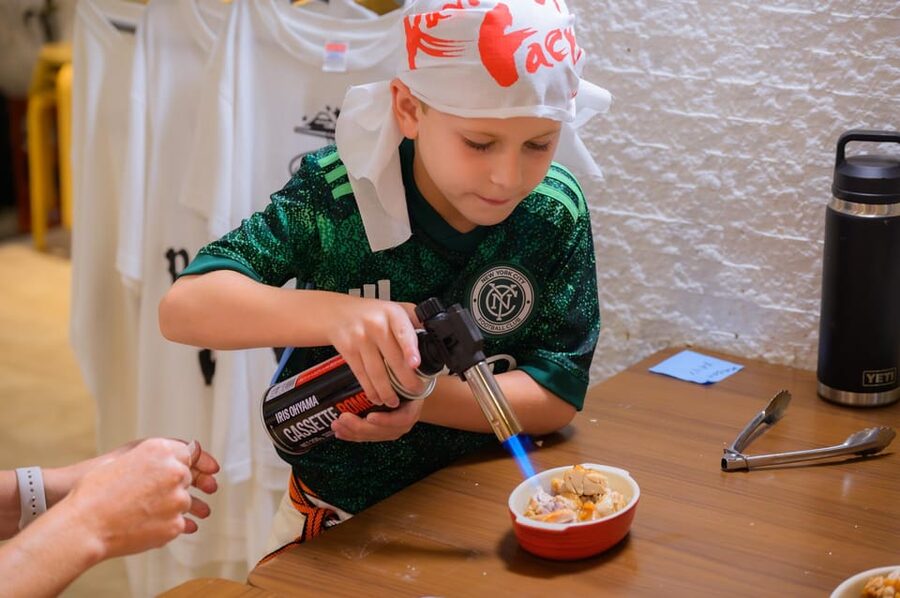
Alongside noodle work, you season the chicken with provided seasonings. Then you move through the prep steps that connect the flavor base to the final bowl.
This matters because ramen is not just noodles and toppings. The soup profile and how you layer flavors is what makes it taste like ramen, not just soup.
What I like about the structure is that you do not choose everything at the end. You build flavor while the process is still fresh in your mind, so when you pick your bowl components, it feels like a decision you understand.
If you have dietary needs, reach out after booking to ask for options. The school specifically mentions that you can contact the local supplier for dietary options. In past experiences, people have been offered alternatives such as tofu and fish broth for pescatarian preferences, and vegan accommodations have been reported too.
The sauce lesson: tasting and mixing Miso, Salt, and Soy

One of the most useful parts of this class is the sauce component. You taste and mix three featured sauces used in ramen styles: Miso, Salt, and Soy. You then choose a soup and sauce combination for your bowl.
This is where you start connecting flavor science to real food. Miso brings a deeper, fermented roundness. Salt can feel clean and direct. Soy adds savory depth and color. When you taste them in a guided way, you stop guessing what to buy later.
In the class, you also flavor chicken and then later pair it with your chosen base. That makes the final bowl feel like it belongs to you, not a standardized presentation.
Your bowl assembly: toppings, egg, condiments, and your final choice
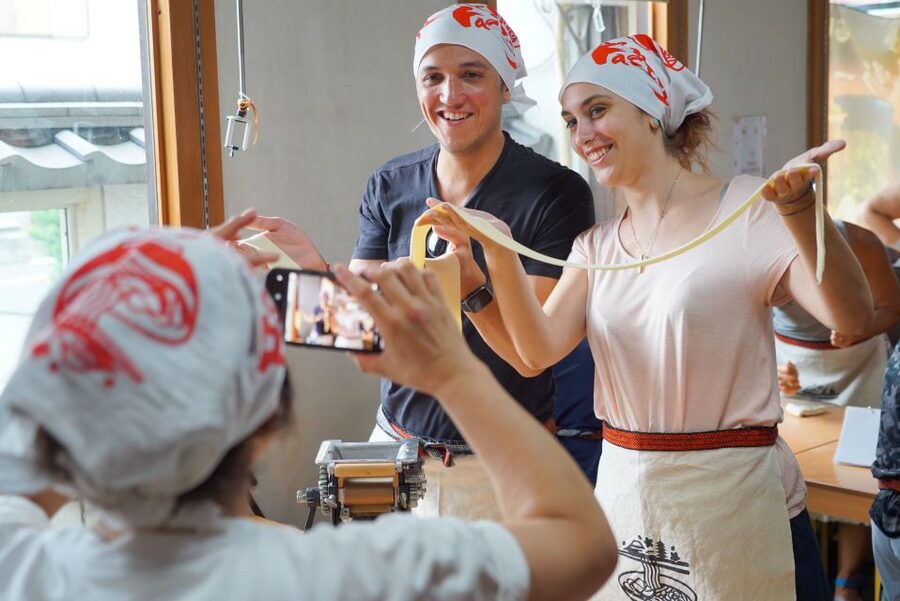
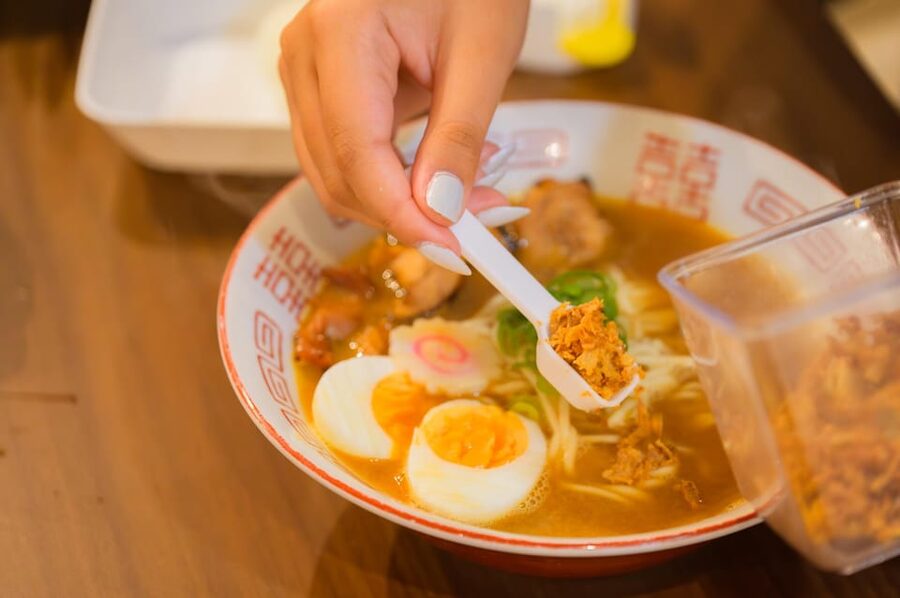
After the noodle and flavor steps, you build your ramen bowl with the topping, egg, and condiments according to your taste. This is your moment to personalize within the structure they provide.
A helpful approach: think in layers. Start with the base decision (soup and sauce combination), then work upward with toppings. Condiments are often where you can correct the balance in your own style, so choose them intentionally rather than randomly.
When your bowl is ready, you get to eat the ramen you made. That part is surprisingly motivating. It turns the class from a “lesson” into proof of concept.
You also get a chance to look back at the experience while you prepare and enjoy the meal. Many people appreciate having the process documented, and staff help with photos and videos during the class.
Recipe email and the souvenir: what you take home that actually helps
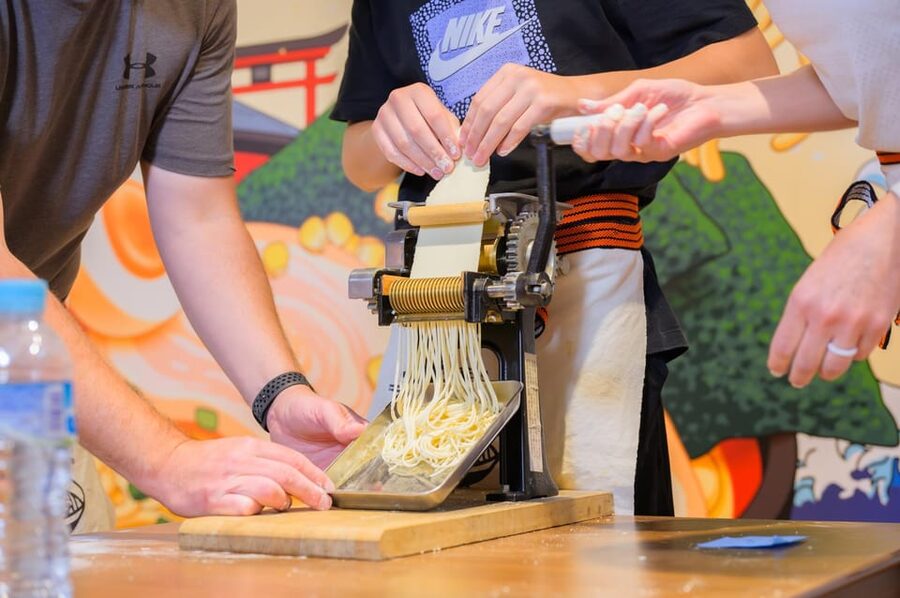
This class is not only about the meal today. The highlights include that you receive the full recipe by email to cook ramen at home. That is a big deal for value, because ramen at home can feel complicated if you only get a vague memory of ingredients.
Instead, you can follow steps again after you are back in your real kitchen, with the class decisions fresh in your mind. Even if you do not make the noodles perfectly like the first time, you will understand how your broth and sauce choices affect the final bowl.
You also get a selective souvenir, and you can choose from 4 types of souvenirs. That is a nice touch because it feels less random than a single gift. It is also a practical reminder, especially if you like buying food souvenirs that are usable or tied to a skill.
Language, group energy, and how instructors change the experience
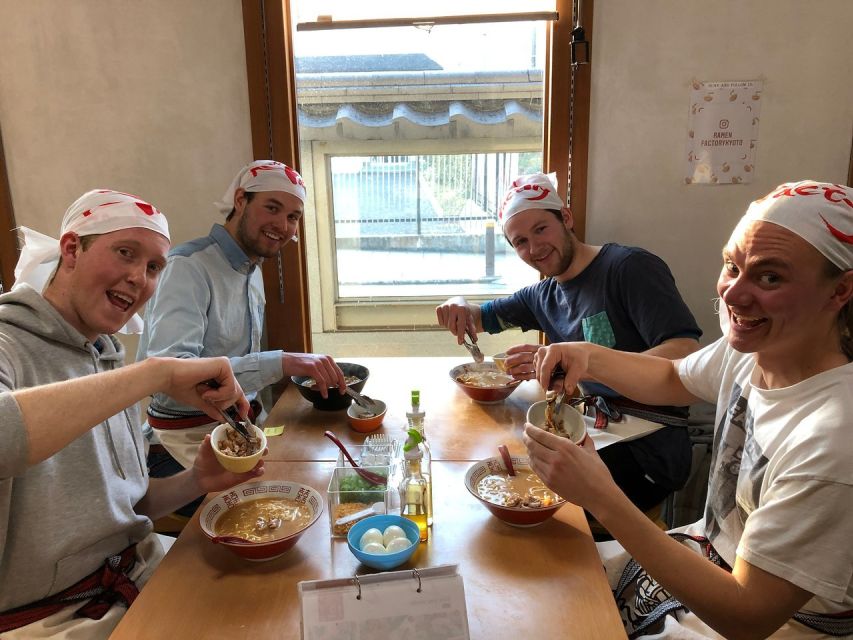
The instructors work in English and Japanese, and the overall tone tends to be lively and encouraging. People mention instructors by name, such as Sakura, Moeka, Fuku, Yuto, Kazuma, Akemi, and Haruka. That variety is a good sign. It suggests the school is built for consistent technique training while still letting instructors bring personality to the class.
If you learn best when someone explains and keeps energy up, you will probably enjoy this. If you prefer quiet instruction, you might still be fine, but you may want to sit where you can focus on the station and follow steps calmly.
Either way, the repeated theme from the experience is clear: clear instructions, organized flow, and a final bowl that tastes great. That combination is what turns a food activity into a real highlight.
Price and value: is $127 for 90 minutes worth it
At $127 per person for 90 minutes, this is not the cheapest food activity in Kyoto. But it also is not trying to be. You are paying for three things that are expensive in time and quality:
- Hands-on noodle making from flour, including the physical steps most visitors never get to try.
- Guided flavor decisions with tasting and mixing of Miso, Salt, and Soy.
- The aftercare items, the souvenir and the recipe emailed so you can cook again.
If all you wanted was to eat ramen, you could do that for less anywhere. But if you want ramen know-how, this is closer to a skill workshop than a meal.
For families, it can be a strong option too, because it is short enough to fit in a busy itinerary, and kids tend to like the “I made this” feeling even when the process is challenging. For solo travelers, it can be a great way to meet people without needing small talk all day.
If you are picky about timing, remember drinks are not included, so budget for water or another drink if you want it.
Who should book this class, and who might skip it
This works best if you:
- Want a memorable food experience with a skill you can repeat.
- Like the idea of choosing a ramen profile, not just eating one predetermined bowl.
- Are okay with a short, guided schedule and a lively classroom atmosphere.
- Prefer activities that keep you fed, since you eat your own ramen during the class.
You might skip it if you:
- Only want casual sightseeing and would rather not do hands-on work.
- Are sensitive to cramped kitchen stations or busy group energy.
- Expect drinks to be included.
Should you book this Kyoto ramen cooking class?
Yes, I think you should book it if you want something practical and fun that fits inside a tight Kyoto itinerary. The biggest reason is that the class teaches the steps that actually matter, starting with noodles from flour and finishing with a bowl you get to customize and eat.
Book it early in your trip day plan, so you can still use the recipe email while you are inspired. And arrive with the expectation that the entrance is down in a basement, then you will get to the fun part faster.
If ramen is on your must-eat list, this is one of the few ways you can leave Kyoto with more than a photo and a memory. You leave with a process you can try again.
FAQ
Where is the meeting point?
It is a five-minute walk from Demachiyanagi station on the Keihan line. The location is on the basement floor. When you arrive, take the staircase to the right of the supermarket and go down to the basement.
How long is the Kyoto ramen cooking class?
The class lasts 90 minutes.
What is included in the price?
The price includes the 90-minute chef course ramen making and a selected souvenir.
Are drinks included?
No. Drinks are not included.
Do they offer dietary options?
They say you can contact the local supplier after booking if you want a dietary option.
Can I cancel for a refund?
Yes, there is free cancellation up to 24 hours in advance for a full refund.
One More Bowl

Kitchens You Can Book Into
Newest Kyoto write-ups from the Loving Japan desk






Japanese Cooking Classes, side by side.
 ★ 5.0Sushi Making Tokyo Roll and Authentic Japanese Sushi ClassFrom $593,971 reviews
 ★ 4.9Roll and Authentic Sushi Making Class in AsakusaFrom $581,957 reviews
 ★ 5.0Ramen Cooking Class at Ramen Factory in KyotoFrom $1311,937 reviews
 ★ 4.9Sushi Making Class in a Happi Coat near a Famous SpotFrom $421,377 reviews
 ★ 5.0Sushi Making Osaka Roll and Authentic Japanese Sushi ClassFrom $311,220 reviews
 ★ 5.0Tokyo Sushi Making Class in Tsukiji with Professional ChefFrom $491,177 reviews
 ★ 5.0Ramen & Gyoza Cooking Class in Tokyo with Local Supermarket VisitFrom $122823 reviews
 ★ 5.0Tsukiji Fish Market Guided Tour and Sushi Making with Pro ChefFrom $104775 reviews
Filed on these lists too