
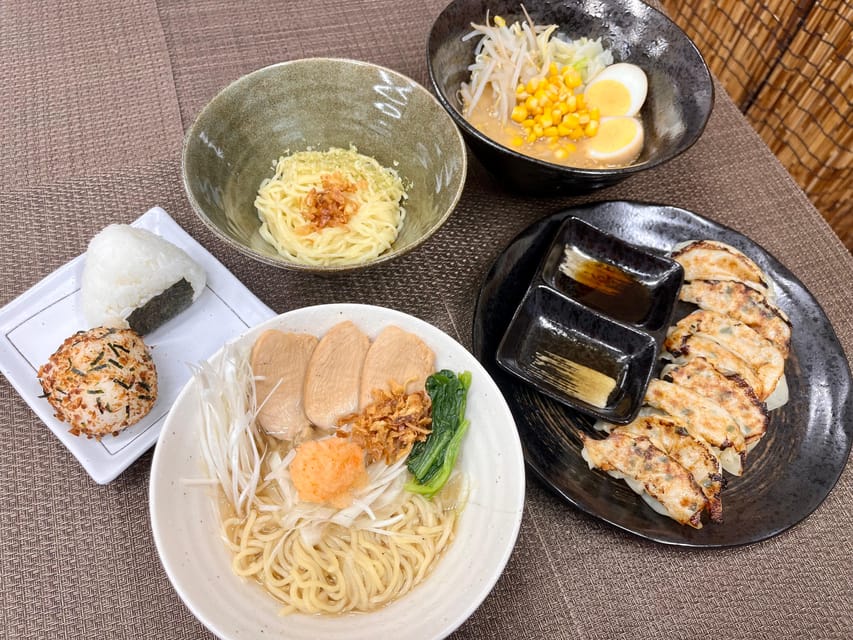
REVIEW · JAPANESE COOKING CLASSES
Kyoto: Ramen, Gyoza, and Onigiri Cooking Class
Kyoto hands you real cooking skills fast. In 90 minutes near Sanjo Keihan, you learn ramen broth technique and practice in a small group setting while English-speaking instructors guide you step-by-step.
I like that the class focuses on the parts you usually can’t figure out from a menu, building both miso and shoyu soup base plus the skills behind gyoza and onigiri. You also leave with recipes you can actually follow at home.
One drawback to plan around: the class does not offer ramen noodles, and it has firm diet limits, including no vegan, gluten-free, or other special diets.
In This Review
- Key highlights before you book
- Finding the classroom in Kyoto, Life Building B1
- How 90 minutes turns into ramen, gyoza, and onigiri
- Miso and shoyu ramen broth: why this class starts with soup
- Gyoza wrapping: the skill that sticks after the class ends
- Onigiri shaping: turning rice into a grab-and-go lunch
- What you eat at the end, and how much food to expect
- Price and value: why $90 can make sense here
- Diet limits and practical constraints you should not ignore
- Who this Kyoto ramen class fits best
- Should you book the Kyoto ramen, gyoza, and onigiri cooking class?
Key highlights before you book
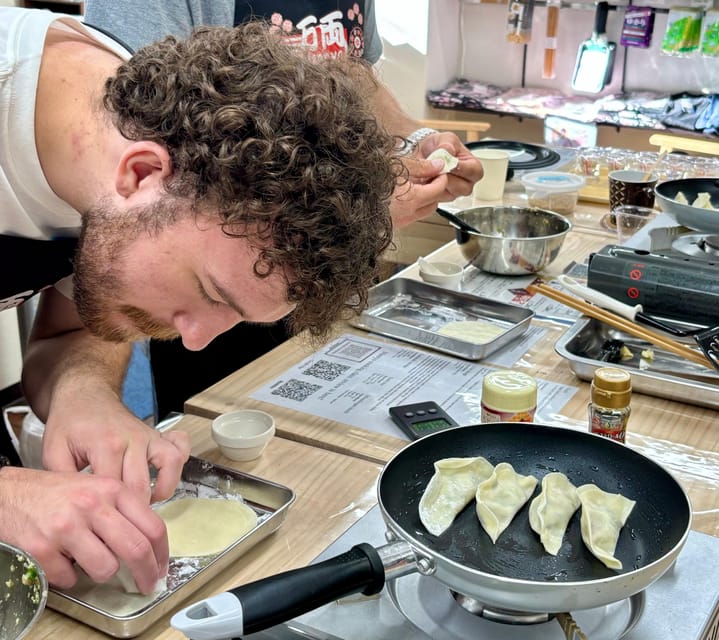
- Broth training, not noodle making so you can recreate the soup at home
- Small-group stations with enough space for hands-on wrapping and shaping
- Miso and shoyu ramen with restaurant-style toppings you can balance intelligently
- Gyoza wrapping and sealing until you get the shape right
- Onigiri shaping for grab-and-go lunches that hold together
- You eat what you cook, plus coffee and tea included
Cook it yourself instead. Other kitchens in Kyoto
- Sushi Making in Kyoto! Same-day bookings welcome!
★ 5.0 · 713 reviews - Kyoto: Ramen Cooking Class at a Ramen Factory with Souvenir
★ 4.9 · 532 reviews - Kyoto: Ramen, Gyoza, and Onigiri Cooking Class
★ 5.0 · 445 reviews - The Original Small-Group Sushi Making Class in Kyoto
★ 5.0 · 436 reviews
Finding the classroom in Kyoto, Life Building B1
The meeting point is at B1 of Life Building, and it is not on the main street. I strongly recommend using Google Maps in advance, because the entrance is one street down, not where you expect it if you are only scanning big storefronts.
If you arrive by cab, get off in front of Family Mart at Sanjo Keihan. It is a short walk from there, about two minutes. On your map, search for Manryo cooking class so you land at the right spot without circling.
The practical upside here is you can keep your day simple. If you are planning Kyoto on foot, this is easy to slot into a late-morning/lunch or late-afternoon/dinner slot. You just need comfortable shoes, because you will be standing and working at stations.
How 90 minutes turns into ramen, gyoza, and onigiri
This is a true hands-on class built around one core idea: learn techniques you can repeat, not just how to assemble a finished dish. You cook ramen broth (but not the noodles), wrap gyoza, and shape onigiri, all within the same 90-minute session.
The flow typically feels quick and organized. You start with instruction, then you rotate through tasks at your station. In the best moments, you get that I can do this at home feeling, because you are measuring, mixing, wrapping, and shaping with guidance instead of watching someone else do all the work.
Group size is limited to eight participants, and instructors plus helpers support each station. People mention the team is organized and efficient, with clear explanations and a good sense of humor. That matters, because gyoza wrapping and onigiri shaping are the kinds of skills where timing and feedback help a lot.
Quick note on who it suits: participants should be at least 13 and able to cook on their own without constant staff help. It is not the kind of class where an adult can do everything for a younger kid while the kid just watches.
Miso and shoyu ramen broth: why this class starts with soup
Ramen shops can show you the noodles and toppings. They rarely teach you how to build the soup base. Here, the focus is the broth itself, including miso ramen broth and shoyu ramen broth.
You learn the ingredients and the logic behind the flavor. The class uses simple items you can generally find at home, like soy sauce, miso, garlic, ginger, sesame oil, mirin, and cooking sake. You might also work with ingredients such as ground pork, lard, oyster sauce, fish powder, chili oil, and butter, depending on the recipe. It sounds like a lot, but the point is how they work together for umami and depth.
One of my favorite practical takeaways is the topping principle: in this style of ramen, the toppings should not overpower the broth. Think of toppings as texture and freshness, not a second sauce battle. The class uses straightforward options, including vegetables and classic add-ons.
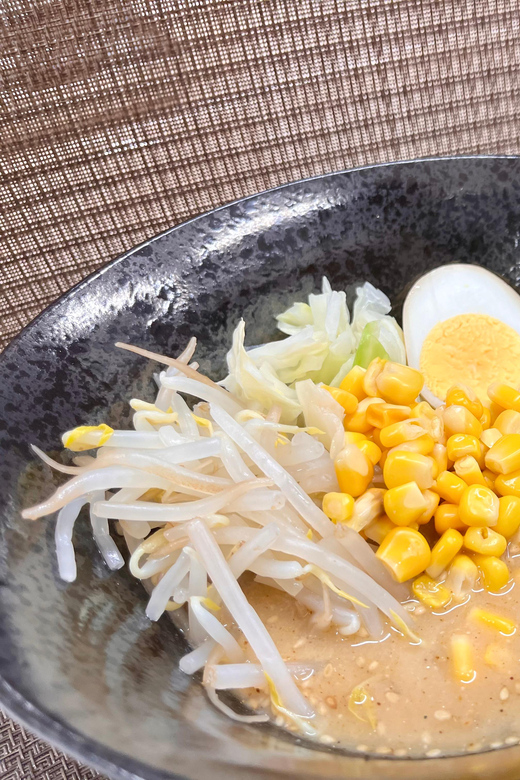
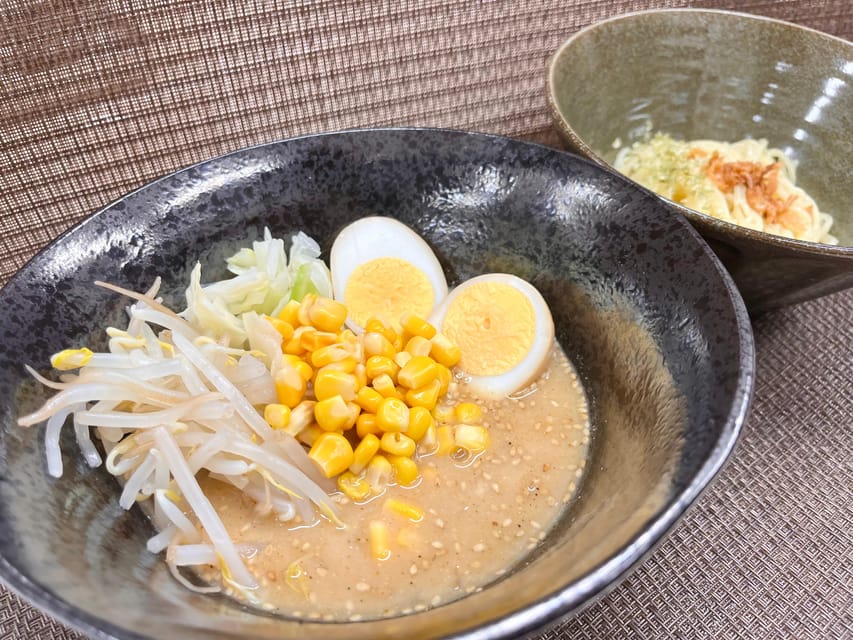
For miso ramen, the toppings include boiled egg, bean sprouts, green onions, and sweet corn. For shoyu ramen, the toppings lean into chicken, bamboo shoots, and green vegetables. That mix teaches you how to balance sweetness, saltiness, and crunch.
Also, you will not be taught how to make the noodles in this class. You are learning what most people miss: the part that makes your kitchen ramen taste like the real deal. If you can buy noodles, you are already 80 percent there.
A bowl somewhere else in Kyoto
- Kyoto Ramen and Gyoza Cooking Class with Professional Chefs★ 5.0 · 282 reviews
- Home style Ramen and Homemade Gyoza in Kyoto★ 5.0 · 152 reviews
- Kyoto Michelin Ramen Workshop or Painting Ramen Essentials★ 4.9 · 100 reviews
- Kyoto Ramen Noodle Making Class★ 5.0 · 58 reviews
- Ramen Gyoza Onigiri Japanese Cooking Class in Kyoto★ 5.0 · 44 reviews
Gyoza wrapping: the skill that sticks after the class ends
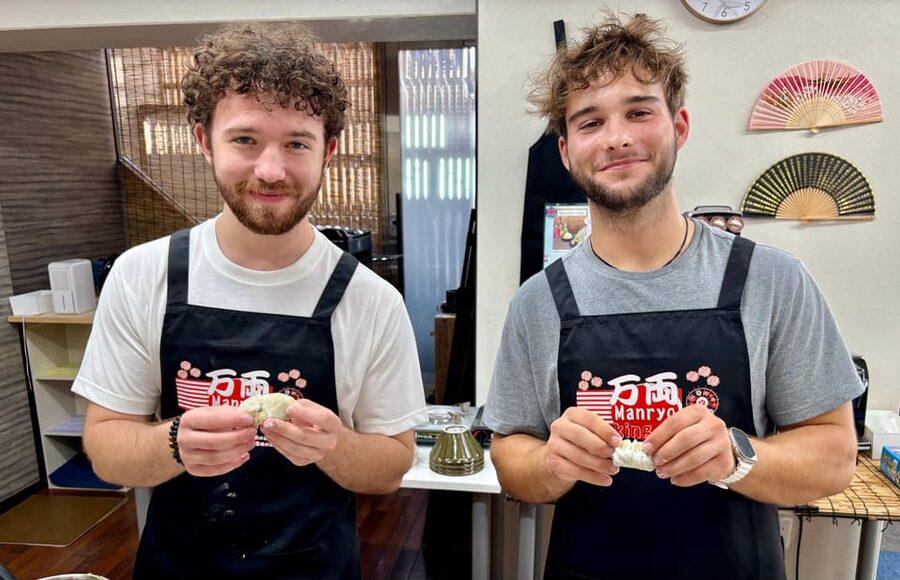
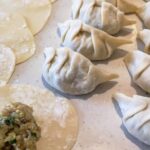
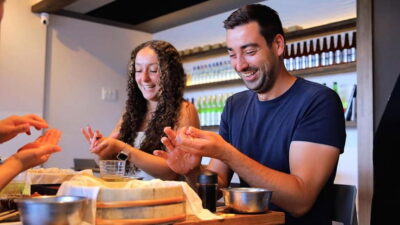
Gyoza is where this class becomes real. The goal is not just eating dumplings, it is learning how to wrap gyoza correctly, with filling proportion and sealing technique.
You start with gyoza filling, balancing ground meat and vegetables with seasonings. The class instruction focuses on getting that texture right, because filling that is too wet or too dry makes wrapping harder. Once the filling is ready, you work on the wrapper technique.
What I like here is that the instructors emphasize the wrapping steps until you can repeat them. You gain a “complete knowledge” of how the folds and seal should look. That is exactly what you want, because gyoza at home can fall apart if your seal is uneven or if you overstuff.
Many people also mention the gyoza ends up pan-fried, which helps you understand what changes when the dumplings hit heat. It reinforces why you need a good seal in the first place.
Practical tip for your own success: come ready to slow down a little on your first few wraps. If you try to go fast immediately, you will fight the process. After a couple of dumplings, your hands start to remember the shape.
Onigiri shaping: turning rice into a grab-and-go lunch
Onigiri is Japan’s answer to the sandwich problem. It is simple, portable, and satisfying. In this class, you learn how to make well-shaped rice balls, not just how to assemble rice and filling.
You stuff onigiri with a variety of fillings and flavors, then shape them into a clean form. The key is the technique that makes them hold together when you pick them up. That skill matters if you want onigiri that actually behaves like food meant to travel, not a bowl of rice that falls apart.
I like that onigiri is treated as a real part of the meal, not a side garnish. Once you can shape them, you get something you can use immediately back home. It is also a great skill for lunch prep because the format is forgiving compared to more delicate dishes.
What you eat at the end, and how much food to expect
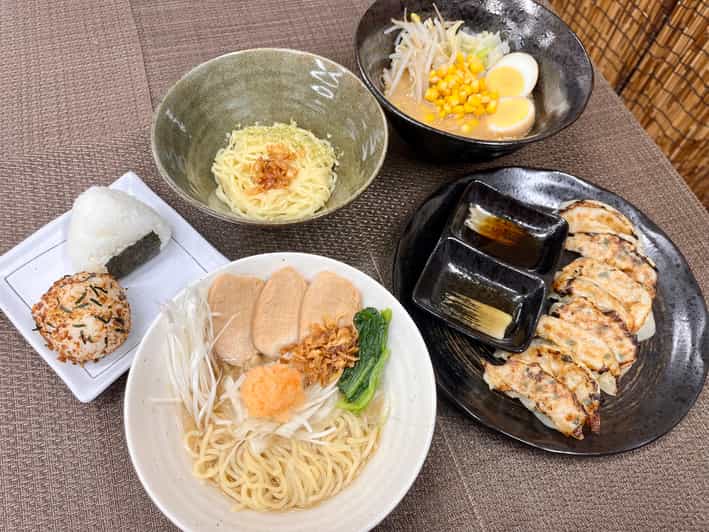
This class is not one of those “snack and go” experiences. You eat what you cook, and it adds up.
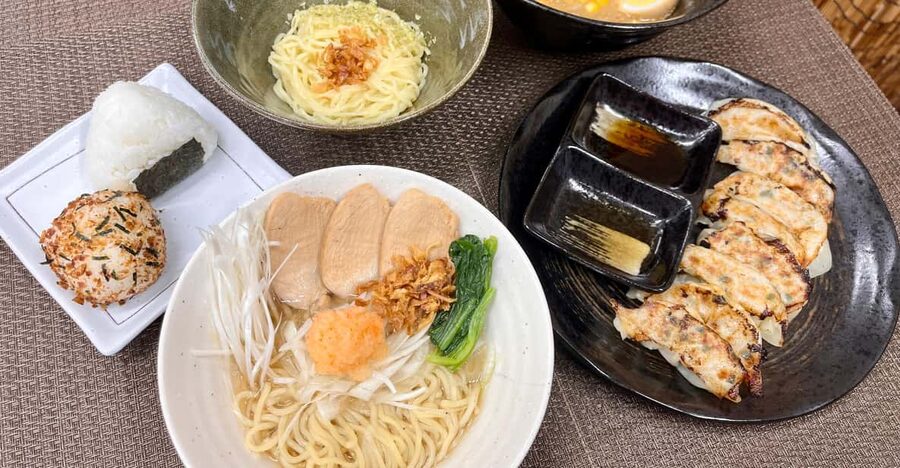
You typically end up with ramen made from the broth you prepared, plus gyoza and onigiri. That means your end-of-class meal covers multiple textures: broth, dumpling bite, and rice ball firmness. People describe it as lots of food, with full bellies by the time you finish.
If you want the smoothest experience, plan your day around it. One common tip is to skip breakfast so you can enjoy the tasting without feeling stuffed before the class even ends.
There is also free coffee and tea included. And if you are in the mood for a celebration, some people report they can purchase beer after the meal if it is available.
Price and value: why $90 can make sense here
At $90 per person for 90 minutes, you might wonder if it is “just” a cooking class. The value comes from three things you do not get in a standard meal.
First, you learn broth technique that most visitors never see, because restaurant cooking does not come with recipes and step-by-step prep. Second, you practice hands-on skills that have a real payoff at home: gyoza wrapping and onigiri shaping. Those are not trivial skills, and they take guidance to get right.
Third, you do not just taste. You cook and eat your own results, with ingredients, equipment, and recipes included. That reduces the usual hidden cost of cooking classes, where you pay but do not leave with enough to recreate the dishes later.
So yes, it is not a cheap activity. But for the combination of instruction, small group attention, and a meal you helped make, the math tends to work in your favor if ramen, gyoza, and onigiri are already on your Kyoto hit list.
Diet limits and practical constraints you should not ignore
This class is very clear about menus and restrictions. There are two menu options:
- Regular Menu
- Vegetarian Menu, where only pork is replaced with tofu, while other ingredients remain the same
The class cannot accommodate vegan, pescatarian, gluten-free, or any other special diets. Ingredients used across recipes can include items like lard, fish powder, oyster sauce, and eggs, so substitutions are not something to count on.
You also need to be aware of the “cook independently” expectation. Children under 12 are not suitable, and the class also is not for wheelchair users. If you have had recent surgery, it is also listed as not suitable.
If your dietary needs are complex, this is the one place where you should double-check with your booking platform before you assume anything. The recipes are included, but your meal compatibility depends on what the class can prepare in the first place.
Who this Kyoto ramen class fits best
This class is a great match if you want practical Japanese food skills you can repeat. It suits:
- People who love ramen and want to learn soup base, not just toppings
- Food-minded couples or friends who like small-group instruction
- Families with kids 13 and up who can follow directions and cook on their own
- Anyone who wants a structured, English-friendly activity that still feels hands-on
It may not fit if:
- You need vegan, gluten-free, or pescatarian modifications
- You want the full experience of making noodles from scratch
- You need wheelchair access or have limitations after surgery
- You prefer slow, relaxed cooking without fast pacing
Should you book the Kyoto ramen, gyoza, and onigiri cooking class?
If you want one Kyoto activity that ends with a real meal and leaves you with repeatable skills, I would book this. The broth focus is the standout value, because it teaches the part you cannot fake by buying noodles. Add in the gyoza wrapping technique and onigiri shaping, and you leave with three home-cook wins.
Just be honest about the constraints. If you fall outside the diet rules or the age and independence expectations, look for a different class that fits your needs. If you are in the target group, this is the kind of hands-on experience that makes Kyoto food stick with you long after the last bite.
One More Bowl
Kitchens You Can Book Into
Newest Kyoto write-ups from the Loving Japan desk


Japanese Cooking Classes, side by side.
 ★ 5.0Sushi Making Tokyo Roll and Authentic Japanese Sushi ClassFrom $593,971 reviews
 ★ 4.9Roll and Authentic Sushi Making Class in AsakusaFrom $581,957 reviews
 ★ 5.0Ramen Cooking Class at Ramen Factory in KyotoFrom $1311,937 reviews
 ★ 4.9Sushi Making Class in a Happi Coat near a Famous SpotFrom $421,377 reviews
 ★ 5.0Sushi Making Osaka Roll and Authentic Japanese Sushi ClassFrom $311,220 reviews
 ★ 5.0Tokyo Sushi Making Class in Tsukiji with Professional ChefFrom $491,177 reviews
 ★ 5.0Ramen & Gyoza Cooking Class in Tokyo with Local Supermarket VisitFrom $122823 reviews
 ★ 5.0Tsukiji Fish Market Guided Tour and Sushi Making with Pro ChefFrom $104775 reviews
Filed on these lists too