
REVIEW · GION, GEISHA AND MAIKO EXPERIENCES
Kyoto night walk tour (Gion district)
Kyoto at night feels like a movie set. This 90-minute Gion night walk turns the well-known streets into a calmer, more meaningful circuit with local context.
I love the mix of free shrine and pagoda stops plus a final look at Kiyomizu-dera when the lights are on. I also like that the pace is meant for photography and noticing details, not speed-walking to tick boxes.
One thing to consider: you are out after dark and doing real walking, including some narrow lanes where you’ll need to keep your voice down.
In This Review
- Key Highlights You’ll Actually Notice
- Why This 90-Minute Gion Night Walk Works
- Meeting at Minamiza Kabuki and Getting Oriented Fast
- Stop 1: Yasaka Shrine, Then the “Keep Quiet” Alleyway Feeling
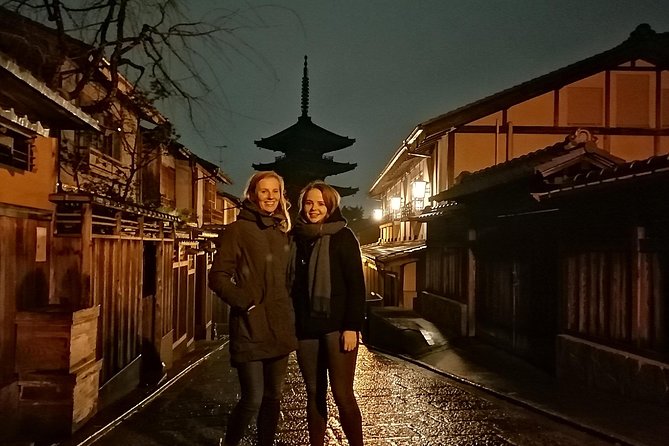
- Yasakanoto Pagoda Time, plus the Best Photo Angle Moment
- Stop 3: Kiyomizu-dera Light-Up Spot (Seasonal)
- How Much Walking Is Involved, and What to Wear
- Price and Value: What $35 Gets You in Kyoto
- Who This Tour Fits Best (and Who Might Want Something Else)
- Practical Tips for a Smooth Night Walk in Gion
- Should You Book This Kyoto Gion Night Walk?
- FAQ
- How long is the Kyoto night walk tour in the Gion district?
- Where does the tour start, and where does it end?
- What stops are included on the route?
- Are admission tickets included for the temples and shrines?
- Do I need a printed ticket?
- Is this tour private or shared with other groups?
- What if the weather is bad?
- Are service animals allowed?
Key Highlights You’ll Actually Notice
- Private group feel on a 90-minute loop, so you can ask questions and move at your pace
- Yasaka Shrine first, then straight into the quieter “local-side” streets
- Yasakanoto pagoda time designed for photos, with history built in before you shoot
- Kiyomizu-dera light-up depends on season, so your timing matters
- Respectful silence moments, including a stone-wall district where explanations stay minimal
Evening walks through the old quarters, compared
- Kyoto Geisha Walking Tour: Gion District & Hidden Gems
★ 4.7 · 3,273 reviews - Kyoto: Gion Magical Night Walking Tour with Geisha Trivia
★ 4.9 · 2,393 reviews - Kyoto: Gion Geisha District Walking Tour – Stories of Geisha
★ 4.7 · 2,187 reviews - Best of Kyoto: Gion, Geisha, Pagodas & Cobblestones
★ 4.9 · 2,058 reviews
Why This 90-Minute Gion Night Walk Works
Gion is one of those places that makes you feel like you arrived late, even when you’re early. The daytime crowds can flatten the experience, turning everything into a blur of faces and selfies. At night, the same streets feel slower, and you can finally see the neighborhood rhythm instead of just landmarks.
This tour is timed well for that goal. In about 1 hour 30 minutes, you get a clean introduction to the area without burning half your evening. That’s a big deal if you’re jet-lagged, traveling with kids, or you just want a strong first Kyoto memory before moving on.
Most of the value here comes from the way the route is built. You’re not just walking past famous buildings. You’re getting story beats in the right places, so the scenery has meaning. Even the moments where the guide keeps things quiet make sense, because Gion has real residential and ceremonial space mixed into the tourist zones.
Meeting at Minamiza Kabuki and Getting Oriented Fast
The meeting point is 194 Kawabatachō, in front of the Minamiza Kabuki theatre. It’s a smart start, because it immediately places you in the Higashiyama culture pocket where entertainment and tradition overlap.
From the first minutes, your guide sets expectations for respectful walking. The tour stays small in feel since it’s private for your group, which helps a lot in narrow lanes. If you hate getting shuffled around, this kind of setup is reassuring.
The tour uses a mobile ticket, which means you don’t need to wrestle with paper confirmations. For night tours, that matters. You’ll spend less time fumbling at check-in, and more time focused on what’s around you.
Stop 1: Yasaka Shrine, Then the “Keep Quiet” Alleyway Feeling
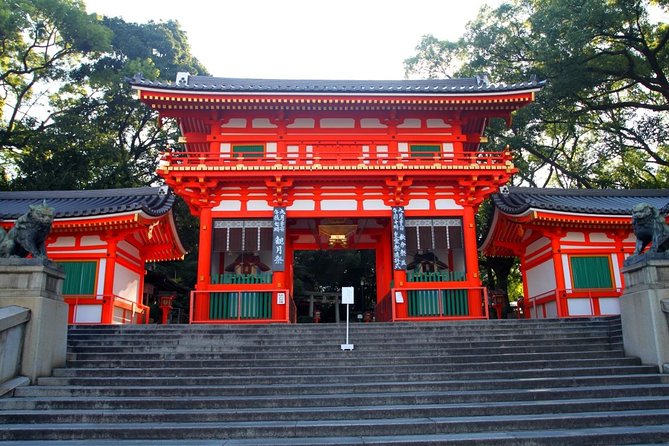
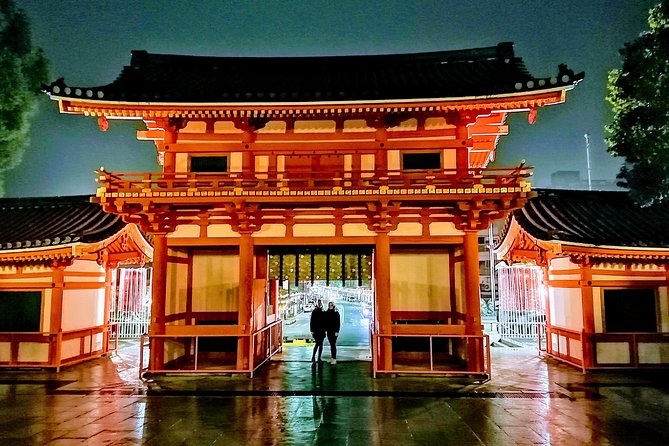
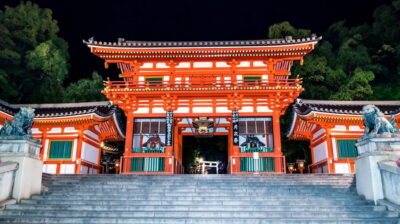
You begin with Yasaka Shrine for about 15 minutes, and admission is free. This stop works as a warm-up because it gives you a foundation for what you’re about to see. When the guide shares local history and what to look for, it stops the area from feeling like random pretty architecture.
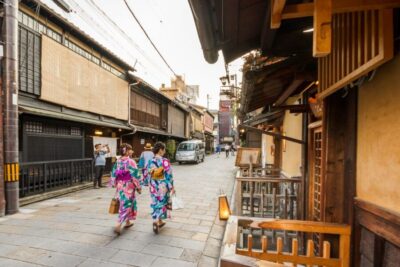
After Yasaka Shrine, you move into a quieter stretch where you’re asked to keep the noise down. One segment is specifically treated like a silent zone near a stone wall district, where the guide explains less and you’re meant to observe calmly.
That detail might sound minor, but it changes how you experience the neighborhood. When you follow the local rhythm, the streets feel more authentic. You’ll notice shadows, lantern light, and the way people move through the lanes. It’s also easier to take photos without that awkward feeling of being too loud in someone else’s space.
Potential drawback: if you’re the type who wants constant narration on every corner, this “quiet” section may feel a little lighter on commentary. Still, it’s a good reminder that Kyoto is not a theme park.
- PERFECT KYOTO 1-Day Bus Tour★ 5.0 · 13,518 reviews
- Kyoto: Fushimi Inari, Kinkakuji, Bamboo Grove 1 Day Bus Tour★ 4.8 · 4,316 reviews
- Kyoto: Tea Ceremony in a Traditional Tea House in Kiyomizu★ 4.9 · 3,519 reviews
- Kyoto Geisha Walking Tour: Gion District & Hidden Gems★ 4.7 · 3,273 reviews
- Kyoto: Tea Ceremony Ju-An at Jotokuji Temple★ 4.9 · 3,207 reviews
Yasakanoto Pagoda Time, plus the Best Photo Angle Moment
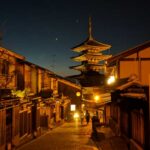
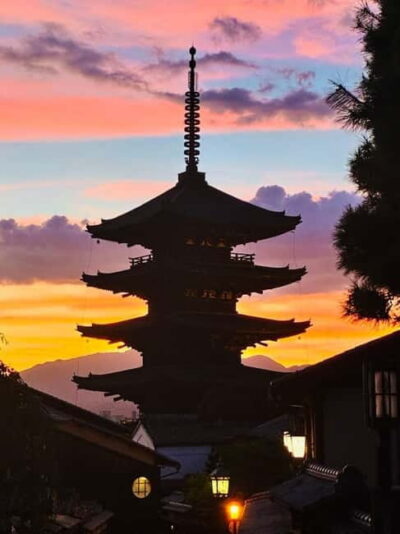
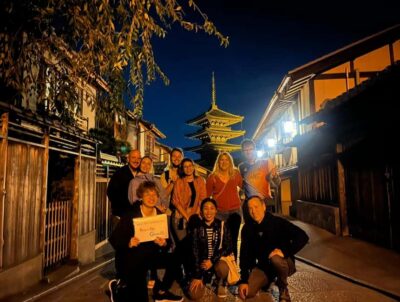
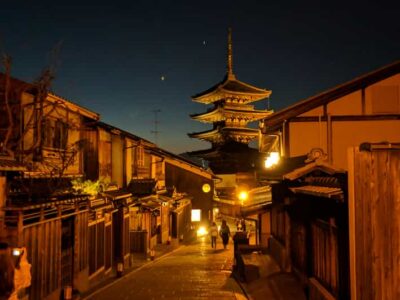
Next up is Yasakanoto, about 20 minutes, also free. This is the part of the walk built around both story and pictures. The guide explains the pagoda history first, which helps when you later look at it through your camera lens. Without context, pagodas can become just another silhouette in the dark. With context, it’s a landmark with a reason to exist where it does.
You’ll also get time to take cool photos in front of the pagoda. Night photography has its own rules. The big win here is timing and positioning. You don’t need to guess where the best angles are because the stop is designed for people to actually shoot.
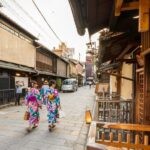
After Yasakanoto, you’ll walk through a famous slope area in the Yasaka region. Slopes like this are often where you get that iconic Kyoto perspective: buildings leaning slightly into view, lantern reflections, and long lines of sight down the street.
One practical note: the tour is built to keep you moving, so if your camera is battery-hungry, keep an eye on it. A night walk is where small tech issues can become big issues.
Stop 3: Kiyomizu-dera Light-Up Spot (Seasonal)
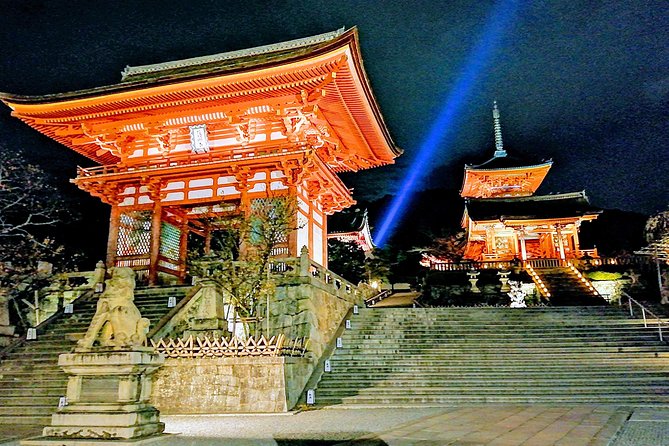
The final major stop is Kiyomizu-dera, around 10 minutes. Admission is not included, so you should plan for potential ticket costs if you want to enter official areas during your visit. The important part is that you can see it lit up depending on the season.
This is the segment that makes the whole tour feel magical. Kiyomizu-dera is already dramatic in daylight, but light changes everything. Even a short look can give you the sense of scale and atmosphere that Kyoto is known for.
Because the stop is relatively short, don’t assume you’ll have unlimited time to explore. The goal is a quick, well-timed viewing moment, not a full temple visit. If you’re also doing other Kiyomizu-dera activities during your trip, think of this as the night contrast to your daytime experience.
If Kiyomizu-dera lighting is not running when you go, you’ll still likely appreciate the viewpoint and the shift from shrine to temple energy. But the “light-up” effect is what makes this stop special.
How Much Walking Is Involved, and What to Wear
This is a night walking tour, and that means your shoes matter more than you think. The experience includes narrow lanes, and the route includes multiple stops that keep you on your feet for the whole loop. It’s not a sit-and-see format.
Go with comfortable shoes you trust on uneven, sometimes slick pavement. If you’re used to museum floors, this will feel different fast. You’ll be happier if you dress for long walking rather than for looking cute for one photo.
Also, be ready for a real neighborhood vibe. This isn’t just a scenic path. You’ll pass places where people live, work, and move through their evening routine. That’s why the silence moments work, and why keeping a respectful volume is part of the deal.
Price and Value: What $35 Gets You in Kyoto
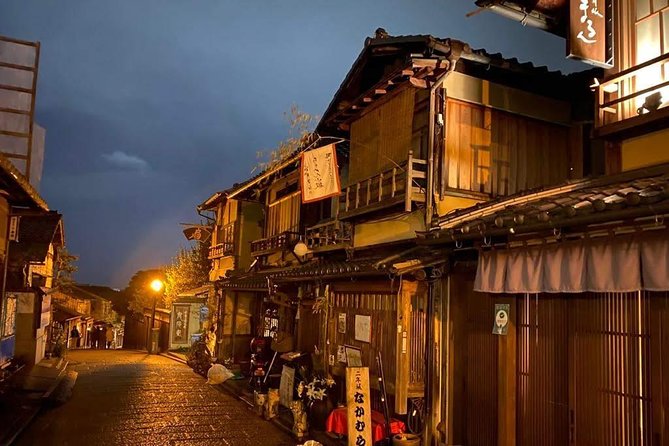
At $35.00 per person for about 1 hour 30 minutes, this tour is priced in the sensible category for a private night experience. The big value trick is that multiple key stops are free: Yasaka Shrine and Yasakanoto both list free admission.
So you’re not paying a big chunk of your budget just to access gates and tickets. You’re paying primarily for the guided route, the local context, and the night pacing that helps you see the area without getting lost.
Private tours usually cost more because you’re not sharing your guide with other groups. Here, the price feels reasonable because the itinerary is tight and the guide is focused on the highlights you’ll actually care about at night.
Where the value can vary for you: if you want a deeper, long-stay deep explanation at every location, you might feel the time is limited. If you want a clear introduction, a photo-friendly night walk, and a calm route that helps you understand Gion quickly, this price-to-time ratio is strong.
Who This Tour Fits Best (and Who Might Want Something Else)
This tour is a great fit if you want your first night in Kyoto to feel grounded and not chaotic. It’s especially useful when you arrive and think, now what? A guided night walk gives you bearings fast, plus it teaches you how to look at Gion like a neighborhood rather than a postcard.
It also works well if you care about cultural etiquette. One of the best things about this experience is that quiet moments are respected on purpose, not as an afterthought. If you like tours where you’re not constantly being herded, the private format helps.
It can be a smart choice for solo travelers too. A night walk in a famous area can be intimidating, but having someone to explain the cultural context takes the edge off. The guide also seems to be comfortable moving through different group needs, including families.
Who might hesitate: if you’re chasing a long list of major temples with lots of indoor time, this isn’t that type of tour. Kiyomizu-dera is a short viewing stop. Yasaka Shrine and Yasakanoto get time, but the emphasis is on the night walk experience, not a full temple circuit.
Practical Tips for a Smooth Night Walk in Gion
Here are a few things I’d do to make the experience feel effortless.
First, arrive a bit early at Minamiza Kabuki so you can settle before walking begins. Night start times can get stressful if you’re hunting addresses in the dark.
Second, treat the quiet sections seriously. When the route asks you to keep it down, follow that. It improves your own photos too, since you’re not drawing attention or blocking others.
Third, plan for Kiyomizu-dera ticket access separately, since admission is not included. Even if you only want the lit view, it helps to know what you’re and aren’t paying for.
Finally, charge your phone and check battery levels before you leave. The tour is paced for taking pictures, and night photos can chew through batteries fast.
Should You Book This Kyoto Gion Night Walk?
Yes, if you want an easy, high-return introduction to Gion at night. The route hits the right mix: Yasaka Shrine, the calm street feeling, Yasakanoto with photo time, and a short Kiyomizu-dera light-up look when conditions align.
I’d especially recommend booking if you like guided context, respect for local etiquette, and a tour that helps you slow down instead of rushing. The price is fair for a private 90-minute walk, and two major stops are free, which keeps the experience feeling cost-efficient.
Skip it if you want a long, indoor-heavy temple day. This is a night neighborhood walk, built for atmosphere, pacing, and learning what you’re looking at along the way.
FAQ
How long is the Kyoto night walk tour in the Gion district?
The tour lasts about 1 hour 30 minutes.
Where does the tour start, and where does it end?
You meet in front of Minamiza Kabuki theatre at 194 Kawabatachō, Higashiyama Ward, Kyoto. The activity ends back at the meeting point.
What stops are included on the route?
The tour includes Yasaka Shrine, a quiet stone-wall district area, Yasakanoto, a walk through a famous slope in the Yasaka area, and a short stop to see Kiyomizu-dera.
Are admission tickets included for the temples and shrines?
Yasaka Shrine and Yasakanoto are free. Kiyomizu-dera admission is not included.
Do I need a printed ticket?
No. The tour uses a mobile ticket.
Is this tour private or shared with other groups?
It is private. Only your group participates.
What if the weather is bad?
This experience requires good weather. If it is canceled due to poor weather, you will be offered a different date or a full refund.
Are service animals allowed?
Yes. Service animals are allowed on this tour.
Evenings in the Old Quarters
Newest Kyoto write-ups from the Loving Japan desk

Gion, Geisha and Maiko Experiences, side by side.
 ★ 4.7Kyoto Geisha Walking Tour: Gion District & Hidden GemsFrom $253,273 reviews
 ★ 4.9Gion Magical Night Walking Tour with Geisha TriviaFrom $242,393 reviews
 ★ 4.7Gion Geisha District Walking Tour – Stories of GeishaFrom $202,187 reviews
 ★ 4.9Best of Kyoto: Gion, Geisha, Pagodas & CobblestonesFrom $242,058 reviews
 ★ 4.5Night Walk in Gion: Kyoto’s Geisha DistrictFrom $212,003 reviews
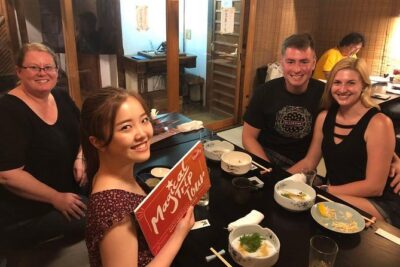 ★ 5.0Kyoto Night Foodie Tour in Gion (9+ dishes + 6 Sake tastings)From $1631,762 reviews
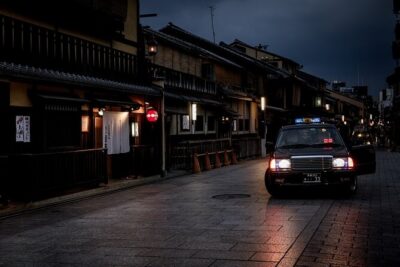 ★ 5.0Kyoto Gion Geisha District Walking Tour – The Stories of GeishaFrom $251,441 reviews
 ★ 5.0Kyoto Gion: 2-Hour Geisha Culture & History Walking TourFrom $231,186 reviews
Filed on these lists too