
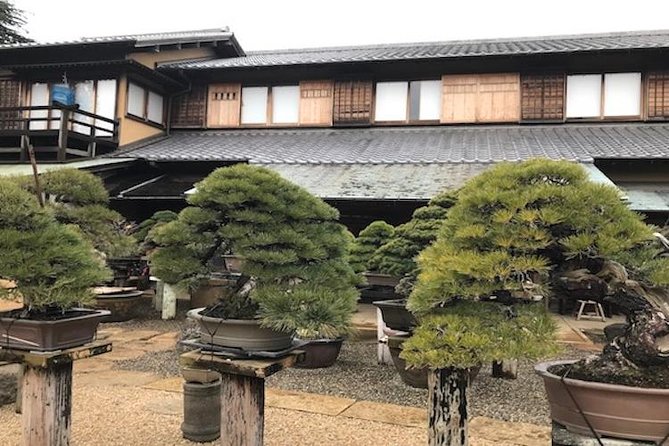
REVIEW · JAPANESE CRAFT AND CALLIGRAPHY WORKSHOPS
Make Your Own Bonsai with a Professional Bonsai Artist in Tokyo
One word: calm craft. This 2-hour bonsai workshop at Shunkaen Bonsai Museum pairs hands-on shaping with translator-supported guidance, and the museum grounds are packed with serious trees, including one reported to be around 1000 years old. I also like the small group size (up to 6), which means real attention, not a quick demo-and-run. The one drawback to watch for is that if you want the tree shipped or taken later, shipping fees are not included.
Tokyo can feel fast, so it helps that this lesson fits cleanly into a day plan. You’ll leave with more than a souvenir, you’ll leave with practical ideas for how bonsai grows and how to keep it alive.
In This Review
- Key Bonsai Workshop Takeaways at Shunkaen
- Shunkaen Bonsai Museum: A calmer side of Tokyo
- The 2-Hour Bonsai Class: What happens step by step
- Translator Help and a Small Group of 6
- Learn Techniques That Actually Matter, Like Wiring
- Museum Time That Helps You See the Art
- Price and Value: Is $78.83 worth it?
- Logistics That Matter in Tokyo: How to plan your day
- Who Should Book This Bonsai Workshop
- Should You Book This Bonsai Class in Tokyo?
- FAQ
- How long is the bonsai making experience?
- Where does the experience take place?
- Is a translator included?
- What is included in the price?
- What is not included?
- How many people are in the class?
- Is cancellation free, and how late can I cancel?
Key Bonsai Workshop Takeaways at Shunkaen
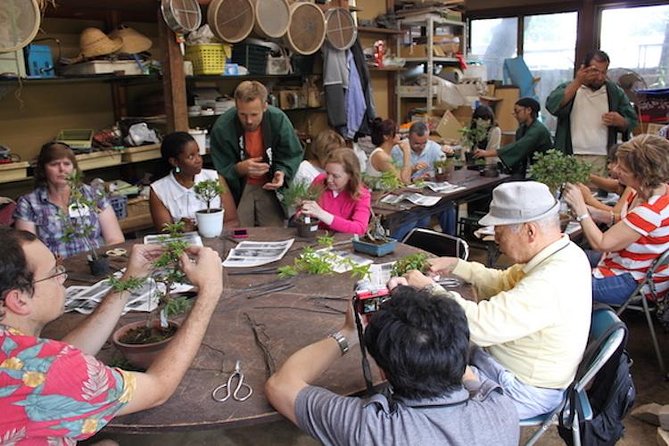
- Up to 6 people means you get personal help as you learn the basics
- Translator support helps you ask questions and understand care steps
- A real museum visit lets you study styles and techniques before and after class
- Hands-on instruction includes technique like wiring, with one session specifically highlighting a juniper
- Tea and a relaxed pace help turn the workshop into a break from rush-hour Tokyo
- Shipping is extra if you plan to send the tree home
Make something to take home. Other workshops
- Tokyo Shinjuku Chopsticks Making Class
★ 5.0 · 1,763 reviews - Chopstick Making Workshop in Ginza
★ 4.8 · 1,366 reviews - Tokyo Sumo Experience: Chanko & Mochi with a Former Pro
★ 4.8 · 567 reviews - Kintsugi Experience: Art of Golden Joinery in Tokyo
★ 5.0 · 467 reviews
Shunkaen Bonsai Museum: A calmer side of Tokyo
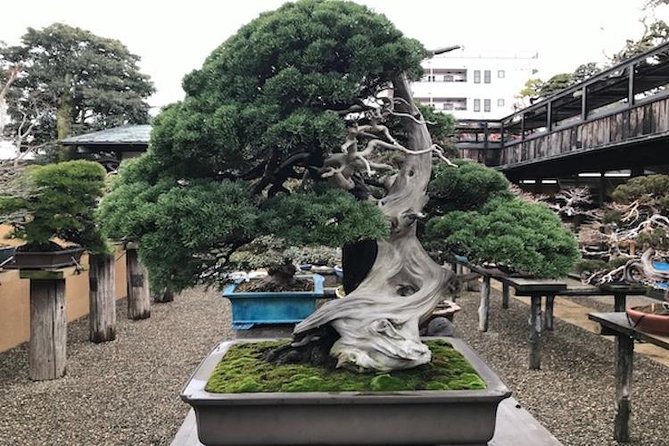
If you’re looking for Tokyo that feels quieter and more human, Shunkaen is a strong match. The setting is a museum that treats bonsai as living art, not something locked behind glass. Reviews point to peaceful courtyards and lots of time to look closely, plus raised paths and multiple levels where you can slow down and really see how trees are trained.
What I like about museums like this is that the lesson does not float in midair. You’re shown the craft in context. Before you touch a trunk or wire a branch, you can spend time studying real examples, different styles, and how pruning decisions change the look over time. One highlight that keeps coming up is the sheer scale of the collection, including a tree reported to be around 1000 years old. You do not need to be a plant expert to feel the weight of that.
Also, tea shows up in the experience. In at least one session, a guide served green tea, which fits the mood perfectly. It turns the class into an actual cultural pause, not just a transaction.
The location is set up for visitors too, with access via public transportation close by. You’ll still want to plan for local transit, but it is not remote in a way that makes your day feel complicated.
The 2-Hour Bonsai Class: What happens step by step
This is built as a short workshop, around 2 hours, designed to fit into busy itineraries. You start at the museum, learn in a compact group, and then end back at the meeting point.
The flow typically feels like:
1) You get introduced to bonsai as a craft and a living practice
2) You learn the key technique(s) for the tree you’re working on
3) You get hands-on coaching while you shape your own tree
4) You tour the collection and ask questions, then finish up
A big reason people rate this so highly is the teaching approach. The instructors and apprentices do not just point. They talk you through what you are doing and why. One review praised the way the host or guide explained the history of bonsai and how to care for it, plus the patience to answer questions one by one.
You should expect practical instruction. Even if you have never touched a bonsai before, you can follow along. The group size matters here again. With fewer people, the teacher can watch your technique, spot where you are hesitating, and help you correct it before you ruin the branch positioning.
One note to keep realistic expectations: this is a first creation experience, not a multi-year training program. You will learn the basics and make your own bonsai, but bonsai is slow work. The win is you start with correct fundamentals and you leave knowing what to do next.
Translator Help and a Small Group of 6
In Tokyo, some activities feel language-proof. This one is not that kind of blind interaction. Translator support is part of the experience, so you can actually ask why a technique works. That changes everything.
I especially value this when learning plant care, because bonsai care is full of details that matter: timing, observation, and how the tree responds after wiring or pruning. With translator support, you are more likely to understand the lesson at the moment you need it, not later when you are stuck Googling.
The group cap also keeps the class from turning into a demo for other people. Up to 6 travelers means:
- you can hold your questions in the air and still get answers
- the instructor can adjust guidance to your pace
- you spend more time doing, less time waiting
If you like workshops but hate being rushed, this structure fits nicely.
- Mt Fuji and Hakone 1-Day Bus Tour Return by Bullet Train★ 5.0 · 26,383 reviews
- 1-Day Tokyo Bus Tour★ 5.0 · 14,250 reviews
- Tokyo: teamLab Planets TOKYO Digital Art Museum Entry Ticket★ 4.6 · 9,779 reviews
- Mt Fuji & Hakone Cruise, Drum Show Bullet Train 1 Day from Tokyo★ 4.0 · 7,413 reviews
- Tokyo Mt Fuji 5th St & Hakone Cruise Bus Tour w/Bullet Train★ 4.4 · 5,024 reviews
Learn Techniques That Actually Matter, Like Wiring
Bonsai shaping often starts with the idea of training branches into position. One review specifically highlights learning the basics of wiring a juniper tree. Even if your session uses a different tree, the core concept is similar: wiring helps guide growth while you create a desired silhouette.
Here’s the practical value: wiring is not just twisting wire around a branch. A good lesson helps you understand how to work carefully, how to position branches without forcing, and how to think in terms of the tree’s future shape, not just today’s look.
You’ll also hear care guidance. Reviews mention being walked through how to care for bonsai after the class. That matters because many people buy plants in Japan and then struggle at home with light, watering rhythm, and long-term training. This workshop gives you the first set of rules that keep your bonsai from becoming a sad science project.
Another nice touch is that apprentices join in. More than one review calls out apprentices taking the class, giving technique instruction, and answering questions. You are not relying on one voice for everything. It’s a team effort, and that often means more ways to understand what you are learning.
Museum Time That Helps You See the Art
The workshop is not only about making. It is also about learning by looking.
After the hands-on portion, you get time to explore the museum collection. Reviews describe large numbers of bonsai in courtyards and on paths at different levels, plus the chance to take your time admiring the trees. You can connect what the teacher showed you to what you see around you.
That museum browsing time is also where you can ask more questions. When you see a tree and you wonder why the branches curve a certain way or why the trunk line looks the way it does, the instructor and apprentices can often explain what they are aiming for with that style.
One reviewer highlighted that they visited twice, one time for the class and another time later, because the collection and staff stories were that compelling. I get that. When you come away understanding one technique, you start noticing everything else.
Price and Value: Is $78.83 worth it?
Let’s talk value plainly. At $78.83 per person, you are paying for:
- the bonsai making lesson
- access to the museum experience (ticket included)
- small-group coaching (up to 6 people)
- translator-supported instruction
- optional assistant support if you select that option
What makes the price feel reasonable is that you are not only getting a craft activity. You are getting an expert-led session in a museum setting with a serious collection and multiple staff members who can answer questions. If you tried to replicate this with a random craft class, you would likely pay similar money but without the deep bonsai context and the language support.
The one cost you should plan for is that shipping fees are not included. Some people choose to take their tree later for a fee. So, your final spending depends on your plan: keep it with you, arrange local pickup, or ship it. If you want zero extra surprises, ask in advance how the tree is handled at the end of class and what extra costs apply for your situation.
Still, if you want a structured, guided first bonsai experience with a real museum behind it, this is a strong deal compared to generic workshops.
Logistics That Matter in Tokyo: How to plan your day
This is designed for busy schedules. Expect around 2 hours total, and it ends back where you started. That means less transit stress, and it is easier to pair with other nearby plans.
The meeting point is at Shunkaen BONSAI Museum, 1-chōme-29-16 Niihori, Edogawa City, Tokyo 132-0001. The area is described as near public transportation, so getting there is usually manageable with normal Tokyo transit habits.
A moderate physical fitness level is required. That likely means you should be comfortable walking around museum grounds and moving at a normal pace for a couple of hours. One review also mentions admiring bonsai on areas with different levels, so wear shoes that work for a garden setting and expect uneven surfaces.
What to bring is simple:
- wear comfortable shoes
- bring a light layer if you tend to get cold indoors
- keep your schedule flexible in case the class timing runs slightly with the group flow
And one practical tip: if you have a tight plan right after class, avoid booking something that depends on you carrying a fragile item for long distances.
Who Should Book This Bonsai Workshop
This workshop is especially good for:
- people who want a hands-on Japanese culture experience that is calm and rewarding
- visitors who care about plants and want real care guidance, not just a craft outcome
- travelers who prefer small groups and dislike being lost in a crowd
- anyone who likes asking questions and getting straight answers through translator support
It may not be ideal if:
- you want a quick photo stop with no real instruction
- you hate being on your feet for short periods
- you cannot handle the idea of extra fees if you need help with shipping or taking the tree later
If you are a complete beginner, this still works. Reviews emphasize how accessible the instruction feels, especially with patient guidance from the host, instructors, and apprentices.
Should You Book This Bonsai Class in Tokyo?
Book it if you want a real bonsai start, with guidance you can understand and a setting that makes the craft feel alive. The pairing of hands-on shaping, translator support, and museum time is what makes this worth your time, not just the fact that you create something.
Skip it or think twice if you’re on a shoestring budget and shipping or tree handling would add a lot. Also consider your expectations. You are not training a bonsai for years in one lesson, you are learning fundamentals and taking home the beginning of a journey.
If you want one experience that feels both practical and quietly special in Tokyo, this Shunkaen workshop earns a spot on your plan.
FAQ
How long is the bonsai making experience?
The lesson is about 2 hours.
Where does the experience take place?
It takes place at Shunkaen BONSAI Museum in Edogawa City, Tokyo, with the meeting point at 1-chōme-29-16 Niihori, Edogawa City, Tokyo 132-0001.
Is a translator included?
Yes. The experience includes tailored instruction with the help of a translator.
What is included in the price?
The price includes the bonsai making lesson, and admission ticket for the museum is included.
What is not included?
Food and drinks are not included, and bonsai shipping fees and transportation fees are not included.
How many people are in the class?
The workshop is capped at a maximum of 6 travelers.
Is cancellation free, and how late can I cancel?
Cancellation is free up to 24 hours in advance for a full refund. If you cancel less than 24 hours before the start time, the amount paid is not refunded.
Made by Hand, and Yours to Keep



Newest Tokyo write-ups from the Loving Japan desk






Japanese Craft and Calligraphy Workshops, side by side.
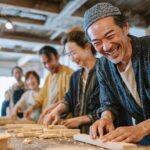
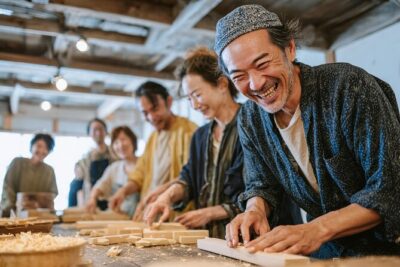 ★ 5.0Tokyo Shinjuku Chopsticks Making ClassFrom $201,763 reviews
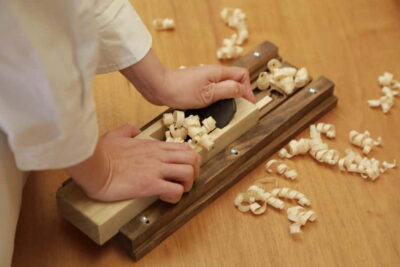 ★ 4.8Chopstick Making Workshop in GinzaFrom $251,366 reviews
 ★ 5.0Chopsticks Making Workshop in Gion with Engraving OptionFrom $15958 reviews
 ★ 4.8Tokyo Sumo Experience: Chanko & Mochi with a Former ProFrom $103567 reviews
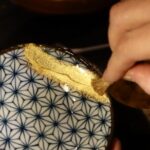
 ★ 5.0Kintsugi Experience: Art of Golden Joinery in TokyoFrom $59467 reviews
 ★ 5.0Tokyo Chopstick Making Workshop with ArtisanFrom $26466 reviews
 ★ 4.9Matcha Making Experience with Mochi Sweets in AsakusaFrom $22388 reviews
 ★ 4.8Authentic knife making experience at a blacksmith in KyotoFrom $154350 reviews
Filed on these lists too