
REVIEW · JAPANESE CRAFT AND CALLIGRAPHY WORKSHOPS
Mochi Sweets Making Class in Tokyo
Mochi is easier than you think. This Tokyo mochi sweets making class teaches you how to shape Japanese treats from glutinous rice flour and offers plant-based, vegan-friendly ingredients, all in a calm private residence. One thing to consider first, though, is the resident cats, two short-haired cats stay in a bedroom during the lesson, so strong allergies may be an issue.
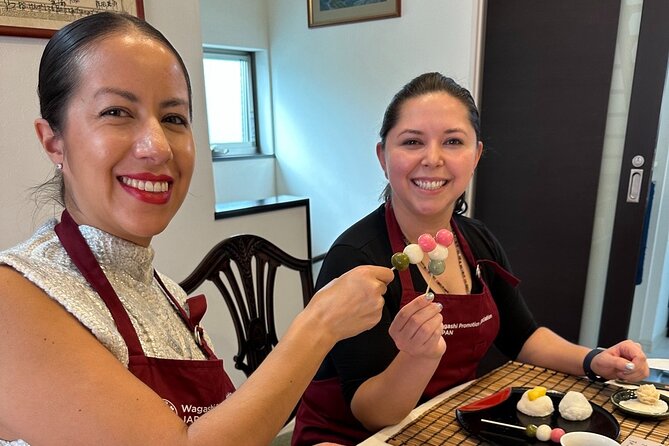
I love that it is step-by-step and paced for your group, not a loud, factory-style demo. You also get to make a lineup of mochi-based sweets, then taste everything with Japanese tea, with take-home packaging ready for later. The whole lesson runs about 90 minutes, so it fits neatly into most Tokyo days without swallowing your schedule.
After the class, you are not stuck right in the middle of tourist chaos. The neighborhood is about a 15-minute train or car ride from central Tokyo, and you can browse local shops, supermarkets, cafes, and even swing by a shrine or a famous public bath before or after class. It is a small detour that feels like actual daily life.
In This Review
- Key highlights to know before you go
- Mochi in a real Tokyo home, in a quiet neighborhood
- The 90-minute mochi lesson: from dough to sweet shapes
- Daifuku, dango, warabi-mochi, isobe-mochi, and fruit swaps
- Strawberry daifuku, with a seasonal fruit plan
- Several flavors of dango on skewers
- Warabi-mochi and isobe-mochi
- Mochi-ice cream recipe download and take-home packaging that actually helps
- Culture and ways to eat mochi, not just instructions
- Vegetarian and vegan-friendly wagashi, using plant-based ingredients
- Price and value: what you get for $75.12 in Tokyo
- Who should book this mochi making class, and who might skip
- Should you book this mochi sweets making class in Tokyo?
- FAQ
- What is the duration of the Mochi Sweets Making Class?
- How much does the class cost per person?
- Is the class private?
- Do I need to bring anything to make the sweets?
- Are there vegetarian or vegan options?
- Are there any animal considerations at the residence?
Key highlights to know before you go
- Cozy private residence setting in a quiet residential area, with a relaxed, homey feel
- Hands-on mochi basics using glutinous rice flour, with simple recipes you can repeat later
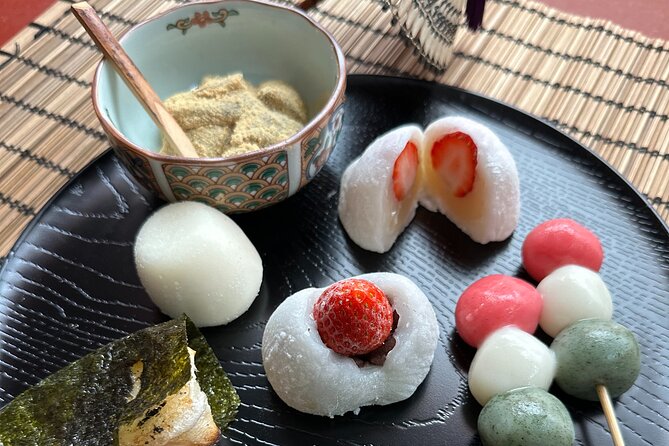
- A full mochi lineup including strawberry daifuku (or alternative fruit), dango, warabi-mochi, and isobe-mochi
- Plant-based wagashi ingredients with vegan options, plus downloadable recipes
- Tea tasting and take-home boxes, so you can eat on the spot and bring more with you
- Teacher photos and videos included, plus a small Japanese gift as a souvenir
Make something to take home. Other workshops
- Tokyo Shinjuku Chopsticks Making Class
★ 5.0 · 1,763 reviews - Chopstick Making Workshop in Ginza
★ 4.8 · 1,366 reviews - Tokyo Sumo Experience: Chanko & Mochi with a Former Pro
★ 4.8 · 567 reviews - Kintsugi Experience: Art of Golden Joinery in Tokyo
★ 5.0 · 467 reviews
Mochi in a real Tokyo home, in a quiet neighborhood
This class happens at a private residence in Ota City, in a calm residential neighborhood. The address for your start is 20-15 Kitaminemachi, Ota City, Tokyo 145-0073, and the activity ends back where you meet. Since it is near public transportation, you are not committing to complicated logistics just to reach a workshop.
What makes this setting feel special is the pace. Instead of being herded in a busy storefront, you get a more personal atmosphere where you can actually focus on what your hands are doing. The class is family-friendly, and it is also a great pick if you want something different from the usual Tokyo checklist of temples, towers, and long lines.
Two practical notes I think you should plan for. First, private transportation is not included, so you will use public transit or your own plan. Second, there are two short-haired cats in the house, and they stay in the bedroom during the lesson. If you have a strong cat allergy, this is the one detail that could change the experience for you.
If you are craving a break from central Tokyo crowds, this is a smart way to spend 90 minutes. You can arrive early enough to do a little local wandering, then return after the lesson for something like a shrine stop or a public bath visit, if that sounds fun in your itinerary.
The 90-minute mochi lesson: from dough to sweet shapes
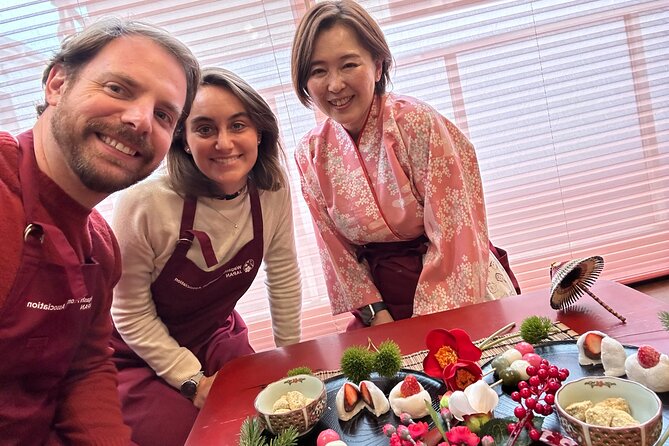
The heart of the experience is mochi making itself, starting with glutinous rice flour. Everything you need is provided, so you do not have to pack utensils, ingredients, or anything like that. You also get a free rental apron, a hand towel, special wagashi tools for shaping, drinking water, and of course, the guided instruction.
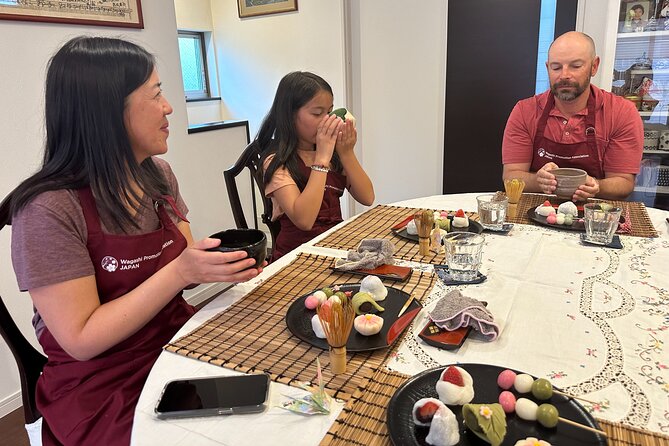
The structure is designed for people who want clarity. You learn step by step, and because the activity is private for your group, you are not stuck waiting for a large class to move along. That matters for mochi, because the dough handling is part technique and part feel. When you are learning in a smaller setup, you can correct and adjust without the stress of falling behind.
In the class, you will also learn the history of mochi and how it connects to Japanese tradition. That background is not just trivia. It helps you understand why mochi shows up in celebrations and why the way people eat it matters. You also get taught multiple ways to eat mochi, which is useful if you only think of mochi as a store-bought dessert.
And yes, you get to make more than one item. That is where the workshop feels like value. You are not just learning one recipe; you are learning how mochi becomes different sweets, textures, and presentations.
Daifuku, dango, warabi-mochi, isobe-mochi, and fruit swaps
Once the mochi base is underway, the class turns into a hands-on lineup of popular Japanese sweets. Here is what you can expect to make:
- Mt Fuji and Hakone 1-Day Bus Tour Return by Bullet Train★ 5.0 · 26,383 reviews
- 1-Day Tokyo Bus Tour★ 5.0 · 14,250 reviews
- Tokyo: teamLab Planets TOKYO Digital Art Museum Entry Ticket★ 4.6 · 9,779 reviews
- Mt Fuji & Hakone Cruise, Drum Show Bullet Train 1 Day from Tokyo★ 4.0 · 7,413 reviews
- Tokyo Mt Fuji 5th St & Hakone Cruise Bus Tour w/Bullet Train★ 4.4 · 5,024 reviews
Strawberry daifuku, with a seasonal fruit plan
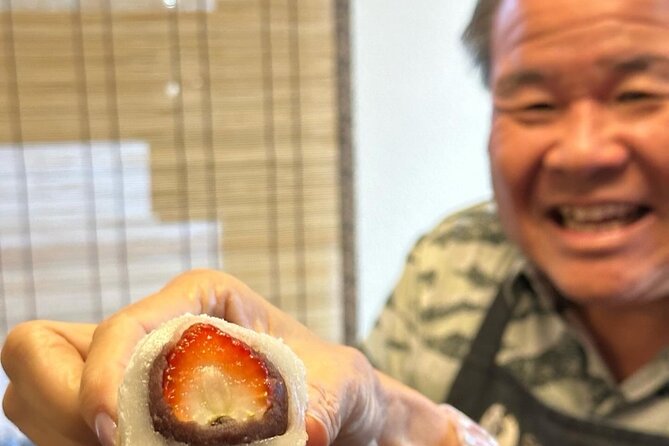
You learn how to make strawberry daifuku. If strawberries are out of season, you use other fruits, such as pineapple or kiwi. That seasonal substitution is more than a workaround. It keeps the ingredient fresh, and it means the workshop still works year-round without you missing out on the core idea of fruit-filled daifuku.
Several flavors of dango on skewers
You also make different-flavor dango. The class focuses on turning the mochi into dango balls and putting them on skewers, so you get the fun, snackable format. If you like desserts you can actually picture eating at a festival, this part is a good match.
Warabi-mochi and isobe-mochi
You will learn warabi-mochi and isobe-mochi as well. These are mochi-based sweets with distinct textures and character. Even if you have eaten them before, you will probably enjoy seeing how the process changes from one style to another. This is where the lesson becomes more than just copying a recipe. You learn how to think like a maker: what matters for shape, texture, and how the final sweet feels.
A helpful upside here is that the recipes are simple and designed so you can recreate them later at home. The ingredients are also described as easily available, and the class uses plant-based products that are available in your own country. That is one of those details that matters when you are done traveling and want to keep the memory alive.
Mochi-ice cream recipe download and take-home packaging that actually helps
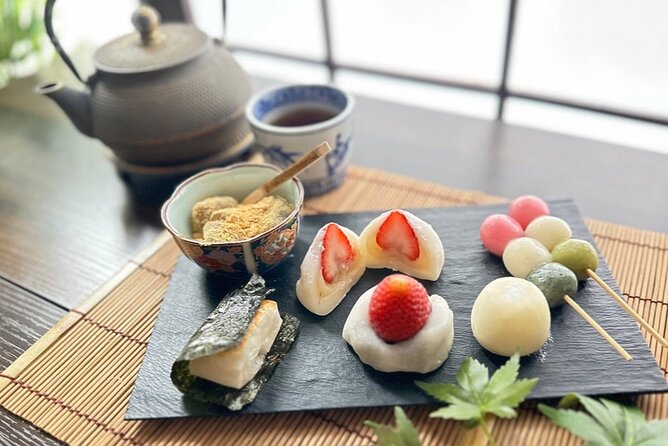
The lesson is not just about what you eat during the class. You also have materials to recreate things later.
One standout included detail is that you can download a mochi-ice cream recipe. That is ideal if your goal is to try a version of mochi that feels modern and different from classic shop mochi. It also gives you something extra to do with what you learned, instead of forgetting it after the tasting.
After the class, you taste what you made, including mochi-ice cream. You can pair everything with Japanese green tea or hojicha, which is roasted green tea. If you are unsure what to order in Japan, hojicha is often a friendly starting point because it is gentler than bright green tea. Either way, the tea pairing makes the sweets feel more grounded in Japanese snack culture.
If you want to extend the experience beyond your 90 minutes, you can take your creations with you in a special box. That is a practical inclusion, not just a nice gesture. It means you can keep your sweet haul for later, whether that is for a hotel treat after a day out or a take-home gift.
And because this is a photo-friendly activity, you also get portrait photos and videos taken during the class for your special experience. The workshop feels like a memory, not only a meal.
Culture and ways to eat mochi, not just instructions
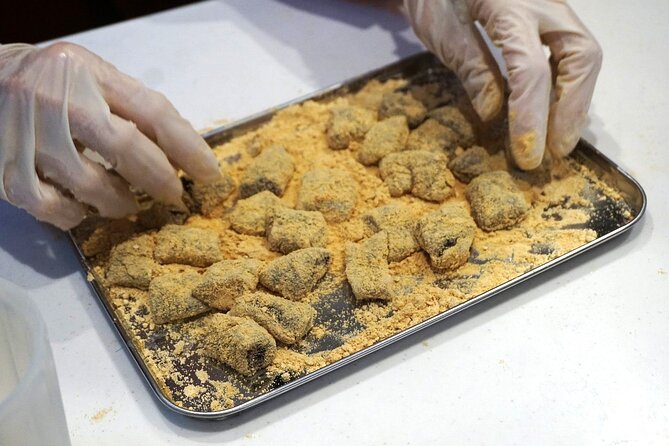
A lot of cooking classes teach technique, but not always the reason behind the technique. Here, you get an introduction to the history of mochi and how it relates to Japanese tradition. You also learn various ways to eat mochi, which helps you move beyond thinking of mochi as one product.
That matters if you are a visitor who wants context while you travel. Japan has so many foods that change form depending on region, season, and celebration. When you understand where mochi fits, the next mochi you see in a shop feels like it has a story attached.
Also, the class explains mochi as part of Japanese eating habits, so it is easier to make sense of what you encounter after. You might find yourself more confident choosing mochi at a cafe, or more interested in how it is presented when you sit down with tea.
The teacher, Satoko san, comes across as warm and passionate, and that tone shows in the way the lesson is delivered. English is described as easy to follow, which is a big deal for a hands-on food class. It keeps you from feeling lost when the steps get technical.
Vegetarian and vegan-friendly wagashi, using plant-based ingredients
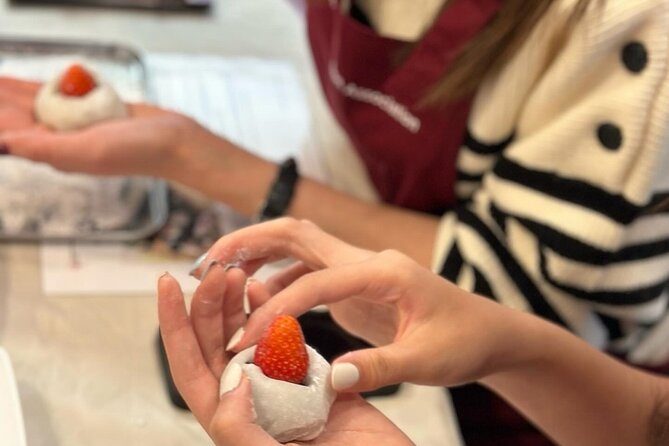
This is a big reason the class works for many diets. The menu is made from plant-based products that are easily available in your own country, and vegan options are available. That means you are not forced into a compromise where you sit out parts of the class or only taste something limited.
In practice, this makes the workshop feel inclusive. You can enjoy the mochi-making process, learn the sweets, and still stay aligned with your eating needs. It also helps you recreate the recipes later without needing specialty ingredients only available in Japan.
If you have dietary restrictions, I recommend you message ahead if you want extra clarity. The class data explicitly mentions vegetarian appropriateness and vegan options, but as always, confirming details directly is wise when you have specific needs.
Price and value: what you get for $75.12 in Tokyo
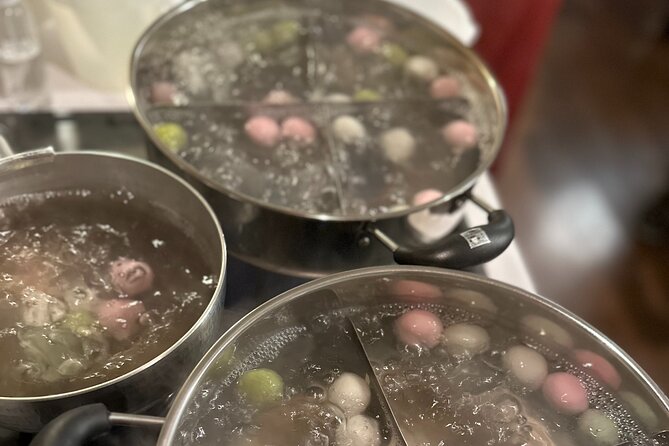
At about $75.12 per person for roughly 1.5 hours, this class can look expensive on paper. But when you map it to what is included, the value is clearer.
You are getting:
- A guided workshop with a real mochi lineup: daifuku, dango, warabi-mochi, and isobe-mochi
- Tools and supplies: apron, hand towel, special wagashi tools
- Drinks: green tea or hojicha and drinking water
- Take-home support: special box for takeaway
- Extra media: portrait photos and videos from the class
- Recipe help: downloadable mochi-ice cream recipe and easy recipes you can redo at home
- Cultural context: history of mochi and multiple ways to eat it
- Dietary support: plant-based approach with vegan options
There is also a note that group discounts exist. And during off-peak season, if your booking group is more than 3 people, it becomes a private lesson with no extra cost. That is a strong value signal if you are traveling with friends or family.
One other practical thing to remember is timing. On average, this type of class gets booked about 42 days in advance, so plan ahead if you are traveling during a popular stretch. Even if you can book closer in some cases, the demand suggests you should not assume last-minute availability.
Who should book this mochi making class, and who might skip
Book this if you:
- Want a hands-on Tokyo food experience that teaches you real technique
- Love Japanese sweets like mochi, daifuku, and dango
- Prefer a smaller, private setting in a quiet residential area
- Care about plant-based options and want vegan-friendly results
- Want take-home sweets plus a downloadable plan for mochi-ice cream
Consider skipping or at least checking details first if:
- You have a strong cat allergy, since two short-haired cats live in the home (they stay in a bedroom during the lesson)
- You dislike activities that involve a home setting rather than a commercial kitchen
- You are only looking for quick sightseeing and prefer low-touch experiences (this is cooking and shaping, not a walk-through)
As a “morning-after-a-long-day” activity, it is also fairly forgiving. It is short, focused, and you walk away with snacks and recipes, not just photos.
Should you book this mochi sweets making class in Tokyo?
Yes, if you want an authentic wagashi moment that feels personal and practical. The best part is the balance: you learn how to make mochi-based sweets step by step, then you eat what you made with Japanese tea, and you leave with a takeaway box plus downloadable recipe support. For many people, that combination makes it one of the most satisfying experiences in Tokyo, not because it is flashy, but because you leave with skills you can actually repeat.
If you are in Tokyo and you also want a break from the crowds, the quiet residential setting is a bonus. Just be sure you can handle the cat situation, and plan on using public transit since private transportation is not included.
If you want a sweet lesson with real value, this is the kind of class that sticks.
FAQ
What is the duration of the Mochi Sweets Making Class?
The class lasts about 1 hour 30 minutes.
How much does the class cost per person?
The price is listed as $75.12 per person.
Is the class private?
Yes. It is described as a private tour or activity, with only your group participating.
Do I need to bring anything to make the sweets?
No. You do not need to bring anything, and everything is provided at the lesson.
Are there vegetarian or vegan options?
Yes. The menu is made from plant-based products, and vegan options are available. It is appropriate for vegetarians as well.
Are there any animal considerations at the residence?
Yes. There are two short-haired cats in the home, and they stay in the bedroom during the lesson. If you have a strong allergy to cats, this is an important consideration.
Made by Hand, and Yours to Keep





Newest Tokyo write-ups from the Loving Japan desk






Japanese Craft and Calligraphy Workshops, side by side.
 ★ 5.0Tokyo Shinjuku Chopsticks Making ClassFrom $201,763 reviews
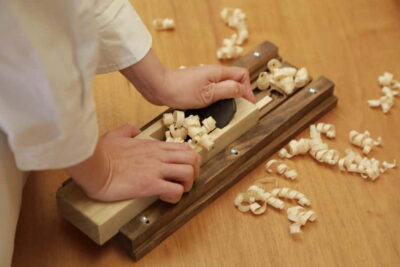 ★ 4.8Chopstick Making Workshop in GinzaFrom $251,366 reviews
 ★ 5.0Chopsticks Making Workshop in Gion with Engraving OptionFrom $15958 reviews
 ★ 4.8Tokyo Sumo Experience: Chanko & Mochi with a Former ProFrom $103567 reviews
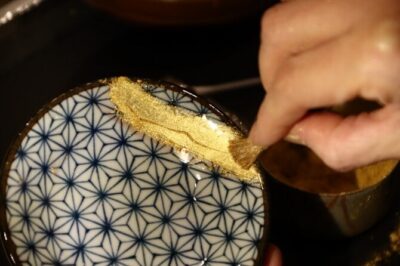 ★ 5.0Kintsugi Experience: Art of Golden Joinery in TokyoFrom $59467 reviews
 ★ 5.0Tokyo Chopstick Making Workshop with ArtisanFrom $26466 reviews
 ★ 4.9Matcha Making Experience with Mochi Sweets in AsakusaFrom $22388 reviews
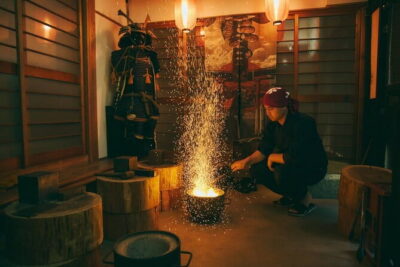 ★ 4.8Authentic knife making experience at a blacksmith in KyotoFrom $154350 reviews
Filed on these lists too