
REVIEW · NAGASAKI MEMORIAL SITES AND CITY TOURS
Nagasaki Private Historical Tour with Licensed Guide
Nagasaki history hits close to home. This private, guided day takes you through the city’s trade-era connections, then carries you straight into the reality of the atomic bombing and the places built around peace. It is a walking tour using public transportation, with a nationally licensed guide and admission fees handled for key stops.
What I like most is the mix of emotional weight and physical variety. You get big-ticket context at the Atomic Bomb Museum, then follow it with quieter, real-world sites like brick church architecture and Meiji-era Western buildings. My other favorite detail is how the tour uses public transit, so the day does not feel like you are stuck in a car the whole time.
One thing to consider: the subject matter can be intense. If you feel sick from shocking war images, tell the guide in advance so you can switch the atomic bombing museum to a less intense alternative itinerary. Also, the day includes walking and steps, so a moderate fitness level helps.
In This Review
- Key highlights worth planning for
- A day in Nagasaki that moves from trade to trauma
- Price and what you actually get for $350
- Hotel or port pickup and a realistic walking pace
- Stop 1: Nagasaki Atomic Bomb Museum, and how to handle the intensity
- Urakami Cathedral: brick architecture that survived, and why it matters
- The Peace Memorial Statue and the pledge you actually feel
- Spectacles Bridge (Meganebashi): a short stop with a route choice
- Glover Garden: Meiji Western-style buildings, relocated and restored
- Oura Catholic Church versus Mount Inasa: pick the tone
- If you choose the default route: Oura Catholic Church
- If you choose Mount Inasa: the observation deck
- Licensed guides in practice: what makes this tour feel good
- Public transportation as a feature, not a failure
- Lunch and breaks: plan for real-time hunger
- Who should book this Nagasaki tour
- Should you book it?
- FAQ
- How long is the Nagasaki private historical tour?
- Is the tour private, or do I join a group?
- What is included in the price?
- What about lunch?
- Can the tour accommodate dietary restrictions?
- Is there a choice between Spectacles Bridge and Mount Inasa?
- What if I feel sick from the atomic bomb museum imagery?
- Can I get a full refund if I cancel?
Key highlights worth planning for
- Licensed guide in English or Mandarin, with on-the-ground context that keeps the day coherent
- Atomic Bomb Museum included, plus an option to adjust the itinerary if you need a lighter approach
- Urakami Cathedral and Peace Park stops, with free admissions and strong on-site meaning
- Glover Garden included, featuring six restored Meiji Western-style buildings relocated and preserved
- Spectacles Bridge and Oura Catholic Church are optional by route, based on whether you choose Mount Inasa
Further guided walks through Nagasaki and its memorial sites
- Nagasaki: Private Walking Tour with a Local
★ 4.7 · 79 reviews - Nagasaki Full-Day Private Tour with Government-Licensed Guide
★ 5.0 · 66 reviews - Nagasaki Half-Day Private Tour with Government-Licensed Guide
★ 5.0 · 53 reviews - Visit Gunkanjima Island (Battleship Island) in Nagasaki
★ 4.0 · 32 reviews
A day in Nagasaki that moves from trade to trauma
Nagasaki is one of Japan’s most unusual cities. It sits at the crossroads of outside contact and strict isolation, then it takes the shock of World War II and turns that into public memory.
That is the spine of this tour. You start with a museum that shows the city before and after the bombing, then you move through places of faith and remembrance. After that emotional core, you pivot to the city’s older European-Japanese overlap, which helps you understand why Nagasaki’s story is not only about the war.
The pacing also matters. It is planned as a roughly 7-hour day including travel time, so you get a lot covered without trying to cram every stop into a rushed sprint.
Price and what you actually get for $350
At $350 per person, this is not a budget stroll. But it is also not just a guide fee, either.
You are paying for a private tour where the guide is nationally licensed, you get pickup from hotel or port, and key costs are already included. Admission fees for major sites are included, plus the public transportation fees for the day. In other words, the price covers the logistics that would otherwise eat your time and attention.
Lunch is not included, and you should budget about $10 to $20 per person. That is normal for Japan day tours, and it also gives you flexibility to eat where the guide suggests rather than forcing one pre-set lunch option.
For me, the value comes down to this: you are buying a full storyline with less decision fatigue. You show up, get moved citywide using public transit, and the guide links the places so they make sense together.
Hotel or port pickup and a realistic walking pace
The tour includes pickup, which is huge if you are arriving by ship or staying a bit outside the easiest transit lines. Because it is near public transportation, the day still runs efficiently without a private vehicle.
The tour also requires moderate physical fitness. You will be walking and dealing with steps throughout the day, and you should not treat this as a “sit and look out the window” plan. If you prefer a slower pace, tell the guide early, and ask what options exist for fewer steps.
One more practical note: the itinerary can change due to weather. That is not a deal breaker in Japan, but it matters when you plan expectations for observation-style stops and outdoor walking segments.
Licensed guides working the same ground
- Nagasaki Full Day Tour with Licensed Guide and Vehicle★ 5.0 · 27 reviews
Stop 1: Nagasaki Atomic Bomb Museum, and how to handle the intensity
The Atomic Bomb Museum is the anchor of the day. It includes admission and is allotted about 1 hour.
What you can expect is not abstract history. The museum focuses on changes to the cityscape before and after the bombing, and it also includes items left behind. That combination tends to hit hard because it makes the transformation visible and tangible.
If you are worried about feeling overwhelmed, do not wait until you are already inside. The tour offers a way to change your plan. If you feel sick from the shocking images, let the guide know when you reserve or on the day of the tour, and they can swap the atomic bombing museum to a less shocking alternative itinerary.
That adaptability is one of the reasons this tour works well for real humans with real limits. You still get the historical grounding, but you do not have to white-knuckle your way through.
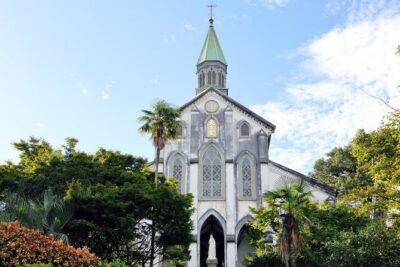
Urakami Cathedral: brick architecture that survived, and why it matters
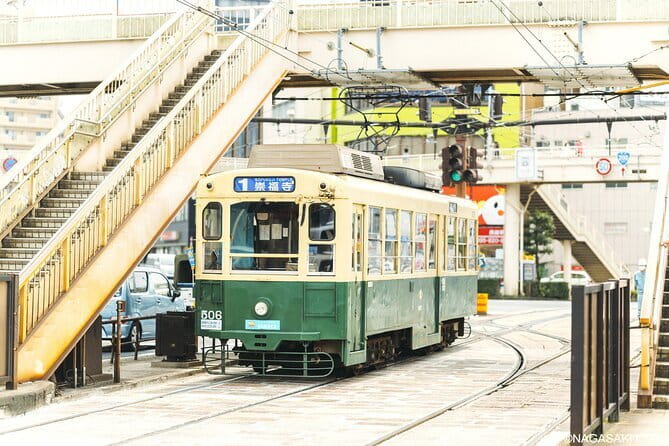
Next up is Urakami Cathedral, around 1 hour with admission free.
This stop is not just a pretty building. The church is described as a brick church with a statue of Mary and the sound of the Angelus bell, and the key point is that it withstood the atomic bomb blast. Standing near a place like this forces you to connect dates to physical survival.
Look for the details your guide points out, then pause to let the emotion land. Even if you have read about the bombing before, on-site experiences have a different effect. The guide’s job here is to keep you oriented, so you understand what you are seeing and why that mattered to the community.
If you are traveling with someone who is less interested in churches, this is still worth it. It is history you can walk around.
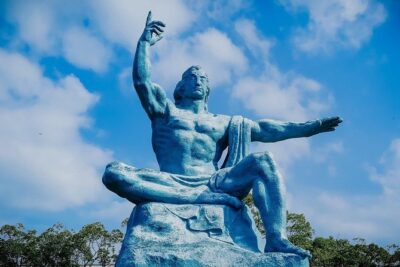
The Peace Memorial Statue and the pledge you actually feel
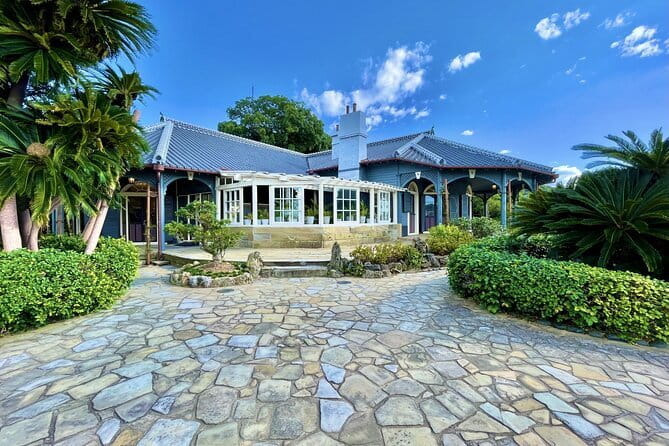
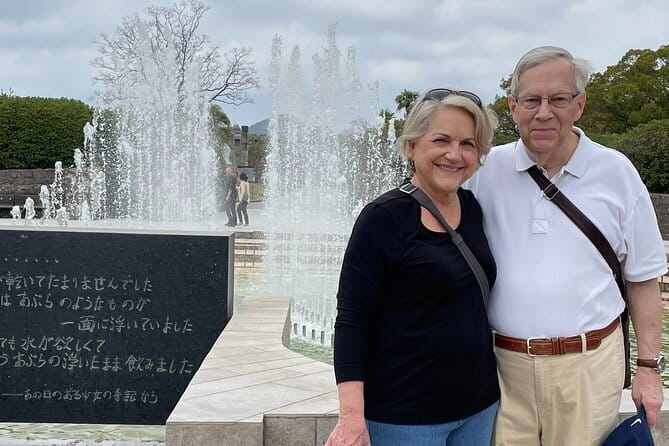
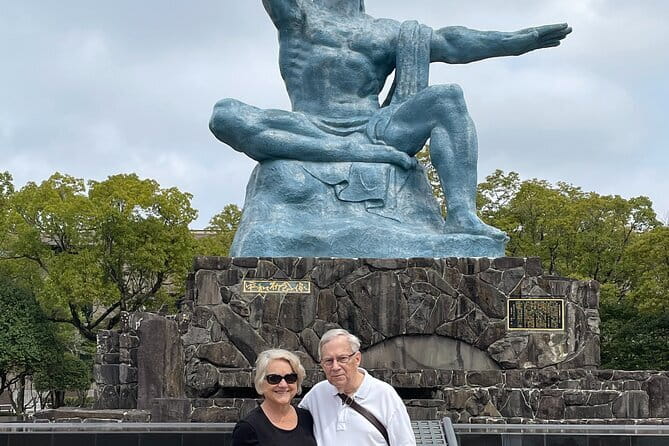
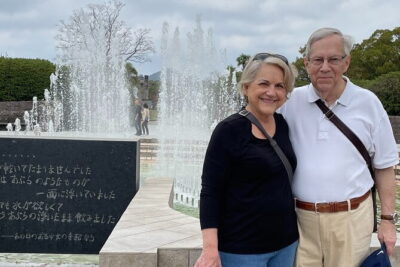
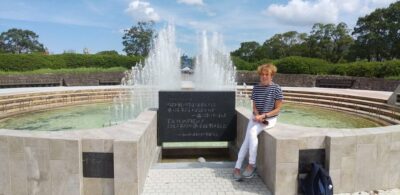
After the cathedral, you head to the Peace Memorial Statue at Peace Park, about 1 hour, admission free.
This stop is built on two ideas: a pledge never to repeat the tragic war, and a wish for lasting world peace. Those phrases can sound generic until you see how the site frames remembrance in public space.
You do not need to force feelings. The value is in understanding the intent behind the park and what visitors and locals come here to reflect on. Your guide can tie this moment back to what you saw in the museum, helping you see how Nagasaki turned grief into a permanent message.
I also like that it is a free stop. You get a big emotional payoff without spending more, and you do not feel like the day is only about paid attractions.
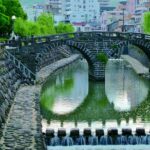
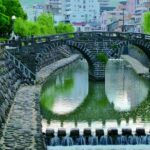
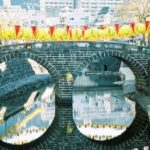
Spectacles Bridge (Meganebashi): a short stop with a route choice
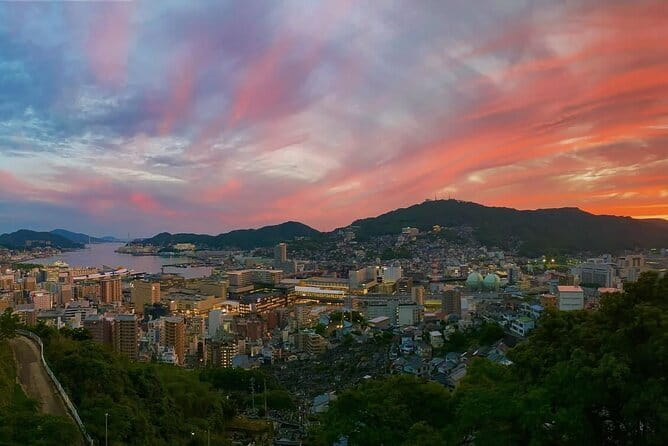
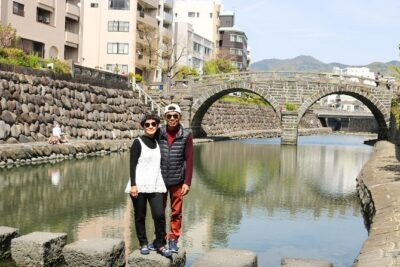
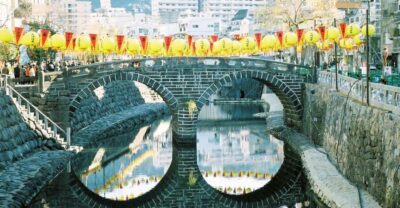
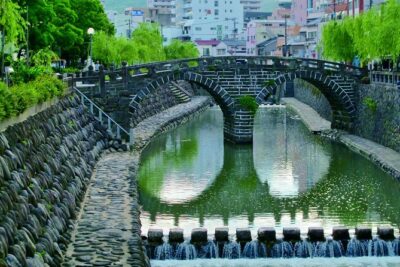
You may visit Spectacles Bridge, also called Meganebashi, for about 30 minutes, free.
There is one catch. This stop is not included for participants choosing the Mount Inasa option. If you still want it, you need to contact the provider in advance to arrange possible additions.
So think of this as a flexible piece of the puzzle. If you are choosing your route, you will be deciding what style of sightseeing you want next: an urban stop that fits cleanly into the walk, or the observation-deck experience.
If you are unsure, ask the guide what the tradeoff looks like for your group and your comfort level that day.
Glover Garden: Meiji Western-style buildings, relocated and restored
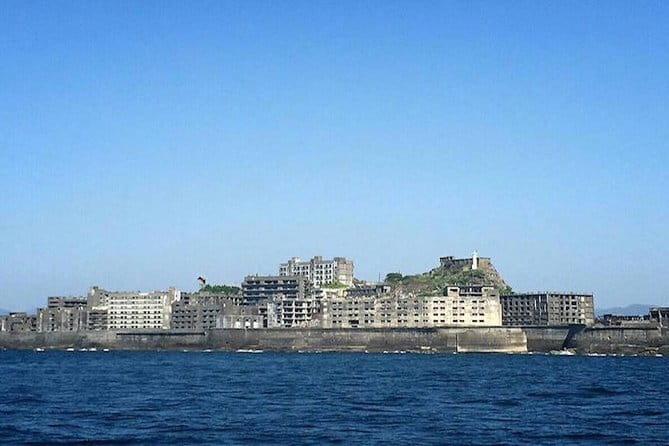
Glover Garden is one of the more visually satisfying parts of the tour, because it shifts you from wartime memory into Nagasaki’s earlier era of cross-cultural presence.
This stop is about 1 hour and includes admission. It features six Western-style buildings from the Meiji period, scattered through the city and then relocated and restored. The former Glover Residence, former Ringer Residence, and former Alt Residence are among the named buildings you can look for.
Why this matters is simple. Nagasaki had European trade and missionary contact in periods when Japan was limiting outside influence elsewhere. These buildings are physical evidence of that mixing, even if you approach them as an architecture fan or a history fan.
If you like photography, this is where you get better chances for relaxed images, not just memorial photos. Still, keep the day in context. Your guide should help you connect this part of the story to the larger theme of Nagasaki as a city shaped by contact and change.
Oura Catholic Church versus Mount Inasa: pick the tone
After Glover Garden, the tour splits based on your choice.
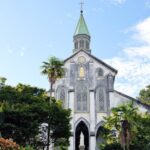
If you choose the default route: Oura Catholic Church
Oura Catholic Church is listed as a stop of about 1 hour with admission included, and it is not included if you choose Mount Inasa. If you want both Oura and Mount Inasa, you would need to contact the provider in advance to discuss possible arrangements.
This is the kind of stop where architecture becomes a historical document. The earlier cathedral stop set you up with faith and survival. Oura continues the story, giving you another chance to see how Catholic presence is part of Nagasaki’s identity.
If you choose Mount Inasa: the observation deck
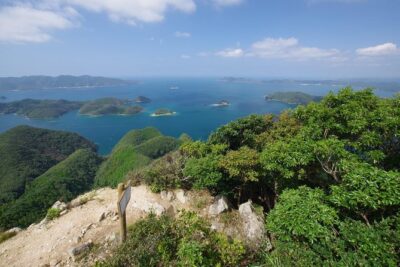
If you select the Mount Inasa option, the final viewpoint experience changes. Instead of Spectacles Bridge and Oura, you go to Inasayama Observation Deck, about 1 hour with admission included.
Mount Inasa is described as standing 333 meters tall. This is your “step back and see the city” moment after walking through its most intense history.
If you do not love viewpoints, you might prefer the church-and-bridge version for a more grounded urban walk. If you do love views, the Mount Inasa option can feel like a reset for the mind.
In either case, the guide can help you time it so the day still flows logically.
Licensed guides in practice: what makes this tour feel good
This is a private tour, only your group. That matters because it lets the guide tailor pace and emphasis to you, not to a crowd.
The tour includes a licensed guide in English and Mandarin. In the reviews and the way the itinerary is described, the guides are praised not only for facts, but also for storytelling that makes the places click together.
Names you might encounter include Noriko (Norah) and Ken, both called out for strong historical explanations and a friendly, professional approach. Another guide name that shows up is Nora. The common thread in how they are described is an ability to connect the trade history, the European-Japanese influence, and the bombing era into one coherent narrative.
I also like that the tour is described as adaptable. If you need to swap the atomic bombing museum due to shock, the guide can adjust your route instead of forcing you to soldier on.
That flexibility is not flashy, but it is exactly what makes a history tour humane.
Public transportation as a feature, not a failure
Some people book private tours because they want a private driver. Here, that is not the point.
The plan uses public transportation, and pickup is included, but the movement around town is done like a local would. One review highlights that you truly do not need a private driver because the tram service is amazing.
If you are the kind of traveler who likes to feel the city between stops, you will probably enjoy this format. It also tends to reduce time wasted on door-to-door transfers, since you are not constantly planning where a car will drop you.
The downside is you are still walking, and you will still follow transit routes. If you dislike transit, this might feel less convenient than a door-to-door vehicle tour.
But if you are comfortable with a “meet at the next stop, walk there together” rhythm, this approach adds realism.
Lunch and breaks: plan for real-time hunger
Lunch is not included, and the guideline is about $10 to $20 per person.
Because the tour is built around multiple meaningful stops, you will likely appreciate a real break where you can eat without hunting for a place on your own. If you have dietary needs, the tour can accommodate vegetarian, vegan, gluten-free, and other restrictions, as long as you share them when you book.
My advice is to treat lunch as part of the planning conversation. Ask the guide where it is easiest to get something that matches your dietary needs and keeps you on schedule.
Also, remember the tour includes travel time. So if you routinely take longer lunches, tell the guide early so the plan can breathe.
Who should book this Nagasaki tour
This tour fits best if you want three things at once:
- A structured history storyline with a licensed guide
- A mix of memorial sites and earlier cultural context
- A private-group experience without paying for a private driver
You should strongly consider it if you care about understanding Nagasaki’s European and Japanese connections and how that identity intersects with the bombing and its aftermath.
You might want to think twice if:
- You are very sensitive to war imagery and do not want even a controlled museum visit. You can request an alternative route, but you still need the guide to know your comfort level.
- You struggle with walking and steps. The day is active, even if it is well organized.
Should you book it?
Yes, I would book it if you want a coherent Nagasaki experience with a real guide, not just a checklist of places. The pricing makes more sense when you factor in the licensed guidance, pickup, public transport costs, and included admissions for the big stops.
I would especially book if you like the idea of using public transit, because it keeps the day grounded and efficient. And if your group includes someone who worries about emotional intensity, tell the guide up front, so the route can be adjusted before you hit the hard moments.
If you do not want history told through the lens of the atomic bombing, then no, do not force it. But if you want the truth, with support and a human pace, this tour is built for that.
FAQ
How long is the Nagasaki private historical tour?
The tour is about 7 hours, and that total includes travel time.
Is the tour private, or do I join a group?
It is private. Only your group will participate.
What is included in the price?
The tour includes a nationally licensed guide (English or Mandarin), admission fees, public transportation fees, and hotel or port pickup.
What about lunch?
Lunch is not included. The estimate is about $10 to $20 per person.
Can the tour accommodate dietary restrictions?
Yes. Dietary restrictions such as vegetarian, vegan, gluten-free, and others can be accommodated if you share them at booking.
Is there a choice between Spectacles Bridge and Mount Inasa?
Yes. Spectacles Bridge is not included if you choose the Mount Inasa option, and Oura Catholic Church is also not included for the Mount Inasa option. You can contact the provider in advance if you want to try to add both.
What if I feel sick from the atomic bomb museum imagery?
Tell the guide at reservation or on the day of the tour. The tour can be adjusted by swapping the atomic bomb museum to another itinerary.
Can I get a full refund if I cancel?
You can cancel for a full refund if you cancel at least 24 hours before the experience’s start time.
Licensed Guides on the Same Ground
Nagasaki and Its Memorial Sites
Newest Nagasaki write-ups from the Loving Japan desk
Nagasaki Memorial Sites and City Tours, side by side.
 ★ 4.7Private Walking Tour with a LocalFrom $8279 reviews
 ★ 5.0Nagasaki Full-Day Private Tour with Government-Licensed GuideFrom $15566 reviews
 ★ 5.0Nagasaki Half-Day Private Tour with Government-Licensed GuideFrom $12253 reviews
 ★ 4.0Visit Gunkanjima Island (Battleship Island) in NagasakiFrom $7132 reviews
 ★ 5.0Nagasaki Full Day Tour with Licensed Guide and VehicleFrom $59827 reviews
 ★ 5.0Taste Local Life: Nagasaki’s Historical Street Walking TourFrom $10527 reviews
 ★ 5.0Nagasaki Street Food Adventure: Private Walking Tour with a LocalFrom $22826 reviews
 ★ 5.0Nagasaki Private Tour with a Local – Highlights & Hidden GemsFrom $6424 reviews