
REVIEW · NAGASAKI MEMORIAL SITES AND CITY TOURS
Nagasaki Half-Day Private Tour with Government-Licensed Guide
Nagasaki, minus the crowds, in four hours. This private half-day tour gives you a government-licensed English guide and lets you build a short plan around what you actually care about. I love that you can skip the fixed-group rhythm and still hit the city’s biggest themes in a compact morning.
Two things I particularly like: first, you choose 2-3 sites from a menu of Peace, foreign influence, temples, and Christian landmarks. Second, your guide meets you in the morning and keeps the pace at walking speed, so you feel more like you’re moving through Nagasaki than just checking it off.
One drawback to plan for: it’s a walking and public-transport tour, and entrance fees plus transit costs are not included for most stops. Also, with only 4 hours and a short list of selected sites, you’ll want to decide ahead of time what you want most.
In This Review
- Key things that make this Nagasaki tour work
- A smart way to sample Nagasaki in half a day
- Private and pick-your-own-sites, not a one-size itinerary
- Walking and public transport: plan for hills, trams, and shoes
- Peace Park and the atomic-bomb area: the stops people remember
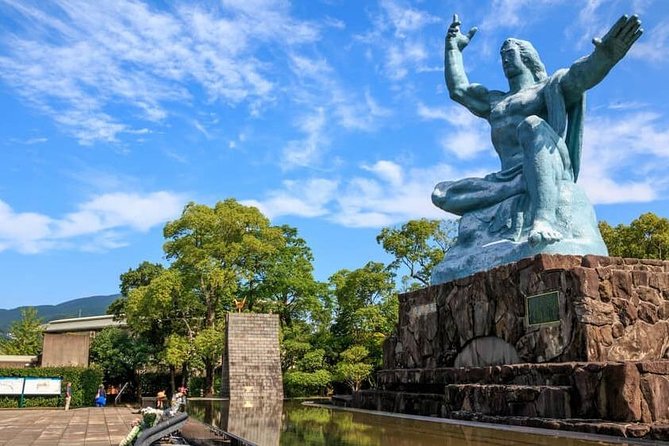
- Nagasaki Peace Park
- Nagasaki Atomic Bomb Museum
- Inasayama viewpoint, Glover Garden, and Dejima: foreign influence in plain sight
- Inasayama Observation Deck
- Glover Garden
- Dejima
- Temples, shrines, and Christian landmarks that show Nagasaki’s mix
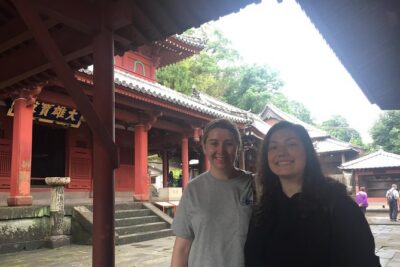
- Sofukuji Temple (Obaku Zen)
- Kofukuji Temple (Teramachi area, Obaku roots)
- The Confucian Temple, the Chinese Museum of Successive Generations
- Nagasaki Gokoku Shrine
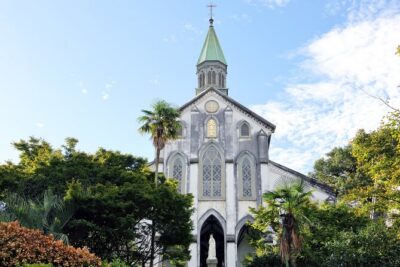
- Urakami Cathedral
- Oura Catholic Church
- Twenty-Six Christian Martyrs Monument
- Downtown favorites: Dutch Slope and Meganebashi for easy wins
- Dutch Slope
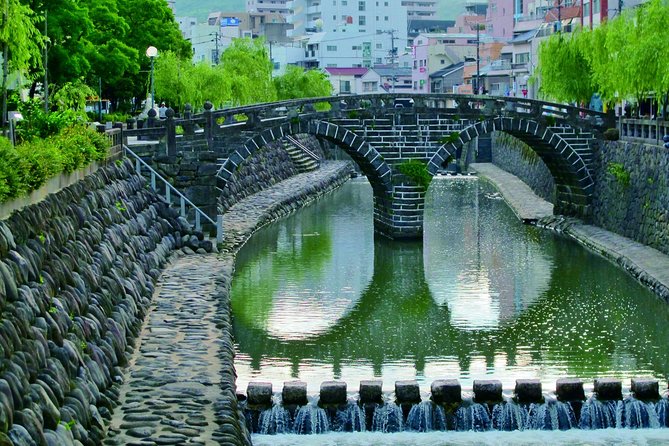
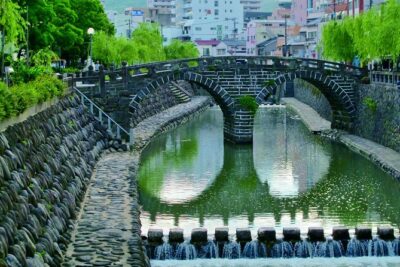
- Spectacles Bridge (Meganebashi)
- Museum option: Nagasaki Museum of History and Culture
- How to choose your best 2 or 3 sites
- Guide quality is the real differentiator here
- Price and value: what $122.20 gets you
- Should you book this Nagasaki half-day private tour?
- FAQ
- How long is the Nagasaki half-day private tour?
- Is this tour private?
- Can I choose which stops to visit?
- Does the guide pick me up at my hotel?
- Is this tour mostly walking?
- Are entrance fees included for the stops?
- Are transportation fees included?
- Does the tour include lunch?
- Is there a group discount?
- What is the cancellation policy?
Key things that make this Nagasaki tour work
- Choose 2-3 stops from a menu, instead of being forced into a long fixed route
- Government-licensed English guide, often with strong personal storytelling about the city
- Hotel-start format (pickup on foot) that helps you avoid getting stuck at meeting points
- Walking-first pace, which fits Nagasaki’s bridges, hills, and waterfront layout
- Peace + city views + faith landmarks, all in one half-day without rushing every street
Further guided walks through Nagasaki and its memorial sites
- Nagasaki: Private Walking Tour with a Local
★ 4.7 · 79 reviews - Nagasaki Full-Day Private Tour with Government-Licensed Guide
★ 5.0 · 66 reviews - Nagasaki Half-Day Private Tour with Government-Licensed Guide
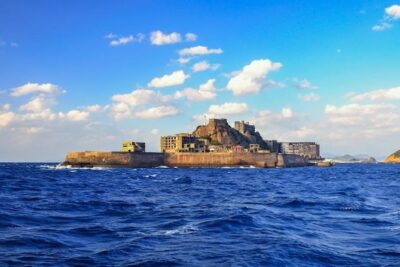
★ 5.0 · 53 reviews - Visit Gunkanjima Island (Battleship Island) in Nagasaki
★ 4.0 · 32 reviews
A smart way to sample Nagasaki in half a day
Nagasaki can feel intense fast. The city packs major 20th-century history, international trade stories, and visible layers of Christian presence, all in one compact area.
This is why I like a half-day private format here. You get a focused morning, then you’re free for a slower lunch, a museum you couldn’t fit, or a street wander where you stop whenever something catches your eye.
Private and pick-your-own-sites, not a one-size itinerary
The biggest value is control. You and your guide decide what to visit from a set list, which means you can tailor the tone of the morning.
Want more “Peace and memory”? You can build around Nagasaki Peace Park and the atomic-bomb area. Want more “foreign trade and architecture”? You can lean toward Glover Garden, Dejima, and the downtown heritage corners. Want a mixed morning across faith and culture? The stops let you stitch together temples, shrines, and churches in a logical route.
Because it’s private, you also avoid the usual group problem: no one arguing about walking speed, restroom stops, or where to take photos. Your guide can adjust the order and pacing so the day feels human.
Walking and public transport: plan for hills, trams, and shoes
This is not a “ride around in a vehicle” tour. It’s designed as walking plus public transport, with pickup on foot and transport costs handled by you.
That setup actually matches Nagasaki well. The city is full of short-but-steep streets, stone bridges, and viewpoints that make sense on foot. The trade-off is you should wear comfy shoes and be ready for some stairs and slopes, especially if you choose the Inasayama viewpoint.
If the weather turns, you still have options, because taxis can come up in planning (you’d pay those costs separately). I’d treat this as a “movement tour,” not a sit-and-listen ride.
- Taste Local Life: Nagasaki’s Historical Street Walking Tour★ 5.0 · 27 reviews
- Nagasaki Street Food Adventure: Private Walking Tour with a Local★ 5.0 · 26 reviews
Peace Park and the atomic-bomb area: the stops people remember
If you want the emotional core of Nagasaki, this is where your morning goes.
Nagasaki Peace Park
Nagasaki Peace Park is a calm space centered on the atomic bombing of August 9, 1945. The best part here is the atmosphere: it’s not loud tourism. It’s more like a quiet place to pause, read, and let the scale sink in.
The practical bonus is that admission is free. That makes it easier to include even if your schedule gets tight.
Nagasaki Atomic Bomb Museum
Near the hypocenter area, the Nagasaki Atomic Bomb Museum documents the destruction and Nagasaki’s recovery. This stop tends to feel solemn, not “quick and cheerful,” so it’s smart to choose it when you have the emotional bandwidth for it.
Admission is listed as not included, so budget for any entry costs. If you’re combining it with Peace Park, ask your guide to sequence it so you get enough time to take it in without feeling rushed.
Inasayama viewpoint, Glover Garden, and Dejima: foreign influence in plain sight
Nagasaki’s international story shows up in its geography and architecture. These stops help you see how the city connected with the outside world.
Inasayama Observation Deck
From Mount Inasa (Inasayama), you get wide views over the city. If you like the “orienting” effect of viewpoints, this is one of the fastest ways to understand how Nagasaki sits.
Admission is free, which is nice because you can spend more of your limited morning time on the story stops. The time listed is short, so you might want to arrive with a plan for a few photos rather than trying to do everything at once.
Glover Garden
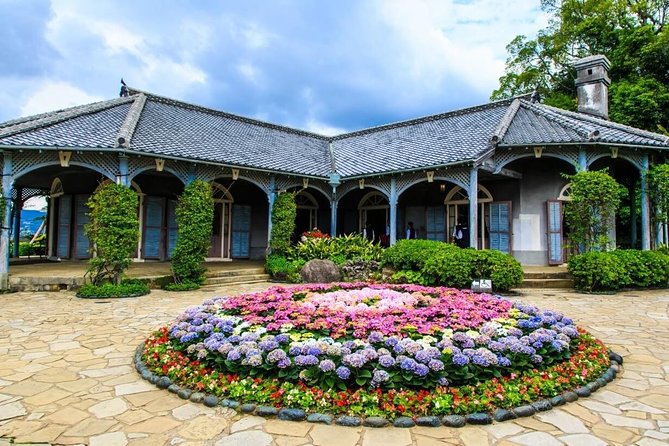
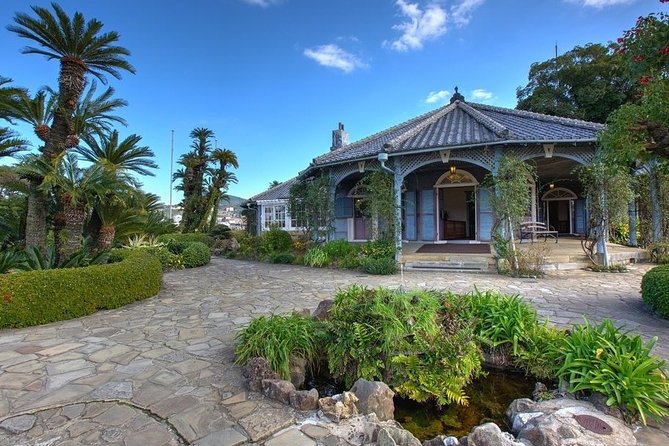
Glover Garden is an open-air museum of mansions and related buildings from Nagasaki’s foreign resident era. The point is not just architecture, it’s the way foreign presence shaped neighborhoods and daily life.
Entrance is not included, so check your budget. The upside is that this stop gives you a visual story that complements the more heavy themes elsewhere.
Dejima
Dejima was a man-made island built in 1636 to control contact between Portuguese residents and the Japanese population. Later, it became part of the broader system that managed foreign activity through strict rules.
This is a stop where a guide helps a lot. The location and history explain why Nagasaki developed a different kind of international relationship than many other Japanese ports.
Admission is not included here as well, so expect additional costs if you choose Dejima as one of your 2-3 stops.
Temples, shrines, and Christian landmarks that show Nagasaki’s mix
One thing I like about Nagasaki is that belief systems are not abstract. You see them in brick churches, Chinese-style temple architecture, and monuments connected to centuries of faith.
You can build a morning that feels balanced, not random. Pick one or two faith-related sites and then add either a view or a museum, so your time has emotional and geographic shape.
Sofukuji Temple (Obaku Zen)
Sofukuji Temple belongs to the Obaku school of Zen Buddhism. The key detail is that it was originally built for Nagasaki’s Chinese residents, and it includes Chinese-style elements in its design.
Admission is not included, so treat this as a paid-add-on stop if you choose it. The time is short, so a guide’s explanations matter if you want more than a quick photo.
Kofukuji Temple (Teramachi area, Obaku roots)
Kofukuji Temple is described as one of the oldest and most important Chinese-founded temples in Nagasaki, and it’s tied to the birthplace of Obaku Zen. It also sits in Teramachi, the Temple Town district.
If you’re interested in how communities formed and moved through the city, this stop connects the dots between Nagasaki’s Chinese roots and everyday neighborhood life.
Admission is not included, so factor in entry costs.
The Confucian Temple, the Chinese Museum of Successive Generations
This stop focuses on Confucius and includes a shrine built by Nagasaki’s Chinese community in 1893. It’s also tied to the Chinese museum of successive generations.
This is a good choice if you want a different angle on “international Nagasaki.” It’s not European influence, it’s Chinese intellectual and community continuity showing up in Japanese space.
Admission is not included.
Nagasaki Gokoku Shrine
A Gokoku Shrine is dedicated to spirits of those who died for the nation. In the tour context, the administration shifted after World War II, which helps explain how memory and institutions changed over time.
Admission is not included, and the time is short. I suggest pairing it with another stop tied to WWII or peace if you want your themes to stay connected.
Urakami Cathedral
Urakami Cathedral is a working Catholic church in a large European-style red brick building. The history is tragic, and the church is part of how modern Nagasaki carries forward remembrance.
Admission is not included. This stop can feel heavy, so if your guide is sequencing multiple solemn sites, ask for a little pacing break.
Oura Catholic Church
Oura Church (Ōura Tenshudō) was built by a French missionary in 1864 for foreign merchants and the growing Catholic community. The tour data lists it twice as separate options, but it’s essentially the same landmark.
If you’re trying to understand how Nagasaki’s port community and missionary activity intersected, Oura is one of the clearest examples.
Admission is not included.
Twenty-Six Christian Martyrs Monument
This monument and adjacent museum remember the twenty-six Christians executed here on February 5, 1597. The listed time is longer than many other stops, which makes sense because the subject needs breathing room.
Admission is not included. If you’re sensitive to religious persecution narratives, consider pairing this with a lighter viewpoint stop later in the morning or saving other major stops for a different day.
Downtown favorites: Dutch Slope and Meganebashi for easy wins
These are the kind of stops that make your morning feel like a real walk, not just a list of formal monuments.
Dutch Slope
Dutch Slope is a stone-paved uphill street linked to foreign traders after the port opened in 1859. It’s the kind of place where one street can tell you a whole shift in city identity.
It’s listed as free. Since the time allocation is short, it works well as a connector between heavier stops.
Spectacles Bridge (Meganebashi)
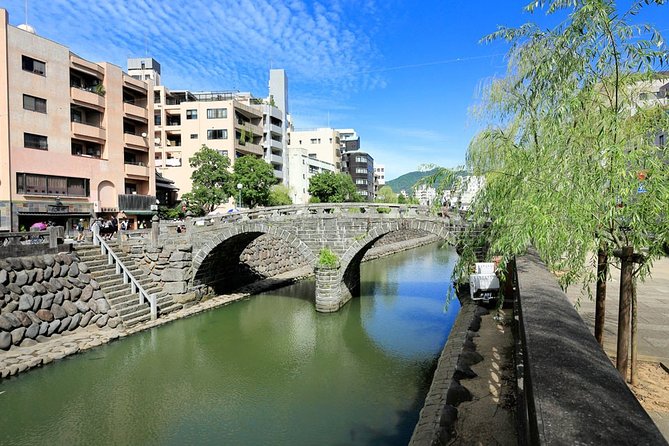
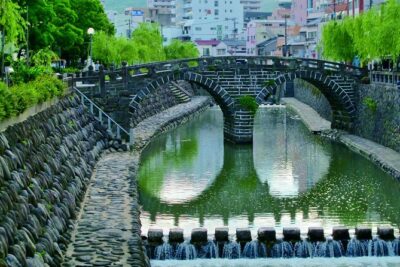
Meganebashi is a stone bridge over the Nakashima River, famous for the shape that resembles spectacles. The bridge sits in downtown Nagasaki, so it’s handy when you want an easy photo stop that doesn’t eat your whole schedule.
Admission is listed as free and the stop is brief. I love using stops like this to reset your brain between big stories.
Museum option: Nagasaki Museum of History and Culture
The Nagasaki Museum of History and Culture is modern and designed to explain the city’s role as a major international trading port. It’s a practical choice if you want a “big picture” bridge between Peace themes and the foreign settlement story.
Admission is not included, and the time is short. If you pick it, I suggest choosing it as one of your main anchors, then pairing it with a single landmark stop for contrast.
How to choose your best 2 or 3 sites
With only a few stops in a morning, your goal is balance. You’ll enjoy the day more if you choose one anchor topic and then add one visual or faith landmark.
Here are a few simple mixes that tend to make sense:
- Peace-forward morning: Peace Park plus the Atomic Bomb Museum, add a free connector like Meganebashi or Dutch Slope
- International-trade morning: Dejima plus Glover Garden, with Inasayama viewpoint for geographic context
- Faith and identity morning: Urakami Cathedral or Oura Church plus either Sofukuji or Kofukuji, then add the Martyrs monument if you want deeper religious history
- Quick, photo-friendly morning: Inasayama viewpoint plus Meganebashi plus either Dutch Slope or a museum, if you prefer a lighter pace
One practical tip: pick at least one stop you’d be happy to revisit on your own later. That way, if you spend extra time reading at one site, you still feel satisfied.
Guide quality is the real differentiator here
The tour lives or dies on your guide, and the praise for this tour pattern is consistent. People specifically named guides such as Yoshi, Hiro, Koko, Hiromi, Norah (Noriko), Yuko, and Yoshiko, and the common theme is that they shape the morning around your interests.
Many guests talked about guides tailoring the schedule, adjusting for rain, and explaining pre-war to present-day context in a way that makes Nagasaki feel connected. A few mentioned tram use to reach key areas and making the route efficient on foot.
One review style detail that stood out: some guides do extra planning before you even meet. That can mean emails or even using messaging apps to iron out timing, and it often results in a smoother morning once you’re walking.
There are also examples of guides being creative with family needs. One family-friendly account described origami as part of keeping kids engaged, and another described rain solutions like taxis and even help preparing for umbrellas.
If you care about a specific angle, message it in advance. Ask your guide what they recommend as your top 2 stops given your interests, and ask them to build a route that makes sense on foot.
Price and value: what $122.20 gets you
At $122.20 per person for about 4 hours, you’re paying for a private licensed local guide plus the ability to customize a short route.
Here’s the value logic I use: if you’re the type who would otherwise spend time figuring out transit, reading history without context, or fighting a group pace, a private guide can actually save energy. You get a plan that fits your time, and you’re not locked into a long day.
Keep expectations clear about costs. Entrance fees and transportation fees are not included, so your final total depends on which stops you select. The upside is a few listed options are free, including Nagasaki Peace Park, Inasayama Observation Deck, Dutch Slope, and Meganebashi.
If you pick a mix that includes free stops and only one or two paid-entry sites, you keep the budget closer to the base price.
Should you book this Nagasaki half-day private tour?
Book it if you want the best of Nagasaki quickly, without the stress of planning. This is a strong pick for your first morning in the city, or when you only have a day and you’d rather walk with a guide than Google your way through history.
Skip it or change your plan if you hate walking or you expect everything to be fully ticketed and covered. Since it’s walking plus public transport and many entrances are not included, you’ll get the most satisfaction if you come prepared with sturdy shoes and a realistic budget for entries and transit.
Also, if emotional topics like the atomic bombing or martyr history will weigh on you, pick your stops intentionally. A guide can help you pace it, but you still control what makes the top of your morning.
FAQ
How long is the Nagasaki half-day private tour?
It runs about 4 hours.
Is this tour private?
Yes. Only your group participates.
Can I choose which stops to visit?
Yes. You customize your tour by selecting 2-3 sites from the available options.
Does the guide pick me up at my hotel?
Pickup is offered. The tour uses on-foot pickup, and you meet the guide in the designated area in Nagasaki.
Is this tour mostly walking?
It is a walking and public transport tour.
Are entrance fees included for the stops?
Not all of them. Admission is listed as free for some stops like Nagasaki Peace Park, Inasayama Observation Deck, Dutch Slope, and Meganebashi. Entrance fees are listed as not included for others.
Are transportation fees included?
No. Transportation fees are not included, and a private vehicle is not included.
Does the tour include lunch?
No. Lunch is not included.
Is there a group discount?
Yes, group discounts are listed.
What is the cancellation policy?
Free cancellation is available up to 24 hours in advance for a full refund.
If you tell me what vibe you want most (peace focus, foreign trade, churches, temples, or views) and what time of day you start, I can suggest a tight 2-3 stop combo that fits well into a half-day.
Licensed Guides on the Same Ground
Nagasaki and Its Memorial Sites
Newest Nagasaki write-ups from the Loving Japan desk
Nagasaki Memorial Sites and City Tours, side by side.
 ★ 4.7Private Walking Tour with a LocalFrom $8279 reviews
 ★ 5.0Nagasaki Full-Day Private Tour with Government-Licensed GuideFrom $15566 reviews
 ★ 4.0Visit Gunkanjima Island (Battleship Island) in NagasakiFrom $7132 reviews
 ★ 5.0Nagasaki Full Day Tour with Licensed Guide and VehicleFrom $59827 reviews
 ★ 5.0Taste Local Life: Nagasaki’s Historical Street Walking TourFrom $10527 reviews
 ★ 5.0Nagasaki Street Food Adventure: Private Walking Tour with a LocalFrom $22826 reviews
Filed on these lists too