
REVIEW · NAGASAKI MEMORIAL SITES AND CITY TOURS
Nagasaki: Private Walking Tour with a Local
Nagasaki hits different when it is explained by a person who lives here. This private walking tour gives you a real, conversation-based route shaped around your interests, not a scripted loop. I like the English-speaking lokafyer part and the way guides tailor the day fast, whether you want atomic history, neighborhood stories, or food stops. One thing to consider: it is still a walking tour, so you’ll want comfortable shoes and a plan for slower moments.
The best payoff is how quickly you go from seeing landmarks to understanding how Nagasaki connects them. Your guide can help you place sites in context and point you toward places that are easier to miss on your own, including trams and local spots for eating and shopping. If you prefer a very structured, no-decisions itinerary, you might find that the flexibility takes a little more input from you.
In This Review
- Key things I would focus on before you book
- Why a private walking tour is the best way to read Nagasaki
- Start where it is easiest, not where it is most dramatic
- 3 to 6 hours, built around your choices (not a fixed script)
- The atomic history core, including Atomic Bomb Museum and Peace Park
- Ropeway, Dejima, and scenic angles you might miss on your own
- Food and shopping tips that actually save time
- Meet your guide: English support you can feel in the details
- Comfort, pacing, and what to wear for a walking-based day
- Price and value at $82 per person
- Who this tour suits best
- Should you book this Nagasaki private walking tour?
- FAQ
- How long is the Nagasaki private walking tour?
- Is this tour private or shared?
- What language is the guide available in?
- Where does pickup happen?
- Are entrance fees included?
- Are meals and drinks included?
- Is public transportation or taxis included?
- Is the tour wheelchair accessible?
- What is the policy for children?
- What is the cancellation policy?
Key things I would focus on before you book
- 100% private, personalized route so you are not squeezed into someone else’s schedule
- English live guide who can explain what you are seeing in plain language
- Pickup in or near the city center so you start with less hassle
- Optional attraction add-ons if you want museum and other ticketed stops
- Street-level local tips for how to move around, and where to eat and shop
- Real flexibility like balancing walking with public transport or taxis when it helps
Further guided walks through Nagasaki and its memorial sites
- Nagasaki: Private Walking Tour with a Local
★ 4.7 · 79 reviews - Nagasaki Full-Day Private Tour with Government-Licensed Guide
★ 5.0 · 66 reviews - Nagasaki Half-Day Private Tour with Government-Licensed Guide
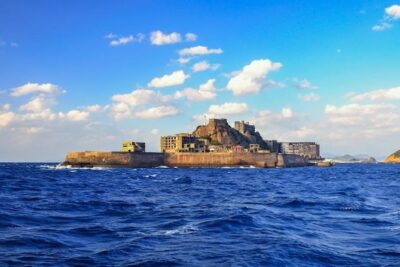
★ 5.0 · 53 reviews - Visit Gunkanjima Island (Battleship Island) in Nagasaki
★ 4.0 · 32 reviews
Why a private walking tour is the best way to read Nagasaki
Nagasaki is not a city you fully “get” just by collecting photos. It helps when someone can connect the dots, explain why a place matters, and point out what locals notice. With this setup, you are not marching behind a megaphone or doing a checklist. You are walking with a local, and your day can bend as your curiosity shifts.
I particularly like that the guide is not just there to repeat facts. Many Nagasaki tours people take rely on information you can already read. Here, the value is how the guide brings the story to life with personal context, plus practical details that help you keep moving once the tour ends. That can mean navigation tips, what to pair with a stop, or how to spend the rest of your afternoon without guessing.
There is also a quiet advantage to doing this as a walking tour: the rhythm of Nagasaki becomes part of the experience. You notice streets, viewpoints on the way, and small city textures that you would skip in a car or taxi.
Start where it is easiest, not where it is most dramatic
You get two clear pickup options in or near the city center: the Statue of Dr. Sun Yat-sen at Umeya Shōkichi & Toku area, or the Nagasaki Atomic Bomb Museum. Either is convenient because you are starting from a place that already anchors your route mentally.
For me, the practical benefit is reduced stress. Instead of spending your first hour in Nagasaki figuring out where to meet, you begin with a landmark you can find. In some cases, guides have even met guests at a cruise terminal, which is a huge help if your day is timed around a ship schedule.
The tour also allows you to choose your pickup location as long as it is in or near the city center. That means you can meet your guide at your hotel, an iconic landmark, or even a quiet café. When you can start near where you are already comfortable, you spend more time on Nagasaki and less time playing transit detective.
3 to 6 hours, built around your choices (not a fixed script)
The biggest promise is simple: no groups, no scripts, and a route that fits you. In real terms, that means you can steer the pacing and priorities. If you want more sightseeing photos and scenic views, the walk can shift that way. If you want history explained more clearly, the guide can slow down for context. If you want food and shopping stops, those can become major beats rather than quick side detours.
The English live guide part matters here. A good guide can translate what you see into something you can actually use, like what to focus on at major sites and how to connect neighborhoods afterward. In guide examples, Suniff and Yuki were praised for adding personal stories and thoughtful explanation. Masaaki and Senyo were specifically noted for helping visitors understand what they were looking at, especially around the atomic history sites.
A realistic consideration: because this is personalized, you may get the best experience if you come with at least a few anchors. You can be totally open-ended, but even one or two preferences helps your guide build a route that feels efficient instead of random.
- Taste Local Life: Nagasaki’s Historical Street Walking Tour★ 5.0 · 27 reviews
- Nagasaki Street Food Adventure: Private Walking Tour with a Local★ 5.0 · 26 reviews
The atomic history core, including Atomic Bomb Museum and Peace Park
Many people come to Nagasaki for the Second World War and the atomic bombing story. When your tour includes the Atomic Bomb Museum and Peace Park, the value is not just access, it is interpretation.
A well-run walking day here helps you read the site without getting lost in details. Guides like Masaaki and Senyo were highlighted for how they explained the historical significance in ways visitors found easier to understand. That is important because museum content can feel overwhelming when you are trying to process everything alone. A local can point out what to pay attention to, and what questions to ask while you are there.
One smart way to use this tour: ask your guide to help you connect your museum time to what you do next. For example, if your focus is meaning and context, your guide can help you plan your walk so the sites flow logically. If your focus is visuals and movement, they may suggest a pacing approach that mixes walking with short rides where it makes sense.
Also note a practical point: entrance fees are not included. If you want the guide to accompany you inside an attraction, you’ll need to cover admission for the guide as well. This is common for private guiding, but it is good to know so there are no surprises mid-day.
Ropeway, Dejima, and scenic angles you might miss on your own
Not all Nagasaki days have to be only memorial sites. One guide-led route included the Nagasaki Ropeway, and another included a tram connection to Dejima. These kinds of additions can add variety to your morning, especially if you want viewpoints and city textures, not only museum time.
Why this matters for your day: once you cover something heavy like atomic history, it helps to balance it with a different sensory pace. Scenic routes and areas like Dejima are often the contrast that makes the day feel complete. Plus, your guide can help you figure out the simplest way to get there, rather than spending your limited time comparing routes.
The ropeway and tram examples also show how flexible the guide can be with transportation choices. In at least one tailored outing, the guide balanced walking with public transportation and taxis so the day stayed comfortable and efficient. That is a big deal in a hilly city, or if you have limited stamina.
If you add these stops, keep a clear priority order in your head. It is easy to pack a lot into 3 to 6 hours, but the best version is usually the one where you still have time to pause, ask questions, and take photos without rushing through everything.
Food and shopping tips that actually save time
A private guide is also your shortcut to the parts of Nagasaki that are hard to find quickly. Multiple guides were praised for providing local recommendations and even helping arrange a lunch stop that felt genuinely good, not just convenient. One guide plan included an amazing lunch break, and the guide also gave follow-up advice for what to do later.
What I like in this kind of city advice is that it is not generic. Guides were described as taking people to places many visitors would never stumble into. That often comes down to two skills: knowing where locals tend to go, and knowing what a visitor is likely to enjoy based on simple questions.
So how should you use it? Ask for two kinds of recommendations:
- A place that fits what you are craving, today
- A second option for later, in case your first choice is too busy
The guide’s tips can extend beyond restaurants too, including places to shop and practical navigation advice so you can keep exploring after the tour.
A small caution: meals and drinks are not included. That means you should treat lunch as part of your daily budget, and coordinate preferences early so your guide can slot it into the walking flow.
Meet your guide: English support you can feel in the details
You are not just buying time, you are buying communication. English live guiding is a key part of why this tour works well for first-timers. Several guides were singled out for English clarity and for going beyond standard historical facts that you can easily read online.
Examples that stood out in guide names and styles include:
- Suniff, praised for enthusiasm and sharing his own experiences
- Yuki, noted for being attentive to detail and adding personal story layers
- Masaaki, praised for guiding around atomic history sites and explaining what visitors struggle to understand
- JUN, praised for quickly adjusting even when guests did not have a plan yet
- Muhammad, praised for pre-tour chats and picking up cruise visitors at the cruise terminal
- REM, praised for fitting in what guests wanted and for very good English
- Senyo, praised for knowledge around atomic history and for an unforgettable pace
If that sounds like a lot of names, that is actually the point. You can see the pattern: the guide quality shows up in how the explanation lands and how well the day is adapted to you.
Comfort, pacing, and what to wear for a walking-based day
This is a walking tour. That means your comfort is not a small detail. Wear comfortable shoes, and plan for some movement as the day progresses. In practice, 3 to 6 hours can mean a lot of small stretches of walking, plus photo stops and viewpoints.
The good news is that it is private, so you are not forced to keep the same pace as strangers. Your guide can adjust rhythm. And some guides were specifically praised for balancing walking with public transportation and taxis when it helped.
If you have mobility needs, note that the tour is wheelchair accessible. You still should confirm how your guide plans the route on the day, especially if you are planning to include attractions that may have their own movement constraints once you arrive.
A final comfort tip: carry a small water bottle and a light layer. Even in a city with short transfers, walking days can feel long, and weather can change faster than you expect.
Price and value at $82 per person
At $82 per person for 3 to 6 hours, the value is mostly about control. You are paying for:
- A private local guide, not a group route
- Route flexibility based on your interests
- Practical navigation and food or shopping tips you can use immediately
What you get is not only “seeing sights.” You get help prioritizing. That is often what people need most in Nagasaki, especially when you are deciding between memorial sites, scenic stops, and time for meals.
Two cost add-ons to remember: entrance fees and personal expenses are not included. Also, if you want to include an attraction and have the guide visit it with you, you cover admission for the guide too. That means your total day cost depends on what you choose to add, like museums or specific paid sites.
Still, for many visitors, private guiding tends to pay off when you care about clarity and when you want a tight schedule without guesswork. If you are traveling with family or friends who have different interests, the private format can be especially valuable because the guide can build around more than one priority.
Who this tour suits best
This works best if you fit one of these profiles:
- First-time visitors who want orientation and a logical sense of how Nagasaki fits together
- Curious travelers who prefer real conversations over memorized facts
- People who want to ask questions and get answers that relate to what they are seeing that day
- Guests who value flexibility, like mixing walking with public transport or taxis
It can also be useful if you are on a timed visit, like a cruise day. One guide was praised for adapting quickly when circumstances changed, and for meeting at the cruise terminal. That kind of adaptability is exactly what private guiding is good at.
If your ideal day is a rigid route with no discussion and minimal walking adjustment, you might prefer a fixed group tour instead. But if you want a day that feels personal and practical, this setup is a strong match.
Should you book this Nagasaki private walking tour?
I’d book it if you want Nagasaki explained in a way you can actually use, plus a route that reflects your priorities. The combination of 100% private guiding, English support, and the ability to build a plan around your interests is what makes this feel like more than a generic city walk.
Do book with a bit of direction. Even if you come with no plan at all, bring a sense of what you care about most, atomic history, scenery, local food, or neighborhood stories. If you do that, your guide can turn the day into something you can remember, not just something you passed through.
Don’t book if you want strict structure, or if you want a day that is mostly seated transportation. Since it is a walking tour, you should be comfortable with walking as the backbone of the experience.
FAQ
How long is the Nagasaki private walking tour?
The tour runs for 3 to 6 hours, depending on availability and the route you build with your guide.
Is this tour private or shared?
It is 100% private. You will have your own guide, with no groups.
What language is the guide available in?
The live tour guide speaks English.
Where does pickup happen?
Pickup is included, and the guide meets you at your preferred location as long as it is in or near the city center. Two listed pickup options are the Statue of Dr. Sun Yat-sen at Umeya Shōkichi & Toku, Nagasaki, or the Nagasaki Atomic Bomb Museum area.
Are entrance fees included?
Entrance fees are not included. If you want to visit an attraction, you will also need to cover the cost of admission for the guide.
Are meals and drinks included?
Meals and drinks are not included.
Is public transportation or taxis included?
Local transportation around the city is not included.
Is the tour wheelchair accessible?
Yes, the tour is wheelchair accessible.
What is the policy for children?
Children below 3 years join for free. Children from 3 to 12 years receive a 50 percent discount.
What is the cancellation policy?
You can cancel up to 24 hours in advance for a full refund.
If you tell me your travel dates and whether you want more atomic history, scenery, or food, I can suggest a smart way to set your priorities for a 3-hour versus a 6-hour version.
Nagasaki and Its Memorial Sites
Newest Nagasaki write-ups from the Loving Japan desk
Nagasaki Memorial Sites and City Tours, side by side.
 ★ 5.0Nagasaki Full-Day Private Tour with Government-Licensed GuideFrom $15566 reviews
 ★ 5.0Nagasaki Half-Day Private Tour with Government-Licensed GuideFrom $12253 reviews
 ★ 4.0Visit Gunkanjima Island (Battleship Island) in NagasakiFrom $7132 reviews
 ★ 5.0Nagasaki Full Day Tour with Licensed Guide and VehicleFrom $59827 reviews
 ★ 5.0Taste Local Life: Nagasaki’s Historical Street Walking TourFrom $10527 reviews
 ★ 5.0Nagasaki Street Food Adventure: Private Walking Tour with a LocalFrom $22826 reviews
Filed on these lists too