
REVIEW · NAGASAKI MEMORIAL SITES AND CITY TOURS
Nagasaki Full Day Tour with Licensed Guide and Vehicle
Nagasaki hits you in layers. This private full-day tour pairs a licensed local English speaking guide with a dedicated vehicle, so you get real context instead of rushed stop-and-shuffle. You also get to customize your day, usually picking 3 to 4 places from a strong list that covers foreign trade, Chinese communities, Christianity, and the peace sites. One practical drawback to plan for, entrance fees and lunch are not included, so your total can climb once you add museums or special sights.
I like that the pacing stays human. You get to swap priorities, spend real time where it matters to you, and ask questions without the awkward pause of a group tour. The vibe is very Nagasaki too: hilltop viewpoints, red-brick Catholic landmarks, Chinese-founded temples in Temple Town, and the uneasy story of Dejima’s controlled contact.
This is the kind of tour that works whether you are here from a cruise ship or staying a few days. And if the weather turns weird, the guide approach stays steady. (One well-traveled pair even got to see Nagasaki in rare snow or sleet, and the day still worked out.)
In This Review
- Key things you’ll do on this private Nagasaki day
- Why this private Nagasaki day beats the cruise shuffle
- Price and what you actually get for $598.53 per group
- How the 6-hour schedule really works
- Inasayama Observation Deck: the Nagasaki “big picture” moment
- Glover Garden: Western trading mansions and a hilltop story
- The Chinese temple belt: Sofukuji, Kofukuji, and Confucius traditions
- Sofukuji Temple
- Kofukuji Temple
- Confucian Temple, the Chinese Museum of Successive Generations
- Dejima: the controlled-contact story that still lingers
- Catholic landmarks: Urakami Cathedral and Oura Church
- Urakami Cathedral
- Oura Church
- Meganebashi and the Dutch Slope: river crossing and foreign trader streets
- Spectacles Bridge, Meganebashi
- The Dutch Slope, Oranda-zaka
- Nagasaki’s peace core: Peace Park and the Atomic Bomb Museum
- Nagasaki Peace Park
- Nagasaki Atomic Bomb Museum
- Nagasaki Museum of History and Culture: when you want facts fast
- Best places to linger if you want photos and meaning
- The guide experience: what makes it feel personal
- When this tour is the best fit, and when it is not
- Should you book this Nagasaki tour?
- FAQ
- How long is the Nagasaki private day tour?
- Is this tour private or shared?
- How many attractions can I choose?
- Does the tour include a licensed English speaking guide?
- Do I get pickup?
- Are entrance fees included?
- What about tickets for the Inasayama Observation Deck?
- Is Meganebashi Spectacles Bridge free to visit?
- What is included in the price?
- Can I cancel for a refund?
Key things you’ll do on this private Nagasaki day
- Choose your 3 to 4 stops from a carefully selected set, so the day matches your interests
- Ride in comfort in a private vehicle, which matters in Nagasaki when distances and hills add up
- Get guide-only explanations at major sites, including the meaning behind major places tied to Christianity and war
- Spend time at the Peace Park area and the Atomic Bomb Museum with context that goes beyond signs
- Mix cultures in one day, from Western trading history to Obaku Zen temples and Confucius traditions
- Lean on local help when you want to arrange nearby add-ons, since guides have helped with ticketing for major excursions
Further guided walks through Nagasaki and its memorial sites
- Nagasaki: Private Walking Tour with a Local
★ 4.7 · 79 reviews - Nagasaki Full-Day Private Tour with Government-Licensed Guide
★ 5.0 · 66 reviews - Nagasaki Half-Day Private Tour with Government-Licensed Guide
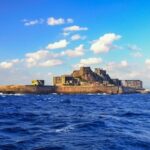
★ 5.0 · 53 reviews - Visit Gunkanjima Island (Battleship Island) in Nagasaki
★ 4.0 · 32 reviews
Why this private Nagasaki day beats the cruise shuffle
If you have only a few hours in Nagasaki, you need two things: smart routing and someone who can explain what you are actually looking at. This tour gives you both. A private car means fewer wasted minutes waiting, and a licensed English speaking guide means you are not trying to interpret every plaque with Google translate while you are walking uphill.
Nagasaki is a small city with a big story. One part of that story is global trade and foreign communities on the hills. Another part is the forced separation system of Dejima. Another part is faith, persecution, and survival. When you cover those in a compressed day, a good guide turns it from a list of monuments into a connected narrative you can feel.
The best part is the customization. The day is not a fixed checklist. You choose 3 to 4 attractions from a list like Glover Garden, Dejima, Urakami Cathedral, Oura Church, and the Peace Park area. That is key, because Nagasaki rewards focus.
Price and what you actually get for $598.53 per group
The price is $598.53 per group (up to 2) for about 6 hours, which includes a licensed local English speaking guide and a private vehicle. If you split it between two people, you are effectively paying about $299 each for a private day with transportation and expert interpretation.
That cost can feel steep if you compare it to a bus tour. But if you value comfort, a calm pace, and someone who can answer your questions, it is easier to justify. You are also not paying entrance fees inside that number, so your plan should include some extra spending for museums and churches that charge.
In plain terms, this tour is best when you want a high-quality day rather than maximum quantity. If you try to see everything, the customization becomes a limitation. If you pick what matters, it becomes the whole point.
How the 6-hour schedule really works
The day is built around 3 to 4 main stops, with a few more options on the menu. Typical stop times in the plan range from about 15 minutes to around an hour at places like Glover Garden. That means you can usually do one viewpoint, one or two major cultural sites, and then end with something reflective like the Peace Park and Atomic Bomb Museum.
Here is the practical reality: Nagasaki has hills and walking. Even when the car does the heavy lifting, your comfort depends on how your chosen sights line up. If you pick a hilltop viewpoint plus multiple temple areas, wear shoes you trust and pace yourself. If you pick more flat downtown sights, you will feel the schedule as lighter.
Also, you have to accept the reality of ticketed attractions. Many of the stops listed here have entrance fees not included, and the tour does not include lunch. I recommend treating the tour as a guided sightseeing base, then adding food and tickets based on your exact route.
- Taste Local Life: Nagasaki’s Historical Street Walking Tour★ 5.0 · 27 reviews
- Nagasaki Street Food Adventure: Private Walking Tour with a Local★ 5.0 · 26 reviews
Inasayama Observation Deck: the Nagasaki “big picture” moment
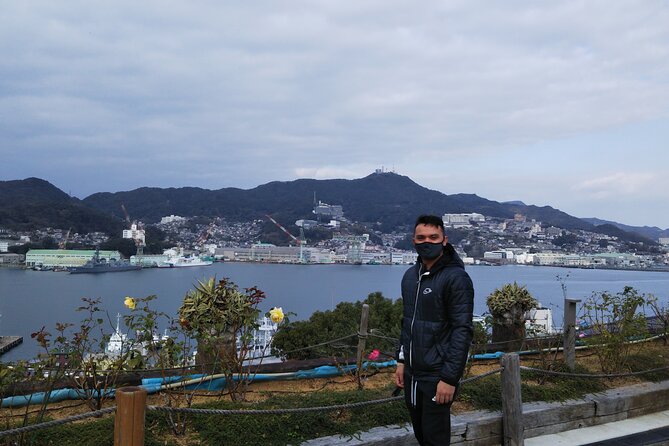
Start your day with a viewpoint at Mount Inasa, the Inasayama Observation Deck area. The deck is on a mountain close to the city center, and you can reach it by ropeway, bus, or car. The time block is short, about 20 minutes, because the real goal is the view, not a long hike.
What you’ll get from this stop is orientation. Nagasaki’s geography is part of the story, and once you see the shape of the city from above, the later sites make more sense. If you are there around clear skies, you will get a much better payoff. If the weather is gray or rainy, it is still worthwhile, but set expectations.
One practical tip: the route to the summit can be affected by conditions. Even when weather is unusual, guides keep the day moving in a sensible way. You will still come away with the city context you need.
Glover Garden: Western trading mansions and a hilltop story
Glover Garden is an open-air museum area on a hillside. Plan on around an hour, and keep your camera ready. This is where Nagasaki’s foreign trade era becomes visible in buildings and layout, not just in books.
Why it matters: it explains how foreign residents lived, traded, and left an architectural imprint on the city. It is also a great “palette cleanser” before you switch gears to Dejima and the faith sites. You get the sense that Nagasaki was not just a port for ships. It was a place where different worlds actually overlapped.
Admission is not included, so expect to pay if you want to go inside. If you are trying to save money, you can still appreciate the exterior area, but the full value comes when you step into the museum features.
The Chinese temple belt: Sofukuji, Kofukuji, and Confucius traditions
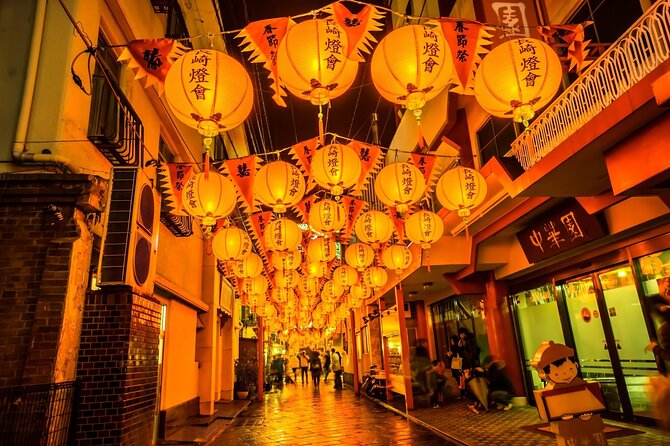
Nagasaki’s Chinese influence is not a side note. It is built into the city structure. This tour includes several Chinese-founded or Chinese-associated sites, usually with short time blocks around 15 to 20 minutes each.
Sofukuji Temple
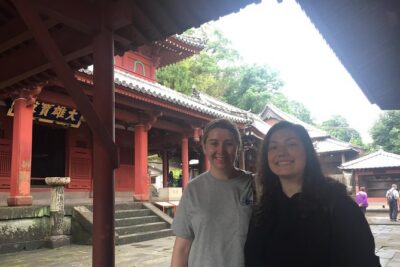
Sofukuji Temple belongs to the Obaku school of Zen Buddhism and was originally built in 1629 for Nagasaki’s Chinese residents. The design ties into Chinese architectural heritage. Even if you spend only about 20 minutes, you will feel the shift from the port-and-trade story into the spiritual and community side.
Kofukuji Temple
Kofukuji Temple is described as the oldest and one of the most important Chinese-founded temples in Nagasaki, located in Teramachi, Temple Town. It has connections tied to the Obaku tradition and gives you a sense of continuity, not a one-off stop.
Confucian Temple, the Chinese Museum of Successive Generations
This is Nagasaki Confucius Shrine. It is one of only a handful of Confucius shrines in Japan, and the site is associated with Nagasaki’s Chinese community. If you care about how communities preserve identity across generations, this stop gives you that angle without being overly abstract.
In practice, these temple stops work best when you do them with a guide. You will understand what you are seeing, including why the layout and details matter. Without that, a lot can blur together in a busy day.
Dejima: the controlled-contact story that still lingers
Dejima is the man-made island built in 1636 to segregate Portuguese residents from Japanese society and control missionary activity. Time allotment is about 50 minutes in the plan, which tells you the intent: this is not a quick photo stop.
Why it hits: Dejima turns the port story into a lesson in power and restriction. Nagasaki’s international presence was not simply open exchange. It was carefully managed, and Dejima represents that management in a physical way.
If you are interested in how trade and religion collided, Dejima is one of the most important stops you can choose. If you only have time for 3 main sites, this is often a top pick.
Catholic landmarks: Urakami Cathedral and Oura Church
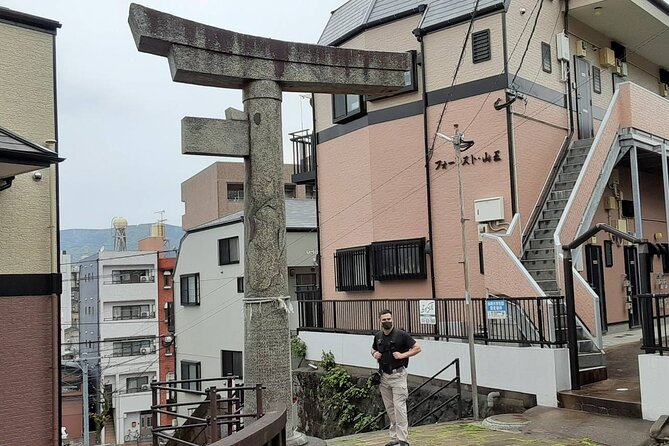
Nagasaki is a major center for Christianity in Japan, and this tour includes two striking Catholic churches tied to different eras.
Urakami Cathedral
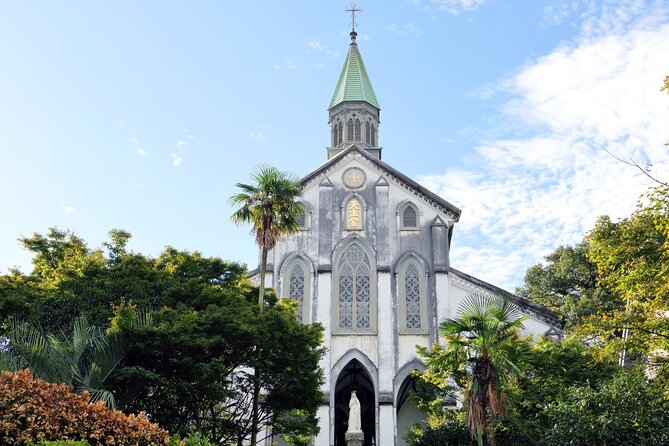
Urakami Cathedral is a working church today, housed in a large European style red brick building. Its history includes tragedy, and that weight is part of why you do not want to rush through this one. The plan gives you about 20 minutes, but with a guide’s context, it can feel longer emotionally.
Oura Church
Oura Church dates to the late Edo period, built around 1864 by a French missionary for a growing community of foreign merchants. If you want the Christianity story that sits alongside trade and foreign presence, Oura Church gives you that connection.
Both stops have entrance fees not included. So plan for the realistic cost of honoring the sites fully.
Meganebashi and the Dutch Slope: river crossing and foreign trader streets
After temples and big historical sites, it is nice to have a lighter stroll. Two downtown style stops do that while still keeping the Nagasaki flavor.
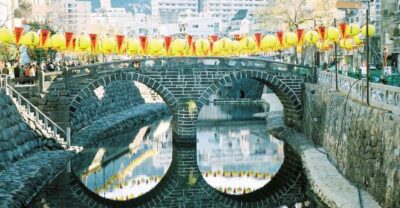
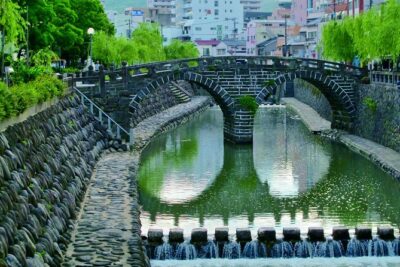
Spectacles Bridge, Meganebashi
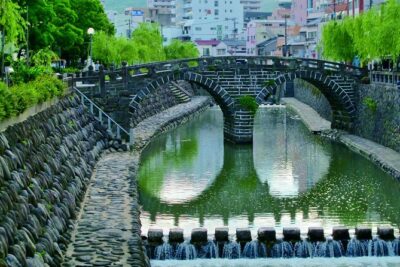
Meganebashi is a stone bridge spanning the Nakashima River, with a name that comes from its resemblance to spectacles. It is short on time, about 15 minutes, and admission is free.
I like this stop because it is easy. You do not need a big ticket purchase to feel the city’s character. It also sets you up for nearby downtown walking.
The Dutch Slope, Oranda-zaka
Oranda-zaka is a stone paved street leading up a hillside where foreign traders lived after the port opened to foreign trade in 1859. This is the kind of place where you get atmosphere more than information, but a guide can connect it back to the larger trading era and how the city changed.
If your schedule is tight, these are good choices when you want culture without draining your energy.
Nagasaki’s peace core: Peace Park and the Atomic Bomb Museum
This is the emotional center of the city, and the tour gives it the attention it deserves.
Nagasaki Peace Park
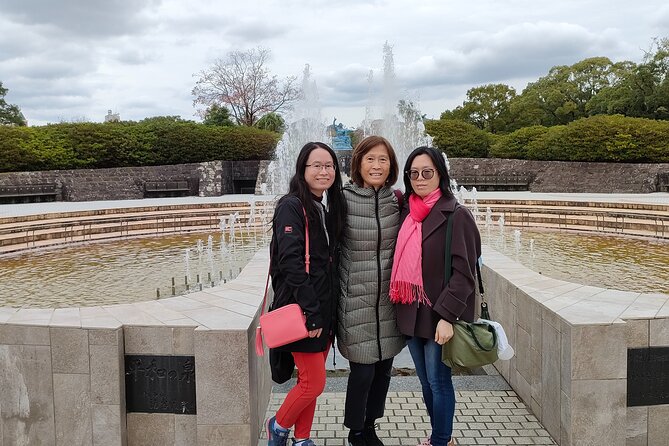
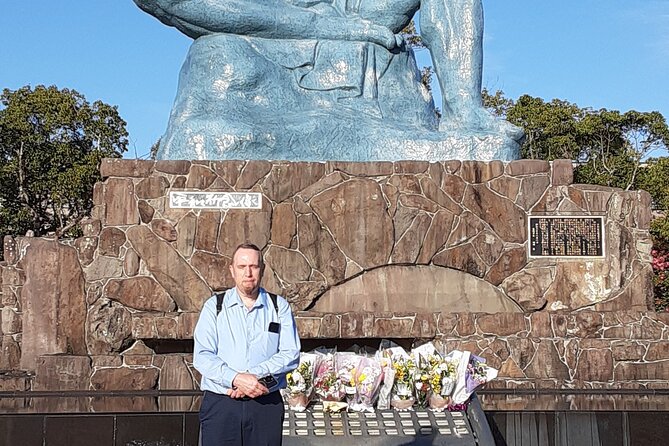
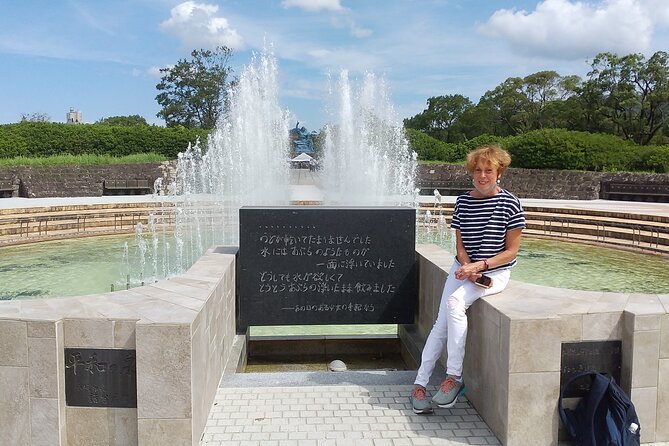
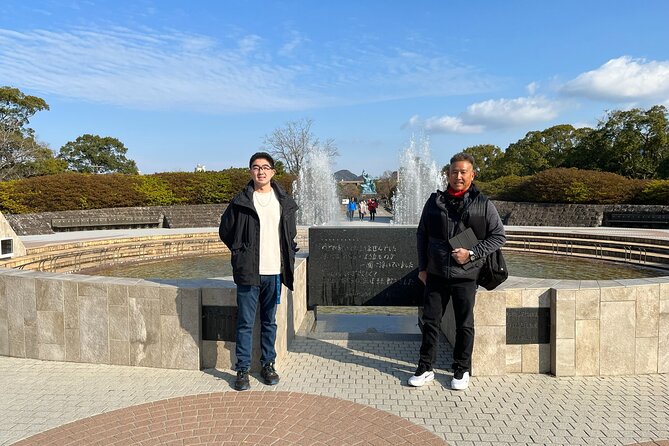
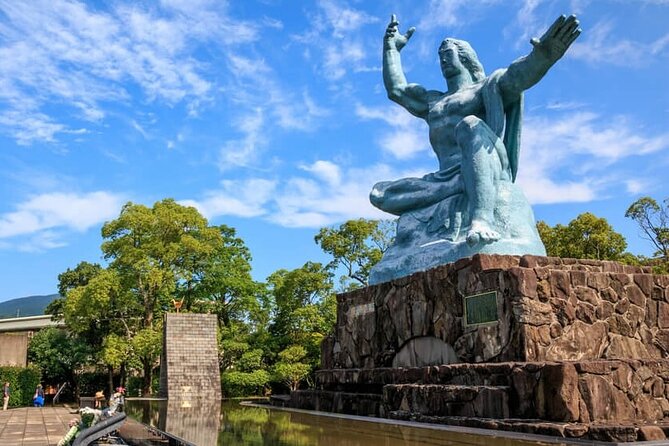
Peace Park is built near the atomic bomb hypocenter and commemorates victims of the 1945 bombing while promoting global peace. It is about 15 minutes, and admission is free. The Peace Statue in the center symbolizes hope and remembrance.
Nagasaki Atomic Bomb Museum
The Atomic Bomb Museum is nearby and documents devastation from August 9, 1945 and the city’s recovery. Time allotment is about 15 minutes in the plan, but in real life, this can be the stop where you slow down. This is also a place where many guides share personal context.
In at least one memorable case, the guide Yoshi shared personal family history connected to that day. The point was not shock value. It was to help you connect facts to a human story.
Also, if you are sensitive to heavy topics, choose your pace. You do not have to sprint through. A good guide will match the tone to your group and answer questions without turning it into a lecture.
Nagasaki Museum of History and Culture: when you want facts fast
If you like museums but do not want a half-day commitment, the Nagasaki Museum of History and Culture is designed for that. It is a modern museum with a tight time block, about 20 minutes in the plan.
Admission is not included, but the museum format can give you a clean overview of how Nagasaki connects to international trade and broader change. For people who hate wandering without a map, this stop can be a relief.
If you already feel you know the story, you may prefer to use that time for another church or viewpoint. If you want a framework first, this museum is a smart pick.
Best places to linger if you want photos and meaning
The itinerary list is broad, and you might only pick 3 to 4 sites. Here is how I would prioritize based on the tour’s balance:
- If you want atmosphere and city orientation: Inasayama Observation Deck plus Meganebashi
- If you want the “international contact” theme: Dejima plus Glover Garden
- If you want Christianity and its history in Nagasaki: Urakami Cathedral and Oura Church
- If you want identity and religious community: Sofukuji, Kofukuji, and the Confucius shrine
- If you want the emotionally central part of Nagasaki: Peace Park and Atomic Bomb Museum
Because this tour is customizable, your guide can help you choose the combination that prevents repeated backtracking. One guide, Hiromi, even made sure a group had extra time at the Atomic Bomb Museum when that was the priority.
The guide experience: what makes it feel personal
The strongest theme across experiences is that the guide is not just reciting facts. Guides handle logistics, explain what you are seeing, and adapt to your questions in the moment.
Some memorable examples that show the style you can expect:
- Rikako has helped make the day work even when weather got unusual, keeping things calm and organized.
- Yoshi, a Nagasaki born and raised guide, was praised for flexible itinerary planning and strong English, and shared personal family context around the atomic bombing.
- Hiromi was noted for giving extra time at the Atomic Bomb Museum and patiently explaining details.
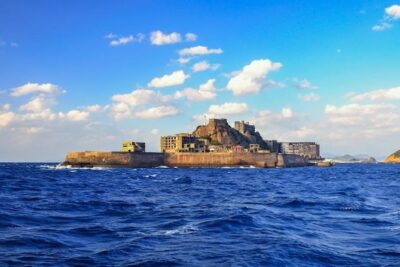
- Guides have also helped with arrangements like getting tickets in advance for Battleship Island related plans, if you want that add-on.
And yes, there have been thoughtful touches like handmade crane gifts in some tours. One group even got gift bags and a surprise teaching moment with origami. Those are not the main reason to book, but they do tell you the experience is human.
When this tour is the best fit, and when it is not
This works best for you if:
- You want a private day with a dedicated guide and comfort by car
- You care about context at major sites, not just pictures
- You want to choose 3 to 4 anchors, then let the guide shape the rest
- You are in town briefly, such as on a short port stop
It may not be the best fit if:
- You want to check off lots of paid attractions and churches with no planning
- You have a strict budget for entrance fees, because many chosen stops have fees not included
- You expect lunch to be included
- You need a very specific type of child seat, since rear-facing car seats are not available and seating options are limited
Should you book this Nagasaki tour?
If your goal is a meaningful, well-paced Nagasaki day that makes the city’s mixed cultural threads click into place, I would book it. The private vehicle and licensed English speaking guide are the difference between seeing Nagasaki and understanding it. Customization is the real win, because it stops you from wasting time on the wrong priorities.
I would especially book this if you care about the big emotional center, the Peace Park and Atomic Bomb Museum area. A good guide can turn that into understanding, not just attendance.
If you are the type who wants to roam freely without structure, you might find the 3 to 4 stop format feels limiting. But if you want a smart day with context, this is a strong choice for two people who want the best use of their time.
FAQ
How long is the Nagasaki private day tour?
The duration is about 6 hours.
Is this tour private or shared?
It is a private tour, so only your group participates.
How many attractions can I choose?
You choose 3 to 4 sites from the attraction list for your tour.
Does the tour include a licensed English speaking guide?
Yes. The tour includes a licensed local English speaking guide.
Do I get pickup?
Pickup is offered.
Are entrance fees included?
No. Entrance fees are not included. Lunch is also not included.
What about tickets for the Inasayama Observation Deck?
The Inasayama Observation Deck is listed with an admission ticket free.
Is Meganebashi Spectacles Bridge free to visit?
Yes. Meganebashi is listed as free.
What is included in the price?
The included items are the licensed local English speaking guide, a private vehicle, and a customizable tour of your selected 3 to 4 sites.
Can I cancel for a refund?
Yes. You can cancel up to 24 hours in advance for a full refund.
Licensed Guides on the Same Ground
Nagasaki and Its Memorial Sites
Newest Nagasaki write-ups from the Loving Japan desk
Nagasaki Memorial Sites and City Tours, side by side.
 ★ 4.7Private Walking Tour with a LocalFrom $8279 reviews
 ★ 5.0Nagasaki Full-Day Private Tour with Government-Licensed GuideFrom $15566 reviews
 ★ 5.0Nagasaki Half-Day Private Tour with Government-Licensed GuideFrom $12253 reviews
 ★ 4.0Visit Gunkanjima Island (Battleship Island) in NagasakiFrom $7132 reviews
 ★ 5.0Taste Local Life: Nagasaki’s Historical Street Walking TourFrom $10527 reviews
 ★ 5.0Nagasaki Street Food Adventure: Private Walking Tour with a LocalFrom $22826 reviews
Filed on these lists too