
REVIEW · NAGASAKI MEMORIAL SITES AND CITY TOURS
Taste Local Life: Nagasaki’s Historical Street Walking Tour
Nagasaki’s past is best seen one street at a time. This half-day historical walking tour links temple lanes and old shopping streets, then finishes at the famous view from Megane-bashi (Spectacles Bridge). It’s designed for an easy morning pace, with a small group and a guide who points out the details you’d miss on your own.
I like the focus on places with real architectural and cultural meaning, especially Sofukuji and Kofukuji temples, not just scenery. I also like the hands-on flow, tram ride, walking, and short stop durations that keep the group moving without feeling rushed, plus the small group of up to 8.
One thing to consider is that you’ll be on your feet for about 3.5 hours and you should plan for walking on streets that can be crowded around shopping areas. If you have mobility limits, wear supportive shoes and be ready to take it at a steady walking pace.
In This Review
- Key Points Before You Go
- Walking Routes That Actually Make Sense in Nagasaki
- Meeting Near the Center, Then a Tram to Sofukuji
- Stop 1: Nagasaki Electric Tramway Head Office (A Practical City Primer)
- Sofukuji Temple: Chinese-Style Nanchuan Architecture in 1629
- Kofukuji Temple: Beans, Calligraphy, and Everyday Origins
- Motenashiya and Megane-bashi: Tourist Info Meets Iconic Stonework
- Hamamachi Arcade: Covered Shopping Lanes for Street-Level Nagasaki
- Small Group, Real Guide Time, and Hearing the Details
- Price and Value: What $105.42 Buys You
- Timing: Why the 3.5 Hours Feel Like a Gift
- Who This Tour Suits Best
- Booking Advice Before You Commit
- Should You Book This Nagasaki Historical Street Walking Tour?
- FAQ
- What is the duration of the Nagasaki historical street walking tour?
- How much does the tour cost?
- Where does the tour start and end?
- How many people are in the group?
- What is included in the price?
- Are food and drinks included?
- Can I get a full refund if I cancel?
Key Points Before You Go
- Up to 8 people means more guide time and easier conversations as you walk.
- Sofukuji and Kofukuji bring you face to face with Nagasaki’s Chinese-influenced temple story.
- Tram ride included via Nagasaki Electric Tramway Head Office makes getting around part of the experience.
- Spectacles Bridge (Megane-bashi) is built into the route, with time to pause for the view.
- Hamamachi covered arcade gives you a break from the weather while you look around street-level Nagasaki life.
- Half-day format leaves you breathing room after the tour for your own wandering.
Further guided walks through Nagasaki and its memorial sites
- Nagasaki: Private Walking Tour with a Local
★ 4.7 · 79 reviews - Nagasaki Full-Day Private Tour with Government-Licensed Guide
★ 5.0 · 66 reviews - Nagasaki Half-Day Private Tour with Government-Licensed Guide
★ 5.0 · 53 reviews - Visit Gunkanjima Island (Battleship Island) in Nagasaki
★ 4.0 · 32 reviews
Walking Routes That Actually Make Sense in Nagasaki
Nagasaki is one of those cities where the street layout matters. This tour builds a logical loop through Teramachi-dori (Temple Street) and Marunouchi Naka-dori Shopping Street, so the morning doesn’t feel like a random grab bag of stops. Instead, you get a progression: temple architecture, then shopping lanes, then that iconic bridge view.
The schedule also works well for first-time visitors. You get the structured highlights in about 3 hours 30 minutes, then you’re free afterward to continue at your own pace from the same central area. I like that setup because it avoids the all-day trap where you spend the whole time only doing the tour.
And because it’s a small-group experience, the guide can slow down when something matters, like a gate detail or a street connection to the next stop. That’s the kind of thing that turns a checklist into a story.
Meeting Near the Center, Then a Tram to Sofukuji
The tour starts at Hotel New Nagasaki, 14-5 Daikokumachi, Nagasaki at 9:00 am, and it ends back at the meeting point. The route quickly gets you into “Nagasaki mode,” including a ride connected to the Nagasaki Electric Tramway Head Office, with an admission ticket included.
Why that matters: a tram in Nagasaki is not just transport, it’s part of how locals move. The stop is designed as an easy way to understand the city’s rhythms early, and you’ll be using that knowledge later when you wander on your own. Also, signs are described as clear, which is a practical comfort if you’re pairing your tour with independent exploring.
Plan to arrive a bit early. The tour is timed, and the guide keeps things on schedule, so starting on time helps you get the full experience without cutting off the temple stops.
Stop 1: Nagasaki Electric Tramway Head Office (A Practical City Primer)
This is a short introduction, about 10 minutes, and it comes with an admission ticket included. You’ll get oriented to the transit scene right away, and you’ll see how the tram fits into the city’s layout.
Even if you already know Japan’s transit basics, this helps because Nagasaki has its own feel. I like that the tour doesn’t treat transit as background noise. Instead, it turns the tram into a tiny first lesson: how the city moves, how stations connect, and how easy it can be to hop around with confidence.
If you’re the type who likes to take control of your itinerary, this start also sets you up to do the same after the tour. You’ll have fewer “how do I get there” moments later.
- Taste Local Life: Nagasaki’s Historical Street Walking Tour★ 5.0 · 27 reviews
- Nagasaki Street Food Adventure: Private Walking Tour with a Local★ 5.0 · 26 reviews
Sofukuji Temple: Chinese-Style Nanchuan Architecture in 1629
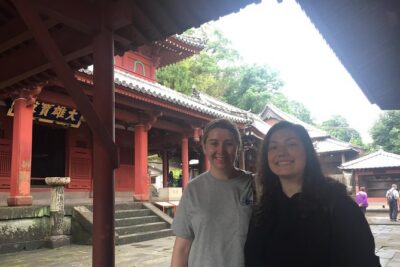
Sofukuji is where the tour’s cultural tone locks in. You spend about 35 minutes here, and admission is included. Sofukuji is a Rinzai temple built in the Nanchuan architectural style of China in 1629.
That Chinese-style detail is not just trivia. It’s a reason the temple feels different from what many people expect when they hear “Japanese temple.” If you pay attention to gates and halls as you walk through, you’ll start spotting how architecture can carry cross-border influence across centuries.
The tour calls out the Daimon Gate and the Daeleon Hall (the Main Hall), which is designated as a National Important Cultural Property of National Treasures. That’s a lot of official weight, and you’ll feel it in the way the space is treated and preserved.
One practical tip: temples are quieter than shopping streets, but they can still be busy during morning hours. Keep your phone ready for photos, and also pause to look slowly. The best part here is not rushing between photo angles.
Kofukuji Temple: Beans, Calligraphy, and Everyday Origins
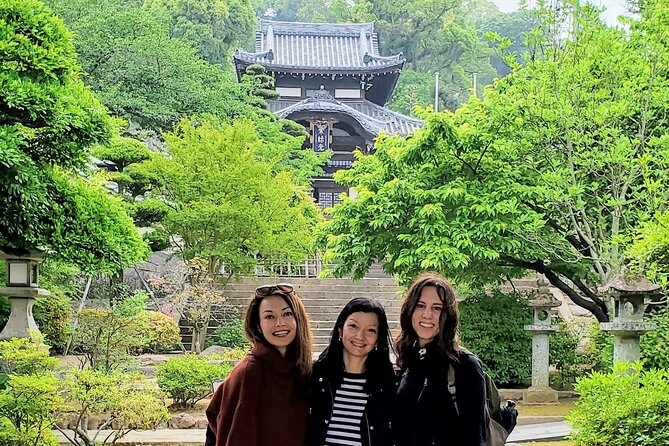
Kofukuji takes about 50 minutes, with admission included. This is another Rinzai temple stop, but it’s introduced through specific origins: it’s described as the birthplace of Japanese kidney beans, Mincho kanji characters, Kofukuji dining tables, and more.
I love this angle because it makes the temple feel connected to real life. Instead of treating the site as “just a place to visit,” the tour frames it as a source of things people use. That’s a big reason this kind of temple tour can feel more meaningful than a museum-only morning.
After Kofukuji, the plan shifts away from the temple grounds into the shopping street portion of the day, described as the middle-aged shopping street with the oldest history of Nagasaki. You’ll get a transition that feels natural: sacred spaces first, then the street life that grew alongside it.
If you’re someone who enjoys stories you can repeat later, this is a stop to linger at. The origins are the kind of detail that sticks when you hear them explained clearly while standing in the right place.
Motenashiya and Megane-bashi: Tourist Info Meets Iconic Stonework
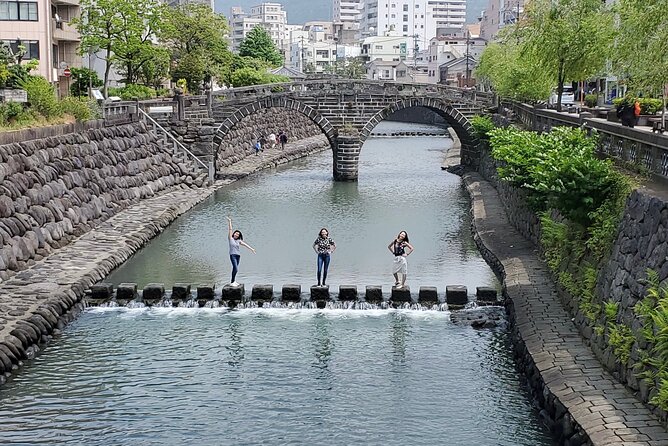
You get a short 15-minute stop at Motenashiya, described as a tourist information center and souvenir shop operated by the landlady, located near Megane Bridge. The tour highlights its practical usefulness, like maps and touring materials, which can be a smart way to decide what to do next without guessing.
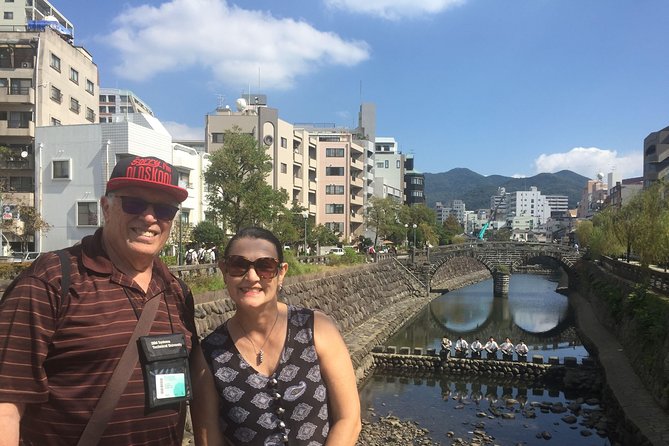
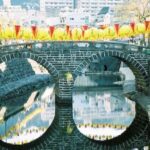
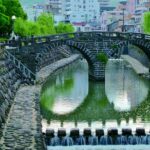
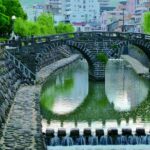
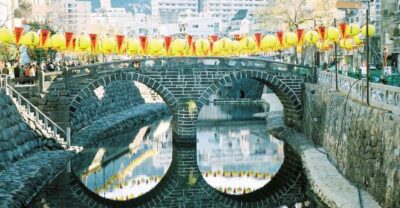
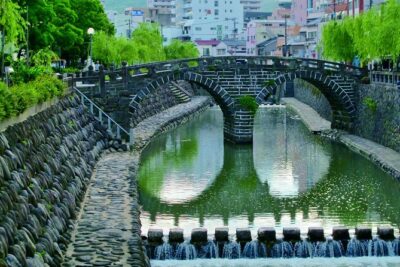
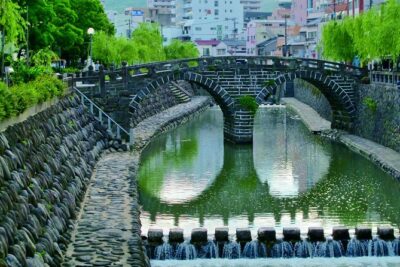
Then comes Spectacles Bridge (Meganebashi), about 30 minutes and admission-free. The bridge is described as the oldest arcuate stone bridge in existence, born in 1634. It’s also noted as being considered part of the Kofukuji entrance for native Chinese during that time. The stone wall is described as heart-shaped, which is exactly the sort of small visual detail worth slowing down for.
This is also where the tour earns its finishing momentum. You’re not just looking at one building, you’re getting a view that connects streets and history. If you like photo spots, plan to take a couple, then take a breath and actually look.
Small-group tip here: because the group is capped at 8, you’re less likely to have to wait for the perfect viewing angle. Still, if it’s crowded, be patient. People come for that bridge photo.
Hamamachi Arcade: Covered Shopping Lanes for Street-Level Nagasaki
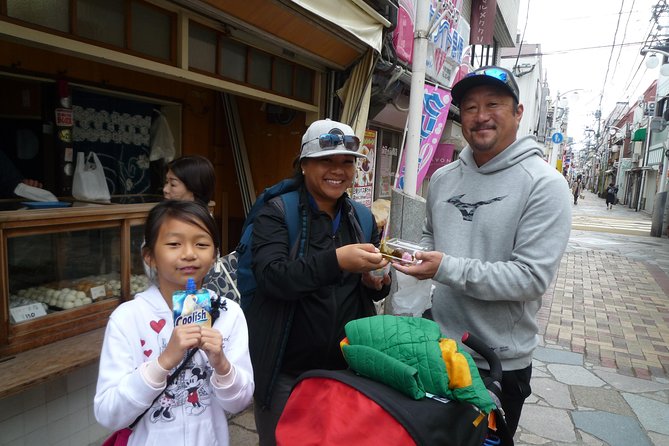
After the bridge, the route enters Hamamachi Arcade (Hamanmachi Shopping Street) for about 25 minutes. This part is admission-free, and it’s where Nagasaki becomes tactile.
The arcade is described as a long covered shopping area that stretches for hundreds of meters, with different directions and decorations like local emblems and colorful banners. I like this stop because it gives you a reality check. After temples, it’s easy to feel like you’re traveling through history only. The arcade reminds you that the city still lives here.
You may also notice snack stands and small shops along the way, since the tour is built around Nagasaki food and culture. Food is not included in the price, but the structure of the day makes it easy to decide what to try on your own right here.
Practical advice: because it’s a covered arcade, it’s good in light rain or glare. Wear shoes that handle indoor-outdoor transitions, and keep a little cash handy just in case a shop has older payment habits.
Small Group, Real Guide Time, and Hearing the Details
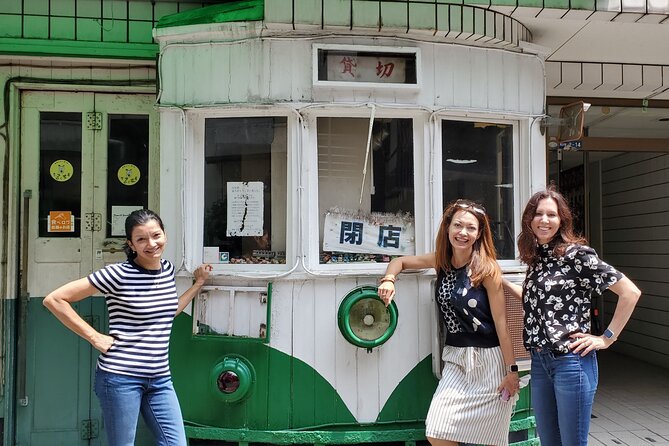
A major strength of this experience is that it’s capped at 8 people. That matters more than it sounds. It’s not just comfort, it changes how the walk works.
With a small group, the guide can pace you for temple entry, explain cultural details while you’re standing in the exact spot, and still keep everyone together. It also helps if you have questions. You’re less likely to feel like you’re interrupting a lecture, and more like you’re part of the day’s flow.
English quality is another recurring theme. Guides including Yuko, Tomomi, Yuki, Masaaki, and Masa are described as friendly, professional, and energetic, with strong command of English. Some feedback also suggested that group audio can be hard to hear in busy areas, so if your hearing needs extra help, choose a spot near the front of the group and don’t be shy about asking the guide to repeat a key point.
Also, the tour has a “keep it moving” rhythm. It’s set up as a half-day walk, so you won’t get lost in long detours. For many people, that’s exactly what you want.
Price and Value: What $105.42 Buys You
The price is $105.42 per person, and that’s not a “cheap walk.” But it does buy real value when you break down what’s included.
What’s included:
- a professional guide
- local taxes
- admission tickets on the tram-related stop and the two main temples (Sofukuji and Kofukuji)
What’s not included:
- food and drinks
- hotel pickup or drop-off beyond the start/end meeting point
- any private transportation like taxi or car
For me, the value comes from pairing the time-saving logistics with actual paid access. Temples can be quick on your own, but guided context is what turns them into “I get it now” stops. Here, you’re also paying for the small-group experience, which usually costs more than larger walking tours.
If you plan to visit the temples anyway, this price looks more reasonable. If you mostly want a casual wander, you might decide to do it on your own. But if you want context and a guided route built around Nagasaki’s key old streets and sites, this is a fair match.
One more practical note: the experience is booked about 101 days in advance on average, which suggests it fills up. If you’re traveling during a busy season, reserve early so you aren’t forced into a later date.
Timing: Why the 3.5 Hours Feel Like a Gift
The tour runs about 3 hours 30 minutes. That’s long enough to see real content, but short enough that your brain isn’t fried by midday.
A big part of the pacing is the stop lengths: around 10 minutes for the tram-related intro, then 35 minutes at Sofukuji, 50 minutes at Kofukuji, 15 minutes at Motenashiya, 30 minutes at Spectacles Bridge, and 25 minutes at Hamamachi Arcade. Those aren’t random durations. They’re designed so you get enough time for photos and explanations without turning it into a full-day commitment.
I also like the timing because the end is near where you started, so you’re not stranded far from your next plan. You can eat, shop, or keep walking immediately after the tour.
Who This Tour Suits Best
This is a great choice if you want an efficient morning that connects Nagasaki’s street and temple identity. The route is built for visitors who like walking, but not for people who want long museum-style stays.
You should join if you:
- enjoy cultural details and architectural differences
- like small groups and personal guide attention
- want a plan that includes a mix of temples, bridges, and old shopping streets
You might choose something else if you:
- prefer fully independent sightseeing with no set path
- have very limited mobility, because the tour requires moderate physical fitness and comfortable walking shoes
Booking Advice Before You Commit
If you’re planning this for a trip, I’d treat it like a morning appointment. It starts at 9:00 am, and you’ll want your day to flow smoothly around it. Wear shoes you trust, because you’ll be walking through streets and arcade areas.
If you’re traveling in a group, check for group discounts, since they’re listed as a feature. Also, plan around the fact that the tour uses a mobile ticket, which is usually easy, but it’s still best to have it accessible without digging through apps at the last minute.
Finally, if you’re the type who enjoys repeating the day’s highlights later, take one “anchor” photo at Megane-bashi, then one at each temple entrance. Those three images are enough to help you remember what you saw and why it mattered.
Should You Book This Nagasaki Historical Street Walking Tour?
Book it if you want Nagasaki in one focused morning, temples plus old street life, with admission included where it counts and a guide who can explain what you’re looking at. The small-group size and the variety of stops make it feel more personal than a typical big-city sightseeing walk.
Skip it or pair it with a different plan if you mainly want a free-form stroll, because you’ll be walking on a set route for about 3.5 hours. Also, if you’re sensitive to walking crowds near shopping areas, pick shoes for comfort and plan to move with the group.
If your goal is understanding Nagasaki, not just photographing it, this is the kind of tour that pays off fast.
FAQ
What is the duration of the Nagasaki historical street walking tour?
It runs for about 3 hours 30 minutes.
How much does the tour cost?
The price is $105.42 per person.
Where does the tour start and end?
It starts at Hotel New Nagasaki, 14-5 Daikokumachi, Nagasaki, 850-0057, Japan and ends back at the same meeting point.
How many people are in the group?
The tour is a small-group experience limited to up to 8 people.
What is included in the price?
The price includes a professional guide and local taxes, and admission tickets are included for the tram-related stop, Sofukuji Temple, and Kofukuji Temple.
Are food and drinks included?
No. Food and drinks are not included.
Can I get a full refund if I cancel?
Yes. You can cancel up to 24 hours in advance for a full refund.
Nagasaki and Its Memorial Sites
Newest Nagasaki write-ups from the Loving Japan desk
Nagasaki Memorial Sites and City Tours, side by side.
 ★ 4.7Private Walking Tour with a LocalFrom $8279 reviews
 ★ 5.0Nagasaki Full-Day Private Tour with Government-Licensed GuideFrom $15566 reviews
 ★ 5.0Nagasaki Half-Day Private Tour with Government-Licensed GuideFrom $12253 reviews
 ★ 4.0Visit Gunkanjima Island (Battleship Island) in NagasakiFrom $7132 reviews
 ★ 5.0Nagasaki Full Day Tour with Licensed Guide and VehicleFrom $59827 reviews
 ★ 5.0Nagasaki Street Food Adventure: Private Walking Tour with a LocalFrom $22826 reviews
Filed on these lists too