
REVIEW · NAGASAKI MEMORIAL SITES AND CITY TOURS
Nagasaki Full-Day Private Tour with Government-Licensed Guide
Nagasaki history fits in one walkable day. This full-day private tour lets you choose 3 to 4 stops for a tailored route, with hotel pickup on foot and a guide who connects the dots from site to site.
I especially like the freedom to shape the day around your interests, not a fixed checklist. You also get to move with locals via public transit, so the city does not feel like a museum hallway.
I’m also a fan of how the guides bring the place down to earth, with real conversation and practical pacing. I’ve seen styles from Hiro, Mei, Yoko, Yoshi, Minnie (Hiromi), and Norah, including quick explanations, fun stop-by-stop quizzes, and getting you where you want fast.
One consideration: this is a walking and public transport day, and there’s no private vehicle, so it may be tough if you want to avoid hills or long transit stretches.
In This Review
- Key Things to Know Before You Go
- How the 6-hour private tour really works in Nagasaki
- Price and Logistics
- Choosing your 3 to 4 stops: Peace, ports, temples, and views
- Peace Park and the Nagasaki Atomic Bomb Museum: how the day gets serious
- Mount Inasa and the view that frames Nagasaki
- Glover Garden, Dejima, and the foreign-settlement storyline
- Sofukuji and Kofukuji: Obaku temples and Chinese roots in Nagasaki
- Urakami Cathedral and Oura Church: European-style Catholic history
- City corners that steal your time: Meganebashi, lantern tradition, and art
- Guides make the difference: Hiro, Mei, Yoko, Yoshi, Minnie, and Norah
- What to expect on the ground: pace, transit, and time budgeting
- Should you book this Nagasaki day?
- FAQ
- What is the duration of the Nagasaki private tour?
- Is this a private tour or shared group tour?
- How many stops can I choose during the tour?
- Are entrance fees included?
- Do I get hotel pickup?
- Is transportation included?
- Is free cancellation available?
- Are service animals allowed?
Key Things to Know Before You Go
- Government-licensed, local English-speaking guides handle the history and the logistics.
- Customize 3 to 4 sites from a menu of major Peace, Christian, and foreign-settlement locations.
- Pickup is on foot from your Nagasaki hotel area, and the day runs on walking plus public transit.
- Some stops are free (Peace Park, Inasayama Observation Deck, Nagasaki Kunchi/Lantern Festival) while many temples and churches have paid entry.
- Guides often help you prioritize fast, so you can fit multiple highlights into a single 6-hour block.
Further guided walks through Nagasaki and its memorial sites
- Nagasaki: Private Walking Tour with a Local
★ 4.7 · 79 reviews - Nagasaki Full-Day Private Tour with Government-Licensed Guide
★ 5.0 · 66 reviews - Nagasaki Half-Day Private Tour with Government-Licensed Guide
★ 5.0 · 53 reviews - Visit Gunkanjima Island (Battleship Island) in Nagasaki
★ 4.0 · 32 reviews
How the 6-hour private tour really works in Nagasaki
Think of this day as a guided “choose-your-own” Nagasaki best-of route. You’ll spend about 6 hours on foot and by public transport, with the guide meeting you within a designated area. The tour is private, so it’s just your party, not a mixed crowd.
Pickup is offered, but in a practical way: you meet your guide near your hotel on foot. That matters because it nudges you into the real rhythm of Nagasaki, trams, buses, and short walks that keep the day moving. One review-style detail I like is how guides can get you around quickly, including using trams and buses to connect parts of the city.
There’s also a pricing point worth thinking about. At $155.22 per person, you’re paying mainly for (1) a government-licensed guide and (2) the flexibility to select your own 3 to 4 stops from a solid list. If you were doing this alone, you would still spend time researching, mapping, and translating, and you’d probably miss little connections a good guide will point out.
Price and Logistics
This tour includes:
- A licensed local English-speaking guide
- A customizable walking plan of 3 to 4 sites from the available options
- Meet up on foot in the Nagasaki area
This tour does not include:
- Transportation fees
- Entrance fees
- Lunch
- A private vehicle
- You cannot combine multiple tour groups
- Guide entry fees are only covered for sights listed as included in the selection
Choosing your 3 to 4 stops: Peace, ports, temples, and views
The most important decision is choosing the balance of themes. The site list is strong, but the day is built for focus, not “see everything.” If you try to cram too much, you’ll feel rushed. If you pick with intention, you get a day that feels like a story.
Here’s a simple way I’d choose:
- If you want WWII remembrance, prioritize Nagasaki Peace Park plus Nagasaki Atomic Bomb Museum.
- If you want views and photo moments, add Inasayama Observation Deck.
- If you want foreign settlement and port history, pick from Glover Garden, Dejima, and the Dutch Slope area.
- If you want Chinese heritage and Zen/Obaku temples, choose Sofukuji Temple and/or Kofukuji Temple, plus the Confucius Shrine.
- If you want Christian heritage, combine Urakami Cathedral, Oura Church, and the Twenty-Six Christian Martyrs Monument.
A practical note on admissions: Peace Park, Inasayama Observation Deck, and Nagasaki Lantern Festival are listed as free. Many other stops are marked as not included, so budget for entrance fees and keep time for lines if you hit a busy hour.
- Taste Local Life: Nagasaki’s Historical Street Walking Tour★ 5.0 · 27 reviews
- Nagasaki Street Food Adventure: Private Walking Tour with a Local★ 5.0 · 26 reviews
Peace Park and the Nagasaki Atomic Bomb Museum: how the day gets serious
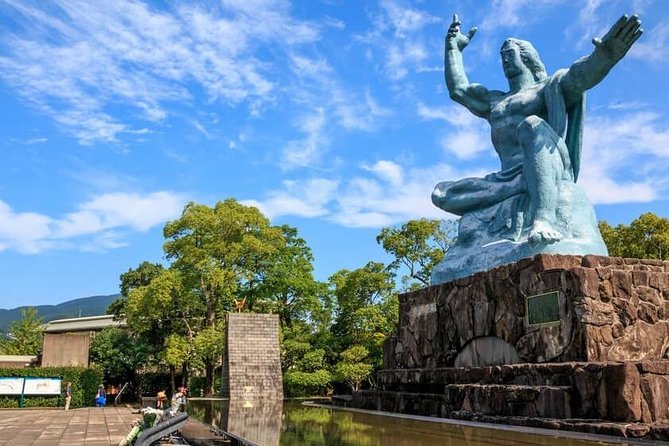
Start with Nagasaki Peace Park if you want the tone set early. It’s a calm place that commemorates the atomic bombing on August 9, 1945, which destroyed a large part of the city and caused enormous loss of life. The stop time is listed at about 15 minutes, and entry is free, so it works well even on a packed route.
If you want more context, the Nagasaki Atomic Bomb Museum is a heavy but important second stop. It’s located near the hypocenter area and is designed to show the devastation caused by the atomic bomb and Nagasaki’s recovery. The time listed is about 30 minutes. One review-style takeaway I agree with: when the day includes this museum, it changes the way you read the rest of the city, because the stories behind the streets suddenly make more sense.
What to expect:
- A reflective pace at Peace Park
- More structured learning at the museum
- A day that may feel emotionally intense, so plan to keep your energy steady for the rest of the route
Mount Inasa and the view that frames Nagasaki
For a mental reset, add the Inasayama Observation Deck on Mount Inasa. Mount Inasa is only 333 meters high, but it gives you sweeping views over the city and likely the coastline, depending on light and weather. The visit time is about 15 minutes, and it’s listed as free.
How you get up there depends on the method you choose. The summit can be reached by ropeway, bus, or car. One review mentioned going up by gondola, which lines up with the ropeway option. If you’re the type who likes a quick, dramatic viewpoint, this is a great use of time.
Practical tip: even with a short stop, views are weather-dependent. If skies are clear, you’ll get a “postcard from the hillside” moment. If not, I’d still do it, but I’d treat it as a chance to orient yourself for the rest of the walk.
Glover Garden, Dejima, and the foreign-settlement storyline
If you want Nagasaki beyond war and churches, turn to the port-era setting.
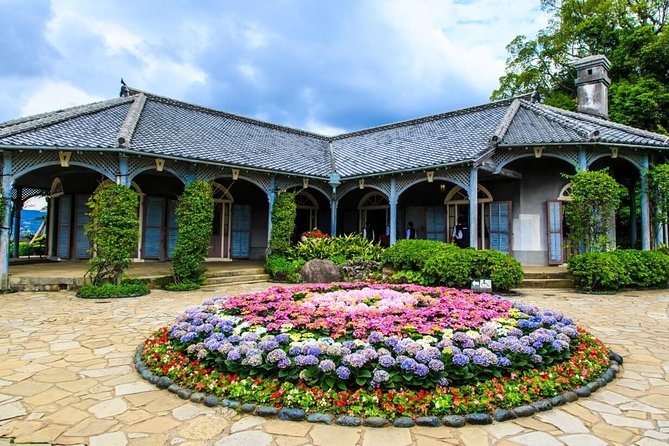
Glover Garden is an open-air museum with mansions and related buildings connected to Western residents. It sits on a hill, so it naturally pairs well with a city-walk day and helps you understand why Nagasaki attracted foreigners through trade and maritime links. Time listed is about 15 minutes, and entry is not included.
Dejima tells a different side of the port story. It was a man-made island built in 1636 to separate Portuguese residents from the Japanese population and control missionary activity. That controlled contact is the whole point of the place. The stop time is also about 15 minutes, and entry is not included.
Then there’s the Dutch Slope (Oranda-zaka), a stone-paved street leading uphill where foreign traders lived after the port opened for trade in 1859. It’s listed as a short stop, and it’s ideal if you like streetscape details you can photograph.
Why these work well together:
- They’re different eras of the same theme, foreigners, the port, and how Nagasaki managed contact.
- They’re visually easy to digest, buildings, streets, and the feeling of a hill port district.
Sofukuji and Kofukuji: Obaku temples and Chinese roots in Nagasaki
Nagasaki has a strong Chinese influence, and the temple options in this tour do a good job showing that without forcing you into one specific style.
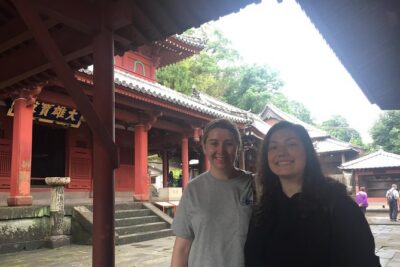
Sofukuji Temple belongs to the Obaku school of Zen Buddhism. It was originally built in 1629 for Nagasaki’s Chinese residents, and the architecture includes Chinese elements. The listed stop time is about 15 minutes, and entry is not included.
Kofukuji Temple is an even older anchor, described as the oldest and one of the most important Chinese-founded temples in Nagasaki. It’s in the Teramachi area, known as Temple Town, and it’s also connected to the Obaku tradition. The listed stop time is about 30 minutes, and entry is not included.
To round out the Chinese thread, consider the Confucius Shrine (listed as Nagasaki Gokoku Shrine in the stop list text, with the Confucius name shown). It’s one of only a handful of Confucius shrines in Japan and was built in 1893 by Nagasaki’s Chinese community. Time listed is about 15 minutes, and entry is not included.
What I like about this cluster: you can build a coherent theme in two or three stops. It also helps explain why Nagasaki does not fit neatly into the “only Japanese cultural sites” idea people sometimes expect.
Urakami Cathedral and Oura Church: European-style Catholic history
Christian history is a major part of Nagasaki’s identity, and this tour’s church options are big enough to carry the day.
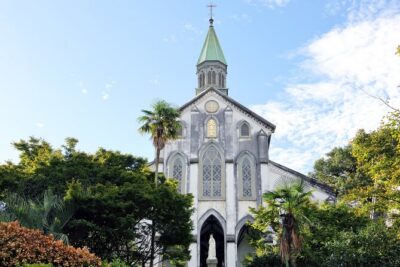
Urakami Cathedral is a working Catholic church in a large European-style building, described as red brick, with a tragic but interesting history. The listed stop time is about 15 minutes, and entry is not included.
Oura Catholic Church (Oura Tenshudō) is also a working church, built toward the end of the Edo period in 1864 by a French missionary for the growing foreign merchant community. The listed stop time is about 15 minutes, and entry is not included.
Between or alongside these, you can add the darker chapter:
Twenty-Six Christian Martyrs Monument with the adjacent museum. It commemorates the 26 Christians executed on February 5, 1597. Time listed is about 30 minutes, and entry is not included.
If you want a full emotional arc, pair:
- Peace Park or the Atomic Bomb Museum for the WWII frame
- Then shift into the earlier persecution story with the martyrs monument
- Finish with the present-day church buildings so you end on what remains
City corners that steal your time: Meganebashi, lantern tradition, and art
Not every highlight is a museum. Some are the kinds of places you feel in your feet, the little street names and bridges you remember later.
The Nagasaki Kunchi festival is often described as a lantern festival tied to Suwa Shrine, held annually on October 7-9 and celebrated for about 400 years. The stop time is listed at about 15 minutes, and entry is free. If you’re visiting in October, this is worth building into your selection.
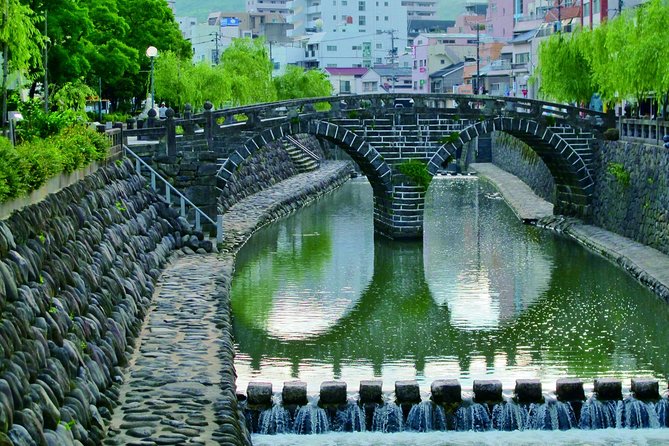
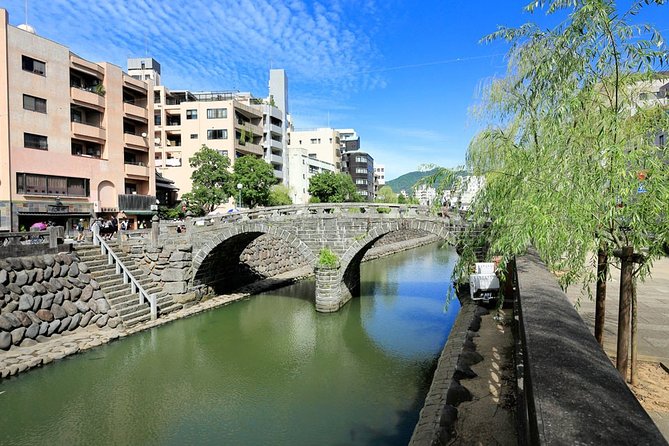
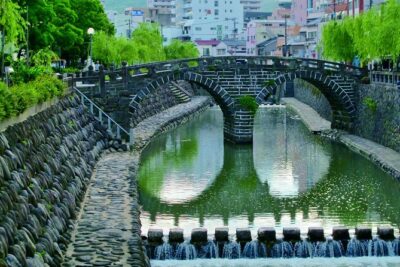
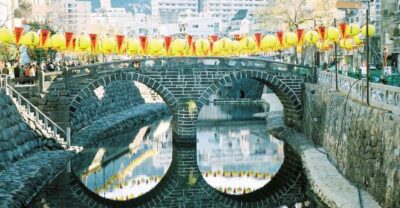
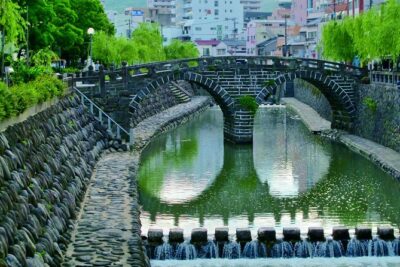
Meganebashi (Spectacles Bridge) is a stone bridge over the Nakashima River in downtown Nagasaki. It’s named for its resemblance to spectacles. The stop is listed in the route options, and even if you only spend a short moment, it’s a great “pause point” for photos.
If you want a change of pace with indoor art, choose:
Nagasaki Prefectural Art Museum, a modern museum complex by the port. The listed stop time is about 30 minutes, and entry is not included.
A smart pairing if you’re museum-minded:
- Atomic Bomb Museum for history
- Art Museum for a different lens on recovery and modern life
Guides make the difference: Hiro, Mei, Yoko, Yoshi, Minnie, and Norah
The reviews paint a clear picture: the guides aren’t just giving dates. They’re building a day where you know why each stop matters.
Some patterns I’d bet on:
- On-time, helpful meetups. One guide, Yoko, was described as meeting right on time at the scheduled hour and building the route around what the visitor wanted.
- Quick adaptation. A tailored day means if your interests shift mid-route, the plan can flex while still hitting your chosen major stops.
- Fast site finding and context. One guide described using a picture book approach to confirm each site quickly and keep you moving.
- Extra touches. One day included a detour to a local cat shrine, which is exactly the kind of Nagasaki flavor that makes photos more fun than predictable.
I also like the family-friendly approach. In one account, a guide used quizzes and small interactive moments that worked for a child. If you’re traveling with kids, that turns a heavy day like Peace Park into a less intimidating experience.
And yes, there’s practical kindness too. One guide helped with a unique gift request tied to anime characters. That’s not a guarantee, but it signals a guide who pays attention to your little needs without making a big show of it.
What to expect on the ground: pace, transit, and time budgeting
This is set up as a walking and public transport tour, with pickup on foot. That has a few consequences you’ll want to plan for:
- You’ll spend time moving, not just sightseeing.
- You should expect some uphill or uneven-feeling neighborhood blocks, especially with hillside areas like Glover Garden and Mount Inasa.
- Because you choose only 3 to 4 sites, your time inside each place depends on which ones you pick.
If your heart is set on Peace Park plus the Atomic Bomb Museum, treat the day as a “remembrance + perspective” theme. Save your other picks for places that complement that message, like port-era sites or churches, rather than adding in every possible viewpoint.
If your goal is lighter, more scenic Nagasaki, you can build a day around:
- Inasayama Observation Deck for views
- Meganebashi and Dutch Slope for street scenes
- Then one cultural anchor, either Glover Garden or a temple stop
You’ll also want to be ready for entrance fees. Many stops are marked as not included, so budgeting ahead keeps the day smooth.
Should you book this Nagasaki day?
Book it if:
- You want a private, government-licensed English-speaking guide
- You like setting your own priorities, picking 3 to 4 sites
- You’re happy using trams and buses and walking between neighborhoods
- You want major Nagasaki themes in one day, Peace sites plus port history plus religious heritage
Skip it (or at least rethink) if:
- You need a lot of vehicle-based sightseeing, because there’s no private vehicle
- You have limited stamina for walking and transit
- You’re expecting a long list of stops. This tour is built for focus, not covering everything in town
If you want an easy way to plan, start by choosing your theme pair. Peace plus one other anchor is the most satisfying combo. Views plus one cultural block is the most fun for photos. Either way, the guide’s job is to help you make those choices stick, and that’s where this tour earns its high recommendation rate.
FAQ
What is the duration of the Nagasaki private tour?
The tour is listed as about 6 hours.
Is this a private tour or shared group tour?
This is a private tour/activity, so only your group participates.
How many stops can I choose during the tour?
You can customize the itinerary to visit 3 to 4 sites from the available options.
Are entrance fees included?
Some stops are listed as free (including Nagasaki Peace Park, Inasayama Observation Deck, and Nagasaki Lantern Festival), while many others are listed as not included. Transportation fees and entrance fees are not included overall.
Do I get hotel pickup?
Pickup is offered, but the tour is described as a walking and public transport experience with pickup on foot. You meet the guide on foot within a designated area.
Is transportation included?
No. Transportation fees are not included, and there is no private vehicle.
Is free cancellation available?
Yes. You can cancel up to 24 hours in advance for a full refund.
Are service animals allowed?
Service animals are allowed.
Licensed Guides on the Same Ground
Nagasaki and Its Memorial Sites
Newest Nagasaki write-ups from the Loving Japan desk
Nagasaki Memorial Sites and City Tours, side by side.
 ★ 4.7Private Walking Tour with a LocalFrom $8279 reviews
 ★ 5.0Nagasaki Half-Day Private Tour with Government-Licensed GuideFrom $12253 reviews
 ★ 4.0Visit Gunkanjima Island (Battleship Island) in NagasakiFrom $7132 reviews
 ★ 5.0Nagasaki Full Day Tour with Licensed Guide and VehicleFrom $59827 reviews
 ★ 5.0Taste Local Life: Nagasaki’s Historical Street Walking TourFrom $10527 reviews
 ★ 5.0Nagasaki Street Food Adventure: Private Walking Tour with a LocalFrom $22826 reviews
Filed on these lists too