
REVIEW · NISHIKI MARKET AND KYOTO FOOD WALKS
Nishiki Market Walking Food Tour with Local guide
Kyoto tastes better with a guide. In about three hours, you get a structured walk through Nishiki Market and the surrounding food streets without guessing what to try. The tour also starts at a very recognizable spot, Starbucks Kyoto Sanjo Karasuma Building, then moves from temple calm to serious eating.
I love the way this tour uses Kyoto’s food-scene classics as real stops, not just names on a list. The Daimaru Kyoto depachika basement food floor is a standout, since your tastings cover everything from local buns to sweets. One thing to consider is that the flow can feel timetable-driven, so if you want total wandering time, you may feel a bit steered.
In This Review
- Key highlights you will actually care about
- Meeting at Starbucks, then switching into local mode
- Rokkakudo Temple: a quiet reset between food stops
- Daimaru Kyoto depachika: where local tastings feel effortless
- Nishiki Market: the kitchen of Kyoto in walking form
- How the guide shapes your experience (and why Andrea, Aoki, Yoriko get mentioned)
- Ending at Nishiki Tenmangu Shrine: a calm finish after the eating
- Price and value: is $79.07 a smart buy?
- Who should book this Nishiki Market walking food tour?
- Quick decision: should you book?
- FAQ
- FAQ
- How long is the Nishiki Market walking food tour?
- What time does the tour start, and where do we meet?
- Where does the tour end?
- What is included in the price?
- Is the tour suitable for people with dietary restrictions or allergies?
- How many people are in a group?
- What happens if the weather is bad or I need to cancel?
Key highlights you will actually care about
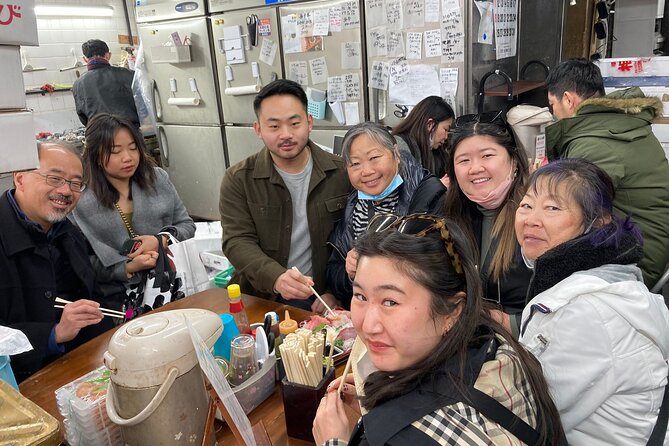
- A small group (max 6 travelers) keeps the walking manageable and the tastings more relaxed
- Daimaru depachika gives you a high-end but easy way to sample Kyoto specialties in one place
- Nishiki Market tastings focus on classic street and shop foods, including examples like sashimi and skewers
- Rokkakudo Temple adds a quiet break so the day does not become nonstop eating
- Finish at Nishiki Tenmangu Shrine for a calm landing after the market rush
- Guide flexibility is repeatedly praised, with guides such as Andrea, Aoki, and Yoriko mentioned as friendly and helpful
Eat your way along the arcade a different way
- Nishiki Market Brunch Walking Tour (7 Tastings + Brunch)
★ 5.0 · 1,355 reviews - Kimono Tea Ceremony at Kyoto Maikoya, NISHIKI
★ 5.0 · 911 reviews - Kyoto Nishiki Market Food and Culture Walking Tour
★ 5.0 · 412 reviews - Kyoto: Nishiki Market Tea Ceremony with Koto Performance
★ 4.8 · 294 reviews
Meeting at Starbucks, then switching into local mode
Your tour begins at Starbucks Kyoto Sanjo Karasuma Building in Kyoto. It is a smart choice for a meeting point, because it is easy to find, and it helps you start without the stress of hunting down an obscure street corner. The tour runs at 10:00 am and lasts about 3 hours, which is long enough to eat well but short enough to fit into a normal day of sightseeing.
From the start, the experience is about flow. You are not just ticking off sights. You are walking a route that connects a temple stop, a major department store food basement, and Nishiki Market, then ending at a shrine. That order matters, because it keeps you from burning your appetite too early, and it gives you a breather before the densest food area.
The tour includes a lunch tasting of 5 to 8 local foods. That sounds simple, but it is the heart of the value. Instead of trying to purchase and compare ten different items on your own, you sample a curated mix as you go, guided by someone who knows what is popular and where to go next.
The practical detail I would plan around: foods can include meat, seafood, wheat, and dairy. If you have allergies or dietary needs, you should contact the provider in advance so the guide can plan around your situation.
Rokkakudo Temple: a quiet reset between food stops
One of the best surprises in this kind of walking tour is when the itinerary gives you a pause. Here, you visit Rokkakudo Temple, described as peaceful and historical. In real terms, this stop works like a reset button. You go from busy Kyoto streets into a calmer space, which makes the next food portion feel more enjoyable instead of rushed.
This is also a nice moment for orientation. Nishiki Market is famous, and it can feel like information overload when you step inside. A short temple stop helps you slow down, look around, and get a sense of where you are in the city before you start sampling.
Another practical benefit is pacing. When tours are all eating with no break, people tend to over-order, then slow down later. By putting a calm stop before the densest shopping and eating areas, the tour keeps the energy steady.
If you prefer photos, this is a good time to grab them without balancing a snack in your hand. If you are more about culture than photos, you still get something important: a reminder that Kyoto is not only about food, it is about place and atmosphere.
Daimaru Kyoto depachika: where local tastings feel effortless
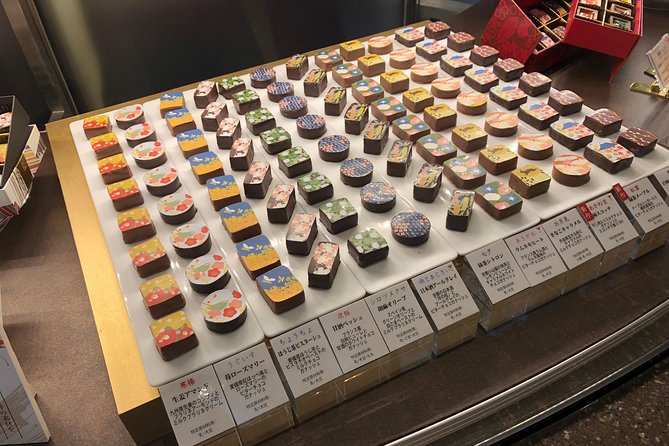
The Daimaru Kyoto stop is built around its depachika, the department store basement food area. This is one of the easiest ways to experience Kyoto flavors because so much is under one roof. You do not need to figure out which shop is worth the line, you do not need to guess what is seasonal, and you can sample multiple items without switching locations constantly.
During this part of the tour, you might taste items such as nikuman (meat buns), plus wagashi (Japanese sweets) from a long-running shop. You could also see bread examples from Yaoyaichi, and the tour may include other local specialities depending on availability and your group’s preferences.
What I like about this approach is that depachika food can be both casual and high quality. It is still street-style eating, but with department store reliability. Your guide can steer you toward what makes sense for your taste, and you get to compare flavors without making a dozen separate decisions.
If you are the type who worries about ordering incorrectly in Japan, this section helps. You are sampling, not trying to interpret a full menu under pressure. And if you are the type who loves variety, this is a dream setup because you can taste several items in a short time.
Keep in mind that tastings vary by the group and what is available on the day. That is not a problem for value, but it does mean you should not expect one exact lineup every single time.
- PERFECT KYOTO 1-Day Bus Tour★ 5.0 · 13,518 reviews
- Kyoto: Fushimi Inari, Kinkakuji, Bamboo Grove 1 Day Bus Tour★ 4.8 · 4,316 reviews
- Kyoto: Tea Ceremony in a Traditional Tea House in Kiyomizu★ 4.9 · 3,519 reviews
- Kyoto Geisha Walking Tour: Gion District & Hidden Gems★ 4.7 · 3,273 reviews
- Kyoto: Tea Ceremony Ju-An at Jotokuji Temple★ 4.9 · 3,207 reviews
Nishiki Market: the kitchen of Kyoto in walking form
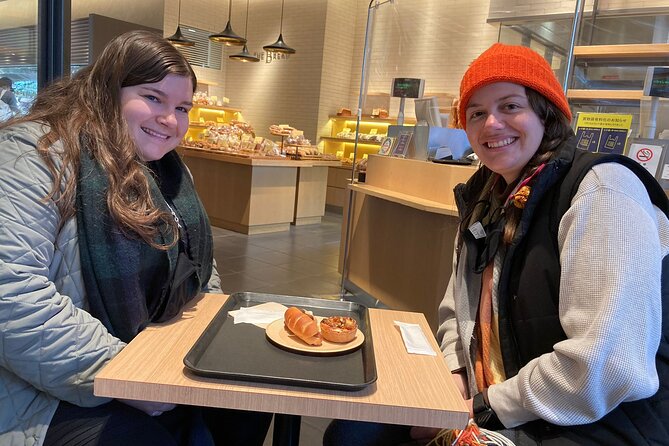
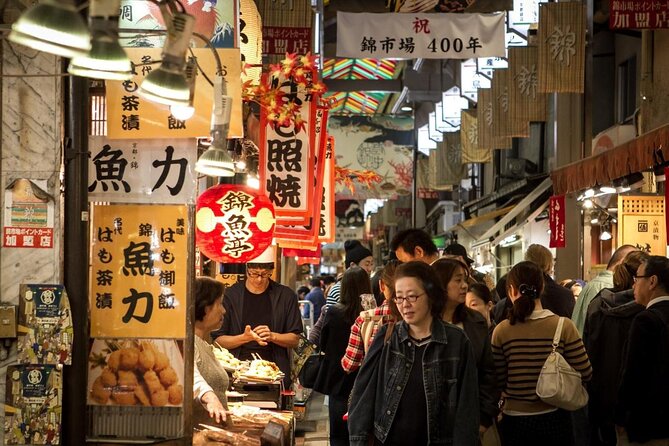
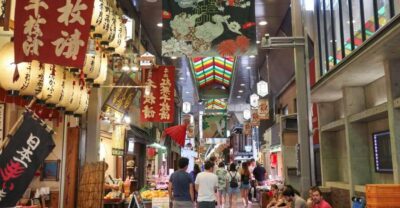
After Daimaru, the tour heads into Nishiki Market, often called Kyoto’s Kitchen. This is where you really feel what makes the area special. It is a dense stretch of food shops and stalls, and it can be overwhelming if you walk in alone. The guide’s job is not just to show you where to eat, it is to help you move through the market efficiently and try foods that represent Kyoto well.
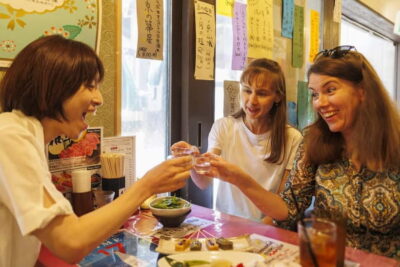
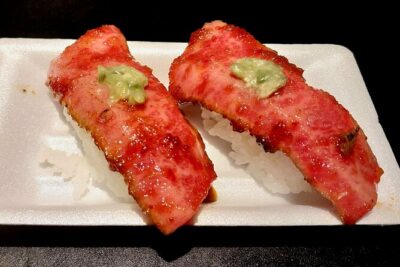
Your tastings here can include fresh specialties. The tour’s examples include sashimi and skewered wagyu beef, along with other market favorites. Another mention from the tour description is classic Kyoto street foods like rolled omelets and skewers. The experience may also include a sake tasting at a small shop, based on guide-led experiences described for the tour.
What you should expect in practice is a steady rhythm:
- You stop, taste,
- You learn what makes the item Kyoto,
- Then you move on before you get too full.
That rhythm is the difference between having a fun snack walk and feeling like you are just consuming random food. You get context, and you get a sense of how the items fit together as a meal.
One word of caution. Nishiki Market is intense on the senses. If you are sensitive to smells, crowds, or lots of sampling stations, slow yourself down. Do not try to chase every stall you see, because the tour tastings are already designed to cover the highlights.
Also, because the tastings can include meat and seafood, check your dietary comfort level ahead of time. If you have allergies, contact the provider in advance. This is not the kind of tour where you should assume you can improvise safely at the counter.
How the guide shapes your experience (and why Andrea, Aoki, Yoriko get mentioned)
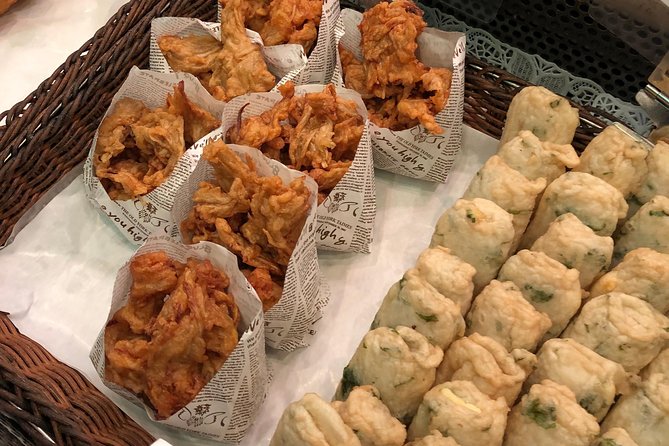
The tour is explicitly guided, and the human part matters here. Several guide names come up in accounts of the experience, including Andrea, Aoki, and Yoriko. In those descriptions, the guides are often called friendly, attentive, and flexible.
That flexibility can mean small but important things:
- Adjusting the pace to your group,
- Giving extra context when you ask,
- Pointing out how locals shop or what people look for in a particular shop.
A couple of the guide comments also mention cultural storytelling, including references to the Gion area and the geisha district while walking through the broader neighborhood. Even if you do not go deep into that topic, it helps you understand what you are seeing and why certain streets feel the way they do.
That said, there is one possible downside that you should treat as real. Some people feel the experience is run on a schedule, and they want more room to slow down and linger. If you are the type who likes to wander markets at your own speed, you might find it a bit structured. The best way to handle that is simple: go in hungry, accept the plan, and let the guide’s pacing work for you.
In a 3-hour food tour, structure is what makes the tastings feel efficient. Without it, you risk turning the day into a series of half-decisions.
Ending at Nishiki Tenmangu Shrine: a calm finish after the eating
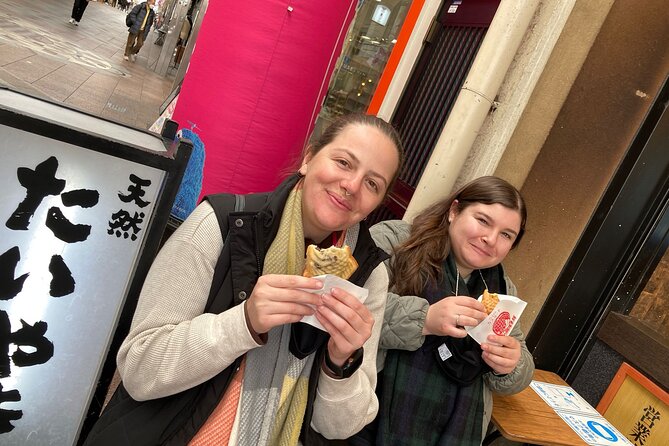
The tour ends at Nishiki Tenmangu Shrine, located at 537 Nakanochō, Nakagyo Ward. This is a gentle way to close the loop. After eating and walking through a famous market, you get a quieter space where you can slow down, catch your breath, and reflect on what you tried.
That matters more than you might think. When you finish near a shrine, it creates a natural boundary between food and sightseeing. You can step away from the noise and feel like you completed a rounded experience, not just an eating session.
It also helps for your next plans. From a practical standpoint, you can continue exploring nearby streets after the tour ends, without feeling like you have to backtrack.
Price and value: is $79.07 a smart buy?
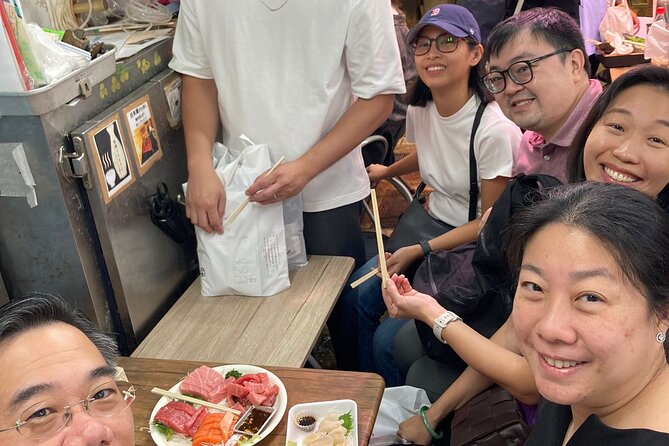
At $79.07 per person, this is not a bargain-basement snack tour. It is also not a luxury private tour. So how do you judge value?
You should start with what you get included:
- A 3-hour guided walk,
- Lunch tasting of 5 to 8 local foods,
- Stops designed around Kyoto’s best-known food zones, like depachika and Nishiki Market.
If you tried to do this solo, you would spend time figuring out which shops to enter, how much to order, and what portions make sense together. You would also likely end up buying more than you planned, then still missing something a local would steer you to.
With a guide, your choices are condensed. You taste multiple items while staying on a route that makes sense for foot traffic. For first-time visitors to Kyoto food culture, that saves effort and helps you get a more representative sample of what Kyoto does well.
If you are a confident foodie who loves spontaneous browsing and already has a game plan for Nishiki Market and depachika food floors, you might be able to save money by doing it on your own. But if you want less decision fatigue and more structured sampling, this price can feel fair.
Also note the group size. With a maximum of 6 travelers, you get a better chance at a relaxed, personal experience compared with large groups that rush and split attention.
Who should book this Nishiki Market walking food tour?
This is a great fit if you:
- Want a structured introduction to Kyoto food without spending hours researching,
- Like the idea of department store depachika tastings plus market street foods,
- Enjoy learning a bit about neighborhood culture as you walk,
- Prefer a small group size and a guided pace.
It may be less ideal if you:
- Want lots of free time to linger in shops on your own,
- Have very complex dietary needs and did not plan ahead with the provider,
- Dislike schedule-driven walking (even though the guide may be flexible).
One more reality check: the experience notes that it works best with good weather. If the day is miserable, you may be moved to another date or offered a refund. That is normal for walking tours in Kyoto, especially when markets and streets are part of the plan.
Quick decision: should you book?
I would book this tour if your goal is to eat your way through Kyoto’s food highlights without wasting time. The combination of Daimaru depachika, Nishiki Market, and a calm temple-to-shrine rhythm makes the whole route feel balanced. And because it includes 5 to 8 tastings, you can treat it as a meal rather than a snack stop.
Skip it only if you strongly prefer free-form market wandering or you know you can handle the food ordering and shop choices alone. If that sounds like you, plan your own route. If it does not, the guide-led structure is exactly what makes this kind of Kyoto day smoother.
FAQ
FAQ
How long is the Nishiki Market walking food tour?
The tour lasts about 3 hours.
What time does the tour start, and where do we meet?
The tour starts at 10:00 am. You meet at Starbucks Coffee – Kyoto Sanjo Karasuma Building (Japan, 〒604-8166 Kyoto, Nakagyo Ward, Mikurachō, 85−1 KDX京都烏丸ビル 1F).
Where does the tour end?
The tour ends at Nishiki Tenmangu Shrine (537 Nakanochō, Nakagyo Ward, Kyoto, 604-8042, Japan).
What is included in the price?
The price includes lunch tasting of 5 to 8 local foods. Tastings can vary depending on preferences and shop availability.
Is the tour suitable for people with dietary restrictions or allergies?
The tour notes that tastings may include ingredients such as meat, seafood, wheat, and dairy products. If you have restrictions or allergies, you should contact the tour provider in advance to discuss what accommodations might be possible.
How many people are in a group?
This experience has a maximum of 6 travelers.
What happens if the weather is bad or I need to cancel?
The tour requires good weather. If it is canceled due to poor weather, you will be offered a different date or a full refund. You can cancel for a full refund up to 24 hours before the experience starts.
Along the Nishiki Arcade
Newest Kyoto write-ups from the Loving Japan desk
Nishiki Market and Kyoto Food Walks, side by side.
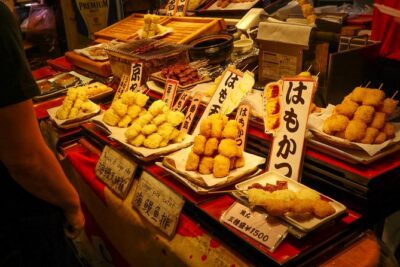 ★ 5.0Nishiki Market Brunch Walking Tour (7 Tastings + Brunch)From $681,355 reviews
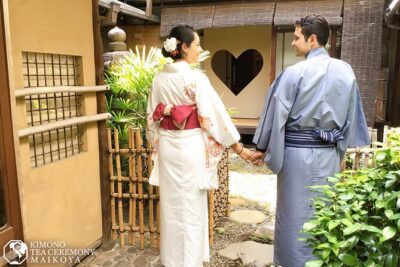 ★ 5.0Kimono Tea Ceremony at Kyoto Maikoya, NISHIKIFrom $65911 reviews
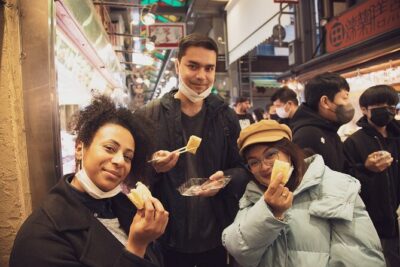 ★ 5.0Kyoto Nishiki Market Food and Culture Walking TourFrom $80412 reviews
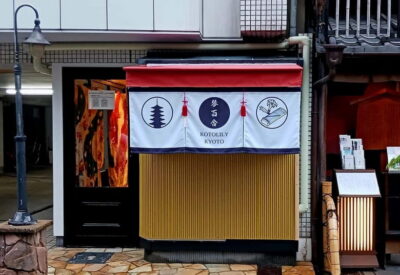 ★ 4.8Nishiki Market Tea Ceremony with Koto PerformanceFrom $56294 reviews
 ★ 4.8Nishiki Market Brunch Walking Tour-7 Tastings+BrunchFrom $66197 reviews
 ★ 4.7Local Food Tasting Tour at the Nishiki MarketFrom $78135 reviews
 ★ 5.0Kimono Tea Ceremony Experience at Kyoto Oritzuruya, NishikiFrom $50116 reviews
 ★ 5.0Kyoto Food Tour of 10 Tastings with Wagyu, Mochi & More SurprisesFrom $14285 reviews
Filed on these lists too